
Second judge blocks Trump's contested D.C. arch
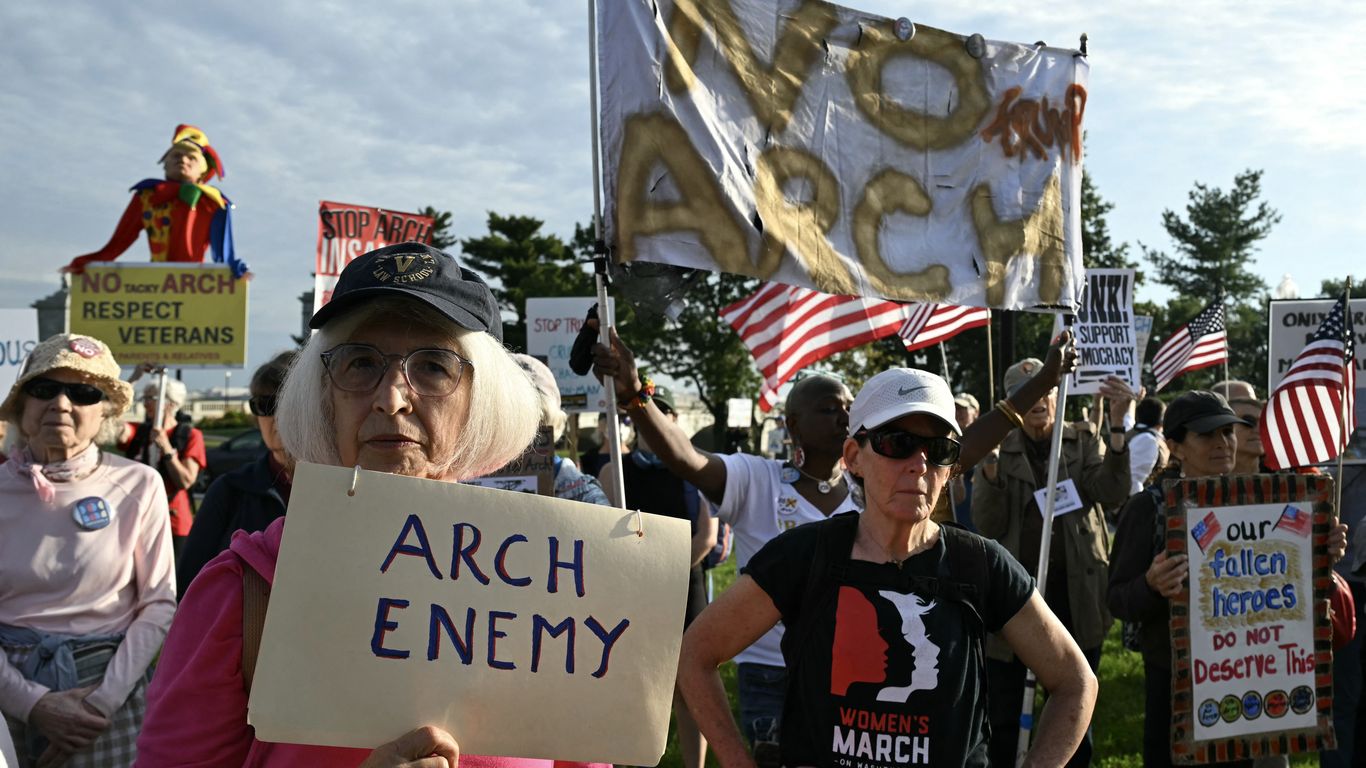
A second federal judge will block construction on President Trump 's embattled arch set to be erected near Arlington National Cemetery , multiple outlets reported Friday. Why it matters: It represents yet another barrier to the multi-year project to build a 250-foot arch that challengers said would obstruct the line of sight between the Lincoln Memorial and Arlington National Cemetery. Driving the news: U.S. District Judge Leonie Brinkema's preliminary injunction will indefinitely block the project, which she reportedly called a "rushed job" from the bench Friday. Zoom out: Brinkema's rebuke comes after D.C.-based District Judge Tanya Chutkan on Wednesday extended her separate order blocking construction on the arch for two weeks. Chutkan, who is overseeing consolidated challenges from military veterans and from the District of Columbia and Virginia, issued her initial temporary restraining order earlier this month. That order prohibited construction, excavation, land disturbance, utility installation and road closures related to the arch, Axios D.C.'s Mimi Montgomery reported. What they're saying: "The judiciary should not be abused to politicize a structure designed to unite our nation," White House spokesman Davis Ingle said in a statement. "We will continue making the case for this beautiful and fitting monument and are confident we will be fully vindicated as this litigation proceeds." The National Park Service did not immediately respond to Axios' request for comment. State of play: The legal hurdles came after the National Capital Planning Commission , which is stacked with Trump loyalists, gave its final approval for the project. Challengers, however, have argued the project requires congressional approval — and as Chutkan noted , "Congress has not enacted any statute authorizing construction of the Arch." Between the lines: The arch is one prime example of the president's quest to remake the nation's capital as he sees fit, from a sprawling White House ball
Read the full story at Axios →