
Jensen Huang spy scandal rocks AI race
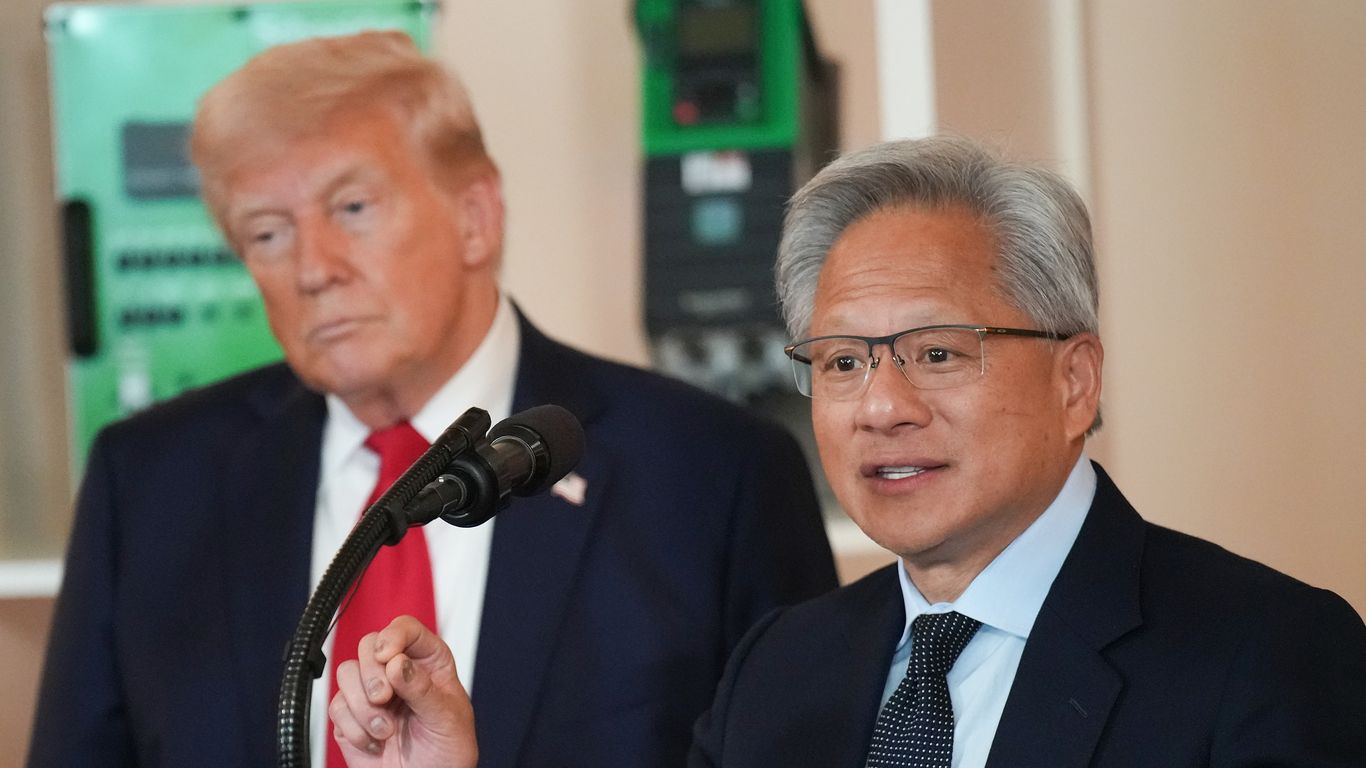
The world's most powerful AI executive admitted Sunday to an affair with a suspected Chinese spy, sending shock waves through an industry built on his singular influence. Why it matters: Nvidia CEO Jensen Huang has fashioned himself as the indispensable leader of an indispensable company — a $4.5 trillion behemoth with unparalleled clout in Silicon Valley, on Wall Street and inside President Trump's White House. Trump stood by Huang on Sunday evening, telling reporters that the Nvidia CEO is "an honorable guy" and "probably has an excuse" for his infidelity. The big picture: Huang, who has led Nvidia since founding the chipmaker 33 years ago, has become the AI boom's chief evangelist and most authoritative voice. He has brushed aside fears of both a speculative bubble and technological catastrophe, joining forces with Trump to calm markets and the public as warnings of an AI apocalypse reached fever pitch. For almost any other CEO, an affair with a suspected foreign intelligence operative could be career-ending. Huang's grip on Nvidia — and the company's extraordinary importance to the AI economy — may insulate him from the same fate. Driving the news: Huang confessed to the affair in a letter to staff Sunday, apologizing to his family as Nvidia's board launched an independent probe into the suspected Chinese intelligence operation. U.S. officials believe Alice Huang, an executive at Nvidia customer Megaspeed, was recruited by Beijing's top spy agency to gather information and potentially influence Nvidia's campaign to expand advanced chip sales to China. Nvidia's board said it had no reason to believe national security or company secrets were compromised and expressed confidence in Jensen Huang, who intends to remain CEO during the investigation. Zoom in: The New York Times first exposed the suspected Chinese espionage operation on Oct. 29, reporting that a woman believed to be working for Beijing had developed a close relationship with Nvidia's CEO. The company po
Read the full story at Axios →