
How the midterms swing each party's economic feelings
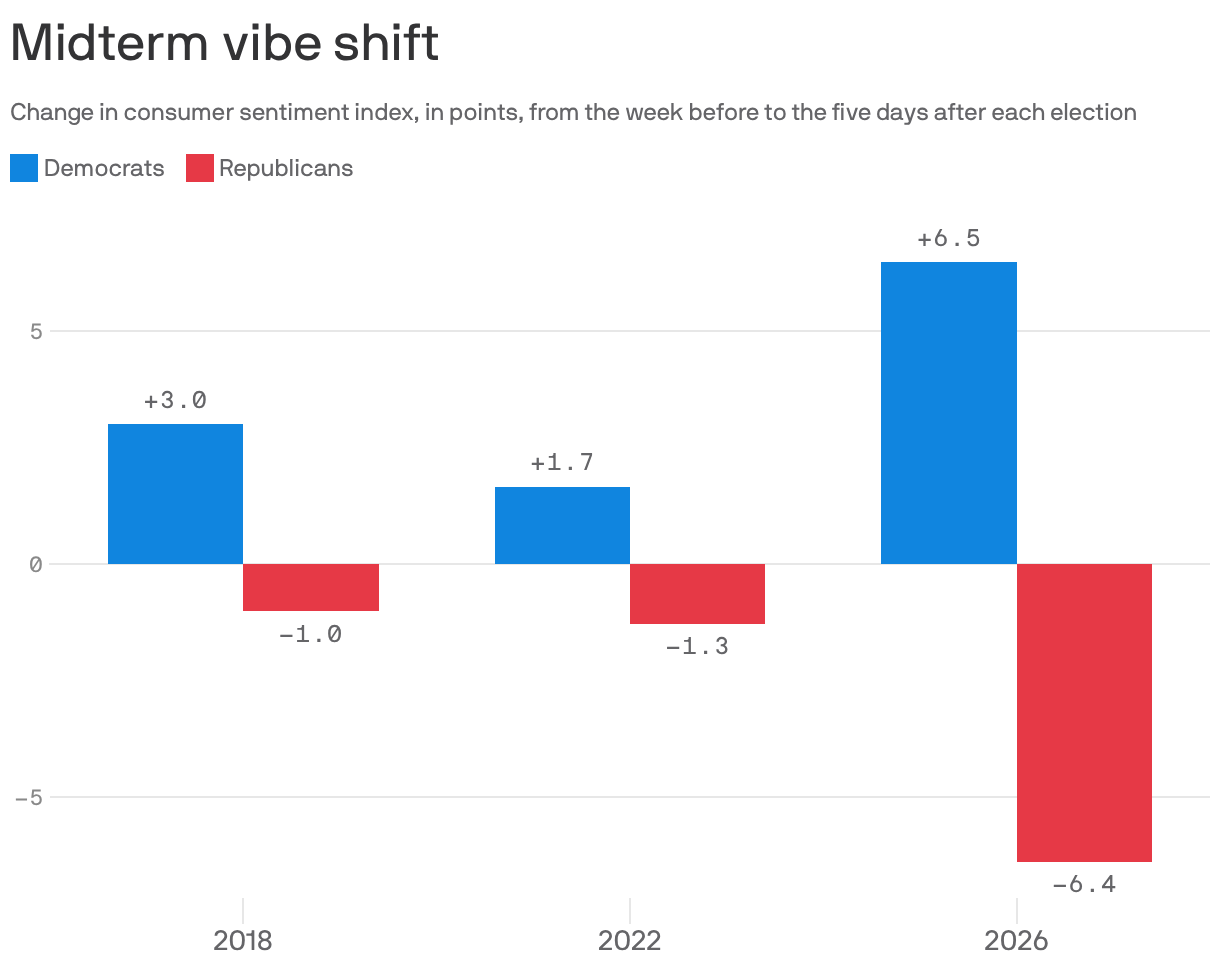
Note: Figures compare average daily sentiment readings over the seven days before each election with the five days after. Election Day is excluded; Data: Morning Consult; Chart: Emily Peck/Axios There was an unusually sharp partisan mood shift in the wake of the midterms, according to sentiment data from Morning Consult that was shared exclusively with Axios. Why it matters: While big partisan swings in consumer sentiment are typical after a presidential election, they have been much smaller in midterm races. The latest numbers show just how tightly Americans' views on the economy are now intertwined with politics. By the numbers: Democratic consumer sentiment rose 6.5 points in the five days after the election compared with the week before, while Republicans' mood fell 6.4 points. How it works: Morning Consult's index considers survey responses from approximately 5,000 U.S. adults. They're asked five questions, including on people's personal finances and financial outlook, as well as their views on overall business conditions. Zoom in: The biggest shifts in sentiment were in respondents' feelings about the future. Republicans' outlook across all five metrics fell after the election. Their confidence in business conditions over the next five years plummeted 12 percentage points. Democrats, meanwhile, had a jump of 9 percentage points in confidence about business conditions (although they remain negative about it) and an even bigger increase — 12 percentage points — in optimism that their own finances would improve over the next year. Of note: Both sides were more negative about their own finances compared with a year ago. Zoom out: Overall sentiment, which includes Independents, barely moved — ticking up less than one point, per Morning Consult. The opposing partisan shifts appear to have canceled each other out. Reality check: It's early days, and sentiment could shift quickly. Between the lines: Consumer sentiment was once a telling measure of how people would ac
Read the full story at Axios →