
Duffy's $50 billion request gets chilly reception from Senate GOP
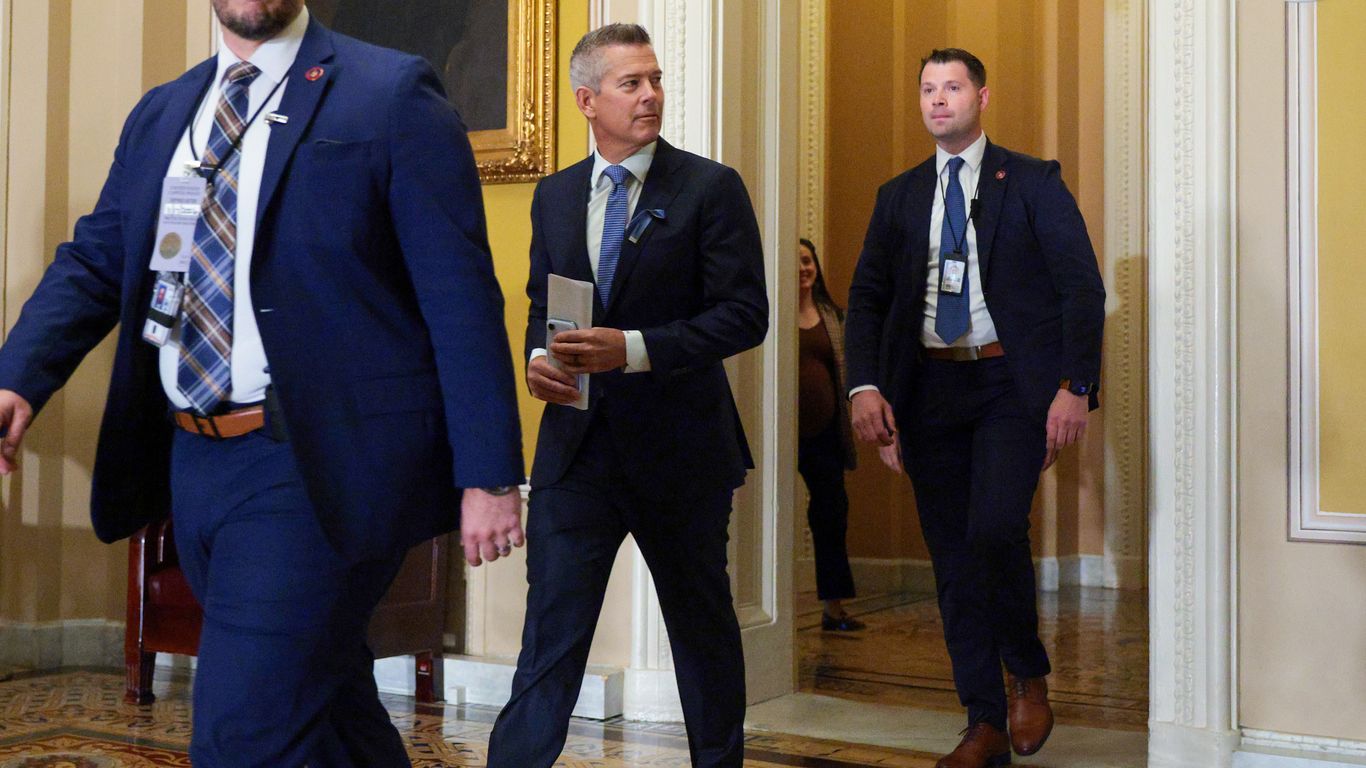
Transportation Secretary Sean Duffy's $50 billion request to overhaul the nation's air traffic control system is getting a chilly reception from Senate Republicans, who are balking at the hefty price tag. Why it matters: The pushback from within President Trump's own party casts doubt on the administration's ability to secure the full $50 billion, even after Friday's historic nationwide groundstop . Sen. John Kennedy (R-La.) told reporters that Duffy "made a huge mistake" by originally requesting $30 billion for air traffic modernization, then later upping the ask to $50 billion following the groundstop. "Maybe he was taking orders, but he's smart enough to know better than to say, 'I need 30 billion. We have a catastrophe. I need 50 billion now.'" Kennedy said, adding, "We're not going to give them $50 billion." Both Duffy and Trump have urged Congress to move quickly on the funding, which the administration formally requested Tuesday. Driving the news: Duffy, along with FAA Administrator Bryan Bedford, pitched the funding — which include $10 billion specifically for air traffic equipment modernization — to Senate Republicans at their weekly lunch. "I don't think the full $50 billion will be funded. Some of that is not safety related," Commerce Chairman Ted Cruz (R-Texas) told reporters. Cruz floated using the fast-track reconciliation process to secure additional funding for upgrading the air traffic control system, but said the administration needs to show it can effectively spend the $12.5 billion Congress already provided in the " Big, Beautiful Bill " last year. "Demonstrate that you can actually modernize, and come back to Congress when you need additional funds," Cruz said. Zoom in: Senate Majority Leader John Thune (R-S.D.) has also raised concerns about the unspent funds. "There's some explanations that have to be given as to why that number is where it is," Thune told reporters Monday. Thune poured cold water on using reconciliation to pass the additional
Read the full story at Axios →