
Alaska Native strongholds push Peltola into Senate history
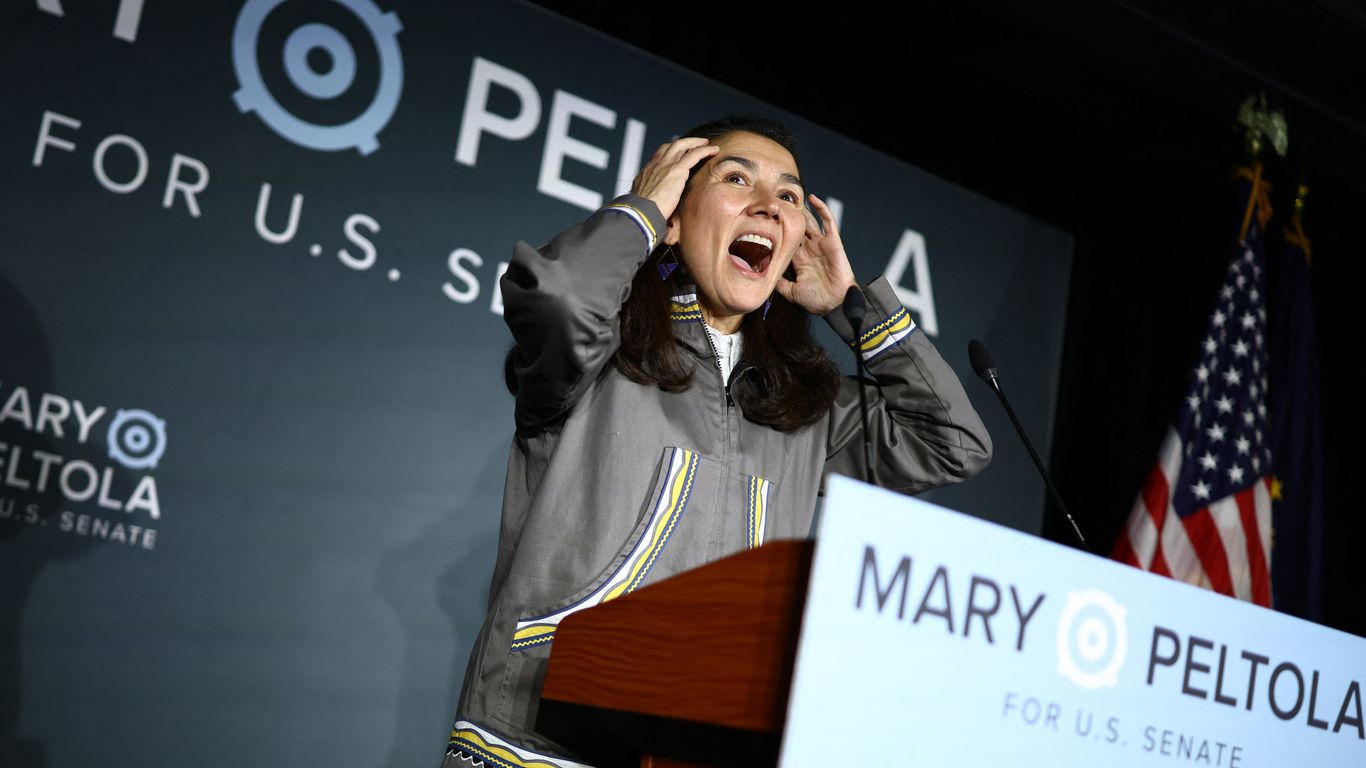
Mary Peltola's path to Senate history ran through four Alaska Native strongholds that delivered more than half of her statewide first-choice lead. Why it matters: The Yup'ik Democrat is the nation's first Alaska Native U.S. senator, powered by communities that endured disenfranchisement, forced displacement and federal violence. The win amplifies their voice on tribal sovereignty and subsistence rights after decades of neglect and discrimination — much as Mississippi Delta Black voters powered Democrat Scott Colom to his surprising Senate victory. By the numbers: Peltola led Republican Sen. Dan Sullivan by roughly 12,400 first-choice votes statewide in Alaska's Nov. 17 unofficial count . Four western and northern House districts delivered a combined margin of about 6,700 votes. In Bristol Bay/Aleutians , for example, Peltola led by roughly 1,150 votes. In Bethel/Yukon-Kuskokwim Delta and Western Alaska/Norton Sound , she led by roughly 2,300 votes. In North Slope/Northwest Arctic , she led by approximately 900 votes. Stunning stat: Those four districts accounted for just about 5% of Alaska's first-choice Senate votes, but roughly 55% of Peltola's statewide lead. Alaska's 2021 redistricting report identifies Districts 37–40 as Alaska Native-controlled. Alaska Natives, alone or in combination, accounted for 85.8% of the voting-age population in District 38, 85.1% in 39, 62% in 40 and 43.8% in 37, using 2020 census figures. About 22% of Alaska residents identified as American Indian or Alaska Native, alone or in combination with another race, according to the 2020 census . State of play: Peltola carried the 50% margin needed to avoid Alaska's ranked-choice tabulation , where lower-ranked preferences from other candidates' supporters could have tipped the race toward another candidate. Michelle Sparck of the nonpartisan Get Out the Native Vote effort told KNBA that Native groups mounted aggressive outreach, including in Native languages. Organizers saw gains in some rur
Read the full story at Axios →