Asian Stocks to Rally on US Tech Surge, Oil Slump: Markets Wrap
Asian stocks were poised to track Wall Street higher as a rally in technology shares and a slump in oil prices drove US benchmarks to their best day in seven months.
Bloomberg · 18h ago

Asian stocks were poised to track Wall Street higher as a rally in technology shares and a slump in oil prices drove US benchmarks to their best day in seven months.
The probabilities make it almost certain that macro forecasts will be wrong far more often than right.
The quarterly results are the first since Lucid CEO Silvio Napoli, who started leading the company in June, announced a restructuring plan.
Rob Arnott, chairman & founder of Syzygy Asset Management, joins Scarlet Fu and Eric Balchunas on "Bloomberg ETF IQ." A renewed wave of dip buying drove stocks toward their best day since April in the wake of a technology selloff that roiled Wall Street, with the market also gaining as oil prices fell. (Source: Bloomberg)
Jonathan Ferro, Lisa Abramowicz and Annmarie Hordern speak daily with leaders and decision makers from Wall Street to Washington and beyond. No other program better positions investors and executives for the trading day than "Bloomberg Surveillance." (Source: Bloomberg)
A renewed wave of dip buying drove stocks toward their best day since April in the wake of a technology selloff that roiled Wall Street, with the market also gaining as oil prices fell. Lori Calvasina, Head of US Equity Strategy at RBC Capital Markets, discusses bearish sentiment in the markets and compressed equity valuations. (Source: Bloomberg)
After its post-election roller coaster ride on Wall Street, the markets enter a new week with a lot of questions. It comes as hiring accelerated in October and as gas prices are set to dip. What do the numbers signify for the months ahead? NBC chief business correspondent Christine Romans joins TODAY to break it all down.
The chipmaker’s size and significance to the A.I trade means that Jensen Huang’s admission of a relationship with a suspected Chinese spy could reverberate across Wall Street.
Hedge funds dumped technology stocks at one of the fastest paces on record last week, and the momentum crash that followed was the biggest in about 40 years. Even so, few on Wall Street are ready to call time on the AI boom.
The Wall Street reaction to the blockbuster Nvidia news is to wonder about who would succeed Jensen Huang if he were to be forced out.
China’s cross-border yuan payment system is heading for its busiest year since its launch in 2015, as robust trade and greater use of the currency for settlements accelerate growth in a key piece of Beijing’s financial infrastructure.
"They’re up because of mounting fiscal stress, not because of AI."
Wall Street sees the Treasury market emerging as a winner from the Democratic landslide in the US midterm elections, giving traders another reason to rethink this year’s sharp selloff.
The news doesn’t stop when markets close. Hosts David Gura, Christina Ruffini and Lisa Mateo bring clarity, context and a bit of humor to the weekend’s biggest headlines, LIVE from New York. Joined by Fmr. Deputy Secretary of State & Fmr. US Special Representative for North Korea Stephen Biegun, SMBC Nikko Securities Chief Economist Joe Lavorgna, Author & Journalist Hannah Howard, North Carolina Rep Elect Paul Barringer, Virginia Rep Elect Shannon Taylor, Rising Communications President Leslie Shedd and Causeway Strategy Group Principal John McCarthy. (Source: Bloomberg)
FORTRESS America calls for reserves of critical minerals, fuel, and munitions inside the U.S. A $2 billion tungsten deal shows why filling them will take years.
S&P 500 companies’ earnings are mostly topping analysts’ estimates — but by the narrowest margin in roughly four years.
President Donald Trump’s return to the White House changed the political calculus around mergers and acquisitions, reviving companies’ desire for dream deals that had become difficult to pull off. Now, corporate America is on the clock.
The overwhelming victory by the Democrats in the midterm elections shook up Wall Street this week
A slew of Wall Street strategists were banking on a short-term selloff following the US midterm elections to give investors an opportunity to buy stocks at a discount.
“They can make life difficult, but they can't necessarily change the overall tenor of where the banks are projected to go,” a Citi analyst said.
Test your knowledge of the week’s events with The Wall Street Journal News Quiz.
Musk has big plans for Tesla and SpaceX in the Lone Star State, and now faces a blue wall of opposition.
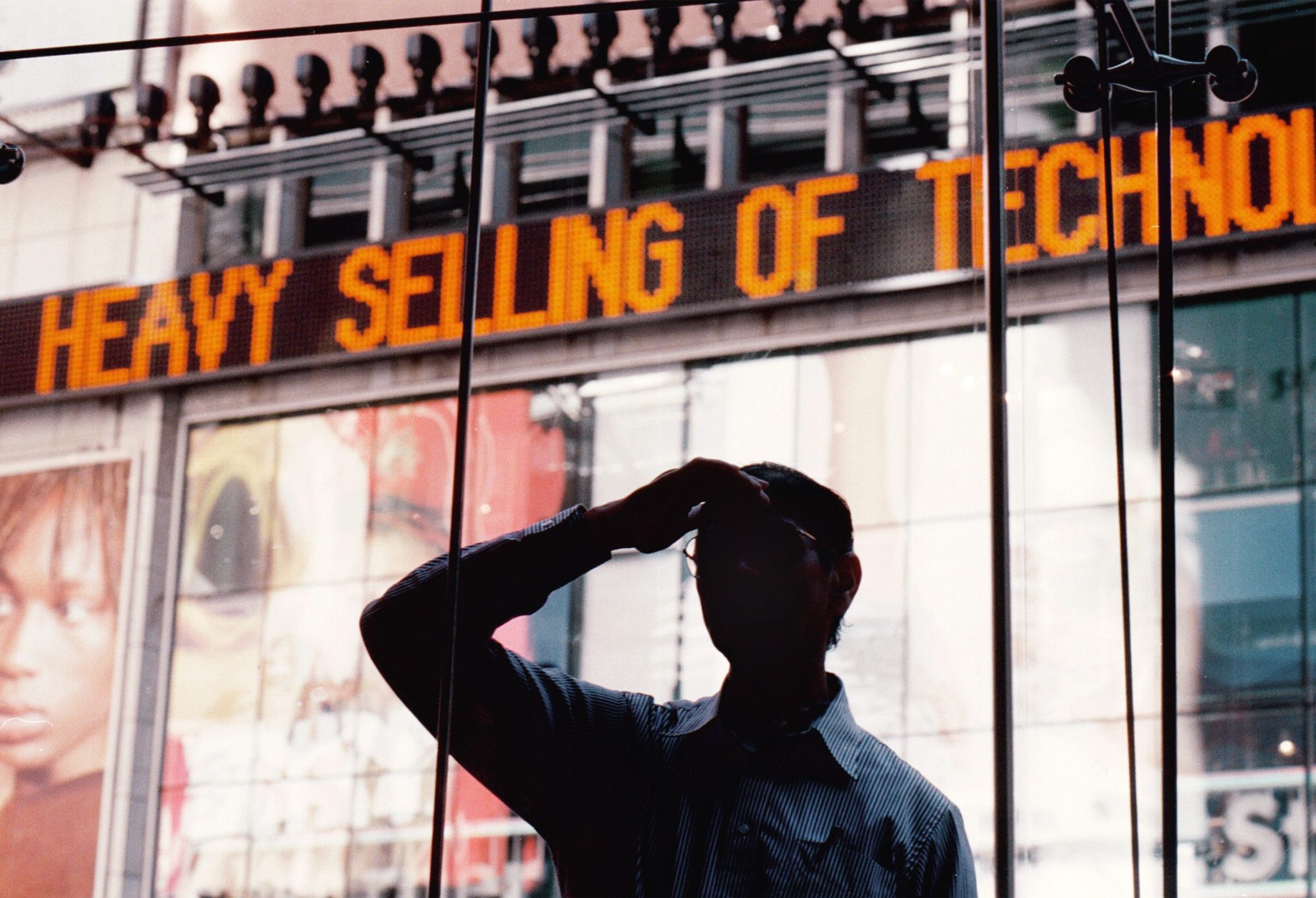
Months of unease over Wall Street’s artificial-intelligence boom erupted into a global market convulsion this week, opening a dangerous new chapter for the investment frenzy that has helped power stock prices, corporate spending and economic growth.
A judge has twice tossed the president’s defamation complaint, which centered on an article about a birthday greeting to the sex offender Jeffrey Epstein.
Wall Street strategists are bracing for the US Treasury to hit against its borrowing limit as early as February, triggering the need for extraordinary measures before it faces a funding crunch in late 2027.
Jonathan Ferro, Lisa Abramowicz and Annmarie Hordern speak daily with leaders and decision makers from Wall Street to Washington and beyond. No other program better positions investors and executives for the trading day than "Bloomberg Surveillance." (Source: Bloomberg)
A rebound in chipmakers buoyed Wall Street as dip buyers emerged despite solid economic readings that reinforced speculation the Federal Reserve will boost rates in December. Max Kettner, Chief Multi-Asset Strategist at HSBC, discusses the AI trade and why it's following market narratives and not market fundamentals. (Source: Bloomberg)
On this episode of Stock Movers: - Moderna (MRNA) shares are gaining after the vaccinemaker boosted its revenue growth guidance for the full year. The firm also posted revenue for the third quarter that beat the average analyst estimate. - Airbnb (ABNB) shares are moving after CEO Brian Chesky said his company is back in “growth mode” after it posted the fastest revenue gain in three years. The company now expects full-year revenue to grow in the “high teens” and lifted its full-year margin forecast for adjusted earnings before interest, taxes, depreciation and amortization to about 36%. - DraftKings (DKNG) shares are sinking after the sports-betting company’s 2027 adjusted Ebitda forecast missed the average analyst estimate. The company also cut its outlook for the current fiscal year, though Wall Street widely expected the reduction. (Source: Bloomberg)
It took around 24 hours for Wall Street’s response to the US midterm elections to turn negative. Once it did, it set in motion a chain reaction of selling that moved considerably faster.
Strategists at the investment bank said the change in expectations is down to the Federal Reserve’s hawkish shift.
Stock-market rout spreads far beyond AI stocks. Plus: First-time homebuyers are paying all-cash. Where’s the money coming from?
Rolling coverage of the latest economic and financial news, as Asia-Pacific markets slide after Wall Street rout Despite the sharp losses suffered on global stock markets around the world, most indices are still up for the year. The Nasdaq Composite index, for example, is still up 4.6% since the start of January – even though it’s more than 10% below its peak. “The tech sell-off has intensified, with the pain of the brutal sell-off on Wall Street carried straight through to Asia and knocking sentiment in Europe. Big worries are colliding – the build-out of data centres looks set to slow, which risks shredding the spending spree underpinning the boom, right at the time that investors have become super nervous about returns on this massive investment. Continue reading...
India, Europe are bright spots for stock investors.
For months, investors have been worrying about a long list of risks to the gravy train of artificial intelligence spending.
Wall Street’s biggest trading desks spent weeks saying the stock-market rally would resume once the election was done. On Thursday, that call backfired spectacularly.
Trump blamed Democrats' midterm wins for Wall Street's massive sell-off, warning Americans on Truth Social that their 401(k)s have dropped.
A sharp sell-off has put a spotlight on the risks facing the AI boom, from heavy spending and borrowing to power constraints and political uncertainty.
Asian stock futures pointed to steep losses on Friday as a post-election rout in chipmakers deepened on Wall Street on growing concerns that Democrats will seek tighter regulation of the artificial intelligence industry.
The fears had shadowed Wall Street off and on for months. Then, all at once, everyone rushed for the exits.
A sharp stock market sell-off sent major indexes tumbling Thursday, prompting financial experts to offer advice for Americans worried about their 401(k) retirement savings.
Bank of America Corp. is combining its global credit macro, fixed income exchange-traded fund, and high-grade corporate bond trading businesses into a single platform as the Wall Street firm looks to streamline credit trading for clients and boost the liquidity it can offer.
A group of Wall Street banks have been tapped to lead a $3.1 billion financing for private equity firm Clayton, Dubilier & Rice and McKesson Corp.’s acquisition of Option Care Health, according to people with knowledge of the matter.
Chip and AI stocks led a delayed selloff on fears new Democratic governors will pause data centers. Analysts split on how long.
Wall Street suffered steep losses as investors reassessed the outlook for the AI boom following Democrats' sweeping midterm election victories.
A punishing selloff in the tech space was dragging the stock market sharply lower on Thursday, one day after equities saw a big bounce after the Democrats swept Tuesday’s midterm vote.
Jonathan Ferro, Lisa Abramowicz and Annmarie Hordern speak daily with leaders and decision makers from Wall Street to Washington and beyond. No other program better positions investors and executives for the trading day than "Bloomberg Surveillance." (Source: Bloomberg)
Wall Street’s top trades of 2026 are coming undone as a violent rotation rattles the U.S. stock market.
Wall Street is digesting the prospect of a slower AI buildout in the wake of the midterm election results.
Wall Street takes a harder look at AI costs after historic midterm results. Plus, the upside to Apple’s lack of artificial-intelligence spending.
Wall Street trading desks are betting that the path of least resistance for stocks is up.