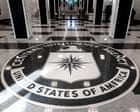
A Table for Fortune by William T Vollmann review – a hugely ambitious 3,000-page portrait of America’s declineThis insider’s history of the CIA explores the last 50 years of US foreign policy with granular detail and mordant humour The 250th year of the American experiment seems to invite a reckoning. For a young country, the United States is overblessed – or burdened – with myths about its foundation and how the nation has conducted itself at home and abroad. William T Vollmann’s 3,000-page novel A Table for Fortune is an epic attempt, 15 years in the making, to engage with the US’s past and present at an institutional and a personal level. The four simultaneously published volumes offer both a family story and an insider’s history of the CIA, in order to show the consequences of the quest for liberty and the belief in American exceptionalism. Vollmann’s previous novels have explored the ideological basis of American society, most notably those of the Seven Dreams series, published from 1990 to 2015, which depict the generally disastrous encounters between American settlers and Indigenous peoples. A Table for Fortune continues this project by investigating the last 50 years of US foreign policy, at the heart of which is 9/11, with the book “tracing the roots of that crime in one direction and its poisoned harvest in another”. Though the CIA has been fertile ground for many great American novelists – Don DeLillo, Norman Mailer – Vollmann is perhaps the first to represent the culture and daily activities of the agency in granular detail. His great gambit is to frame this as a dark workplace comedy of minor resentments, sexual tension and office banter. These sections are narrated by the institutional voice of the CIA itself in a relentlessly sardonic tone rife with acronyms, codenames and jargon rendered in multiple fonts. The mordant humour of the narrator, who regards all forms of death and suffering as “ fun ”, has a seductive quality that allows Vollmann to educate the reader about a broad sweep of geopolitical subjects ranging from the Angolan civil war to the interroga
The Guardian · Nov 4