A University of Glasgow spinoff has developed a handheld device that uses ozone generated from fresh air to tackle one of the most persistent and overlooked sources of hospital infection—contaminated sink drains.
Music therapy before and during an often stressful procedure to visualize blood flow to coronary arteries (coronary angiography) is associated with lower systolic blood pressure—the higher number in a reading—according to the results of a comparative clinical trial published online in the journal Heart.
When it comes to medical imaging, everyone wants better technology faster—but no one wants to cut corners on health and safety. Enter a new statistical tool that determines whether AI-generated data could accurately stand in for patient data in clinical trials.
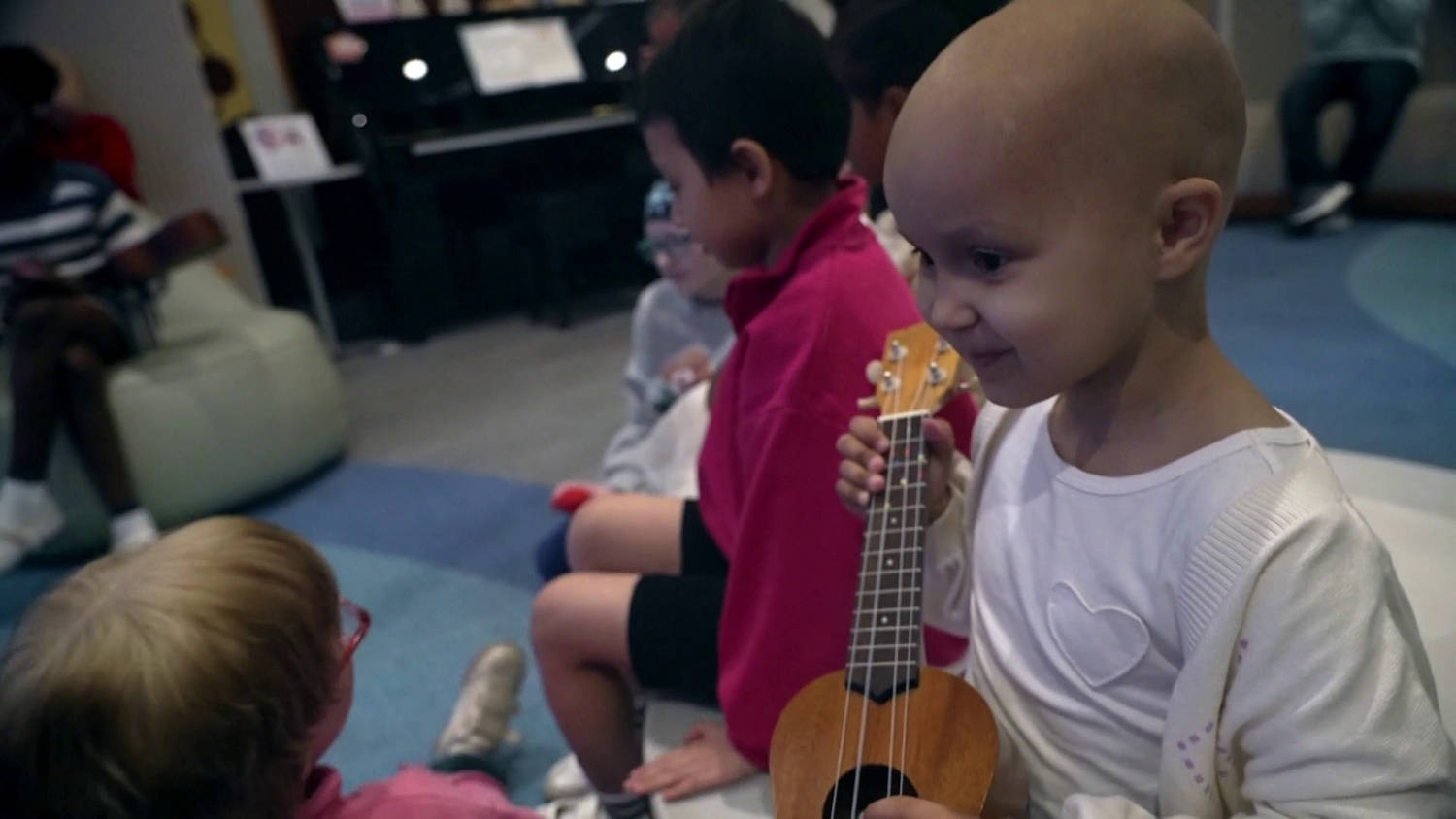
At St. Jude Children’s Research Hospital, music is used everyday to help young patients through some of their toughest moments. Amy Love, who launched the music therapy program at the hospital, leads activities that provide comfort and care traditional medicine cannot. NBC’s Priscilla Thompson joined Amy and the hospital’s national outreach director Marlo Thomas for TODAY’s Thanks and Giving series to see firsthand how music is being used as medicine.
At St. Jude Children’s Research Hospital, music is used everyday to help young patients through some of their toughest moments. Amy Love, who launched the music therapy program at the hospital, leads activities that provide comfort and care traditional medicine cannot. NBC’s Priscilla Thompson joined Amy and the hospital’s national outreach director Marlo Thomas for TODAY’s Thanks and Giving series to see firsthand how music is being used as medicine.
The heart gives warning signs. It does so through small electrical variations—signals so subtle that until now they have gone unnoticed among the millions of data points generated by implantable defibrillators. Today, thanks to remote analysis of the cardiac signal, these whispers can become an early warning.
When speech and music overlap or occur in rapid succession, listeners can recognize both almost instantaneously. Researchers have wanted to understand why this happens for a while. Now, a new study, published in Science Advances, corroborates previous findings that suggest the brain's auditory cortex differentiates between speech and music using patterns that describe how acoustic energy changes over time and across frequencies. The new study suggests these processes are sufficient to do the job under normal listening conditions—which, in this study, involve the Harry Potter soundtrack.
AI-generated discharge summaries can meet, and in some respects exceed, current standards of care, according to new research led by iCARE (Imperial Clinical Analytics, Research and Evaluation).
A new international Diabetes Data Rights Charter is calling for people with diabetes to have far greater control over the health data generated by 24/7 diabetes monitoring devices.
We all know the joy of hearing a song we love. It can be a physical experience, as we tap our toes or sing at the top of our lungs. Or it can be emotional, lifting our mood or conjuring long-buried memories.
AI-generated interpretations of echocardiograms were comparable in accuracy to preliminary interpretations prepared by ultrasound technicians (sonographers) and cardiologists. The assistance of AI preliminary interpretations also reduced the time cardiologists spent interpreting each scan by almost half. All of this is according to new, independent, preliminary late-breaking science presented Monday at the American Heart Association's Scientific Sessions 2026 in Chicago.
Singing in a choir strengthens breathing capacity, decreases depression and anxiety, and improves perceived school functioning in children born with a single heart ventricle, according to a feasibility study from Ann & Robert H. Lurie Children's Hospital of Chicago published in Pediatric Cardiology. This intervention, including in-person and online singing and breathing instruction, was developed and trialed in collaboration with Northwestern University Bienen School of Music.
Imagine sitting down with your family at a restaurant. Conversations at your table overlap with those of patrons seated nearby. Utensils clink on plates. Waitstaff weave between tables. Music plays overhead.
Every dollar spent on COVID-19 vaccine development and distribution generated an estimated $81 to $810 in economic value during the first year that vaccines were given, according to new research published in the journal PLOS Medicine.
What happens in the brain when sensory stimulation continues over time—for example, while jogging, reading or listening to music? Sensory input activates specific groups of neurons, increasing their demand for oxygen and nutrients. In response, nearby blood vessels dilate and increase blood flow, a process known as neurovascular coupling. Although astrocytes—star-shaped non-neuronal cells in the brain—have long been thought to participate in this process, exactly how they contribute has remained unclear.
A new randomized clinical trial from Toronto Metropolitan University (TMU) found that listening to just 24 minutes of personalized music paired with auditory beat stimulation (ABS) lowered levels of the stress hormone cortisol more than twice as much as pink noise, a popular sound used for relaxation. Yet participants reported feeling equally calm after both.