TopNewsOn

Results for “don toliver”

Custom MRI tool could show within weeks if pancreatic cancer treatment is working

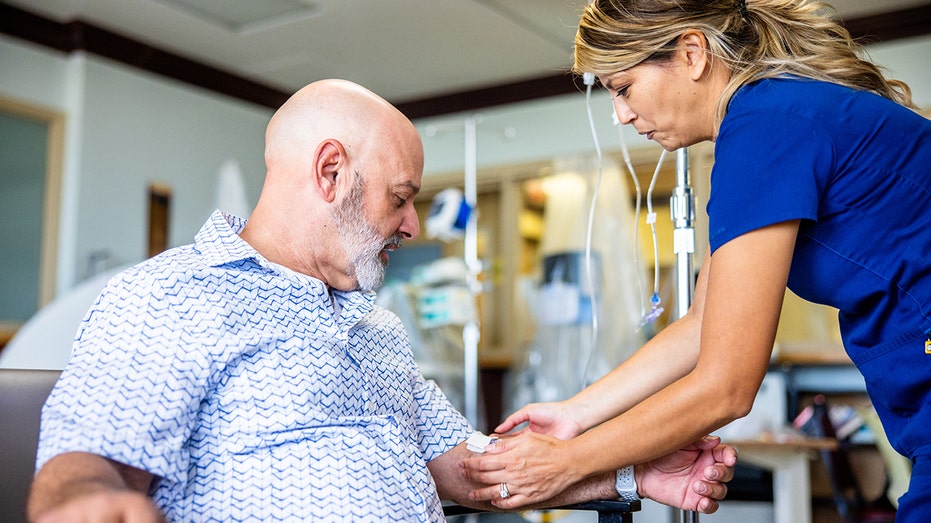
About 60% of people diagnosed with pancreatic cancer don't qualify for surgery because their disease is too advanced. For these patients, treatment typically begins with chemotherapy, in the hope that the tumor will shrink enough to be surgically removed, which offers the best chance of long-term survival. A new clinical trial at The Ohio State University Comprehensive Cancer Center—Arthur G. James Cancer Hospital and Richard J. Solove Research Institute (OSUCCC—James) is testing a custom imaging tool designed to measure much earlier whether that chemotherapy is working, so treatment can change quickly if it is not.

Medical Xpress · Nov 20
Paramedics need time and support to recover between emergency calls

When a paramedic arrives at your door, they may have come straight from someone else's emergency. "I don't know how you do your job," people often tell me. I think about how little time there can be to take in what's happened on one call before the next one comes in.

Medical Xpress · Nov 20
A new tool to predict T cell behavior and improve immunotherapies

T cells are the trained killers of the immune system and the driving force behind cancer immunotherapy. But the behavior of T cells is hard to predict: Some spring into action when prompted, while others become lethargic and aimless. This puzzling inconsistency is one of the main reasons immunotherapies don't work in most cancer patients.

Medical Xpress · Nov 17
Why don't GLP‑1 obesity drugs work for everyone?

Medications like Ozempic and Wegovy, which contain semaglutide—a GLP‑1 receptor agonist that helps regulate blood sugar, appetite and body weight—have become household names and important pillars in obesity management for the medical profession.

Medical Xpress · Nov 17
Three decision-making styles emerge when people weigh probability words against numbers, researchers report

We don't all understand the same words in the same way, and this can affect the choices we make, according to researchers including those from the University of Tokyo. A team sought to compare how people with an autism spectrum disorder (ASD) and people without ASD interpret probability terms. They found that people with and without ASD could be divided into three groups of decision-makers, whose judgment varied depending on the relative influence of positive or negative framing and the numerical probabilities they inferred from verbal expressions. This work highlights the importance of dialogue to check whether people have understood information as intended and to support informed decision-making.

Medical Xpress · Nov 12
Language barriers may keep families from introducing peanuts early

Feeding peanut products to infants early in life is one of the best tools doctors have to help prevent peanut allergy. A new study being presented at the 2026 Annual Scientific Meeting of the American College of Allergy, Asthma and Immunology (ACAAI), held Nov. 12–16 in Phoenix, suggests that families who don't speak English may be missing out on this protection. The study has also been published in Annals of Allergy Asthma & Immunology.

Medical Xpress · Nov 12
Insurance delays and denials mean kids don't get allergy and asthma medications

When a child's severe asthma, eczema, hives or food allergy isn't under control, an allergist may prescribe a newer type of medicine called a biologic. But a new study being presented at the American College of Allergy, Asthma and Immunology (ACAAI) 2026 Annual Scientific Meeting finds that getting insurance to pay for these medicines can take weeks, and many requests are turned down.

Medical Xpress · Nov 12
Nonprofit hospitals' financial assistance policies often don't reflect community need, study finds

Nonprofit hospitals in communities with the greatest financial needs offer eligibility for free care similar to that offered by hospitals in less disadvantaged communities, according to a new national study from Tulane University researchers. The study, published Nov. 2 in Health Affairs, analyzed 10 years of Internal Revenue Service data from more than 1,600 nonprofit hospitals.

Medical Xpress · Nov 9
Bill Would Allow AI to Prescribe Drugs

This is a MedPage Today story. Artificial intelligence (AI) could be used to prescribe medications to patients -- if a new bill makes its way through Congress. The proposed legislation, sponsored by Rep. David Schweikert (R-Ariz.), would amend the Federal Food, Drug, and Cosmetic Act to clarify that AI and machine learning technologies can qualify as a practitioner eligible to prescribe drugs if authorized by the state involved and approved by the FDA. The bill was introduced in the U.S. House of Representatives and referred to the House Committee on Energy and Commerce in January. But Adam Rodman, MD, MPH, a hospitalist and director of AI programs at Beth Israel Deaconess Medical Center and assistant professor at Harvard Medical School in Boston, told MedPage Today that the technology is not nearly where it needs to be for this kind of prescribing. However, "[t]hings are accelerating so quickly," he added, "I don't doubt that we will be having this conversation," at some...

ABC News · Feb 16

RFK Jr. Made These Promises to Win Key Senator's Vote

This is a MedPage Today story. Sen. Bill Cassidy, MD (R-La.), said he received numerous pledges from Robert F. Kennedy Jr. and the Trump administration to protect medicine and science -- particularly regarding vaccines -- that clinched his support for the HHS secretary nominee. Cassidy said Kennedy and the administration promised an "unprecedentedly close collaborative working relationship" that includes the two of them meeting or speaking "multiple times a month." They also said that Kennedy could appear before the Senate Health, Education, Labor and Pensions (HELP) Committee -- which Cassidy currently chairs -- quarterly if requested. Most of the pledges revolved around vaccines, including that Kennedy will work within current approval and safety monitoring systems, and not establish parallel systems. He'll also maintain recommendations from CDC's Advisory Committee on Immunization Practices (ACIP) without changes, and statements that vaccines don't cause autism won't be...

ABC News · Feb 9