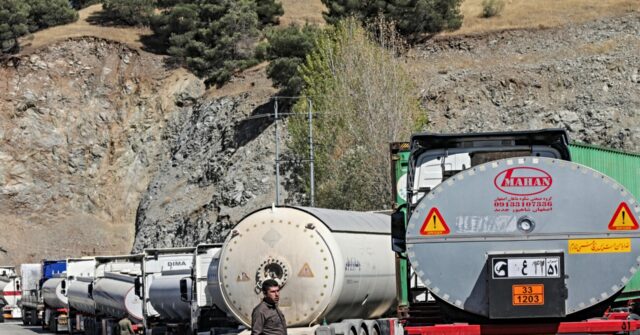
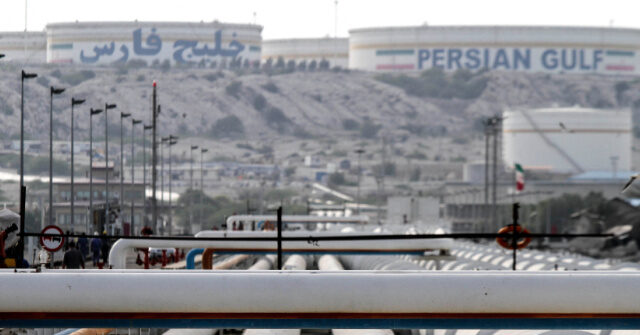
Iran warns Iraq against becoming Trump’s ‘instrument’ amid border crackdown (opens Al Jazeera in a new tab)
Iraq's unofficial border crossings are part of a broader campaign to combat oil smuggling.
Al Jazeera · 3h ago

Iraq's unofficial border crossings are part of a broader campaign to combat oil smuggling.
Kyiv’s forces attacked the independent Novoshakhtinsk oil refinery in Russia’s southern Rostov region, triggering a fire at the facility, Ukraine’s General Staff said on Telegram.
Argentina's bid to temporarily block oil drilling off the nearby U.K.-held Falkland Islands was rejected Saturday by an international tribunal that rules on maritime disputes. The post Argentina Loses Bid to Halt Oil Drilling Off Nearby British Falkland Islands appeared first on Breitbart .
A United Nations-backed court rejected a request by Argentina seeking to halt a UK oil project near the Falkland Islands.
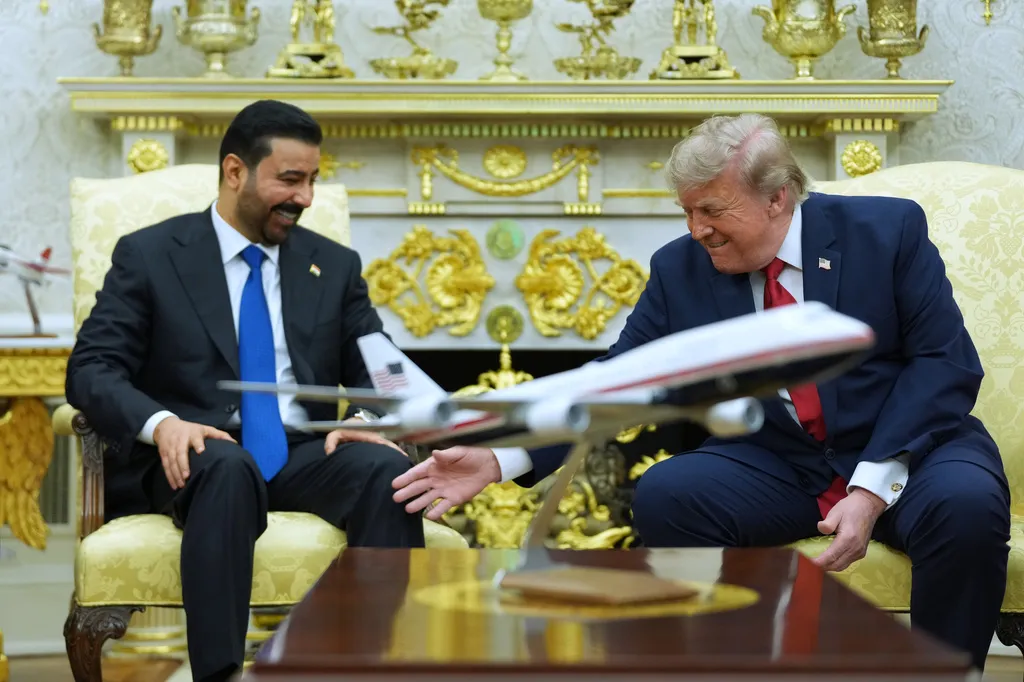
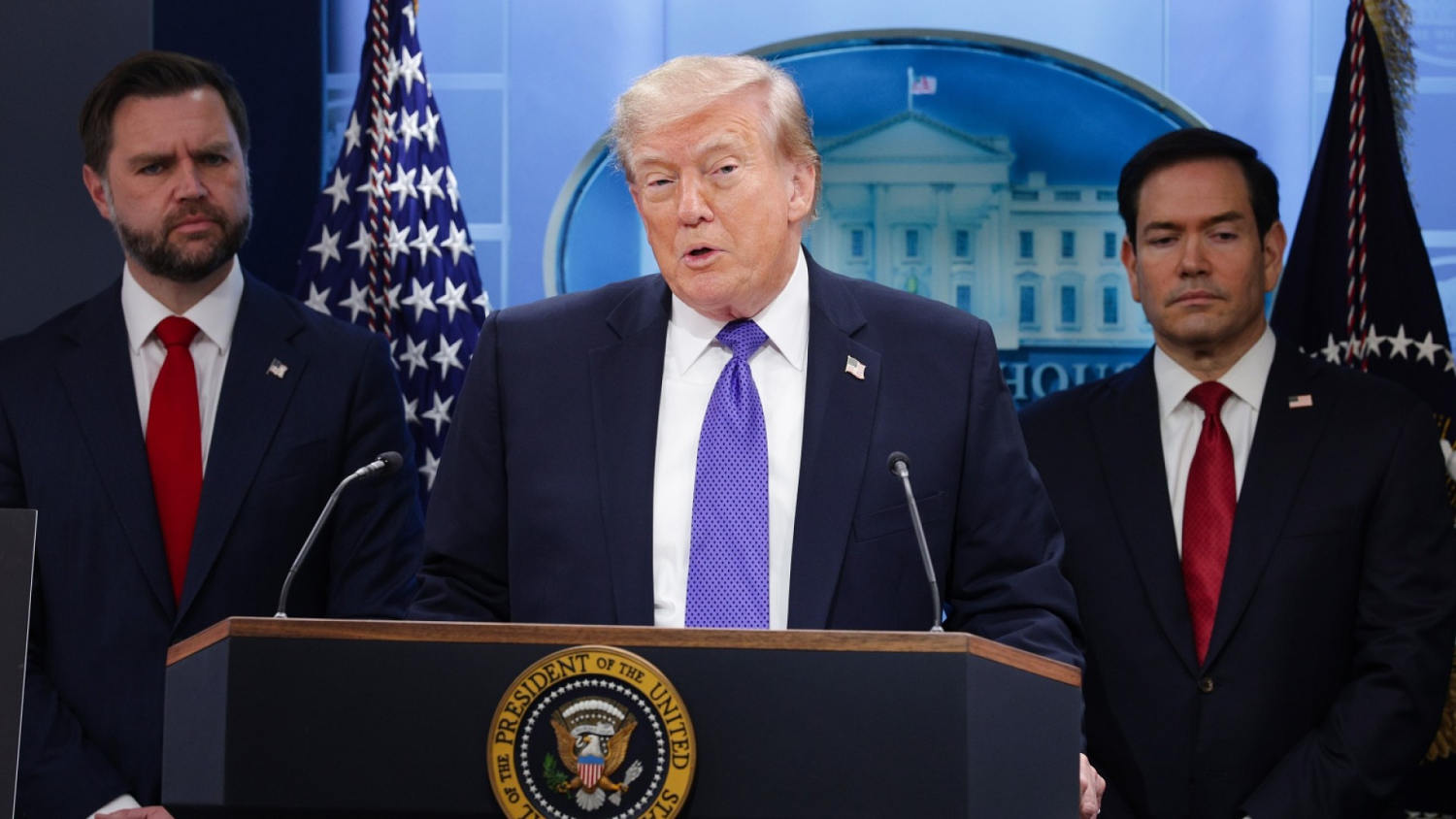
President Donald Trump expressed support Friday for Iraqi Prime Minister Ali al Zaidi’s assertion of state authority that centers on an anti-corruption campaign and includes consolidating the nation’s oil and weapons under state control. “We support Iraqi Prime Minister Ali al-Zaidi’s efforts to assert state authority throughout Iraq, stop the smuggling of Iraqi oil, end […]
Truck drivers associated with a major union in Iran entered their sixth day of a strike on Friday, reports from independent and dissident media shared, significantly threatening supplies for everything from farms to groceries to factories. The post Iran Trucker Strike Enters Sixth Day, Triggered by High Oil Prices and Rampant Inflation appeared first on Breitbart .
Baghdad closes border crossings as Kurdish authorities warn of constitutional violations and call for meeting.
Controversial decisions over a North Sea oil field and one of the world’s biggest airports are threatening to shake the unity that Prime Minister Andy Burnham has brought to Britain’s ruling Labour Party.
Oil is on track for its first weekly gain this month as attacks on energy infrastructure and tankers in the Middle East raised concerns escalating hostilities could disrupt exports. Separately, a drone attack on Kuwait killed two Italian civilians and injured two others Thursday, with the Gulf nation blaming Iran for the strike on what its military described as a “vital” facility. Bloomberg's Stuart Livingstone-Wallace has the details. (Source: Bloomberg)
On a call to soldiers deployed to the Gulf, Donald Trump claimed that the US does not ‘need Middle East oil'.
Alberta raised its projected surplus for the current fiscal year to C$8.5 billion ($6 billion) as the lingering war in Iran keeps oil prices elevated.
‘prepared for the Environmental Law Institute’
Energy Secretary Miatta Fahnbulleh is due to make a decision on whether to give the go-ahead for drilling in the oil field off the north-west coast of Shetland within weeks.
Venezuela's socialist regime on Tuesday announced that it signed a $400 million service order agreement with British multinational Shell to boost the country's crude oil and gas output capabilities. The post Venezuela Signs $400M Service Order Agreement with Shell appeared first on Breitbart .
Ukrainian Foreign Minister Andrii Sybiha told Russian President Vladimir Putin to “stop complaining” about attacks on oil refineries following tit-for-tat attacks between the countries targeting energy-related targets. “If Putin doesn’t like Ukraine’s strikes on his oil refineries, he can order an end to the war. If he doesn’t want his military vessels hit, he can…
On the early edition of Balance of Power, Bloomberg Washington Correspondents Joe Mathieu discusses the latest from DC. On today’s show, Taxpayers for Common Sense President Steve Ellis, Stonecourt Capital Partner Rick Davis, Harvard Kennedy School Ash Center Visiting Democracy Fellow Jeanne Sheehan Zaino and Gulf Oil Chief Energy Advisor Tom Kloza. (Source: Bloomberg)
Beijing is losing its foothold in infrastructure, oil interests, minerals, debt and military presence — and its primary geopolitical ally — in the United States’ own backyard.
Sen. Maggie Hassan (D-N.H.) is demanding answers after a report alleged Vice President Vance had a connection to a major energy company, which got a license to sell Venezuelan oil soon after the U.S. captured the country’s president. Hassan, the incoming chairwoman of the Senate Homeland Security and Governmental Affairs Committee, said in a letter…
Iran’s Islamic Revolutionary Guard Corps (IRGC) on Monday said three oil tankers escorted through the Strait of Hormuz were hit by underwater mines. The IRGC Navy’s Public Relations Office told the state-run Fars News Agency that one of the tankers was near the country’s southern coast while the other two were hit in the eastern…
In a discursive speech that touched on the coronavirus, Venezuela, oil flows, the stock market and Ukraine, Trump pardoned two turkeys ahead of the Thanksgiving holiday.
Colombian President Abelardo de la Espriella vowed revenge on the perpetrators of a car bomb attack that devastated the regional government headquarters in the nation’s biggest oil-producing province.
Moscow will respond to Ukraine’s ongoing attacks on oil refineries, with the situation on Russian domestic fuel market remaining challenging, according to President Vladimir Putin.
The Iran-backed Houthi insurgents of Yemen on Sunday claimed an attack on Petro Rabigh, a major oil refinery and petrochemical complex on the Red Sea coast of Saudi Arabia. The post Houthis Claim Attack on Major Saudi Oil Refinery appeared first on Breitbart .
The United States is investigating whether Iran is behind a wave of cyberattacks targeting commercial ships carrying energy products and other possibly hazardous cargo, raising concerns that Tehran could be expanding its campaign against U.S. interests well beyond the Middle East. As many as 50 vessels carrying oil, liquefied petroleum gas, chemicals, and other potentially […]
Last week, President Donald Trump traveled to the ASEAN summit in the Philippines. Most commentators have emphasized what the trip means for our relationship with China, but the president’s most telling remarks focused on our own backyard. In his bilateral meeting with Philippine President Ferdinand Marcos Jr. in Manila, Trump noted that the United States […]
In 1867, Secretary of State William Seward purchased Alaska from Russia for $7.2 million, or roughly 2 cents an acre. Contemporary critics mocked the acquisition as an empty icebox, yet within decades the territory delivered gold, oil, and the strategic depth that still shields America’s northern approaches. That same geopolitical logic now applies across the […]
Federal officials are investigating whether Iran was behind dozens of recent cyberattacks on energy tankers. They fear the Islamic Republic is expanding the conflict far beyond the Middle East, using hacking operations and terror schemes aimed at Americans, The Wall Street Journal reported Monday. As many as 50 vessels hauling crude oil, liquefied petroleum, chemicals, ...
A US senator is investigating the role Vice President JD Vance played in awarding a lucrative Venezuelan oil contract to a political donor and then-executive at commodities trader Vitol Group.
As many as 50 ships carrying oil and other explosive substances are believed to have been attacked, U.S. officials said.
The conflict in the Middle East continued over the weekend, with Iran attacking Bahrain again and Tehran-backed Houthi militants targeting Saudi Arabia. Despite the hostilities, the oil supply outlook remains robust. Bloomberg's Stuart Livingstone-Wallace breaks down the situation. (Source: Bloomberg)
Iran reportedly positioned 14 tankers at Kharg Island to breach the U.S. blockade, as President Donald Trump dared Tehran to test American naval forces in the Gulf.
A number of ports across the U.S. are reporting an onslaught of cyberattacks amid a growing number of AI-enabled attacks targeting notable infrastructure. The Port of Corpus Christi, Texas, which functions as the U.S.’s largest passage of oil exports, said it was targeted with “hundreds if not thousands” of attacks per day, according to reporting from…
Iran has amassed more than 14 tankers at its most crucial crude-oil export terminal to try to get its money-maker flowing again despite a US naval blockade, a new report said — but experts doubted the claim.
President Donald Trump reportedly favors intensifying the economic campaign against Iran over renewed major military strikes, with Washington seeking to choke off the regime’s remaining oil-export routes as Tehran struggles under the weight of the American blockade. The post Report: Trump Favors Economic Stranglehold on Iran Over Renewed Major Strikes appeared first on Breitbart .
Somewhere in America, someone who joined a little-known artificial intelligence startup five years ago is looking at a stock portfolio that would have sounded like a practical joke when they accepted the job. They didn’t win the lottery. They didn’t inherit an oil empire. They helped build a business that people wanted to invest in. […]
A permitting reform bill in the Senate could help speed the development of renewable energy projects, but it's splitting environmentalists over other provisions that help the oil and gas industry.
The first Democrat in 36 years to win a seat on the commission that governs the oil and gas industry in Texas said he plans to work with his Republican colleagues to speed up permitting in the state.
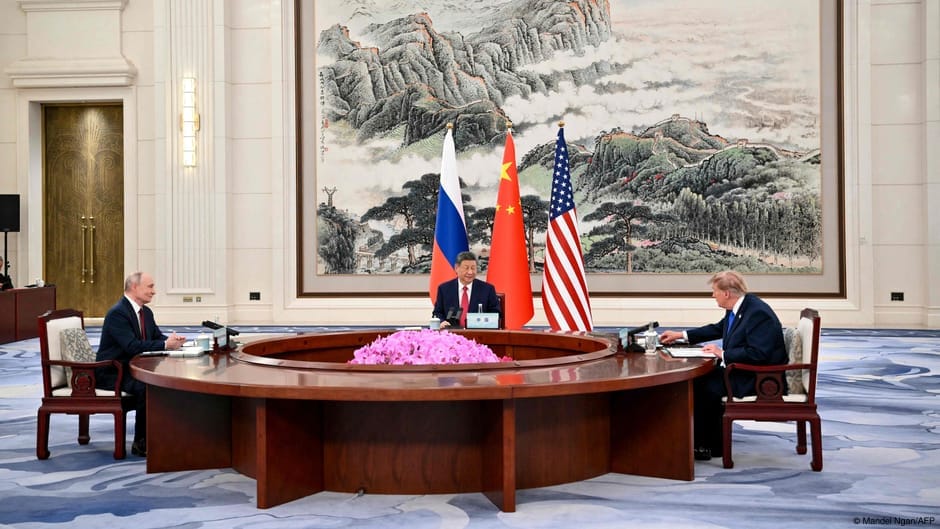
President Trump holds a press conference following his meetings with the leaders of China and Russia as the stock market closes in correction territory. NBC News’ Kelly O’Donnell, Brian Cheung and Richard Engel break down the President’s comments and the state of the economy.
President Donald Trump says he would launch the war against Iran again, as JD Vance blames midterm losses on voter anger over the conflict and oil prices.
President Donald Trump didn’t hold back at his press conference on Friday, questioning the severe plunge in oil prices immediately after Republicans lost heavily in the midterm elections. Crude oil has tanked hard since the November election, a development that Trump says would have been nice to have “in front of the election.” “Crude oil ...
Venezuelan opposition leader María Corina Machado wants to reshape the country’s energy industry even beyond the dizzying changes it has undergone this year, signaling a more critical role for private industry should she clinch the presidency.
The Senate passed a sweeping, bipartisan bill Thursday night that's designed to cut permitting timelines for energy and infrastructure projects. Why it matters: The eyes of the entire energy industry are on this bill. If it becomes law, it could transform how America builds energy infrastructure, with major implications for everything from electricity costs to data centers. Getting rid of bureaucratic hurdles and creating a more predictable process for energy projects is a top priority for the fossil fuels and renewables sectors. But critics argue the plan, which has White House support, would unacceptably weaken environmental protections and the rights of Native American tribes. Driving the news: The vote was 62-33. The bill would still have to pass the House before the end of the year, and any differences would have to be worked out by both chambers before President Trump could sign it into law. Catch up quick: It would make significant changes to federal permitting, including: New limits on the duration of lawsuits, and the scope and length of reviews under the Clean Water Act and National Environmental Policy Act. Language that would make it more difficult to revoke permits once they're issued, a priority for renewables groups and Democrats upset with Trump administration barriers. State of play: There are also provisions to ensure that data centers pay for needed grid upgrades, and expand federal authority over the siting and approval of certain interstate transmission projects. Friction point: Many environmental advocates argue that the bill would dangerously erode safeguards in the National Environmental Policy Act and other laws. Multiple tribal groups still oppose it despite changes aimed at easing concerns about consultation on historic preservation. Energy and business groups, ranging from renewables developers to manufacturers to the oil and gas industry, are lobbying for the measure. The AFL-CIO and many individual unions back it, too. What's next: The
US Energy Secretary Chris Wright speaks with Bloomberg's Joe Mathieu and Kailey Leinz from Warsaw. Wright says Russia and China are "absolutely very significant competitors of ours." He says in many areas, they are outright adversaries. Wright says Europe won't go back to buying Russian energy. He also talks about the flow of oil around the world, sanctions, and need for more nuclear energy in the US. (Source: Bloomberg)
The foreign minister of Iran issued an aggrieved condemnation of "foreign interference" on Thursday as the leaders of China, Russia, and America concluded a historic trilateral meeting addressing some of Iran's top foreign policy concerns. The post Iran Rails Against ‘Foreign Interference’ After China, Russia, U.S. Unite on Oil and Nuclear appeared first on Breitbart .
If the sweeping Senate permitting bill becomes law, it will reflect a rare convergence of political and market forces strong enough to trump the Beltway aversion to big, bipartisan deals. Why it matters: The bill could transform how America builds energy infrastructure, with major implications for everything from electricity costs to data centers. Getting rid of bureaucratic hurdles for energy projects is a top priority for the fossil fuels and renewables sectors. But critics argue the plan would unacceptably weaken environmental protections and the rights of Native American tribes. The latest: A vote on final passage of the White House-backed bill could occur Thursday after the Senate plows through some more amendments. The big picture: Many industries — pipelines, transmission, housing, you name it — call permitting a long bureaucratic and judicial maze that stymies projects. Yes, but: That, on its own, isn't nearly enough to get this far. Here are other reasons the bill has a path to becoming law after years of failed efforts to upend permitting. 🗳️ The cost-of-living election. The midterms were soaked in affordability politics at a time of rising energy bills. While critics can call the projected savings modest, cost is politically front and center. The Rhodium Group estimates that big provisions it analyzed would cut average residential power prices by 3%-4% in 2035. Third Way, a group that favors the bill, supported the research firm's work. 📈 Rising electricity demand. U.S. power thirst has been rising in the last few years after staying largely flat for decades, driven partly by AI and wider electrification of the economy. 🦋 A maturing clean energy industry. As sectors like renewables and storage become more mainstream, " more developers and companies are seeing the real-world challenges" of doing projects, clean energy lobbyist Jeff Navin notes via email. That puts them in agreement with utilities and oil and gas companies. "They all run into problems ge
President Trump, Chinese President Xi Jinping and Russian President Vladimir Putin issued a four point “peace declaration” following their unprecedented summit in China on Thursday. The world leaders addressed United Nations reform, oil production and supply, the International Criminal Court and nuclear conflict, according to text released by Russia and China. The declaration states that as…
As Donald Trump seeks to tighten economic pressure on Iran, China remains its biggest oil customer and Russia a key partner. But both powers are balancing support for Tehran against broader interests with Washington.
The US government’s $100 billion deal with a controversial Venezuelan oil baron needs scrutiny, but a long-term partnership with Washington is nevertheless critical for Caracas, said opposition leader María Corina Machado.
Ukraine's military says its strikes hit a key oil refinery in Russia's Krasnodar Krai region ahead of President Donald Trump's meeting with Vladimir Putin.
GOP lawmakers are rushing through high-priority bills before newly elected Democrats are sworn in Climate groups fear lawmakers could pass a bill by the end of the year that would give fossil fuel companies immunity from lawsuits and legislation that aims to hold them accountable for the climate crisis. After the blue wave election, Republican lawmakers are rushing to pass high-priority bills before newly elected Democrats are sworn in. Hundreds of elected leaders and climate groups sent a letter to Democratic leadership urging them to reject any proposal that would shield fossil fuel companies from liability for the climate crisis. Continue reading...