When completing tasks or acquiring information, humans can be driven by intrinsic and extrinsic motivations. The term intrinsic motivation entails doing something because it is interesting to us or we find it enjoyable, while extrinsic motivation means doing it to obtain a reward, such as money, praise or a good grade.
Shoppers are more likely to buy products and pay more for them when they adopt a "collecting mindset," according to new research co-authored by Bayes Business School (City St George's, University of London).
Kazakhstan has hundreds of plant species found nowhere else in the world. Many have been known to botanists for decades, described in floristic publications and held in herbarium collections. Yet knowing that a plant exists is different from having the information needed to judge its prospects for survival.
Researchers are constantly getting closer to making practical quantum computers. Now, a team of researchers has overcome another hurdle in the process. Their study, published in Physical Review Letters, describes a new platform for manipulating entangled atomic networks in measurement-based quantum computation—a process usually hindered by difficulties manipulating only one atom or one group of atoms at a time.
Being the one everyone turns to at work may seem like a privileged position. You know the right people, receive important information and take part in decisions. But there is a hidden cost: messages pile up, requests keep coming, meetings overlap and concentrating on your own work becomes increasingly difficult. Eventually, paradoxically, the very people most involved in company life may begin to want to leave.
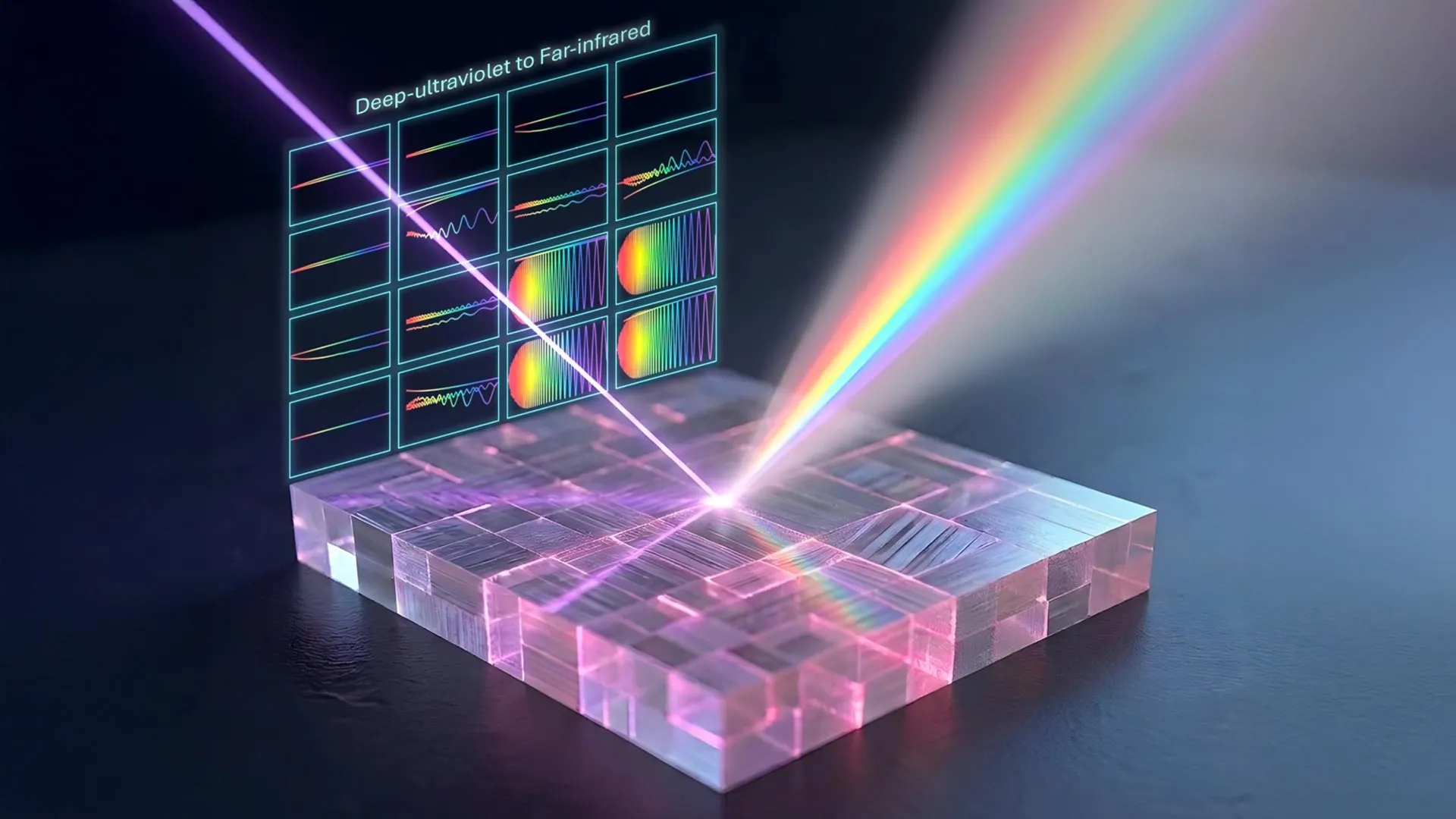
When light interacts with a material, a small part of it gets scattered with a different energy. This change can reveal information about the molecules within the material based on their unique molecular fingerprints. This phenomenon, which earned physicist C. V. Raman the 1930 Nobel Prize in Physics, forms the basis of Raman spectroscopy, a widely used technique for studying the chemical composition of materials.
University of Texas at Dallas researchers have developed a method for securely storing data in the DNA of living human cells while protecting the information from unauthorized access. The researchers describe the technology in a paper published online Oct. 21 in Nature Communications.
What makes people support a carbon price? To find out, 108 researchers, led by a research team at the University of Innsbruck, Austria, tested 55 different ideas at the same time, from information campaigns to reflection tasks. On average, there was a small but statistically significant positive effect. Individually, the effect was detectable for only 11 of the 55 ideas. One of the strongest effects came from writing a letter to a fictional person of a future generation. The results were recently published in the journal Nature Human Behaviour.
The diversity of species in a habitat is a common focus of conservation efforts. Local biodiversity has been shown to influence important ecosystem functions like pollination and pest control. In this study, Kumar and colleagues investigated the impact of diversity on the flow of ecological information in the form of defensive bird calls.
Cornell researchers have found a novel way to boost immunity against cancer: using ancient virus-derived machinery to produce tiny extracellular vesicles that carry antigen information across long distances to rally immune cells.
Myanmar amber (more commonly known as "burmite") is one of the most important sources of information about biodiversity during the Mesozoic Era. This amber dates back to the age of the dinosaurs and is approximately 99 million years old. Burmite preserves numerous now-extinct organisms (animals, plants, fungi, etc.) as inclusions, often in astonishing detail. This is because amber can preserve even soft tissues, which would otherwise decompose rapidly, and do so in three dimensions.
Wasps can recognize the faces of their nestmates, much like humans can tell the difference between mom and dad, friend and foe. Now, new research from Wake Forest University shows how the wasp brain makes those distinctions. The finding, said Christopher Jernigan, assistant professor of biology, offers additional perspectives in understanding how animals across species—even humans—process social visual information to distinguish one face from another.
Predicting how molecules interact is central to drug discovery: it offers important information about how a new drug might work in the human body, the side effects it can cause and more. Computationally modeling these interactions can reduce the need for lengthy and expensive lab work, but some interactions still remain beyond the reach of classical computers.
A promising material for ultra-fast optical communications has held a secret for decades, but scientists may have finally cracked it. Researchers at KAIST and Caltech have precisely measured how barium titanate controls and absorbs light, resolving longstanding uncertainties that have slowed its development. Their findings could make it easier to build optical devices that transmit information faster while wasting less light.
Gamified features in mobile payment applications may significantly increase adoption among consumers in emerging economies, with men and women responding in almost identical ways, according to research published in the International Journal of Business Information Systems.
Researchers recently used multispectral imaging technology to try to uncover hidden information from medieval manuscripts at the Rare Book and Manuscript Library at the University of Illinois Urbana-Champaign. The library hosted a digital imaging workshop in early October that served as a pilot study for how the technology can help analyze fragile, centuries-old documents.
A research team at the University of Potsdam has conducted a field experiment to investigate whether contact through social media can reduce prejudice. The findings suggest that following an unfamiliar Instagram profile for just three days can lead to more favorable attitudes—not only toward the group represented by the profile. The study was published in the Journal of the Association for Information Systems.
Among the thousands of chemicals used in daily life, toxicity information is available for only a small fraction. Much of this information comes from high-dose animal studies, which are costly, time-consuming and limited by species differences.
In the business world, knowing the right people is often considered a passport to success. A well-connected professional can introduce colleagues to new clients, bring together experts from different departments or create collaborations that would otherwise never happen. But there is a catch: The people best positioned to connect others may also be the ones others are least inclined to trust.
AI companions could help reduce loneliness by creating a greater sense of belonging and improving self-esteem, according to new research from Durham University Business School.
Plant scientists know that what grows above the soil doesn't offer enough information to understand an entire plant community. Different species contribute differently to belowground biomass, and those differences matter for soil health and ecosystem functioning. However, digging up roots to separate and identify them by species, especially when many plants are growing together underground, can be difficult and time-consuming, according to a team of researchers in the College of Agricultural Sciences at Penn State.
Many people believe there are obvious ways to spot a liar without listening to a word they say, such as shifty glances and nervous fidgeting. Psychologists, however, are increasingly looking past these supposed telltale signs, which aren't necessarily reliable, toward subtler, involuntary clues that can be harder to detect.
Food waste depends not only on what people do but also on how refrigerators and packaging are designed. This is the conclusion of a study from Linköping University (LiU) in Sweden. Information campaigns are not enough. Refrigerators and packaging must also be designed based on how people actually behave, according to the researchers.
Writing is one of the most important inventions in human history. It transformed how we share knowledge, communicate and pass information from one generation to the next. But has it also changed the way we build sentences and the complexity of our languages?
Benjamin Barber IV, Gianluigi Giustiziero and Simon Weschle examine a little-studied form of corporate political activity: firms providing regulators with information about rivals' potential violations. The research is published in the Strategic Management Journal.
Quantum technologies, devices and systems that process, store, transfer or collect information leveraging the laws of quantum mechanics, could outperform their classical counterparts on some real-world tasks. Many of these technologies encode quantum information in qubits, which can exist in either of two basic states or a superposition of them.
Intense laser light can make a crystal emit new colors at frequencies many times higher than that of the original beam. This process, known as high-harmonic generation, provides a powerful way to investigate the rapid motion of electrons in solids. Researchers usually study the brightness and spectrum of the emitted light. Yet those measurements capture only part of the available information. Fluctuations between individual laser pulses can also reveal how the emission is produced.
Quantum technologies, devices that can process, store or collect information leveraging the laws of quantum mechanics, could potentially outperform their classical counterparts on some tasks. Yet these devices are highly sensitive to changes or disturbances in their surrounding environment, which can disrupt quantum effects and lead to errors.
From light switches to transistors, many kinds of switches have exactly two states: on or off, conducting or insulating, zero or one. Researchers at TU Wien are working with unusual materials that challenge some of the standard assumptions of materials physics. Using one of these materials, they have developed a tiny switch with four distinct states and several ways to move between them. This opens up new ways to process and store information. The study is published in the journal Communications Materials.
A researcher from Tokyo Metropolitan University has proposed a new interpretation of camouflage in nature. Most theories dismiss it as a form of communication because there is no apparent "signal" but rather a lack of one. Using an information-theoretic approach, the researcher shows that camouflage can be framed as an "information-masking" signal, one that disrupts the flow of information. The same idea might be applied to the wider field of communication, where signals may actively conceal information rather than convey it.
Today, many leading quantum computers are built from superconducting circuits. However, the qubits in these circuits can easily lose energy to their surroundings, scrambling the fragile quantum information they hold.
Artificial intelligence models are easy to pressure into giving out false climate information despite being initially reliable, finds a new UNESCO-UCL report to be launched at an international conference.
Over the past several decades, researchers have demonstrated quantum teleportation, the transfer of one quantum system's state to another, in a range of systems. However, many quantum computers encode logical qubits (units of quantum information) across groups of physical qubits, which makes teleporting the encoded state without losing information more challenging.
Scientists have discovered how to use flashes of laser light to organize tiny electrical regions inside a crystal, solving a decades-old mystery about how the material behaves. The laser-induced alignment lasts just a trillionth of a second, but the breakthrough could open the door to new ways of processing and storing information.
Global fish production and consumption have hit new heights, according to the United Nations. People worldwide are consuming much more fish per capita, and more than 23 million people now work in the aquaculture industry. That booming business is putting pressure on the world's oceans.
Property sales that complete on this day have a lower median price. Air fares are cheaper. Weddings are non-existent. And motor collisions increase. How did it become so mired in superstition? “I have only worked one Friday 13th wedding in my 14 years in business,” says Caroline Smyth, a photographer and celebrant based in Larne, Northern Ireland. “I definitely think it is down to the fact that it’s a date surrounded by superstition. People are maybe afraid it’s a bad omen for their marriage.” Smyth’s sole Friday 13th wedding, in September 2013, was the first she ever photographed – and it kickstarted her career. But for many businesses, the date is not so auspicious. From weddings to flights, job interviews to elective surgeries, many people avoid booking anything of significance on this date, believing it to be bad luck. Continue reading...
A study of almost 200 undergraduate and postgraduate students in South Korea suggests that the skills of aspiring entrepreneurs are more likely to translate into plans to start a business when supported by trustworthy digital networks and useful online resources. Details of the findings are reported in the World Review of Entrepreneurship, Management and Sustainable Development.
Researchers from the Faculty of Physics at the University of Warsaw (UW) and the Center for Optical Quantum Technologies at the University of Warsaw's Center for New Technologies (CeNT UW) have developed a method for ultrasensitive microwave sensing. Using cold, strongly interacting Rydberg atoms as a microwave detector, the researchers observed that carefully engineered interactions between the atoms make the atomic state resistant to loss.
Virtual reality and augmented reality strongly rely on visual information; consequently, they are inaccessible to individuals with visual impairments. To create illusions of tactile feedback or force sensations without physical contact, previous studies have primarily relied on visual manipulations, such as altering the apparent position of objects, with less attention given to the potential of sound alone.
The specialized language used by analysts and management in listed companies' Q&A sessions can be challenging for individual investors to follow. However, Kaisa Penttinen's doctoral dissertation in accounting at the University of Vaasa, Finland, shows these sessions still deliver useful information beyond what is disclosed in written reports alone.
Researchers have created a quantum computer that stores information in microscopic vibrations, potentially making quantum machines smaller, more powerful, and better at preserving information. The breakthrough successfully demonstrated advanced quantum calculations and could help overcome major barriers to practical quantum computing.
Researchers at the U.S. Department of Energy's (DOE) Ames National Laboratory have discovered a way to control the handedness of magnons, tiny magnetic waves that can carry information through materials. By changing the material's magnetic state with an external magnetic field, they were able to switch magnon behavior, a finding with potential applications in quantum information and quantum computing technologies. Their findings are published in Physical Review Letters.
Researchers at the Department of Energy's (DOE's) Oak Ridge National Laboratory (ORNL) and their collaborators used lasers and neutrons to observe a long-lived quantum state in a magnetic material, opening a new way to study materials systems driven far from their equilibrium. Manipulation of quantum magnets is important for advancing quantum information science and could reduce loss of transported information, improve memory devices and benefit other quantum technologies.
Magnons are quasiparticles that represent quantized spin waves in magnetic materials. They can carry information without moving electric charge, making them promising for future information technologies that could use less energy than conventional electronics. The frequency, stability and propagation distance of these waves are all important for their potential applications.
Artificial intelligence is increasingly becoming part of everyday life and work. AI can generate information, summarize evidence and perform calculations. However, it does not remove the need for critical thinking and conceptual understanding.
A research team led by Lu Haipeng, a professor in the Department of Chemistry at The Hong Kong University of Science and Technology (HKUST), has achieved a breakthrough in preserving spin information for optoelectronic technologies. The team has developed a perovskite chiral multiple quantum-well system that maintains spin polarization approximately 300 times longer at room temperature. The study opens new possibilities for future quantum technologies and next-generation spin-based applications. The study was published in the journal Nature Photonics.
During a disaster, emergency managers need quick, reliable data to make decisions, but the vast and changing stream of information that emerges during a crisis can make it difficult to distinguish facts from noise.
Human cells turn genetic instructions into proteins with great precision. Critical for the translation of this information are transfer RNAs, or tRNAs, small molecules that read the genetic code three letters at a time and bring the matching building blocks of proteins, the amino acids, to the cell's protein-making machinery, the ribosome.