The latest global State of Wildfires report, co-led by the University of East Anglia, shows that the extreme fire-prone weather experienced across Spain and Portugal in 2025 was three times more likely due to human-caused climate change, and the area burned was three times larger. The paper is published in Earth System Science Data.
Results for “east texas”
Newly discovered artifacts are evidence of the earliest known example of a tradition of making clay figurines in the Middle East—and challenge long-held beliefs about when and how clay began to be used for symbolic purposes in the region, according to a study published in PLOS One by Laurent Davin from The Hebrew University of Jerusalem, Israel, and colleagues.
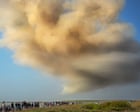
‘I was chosen to go around the Moon on a SpaceX starship. Preparations took over my life. Then, four minutes into watching a rocket on a test flight, it broke apart. And that was the end of my adventure’ This photograph was taken on 20 April 2023 from the VIP section of SpaceX’s launch viewing area, looking out from South Padre Island, Texas, towards Boca Chica, a nature reserve near the Mexican border which is home to SpaceX’s Starbase launchpad. In 2021, I and seven other civilians were selected from an open call to go around the Moon on a free SpaceX Starship flight funded by the Japanese billionaire Yusaku Maezawa. The dearMoon Project included myself and another photographer. For me, the story also became about being plucked from obscurity and planted in this very surreal world I could never have imagined being a part of in a million years. At the time, only 24 white American men had orbited or landed on the moon. Being selected for something like that changes your life and your perception of your worth in the world. The flight, originally scheduled for 2023, completely took over my life. It took the air out of every room – I couldn’t talk about anything else. People stopped commissioning me because they assumed I was busy going to space; every conversation I had was about it. This was going to be the rest of my life. That day in April was pivotal. We were there to watch SpaceX’s Integrated Flight Test 1. After four minutes, following a relatively successful liftoff, the vehicle experienced what they call in space terms an “RUD” – Rapid Unscheduled Disassembly – and broke apart in the air. We put on a brave face but secretly I was thinking: “Wow, the risks are no longer theoretical. I could have been on that.” The dust cloud in the image emerged from the concrete launchpad and tower – obliterated by the power of the raptor engines. The debris ended up all over the local houses and SpaceX closed the launch facility for reconstruction for four months while they c
Researchers at Texas A&M University have cracked a problem that has limited biological imaging for years: seeing fine cellular detail while looking deep inside living tissue. The new microscopy technique resolves structures smaller than 100 nanometers, roughly a thousand times thinner than a human hair, without giving up the ability to image deep into intact samples.
Iran and Afghanistan have a certain iconic status as largely inhospitable areas, rich in raw materials. But where does this remarkable geology come from? Researchers from the University of Central Asia and Utrecht University have now reconstructed the history of this 'geological Silk Road' in detail. "Culturally, the region lies at the crossroads of European, Central Asian, East Asian, Indian and Arab influences. Our reconstruction shows that the same is true geologically." Their results are published in the journal Gondwana Research.
Artificial intelligence is helping Texas A&M AgriLife Research scientists fast-track answers to a long-standing question in human biology: What do hundreds of mystery proteins in the mitochondria actually do?
Researchers at the University of East London (UEL) have developed a new framework for assessing earthquake risks, using AI-assisted technology to examine how soil conditions, ground shaking and structural strength influence a building's ability to withstand seismic activity.
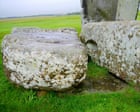
Geologists say they are getting closer to solving mystery as tests suggest stone may have come from elsewhere in Scotland, northern England or even Ireland They spent countless hours on weather-battered Scottish hills, a hardy band of geologists searching for the origin of one of Stonehenge’s most intriguing features. But the prehistoric monument tends to yield its secrets reluctantly, and a new scientific report reveals that the origin of Stonehenge’s altar stone remains elusive – and the wind-whipped geologists may very well have been looking in the wrong spot anyway. Continue reading...
Researchers have long known that releasing domesticated ducks can alter wild populations. Now, a study led by a doctoral student at The University of Texas at El Paso has documented, for the first time in North America, when and where these genetic changes took place and tied them directly to more than a century of releases.
Even for countries where typhoons are a way of life, the last few months have brought unusually wild weather.
High temperatures change how mealybugs feed, and that could help explain why some pasture mealybug infestations do far more damage than others, according to early findings from Texas A&M AgriLife Research scientists.
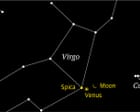
The brilliant planet is about to join the waning crescent moon and the brightest star in the Virgo constellation Early risers have a beautiful sight to look forward to this week as brilliant Venus joins the waning crescent moon and the star Spica in the morning sky. The chart shows the view looking east-south-east from London at 0600 GMT on 7 November. Venus will be the easiest object to identify, shining brilliantly. Next to it will be Spica, the brightest star in the constellation of Virgo, the virgin, situated about 250 light years from Earth. Continue reading...
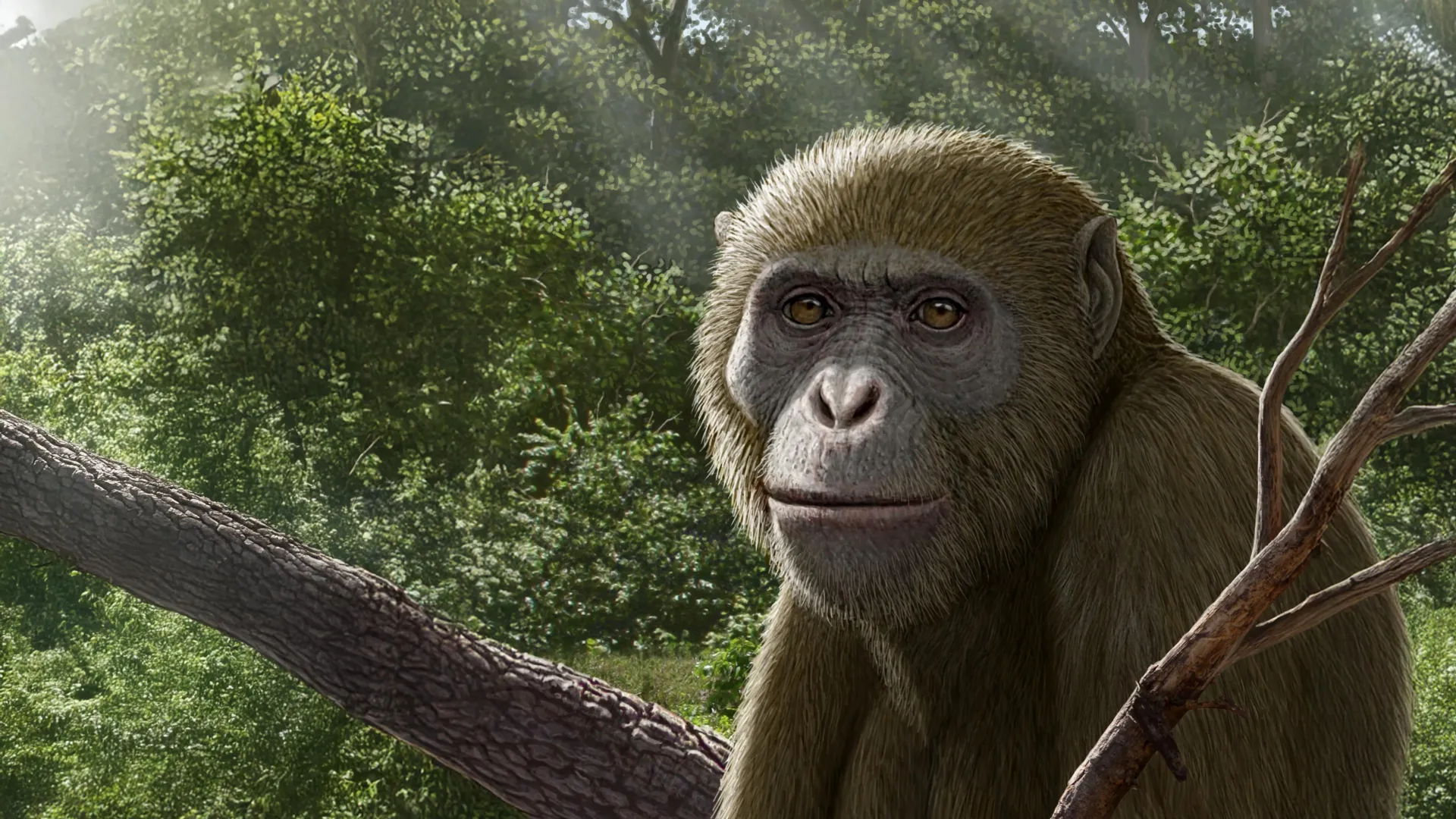
A 17- to 18-million-year-old ape fossil discovered in Egypt is challenging long-held beliefs about where the ancestors of humans and other modern apes first evolved. Scientists now suspect that North Africa and the Middle East, rather than East Africa, may have been the cradle of modern ape evolution.
In the Texas Panhandle, two livestock guardian dogs patrol a herd of cattle grazing the Rita Blanca National Grasslands. Although their singular focus is protecting the herd from would-be predators, their presence may make them wildlife conservation allies.
Scientists have uncovered a long-lost volcanic system in Iran that dates back roughly 100 million years, revealing a hidden chapter in Earth's tectonic history. The discovery sheds new light on the disappearance of an ancient ocean and the powerful geological forces that reshaped the Middle East.
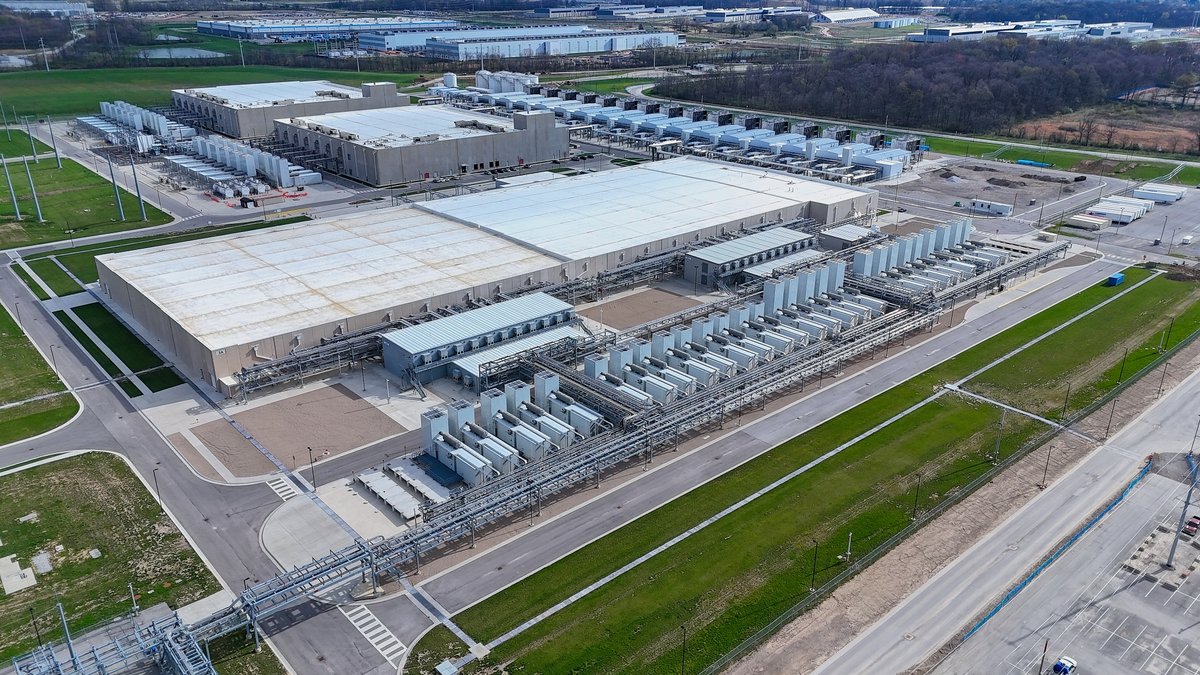
Attacks against data centers in Europe and the Middle East are raising questions as to how we protect the infrastructure on which our digital lives depend