TopNewsOn

Results for “eight-goal thriller”

A simple supplement may help clear brain fog after cancer

A surprising new study from UCLA suggests that a naturally occurring molecule could help breast cancer survivors overcome the frustrating brain fog and exhaustion that can linger long after treatment ends. Researchers found that women taking an oxaloacetate supplement for eight weeks experienced substantial improvements in memory, concentration, mental clarity, and fatigue.

Science Daily · 7h ago
How octopuses squeeze through too-small gaps

Octopuses are extraordinarily versatile. From walking across the seabed on their eight arms to jetting through the water, manipulating tools and squeezing through unimaginably tight spaces, the flexibility of octopuses almost defies belief. "Octopuses can change their body shape to squeeze through tiny holes, almost like water flowing through a gap, so their size doesn't always limit where they can go," says Wenci Xin from the National University of Singapore.

Phys.org · Nov 5
Very good boys? The dark, dystopian rise of robot dogs | Arwa Mahwadi

Pups that carry your shopping are one thing – but what about the mechanical canines being bought up in the US by ICE? Or the mutant mutts due to be developed by a startup called Warhound? Have you ever wanted to hang out with a dog with no fur, no face and a chip in its shoulder? If so, I suggest you head to San Francisco, where a startup called Dimensional has been paying people $20 (£15) an hour to walk four-legged robot dogs . This isn’t because the dogs need the exercise – it is because the company needs the training data. As reported in the New York Times, the goal is to develop “operating systems that can integrate with AI agents so the machines can act more independently”. What exactly will these machines do when they can act more independently? The founder of Dimensional insists they will help people. They might carry groceries home, for example, which is certainly something my tiny chihuahua-mix is incapable of. Continue reading...

The Guardian · Nov 4
Study maps Nelore cattle microbiota to reduce methane emissions

Researchers at the Brazilian Agricultural Research Corporation (EMBRAPA) are studying the relationship between the genetics of Nelore cattle and the microorganisms in their guts (microbiota). Nelore cattle are the most widely raised beef breed in Brazil. The goal is to develop strategies that reduce emissions of methane—a major greenhouse gas—and improve the animals' feed efficiency.

Phys.org · Nov 4
Scientists discover surprising heart benefits of eating avocado and mango every day

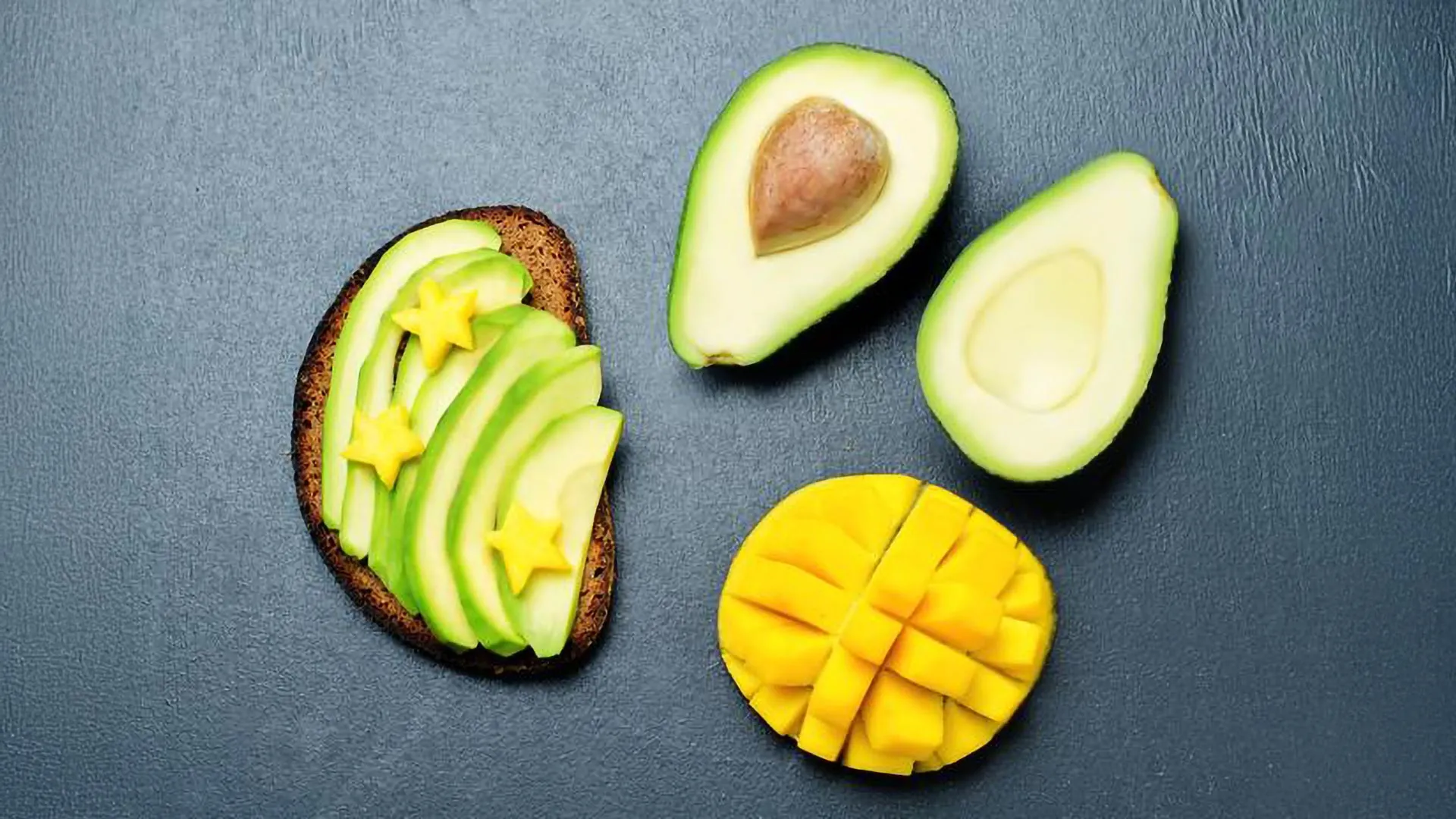
Eating an avocado and a cup of mango every day may provide surprising benefits for heart health, according to a new study involving adults with prediabetes. After just eight weeks, participants experienced significant improvements in blood vessel function and diastolic blood pressure, particularly among men. These benefits occurred without weight gain or changes in calorie intake, suggesting that the nutrient-rich combination could support cardiovascular health through a simple dietary adjustment.

Science Daily · Nov 3
Zombies are real—just ask the parasites taking over the bodies and brains of insects and rodents

Zombies have taken many forms in popular culture. In Michael Jackson's "Thriller" music video, corpses climb out of their graves and perform an impressively coordinated dance. In HBO's "The Last of Us," a fungus infects humans, takes over their bodies and turns them into hosts that help spread the infection. Even Plankton has tried his hand at taking control of another organism in "SpongeBob SquarePants."

Phys.org · Nov 2
A job that changed me: I ran observatory tours as a student. An eight-year-old’s question taught me two important lessons

I thought the explanation I’d given about black holes was family-friendly; but after what she had said, I had to rethink my examples Read more in the a job that changed me series In the first year of my science degree, I was fortunate to land a job as an astronomy guide at the Sydney Observatory. In my role, I would lead tour groups of about 20 people. We’d look at stars and planets through telescopes. If the skies were filled from horizon to horizon with clouds, we’d explore more of the universe through a 3D theatre. And to peer beyond what our telescopes could see, we’d pile inside the cosy planetarium, seeing what the light pollution of Sydney and clouds would often obstruct from our view. My favourite object to show in the planetarium was the Hubble Ultra Deep Field image. Before revealing the image, I’d explain how the Hubble space telescope had stared at a piece of sky the size of a grain of sand held at arm’s length for 11 days, collecting enough light to look into the farthest corners of the universe. Then I’d zoom in on that tiny piece of sky, revealing the gorgeous image. At least one person would audibly gasp at the reveal. Continue reading...

The Guardian · Nov 2
Drinking tea may help protect your heart, but there’s a surprising catch

A massive study of nearly 486,000 adults found that regularly drinking tea was associated with an 11% lower risk of heart and blood vessel diseases. The lowest risk was linked to drinking roughly six to eight cups per day, with black tea showing more consistent benefits than green tea.

Science Daily · Nov 1
Would you pay to have the ‘best baby’? Liberal eugenics and the troubling quest for human perfection

For decades the idea of eugenics has been taboo. Now it is returning in a new commercial guise For a very long time, I dreamed of being cured. I was born in 1981. I learned to walk early enough, but I stumbled and fell more easily than other children. My parents began to worry that something was wrong, that my muscles were weaker than they should be. Eventually, at the age of three, I was diagnosed with a form of spinal muscular atrophy (SMA). In the 1980s, the precise mechanics were not yet understood, but the condition was known to be hereditary, probably linked to a recessive gene. It was also known to be progressive. As I aged, my muscles would not keep pace. At eight, I began to use a wheelchair for longer distances. By the time I was 18, I rarely walked outdoors any more. It is hard to be young and to know that you are growing weaker rather than stronger. I had all the same aspirations that my nondisabled friends did, but I lived in fear of the future in a way they did not. I spent a lot of time thinking about what my life would have been like if I didn’t have SMA. The images in my head were of something like a double: myself, only rid of this one deficit, imprecisely defined, but encoded somewhere in my body. Continue reading...

The Guardian · Oct 27

A 2,700-year-old solar eclipse just revealed something surprising about Earth

A solar eclipse recorded more than 2,700 years ago is revealing surprising secrets about Earth's rotation and the Sun's ancient behavior. By correcting an eight-kilometer error in the location of an ancient Chinese capital, scientists were able to reconstruct a total solar eclipse that occurred in 709 BCE and obtain more accurate measurements of how fast Earth was spinning at the time.

Science Daily · Oct 26