TopNewsOn

Results for “indecent exposure”

Light-activated nanoparticles may help treat head and neck cancer

For patients with head and neck cancer, treatment can come at a high cost to their quality of life, affecting their ability to speak, swallow and even breathe due to invasive procedures. Now, Penn State researchers have developed a light-activated nanoparticle system with the long-term goal of shrinking tumors while limiting exposure to healthy tissue and improving patients' quality of life after cancer treatment. Penn State has licensed the technology to Illuminate Therapeutics, which is advancing its preclinical development.

Phys.org · 23h ago
Study of 750,000 pregnancies reveals a surprising twist about Ozempic and Wegovy

A study of more than 750,000 pregnancies found that early exposure to Ozempic, Wegovy, and similar drugs was not linked to increased pregnancy complications when used for weight loss, but was associated with a higher risk of premature birth when prescribed for diabetes. The surprising difference suggests that diabetes itself may be driving the risk, although researchers caution that the drugs' safety during pregnancy remains uncertain.

Science Daily · Nov 13
Microplastics found in wild mammals' blood more than 40 miles from human infrastructure

Animals, like humans, are taking up increasing amounts of tiny plastic particles. Such microplastics are demonstrably hazardous to many species under experimental conditions, and it is suspected that they may also pose a threat to animals in the wild. While data about microplastic concentrations in the terrestrial environment exist, it has not yet been clear if higher exposure also translates into higher microplastic accumulation in individual animals. A new paper published in Nature now confirms this link.

Phys.org · Nov 12
A new method for tracking climate change and air pollution

Two papers by Prof. Thomas A. Weber develop a rank-based method to track environmental change. They apply the idea to follow Geneva's warming climate, and generalize the approach to quantify shifts in spatial air-pollution exposure across Switzerland. The method compares observations with a historical baseline and shows how accounting for where people live changes the assessment of air-quality improvements.

Phys.org · Nov 10
What seal pups can reveal about the effects of mercury exposure

Marine mammals living along the Pacific Coast of North America encounter more than the fish, crustaceans, cephalopods and other marine mammals that live around them. Because contaminants such as mercury can move through marine food webs and biomagnify—becoming more concentrated as they move from prey to predator—fish-eating marine mammals can be exposed to higher levels of these pollutants.

Phys.org · Nov 10
Gold mining introduces an overlooked threat to wild caimans

Mercury pollution from artisanal gold mining in tropical regions is finding its way into wildlife. A team from the University of Vienna and the Veterinary University of Vienna shows that mercury exposure impairs the glucocorticoid response that helps animals cope with acute stress. This weakened stress response could reduce the caimans' chances of survival and reproduction. The findings, recently published in the journal Communications Biology, point to a previously overlooked endocrine threat to crocodylians.

Phys.org · Nov 4
Less than 42 minutes of bright daylight linked to higher dementia risk

Getting more daylight could be linked to a surprisingly powerful benefit for brain health. In a study of more than 87,000 adults, researchers found that higher daytime light exposure was associated with a 16% lower risk of dementia, with longer exposure to bright light linked to even greater reductions. Remarkably, getting less than 42 minutes of bright daylight daily was a stronger predictor of dementia than six established risk factors.

Science Daily · Oct 29
Peta releases video showing experiments on infant monkeys at University of Washington

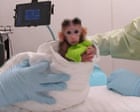
Animal-rights group released video footage that shows distressed baby macaques undergoing lab experiments Footage released by the animal-rights group Peta reveals, for the first time, filmed experiments at the University of Washington’s National Primate Research Center (WaNPRC), in which newborn monkeys were separated from their mothers and subjected to neurological tests after prenatal exposure to a neurotoxin. Records show that the infant monkeys, some just two days old, were used in research on domoic acid, a toxin produced by marine algae that accumulates in shellfish and can cause illness in humans. The experiments were part of a project that ran for six years until 2020. Continue reading...

The Guardian · Oct 26