NASA conducts latest RS-25 engine test in support of future Artemis missions
NASA tested RS-25 engine No. 10001 on Nov. 18 on the Fred Haise Test Stand at NASA's Stennis Space Center near Bay St. Louis, Mississippi.
Phys.org · Nov 19

NASA tested RS-25 engine No. 10001 on Nov. 18 on the Fred Haise Test Stand at NASA's Stennis Space Center near Bay St. Louis, Mississippi.
This week the US lost its measles elimination status, an official recognition that the infectious disease is endemic in the country after being eliminated for 26 years. To find out what this means in practical terms for citizens, Ian Sample hears from the Guardian US health reporter Jessica Glenza. She explains why it comes at an already difficult time for the health secretary, Robert F Kennedy Jr, and his Make America Healthy Again movement, and what newly elected Democrats will be focusing on when it comes to health Clips: CBS, NBC, CBC US loses measles elimination status amid worst outbreak since 1991 Continue reading...
New research has revealed young emperor penguins encounter industrial krill fishing in their epic first year at sea, strengthening the case for proposed new marine protected areas. The study was co-led by France's CNRS, the Center Scientifique de Monaco and the Woods Hole Oceanographic Institution. The international research team tracked 48 juvenile emperor penguins from three colonies around the Weddell Sea: Snow Hill Island, Jason Peninsula and Atka Bay.
The night sky is as good a place as any for a mystery. Back in 2002, astronomer Scott Hyman and his colleagues detected five mysterious bursts of radio waves coming from near the center of our galaxy, spaced roughly 77 minutes apart. The signals were detected again in 2003 and 2004, but then disappeared. Despite years of searching, there was no sign of their return.
Water flooded the pasture, spilling from an irrigation pipe tucked alongside a hill at the Sierra Foothill Research and Extension Center, a University of California research facility located about 20 miles (32 kilometers) east of Yuba City. For more than three hours, starting at 6 a.m. this summer day, the water had seeped into the soils beneath the yellow-green grass, spreading to various depths while flowing downslope toward its destination.
Antiferromagnets are regarded as important materials for next-generation electronics. It is difficult, however, to accurately measure some of their properties. A new study by a team of researchers from Martin Luther University Halle-Wittenberg (MLU) and the Max Planck Institute for Microstructure Physics, working as part of the Cluster of Excellence Center for Chiral Electronics, explains why this is the case.
Global temperatures may continue to rise even after human CO₂ emissions stop. The temperature change that follows is known as the zero emissions commitment (ZEC), and it is often assumed to be close to zero. A study led by the Met Office Hadley Center, with co-authors from several institutions including the University of Liverpool, found that the temperature response depends on how much warming has already occurred.
On April 10, 2019, the Event Horizon Telescope (EHT) Collaboration revealed the first picture of a black hole. The object is at the center of a galaxy known as M87, about 55 million light-years away.
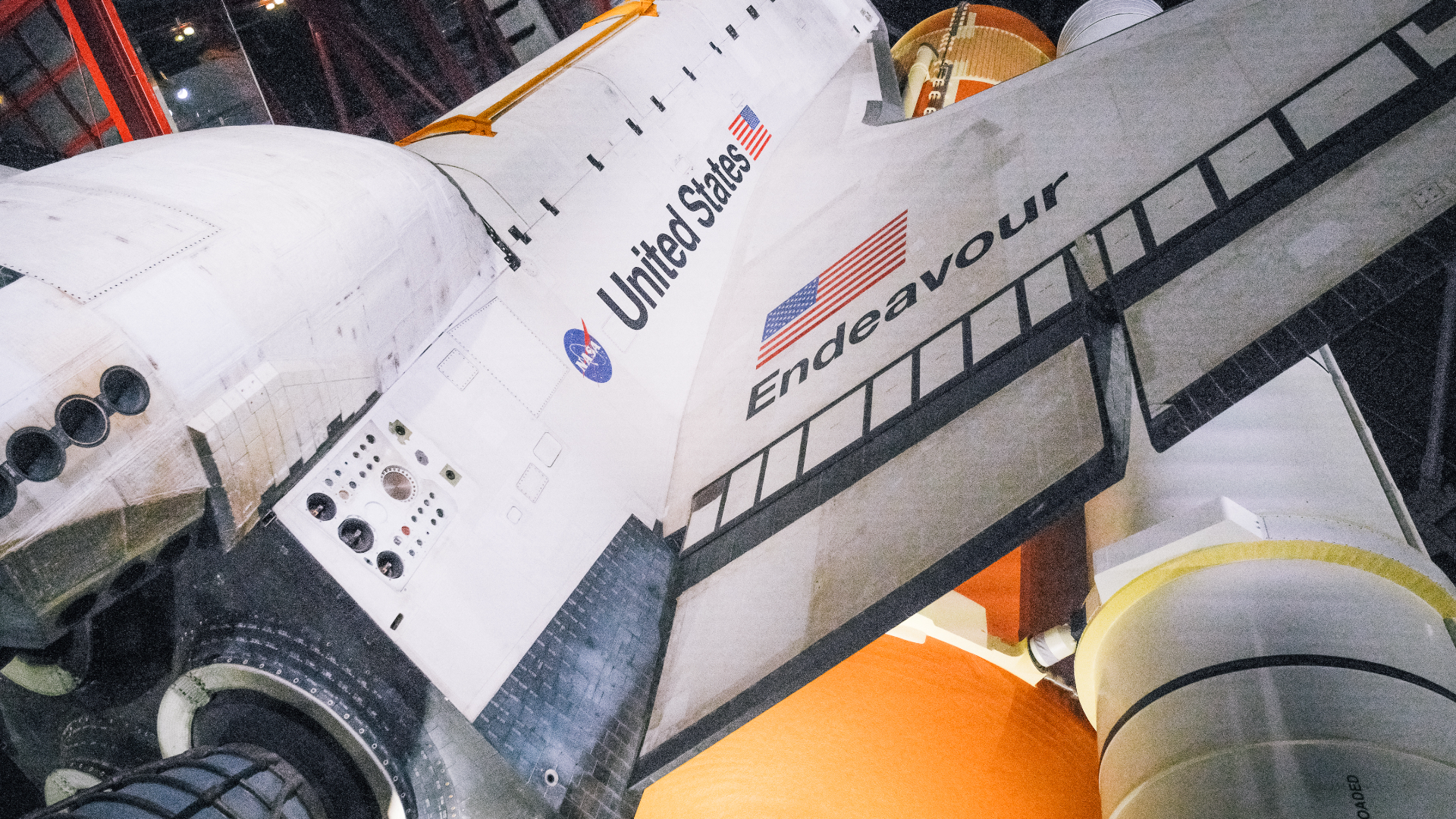
The California Science Center's brand-new Samuel Oschin Air & Space Center —the home of NASA's space shuttle Endeavour —officially opened to the public today (Nov. 13).
Researchers from the Faculty of Physics at the University of Warsaw (UW) and the Center for Optical Quantum Technologies at the University of Warsaw's Center for New Technologies (CeNT UW) have developed a method for ultrasensitive microwave sensing. Using cold, strongly interacting Rydberg atoms as a microwave detector, the researchers observed that carefully engineered interactions between the atoms make the atomic state resistant to loss.
The Space Shuttle Endeavour has been on display in California since 2012 — not long after NASA ended the program. Now, the California Science Center is showing off the shuttle in a new way.
Researchers from Northeastern University's Ocean Genome Legacy Center (OGL) have taken the next step toward deciphering the life cycle and unusual reproductive strategies of a limestone-eating species of shipworm. The results could ultimately usher in new developments in lifesaving medicine.
Scientists at the Curtin University node at the International Center for Radio Astronomy Research (ICRAR) have linked mysterious radio pulses to an unusual pairing of stars—a dead star that spins every eight minutes and a star similar to our own sun.
The 2019 Event Horizon Telescope (EHT) image was the work of hundreds of scientists and captured the first direct view of a black hole's shadow—becoming one of the most recognized scientific images of the modern era. A team of four from CSIRO, Australia's national science agency, has developed a powerful new imaging technique that validated the landmark 2019 image of the black hole at the center of galaxy M87.
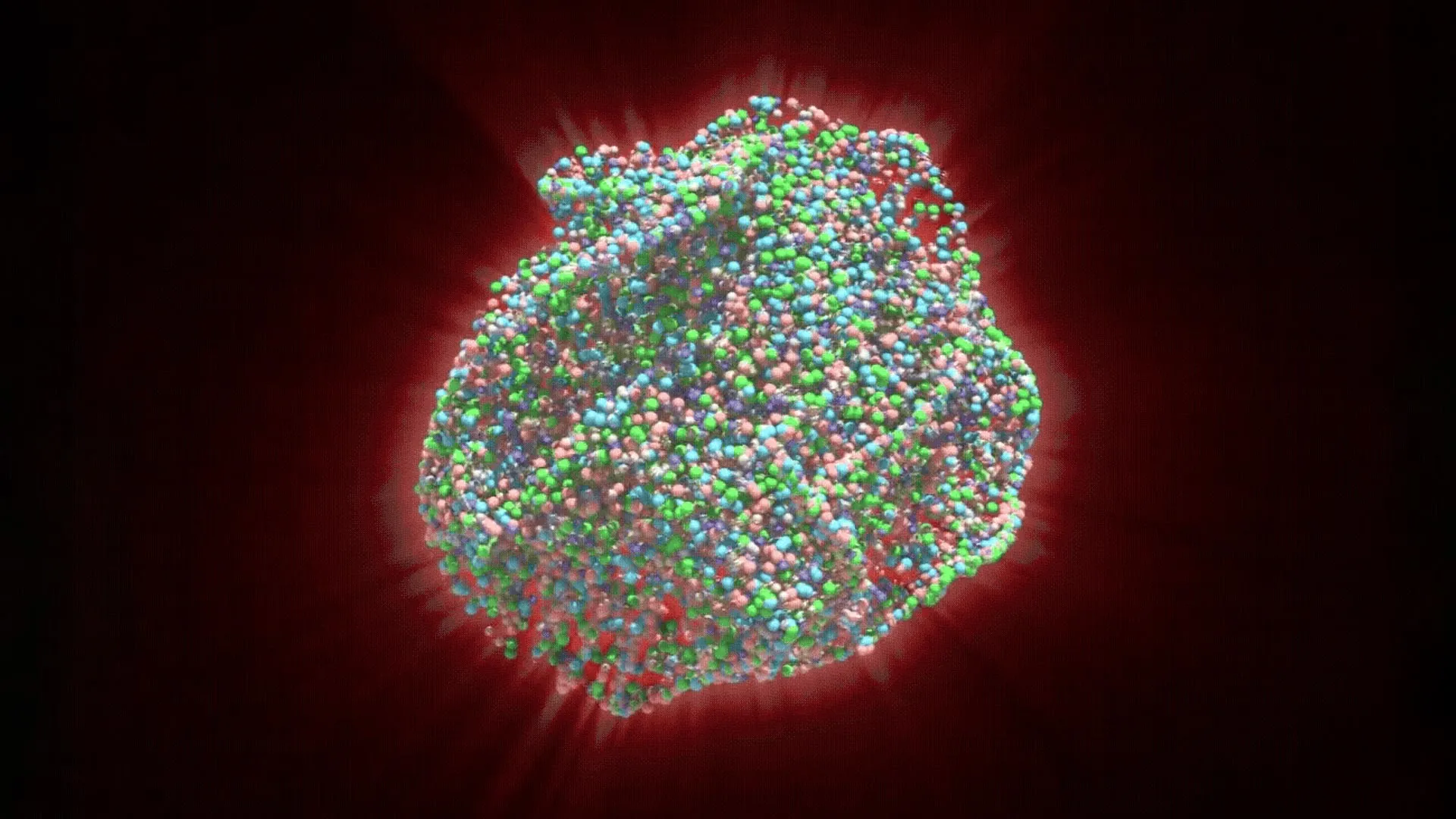
Plants are green because of a pigment that is key to photosynthesis: chlorophyll. In its production, the enzyme chlorophyll synthase plays an important role. As part of an international collaboration, researchers from Osnabrück University, the Center Algatech in Třeboň and the University of Sheffield have now succeeded in deciphering the structure of this enzyme and gaining valuable insights into its mechanism. The findings are published in the journal Nature Chemical Biology.
Cyclopia is the most severe form of a rare birth condition in which the developing brain fails to divide into two separate halves. This can also affect facial development, sometimes leaving the baby with a single eye socket in the center of the forehead and severe facial abnormalities. Most babies born with this condition either die before or soon after birth. It is so rare that it occurs in roughly 1 in 100,000 births, so finding physical evidence of it from modern times is difficult, let alone from historical ones.
Around 12 million light-years away, the supermassive black hole of the galaxy Centaurus A is hurling two enormous plasma jets into space at nearly the speed of light. These so-called jets are brighter at their edges than at their center. The reason for this was previously unclear but has now been explained by a team from the Chair of Astronomy at the University of Würzburg. The research is published in the journal Astronomy & Astrophysics.
Researchers from the Skoltech AI Center, together with colleagues from the Zelinsky Institute of Organic Chemistry of the Russian Academy of Sciences, ITMO University and other institutions, have published a paper in Chemical Society Reviews that examines where AI produces measurable value in a chemical research workflow, how to assess its reliability and why a strong benchmark result does not necessarily translate into laboratory performance.
Bioacoustics researcher Léa Bouffaut, at the Cornell K. Lisa Yang Center for Conservation Bioacoustics, has spent the past several years eavesdropping on the conversations of whales. But instead of using underwater microphones like other marine scientists, she listens by tapping into fiber-optic cables lying on the ocean floor—a powerful tool to aid in marine mammal conservation.
Quantum chemistry can be used to calculate the probabilities of which chemical processes will occur. This involves a great deal of programming work. Dr. Michael F. Peintinger from the Mulliken Center for Theoretical Chemistry at the University of Bonn has investigated what happens when artificial intelligence is used for this purpose. His work is published in the Journal of Computational Chemistry.
Aliens have long been a staple of science fiction. Yet the possibility of intelligent life beyond Earth is more than a matter of imagination—it is also a subject of serious scientific inquiry. Professor Woong-bae Zee of Sejong University's School of Liberal Studies has recently published an astronomy paper that places the word "alien" front and center.
An international team of researchers led by UT Southwestern Medical Center has developed a versatile light-sheet microscope that captures 3D views of biological samples, from activity inside living cells to larger tissues. Designed to make detailed imaging much simpler and faster, the approach could help laboratories stretch equipment budgets and expand research that may ultimately inform patient care.
How does an octopus remember what it has learned? A new study led by Dr. Ana Luiza Turchetti-Maia, Dr. Tal Shomrat and professor Binyamin (Benny) Hochner—researchers from the Hebrew University of Jerusalem and Ruppin Academic Center—has uncovered a previously unknown molecular mechanism that may help explain how these remarkably intelligent animals form and maintain memories.
NASA has successfully demonstrated technology designed to help spacecraft autonomously navigate to safe landing sites on the moon and on other planets. An Alta-X drone equipped with the agency's Safe and Precise Landing—Integrated Capabilities Evolution (SPLICE) guidance, navigation and control payload completed simulated lunar descent and landing maneuvers Aug. 27. The flight took place at Rogers Dry Lake near NASA's Armstrong Flight Research Center in Edwards, California.
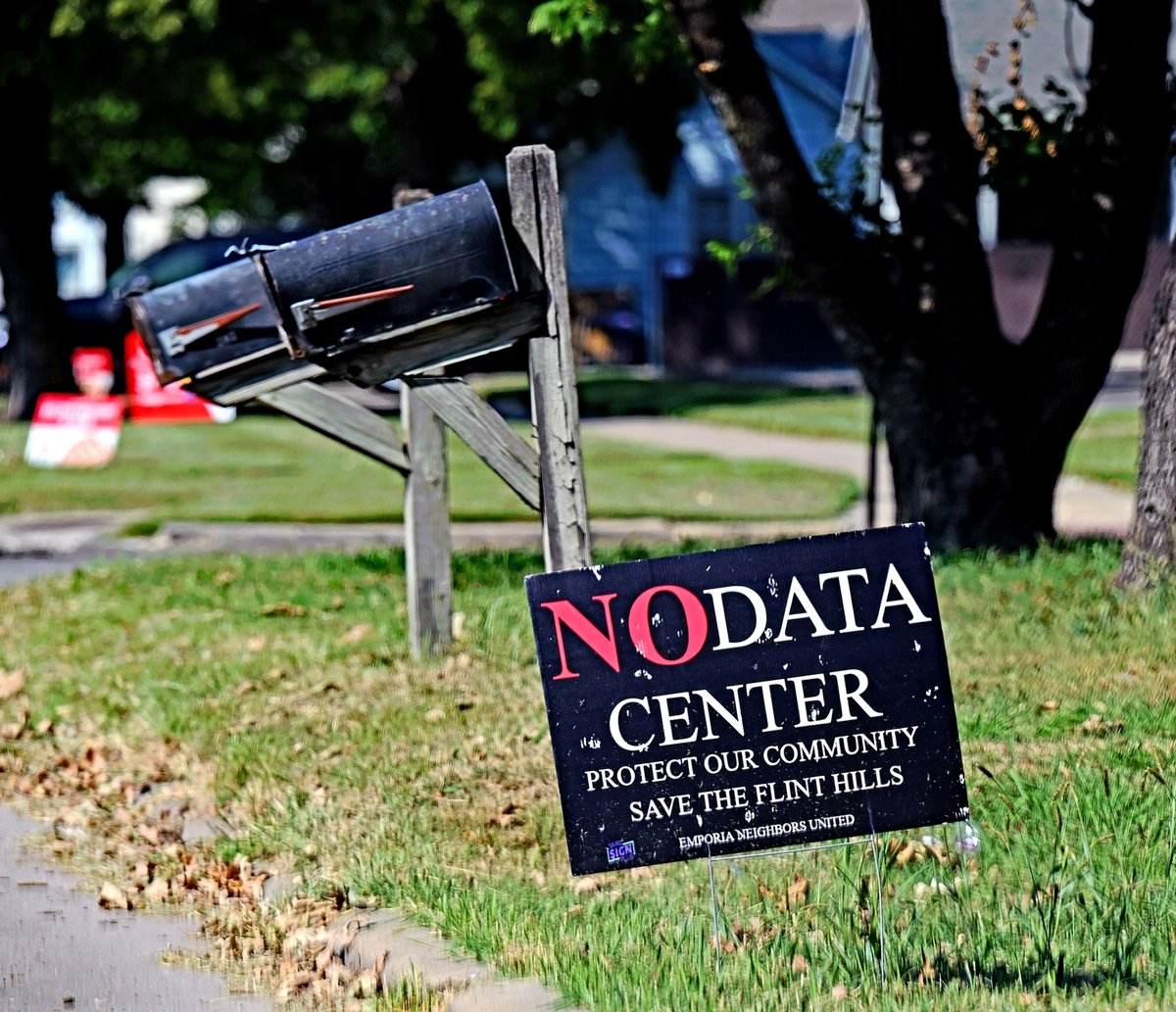
Across 10 states this Election Day, voters overwhelmingly backed restrictions on data center development or rejected measures that would have eased their construction
A recent study published in Nature Electronics and carried out by researchers from nanoGUNE's Quantum Hardware research group, Quantum Motion, London Center for Nanotechnology, Imperial College London and the University of Cambridge introduces a new superinductor created within a silicon integrated circuit fabricated in a commercial complementary metal–oxide–semiconductor (CMOS) process.
A new study led by the ICARUS Climate Research Center at Maynooth University in Ireland has reconstructed a century of Irish sea-level change, revealing a stark acceleration in sea-level rise. The research, titled "A Century of Sea-Level Change in Ireland (1925–2024)" and published in Ocean Science, combines tide-gauge records from six locations, including newly digitized historical records from Cork, Tarbert and Galway.
Scientists at CERN's Large Hadron Collider have uncovered compelling new evidence that even relatively small atomic collisions can recreate the extraordinary state of matter that filled the universe moments after the Big Bang. Known as quark-gluon plasma, this exotic substance forms at temperatures more than 100,000 times hotter than the center of the Sun, causing ordinary particles to break apart into their fundamental building blocks.
Researchers at the German Cancer Research Center (DKFZ) and the HI-STEM Stem Cell Institute have discovered a group of particularly long-lived blood stem cells in mice. These cells remain in a dormant state for an exceptionally long time while retaining their ability to generate new blood cells. This newly discovered cell population may be responsible for sustaining blood regeneration and immune defense throughout a mouse's entire life.
Scientists spend their careers trying to understand how the world works. Yet even in their own specialties, complete understanding may remain elusive. That idea lies at the center of a new article by Richard Shiffrin, distinguished and Luther Dana Waterman professor of Psychological and Brain Sciences in the College of Arts and Sciences at Indiana University Bloomington, Stephen Stigler of the University of Chicago, and Frank Keil of Yale University.
Astronomers have determined that VVV CL001, a metal-poor globular cluster near the center of the Milky Way, is about 13.4 billion years old, making it one of the oldest known star clusters in our galaxy. The cluster lies behind thick clouds of interstellar dust, which made its distance and age difficult to establish. The paper, outlining the methodology for estimating its age and distance, was posted to the arXiv preprint server on Oct. 20. It has been accepted for publication by Astronomy & Astrophysics.
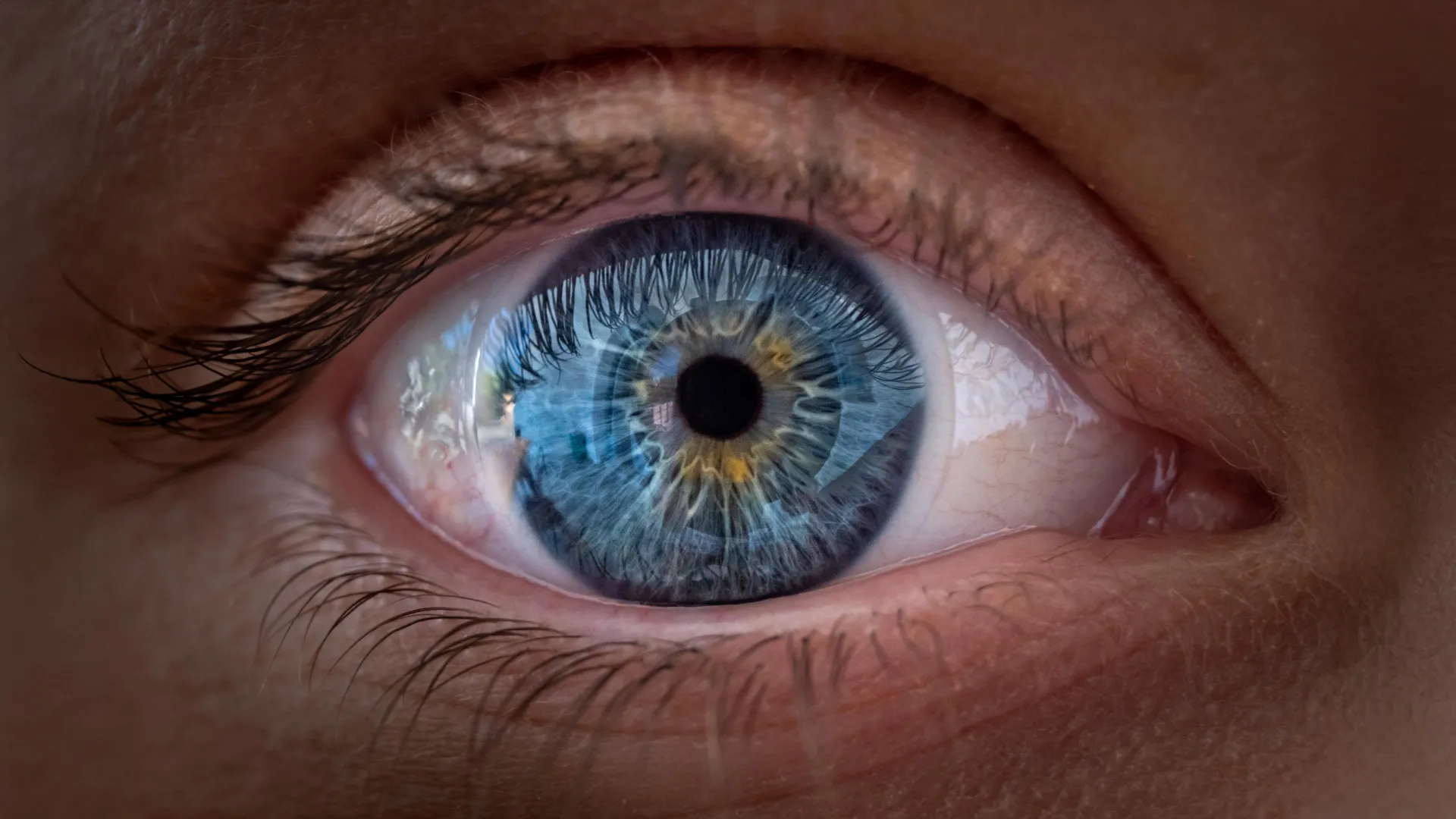
Scientists at Johns Hopkins University have uncovered a surprising process that helps humans develop sharp vision before birth, challenging decades of assumptions about how the eye forms. Using miniature human retinas grown in the lab, researchers discovered that a vitamin A derivative and thyroid hormones work together to shape the foveola, the tiny region at the center of the retina responsible for our sharpest vision.
Varying crop rotations and keeping the soil constantly covered with vegetation help protect crops against droughts and floods, in addition to increasing productivity. This technique was tested in Rio Grande do Sul state, Brazil, by researchers from the Center for Carbon Research in Tropical Agriculture (CCARBON) at the University of São Paulo (USP).
Cells are very particular about the proper locations of their contents. For example, DNA is packaged in the nucleus in a highly specific way, but researchers are still trying to understand how this happens. For stem cells in the brain of a larval fruit fly—a model organism used to study processes such as early development—the DNA is organized so that the center of each strand, called the centromere, is at the top of the nucleus.
Reid Wiseman, now a retired emeritus astronaut, will become deputy director of the Jet Propulsion Laboratory, NASA’s premier center for deep-space robotic missions.
Cowboy Space just gave us our first look at its "Big Iron" rocket, which the company will use to build its AI data center constellation. Big Iron's debut is targeted for late 2028.
Randomised trials of omega-6s do not show an increase in inflammation caused by the fatty acid Read more in the Antiviral series If you’ve been online lately, you’ve probably been bombarded with the discourse about seed oils. Once a completely innocuous food that no one really talked about, they have become the enemy of the moment. Robert F Kennedy Jr, the secretary of health and human services in the US, has called them “toxic” and vowed to act against them. There are countless activewear-clad influencers online saying that nothing harms your health more than these products. Which is odd, because the Australian dietary guidelines say seed oils are basically fine. You should limit them because they’re high in calories but otherwise there’s no major reason – according to the guidelines and most experts – why you should avoid them. As Prof Lauren Ball, director of the University of Queensland’s Centre for Community Health and Wellbeing, says: “There’s no convincing evidence that eating seed oils like canola or sunflower oil in normal dietary amounts harms our health. In fact, these oils contain unsaturated fats, which are generally beneficial for cardiovascular health.” Dr Jason Wu, a professor at the University of New South Wales, agrees: “The evidence base consistently points to health benefits of eating seed oils.” Continue reading...
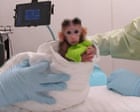
Animal-rights group released video footage that shows distressed baby macaques undergoing lab experiments Footage released by the animal-rights group Peta reveals, for the first time, filmed experiments at the University of Washington’s National Primate Research Center (WaNPRC), in which newborn monkeys were separated from their mothers and subjected to neurological tests after prenatal exposure to a neurotoxin. Records show that the infant monkeys, some just two days old, were used in research on domoic acid, a toxin produced by marine algae that accumulates in shellfish and can cause illness in humans. The experiments were part of a project that ran for six years until 2020. Continue reading...
In his annual speech on threats to the nation, Sir Ken McCallum, the head of the UK’s intelligence service, MI5 , warned that AI had the potential to ‘change the stakes’ on existing and even new bioweapons. To find out why, and how, Ian Sample speaks to Dr Tom Inglesby, director of the Johns Hopkins Center for Health Security and the Bloomberg School of Public Health. He explains what has governments so worried and what measures could be put in place to reduce the risks Continue reading...
In his annual speech on threats to the nation, Sir Ken McCallum, the head of the UK’s intelligence service, MI5 , warned that AI had the potential to ‘change the stakes’ on existing and even new bioweapons. To find out why, and how, Ian Sample speaks to Dr Tom Inglesby, director of the Johns Hopkins Center for Health Security and the Bloomberg School of Public Health. He explains what has governments so worried and what measures could be put in place to reduce the risks Could AI ‘change the stakes’ in the development of bioweapons? Support the Guardian: theguardian.com/sciencepod Continue reading...