TopNewsOn

Results for “kent state”

Scientists discover new way to control magnetic waves for future quantum technologies

Researchers at the U.S. Department of Energy's (DOE) Ames National Laboratory have discovered a way to control the handedness of magnons, tiny magnetic waves that can carry information through materials. By changing the material's magnetic state with an external magnetic field, they were able to switch magnon behavior, a finding with potential applications in quantum information and quantum computing technologies. Their findings are published in Physical Review Letters.

Phys.org · 15h ago
Laser-driven magnetic state defies equilibrium rules

Researchers at the Department of Energy's (DOE's) Oak Ridge National Laboratory (ORNL) and their collaborators used lasers and neutrons to observe a long-lived quantum state in a magnetic material, opening a new way to study materials systems driven far from their equilibrium. Manipulation of quantum magnets is important for advancing quantum information science and could reduce loss of transported information, improve memory devices and benefit other quantum technologies.

Phys.org · 20h ago
A new role for chlorine: Uncovering anion redox in solid-state battery cathodes

As demand grows for safer and more capable rechargeable batteries, scientists are looking beyond the familiar metal-centered chemistry of conventional cathodes. A promising route is to draw additional charge from anions—the negatively charged atoms in a material—rather than relying on transition metals alone. Oxygen and sulfur have attracted substantial attention in this area. Whether chlorine can play a comparable role in chloride-based battery cathodes has been less clear.

Phys.org · 22h ago
Researchers launch all-out assault on sawflies damaging wheat crops

Colorado wheat—the foundation for flour used in bread, noodles and pastries—has been besieged by the wheat stem sawfly, a native insect that recently developed a preference for wheat over native grasses. This destructive agricultural pest has spread across the state's Eastern Plains, devastating fields where it takes hold and causing $70 million in direct and indirect losses a year to one of Colorado's top agricultural commodities.

Phys.org · Nov 10
Canines could help anthropological studies, answering questions about human evolution

Anthropologists seeking to understand human evolution often include primates such as chimps or apes in their studies. But a new review paper by Kyle Smith, a postdoctoral research scholar in NC State's College of Veterinary Medicine, argues that an equally informative animal is often right under our noses—the domestic (or family) dog.

Phys.org · Nov 9
Quantum interference keeps two atoms bound despite enough energy to break apart

How can something remain intact when it should naturally break apart? This question has been addressed by researchers at RPTU. Their work has led to the experimental observation of an unusual quantum state in which two atoms remain bound together even though they possess enough energy to separate. The results have been published in the journal Nature Physics.

Phys.org · Nov 9
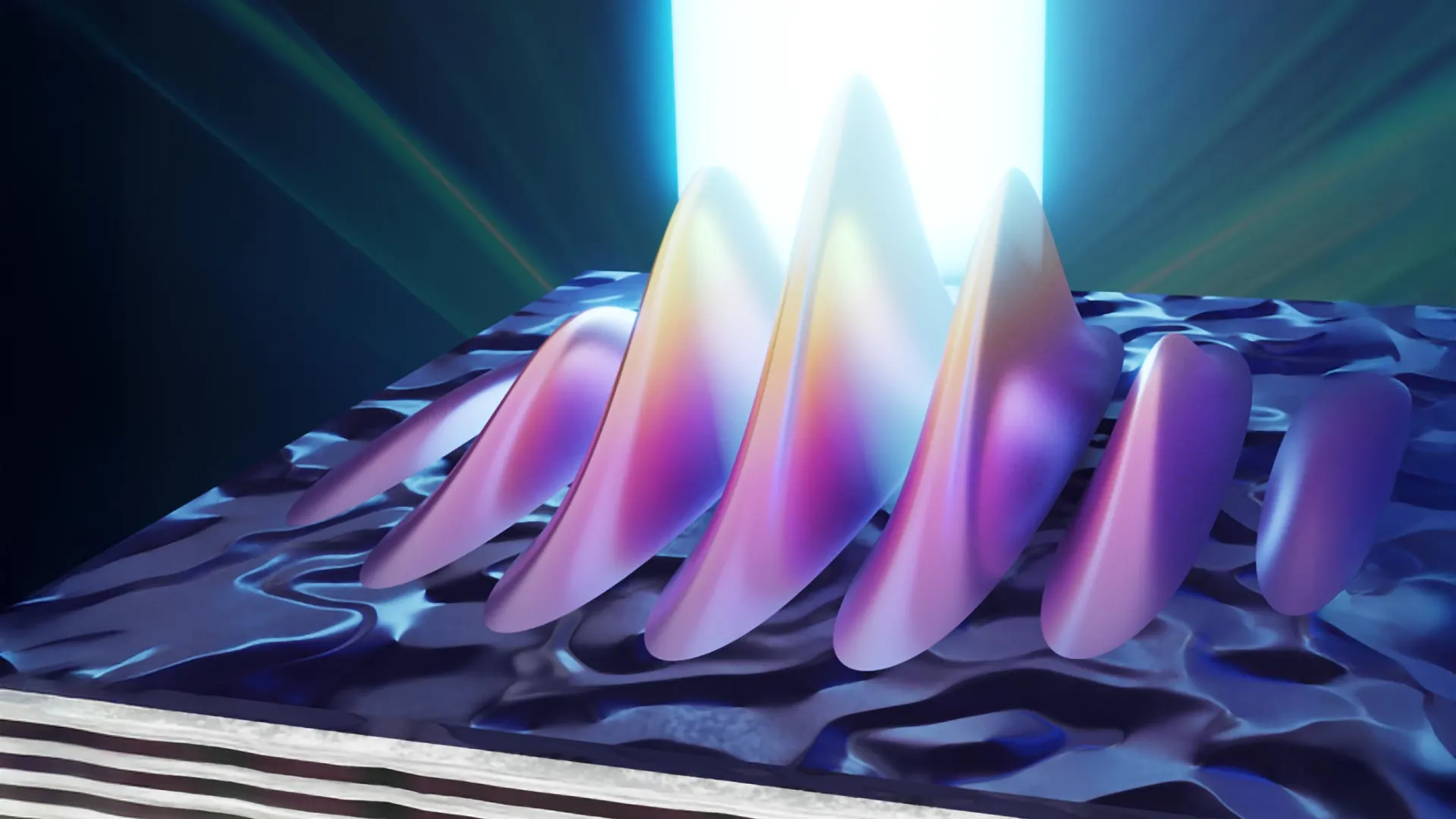
A quantum breakthrough makes light behave like both a solid and a liquid

Scientists have observed a bizarre quantum state of matter that combines the structure of a crystal with the frictionless flow of a liquid, all at room temperature. The breakthrough overturns a major practical limitation of exotic quantum experiments and could help bring powerful new light-based computing and sensing technologies closer to reality.

Science Daily · Nov 9
The Guardian view on Ordnance Survey maps: still a superior way to navigate the landscape | Editorial

The 225th anniversary of the organisation’s first publication is an opportunity to celebrate its unique contribution to our sense of place In his one-paragraph short story , On Exactitude in Science, Jorge Luis Borges imagines an empire in which the level of cartographical ambition is so high that a map is made on a one-to-one scale with the imperial territory. The quest for perfect accuracy doesn’t end well. But the earliest map-makers for Ordnance Survey, which this week marked the 225th anniversary of its first publication, might have empathised with the obsessive dedication. The 1801 OS map of Kent was 10 years in the making, its military-led production inspired by fears of Napoleonic invasion. But as Rachel Hewitt points out in Map of a Nation , her stirring account of the Ordnance Survey’s early years, its genesis also lay in an Enlightenment-based enthusiasm for comprehending and accurately representing reality. During the course of the 19th century, the entirety of the British isles was meticulously mapped through fog, rain, wind and sun, in what was described as “a wild and arduous exercise”. The surveyors, armed with theodolites, measuring chains and notebooks, saw themselves as footsoldiers serving in the ranks of Reason as they brought intellectual order to the landscape. Continue reading...

The Guardian · Nov 8

Scientists discover Europe's ancient forests were nothing like we imagined

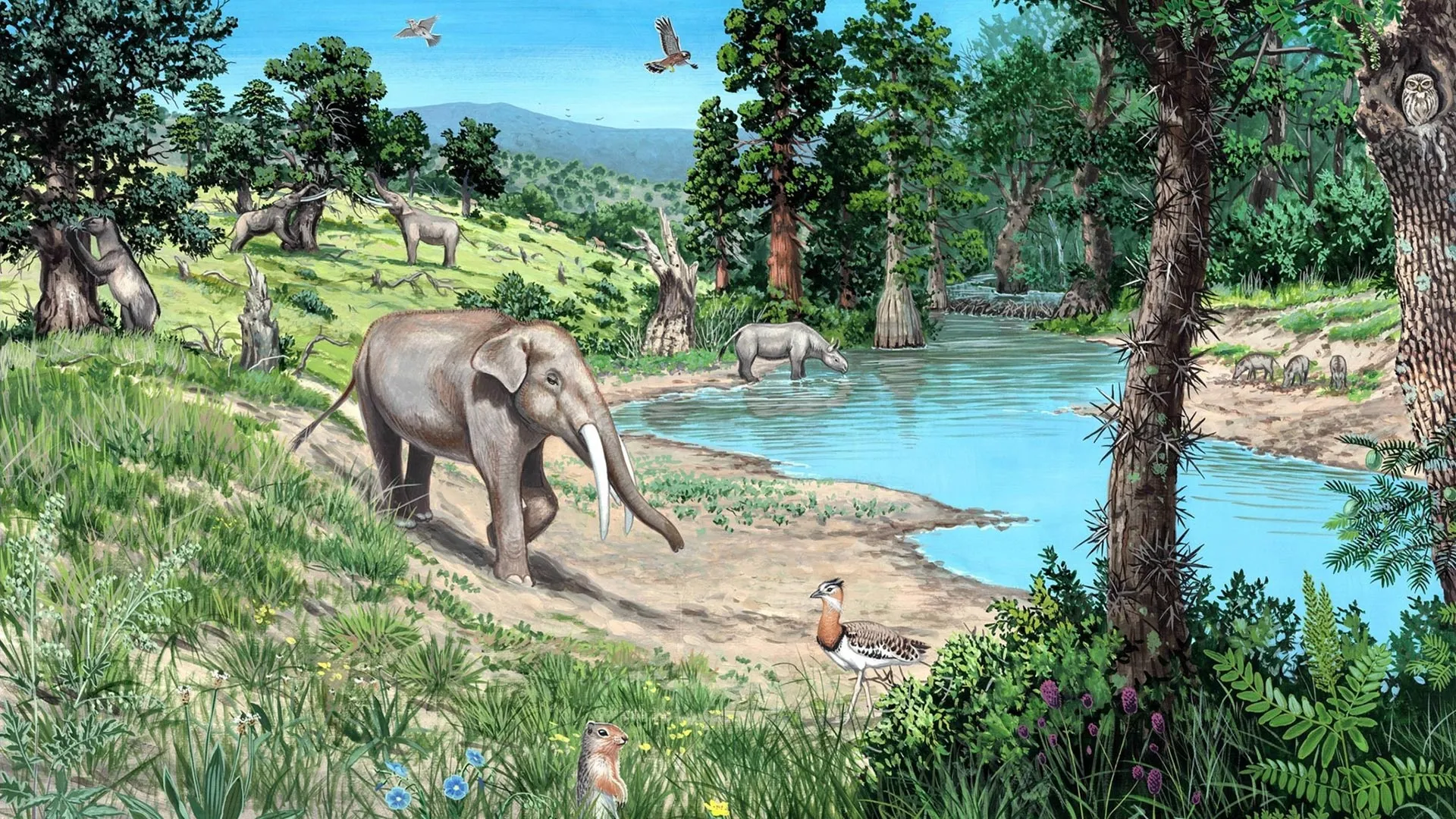
Scientists have uncovered evidence that Europe was dominated for more than 20 million years by open woodlands, colorful meadows, and large grazing animals, not the dense forests long considered its natural state. The surprising discovery challenges modern reforestation strategies, suggesting that planting thick forests could actually harm the biodiversity conservationists hope to protect.

Science Daily · Nov 7
Light-powered method resurrects 'dead-end' compounds for drug discovery

Throughout the drug development process, which can take a decade or more, tens of thousands of chemical compounds are produced that never go on to become medicines. A Florida State University researcher is part of a team that has discovered a new way to give some of these "dead ends" a second chance at becoming the foundation for tomorrow's blockbuster drugs.

Phys.org · Nov 6
States tax sports betting heavily, but gamblers may barely feel it

Sports betting has grown explosively since 2018, when a U.S. Supreme Court ruling struck down a federal ban on it. Now, Americans wager more than $165 billion on sports annually, contributing to an industry larger than state-run lotteries even excluding prediction markets such as Kalshi and Polymarket.

Phys.org · Nov 6
Emptying towns reveal links between state withdrawal and political radicalization in Eastern Europe

Across Europe, the 'emptying' of places abandoned by the state, capital and people is increasingly common. At the epicenter of this growing phenomenon are villages and towns in Eastern Europe and Russia, where the transition from socialism to capitalism has expelled people and places from investment and the care of the state—changes that, in some places, have been further intensified by war.

Phys.org · Nov 6
Electrical control of an unconventional quantum transport state demonstrated in a magnet for the first time

Researchers at Tohoku University and the Japan Atomic Energy Agency (JAEA) have successfully controlled a unique quantum phenomenon—the quantum-geometric nonlinear Hall (QgNLH) state—using electric current for the first time. The breakthrough was achieved by revealing and exploiting the coupling between the spin structure and the QgNLH state in an electrically switchable chiral antiferromagnet.

Phys.org · Nov 5
Where U.S. states rank on new housing supply pipeline

In order to know where you're going, you must know where you've been, says an old adage. And a new UNLV housing supply rankings report is putting that proverb into practice by providing policymakers and the public with the nation's first comprehensive look at how state-level new home permitting activity stacks up—and offering clues on local, state or regional measures that could help drive down skyrocketing prices.

Phys.org · Nov 5
A new route to calculating gluon production in proton–nucleus collisions

In the theoretical study of proton-nucleus collisions, the colliding projectiles can be described as streams of color charges moving along their respective trajectories. These color charges couple to gluons, which then produce the particles that are observed in the final state (gluons and quarks, which eventually produce hadrons).

Phys.org · Nov 5
New research uncovers chiral topological phases in metals without structural order

Fermions are among the most important particles in physics and include both everyday electrons and more exotic variants. Chiral fermions, like gloves, come in left- and right-handed versions and were proposed over a century ago. While high-energy neutrinos—the leading candidates for massless chiral fermions—proved to have mass, nearly (semi-) metallic solid-state crystals were discovered 15 years ago to host electronic versions of massless chiral fermions.

Phys.org · Nov 4
How a scientist went from hero to traitor in a US water crisis - video

When the water in Flint, Michigan, became contaminated with dangerous levels of lead, Dr Siddhartha Roy, then a third year PhD student, was part of the team of scientists who publicly contradicted state and federal claims that it was safe. He became a local hero until a new piece of research challenged the idea that children in Flint had been left permanently brain damaged by the crisis. His adherence to the evidence, no matter who it offended, has earned him the 2026 Maddox prize, which recognises individuals who stand up for science and evidence, despite challenges or hostility. He tells Ian Sample how he reflects on his experience in Flint, and why he lost friends as a result of his work there Continue reading...

The Guardian · Nov 4
Lab-grown neurons retain features of embryonic development

Scientists from Skoltech, together with colleagues from the Kharkevich Institute for Information Transmission Problems of the Russian Academy of Sciences, Lomonosov Moscow State University and other organizations, conducted a comparative study of the 3D genome organization in neurons derived from induced pluripotent stem cells and in neurons of the adult human brain. The authors collected and processed more than 300 3D genome maps covering 62 human samples and 34 mouse samples, including data on embryonic stem cells, induced pluripotent stem cells, neural progenitors, fetal and postmortem neurons, as well as neurons differentiated in vitro.

Phys.org · Nov 4
Light-matter hybrids form supersolid quantum state at room temperature

Researchers from the Faculty of Physics at the University of Warsaw, the Military University of Technology (Poland), IBM Research Zurich and the French National Centre for Scientific Research (CNRS) have observed a new quantum state of matter known as a supersolid in an exciton-polariton Bose-Einstein condensate. Remarkably, the phenomenon occurs not at temperatures close to absolute zero, but at room temperature. The results have been published in Science Advances.

Phys.org · Nov 3
A laser can draw superconductivity at the nanoscale

Researchers from ICMAB-CSIC, the Politecnico di Milano and Université de Liège have adapted a direct laser writing technique that allows them to "draw" superconducting properties in a material. The result is a new way to locally program the behavior of a superconductor, tuning it from a fully superconducting state to an insulating one with extraordinary precision.

Phys.org · Nov 3
How a scientist went from hero to traitor in a US water crisis – podcast

When the water in Flint, Michigan, became contaminated with dangerous levels of lead, Dr Siddhartha Roy, then a third year PhD student, was part of the team of scientists who publicly contradicted state and federal claims that it was safe. He became a local hero until a new piece of research challenged the idea that children in Flint had been left permanently brain damaged by the crisis. His adherence to the evidence, no matter who it offended, has earned him the 2026 Maddox prize, which recognises individuals who stand up for science and evidence, despite challenges or hostility. He tells Ian Sample how he reflects on his experience in Flint, and why he lost friends as a result of his work there Read more Guardian coverage of the Flint water crisis Support the Guardian: theguardian.com/sciencepod Continue reading...

The Guardian · Nov 3
Large Hadron Collider reveals evidence of Big Bang matter in surprisingly small collisions

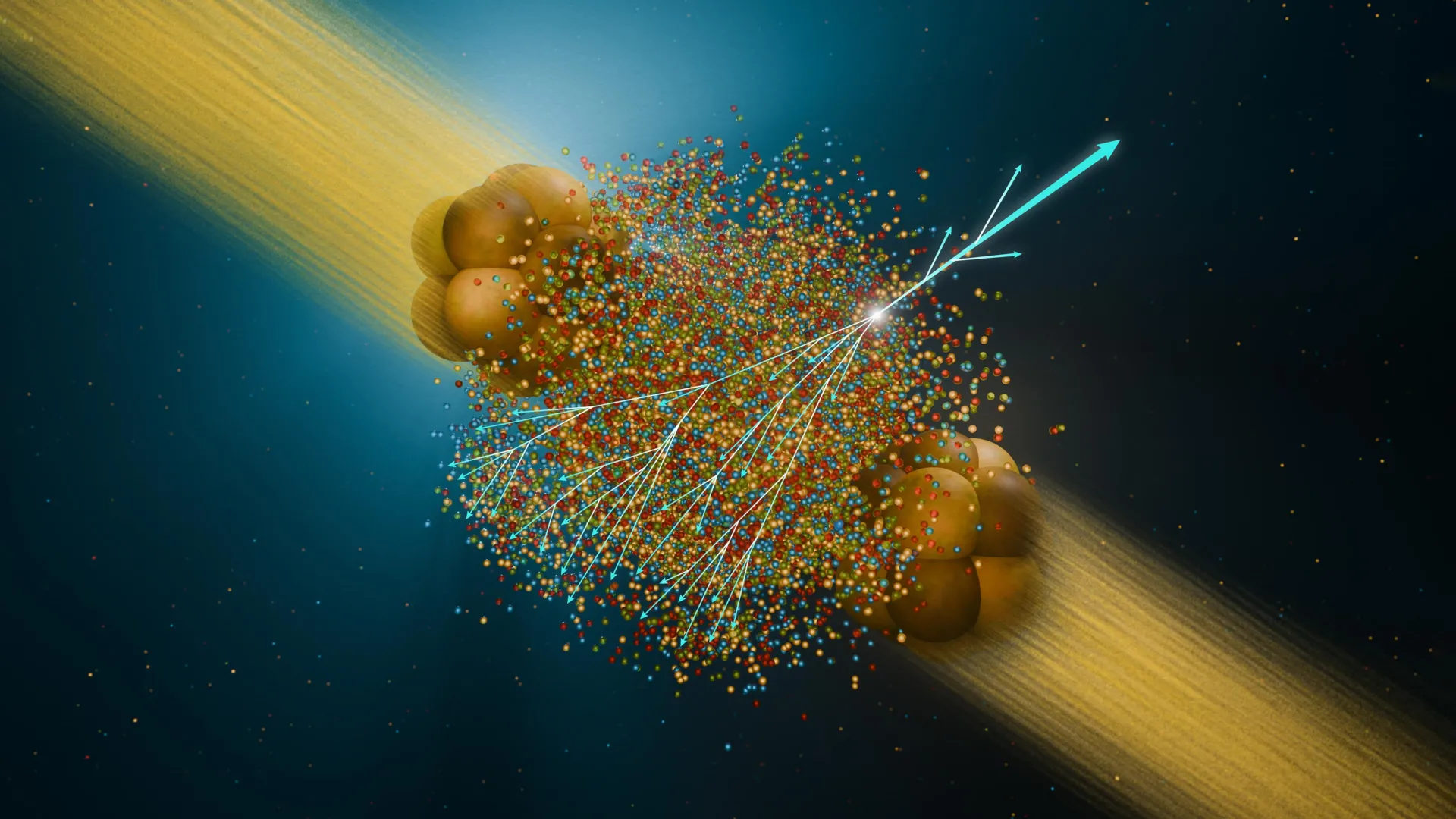
Scientists at CERN's Large Hadron Collider have uncovered compelling new evidence that even relatively small atomic collisions can recreate the extraordinary state of matter that filled the universe moments after the Big Bang. Known as quark-gluon plasma, this exotic substance forms at temperatures more than 100,000 times hotter than the center of the Sun, causing ordinary particles to break apart into their fundamental building blocks.

Science Daily · Nov 3
Stem cells in deep sleep may point to a secret reserve for lifelong blood renewal

Researchers at the German Cancer Research Center (DKFZ) and the HI-STEM Stem Cell Institute have discovered a group of particularly long-lived blood stem cells in mice. These cells remain in a dormant state for an exceptionally long time while retaining their ability to generate new blood cells. This newly discovered cell population may be responsible for sustaining blood regeneration and immune defense throughout a mouse's entire life.

Phys.org · Nov 2
Scientists smash oxygen nuclei to recreate matter from the Big Bang

Scientists have recreated a primordial state of matter from the dawn of the universe by colliding oxygen nuclei at nearly the speed of light. The surprising results show that this exotic substance can form in smaller, lower-energy collisions than previously demonstrated, challenging the known boundaries of early-universe physics.

Science Daily · Oct 31
Crop diversification protects fields from extreme weather and boosts productivity

Varying crop rotations and keeping the soil constantly covered with vegetation help protect crops against droughts and floods, in addition to increasing productivity. This technique was tested in Rio Grande do Sul state, Brazil, by researchers from the Center for Carbon Research in Tropical Agriculture (CCARBON) at the University of São Paulo (USP).

Phys.org · Oct 30
Do spiders dream? Scientists just found a surprising clue

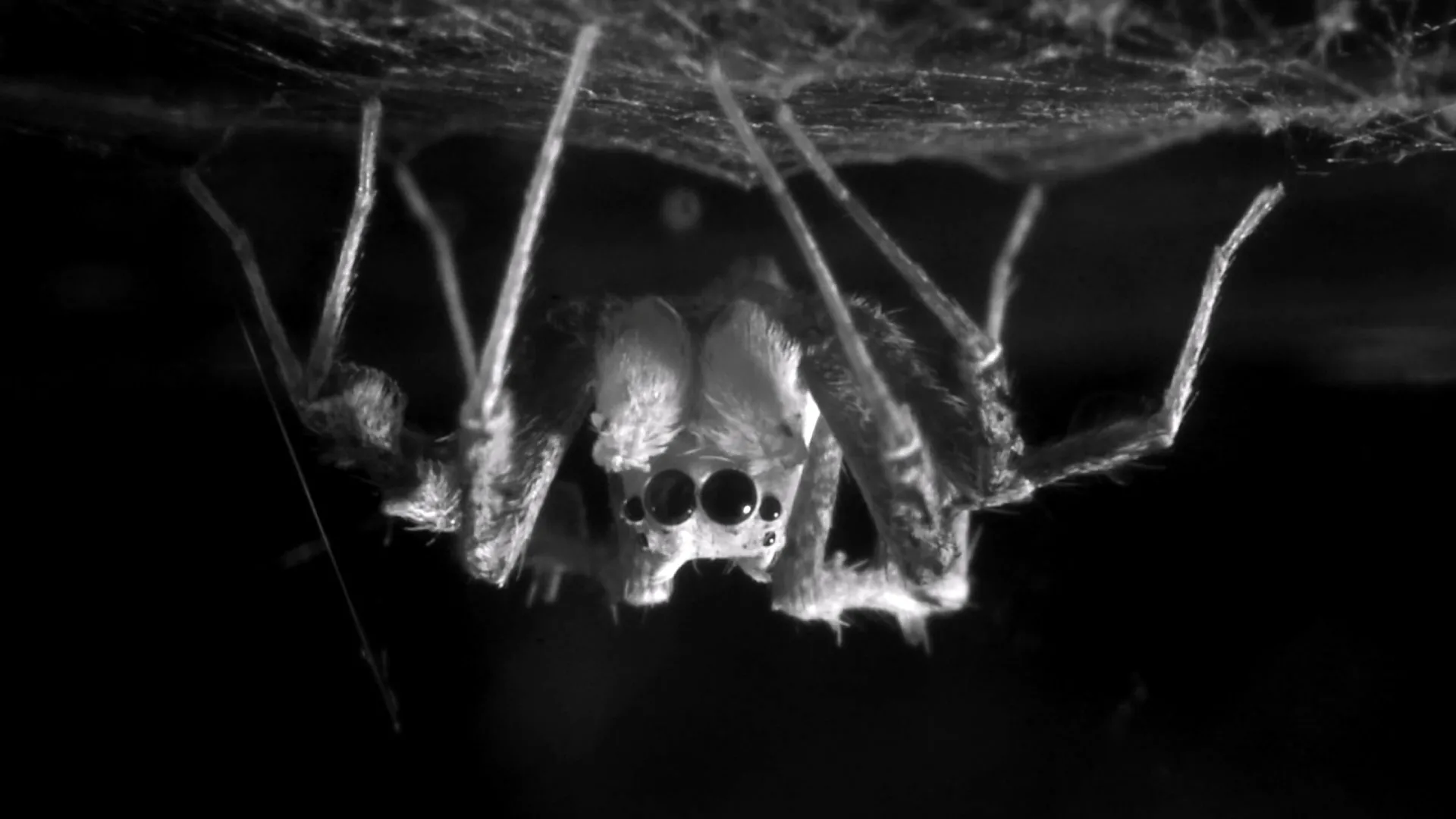
Scientists have discovered that spiders may sleep in ways surprisingly similar to humans, complete with distinct sleep stages and a dream-like REM state. Researchers at the University of Bonn studied the Australian jumping spider Portia fimbriata, a remarkably clever hunter known for its sophisticated strategies. By recording the spiders over several days and nights, they found clear evidence of regulated sleep, including a REM-like stage marked by eye movements and muscle twitches.

Science Daily · Oct 27
The Guardian view on plague in Russia: what is most worrying is the lack of information | Editorial

In the three weeks since a health worker’s death in Siberia, officials have stonewalled the WHO – setting a worrying precedent for future pandemics Is there a plague outbreak in Russia? If the answer were a clear yes, there shouldn’t be much reason to worry. With swift medical intervention, plague is treatable. But in the nearly three weeks since a worker at a Siberian plague research unit died of a mysterious respiratory illness, state officials have been consistently tight-lipped about what happened and whether there were any further cases. It is this uncertainty that has the World Health Organization (WHO) and international community worried: partly because there is a – very small – risk of an outbreak, and partly because it is yet another warning that the international coordination we rely on to prevent pandemics is fraying along with the rest of international politics, and could easily fail to protect us in the future. Continue reading...

The Guardian · Oct 18