TopNewsOn

Results for “lamar jackson-less”

France's shorter workweek hit lower-skilled workers harder

Doing more with less has become standard operating procedure for many in the current economic climate. And for some in the wake of France's 1998 workweek reduction, it was in response to a reform that's still being debated today.

Phys.org · 15h ago
Using ChatGPT at work? Your boss may trust you less, new study finds

Artificial intelligence may be making employees faster and more productive, but it could also be quietly damaging their careers. A new study led by Samuel Meyers, a Ph.D. student, together with his adviser Dr. Yochanan Bigman of the Hebrew University of Jerusalem and Dr. Roman Briker of WHU—Otto Beisheim School of Management in Germany, suggests that workers who use ChatGPT and other AI tools may pay an unexpected professional price: their managers are less likely to trust them.

Phys.org · Nov 4
Pulsars set first mass limits on supermassive black hole pairs in the early universe

So far, observations by instruments including the James Webb Space Telescope have revealed the presence of surprisingly massive black holes in the early universe. Even less than a billion years after the Big Bang, some of these bodies already weighed billions of times the mass of the sun, and to date, astronomers are unclear as to how they could have grown so large so quickly.

Phys.org · Nov 4
Foot-stiffening socks could make walking less tiring

Human feet are much stiffer than those of other primates, which means they limit midfoot bending during walking. The evolutionary reasons for this are not entirely clear. One idea is that the features that stiffen the foot evolved to make upright walking less effortful.

Phys.org · Nov 4
Study finds stronger trade secret protection leads firms to break down innovation silos

To guard proprietary know-how, many firms separate their inventors into independent groups so that no single employee sees too much of the organization's knowledge. New research published in Strategic Management Journal finds that when U.S. states strengthened trade secret law, high-tech firms relied less on this kind of compartmentalization and connected their inventors more broadly—and the inventions that followed had greater technological impact.

Phys.org · Nov 3
Cold without consequences? Short-term climate fluctuations appear to have had less impact on early farmers

Cold conditions may not have been responsible for the centuries-long pause in the spread of farming across south-eastern Europe during prehistory, according to a new study by the Leibniz-Zentrum für Archäologie (LEIZA) in Germany, published in the journal Proceedings of the National Academy of Sciences. Researchers found no evidence of extreme cold at the Greek archaeological site of Franchthi, nor any statistically significant link between local temperature fluctuations and changes in how people obtained their food.

Phys.org · Nov 3
Bee nest linings could inspire plastics that break down in soil

Hundreds of millions of metric tons of plastics are produced every year, and most of them end up sitting in landfills or polluting natural environments after use. These plastics endure for dozens to hundreds of years. But some scientists are on the lookout for solutions to this problem. And now, one team of researchers might have found a potential solution in bee nests. Their study, published in the Proceedings of the National Academy of Sciences, shows that a natural plastic made by bees may offer design lessons for plastics that degrade naturally in far less time.

Phys.org · Nov 3
Magnetic nanocomposites could help shrink the components that power computer chips

When you think about making computer chips better, you probably think about transistors. My colleagues and I focused on a less visible part of the problem: the components that deliver power to those transistors. A chip needs more than electricity. It needs electricity supplied at the right voltage, with fluctuations kept under control. Making the hardware that does this smaller is an important challenge—and one that led my colleagues and me to build tiny magnetic devices called stripline microinductors.

Phys.org · Nov 2
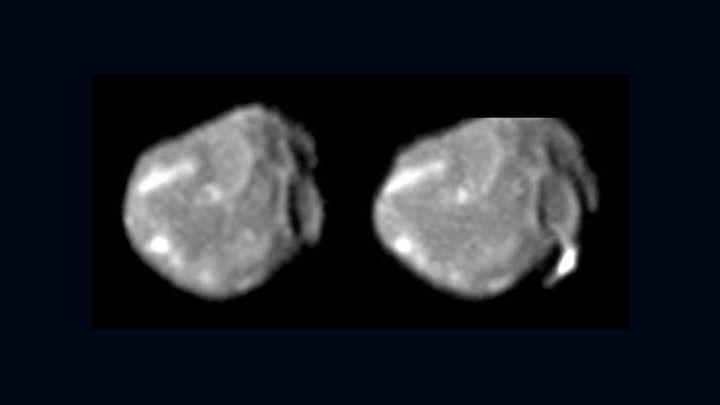
Stars make oxygen for small galaxies, but they lose most of it

Scientists examining data collected by NASA's Hubble Space Telescope have found that dozens of small galaxies contain far less oxygen than their stars are estimated to have produced. The researchers, including a Rutgers astrophysicist, studied 37 dwarf galaxies, which are much smaller than the Milky Way and considered to be nearby, within 22 million light-years of Earth. The results were published in The Astrophysical Journal.

Phys.org · Nov 2
Zombies are real—just ask the parasites taking over the bodies and brains of insects and rodents

Zombies have taken many forms in popular culture. In Michael Jackson's "Thriller" music video, corpses climb out of their graves and perform an impressively coordinated dance. In HBO's "The Last of Us," a fungus infects humans, takes over their bodies and turns them into hosts that help spread the infection. Even Plankton has tried his hand at taking control of another organism in "SpongeBob SquarePants."

Phys.org · Nov 2
Beyond visitor numbers: Understanding overtourism risk in suburban Tokyo

Overtourism has become a growing concern in popular tourist destinations, where large numbers of visitors can put pressure on local communities and attractions. However, not all destinations face the same challenges. While busy city centers may struggle to manage crowds, less-visited suburban areas often face the opposite problem: attracting enough visitors. As tourism develops in these areas, an important question arises: Could places that currently receive relatively few visitors face new pressures as tourism grows?

Phys.org · Nov 2
Mars dust may be less abrasive than lunar dust, spacesuit samples suggest

Tucked away among its sensors, cameras and navigation tools, NASA's Mars rover Perseverance is wearing small swatches of spacesuit material. A rover doesn't need a spacesuit, but the swatches—each less than a square inch (6.5 square centimeters) in size—serve an important purpose: They're helping scientists assess the potential damage caused by ubiquitous Martian dust.

Phys.org · Nov 1
This oddball reflective lava world is challenging to understand

Among Kepler and TESS's many surprising exoplanet discoveries are the ultra-short-period (USP) planets. These planets move very quickly and complete an orbit in less than 24 hours. Ancient astronomers thought that Mercury was so fast—it goes around the sun every 88 days—that they named it after the Roman god Mercury, who was the fast-traveling messenger of the gods. They couldn't have known how sluggish Mercury is compared to the USPs.

Phys.org · Nov 1
Less than 42 minutes of bright daylight linked to higher dementia risk

Getting more daylight could be linked to a surprisingly powerful benefit for brain health. In a study of more than 87,000 adults, researchers found that higher daytime light exposure was associated with a 16% lower risk of dementia, with longer exposure to bright light linked to even greater reductions. Remarkably, getting less than 42 minutes of bright daylight daily was a stronger predictor of dementia than six established risk factors.

Science Daily · Oct 29
A simple daily fiber supplement reduced arthritis pain and improved strength

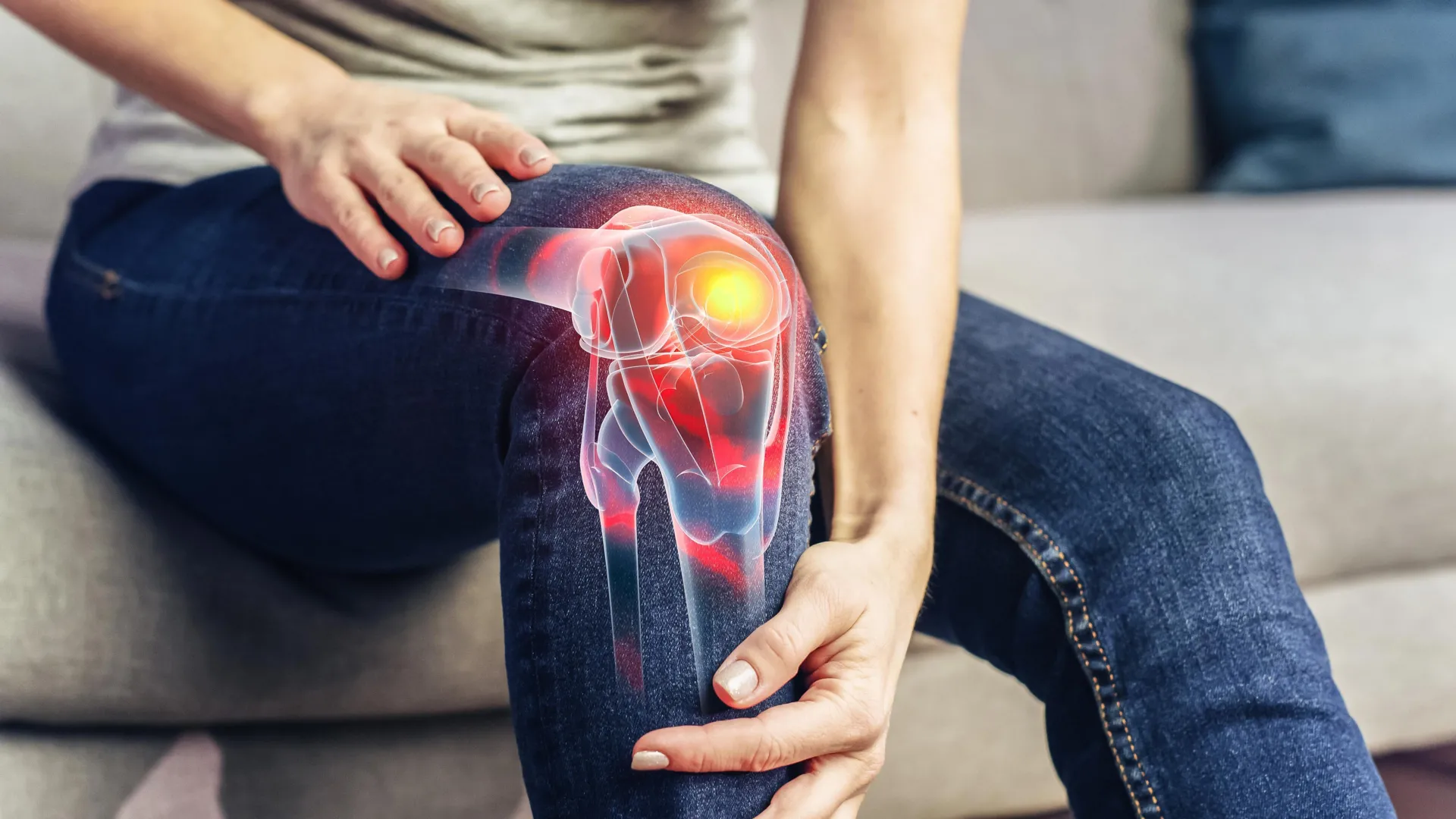
A new clinical trial suggests that a simple daily fiber supplement could significantly reduce knee osteoarthritis pain, improve muscle strength, and make the body less sensitive to pain. Researchers discovered that the benefits may be linked to changes in gut bacteria and the hormone GLP-1, revealing a promising new approach to arthritis relief.

Science Daily · Oct 28
The autistic brain processes faces differently than scientists thought

A major new study reveals that autistic children’s brains process faces differently, and those differences may begin earlier than scientists previously thought. Researchers found that brain signals associated with recognizing faces become more specialized as neurotypical children grow older, but show much less change in autistic children. The discovery could help explain why some autistic people have difficulty recognizing faces and reading emotions.

Science Daily · Oct 28
Is AI making you lazier?

A new study revealed that people who rely on AI for basic tasks like math problems became less motivated over time. In response, Live Science polled its readers to see if they agree with these findings.

Live Science · Oct 27