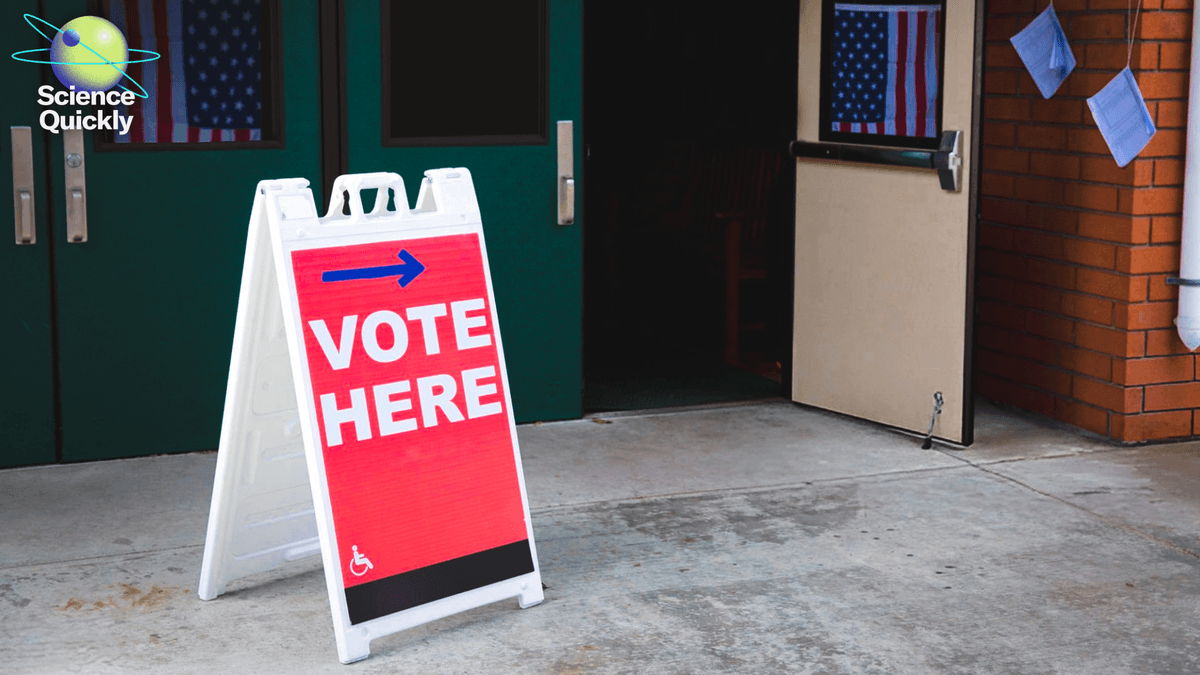
Science advocates react to Democrats’ historic midterm rout: ‘It’s a new day in Washington’
Researchers and advocates say they hope the “blue wave” could signal more accountability after two years of attacks on science
Scientific American · 4h ago

Researchers and advocates say they hope the “blue wave” could signal more accountability after two years of attacks on science
Democrats swept Congress and won in red states. Here are the races that matter most for decarbonization, disasters, and data centers
It's no secret that American politics is dominated by older politicians. When 81-year-old Joe Biden withdrew from the 2024 presidential race amid concerns about his age, it was the then-78-year-old Donald Trump who ultimately entered the White House. The median age in the House of Representatives and the Senate was 58 and 65, respectively, while the average American was just 39 years old.
The three Americans currently living off Earth made sure their voices were heard, voting in the midterm election from the International Space Station.
A global accounting puts the value of ecosystem services that could be lost to sea level rise at well over 100 billion in 2020 international dollars (Int$2020) per year by 2100, according to a study—and the nations that are likely to lose the most are not the highest emitters.
Fish that are cultivated in pools or ponds are an increasingly important source of food around the world. Unfortunately, disease outbreaks can cause substantial losses in aquaculture.
Fires in the U.S. are getting faster, larger and more dangerous, but people continue to develop and move into fire-prone regions. New research from the University of Colorado Boulder's Cooperative Institute for Research in Environmental Sciences (CIRES) shows that if we don't act on climate change, which fuels fires, manage vegetation or transform how we build and adapt to fire, the risk to structures in the U.S. will almost triple by midcentury.
Urban flooding causes significant social, environmental and economic losses every year. In Baltimore, those losses have increased in frequency and intensity since flooding records began in 1748 and are expected to continue doing so as the climate changes. Traditional flood prevention approaches, which use concrete and other impervious surfaces to direct flow, often fail in urban settings because they impede rainwater infiltration.
People are peppering artificial intelligence chatbots every day with questions, but when it comes to politics and the looming 2026 U.S. midterm elections, what role are AI platforms playing? Could an AI chatbot sway a voter to switch parties or reexamine their political beliefs?
UN-backed report finds even temporary rises above Paris agreement target could cause harm to glaciers and polar ice sheets Earth’s icy regions face such dangerous melting that global heating should be brought back below 1C after an inevitable period of overshooting global temperature targets, a UN report has found. Permanent and widespread losses of snow and ice expose a “persistent myth” that overshooting the 1.5C target of the Paris climate agreement – to 2C or 3C – could be manageable or even preferable to urgent cuts to emissions, the report found. Continue reading...
From Medicare for All to research grants, science-driven issues are playing a role in the midterm elections