TopNewsOn

Results for “near white”

Dead stars could break one of physics' most famous limits

A surprising new discovery suggests that some dead stars can grow far more massive than scientists once thought possible. Computer simulations show that powerful magnetic fields could allow white dwarfs to reach 2.4 times the mass of the Sun, dramatically exceeding a famous limit that has stood for decades. The findings could help explain unusually bright supernova explosions that have long puzzled astronomers.

Science Daily · Nov 6
NASA navigation experiment shows promise for planetary landings

NASA has successfully demonstrated technology designed to help spacecraft autonomously navigate to safe landing sites on the moon and on other planets. An Alta-X drone equipped with the agency's Safe and Precise Landing—Integrated Capabilities Evolution (SPLICE) guidance, navigation and control payload completed simulated lunar descent and landing maneuvers Aug. 27. The flight took place at Rogers Dry Lake near NASA's Armstrong Flight Research Center in Edwards, California.

Phys.org · Nov 4
Big extended families help adult female ground squirrels survive hibernation

For Belding's ground squirrels, adult females are more likely to survive from year to year if they live near more adult female kin—but neither males nor young females get the same boost from nearby family. Jill Mateo and colleagues at the University of Chicago, U.S., report these findings on Nov. 4, 2026, in the journal PLOS One.

Phys.org · Nov 4
US midterm elections: Younger politicians could strengthen trust in democracy

It's no secret that American politics is dominated by older politicians. When 81-year-old Joe Biden withdrew from the 2024 presidential race amid concerns about his age, it was the then-78-year-old Donald Trump who ultimately entered the White House. The median age in the House of Representatives and the Senate was 58 and 65, respectively, while the average American was just 39 years old.

Phys.org · Nov 4
Park users reveal 5 factors shaping acceptance of wildlife management

Should an area be fenced off, should animals be sterilized or relocated—or, as a last resort, selectively culled? As the long-running controversy over white-tailed deer in the Montreal suburb of Longueuil's Michel-Chartrand Park has shown, managing wildlife in peri-urban parks isn't just about the science. Emotions, trust and how decisions are communicated also play a role.

Phys.org · Nov 3
400,000-year-old fossilized termite nests named after Little Karoo town

University of Cape Town (UCT) researchers recently named a series of approximately 400,000-year-old fossilized underground nests of an extinct termite species after Calitzdorp, the Little Karoo town near which they were found. In October 2026, the research team returned to the town to donate a poster documenting their discovery to the Calitzdorp Museum, helping to connect local communities with the region's fossil heritage.

Phys.org · Nov 2
Dust-shrouded Milky Way star cluster may be nearly as old as the universe

Astronomers have determined that VVV CL001, a metal-poor globular cluster near the center of the Milky Way, is about 13.4 billion years old, making it one of the oldest known star clusters in our galaxy. The cluster lies behind thick clouds of interstellar dust, which made its distance and age difficult to establish. The paper, outlining the methodology for estimating its age and distance, was posted to the arXiv preprint server on Oct. 20. It has been accepted for publication by Astronomy & Astrophysics.

Phys.org · Nov 2
Tributes paid to ‘inspiring’ University of Cambridge scientist who died in Spanish train crash

Dr Marta Shahbazi was travelling to a conference to receive an award for scientific excellence in developmental biology An “inspiring” University of Cambridge scientist died in the Spanish train collision on Wednesday which killed at least 69 people. Dr Marta Shahbazi , an affiliate associate professor at the Cambridge Stem Cell Institute and a group leader at the city’s Medical Research Council Laboratory of Molecular Biology (LMB), was travelling on one of the trains involved in the crash near Urda in Toledo province. Continue reading...

The Guardian · Nov 1
Can Scientists Make Football Safer?

Researchers are exploring novel ways to treat, even prevent, the brain disease C.T.E. One of the most surprising: near-infrared light.

The New York Times · Oct 28
A single sauna session sends immune cells surging through your body

A new Finnish study reveals that just 30 minutes in a sauna can temporarily flood the bloodstream with additional white blood cells, potentially helping the immune system patrol the body and detect threats. The surprising response resembles the immune boost seen during exercise and may help explain some of the health benefits linked to sauna bathing.

Science Daily · Oct 28
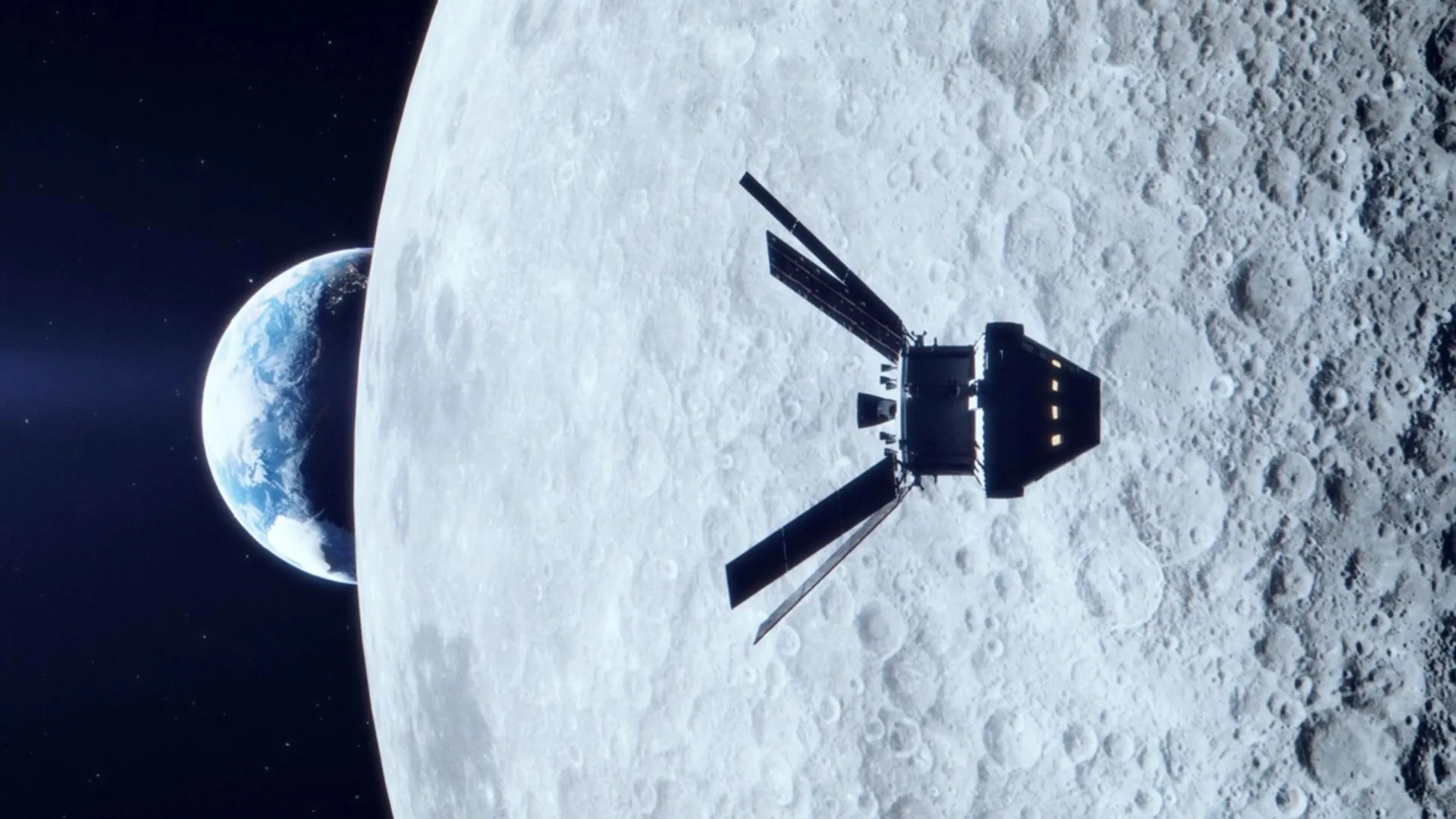
NASA’s Artemis I mission reveals surprising radiation levels near the Moon

NASA’s Artemis I mission has revealed that cosmic radiation near the Moon is higher than in Earth orbit, but not by as much as scientists might expect. Tiny experimental detectors also uncovered surprising details about how radiation passes through the human body, offering valuable insights for future lunar exploration.

Science Daily · Oct 28