Binance says it has restored backing for 90% of assets affected by its $6.3 billion hack and is planning to resume withdrawals, subject to security checks.
Results for “social security”
Account takeover threats go beyond stolen passwords as criminals exploit session cookies, SIM swaps and MFA fatigue to bypass your login security.
These cameras can provide solace, and even prevent crimes. But they also show us things that are inexplicable, and sometimes downright terrifying.
EXCLUSIVE: A security researcher discovered the hardcoded credential in Applebee's app, allowing unrestricted access to customers' personal data.
Snap is now the only defendant in the case.
Tech advocacy groups warn that foreign nationals at AI companies like OpenAI and Google pose a national security threat amid a lack of federal oversight.
Low costs and offline security mean magnetic tape still has a job.
The fanfic site could be down for weeks due to a “security incident.” Users are not taking it well.
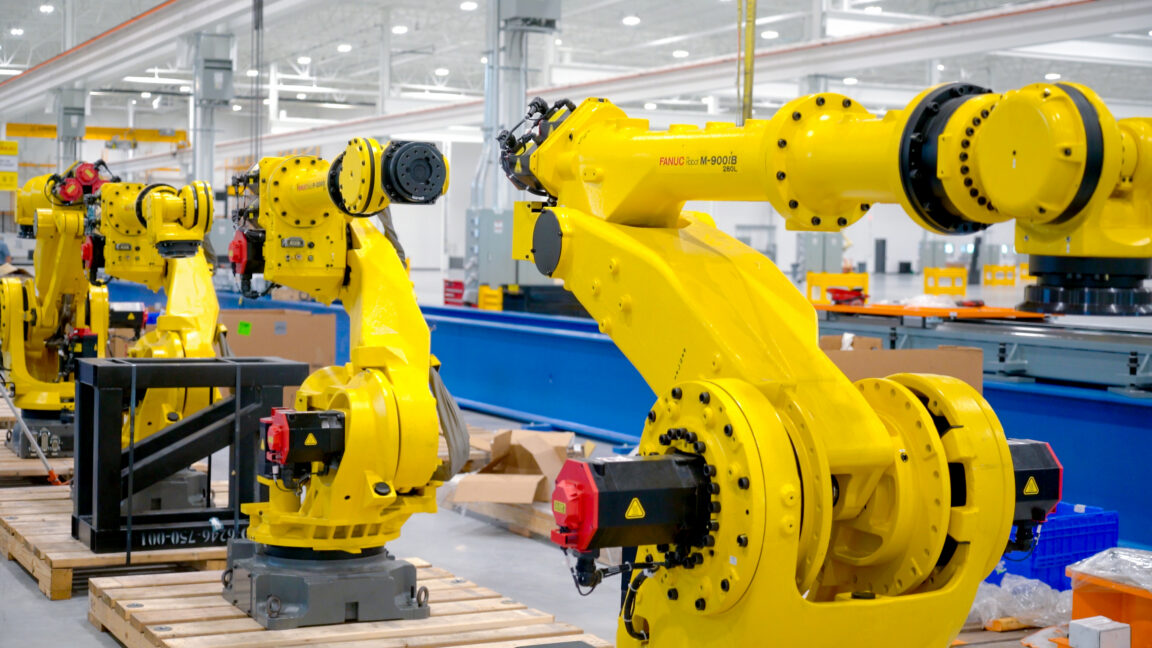
President orders trade talks on foreign-made factory robots, threatens tariffs.
Court documents reveal staff considered ways to ‘get academic community to disavow’ influential US author Meta staff discussed deploying a “whisper strategy” to undermine the influential US academic whose work has inspired a global social media crackdown , according to court documents. Employees at the parent group of Facebook and Instagram sought to discredit Jonathan Haidt, the social psychologist and author of The Anxious Generation , a book that helped tip the debate about online safety towards more stringent measures such as the under-16 ban in Australia. Continue reading...
Reliance on the island for AI chip production puts it among America’s top foreign policy interests.
Ofcom says photo and digital ID, banking checks or facial age estimation can help prove someone is 16 or over.
AI tools are making it easier to modify and recreate games, raising questions about piracy, copyright and how far the technology could disrupt the industry • Don’t get Pushing Buttons delivered to your inbox? Sign up here If your social media algorithms have clocked that you’re into video games, something strange will have happened in the past few weeks. Your feed, like mine, will have been full of clips of streamers playing bizarre mashups of popular video games . Skyrim in Minecraft. Halo, except the main character is Mario. Skate 2 in Call of Duty maps. A flood of professional-looking fan-coded game mods that are mildly interesting to look at for 30 seconds, but ultimately inconsequential. Would I download a mod that lets me play Wii Bowling inside a zombie shooter? No, but I am very interested in where they came from. Of course, the answer – or at least, most of the answer – is AI. After a week of researching this (thanks especially to Replay Mode on YouTube for this informative video , which set me down this track) I now understand that these mashup mods are not just AI-generated videos, but AI-assisted coding. Basically, as of a few weeks ago, Anthropic’s Claude has become extremely good at decompiling video game code. Games are written by humans in readable code and then compiled into binary 1s and 0s that the PC or console running it can read; decompiling is the reversal of that process, revealing a game’s source code, which humans can then edit and mess around with for fun. This used to be an extremely laborious process. But now it is not, because humans aren’t doing much of it any more. Continue reading...
Labor government under pressure to create social media watchdog as new online safety standards bill passes lower house Follow our Australia politics live blog for latest updates Get our breaking news email , free app or daily news podcast The federal government wants to ban AI chatbots which seek to create “emotional intimacy” after prime minister Anthony Albanese raised the alarm in a heartfelt speech about children treating these agents as their “best friend”. But Labor is coming under increasing pressure to empower the telecommunications ombudsman to become a watchdog for social media and AI to give Australians an external complaints mechanism and allow the “naming and shaming” of big tech. Sign up for Guardian Australia’s Politics, really newsletter here Continue reading...
From apps that block distractions to stripped-down phones, young people are finding ways to unplug from platforms they say profit from their attention Gen Z voters: tell us what is guiding your vote in the US midterm elections? Nelissa Moukoudi, 19, a university student in Canada, noticed a shift once she joined Instagram and TikTok. “My social life completely plummeted and it felt like my life was only [using] social media and school,” she said. Continue reading...
A fake Social Security statement phishing email uses the SSA logo and a convincing layout, but the sender's domain instantly exposes the scam.
Athletes’ scramble to control – and monetise – their digital identities at the cutting edge of AI rights deals Get our new political email , free app or daily news podcast The Socceroos star stares at the camera as he strides through an enormous atrium, the sound of his football boots on polished concrete echoing around him. Suddenly, he spawns four digital clones that peel off out of view to re-emerge in different settings around the world. This scene from a social media video is fake and generated by artificial intelligence. But it has been authorised by the very real 22-year-old footballer, Cristian Volpato, the latest professional athlete to licence and monetise his AI likeness. Continue reading...
AI discovered a vulnerability in part of the internet's architecture, called PHP2SHELL. Security researchers rushed to fix it, but news of the vulnerability leaked and hackers have swooped in.
AI was used to uncover a security weakness that affects most of the world's websites, researchers said. Here's what internet users should know.
The language that’s known as the backbone of the internet is now subject to what experts are calling the one of the most notable vulnerabilities in recent memory
A jury found that the social media company had deceived consumers for years about its data privacy policies.
The more access you give personal AI agents, the more capable they can be. But should you trust them?
A dedicated VPN IP address may reduce frustrating CAPTCHAs and bank login security checks by giving websites a consistent connection to recognize.
AI is increasingly getting good at doing some tasks, but it can never replace human workers’ judgment Autonomous cars, which may be the safest we have built, keep getting easily avoidable parking tickets. While Waymos crash far less often than human drivers over tens of millions of miles, they’re still terrible at performing basic tasks – keeping out of disabled parking spots and tow-away zones, or steering clear of a church garage during Sunday service, according to the Wall Street Journal . That is the state of AI today: impressively capable at something complex, yet embarrassingly clumsy at something easy. And it has implications for what work will remain human and what will be automated by AI. Madhu Shashanka is co-founder, chief scientist and chief technology officer at Concentric AI, a data security software company Continue reading...
Wikipedia’s 68m articles have been consulted trillions of times. Not bad for a website that has barely changed since it was founded 20 years ago A few years ago, I was struck by the tension between how Wikipedia was used, and how it was talked about. Everyone was on it all the time, and yet its reputation had stalled at “don’t trust it”, because it was the “free encyclopedia that anyone can edit”. Clearly people were trusting it, so much so it had become part of the fabric of everyday life since it was founded by Jimmy Wales and Larry Sanger in 2001. But despite the fact it now has been consulted trillions of times by billions of people (English Wikipedia alone is 5.2bn words long), it inspires an odd lack of curiosity. Even people donating to Wikipedia might say the money was “for the factcheckers”, though there aren’t any – not paid ones, anyway. Meanwhile, the internet in the social media era had begun to feel like a much uglier place, and some digital nostalgia was setting in: here was this holdover that had somehow survived; a website that functions – and even looks – much the same as it did 20 years ago. Continue reading...
Health trackers can now alert you to shifts you can’t feel. Doctors warn the data might give you anxiety—or a false sense of security.