Stocks sold off as doubts over the durability of the artificial intelligence boom drove investors out of technology shares. MSCI’s gauge of Asia Pacific equities fell 2.1%, led by a 6.3% slide in South Korea and a 4.8% drop in Taiwan, the region’s two key barometers of the AI trade. Bloomberg's Winnie Hsu reports. (Source: Bloomberg)
Results for “trade secrets”
Huawei Technologies Co. was found guilty of multiple US criminal charges, including money laundering, a conspiracy to steal trade secrets and defrauding banks about its business in Iran and North Korea. Bloomberg's Jill Disis has more. (Source: Bloomberg)
Stacy Rasgon, a Senior Analyst covering Semiconductors at Bernstein, discusses whether recent events involving Nvidia and Jensen Huang have exposed weaknesses in the semiconductor trade. He discusses what the hyperscaler buildout will look at in 2028 and beyond. He speaks with Romaine Bostick on "The Close." (Source: Bloomberg)
The charges against the Chinese tech company date back to 2019.
Emily Roland, Co-Chief Investment Strategist at Manulife John Hancock Investments, argues that the Federal Reserve is central to the outlook for equities as momentum in the AI trade slows and markets need a stronger macro cycle to advance. She says investors need a Fed “put,” not only support from Trump-related policy, and describes the Fed as a key market problem. She speaks with Romaine Bostick on "The Close." (Source: Bloomberg)
A jury has found Huawei guilty of stealing US trade secrets, according to reports from NBC News and Bloomberg. The verdict, handed down in a federal court in New York, concludes a years-long legal battle that accused the Chinese telecom giant of stealing source code and proprietary technology from several companies, including T-Mobile, Cisco, and […]
Bonds backing cloud computing provider CoreWeave Inc. fell to record lows Tuesday, among the day’s biggest corporate bond losses, amid renewed concerns about the durability of the AI trade.
Get a jump start on the US trading day with Dani Burger on "Bloomberg Open Interest." Stocks slide as the Nvidia euphoria fades and trade fears return. Nvidia is still at the center of the storm. Cleo Capital’s Sarah Kunst says board members should resign, Congressman Raja Krishnamoorthi raises national security concerns, and Harvard’s Jesse Fried weighs the board’s duty to shareholders. Plus, Matt Maley on cracks in the AI trade, Anthropic falls below its IPO price, and retailers deliver a bright spot. (Source: Bloomberg)
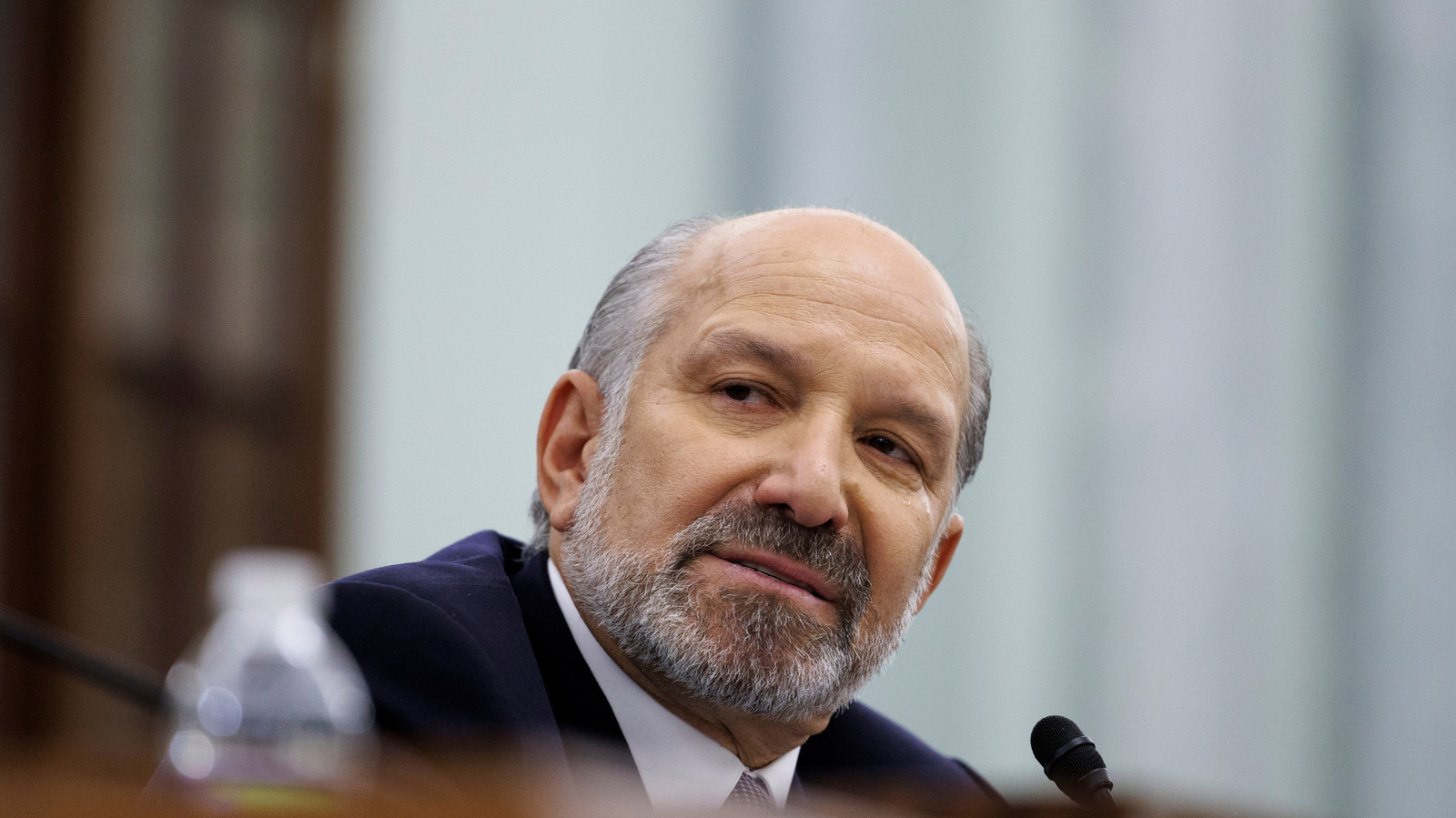
As Jensen Huang returns to his post as Nvidia's CEO with support from the Trump Administration, the Department of Commerce has added Megaspeed to its Entity List, which blocks trade with the company, citing national security risks. As reported earlier by Semafor, Commerce Secretary Howard Lutnick had faced increasing pressure to list the company after […]
No American company, including NVIDIA, can sell technologies to Megaspeed without a license from the federal government.
A selloff in technology giants dragged down stocks, with the market also retreating on concerns over fresh US tariffs. Skepticism surfaced over whether the artificial-intelligence trade can mount a sustained rebound, with the Nasdaq 100 falling 1.5%. Nvidia Corp. lost 5%. Anthropic PBC sank below its $83 initial public offering price. Ivan Feinseth, CIO and Senior Partner at Tigress Financial Partners, explains why he remains bullish on tech and why he's maintaining his strong buy rating on Nvidia. (Source: Bloomberg)
Franklin Templeton Chief Market Strategist, Stephen Dover, sees Nvidia’s rebound as a near-term positive, with the “Bank of Nvidia” back in play, but warns that circular AI funding and corporate-governance risks remain. He favors broader equity exposure, emerging markets and diversification beyond the AI trade. He appeared on Bloomberg's Insight with Haslinda Amin. (Source: Bloomberg)
US equity futures decline as the rally following Jensen Huang's return to Nvidia eases. The Trump administration has put Megaspeed and a Singaporean subsidiary of Alibaba on a US trade blacklist that bars it from buying advanced AI chips. China will continue exporting critical minerals to the US, maintaining the trade truce with Washington. Patrick Armstrong of Plurimi Wealth joins "Bloomberg Brief" to discuss the implications for the AI trade with Huang back as Nvidia CEO. Amy Wu Silverman of RBC Capital Markets examines the outlook for the volatility market. (Source: Bloomberg)
The extraordinary rally in stocks that followed Jensen Huang’s return to Nvidia is giving way to caution as traders wait for further evidence that the artificial intelligence trade can build on its rebound. The Trump administration blacklisted a Singaporean subsidiary of Alibaba, roping one of China’s biggest tech companies into its crackdown on Megaspeed, the firm at the center of a controversy that briefly cost Huang his job. Today's guests: Clemens Fuest, ifo Institute President; Charlotte Ryland, CCLA Lead Investment Manager; Carissa Veliz, Oxford University Institute for Ethics in AI Associate Professor; Olof Engelbrekts, Bank of America Switzerland CEO & Head of Investment Banking for Switzerland; Rishi Khosla, OakNorth CEO & Co-Founder. (Source: Bloomberg)
Sharon Bell, senior European equity strategist at Goldman Sachs, discusses the outlook for the AI trade after the rally in stocks that followed Jensen Huang’s return to Nvidia. "We may stay overweight equities, but you want to buffer that with bonds," Bell tells Bloomberg Television. "Take less risk maybe, but also diversify and mix your exposures." (Source: Bloomberg)
Nvidia's reinstatement of Jensen Huang as chief executive officer doesn’t remove the cloud that still lingers over him and chipmaking giant. Huang is set to testify before the Senate Banking Committee on Dec. 3, while concerns also remain around the costs and risks of the AI buildout. Bloomberg's Neil Campling has more. (Source: Bloomberg)
Jensen Huang’s return to Nvidia Corp. after lobbying by President Donald Trump has revived Asia’s battered AI trade, but investors say it’s done little to resolve the bigger questions hanging over the boom.
The Trump administration has put Megaspeed International on a US trade blacklist that bars it from buying advanced AI chips, targeting a Singapore-based firm at the heart of the scandal that briefly cost Jensen Huang his job at Nvidia. (Source: Bloomberg)
Malaysia will advise data-center operators not to host, lease space or provide services to seven companies newly placed on a US trade blacklist, stepping up efforts to prevent the country’s booming industry from being used to circumvent American technology restrictions.
Vivek Mahajan, CTO of Fujitsu, discusses the global rollout of the company's Monaka server and its strategy to build infrastructure for sovereign AI. He says Fujitsu is targeting sectors where security is critical, including defense, finance, government and manufacturing, as demand for trusted AI infrastructure grows. He speaks with Avril Hong on "Bloomberg: The Asia Trade". (Source: Bloomberg)
Japanese stocks rose as Jensen Huang’s return to lead Nvidia Corp. eased concerns about a slowdown in AI investment that had intensified following his departure.
US prosecutors say the former engineer at OpenAI charged with bugging an office conference room likely intercepted trade secrets and possessed a photograph of what appears to be a term sheet for a “strategic partnership” between the ChatGPT maker and another company.
Katy Kaminski, Chief Research Strategist and Portfolio Manager at AlphaSimplex Group, says Nvidia’s sharp jump underscored how concentrated and pervasive the AI trade has become. She notes that its influence extends beyond equities and that the scale of recent market moves shows how important the theme has become. She speaks with Romaine Bostick on "The Close." (Source: Bloomberg)
The Trump administration put Megaspeed International on a US trade blacklist barring it from buying advanced artificial intelligence chips, targeting a Singapore-based firm at the heart of the scandal that briefly cost Jensen Huang his job as Nvidia chief executive officer. In a filing Monday, the Commerce Department formally added Megaspeed to its so-called entity list, a designation that bars the company from buying AI chips and other advanced technology without a US government license. Maggie Eastland, Bloomberg News Tech and Industrial Policy Reporter, and Michelle Jamrisko, Bloomberg News White House & National Security Editor discuss what today's White House moves mean for the relationship with China. (Source: Bloomberg)
Former Republican representative from North Carolina Patrick McHenry said that even if the Trump administration has already absolved Jensen Huang of any wrongdoing in his affair with an alleged Chinese spy, Congressional investigations could reveal details that change the public posture around the company and help other governments put pressure on the chipmaker. McHenry said that Jensen Huang peers with Elon Musk in terms of market impact and how his actions dictate the future of AI. (Source: Bloomberg)
Find out how affordable smart rings compare with the Oura Ring 5 on upfront price and long-term cost and know which trade-offs come with paying less.
Nvidia Corp.’s board reinstated Jensen Huang as head of the world’s largest chipmaker in one of the most startling corporate comebacks in history, sending the stock on its biggest rally in decades. Less than two weeks after Huang left Nvidia under the cloud of scandal, he is reclaiming the titles of president and chief executive officer, the board said in a surprise statement Monday. President Donald Trump has pressed for the move, and the board cited the US government’s input when making the announcement. Barry Ritholtz, Founder of Ritholtz Wealth Management and Host of “Masters in Business” says this is the ultimate "Trump always chicken's out trade. (Source: Bloomberg)
Get a jump start on the US trading day with Dani Burger on "Bloomberg Open Interest." Jensen Huang is back at Nvidia, with an extraordinary push from President Trump helping clear the way. Bloomberg Open Interest explores what his return means for Nvidia, the AI trade and Washington, with Ed Ludlow, Mandeep Singh, Michael Shepard and Tyler Kendall. Plus, David Herro on the global market ripple effects, and Pierre Ferragu on why Nvidia still needs Jensen. (Source: Bloomberg)
Shares of companies tied to artificial intelligence surged Monday after Nvidia Corp. reinstated Jensen Huang as president and chief executive officer, effective immediately. Ted Mortonson, Managing Director: Technology at Baird, discusses the move and its broader impact on the AI trade. (Source: Bloomberg)
US stock futures are mounting a rebound from a rout in the artificial intelligence trade that sent the S&P 500 into a technical correction. Anthropic opened higher in US premarket trading after slumping on its second day of trading on Friday. European natural gas prices jumped as a sharply colder weather outlook intensified concerns over Europe’s winter supplies, already under pressure from export disruptions linked to the US-Iran war. Today's guests: Kallum Pickering, Peel Hunt Chief Economist; Elie Maalouf, IHG Hotels & Resorts CEO -- "The Pulse With Francine Lacqua" is all about conversations with high profile guests in the beating heart of global business, economics, finance and politics. Based in London, we go wherever the story is, bringing you exclusive interviews and market-moving scoops. (Source: Bloomberg)
James Sullivan, Co-Head of Global Fundamental Research at JPMorgan, says Asian AI stocks are pricing in earnings cuts of as much as 30%, while the firm sees about 5% as realistic. On Bloomberg's Insight with Haslinda Amin, he discussed the recent tech selloff, as well as his outlook for Fed policy. (Source: Bloomberg)
Eva Lee, Chief Investment Office Head of Greater China Equities at UBS Global Wealth Management, says investors can look to companies with strong balance sheets, sound fundamentals and capacity for buybacks. Investor sentiment toward the AI trade remains fragile even after Asian authorities rolled out support measures and US markets showed signs of stabilizing. (Source: Bloomberg)
Emerging-market stocks are set to erase this year’s gains as deepening concerns over the sustainability of the artificial-intelligence trade fuel selloffs across markets from the US to Asia.
Apple's AirPods Max sound great, but they come with a lot of compromises for $549 headphones.
Tempered glass has taken over the PC case market. Learn what drives the trend and the trade-offs that could make a glass-panel build a poor fit for you.
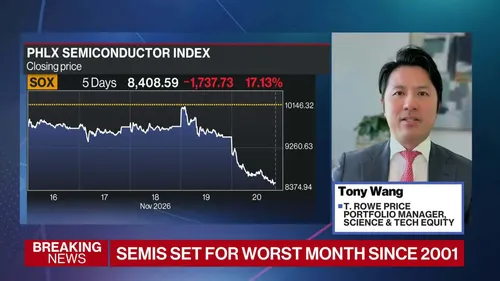
Tony Wang, Portfolio Manager of the Science and Technology Equity Strategy at T. Rowe Price, is asked whether the AI cycle has changed and whether recent declines create a buying opportunity. He also flags Wednesday’s PCE inflation report as a potential catalyst for markets. He speaks with Romaine Bostick on "The Close." (Source: Bloomberg)
Leverage could be the weak spot as prices fall from their heights.
Test using prompts with unique, trackable secrets proves that data doesn't stay private.
Bloomberg’s Ed Ludlow takes a look at Anthropic shares falling after its blockbuster stock market debut, as part of a wider global tech selloff hitting the AI trade. And: Grand Theft Auto 6 has finally arrived with record-breaking demand. (Source: Bloomberg)
Anthropic PBC shares erased much of their first-day jump on Friday, testing investors’ faith after the AI lab delivered the biggest initial public offering in history. Gene Munster, Managing Partner at Deepwater Asset Management and Ted Mortonson, Managing Director: Technology at Baird, discuss AI trade volatility and how Nvidia and Anthropic have reshaped the AI narrative. (Source: Bloomberg)
Gauges of credit risk rose for some of the biggest hyperscalers and chip makers while their bonds weakened on Friday, as the wobbling AI trade spurred volatility in global markets.
US Trade Representative Jamieson Greer discusses US chip controls, talks between President Donald Trump and Chinese President Xi Jinping on rare earths, and the potential for an extension of the US-China trade agreement. He speaks with Annmarie Hordern on “Bloomberg Surveillance.” (Source: Bloomberg)
US Trade Representative Jamieson Greer discusses US chip controls and talks between President Donald Trump and Chinese President Xi Jinping after the two leaders met this week in Shenzen. He speaks with Annmarie Hordern on “Bloomberg Surveillance.” (Source: Bloomberg)
US equities are trading lower before the bell on Friday as a momentous week — characterized by the arrival of the long-awaited Anthropic PBC IPO — appears to have done little to appease concerns over the AI trade following initial excitement.
Nasdaq futures were lower as the index headed toward its worst one-week performance since Trump’s April 2025 imposition of sweeping tariffs, and stocks fell across the globe as sentiment around the AI trade deteriorated further.
Anthropic shares fell in premarket trading as a broad market selloff and doubts about the AI trade overshadowed the optimism that had fueled a rally on its record-setting debut. Apple is developing its own autonomous AI agent that can get things done on behalf of users, looking to enter a fast-growing market already being pursued by OpenAI, Anthropic, Meta and others. A gauge of global stocks is heading for its longest losing streak in three years as the AI trade undergoes a sharp unravelling, putting this year’s broader equity gains at risk and roiling metal markets. Today’s guests: Themos Fiotakis, Barclays Global Head of FX Strategy & EM Macro Strategy; Jill Rutter, Institute for Government Senior Fellow; Vas Narasimhan, Novartis CEO (Source: Bloomberg)
Investors are still worried after the first public market debut of a frontier AI lab
Katrina Dudley, senior investment strategist at Franklin Templeton, sees the current market environment as an opportunity to add some stocks to your portfolio “outside the direct AI trade” within “underappreciated AI beneficiaries.” She speaks on “Bloomberg Brief.” (Source: Bloomberg)
Anthropic shares fell on their second day of trading. The Claude chatbot maker tumbled in premarket trading as a broad market selloff and doubts about the AI trade overshadowed the optimism that had fueled a rally on its IPO day. Bloomberg Intelligence Matthew Bloxham has more. (Source: Bloomberg)
Investors sought to navigate a choppy week for equities, starting with a fresh bout of volatility for the AI trade when the US introduced new restrictions on China's access to high-end AI chips following a spying controversy dogging Nvidia. The fresh curbs presented President Xi Jinping and President Donald Trump with a dilemma, threatening a fragile trade truce as the two met at the APEC leaders' summit in Shenzhen. As investors grappled with the reality that Nvidia sits at center of the AI ecosystem, questions are emerging about how a shift in leadership at the company and global AI policy could cause a shake-up in the stability of global semiconductor supply chains. The Opening Trade spoke to market experts and leading geopolitical voices throughout the week. (Source: Bloomberg)