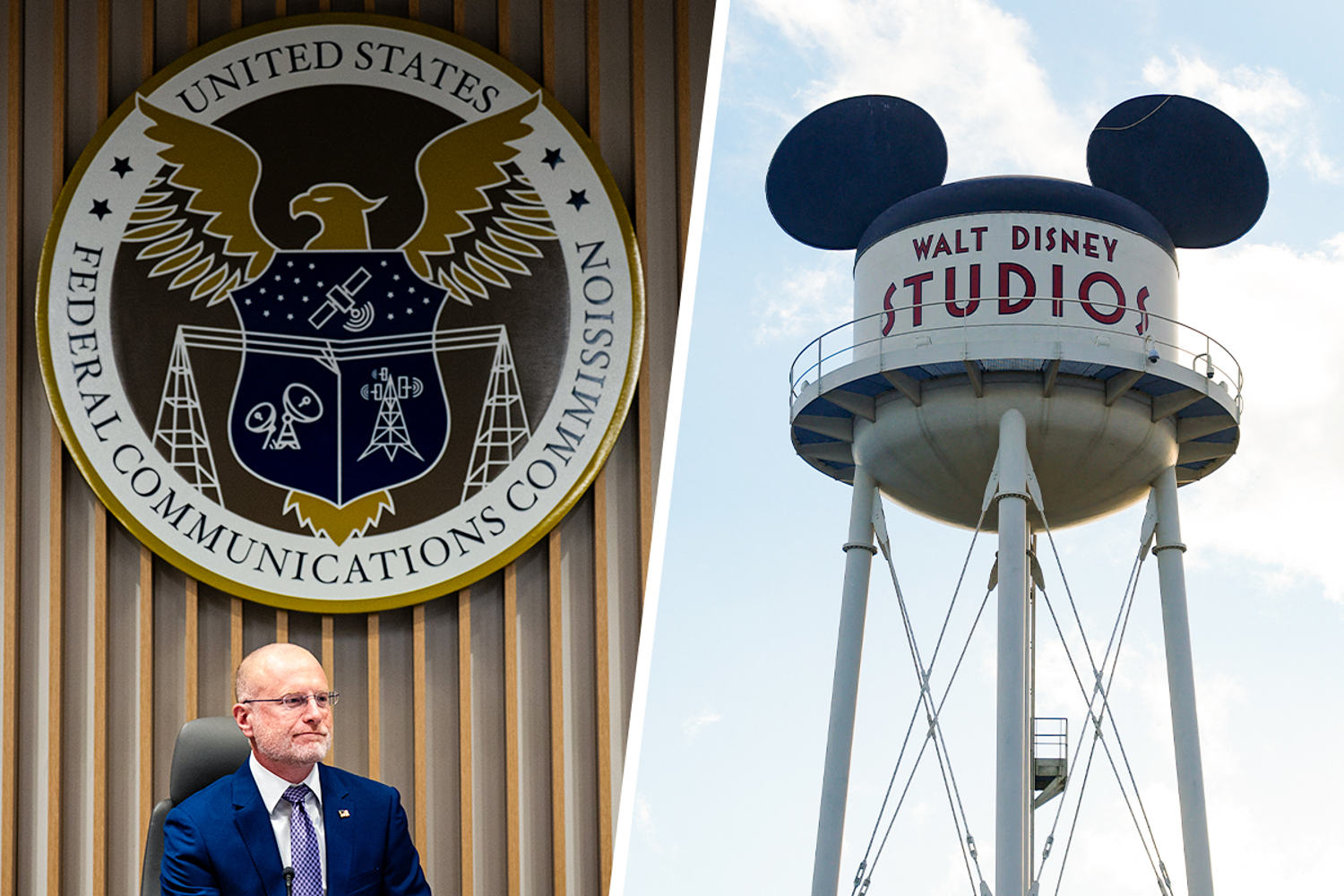
The Walt Disney Co. secured a temporary restraining order Wednesday blocking the Federal Communications Commission from moving forward with an unusually early review of ABC’s broadcast-station licenses, which the media company has called an attack on free speech by the Trump administration.
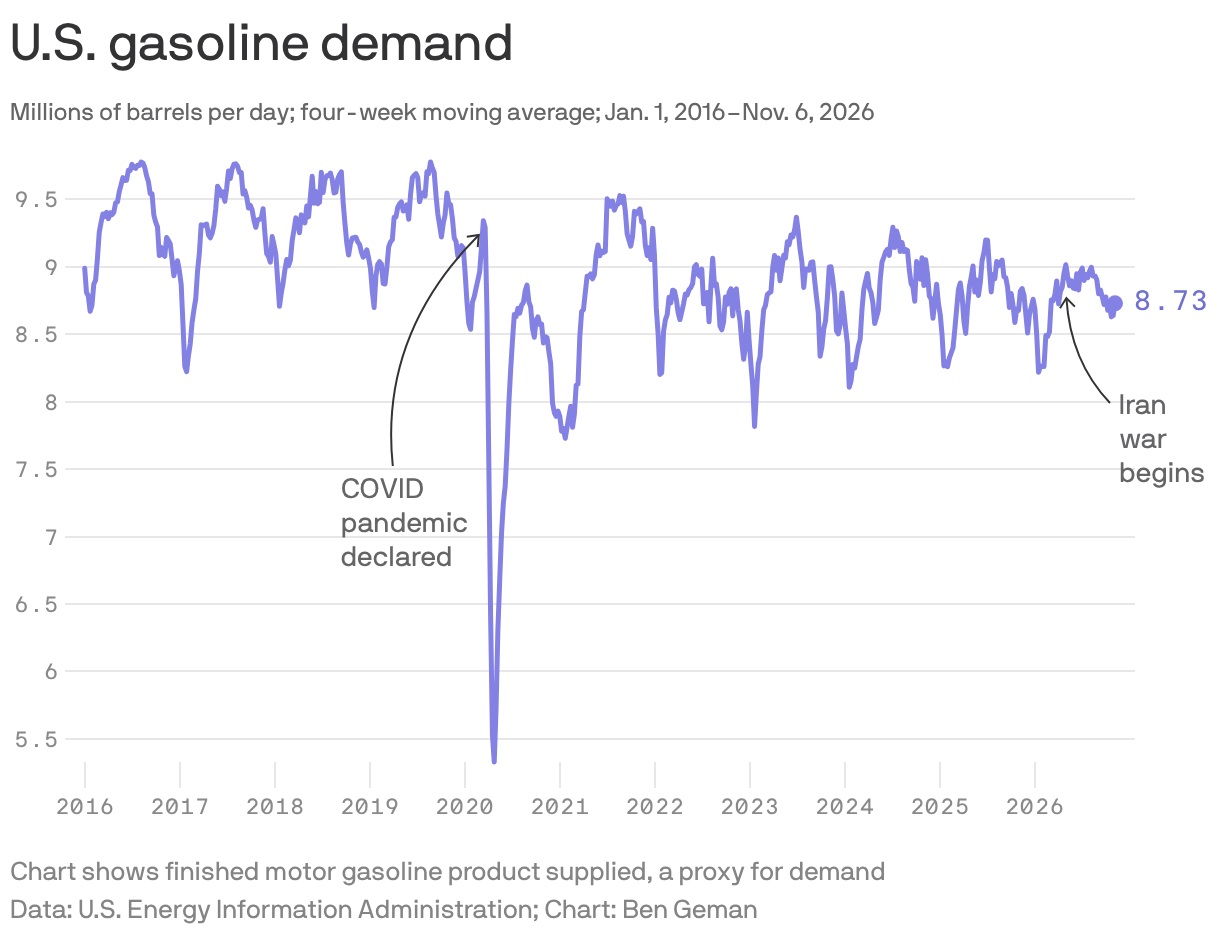
Pain at the pump may have changed some votes, but it's apparently not prompting big changes in how much Americans drive. Why it matters: Most driving isn't especially optional, so people are absorbing the cost. This year Americans have paid an additional $88 billion for gasoline relative to a no-war baseline, according to Brown University's Climate Solutions Lab. The Energy Policy Research Foundation finds that U.S. households paid between $300 and $730 more on gasoline in March-August compared to the prior year. State of play: Gasoline demand from the beginning of March, right after the Iran war started, through early November is very similar to the same stretch last year, per federal data. There's "no discernible evidence of a decline in gasoline consumption," UC-Berkeley energy economist Lucas Davis writes in a new post on the topic. That's despite gasoline prices being 31% higher since the war began compared to the same period last year. The intrigue: Davis points out that the stubborn demand comes despite polling that shows Americans say high prices are changing their habits. He flags an April Washington Post-ABC News survey that showed 44% of respondents saying they had cut back on driving. Multiple polls show some version of this. For instance, 57% of respondents in a June Gallup survey said high prices were causing them to drive less. How it works: Davis' post and the chart above rely on the federal Energy Information Administration's measure of gasoline product supplied. EIA calls it a proxy for demand, and measures gasoline leaving the supply chain, including refineries and bulk terminals. There's no perfect measurement. The Transportation Department tracks miles traveled, though there's a lag. The most recent data, for August, does not show a drop-off this year. The bottom line: "[T]his is a valuable reminder of the gap between what people say and what they do," Davis writes. "Drivers may talk about cutting back, but studies in the economics literature co
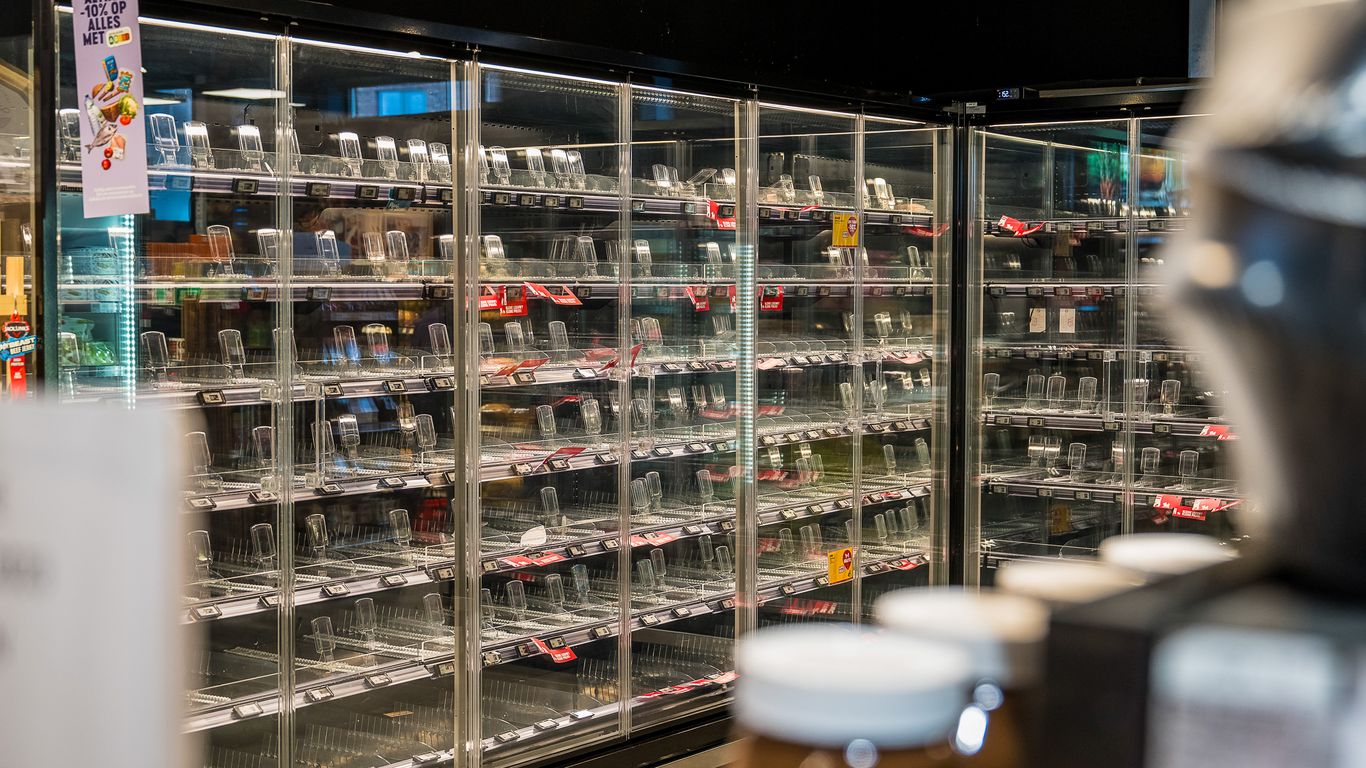
Cyberattacks are wreaking havoc on an unlikely target across Europe: supermarket refrigerators. Why it matters: Hackers are turning everyday, internet-connected equipment into physical hazards, spoiling food and causing costly damage. U.S. supermarkets use similar technology, and the Pentagon is already investigating suspected cyberattacks involving refrigeration systems at six military commissaries. Driving the news: Suspected cyberattacks sent refrigerator and freezer temperatures soaring at dozens of European supermarkets overnight, spoiling food and threatening costly losses. Grocery chains Ahold Delhaize and Colruyt reported incidents affecting stores in Belgium and Luxembourg, while Swedish chains ICA and Coop reported similar disruptions, per Reuters . A Belgian company that operates Delhaize's refrigeration systems said hackers switched the units into defrost mode. Here's what to know. Supermarkets hacked in Europe Supermarkets in Belgium, Estonia, Finland, Ireland, Luxembourg, the Netherlands and Sweden reported cyberattacks or IT disruptions, forcing some stores to discard spoiled food. Dozens of stores were affected, including an ICA supermarket in Sweden that said hackers set its refrigerator and freezer temperatures to 122°F, per ABC News . Authorities haven't shared who specifically is behind the attacks, per NBC News . Empty refrigerated shelves at a Proxy Delhaize supermarket in Maleizen, Belgium, following a refrigeration outage. Photo: Wiktor Dabkowski/Bloomberg via Getty Images Flashback: The incidents follow similar attacks in France last month, when hackers seized control of hundreds of refrigeration units, causing fires and spoiling food. It's unclear whether the attacks are connected. What they're saying: France's finance minister Roland Lescure said at the time that the attack "touches the heart of our food security." "It was a wake-up call for everyone," he said. How fridges get hacked How it works: Hackers aren't opening up each individual