

If the sweeping Senate permitting bill becomes law, it will reflect a rare convergence of political and market forces strong enough to trump the Beltway aversion to big, bipartisan deals. Why it matters: The bill could transform how America builds energy infrastructure, with major implications for everything from electricity costs to data centers. Getting rid of bureaucratic hurdles for energy projects is a top priority for the fossil fuels and renewables sectors. But critics argue the plan would unacceptably weaken environmental protections and the rights of Native American tribes. The latest: A vote on final passage of the White House-backed bill could occur Thursday after the Senate plows through some more amendments. The big picture: Many industries — pipelines, transmission, housing, you name it — call permitting a long bureaucratic and judicial maze that stymies projects. Yes, but: That, on its own, isn't nearly enough to get this far. Here are other reasons the bill has a path to becoming law after years of failed efforts to upend permitting. 🗳️ The cost-of-living election. The midterms were soaked in affordability politics at a time of rising energy bills. While critics can call the projected savings modest, cost is politically front and center. The Rhodium Group estimates that big provisions it analyzed would cut average residential power prices by 3%-4% in 2035. Third Way, a group that favors the bill, supported the research firm's work. 📈 Rising electricity demand. U.S. power thirst has been rising in the last few years after staying largely flat for decades, driven partly by AI and wider electrification of the economy. 🦋 A maturing clean energy industry. As sectors like renewables and storage become more mainstream, " more developers and companies are seeing the real-world challenges" of doing projects, clean energy lobbyist Jeff Navin notes via email. That puts them in agreement with utilities and oil and gas companies. "They all run into problems ge
Results for “alcaraz puts”

Iran's reported dirty bomb exploration puts new focus on a threat experts say could shut down a city and displace families even without mass casualties.

Axios chief technology officer Dan Cox, who's spent 25 years at some of the world's biggest tech companies, puts the recent spate of high-profile failures in perspective: My parents, my siblings and plenty of other people are asking the same question: How worried should we be? The big picture: I've been in technology a long time. I take these threats seriously , but I'm not in panic mode. When something breaks, we need to understand what happened, how far it reaches and what we can do about it. A frightening headline doesn't answer those questions. Zoom out: The way I think about it, we've put powerful tools in more hands, and people are taking potshots to see what they can hit. Those shots can do real damage, and we need to protect ourselves. But hearing gunfire doesn't, by itself, mean an army is coming over the hill. We need to understand who's firing, what they can actually do and whether the threat is changing. Zoom in: Over the past few weeks, we've identified bad actors snooping around our own website, too. Our talented engineers have investigated threats and put mitigations in place. There may still be attempts on our site, but each incident gives us an opportunity to strengthen our systems. Between the lines: There are thousands of smart, resourceful and dedicated engineers working to protect the systems we all rely on. I see that commitment in our own team. I believe that if the threat grows, more people with those skills will step up. That's part of why I have confidence in our ability to respond, even as the threats evolve. The bottom line: Fred Rogers shared his mother's advice for frightening news: "Look for the helpers. You will always find people who are helping." I think about that here. There are a lot of capable people working on these problems. I have confidence in them, even while we have real work to do. I want people to feel informed enough to act, rather than frightened enough to assume the worst.

ATP Finals updates, with play from 7.30pm GMT Sign up for the Recap newsletter | Email Daniel “Achieving the world No 1 status is something every player dreams of, but I feel like I’m the only world No 1 in tennis history that has to explain why it’s OK for me to be world No 1. Which I find quite difficult, because I think I deserve to be where I am”. So said Alexander Zverev after becoming the first world No 1 to lose in straight sets immediately after establishing that status. He does, though, know why it’s like this. First of all, not everyone agrees with his assertion that “the accusations” against him of domestic violence “have been proven false”, so not everyone is happy with his new status. But there are sporting reasons too: the man unable to win majors when Jannik Sinner and Carlos Alcaraz are healthy has pirated two in their absence, beating no one ranked higher than 14 to take the first and no one ranked higher than nine to take the second. A such, he sits inside a tautological paradox: a win is a win, yet also, there are wins and there are wins. Continue reading...
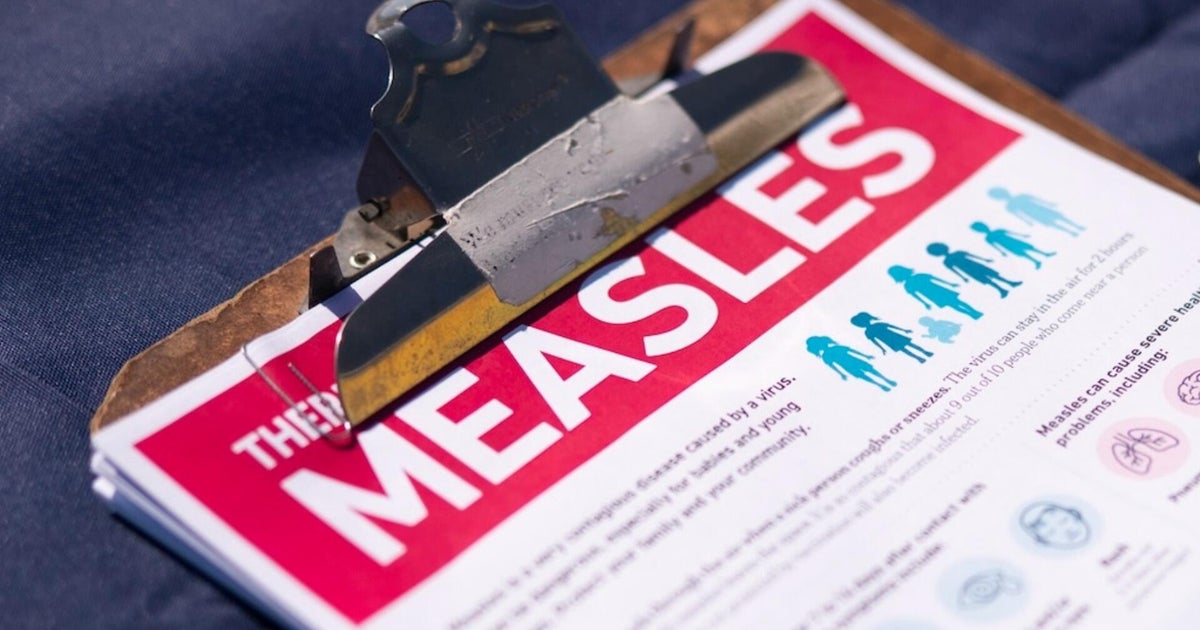
The United States is expected to officially lose its status as a country that has eliminated measles after reporting the highest case total in more than 30 years. CBS News chief medical correspondent Dr. Jon LaPook puts it into perspective.

Updates from the opening game in Turin, starts 2pm Get in touch: email Tom and follow us on BlueSky First set: Jódar wins the toss and will serve first. Ok, let’s get into it. Alexander Zverev gets the first chance to state his credentials at this year’s ATP Finals. Zverev has thrived in the absence of the top men’s players, winning the French and US Opens but with Carlos Alcaraz back and lurking on the side of the draw in Turin, we will see how the 29-year-old handles the gaze of coming into this glitzy event with the added weight of being world No 1. Continue reading...

Treasury Secretary Scott Bessent said in a Friday interview that while his department and others agreed on placing Megaspeed on a special list of companies that pose national security concerns, the Commerce Department "has the pen." Why it matters: Bessent didn't deny reports of tension between him and Commerce Secretary Howard Lutnick , who has come under scrutiny for his inaction over Megaspeed. The Singapore tech company has been accused of illegally diverting U.S. chips to China, and former Nvidia CEO Jensen Huang admitted he had an affair with an executive from the company. The U.S. has identified the woman, Alice Huang , as a suspected Chinese intelligence asset. Driving the news: " Treasury, War, USTR, and State — they were in favor of putting Megaspeed on the entity list for months, but Commerce has the pen," Bessent said on CNBC Friday morning. "You ... have to ask them about their internal processes," he added. The Commerce Department did not immediately respond to Axios' request for comment. Editor's note: This is a breaking news story and will be updated.

Despite all the advantages offenses have secured over the years, defenses are better at pressuring the QB than any other time in recent history The Baltimore Ravens are preparing to start their fourth quarterback this year, Jacoby Brissett, against the beleaguered Los Angeles Chargers on Monday, because of injuries to Lamar Jackson, Tyler Huntley and Joe Fagnano. That puts them dangerously close to the NFL record of five within a single season (a record shared by the 1984 Bears and 2023 Browns when excluding the 1987 strike season). Jackson, Huntley and Fagnano were all injured after taking hits in games. And if it seems like quarterbacks are taking punishment more often this year, your eyes aren’t deceiving you. Through nine weeks, quarterbacks have been hit on 15.1% of their dropbacks, the most we’ve seen since 2006, when hits were first logged in official box scores. Continue reading...

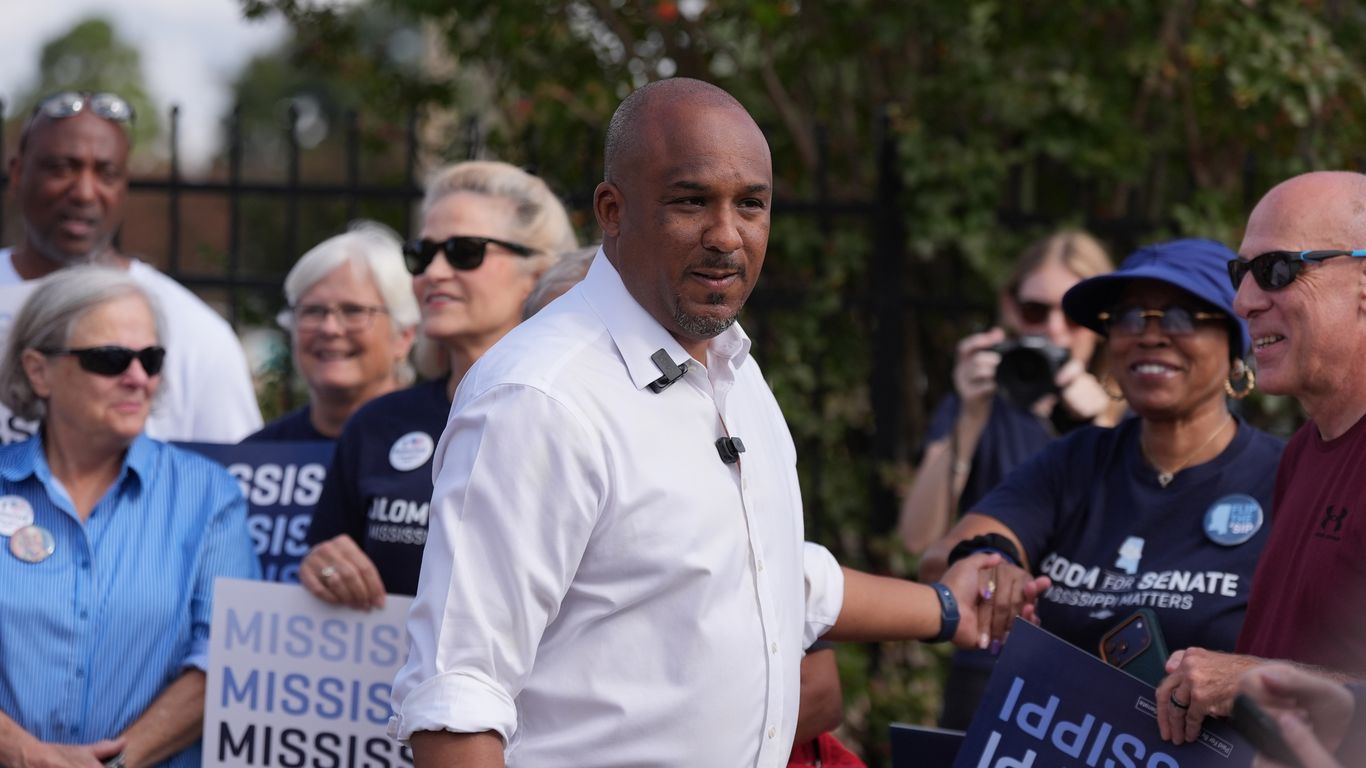
Mississippi, a state with the largest share of Black residents in the country, has elected its first Black U.S. senator in nearly 150 years. Why it matters: For generations, Black Mississippians left the state to escape Jim Crow and pursue economic and political opportunities elsewhere. Now, Mississippi faces a new question: Was Scott Colom's victory a once-in-a-generation breakthrough, or the beginning of an era of Black political power? Driving the news: Colom's defeat of incumbent Sen. Cindy Hyde-Smith broke a barrier that had stood since Reconstruction. Mississippi was the first state to send Black senators to Congress, before violence and disenfranchisement stripped Black residents of their political power. In Colom's race, Democrats gained ground in 75 of the state's 82 counties, Marvin King, an associate professor of political science and African American studies at the University of Mississippi, told Axios. "It wasn't just a fluke of super high turnout in one particular region," he said. "Scott Colom's victory can signal that maybe Mississippi is ready to govern differently." The big picture: During the Great Migration , roughly 6 million Black Americans left the South to escape discrimination and seek better opportunities. Many Black Mississippians built political power in Northern cities such as Chicago, said Keneshia Grant, a Great Migration expert at Howard University. For many, the question became, "should we go and try for a better life in these other places ... or should we stay and fight where we are?" Grant said. "It was about economic opportunity, but I also think it was about terrorism too," Cassandra Overton Welchlin, executive director of the Mississippi Black Women's Roundtable, told Axios, pointing to the lynchings that drove families away. Welchlin left Mississippi for graduate school and considered staying away. "I did not want to come back to Mississippi because it is hard here," she told Axios. Mentors encouraged her to return. She did, ev

Google puts schools in an "impossible position" by blocking students from using its search platform unless AI tools are also enabled, Senator said.

Election results appear to have turbo-charged an already growing social, political and financial market rethink about AI ‘AI clog’: UK battles onslaught of chatbot-generated complaints Editorial: the AI backlash – Silicon Valley’s political power is cracking Last week’s midterms may not have cowed Donald Trump, but they should be a wake-up call for the grinning tech broligarchs who lined up at his inauguration two chaotic years ago. Clearly, the cost of living squeeze unleashed by Trump’s war in Iran was a big driver of the Democrat wave. But AI was also on the ballot – in many places, literally. Continue reading...

The Trump administration has proposed changes to the National Historic Preservation Act that could endanger historic sites that are significant to tribal nations across the country. Oklahoma tribes say that puts ancestral lands in Ohio at risk.

Stephen Miller is no Susie Wiles: He believes in almost limitless presidential power, considers the Democratic Party an extremist organization, and dreams of ruthless crackdowns on immigration and foreign adversaries. Why it matters: Miller, the new White House chief of staff, isn't just unlike anyone who's had the job under Trump — he's unlike any to occupy the powerful position in the modern era. He puts the hard in hard-liner and understands how to pull the levers of power to get his way and make the U.S. government a MAGA machine. Miller's appointment sets the stage for two years of partisan warfare with the new Democratic-led Congress, which is likely to launch investigations of Trump's administration, political committees and allies. "Stephen is Trump's wartime consigliere," Roger Stone, one of the president's oldest friends and advisers, told Axios. The big picture: Despite his post-midterm comments about finding ways to work with Democrats, Trump's choice of Miller signals that he's not looking for truces. He's prepping for war, and sees Miller as a brass-knuckle general and tactical expert impervious to criticism or traditional restraints. Trump's MAGA brain for a decade, the 41-year-old has detailed his Miller Doctrine in speeches, policies and press conferences: Presidential power is "very substantial and will not be questioned." Miller said those words about Trump's Muslim travel ban in 2017 on CBS's "Face the Nation," but to him they broadly apply to other areas of the executive's authority. Court authority is limited. In May 2025, when courts blocked aspects of Trump's deportation policies, Miller said the rulings were the work of "radical rogue judges" who were "at war" with the executive and legislative branches. The political opposition is a threat to America. "The Democrat Party is not a political party. It is a domestic extremist organization," Miller told Sean Hannity in August 2025. He also warned that if Democrats won Congress, "it's game over.
Americans on both sides of the political aisle are watching the nail-bitingly close Mississippi Senate race , where a controversial voter-roll cleanup has come under scrutiny after some voters reported problems casting their ballots. Why it matters: The cliffhanger has exposed concerns about relying on third-party data to determine where voters live and how states maintain voter rolls. Republican Sen. Cindy Hyde-Smith and Democrat Scott Colom are locked in a razor-thin race to be the state's junior senator. As of 2 p.m. ET Friday, Colom led by a little over 2000 votes, according to Associated Press data. The big picture: More than 230,000 Mississippians were listed as inactive ahead of the midterms, according to an analysis by Mississippi Today. That's up from roughly 166,000 in the 2024 election, according to federal data . Those voters weren't removed from the rolls, but they were required to cast affidavit ballots in Tuesday's election. Election workers review those ballots after Election Day, checking voter information against registration records. In some cases, voters must verify their identity with their county circuit clerk's office, slowing vote counting and — in this case — determining the winner. The intrigue: The inactive voter total shot up after the state's March primaries, months after Secretary of State Michael Watson's office inked a $50,000 deal with credit reporting company Experian to help verify voter addresses. "The increase in inactive registrations across the state of Mississippi raised some concerns because it seemed unusually high compared to other cycles and in such a small amount of time," Thessalia Merivaki, an elections research expert and former professor at Mississippi State University, tells Axios. She says there were concerns about "how reliable" these data brokers are, and whether relying on them had "resulted in erroneously placing eligible voters on an inactive status." How it works: Experian's data was intended to flag voters wh
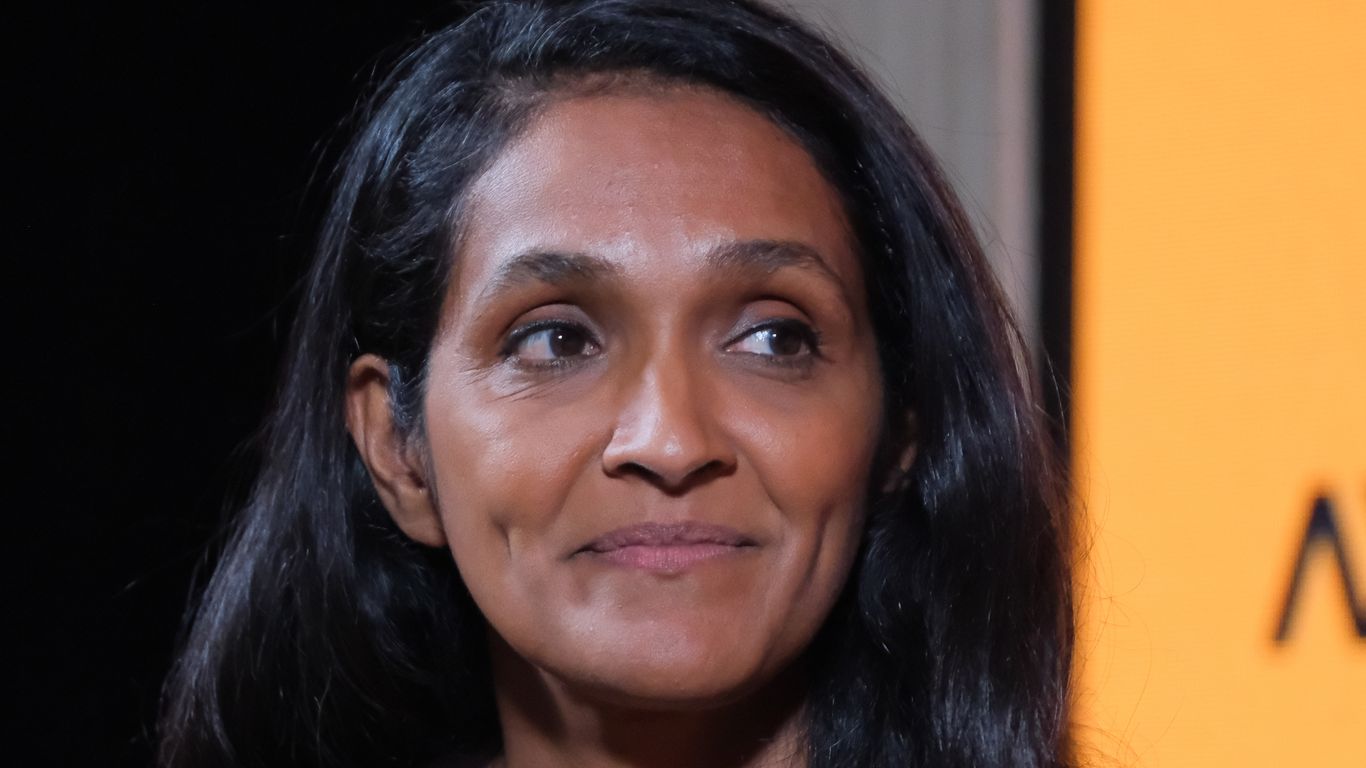
Democratic socialist Nithya Raman toppled embattled Los Angeles Mayor Karen Bass in a stunning upset, putting South Asian immigrants on course to lead America's two largest cities. Why it matters: With New York's Zohran Mamdani already in office, Raman's win puts democratic socialists on track to run two of America's most powerful city halls — testing whether their promises on affordable housing and better government can survive the pressures of governing. The big picture: Raman's victory marks a historic shift in urban American politics as voters embrace a new generation of immigrant leaders challenging the Democratic establishment. Raman, 45, immigrated from India as a child. Mamdani, New York's mayor, also has South Asian roots and immigrated to the U.S. Both built their political careers around affordability and inequality, giving democratic socialism a powerful foothold in America's largest cities. State of play: The Associated Press called the race for Raman Thursday, making Bass the first Los Angeles mayor in two decades to lose reelection. Raman led Bass 52.1% to 47.9% in unofficial results released Thursday. Ballot counting continues. Bass, who won in 2022, conceded and pledged a smooth transition. Raman takes office Dec. 14. Raman defeated a political heavyweight backed by California Gov. Gavin Newsom, former Vice President Kamala Harris, former House Speaker Nancy Pelosi and much of the City Council. Zoom in: Raman capitalized on growing frustration over homelessness, housing costs and Bass' handling of the deadly 2025 Palisades Fire. A September Berkeley IGS/L.A. Times poll showed Raman leading Bass 66%-4% among likely voters under 30 and 45%-21% among Latino likely voters. Bass narrowed the gap. The final Berkeley poll showed the candidates tied at 40%, with 19% undecided. Among Latino likely voters, Raman's lead shrank to 43%-40%. Raman launched her challenge in February after previously endorsing Bass, turning former allies into political rivals. Zoom

Shili Chen claims husband Shouyong Zhang fired the fatal shots that killed Jonathan McKinsey in a Dublin, California, park amid a bitter custody battle.

Democrats will happily tell you how good they feel about retaking the House on Tuesday — just as soon as they stop hyperventilating into a paper bag. Why it matters: They've been burned too many times on Election Day to feel anything more than "nauseously optimistic," as one House Democrat put it to Axios. The polls point to a decisive Democratic victory on Nov. 3, yet fears of a massive polling error or some other eleventh-hour disaster are giving party members sleepless nights. "One woman at a rally in New Jersey told me last week that she was 'nauseously optimistic,'" Rep. Jamie Raskin (D-Md.) told Axios. "That may capture a lot of people's last-minute jitters." A House Democrat who has spoken to leadership told Axios: "They feel optimistic. You know, guarded. Guarded optimism. Where we're going to end up, you never know." State of play: Democrats are targeting dozens of Republican-held seats they think could flip, some of which President Trump carried by 10, 15, even 20 percentage points in 2024. Democrats' House Majority PAC, for instance, went on the air Wednesday in retiring Rep. Elise Stefanik's (R-N.Y.) district, which Trump won by 21 points. They also began spending against Rep. Mike Flood (R-Neb.), who won his last reelection with 60% of the vote. HMP is so bullish it has moved money out of the races to replace retiring Reps. Don Bacon (R-Neb.), Chuck Edwards (R-N.C.) and Darrell Issa (R-Calif.), which they believe Democrats are on track to win handily. "I am cautiously optimistic we win between 20-25 seats," Rep. Ro Khanna (D-Calif.) told Axios. Democrats' landslide scenario puts them closer to 40 or 50 pickups, which would be a historic night for the party. Yes, but: Mid-decade redistricting in Republican-controlled Southern states is all but certain to cut into those gains. The GOP is expected to easily flip redrawn seats in Tennessee and Louisiana where the incumbent Democrats chose to retire rather than face uphill reelection battles. Democratic lead