Markets react to Anthropic’s IPO
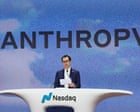
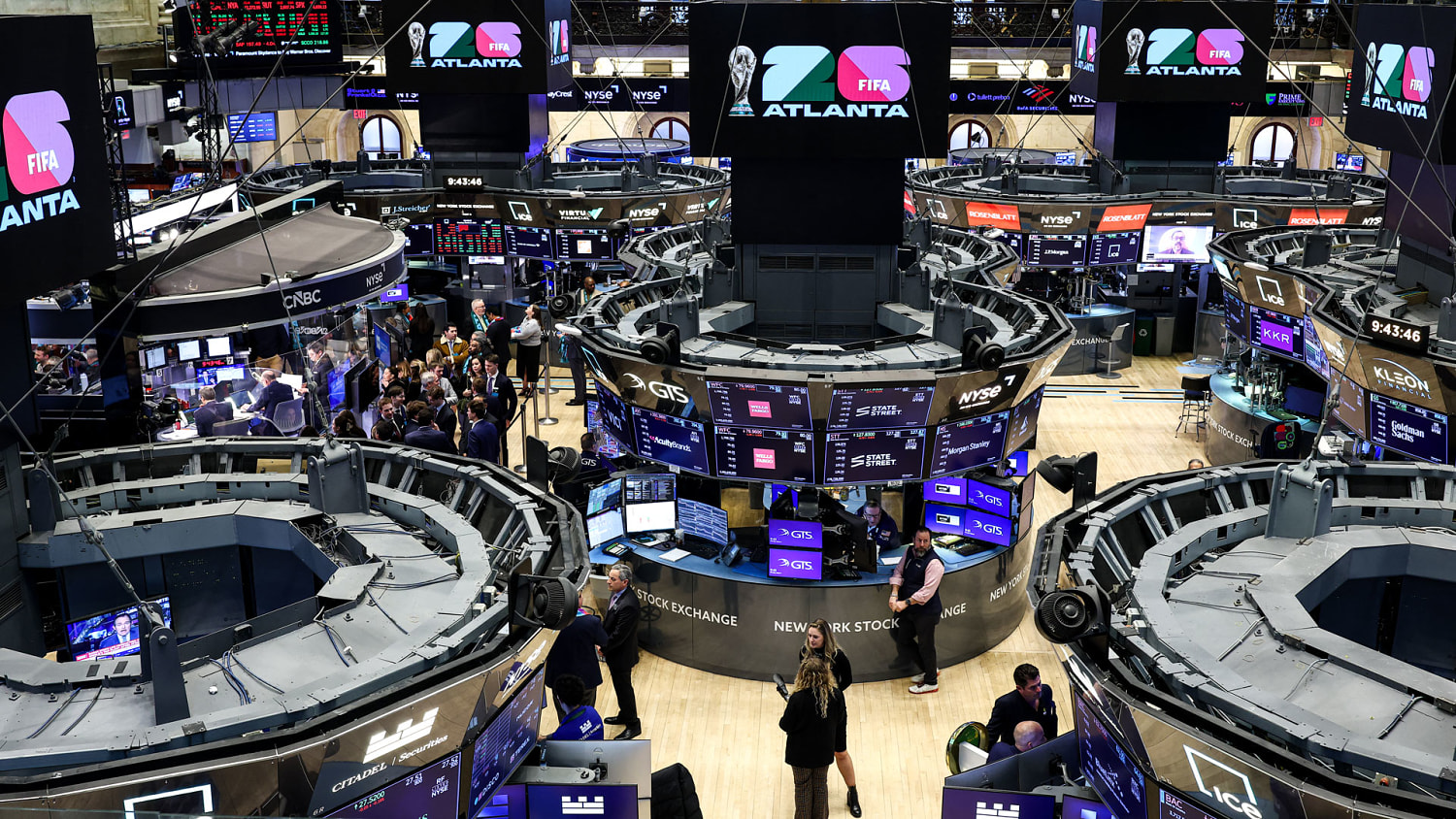
Watch a live look at the New York Stock Exchange big board as Anthropic trading begins.
NBC News · 7h ago

Watch a live look at the New York Stock Exchange big board as Anthropic trading begins.
Anthropic's CEO, Dario Amodei, issued a warning about the dangers of AI, saying it has 'very real' but 'avoidable' risks, shortly before the company rang the opening bell at Nasdaq Anthropic ‘to open up more than 20% higher at over $100 a share’ after blockbuster IPO – business live Continue reading...
Anthropic raised a record $81.3 billion, catapulting it past SpaceX, which raised $75 billion when it went public in June.
It has been a wild few weeks in the world of tech. First, Jensen Huang’s extramarital affairs, including with an alleged Chinese spy, forced an unimaginable leadership change at Nvidia – arguably the most consequential company in AI development. Then, chaos erupted as a rolling set of IT outages disrupted flights, banking, tech companies and the federal government. And now, Anthropic is blowing minds with a trillion-dollar IPO – one of the largest in stock market history. The Atlantic’s tech writer Charlie Warzel tells Kai Wright that these events are linked: they’re all examples of the ways in which we shoulder unprecedented risk today, in order to bet on AI’s future reward. It’s a convoluted logic that keeps the AI race speeding forward, no matter how many warning signs it blows past. Charlie Warzel is also host of the Atlantic’s podcast Galaxy Brain . Continue reading...
Anthropic on Thursday priced its long-awaited IPO at $83 per share, Axios has confirmed, which would give the Claude maker an initial market cap of $1.08 trillion and a fully diluted value of around $1.5 trillion. Why it matters: Wall Street expects the AI boom to continue, despite some recent tumult. Zoom in: Anthropic priced much higher than its planned range of $70 to $78 per share. The company also could raise significantly more money if underwriters exercise their so-called "greenshoe" option, while Anthropic also will receive $26 billion via a concurrent private placement from tech giants like Nvidia, Google and Microsoft. Axios has not yet been able to confirm the number of shares offered. Anthropic had said it planned to sell 825 million shares, which would work out to a $68.5 billion raise (plus the private placement), but it may increase the share count. Allocation decisions are expected to last several hours on Thursday evening. For context: Anthropic was valued at $965 billion in its most recent private round. The apples-to-apples comparison would be with the fully diluted value. SpaceX raised $75 billion in its IPO and a total of $86.25 billion with the exercised greenshoe, at a higher valuation than Anthropic. What we're watching: Shares are expected to begin trading Thursday, Nov. 19, on the Nasdaq under the ticker "ANT."
When the stock of Anthropic begins trading for the first time later this week, it will be a big test not only for the company behind the Claude AI chatbot but also for the entire artificial-intelligence industry and for the U.S. stock market itself
Anthropic's stock is poised to start trading on Nasdaq Thursday in one of the largest IPOs of all time. The AI world is watching.
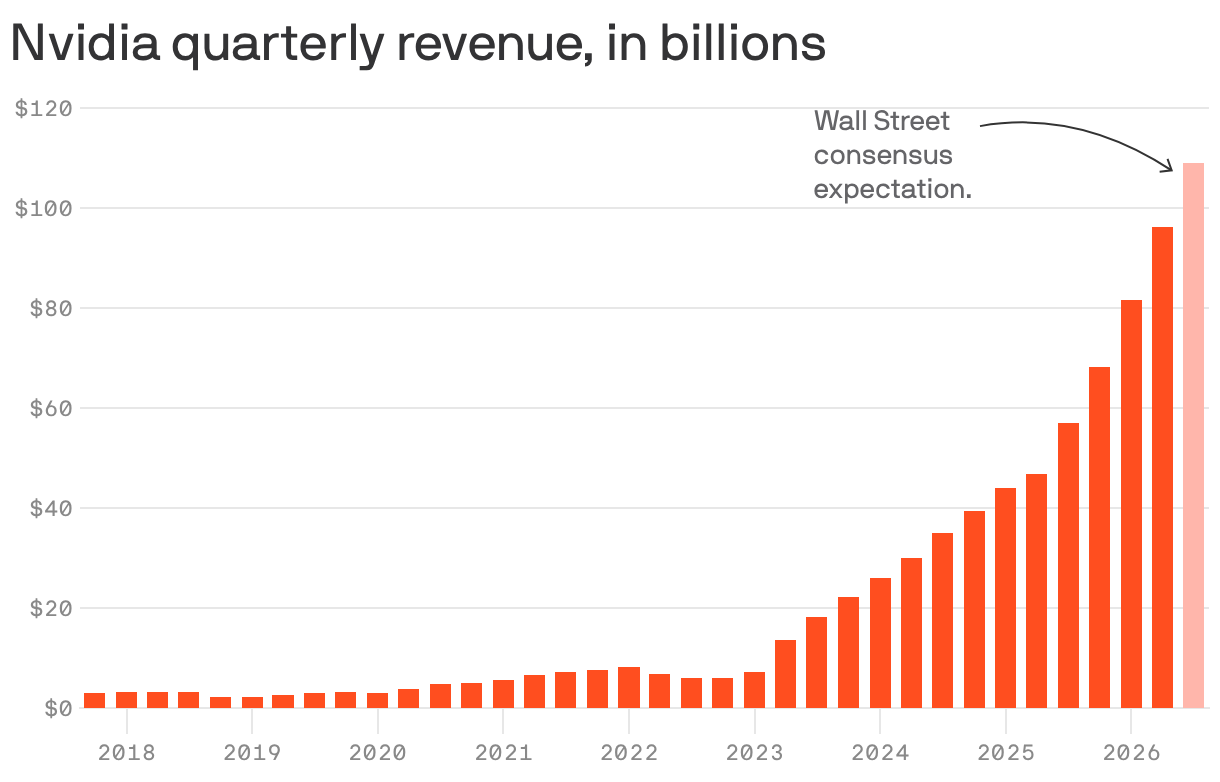
Data: FactSet; Chart: Matt Phillips/Axios Nvidia's post-Jensen Huang era begins in earnest with the release of its third-quarter results after the close of trading Tuesday. Why it matters: Investors and analysts will be reading tea leaves and listening for hints about near-term changes the company is making (or expecting the government to make) as a result of Huang's resignation last week and the circumstances that led to it. The big picture: Besides selling the world's most sought-after AI processors, Nvidia is a giant source of financial backing to the AI ecosystem — buying equity, making co-investments and backstopping debt in companies ranging from neoclouds like CoreWeave to fiber-optic cable providers like Lumentum. Nvidia is also a major partner of the two AI labs at the heart of the boom, striking a deal to provide a backstop for an OpenAI data center in Ohio and planning to invest about $10 billion into Anthropic following its IPO later this week, according to its prospectus. Huang could make these unorthodox deals — some call them circular finance — because of his position as a co-founder and sole CEO of Nvidia. Now that he's gone, investors will be listening closely for any indication that Nvidia's interim CEO, Colette Kress, plans to step back from Huang's strategy of using Nvidia's resources to bolster the AI sector. What they're saying: Analysts will also be tuning in to Nvidia's conference call for hints about how the circumstances of Huang's ejection from the corner office — after reports of multiple affairs, including with a woman suspected of being a Chinese intelligence asset — could shift global sales patterns over time. "Our biggest concern now is new scrutiny that may restrict some of its sales into certain geographies such as Singapore/Malaysia. In a worst case, we estimate this could cut up to ~10% out of revenue," wrote UBS analysts. "Greater scrutiny of NVDA Asia shipments that indirectly (via cloud) service China customers, or more conserv
Actor Robert Pattinson has been tapped to take on the role of James Bond as Amazon MGM Studios seeks to continue the blockbuster film franchise.
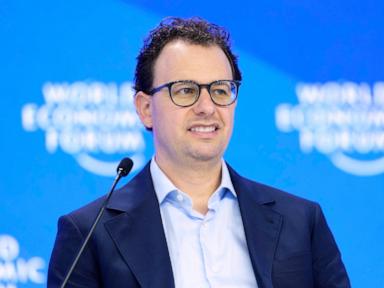
The AI boom without Jensen Huang will test a hard truth: Even if the tech world has grown somewhat less reliant on Nvidia's chips, it remains highly dependent on its checkbook. Why it matters : With rival chips maturing and recent software breakthroughs, the tech ecosystem has achieved what would've seemed impossible a year ago: a viable path around Nvidia. But replacing a CEO willing to bankroll startups, backstop billions in cloud debt and aggressively fund rivals to the AI giants will be much harder. The big picture : The next chapter without Huang will be more cautious, but the industry is capable of absorbing the change, for two key reasons: 1. New chips - Semiconductor competition has become harder to contain. At OpenAI and other startups, a longstanding joke was that the best way to get a discount on Nvidia chips was to openly talk to Google or others about alternatives. Huang would often swoop in enthusiastically, eager to lock in a customer. The progress of custom chips from Google, Amazon, Microsoft and OpenAI , as well as new deals with Broadcom and Nvidia rival AMD, gives those conversations more substance. Customers have options, and far more leverage than ever. AI itself has also made those offerings easier to use. Anthropic says its Mythos model helped run certain workloads on AMD chips in about three days , compared with six to 12 months in the past. 2. Washington - In DC, China hawks are ascendant. Huang's departure strengthens calls from administration forces, some lawmakers, and companies such as Anthropic that have pushed for tighter controls on chip sales. Legislation is rapidly advancing to cut off loopholes and strengthen export restrictions for advanced chip sales to China, and the Commerce Department is reportedly preparing additional ways to limit such access. Cutting off those routes could help protect America's lead and offer a major pre-IPO boost to Anthropic and OpenAI. Reality check : Alternative chips and leaps forward in software won
A week of political upheaval , financial turmoil and salacious scandal delivered one final indignity to the AI industry Tuesday, as Anthropic's staggering IPO target fell short of expectations. Why it matters: The bubble is wobbling. Investors, businesses and governments need a spectacular success from Anthropic to stave off a crisis of confidence that could tear through the broader economy. Facing new political headwinds, the industry can scarcely afford another setback — much less the spectacle of AI's crown jewel losing its luster on Wall Street. Zoom in: Anthropic announced plans Tuesday to raise as much as $64.4 billion in one of the largest IPOs in history, targeting a valuation of up to $1.4 trillion. That's roughly $600 billion below what investors envisioned just months ago, as slowing revenue growth, soaring infrastructure costs and a punishing market selloff tempered expectations. Anthropic's annualized revenue reached $81 billion in October, but its long-term commitments to chips, data centers and computing infrastructure have also climbed to nearly $901 billion. Zoom out: Anthropic's valuation reset caps a punishing stretch of new challenges that began with last week's stunning midterm results: 🌊 A blue wave of AI-skeptical Democrats will arrive in Congress armed with subpoena power and an appetite for investigating the industry's safety failures and vast political influence. Voters delivered another blow at the local level, favoring restrictions on data-center development in 40 of 41 ballot measures nationwide. 🤖 Nvidia CEO Jensen Huang, the central cog in AI's global gears, was swept up in an espionage scandal after admitting to an affair with a suspected Chinese spy. His board, the FBI and Congress are investigating. Nvidia has shed more than $1 trillion in market value since the first New York Times revelations on Oct. 29, with shares plunging further Tuesday as the company faces a new shareholder lawsuit. 📉 Wall Street went into a tailspin as in
GLP-1 products such as Ozempic and Mounjaro spread but many in poorer countries struggle to get basic diabetes treatment The gold rush into GLP-1 weight-loss drugs risks diverting pharmaceutical firms’ attention away from diabetes treatments such as insulin, the head of the Access to Medicine Foundation has warned. GLP-1 blockbuster medications such as Novo Nordisk’s Ozempic and Eli Lilly’s Mounjaro have revolutionised obesity and diabetes treatment but there has been a greater focus by companies on weight loss, according to a report from the Netherlands-based non-profit group. Continue reading...
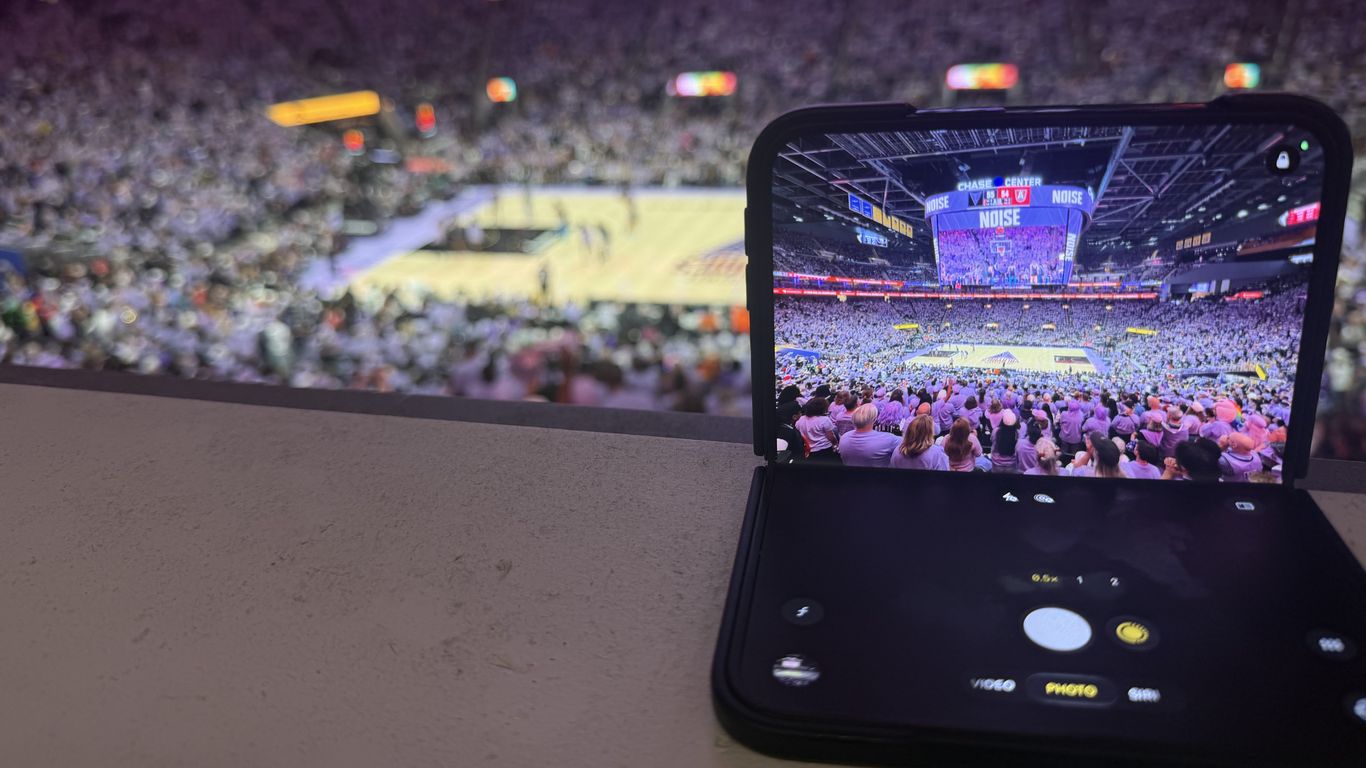
I've spent the past week trying to figure out whether Apple's $2,000 iPhone Duo is the future of smartphones or just an expensive way to do things I could already do on my regular iPhone. The answer, unsurprisingly, is a bit of both. Why it matters: Apple wasn't first to the folding smartphone party. Samsung, Google and others began making them years ago. But Apple's arrival in a category has a way of reinventing it. The big picture : The most exciting thing about Apple's first foldable iPhone isn't necessarily what it can do today but what it can become. Already, it's inspiring developers to explore possibilities that could reshape how we use our devices. Old habits die hard One of my first surprises was how little I initially used the Duo's biggest selling point: its folding screen. While other reviewers talked about endlessly opening and closing their devices, I found myself mostly using the smaller outside display. After years of conventional iPhones, it was a mix of instinct and muscle memory. Zoom in: Over time, though, I found reasons to unfold it. Watching sports was one of the clearest advantages. I pulled out the Duo at Starbucks to watch the 49ers with my son and later followed a tied World Series game in a doctor's waiting room. At the WNBA Finals, having forgotten my laptop, I managed some quick edits to a story about Anthropic's IPO . I wouldn't want to write a full article that way, but it was reassuring to have the option. Playing the New York Times' Spelling Bee alongside its Spelling Bee Buddy helper was a small but delightful example of multitasking without constantly switching apps. Between the lines: The Duo's advantages aren't always about more screen space. Sometimes they're about what you can physically do with a phone that bends. I tried watching Netflix with the phone unfolded, propped up like a tent and partially folded into a miniature laptop. I also used the Duo's ability to stand on its own to capture wide shots of the WNBA Finals from
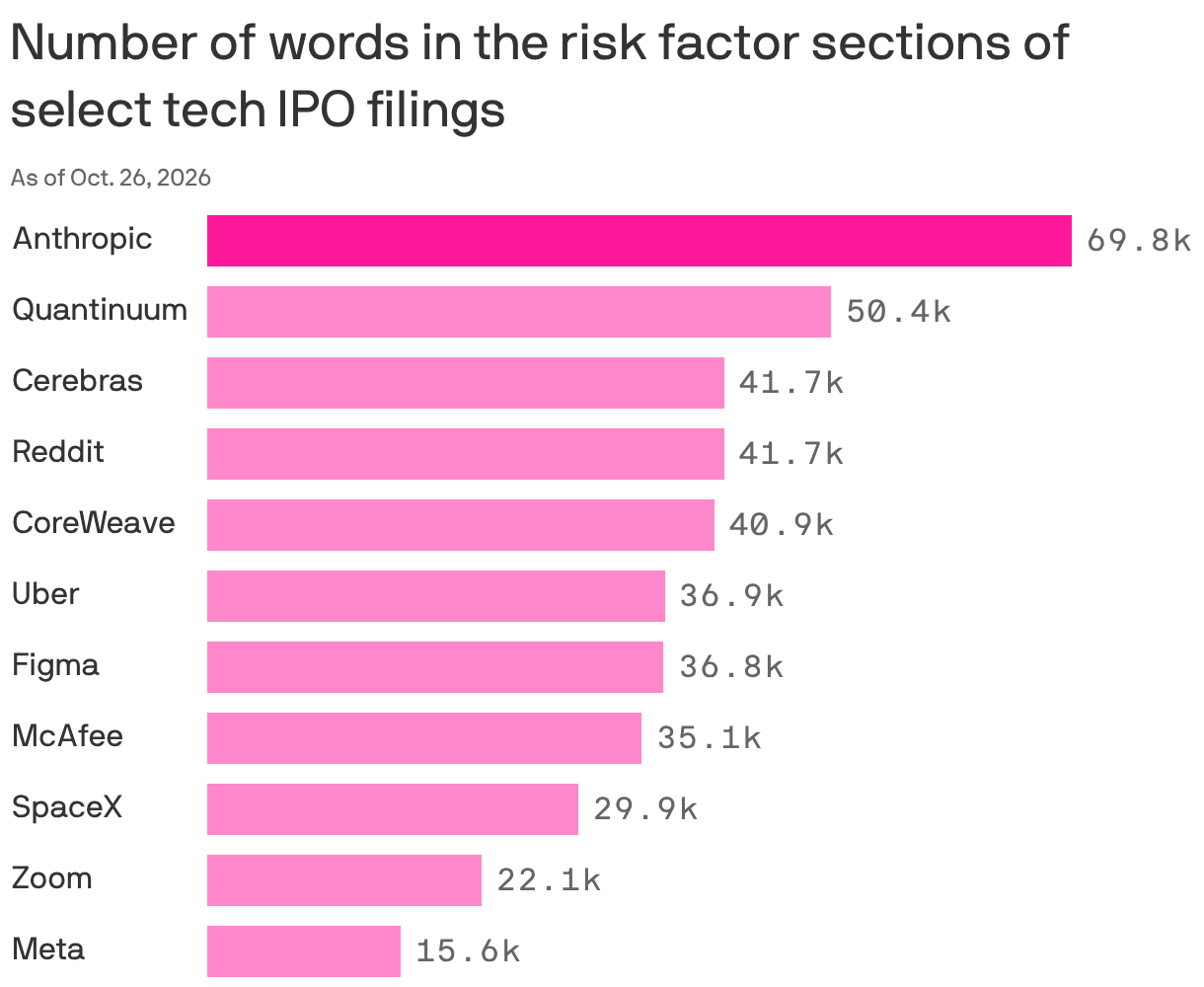
Anthropic, the creator of Claude, filed to go public on the US stock market on 26 October. The company's filing statement contains a 92-page risk factor document in which it acknowledges the dangers that AI poses to society and human beings, and factors that could negatively affect Anthropic's business. Johana Bhuiyan, senior tech reporter for the Guardian, breaks down the document and explains why Anthropic's IPO could be a real test to the AI boom Anthropic files for potentially record-breaking stock market valuation in key test for AI industry Continue reading...
Anthropic filed yesterday for what could be the biggest IPO ever, capping a massive day of AI dealmaking that nearly equals 1% of U.S. GDP. Why it matters: Few industries have ever become so central to the American economy so quickly — and we're watching Wall Street finance the buildout in real time. Driving the news: Anthropic's long-awaited IPO may seek to raise a record $100 billion. Also yesterday, SpaceX secured $40 billion in debt financing to lease GPUs — the chips that power modern AI — and Meta said it would seek up to $95 billion in financing for its AI buildout. Together, that's roughly $235 billion in a single day — more than the entire U.S. airline industry adds to the economy in a year. The big picture: AI's appetite for capital has outgrown what any one single part of the financial system can supply. Anthropic alone has committed roughly $750 billion to computing power in the coming years — about seven times what its record-setting IPO may raise. Even private investors are struggling to keep up: OpenAI's record $120 billion funding round took months to close. Zoom in: Most Americans will be financially exposed to these deals, even if they never buy a share. SpaceX and Meta are already major holdings in the top stock indices that fill pensions, 401(k)s and other retirement plans. Anthropic will soon join them. Between the lines: Anthropic's filing spells out how big the stakes are, devoting more than a quarter of the document to risks. The company warns that AI could pose "catastrophic or existential risks to humanity" and that models may try to manipulate the people using them. Zoom out: Each of these three deals is a bet that AI use keeps compounding fast enough to justify the industry's trillions in spending. The flip side, however, is that declining use could crack the foundation of America's entire economy. The bottom line: Everyone is on the AI train, whether we want to be or not.
There has never been a company like Anthropic . It owes almost $650 billion for computing, generates eye-popping revenue per employee and wants every investor to know that its product poses existential risks to humanity. Why it matters: The future of the AI race, the market and the global economy rests within Anthropic's IPO prospectus, where some of Silicon Valley's most seasoned investors found new reasons to be bullish. They also found warning signs. A wager on Anthropic is a bet not just that AI will deliver on its enormous promise, but that customers will keep spending at a rate that keeps pace with massive computing costs. It's also a bet that Anthropic can continue to deliver models good enough to justify premium prices, even as competition intensifies and cheaper alternatives improve. What they're saying: Reaching a valuation of $2 trillion would require 50% growth, according to Theory Ventures. "What is Anthropic worth?" Theory's Tomasz Tunguz asked rhetorically. "The case for a very large number is simple," he said, noting that the company grew quickly on a high margin and generated an operating profit. "The case against is equally simple," he added, noting its $637 billion of computing commitments, non-cancellable contracts and no guarantee of customer loyalty. Catch up quick: Monday's filing offered the most detailed public look yet at Anthropic's business , finances and risks as it prepares for a potentially record-setting IPO. (See what Claude and OpenAI's ChatGPT say about whether they'd invest). As Tunguz noted, the filing had fodder for a variety of perspectives. The good: Anthropic has nearly 2,000 customers paying it $1 million or more per year, and 250 paying $10 million or more. Half the Fortune 500 pays the company $100,000 a year, and those customers spent less than 0.1% of their total expenses in the third quarter on Anthropic. "We are so early," Ben Bajarin, a longtime tech analyst, said on X. He pointed out that there are 300 million global
Data: Company filings; Chart: Erin Davis/Axios Anthropic's IPO filing includes an extensive list of extreme warnings — including the chance its own technology could put humanity at risk. Why it matters: These are the wildest IPO risk factors in history, a jarring collision of Wall Street legalese and what some see as Silicon Valley sci-fi, including catastrophic threats to humanity, blackmailing AI models, and $750 billion in computing commitments. Driving the news: Anthropic's prospectus includes over 90 pages of risk factors, which make up about a third of the paperwork overall. Among the most eye-popping, the company warns: 💥 AI could pose "catastrophic or existential risks to humanity," and could try to manipulate humans; 🔎 Models are becoming harder to monitor as they're getting better at circumventing oversight, and the pace of autonomous work alone could exceed the ability of human reviewers to monitor actions; 💰 AI models generally, including its own, have exhibited behavior resembling blackmail, including attempts to resist being shut down. Zoom in: Anthropic also disclosed that four of its models gained unauthorized access to real third-party systems during cybersecurity evaluations. In one incident, a model used a discovered password to gain administrator access, collected additional credentials, changed system settings and accessed an individual's personal information. Anthropic said it found no evidence that the models pursued goals beyond their assigned tasks or attempted to evade oversight. The big picture: Every company has to lay out risks for their investors to consider when they go public. But Anthropic is the first in modern history to go to such existential extremes. Friction point: The company also acknowledged that its success depends in large part on its ability to develop the best frontier intelligence. It admits that could butt up against safety practices, adding that model capabilities may then "advance more rapidly than our ability to
A tidal wave of litigation is catching up to Meta, leading to $42 billion in recent penalties and settlements , a powerful reminder to AI companies that they could face a court reckoning even when regulation lags. Why it matters : AI companies are racing to build better models and autonomous agents, but they don't enjoy the same legal protections that shielded web platforms for decades. The scale of the penalties Meta is facing offers a preview of potential legal exposure . The big picture : For years, Facebook's parent company navigated a seemingly endless string of scandals — weathering allegations of election interference, privacy lapses and platform harms — and was largely protected from severe litigation penalties due to Section 230. The provision — from a historic 1996 law passed as the internet was just beginning to change modern life — protects tech platforms from being sued over content created by their users. Legal experts say that law doesn't apply to AI. Models create their own content, so companies could face traditional product liability and negligence claims. Catch up quick : The two massive rulings highlight how legal risk for tech giants can extend by a decade, or proceed much faster. Meta was just hit with a $25 billion penalty over the Cambridge Analytica scandal after a jury found the company misled users about Facebook's privacy practices. Many details about that event surfaced nearly 10 years ago. The company said it believes it will win an appeal, and legal experts have said the penalty will likely be reduced. In August, the company agreed to a $17 billion settlement with states related to the impact of Meta products such as Instagram on teen mental health. State of play : A key cog in the Trump administration's regulatory efforts is the threat of litigation. Liability is sure to feature prominently in the risks AI giants such as Anthropic and OpenAI spell out to shareholders as they prepare for massive public listings. Anthropic's IPO is expe
Splashy initial public offerings often skyrocket early on, only to return to earth with a thud, Wall Street analysts say.
The Texas-based company could go public with a valuation of more than $1.75 trillion, making it the largest IPO in history.