
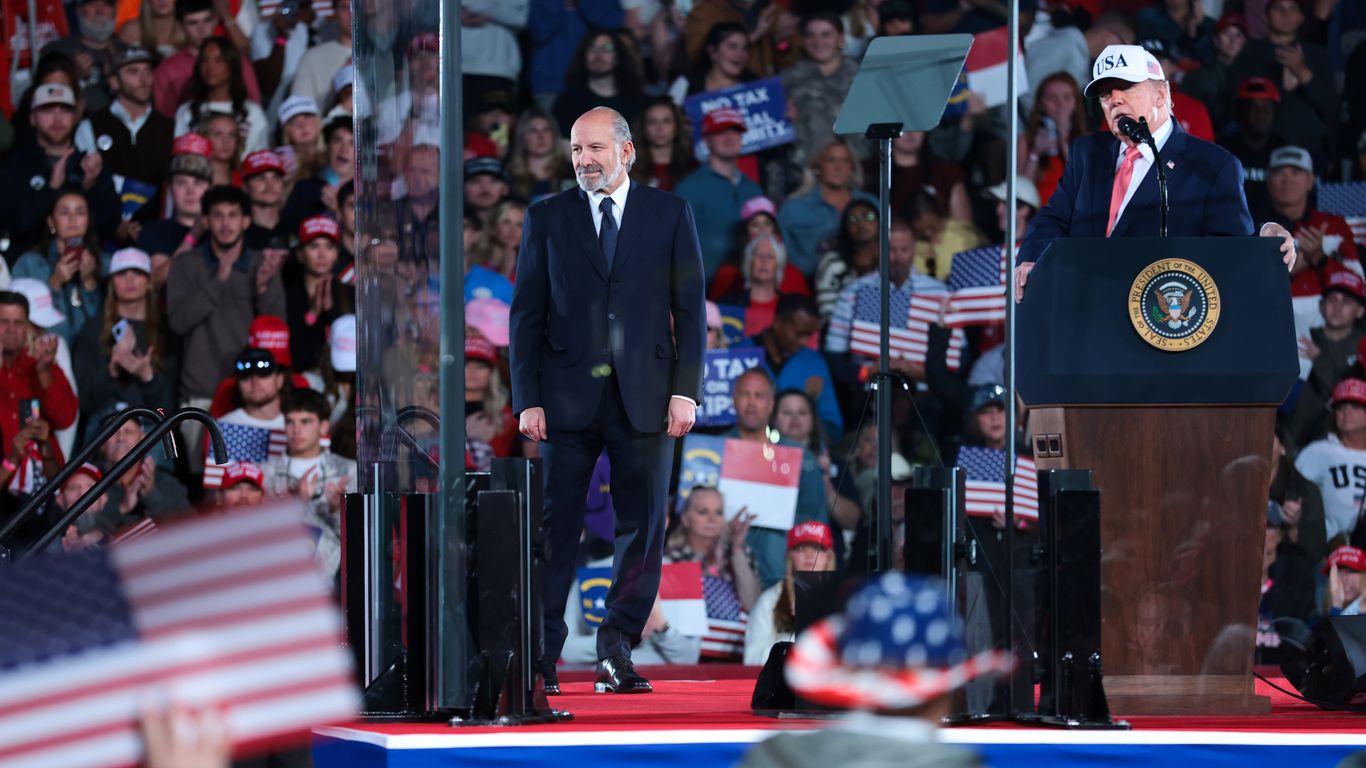
President Trump called for an investigation into the government's economic statistics on Thursday, alleging without evidence that growth figures released before the midterm elections were deliberately understated. Why it matters: Revisions to GDP are routine and reflect more complete information that becomes available after the initial estimates are published. The allegations could renew concerns about political interference in the production of critical economic data that underpin trillions of dollars in investment decisions and Federal Reserve policy. What they're saying: The Bureau of Economic Analysis on Wednesday substantially revised the third-quarter GDP data, reflecting a 4.3% annualized pace of growth, up from the 3.4% reported less than a week before the midterm elections. Trump claimed in a Thanksgiving morning Truth Social post that the initial figures were "FAKE." "Why wasn't the correct number issued before the Election? I am asking for an immediate investigation of this situation," Trump wrote in the post, calling it a "massive, and purposeful, error." The intrigue: Government statistical agencies operate under longstanding standards that are aimed at insulating career economists and statisticians from political influence in the collection and dissemination of economic data. But it's not the first time an agency has come under Trump's fire anyway, following his dismissal of the Bureau of Labor Statistics commissioner last year over revisions to jobs data. This time, however, the agency that released GDP and other key economic data is housed within the Commerce Department — led by one of Trump's closest political allies, Howard Lutnick. Friction point: There is a legitimate debate about how to improve the timeliness and accuracy of government economic data. But that is fundamentally different from Trump's allegation that federal statisticians deliberately misrepresented the strength of the economy. How it works: The initial GDP figure is not supposed t
Results for “business information”

From cookbooks to YouTube to ChatGPT , the way Americans plan their holiday menus has evolved. The big picture: But there's something uniquely human about building a recipe, and chefs warn we risk fracturing personal connections and family history by reducing culinary traditions to chatbot prompts. "Recipes can have tradition and ritual," says Melanie Underwood, a culinary educator and founder of Nourish & Gather . She warns that taking the human conversation out of cooking could further erode our cultural oral histories. Context: Campbell's recent State of the Sides survey found that 27% of U.S. adults who celebrate Thanksgiving have used generative AI for holiday planning or cooking, up from 22% last year. And 65% of shoppers say they would like to use AI in some aspect of holiday meal planning, per holiday shopper trend research from FMI, the Food Industry Association. Among those celebrating at least one holiday this season, 34% say they'd use AI to find new recipes, 23% said they'd use it to plan the overall menu and 16% said they'd use it to make the holiday meal healthier. Friction point: Food bloggers and chefs have warned that traffic to their trusted websites is plummeting with the rise of AI recipe summaries, forcing some to quit the game altogether. Plus, AI recipes on the " slop "-pier side can be disastrous for the dinner table. The AI-generated recipes that pop up on Google's search results page "are often total nonsense," recipe blogger Eb Gargano told Axios in an email. "They've been generated by AI – and, at least last time I checked – AI cannot cook a recipe or taste a recipe," she said. Food bloggers have a name for those recipes, she added: "Frankenstein recipes." Underwood says she uses AI to help her with the operational side of her business. But when she recently asked a chatbot to scale her recipe for a large event and make a shopping list, it cut out ingredients — saying it was trying to improve her recipe. Our thought bubble: AI is not a c

Agents who answered the phone line, announced at a news conference and in alerts, were not able to offer information about responding to the detonation in Iowa.
Wall Street has been reeling amid fears about the future of the AI boom. But in the here and now, the U.S. economy is experiencing an outright boom. The big picture: Growth was even stronger this summer than it appeared, and the robust expansion is continuing this fall, according to a range of data released Wednesday morning. That is pushing Americans' incomes up and the pace of layoffs down. The strong data helps explain why the Federal Reserve is prepared to raise interest rates two weeks from now even in the face of financial market turbulence. Driving the news: The U.S. economy grew at a 4.3% annual rate in the July-through-September quarter, according to the second revision to GDP data — well above the 3.4% originally reported. The strong results have continued into Q4. The Commerce Department separately said that personal income rose 0.7% in October, well ahead of analysts' expectations. Overall orders for durable goods came in below forecasts for October, but core capital goods orders — a forward-looking measure of investment spending — climbed 1.2%, also well ahead of projections. The Labor Department said that only 189,000 people filed new claims for jobless benefits last week, matching the lowest of 2026 and among the lowest readings on record (claims go back to 1967). Zoom out: The Q3 GDP reading was powered by business investment, especially for software, showing that the AI buildout remains a powerful driver of overall economic growth. It wasn't driven by volatile components of GDP like inventory and trade swings; real final sales to private domestic purchasers surged at a whopping 5.8% pace, and gross domestic income — conceptually similar to GDP — rose at a 4.4% rate. Translation: This isn't some fluky reading, but rather a sign of underlying robustness. Rapid growth looks set to continue in Q4; the Atlanta Fed's GDPNow tool estimates current-quarter growth at 2.9%. Zoom in: Nonresidential fixed investment — the GDP subcategory that covers capital spe

The Army detonated 68 drums of unstable lead azide on an Iowa plant Wednesday after multiple delays, a court challenge and presidential intervention . The big picture: Elected officials slammed the military over communication shortfalls ahead of the detonation, which triggered evacuations, closures and fears about exposure to toxic lead dust in surrounding communities and states . Federal officials have repeatedly stressed that detonating the unstable lead is safer than risking it exploding spontaneously. Driving the news: Environmental Protection Agency administrator Lee Zeldin told CNN that, based on initial feedback from the Department of Defense, mitigation efforts "exceeded expectations." Missouri Gov. Mike Kehoe also said early analysis from federal partners indicates the detonation was "well-contained." The Army has not yet released a statement on the status of the operation. Reporters near the plant witnessed large clouds of smoke rising following the detonation. Context: The evacuation zone is a 5-mile cone extending southwest of the ammunition plant, per the Army's public safety notice . Evacuees are set to receive notice by phone when it's safe to return. Those outside of the evacuation zone should still shelter in place by closing all windows and doors, recirculating heating and turning off fans that pull in outside air, among other protective measures for children and livestock, per the Army. State of play: President Trump ordered the Army to pause plans to detonate the explosives on Monday, saying the blast couldn't proceed without approval from a court and Democratic Gov.-elect Rob Sand . But Trump warned he would hold Sand responsible for "any and all death or destruction" if the governor-elect refuses to approve the detonation. The court initially granted an administrative stay but lifted it Monday, allowing the plan to proceed. Sand said in a statement that the administration should decide "based on the information they have from the people they br

Data: Bureau of Economic Analysis ; Chart: Courtenay Brown/Axios The U.S. economy grew substantially faster this summer than initially thought, the government said Wednesday — a blockbuster upgrade to its estimate of third-quarter GDP. By the numbers: The economy expanded at a 4.3% annualized rate, up from the 3.4% initially reported and nearly twice the rate of 2.2% in the second quarter. Why it matters: The economy has even more momentum than previously understood, a sign of remarkable resilience in the face of higher borrowing costs and stubborn inflation that could give the Fed more latitude to raise rates. Zoom in: The upward revision reflected stronger business investment fueled by the AI buildout and software investment, as well as consumer spending. A measure of underlying private-sector demand — which strips out trade, inventories and government spending — rose at a whopping 5.8% annual rate, up from the 4.9% initially reported. The backdrop: Separate data out Wednesday showed personal income jumped 0.7% in October while inflation-adjusted consumer spending stalled, pushing the saving rate up to 4.1% from 3.6% the prior month. The personal consumption expenditures price index — the Fed's preferred inflation gauge — climbed 3.8% from a year earlier, from 3.6% in September. Core inflation, which excludes food and energy, accelerated to 3.3% from 3.1%. On a monthly basis, both headline and core prices rose 0.3%. The bottom line: The U.S. economy was on remarkably strong footing heading into the end of the year, though inflation remains stubbornly high. Editor's note: This story has been updated with additional details.
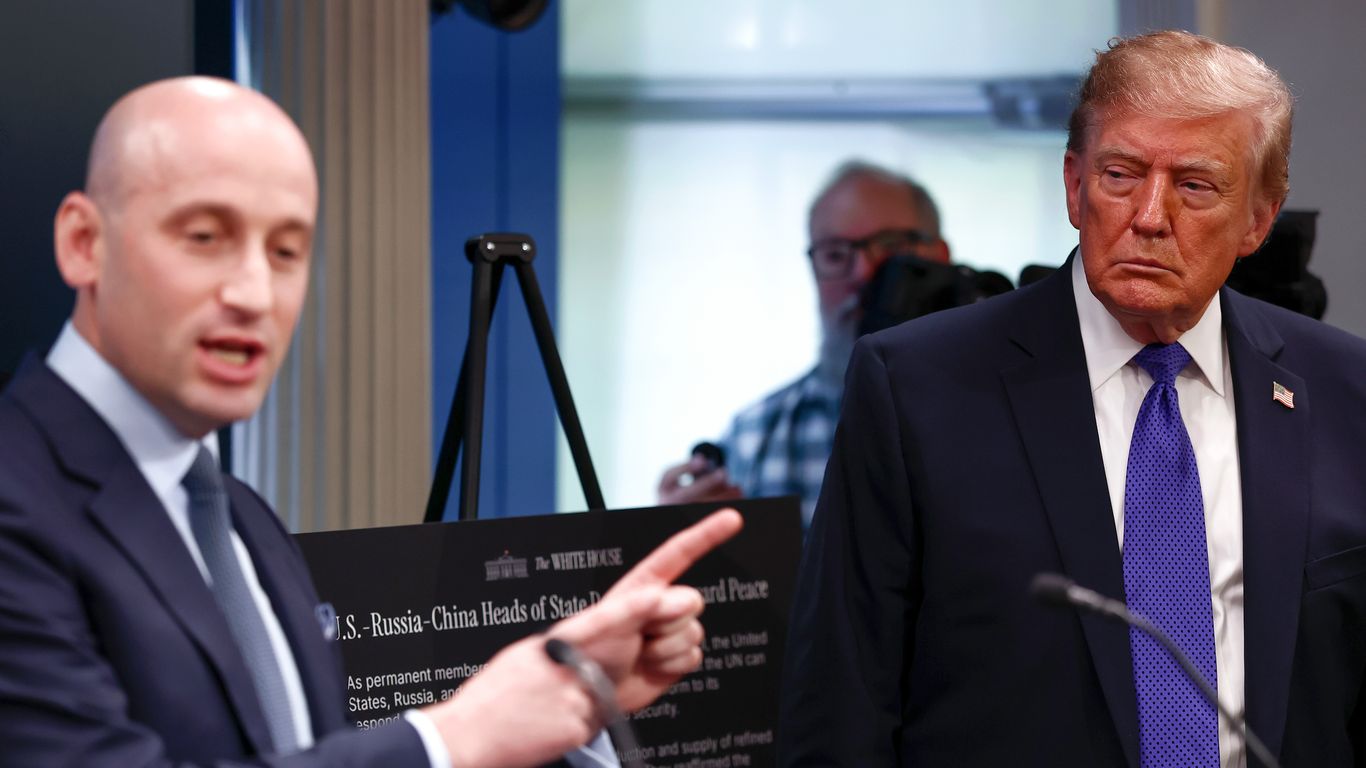
The Trump administration is facing the first of possibly hundreds of lawsuits testing whether it can be held liable for how immigration officers acted during the ICE crackdowns . Why it matters: These cases could force the administration to defend the conduct of officers operating under former Homeland Security Secretary Kristi Noem and now-retired Border Patrol Commander-at-large Greg Bovino. Driving the news: Democracy Forward, an advocacy litigation nonprofit, filed its first Federal Tort Claims Act (FTCA) case on Monday on behalf of Dayanne Figueroa. Figueroa, a U.S. citizen, was arrested during Operation Midway Blitz in Chicago in October 2025. Video footage of Figueroa's arrest, after dropping her son off at school, shows officers driving into her vehicle and dragging her out of her car by her legs in a chaotic scene with multiple witnesses. Under FTCA, she could file for monetary compensation. And if the case goes to trial, discovery could reveal more information about the directives to make arrests during Operation Midway Blitz. What they're saying: "I anticipated that I was going to be met with silence. I'm not surprised, but again, I still expect accountability, so I'm not gonna let that define the outcome of all this," Figueroa said in an exclusive interview with Axios. "I want my experience to be a catalyst for meaningful change." Figueroa has also testified before Congress and filed a police report over her experience. She is now asking for no more than $1 million, according to the FTCA filing, which alleges unlawful arrest, battery and failure to provide medical care. Zoom in: Figueroa's claim comes after filing an administrative complaint against DHS over its officers' conduct both during her arrest and while she was detained. The administration had six months to respond, but didn't, opening her path to an FTCA case. "This is really a sort of tip of the spear of this type of case," Jeff Dubner, an attorney leading the effort for Democracy Forward, sai
Despite Jensen Huang's shock return as Nvidia's CEO, experts say it's anything but business as usual for the chipmaker.

The contract caterer switching to New York is a big hit to the London Stock Exchange but what is being done to discourage others from delisting? That’s gratitude, eh? Compass Group built its business, in part, on contracts to serve dinners in British schools and run catering operations in NHS hospitals. Now it plans to switch its primary stock market listing to New York in 2028. Compass is a bad one for the London market to lose. First, it is the 18th largest company in the FTSE 100 index and one of the few that is the biggest in the world in its market (contract catering, not just for the public sector but for thousands of corporate clients). Second, its reasons for joining the stateside listing rush feel flimsy – but also dangerous. Continue reading...

We naturally assume people in business and power are slightly full of it, spinning us wildly to exaggerate their achievements or capabilities. In the case of AI and its ability to do irreparable damage to society, it's time for all of us — the media, the White House and Congress — to believe them: They've truly built something we don't understand and soon, if not already, can't fully control. Why it matters: This is no longer a future problem. It's a today problem, if not a crisis. You see this with near-daily glitches at airports or banks. You see this in our reporting about two dozen researchers inside these companies claiming their AI is too powerful and uncontrollable to release. And you see this in AI execs' own on-the-record warnings that we're at or near the point of the technology surpassing comprehension or control. Just believe them. If we wait for a cyberattack on the U.S. electricity grid or some bad actor to release a pathogen at an elementary school, it's too late. We'll panic and make rushed, emotional decisions and bad policies. It's not too late to prevent this, while still getting the upside benefits of AI. In our conversations with hundreds of people involved in building and regulating AI, there's shockingly wide agreement about the dangers ahead — and ways to protect against the worst outcomes. There's just no mechanism or urgency to bring the right mix of people together to do this. The steps seem clear: Make this a society-wide, urgent call to action. This should be an all-hands-on-deck moment, the only topic Congress prioritizes short-term. Yes, it probably requires presidential leadership, and Trump is reluctant to slow things down. But his top cyber officials privately agree with us: This demands fast, smart, bipartisan action with heavy private sector involvement. Let 'er rip no longer feels like a plausible plan. Focus on safety and cyber first. Most leading AI companies would gladly slow down a bit, prioritize verifiable safety standards,

For big stars, endorsing companies like Kalshi and Polymarket is just another day in the beautiful business of being – and staying – rich When Giannis Antetokounmpo announced he was taking an investment stake in prediction market Kalshi in February, the claim he made to accompany the announcement – “We all on Kalshi now” – sounded as absurd as the howls of outrage from sports lovers seemed universal. Nine months later, Kalshi’s grip on American fans appears murderously tight: notional monthly trading volume on the platform, the majority of which is taken up by wagers on sports, increased to nearly $100bn in October from $40bn in August, as the company gears up for yet another funding round at a rumored valuation of $65bn ahead of a potential IPO. Rival prediction market Polymarket, which relaunched in the US late last year after regulators shut it down in 2022, has seen similar growth over recent months. However righteous the disgust from fans on social media at the deepening incursion of these odious platforms into professional sport may be, their popularity seems only to grow. More perplexing is the widening circle of athletes like Giannis who’ve thrown off whatever shame might once have come from association with these businesses and given them their full-throated support. The line between role model and shill in professional sports is now essentially non-existent. Pete Sampras, a man so private in retirement it can often seem like his entire tennis career was a collective hallucination, released an ad for Kalshi during this year’s US Open after two decades largely out of the public eye. José Mourinho trousered a brick of Kalshi cash this summer in exchange for a gambling promo during the World Cup. The prediction market machine now sponsors Jalen Brunson and Josh Hart’s Roommates Show, on which the recently crowned pair of NBA champions begin every episode dutifully informing us that their amazingly dreary podcast is “presented by Polymarket, the top prediction

Sgt. Jian Zhao faces up to 10 years in prison after pleading guilty to selling national defense information from Joint Base Lewis-McChord, prosecutors say.

Shares are volatile amid jitters over tech and AI – but think carefully before you decide to ditch investments too Business live – latest updates It has been a volatile time on global stock markets. There have been signs in recent weeks that investors are getting cold feet over the outlook for AI companies and selling off technology stocks. Last week, the AI company Anthropic launched on to the market and had a record-breaking first day , but on Friday stock markets around the world tumbled and the US Nasdaq closed 5% below its mark on 1 January . Continue reading...
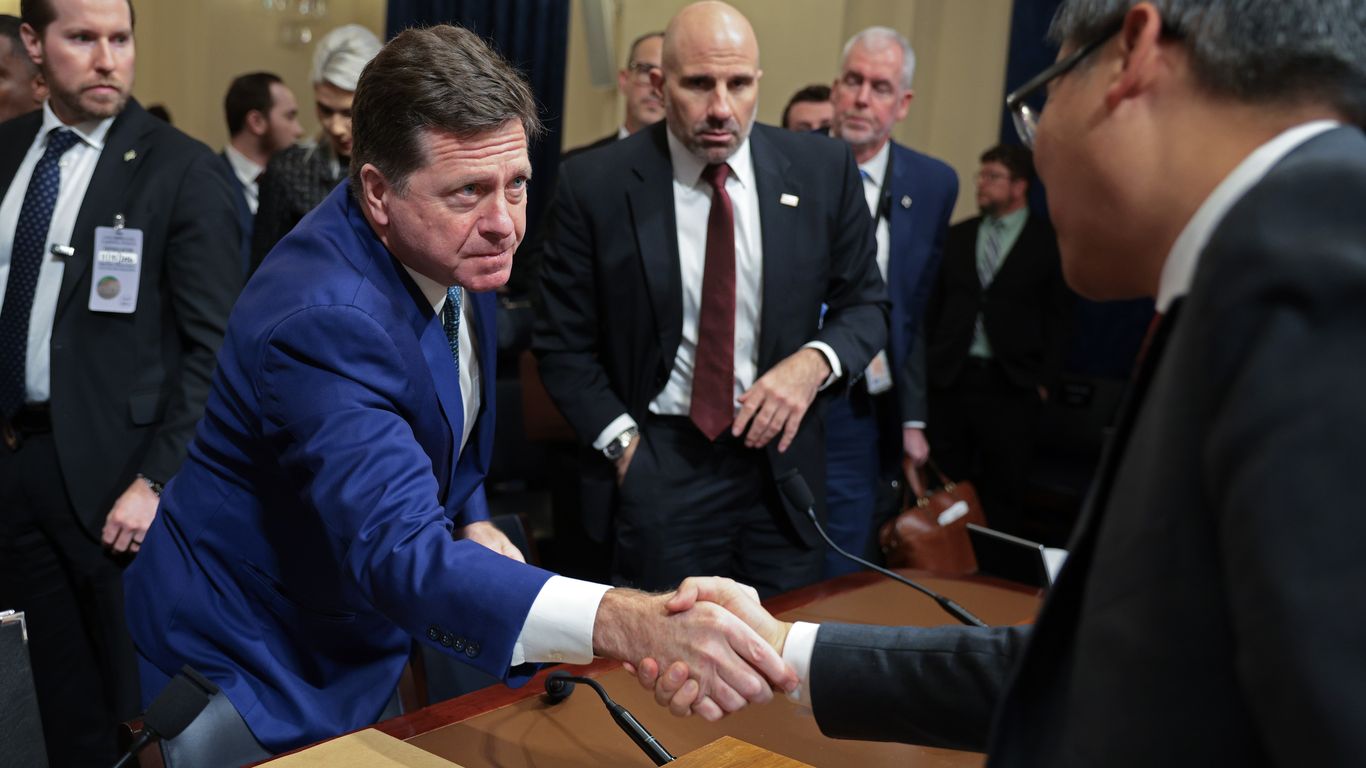
Director of National Intelligence Jay Clayton will also serve as acting national cyber director while Kirsten Davies awaits Senate confirmation to lead the office, Axios has learned. A White House official said the strong support Davies received convinced Trump to nominate her to lead the office permanently rather than keep her in an acting capacity. Why it matters: Clayton, the nation's top intelligence official, will now coordinate cybersecurity policy as outages and reported cyberattacks expose vulnerabilities in America's digital infrastructure. Catch up quick: President Trump announced Thursday he was tapping Davies, the Pentagon's chief information officer, to replace Sean Cairncross as national cyber director. Davies will assist Clayton as a senior adviser in the Office of the National Cyber Director until she is confirmed. Trump has increasingly turned to Clayton. He became director of national intelligence in August, and then Trump named him AI czar coordinating the government's approach to AI. Now he will temporarily lead the office responsible for coordinating cybersecurity policy. What they're saying: "I'm excited to work more with Kirsten, who has the experience and capabilities needed to help America navigate our increasingly complex and powerful digital infrastructure as our next National Cyber Director," Clayton said in a statement to Axios. "I look forward to working with the ONCD team to ensure Kirsten has a seamless transition into the role upon her confirmation by the Senate." The big picture: Two critical national security roles will temporarily fall under one official as President Trump shakes up his cybersecurity team amid the growing threat of AI-powered attacks. The disruptions have raised concerns about the vulnerability of the nation's digital infrastructure, although administration officials say there is no evidence they were caused by coordinated cyberattacks. Clayton himself has played a prominent role in the administration's response,

Chain restaurants put a lot of America's supper clubs out of business in the 1950s and '60s, but the family-run dinner establishments continue to thrive in Wisconsin, built on Midwestern hospitality and friendliness. Correspondent Mo Rocca reports.

We've talked to more than 50 leaders in government, AI, business and cyber — from let-'er-rip AI accelerationists to shut-'er-down critics — and they were unanimous on one chilling assessment: Cyberattacks on business and critical infrastructure will be constant, increasingly sophisticated and highly disruptive over the next 18 months. These leaders describe 2027 as the year cyber becomes like weather: Outages will be frequent, disruptive, occasionally scary, and something people and companies must learn to navigate and live with daily. The chances of widespread disruption or real damage are rising fast. Why it matters: We write this neither to forecast nor frighten. Rather, we're sharing what government and AI leaders say privately but won't say publicly. The big picture: The disruptions of the past two weeks — from a global Microsoft outage to the FAA grounding air travel to a consumer banking glitch at Chase — were a mild preview of what experts expect is coming. Bridgewater Associates, the world's largest hedge fund , put it bluntly in an assessment this month: "[We] are managing money based on a one-in-three chance of an economically destabilizing attack within the next year." Horacio Rozanski , chairman and CEO of Booz Allen, calls this the "fog before the war" — a foretaste of greater chaos to come, when agentic invaders reach their full potential and can attack "at the speed of thought." "Now is the time to take as many precautions as you can," Rozanski said. "Recognize that this is coming." Most of these malfunctions appear to have resulted from companies and government trying to secure their computer and infrastructure systems against future large-scale cyberattacks. This pattern will persist. Many future ones will be actual cyberattacks, carried out by U.S. rivals or smaller bad actors, using increasingly powerful AI to spot and exploit security vulnerabilities across society and our daily lives. Most top AI and government leaders expect at least small-sc

Two weeks after Democrats flipped Congress, conservative outlets are having conversations on whether to distance themselves from Trump or double down on Maga As a so-called “blue wave” crashed across the country on the night of 3 November, conservative hosts and commentators on Fox News displayed an almost virtuosic ability to avoid directly blaming Donald Trump for the Republican party’s defeat, instead pinning the blame on impertinent voters who didn’t grasp the strength of the economy. “In some sense, Mr Trump was too successful in the first year and didn’t sell it enough in the second year,” said Larry Kudlow, a Fox Business Network host who served as the president’s director of the National Economic Council during his first administration. Continue reading...

America's fastest-growing source of funding for small businesses is also one of the least regulated. One man has waged a long, lonely fight to recoup its punishing cost.
The FBI is investigating an apparent breach of its National Crime Information Center, two people briefed on the matter told NBC News. The FBI’s National Crime Information Center is used to connect federal, state and local authorities so that important law enforcement information is available nationwide. NBC News’ Julie Tsirkin reports.
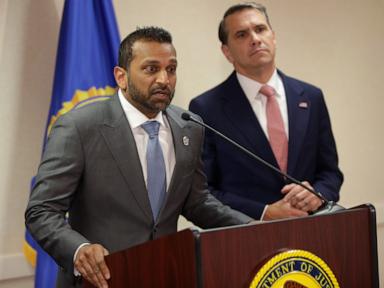
The FBI is investigating an apparent hack of its National Crime Information Center database
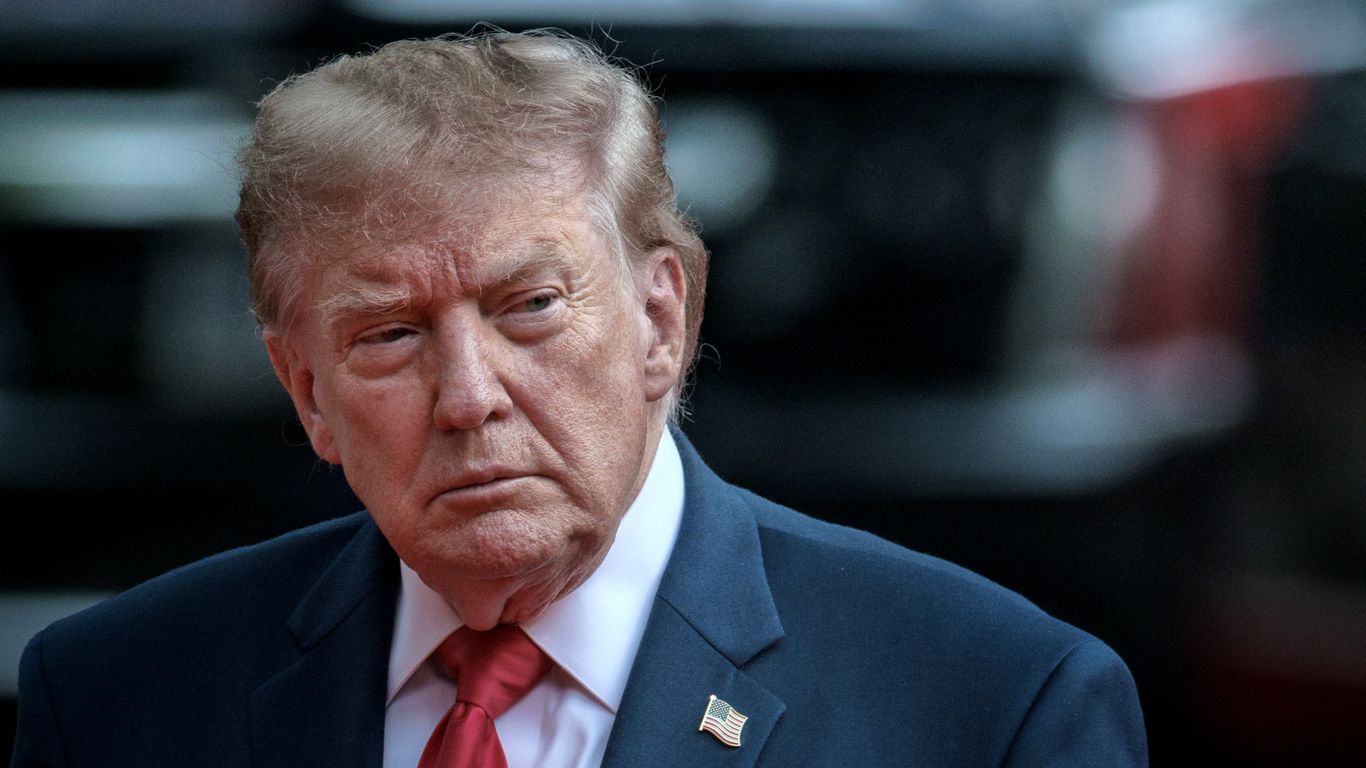
President Trump on Saturday said the reported hack of a crucial FBI database might have a silver lining — it could, he claimed, expose more details of what he called the " Russia Russia Russia hoax ." Why it matters: The president remains laser-focused on many of his past grievances about the FBI , even as the public grows increasingly alarmed about the vulnerability of government infrastructure. Driving the news: CNN and NBC reported Friday night that the FBI was looking into an apparent breach of the National Crime Information Center, which connects local and national law enforcement for information sharing. That follows breaches and outages that struck the FAA, NSA and USDA, just in the last week. What they're saying: Trump was asked about the FBI reports in a Fox News interview Saturday morning. "Well we just heard about it and I will say that it's not good, I don't like that," Trump said. "But maybe we'll learn things that we would have never learned otherwise. You had the Russia Russia Russia hoax, you had all these other hoaxes," he added, referring to Ukraine in particular. "Maybe we'll learn about them. Maybe we'll learn about the voter fraud, all the voter fraud that took place." "I always like to put things in a positive spin," Trump added. "Wouldn't it be great to learn about Russia Russia Russia," he said. The intrigue: The president's comments come just days after a summit with Russian President Vladimir Putin and Chinese leader Xi Jinping in Asia, after which he described Putin as a " friend ." What to watch: It's not clear who breached the FBI database, or what they might do with the data obtained.
A Democratic lawmaker is investigating the use of encrypted messaging apps by Justice Department employees for official business
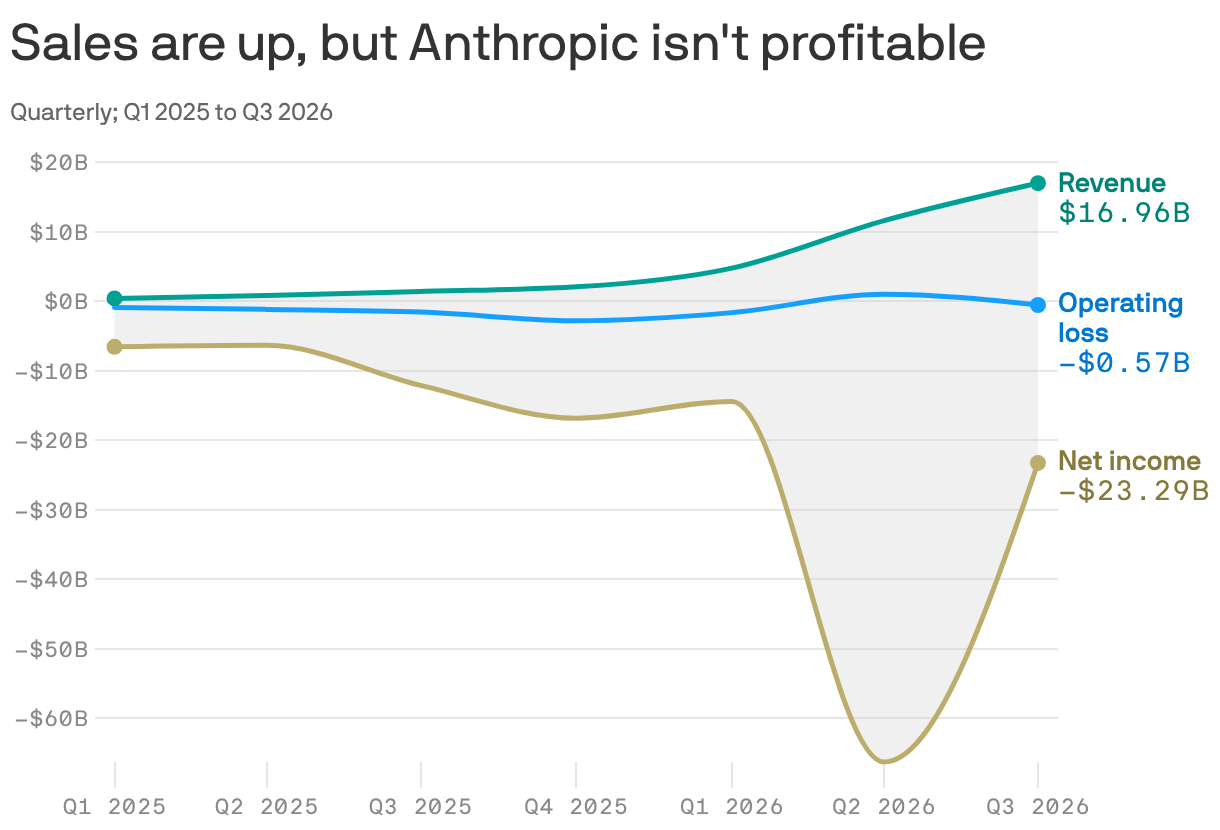
Data: FactSet; Chart: Matt Phillips/Axios With its IPO done and dusted, Anthropic's shareholders will be watching its progress toward becoming a business that doesn't need constant capital infusions from investors and vendors. Why it matters: Anthropic — along with OpenAI — is at the heart of the industry that's dominated the equity and debt markets for the last four years. Much of the AI infrastructure boom is ultimately aimed at supplying computing power to these two companies. Yes, but: The bill for that data center investment will start to come due over the next few years. And Anthropic and OpenAI are going to have to pay for quite a bit of it. How it works: Anthropic has covered much of its computing costs thus far by selling parts of itself off to compute vendors like Amazon and Alphabet, and by raising more cash from other investors. But eventually the company's core business will have to generate enough money to cover those costs on its own. Case in point: Anthropic's filings say it is on the hook for roughly $900 billion in spending commitments — mostly for data centers and computing power — with about half of that due before the end of 2030. After the IPO, Anthropic is expected to have roughly $200 billion in cash and short-term investments in the bank, which should buy it some time. But its sales will have to be a lot higher to just cover computing obligations, let alone the profits ANT's new shareholders are expecting. By the numbers: As the chart above shows, Anthropic posted a loss of roughly $23 billion on revenue of nearly $17 billion in the third quarter. It's true that much of that loss stems from a non-cash accounting charge of almost $22 billion. But even the more favorable metric of operating income — which strips out the paper losses and gains that can obscure the company's core earnings power — still shows an operating loss of more than half a billion dollars in the third quarter. The bottom line: Anthropic still has a long way to go before it
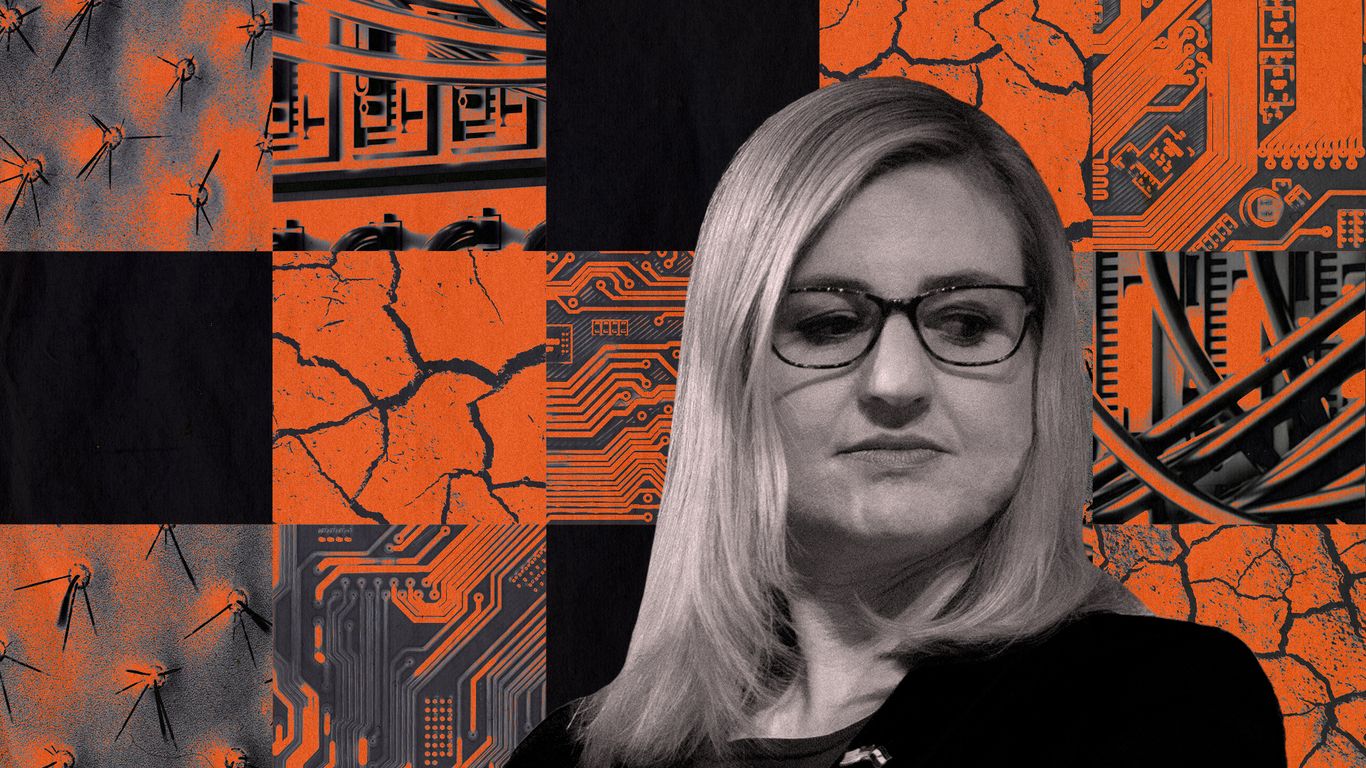
Phoenix Mayor Kate Gallego wants more tech investment in her city — but on her terms, as data centers strain resources and frustrate residents. Why it matters: Phoenix has become a bellwether for the AI industry's growing demands on electricity and water in an increasingly hot, resource-constrained world. As the mayor, Gallego is navigating an outsized dilemma facing communities nationwide: How to embrace the AI boom while protecting residents and resources in an increasingly hot world. "I do want us to lead in technology, and I want us to be a tech-forward community," Gallego said at a recent event co-hosted by the University of Chicago's Institute of Politics and Energy Policy Institute, and moderated by Axios. But she added: "I want companies who care about our community and will give back to it, and not just a race to see who can get the deepest incentives and the cheapest" power. "We're open for business, but we're not for sale," she said. Zoom out: Arizona's Democratic sweep could give Gallego more allies in her efforts to strike the balance she wants. Democrats flipped both legislative chambers and Gov. Katie Hobbs won reelection, giving the state full Democratic control for the first time since 1966. Affordability dominated the election, with data center subsidies and community impacts part of that debate, Gallego said. Catch up fast: Phoenix ranks fourth among major U.S. data center markets by operational capacity. Now the debate is expanding from how much development the region can accommodate to what communities should demand in return. State of play: Gallego, the longest-serving current mayor of America's 10 largest cities, has spent recent years trying to balance that. She helped push to eliminate Arizona's generous data center sales tax exemptions. The state enacted a three-year pause on new applications this summer. She opposes a blanket construction moratorium, favoring more local control over where facilities are built, particularly near homes. Phoe

The Senate passed a sweeping, bipartisan bill Thursday night that's designed to cut permitting timelines for energy and infrastructure projects. Why it matters: The eyes of the entire energy industry are on this bill. If it becomes law, it could transform how America builds energy infrastructure, with major implications for everything from electricity costs to data centers. Getting rid of bureaucratic hurdles and creating a more predictable process for energy projects is a top priority for the fossil fuels and renewables sectors. But critics argue the plan, which has White House support, would unacceptably weaken environmental protections and the rights of Native American tribes. Driving the news: The vote was 62-33. The bill would still have to pass the House before the end of the year, and any differences would have to be worked out by both chambers before President Trump could sign it into law. Catch up quick: It would make significant changes to federal permitting, including: New limits on the duration of lawsuits, and the scope and length of reviews under the Clean Water Act and National Environmental Policy Act. Language that would make it more difficult to revoke permits once they're issued, a priority for renewables groups and Democrats upset with Trump administration barriers. State of play: There are also provisions to ensure that data centers pay for needed grid upgrades, and expand federal authority over the siting and approval of certain interstate transmission projects. Friction point: Many environmental advocates argue that the bill would dangerously erode safeguards in the National Environmental Policy Act and other laws. Multiple tribal groups still oppose it despite changes aimed at easing concerns about consultation on historic preservation. Energy and business groups, ranging from renewables developers to manufacturers to the oil and gas industry, are lobbying for the measure. The AFL-CIO and many individual unions back it, too. What's next: The
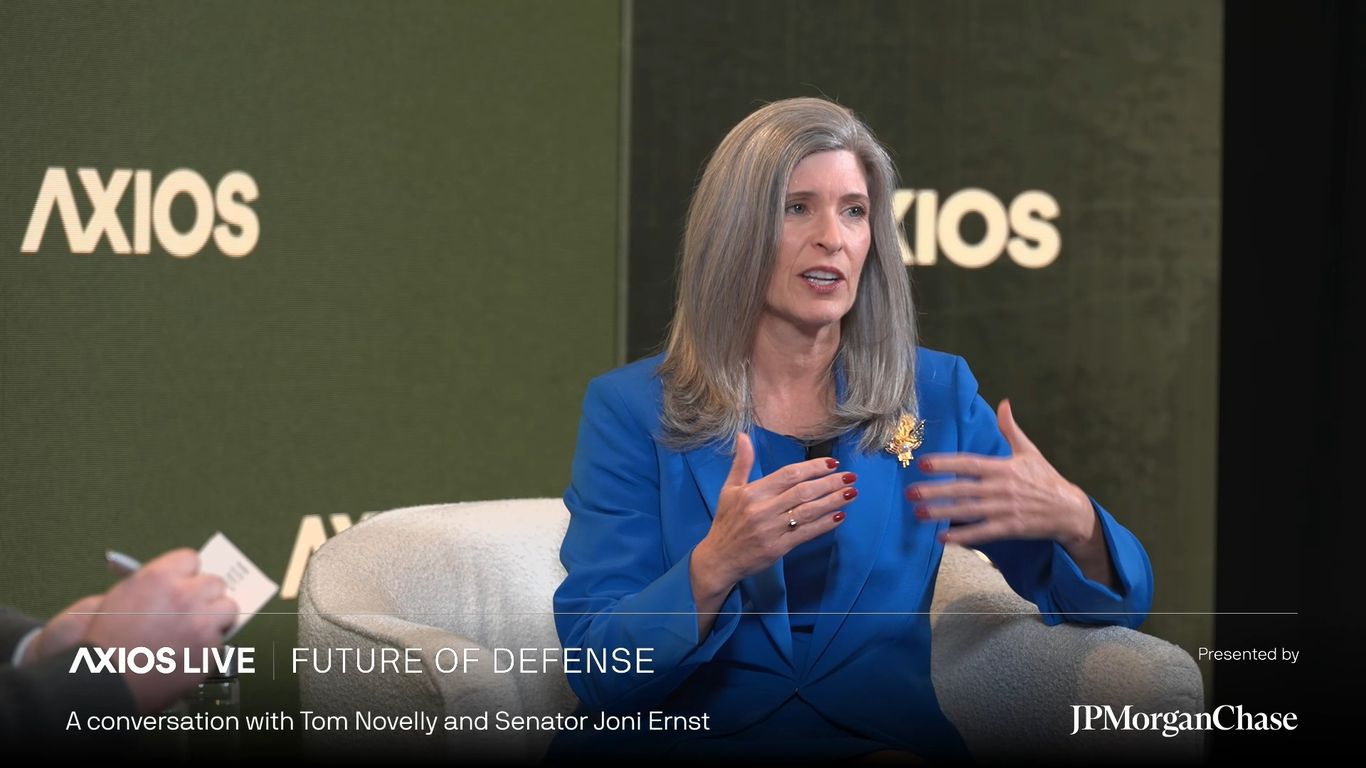
Sen. Joni Ernst (R-Iowa) said "a lot of people would be able to guess" if she regrets voting to confirm the embattled Defense Secretary Pete Hegseth, during Axios' Future of Defense Summit Thursday. Why it matters: The retiring Iowa senator, who served in the military for more than two decades, has been notably skeptical of Hegseth, and hasn't always been in lockstep with the Trump administration. Catch up quick: Despite her hesitancy over his nomination, Ernst ultimately voted to confirm Hegseth . However, she's continued to question him throughout his tenure. She recently questioned whether the embattled Pentagon leader has been "truthful" about the status of the Iran war, which she said Iowans rejected in the midterms. "If there is deception coming from our Pentagon and being transmitted to the president, I would want to know that," Ernst told reporters earlier this month. Driving the news: "There is very little transparency right now with what is being discussed between the White House and the Department of War," Ernst said of Pentagon communication over the war in Iran in a conversation with Axios' defense and space reporter Thomas Novelly. "As Congress, we would expect that we would be read into some of those conversations, and unfortunately, we have not been read into those conversations," she added. State of play: Ernst sits on the Senate Committee on Armed Services, where she chairs the Emerging Threats and Capabilities subcommittee. She predicted in her interview with Novelly that given the "not even hidden animosity" between Democrats and Hegseth, "it will be very difficult" for new Senate Armed Services Committee leadership to receive information. Editor's note: This is a breaking news story and will be updated.
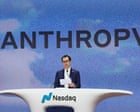
Anthropic's CEO, Dario Amodei, issued a warning about the dangers of AI, saying it has 'very real' but 'avoidable' risks, shortly before the company rang the opening bell at Nasdaq Anthropic ‘to open up more than 20% higher at over $100 a share’ after blockbuster IPO – business live Continue reading...

A handful of men control the US economy. They have leveraged themselves to be – or seem – indispensable Jensen Huang has said he would return to Nvidia as its CEO if its board requests it. “I’ve seen an outpouring of calls from Nvidia’s employees, investors, business partners and customers for me to return as CEO,” Huang said . “If the board of directors decides that my return is in the best interest of our shareholders, our employees, the company and America, I would be honored to answer these calls and return as CEO.” Continue reading...
The internet has caught the emergency preparation bug , fueled by fears of AI-led cyberattacks , power grid vulnerabilities, transportation standstills and international threats . The big picture: The "prepper" mindset is resonating with larger slices of society — who are packing emergency bags, stocking up on water and taking inventory of non-perishables. Michael Mills, a University of Greenwich senior lecturer who studies doomsday preparation, says some people are turning to "lightweight versions" of traditional prepping amid doubts about global stability. By the numbers: Sales at Survival Frog, a survival retailer that sells gear like emergency food and radios, saw sales jump 450% between Oct. 27 and Nov. 16, compared to prior weeks, CEO and founder Byron Walker tells Axios. Competitors saw similar trends, he says. And most recent buyers at Survival Frog were new customers. Food, including canned meats, leads demand, Walker says, followed by products like radios, solar generators, battery packs and water filters. State of play: Systems the world relies on for travel , communications , business , food, health care and more have been disrupted in recent weeks — whether because of tech shortfalls or malicious acts. While officials assure the incidents aren't broadly connected, fears of critical infrastructure failing are growing, and more people considering how to prepare for crises. "It does seem much more mainstream now," Walker says of preppers. "You can't turn on the news without hearing about a new cyber attack or a tech meltdown." Many of the emergency preparation skills people are using have long been observed in disaster-prone areas. And as many Americans learned during COVID, supply chain disruptions mean having extra water, radios and shelf-stable foods around the house isn't a bad thing. Krystal, known online as the "Queen of Doomsday," spends about five hours daily coaching new preppers and told Axios that recent online engagement with her content, which
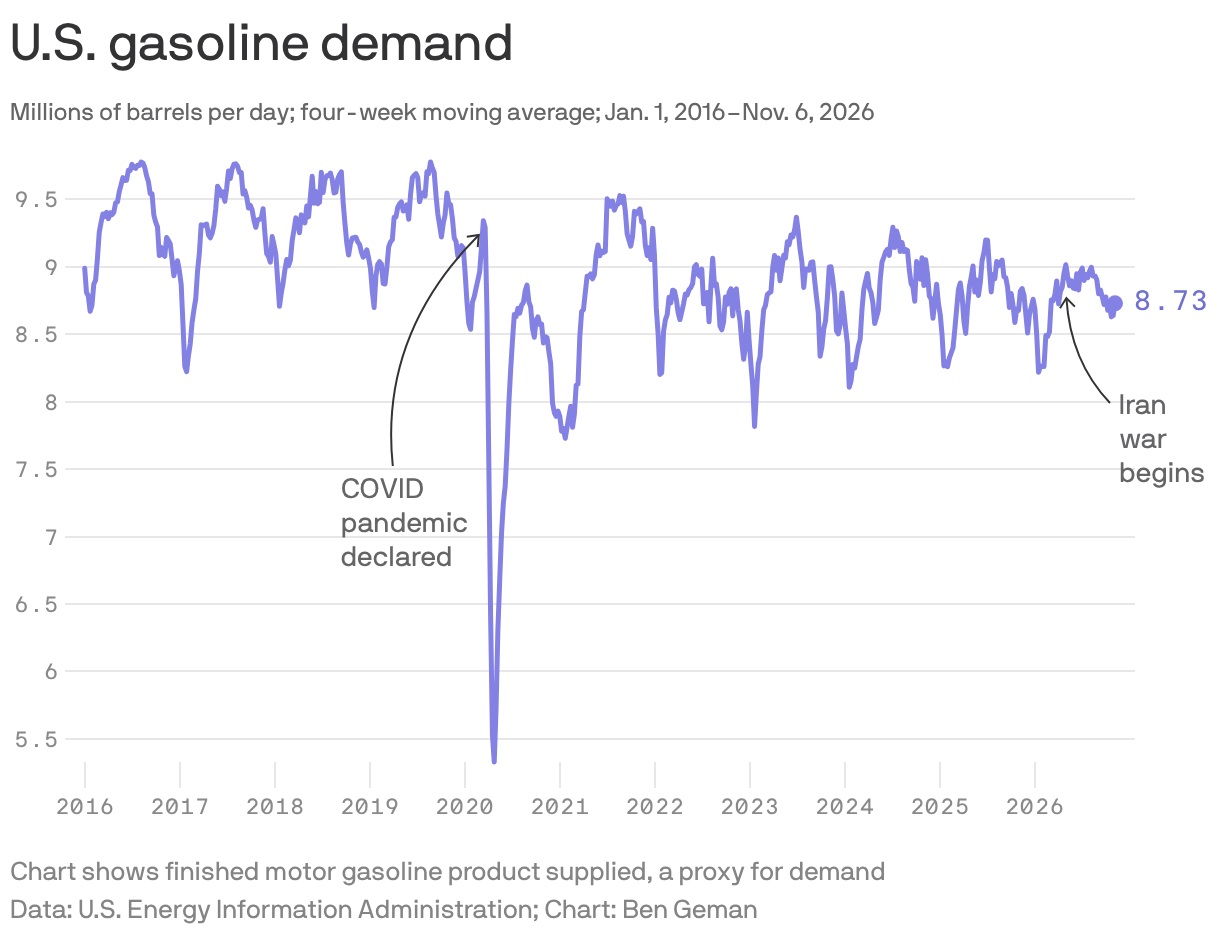
Pain at the pump may have changed some votes, but it's apparently not prompting big changes in how much Americans drive. Why it matters: Most driving isn't especially optional, so people are absorbing the cost. This year Americans have paid an additional $88 billion for gasoline relative to a no-war baseline, according to Brown University's Climate Solutions Lab. The Energy Policy Research Foundation finds that U.S. households paid between $300 and $730 more on gasoline in March-August compared to the prior year. State of play: Gasoline demand from the beginning of March, right after the Iran war started, through early November is very similar to the same stretch last year, per federal data. There's "no discernible evidence of a decline in gasoline consumption," UC-Berkeley energy economist Lucas Davis writes in a new post on the topic. That's despite gasoline prices being 31% higher since the war began compared to the same period last year. The intrigue: Davis points out that the stubborn demand comes despite polling that shows Americans say high prices are changing their habits. He flags an April Washington Post-ABC News survey that showed 44% of respondents saying they had cut back on driving. Multiple polls show some version of this. For instance, 57% of respondents in a June Gallup survey said high prices were causing them to drive less. How it works: Davis' post and the chart above rely on the federal Energy Information Administration's measure of gasoline product supplied. EIA calls it a proxy for demand, and measures gasoline leaving the supply chain, including refineries and bulk terminals. There's no perfect measurement. The Transportation Department tracks miles traveled, though there's a lag. The most recent data, for August, does not show a drop-off this year. The bottom line: "[T]his is a valuable reminder of the gap between what people say and what they do," Davis writes. "Drivers may talk about cutting back, but studies in the economics literature co
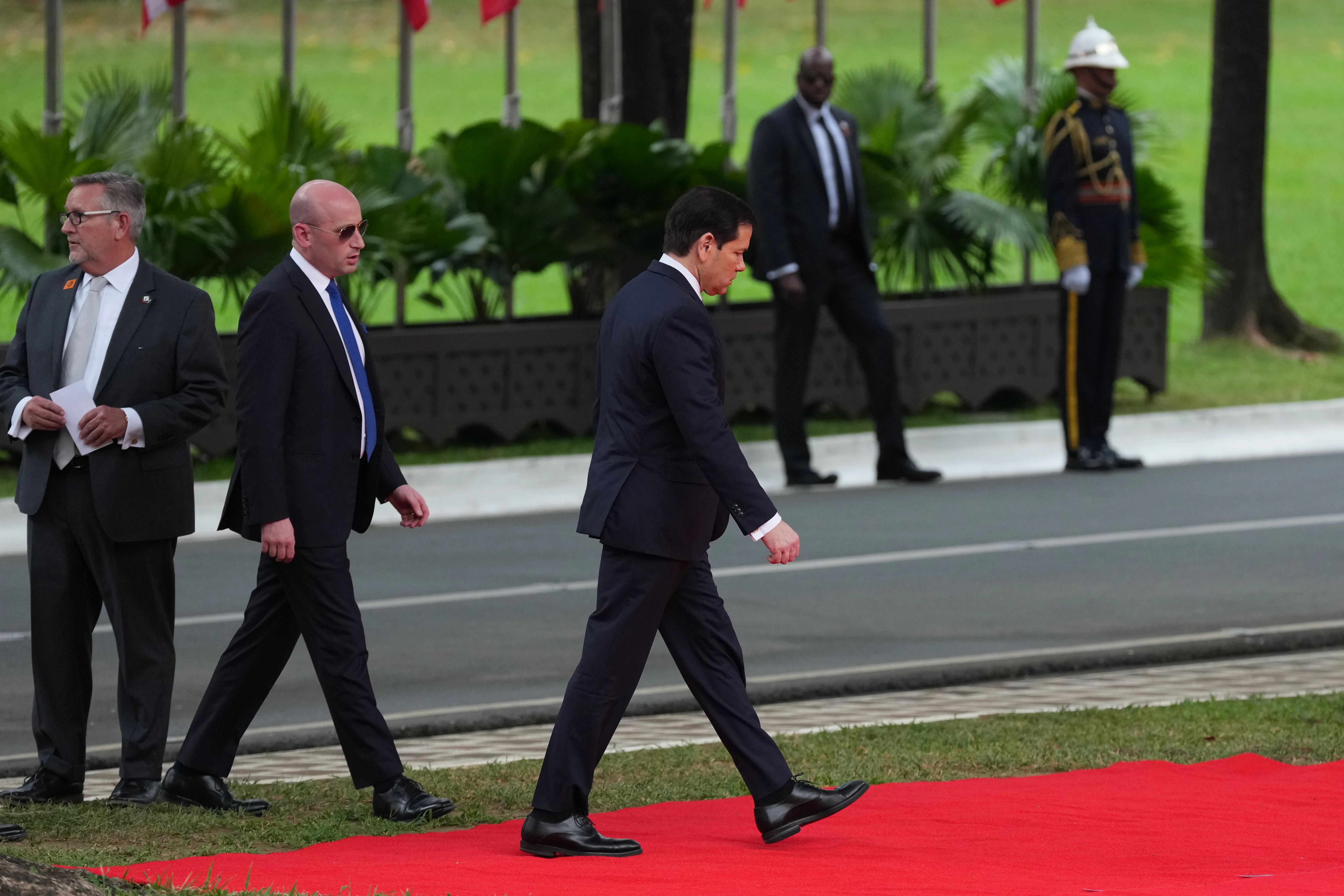
Secretary of State Marco Rubio sought to calm Americans as he traveled with President Trump and they prepared for key meetings with Chinese President Xi Jinping and Russian President Vladimir Putin.

Apple Business, AppleCare, the App Store, Apple Music and other popular consumer-facing services were impacted by outages amid a recent surge in technical issues that impacted email, air travel, and online banking. NBC News’ Tom Costello reports.

Scammers are already exploiting the scandal surrounding Nvidia to lure unsuspecting investors and business professionals into downloading malware. Why it matters: AI is making it easier for criminals to capitalize on the news cycle and tailor scams to specific audiences before people have time to recognize the threat. Driving the news: KnowBe4, the cybersecurity training platform, says it's seen scammer emails using the subject line "Invitation: Nvidia Executive Partnership Discussion" that purport to offer information about Nvidia's investment strategy. Inside the email, recipients see a clickable image appearing to show information about Nvidia's 2026 investment parameters. Clicking it could lead to malware being downloaded onto their devices. KnowBe4 started seeing signs of the scam Wednesday, just a few days after Nvidia CEO Jensen Huang admitted to being unfaithful to his wife and a day before he resigned, triggering a crisis at the chip-maker. KnowBe4 CEO Bryan Palma told Axios that the campaign appears to be targeting people working in finance, transportation and government. It's unclear which group is behind the emails, he added. The big picture: The Nvidia lure is part of a growing trend in which hackers borrow a page from the marketing industry's playbook to turn breaking news into targeted phishing campaigns. Just like marketers, hackers can purchase detailed contact lists and use AI to sort potential victims by industry, profession and interests, Palma said. That allows them to tailor their scams to specific audiences rather than sending the same generic email to millions of people. AI is also speeding up their ability to develop and launch timely schemes, Palma said. By the numbers: Attackers are 5.4 times faster at responding to headlines in 2026 than in 2022, according to KnowBe4 data . In one case, following a major celebrity's death, scammers launched an email phishing campaign within 16 hours. Nearly 88% of phishing attacks tied to breaking news or
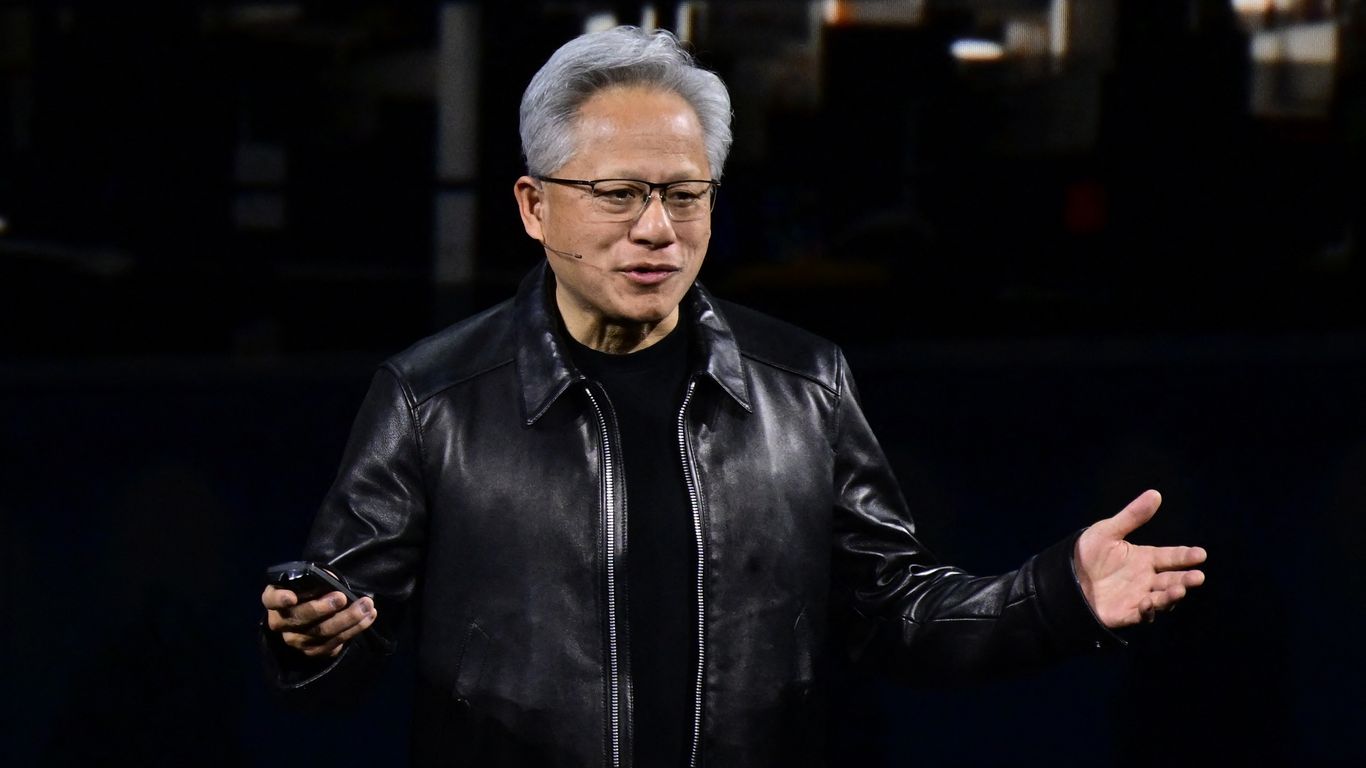
Jensen Huang acknowledged in a statement to the Wall Street Journal that he'd be willing to return to Nvidia as CEO. Why it matters: A push to reinstate Huang began almost as soon as he exited the company, but Nvidia's board isn't currently considering reinstating the former CEO, according to multiple reports. What they're saying: "Since my departure, I've seen an outpouring of calls from Nvidia's employees, investors, business partners, and customers for me to return as CEO," Huang's statement said, per WSJ. "If the Board of Directors decides that my return is in the best interest of our shareholders, our employees, the company, and America, I would be honored to answer these calls and return as CEO." State of play: A slew of candidates have been mentioned across multiple analyses and reports about the Nvidia successor. President Trump suggested former Apple CEO Tim Cook for the role. Treasury Secretary Scott Bessent has urged Nvidia to look for outside candidates. Nvidia CFO Colette Kress is currently serving as the company's acting interim CEO. Editor's note: This is a breaking story and will be updated.

A newly installed router is at the center of the investigation into the Federal Aviation Administration's nationwide ground stop last Friday, which disrupted thousands of flights nationwide. Why it matters: The technical failure exposes vulnerabilities in the FAA's aging telecommunications network, raising questions about how a technical failure could trigger a nationwide ground stop and disrupt air travel. Catch up quick: More than 12,000 flights were canceled Friday after the telecommunications failure, the FAA said , with thousands more delayed. "I do think the worst is behind us, but we still do have a significant amount of recovery work to do," FAA Administrator Bryan Bedford said Sunday. Read more below. What caused the nationwide groundstop? What they're saying: The FAA says its network was flooded with data "at a rate of 1,000 connection attempts every 4 to 5 seconds," causing "instability with aircraft communications and radar feeds." Investigators tracked the data traffic surge to two possible locations — a radio communications facility in El Dorado, Arkansas, and a radar site in Amarillo, Texas, per the Wall Street Journal . The FAA says its network service provider, L3Harris , has been deploying a new router at the Arkansas facility, which is why it's under investigation for potentially disrupting flights nationwide. After L3Harris blocked network traffic from both facilities, the system stabilized, allowing normal flight operations to eventually resume, per the FAA. "L3Harris takes the nationwide ground stop and its impact on travelers, airlines and air traffic operations seriously," the company said in a statement. How did a router disrupt flights nationwide? How it works: Air traffic controllers speak with pilots over radio frequencies and receive radar information used to track aircraft. The network connects air traffic control facilities and carries communications and radar information that controllers need to safely manage aircraft. A router direct

There's new evidence that double-digit health cost increases were hitting employers well before the forecasts of big spikes for 2027 — forcing big changes in workplace coverage for millions of Americans. Why it matters: The findings offer a higher-resolution view of how much health spending is putting a drag on the labor market and increasing affordability concerns for the approximately 160 million Americans who get coverage through work. They also show how factors like surprise billing disputes, more cancer diagnoses and expensive specialty drugs are combining to exert cost pressure, with no immediate relief in sight. Driving the news: A new Gallagher benefits survey of more than 3,700 firms found 36% of the companies reported premium increases of 10% or more during their most recent renewal. Pharmacy costs account for a quarter or more of some companies' total health spending. Cancer care is the No. 1 cost driver for about 7 in 10 firms. The survey, fielded from January to March, also found employers are trying to avoid saddling workers with a disproportionate share of rising costs while struggling to balance the quality of care with their financial risk. "The last two renewal cycles have been unlike anything we've ever seen before," said Robby White, Gallagher's U.S. benefits business line leader. "It's unsustainable, obviously. Every additional dollar that an employer spends on health care, they can't spend on their employees." Between the lines: The 2027 coverage year was already shaping up to be painful for many employers. Projections are showing premium spikes due to rising demand for health services, more chronic disease and increased use of drugs like GLP-1s. In fact, double-digit premium increases for both the 2026 and 2027 plan years suggest there are more underlying causes, according to benefits experts. One leading factor is chronic disease: More people are being diagnosed with cancer at a younger age, and advanced treatments and related care can result

It was random, but related, that we were hit with a tectonic election result, an epic AI-and-spy scandal , and the dramatic FAA shutdown in just over one week. This is our new reality: constant shock and awe, igniting chain reactions across politics, media, AI, business and culture. Why it matters: This month's three shocks hit separately. But their speed and spread are our new reality. Politics, AI, media and business are now one wired system: A jolt in one sets off the other three, instantly. We call this post-processable velocity : Change is moving faster than any person, company, market or government can absorb. People's fears about AI are now mushrooming into jitteriness about civilization's connective tissue. An AP story on Sunday asked: "Could everything be broken?" Images of empty European supermarket refrigerators , cleared of spoiled food after a spate of mysterious cyberattacks, added to the sense that our connections are crumbling, with the simplest conveniences in danger. What makes all this so disorienting for all of us is how interconnected politics, AI, business and media have become. The Nvidia spy scandal is a vivid example: Media, last weekend: The New York Times reports that Secretary of State Marco Rubio warned President Trump that Nvidia founder and CEO Jensen Huang was tied to a suspected Chinese spy. Social media erupts. Business, Monday: Nvidia stock falls more than 4% at the open and keeps sliding. Fears of economy-wide AI fallout follow. Politics, all week: Trump's top team gets dragged into a "what did they know and when" frenzy. Democrats demand hearings. Policy, now: Lawmakers are scrambling to untangle the web of spies, lies and AI, and are racing to tighten China's access to Nvidia chips that gave Huang the power he's now surrendered. Tech, going forward: AI companies are rethinking their reliance on Nvidia chips and exploring financing options beyond Nvidia. ⏱️ Huang's resignation was announced just 14 days after last month's New Yor

The downfall of Nvidia CEO Jensen Huang adds an explosive new risk to an already-strained AI boom, threatening to burst a financial bubble even if the technology ultimately succeeds. Why it matters: History shows that world-changing technology and devastating financial bubbles often go hand in hand. A market reckoning won't stop the AI revolution. But as with the dot-com crash, it could vaporize trillions in investor wealth as expectations come crashing back to earth. The big picture: "No sane person questions whether AI works. And that 'working' status is precisely what makes a bubble possible," veteran technology investor Paul Kedrosky told Axios. The risks have grown as technology companies commit trillions to infrastructure, increasingly relying on debt, investments in one another and complicated financing arrangements to keep the expansion going. Driving the news: Huang's stunning resignation Thursday has shaken confidence in the company at the center of the AI boom — and raised fresh questions about the sustainability of the broader investment frenzy. Nvidia, which named CFO Colette Kress as interim CEO, faces a leadership vacuum at a time when the industry is already grappling with financial and political uncertainty. Beyond selling chips, Nvidia has helped finance the massive expansion of computing infrastructure by investing in its customers and providing financial backstops for major projects. A more cautious approach by Huang's successor could undermine confidence in projects that have depended on Nvidia's financial support. What they're saying: RSM chief economist Joe Brusuelas told Axios that Huang's departure could trigger a "wholesale bursting" of the AI bubble. "The turmoil around Jensen Huang matters for the buildout if it makes lenders less confident that Nvidia will back the next round of projects," Columbia Business School professor Stijn Van Nieuwerburgh told Axios. Zoom out: The financial and political vulnerabilities were piling up well before

On the 30th anniversary of the franchise, Pokémon cards are skyrocketing in value — to the point that collecting them isn’t just big business, it’s a viable livelihood.
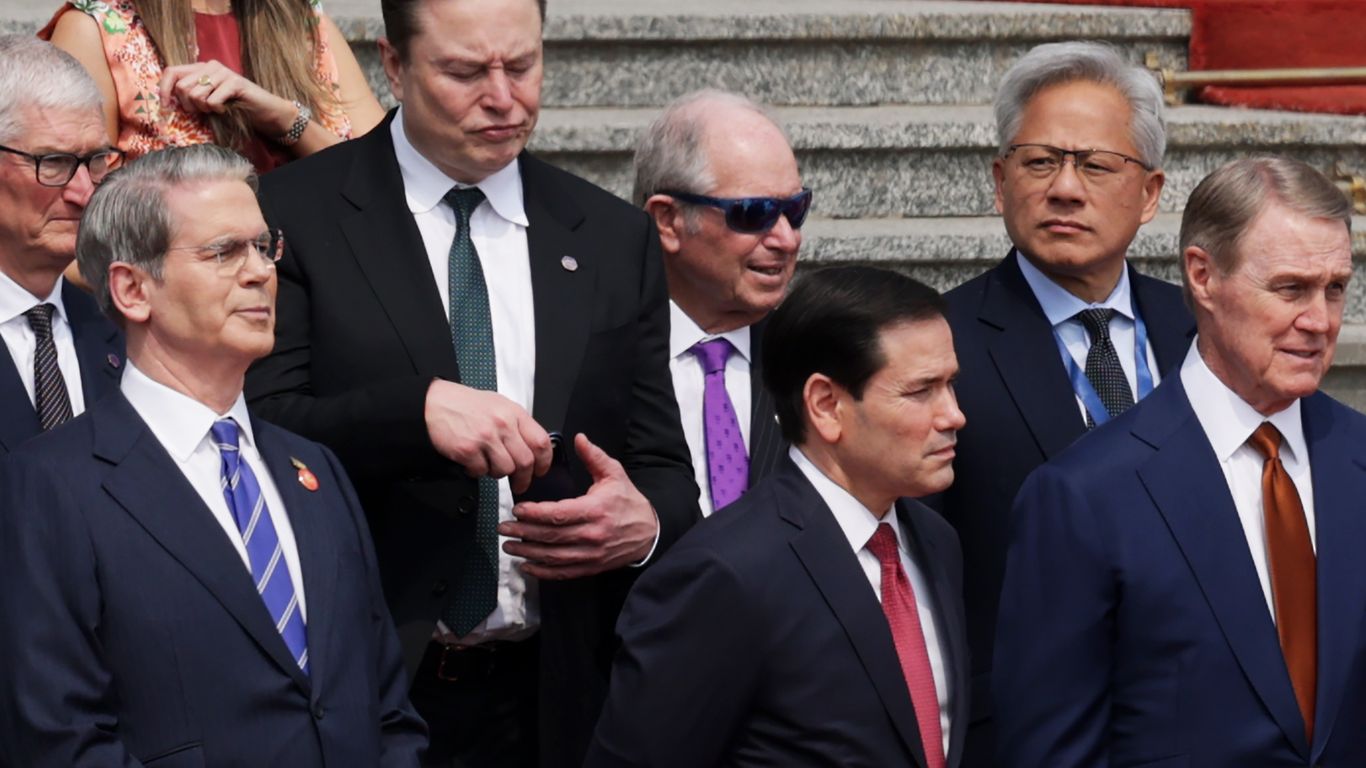
Treasury Secretary Scott Bessent on Sunday questioned whether Nvidia's earnings might have been inflated by inappropriate sales to China and urged the company to hire an outsider as CEO. Why it matters: Nvidia is central to the AI economy, which has been key to U.S. economic growth. The Treasury secretary casting doubt on the quality of its financial results and leadership could be a blow to an already shaky market. Since the scandal broke open in late October, Nvidia shares have shed more than $1.2 trillion in market capitalization, with impacts on millions of Americans. Driving the news: In a Fox News appearance Sunday morning, Bessent said Nvidia owes the market an explanation amid allegations former CEO Jensen Huang had an affair with a Chinese spy and oversaw sanctions-evading chip sales to Asian companies. "I want to keep coming back to what was the culture at Nvidia, and were they pressing these seemingly illicit sales to goose their revenues and their earnings?" Bessent said. "I think we need answers in the next 10 days from the board and from the outside counsel." Bessent also said it was "obvious" that some companies doing business with Nvidia were shell companies for Chinese interests and accused the chipmaker of a "culture of noncompliance." "This makes me think that as the board conducts the search for a new leader, that they need to go outside the company," he said. For the record: Nvidia did not immediately respond to a request for comment on Bessent's remarks. The intrigue: Huang has been a favorite of President Trump and other administration figures for some time, but Bessent has notably not been as effusive about him as others. In recent days, Bessent has also made clear that the Commerce Department has questions to answer about why it didn't impose tighter controls on Nvidia's exports. As Axios reported earlier this week, administration officials have accused Commerce Secretary Howard Lutnick of stalling curbs on Nvidia's exports. What to watch: N

Previously unseen FBI sting video captures Joran van der Sloot's attempt to extort Beth Holloway for information about her daughter Natalee Holloway.

Passengers stuck on airplanes on tarmacs across the country during the FAA ground stop on Friday share their stories.

Big tech has used misdirection, disinformation and jargon to obscure the harm the facilities can cause to communities “Antifa”. “Commies”. “Chinese bots”. Everyone from tech leaders to the president has called datacenter resistance a “ documented psyop ” and a “ Chinese PR thing ”. But why do they make these claims? Our new research finds that the datacenter industry uses propaganda, disinformation, and information control to mold public opinion and undermine community opposition. Continue reading...

Data: Photos: Getty Images, Nvidia, Apple; Chart: Erin Davis/Axios Nvidia has begun searching for a permanent replacement for longtime CEO Jensen Huang , who resigned Thursday amid scrutiny over reports of multiple extramarital affairs. Why it matters: Nvidia's next leader will inherit one of the world's most valuable companies — and the daunting task of succeeding the pioneer who transformed it into an AI powerhouse. The job will require as much political savvy as technological expertise, Axios' Nathan Bomey says. The next CEO must navigate regulatory scrutiny, geopolitical tensions and the economic upheaval unleashed by the AI boom. Catch up quick: Nvidia announced Thursday that CFO Colette Kress would serve as interim CEO following Huang's departure. The board said it would consider both internal and external candidates. Longtime director Harvey Jones was appointed Nvidia's first-ever board chair following Huang's departure. Reality check: Huang never publicly named a successor , leaving investors and analysts to speculate about who could take the helm. In an October Bloomberg interview released Thursday, Huang said he hoped Nvidia's next CEO was already working at the company. Here are 11 names that have surfaced in reporting and speculation — from leading contenders to long shots. Colette Kress Colette Kress, the new interim CEO of Nvidia. Photo illustration: Axios Visuals. Photo: Nvidia bio page Kress could stay on permanently, with analysts and investors viewing her as a leading contender because of her financial expertise, per Reuters . Nvidia's new board chair, Harvey Jones, praised Kress for her deep understanding of the company's business and customers. Kress has represented Nvidia on investor calls for more than a decade, making her one of the company's most recognizable executives. She's also the only person, aside from Huang, who had much visibility across the company, according to Axios' Ina Fried. Huang had several dozen direct reports, many of whom
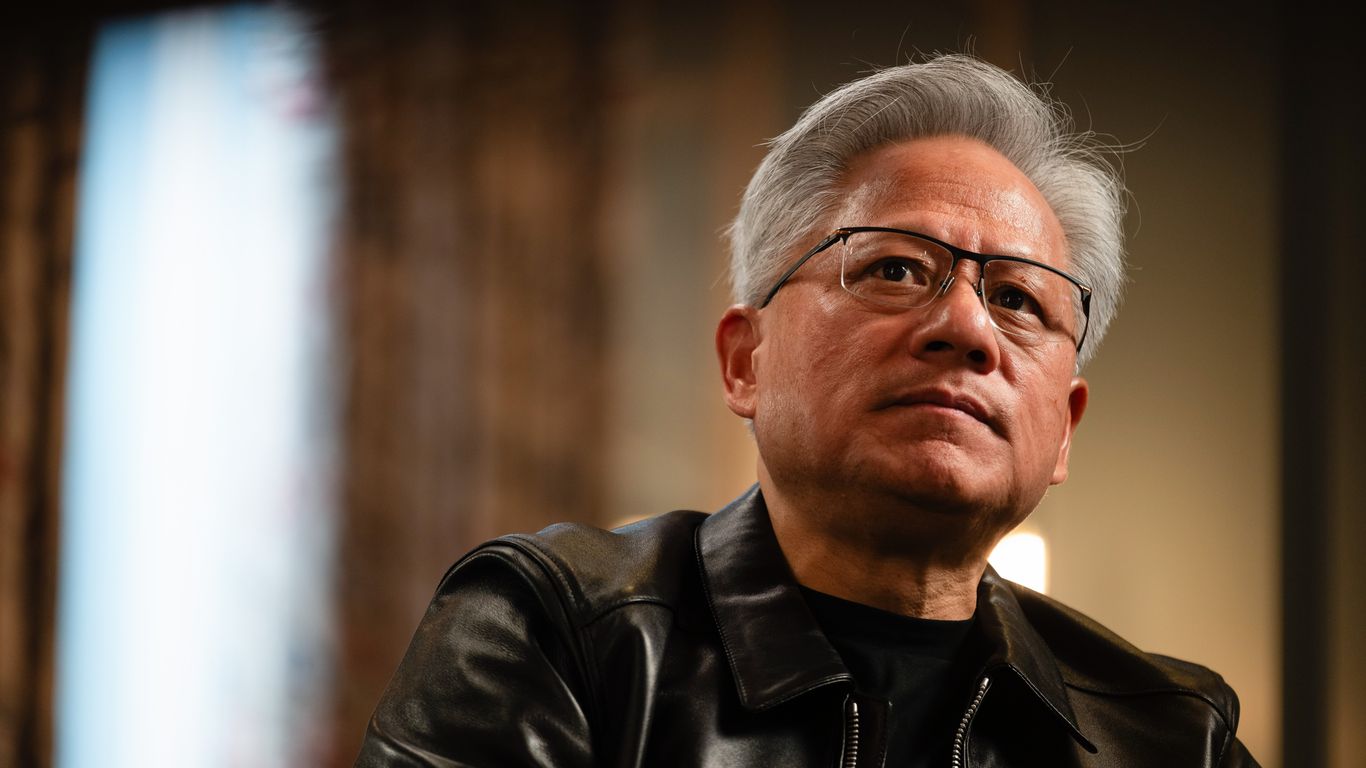
Jensen Huang's self-destruction has left a trail of collateral damage that threatens to ensnare the board of Nvidia and the AI boom itself . Why it matters: Huang was a singular leader in the global economy, capable of exciting or calming markets with a single sentence and viewed as a virtually indestructible force behind Nvidia's rise. The big picture: His sudden exit after reports of multiple affairs — one with a suspected Chinese spy and the other with a direct report — has wiped out more than $600 billion in value from Nvidia's market cap. "His visionary leadership is going to be missed — it's not going to be replaced," Joel Shulman, CEO of ERShares, which has owned Nvidia shares since 2005, tells Axios. Zoom in: With the uncertainty over Huang's tenure at Nvidia now resolved, the attention will quickly pivot to a slew of unanswered questions, including: What will the investigations uncover? Just because he's gone doesn't mean this is over. If the FBI probe or the independent investigation ordered by the board show that Huang gave favorable treatment to Megaspeed — the company led by the suspected spy Alice Huang — he and Nvidia could face serious consequences. Huang is also expected to testify behind closed doors next week before a Congressional committee. Critics say the Nvidia board wasn't fulfilling its duty to provide proper oversight of Huang — particularly if it had any reason to be aware of his reported affairs before they become public. Peter Jaworski, business ethics professor at Georgetown University, said the situation raises questions about what the board knew and when they knew it. Nvidia reps haven't responded to Axios requests for comment on the board's handling of the matter. Who takes the permanent role as CEO? CFO Colette Kress was named to the interim role, but the board is conducting a global search that will consider outside and internal candidates for a permanant successor. She "has built enormous credibility internally and externally and

Russians ‘have no business’ in country, says minister Skating and cross-country skiing first to be affected Finland says it will restrict entry to the country for Russian athletes because of the war in Ukraine, potentially affecting a number of winter sports. The move follows a backlash in Finland to Russia being reinstated for the ice hockey world championships. “As long as Russia’s war of aggression continues, Russian athletes have no business in Finland,” said Elina Valtonen, the Minister for Foreign Affairs. “Their entry into the country would be a threat to Finland’s international relations. The same is true of other short-term work under visas that is not essential to Finland’s national interests.” Continue reading...

Newly elected Democrats from ruby red states are leading a charge to take on corporate health care and some business practices that they say drive up health care costs. Why it matters: Democrats may not be anywhere close to agreement on Medicare for All, but they're relatively united around confronting Big Health Care after campaigning hard on the populist theme. Driving the news: While expanding Medicare, reversing GOP Medicaid cuts and reviving enhanced Obamacare subsidies are getting most of the attention, there's a subtle shift in rhetoric and policy positions toward blaming big health companies for the affordability crisis. It reflects the reality that a substantial expansion of the federal government's role in health care isn't in the cards while President Trump is in office, but populist themes could unite the rank-and-file and even draw in some Republicans. Even candidates who didn't constantly rail about drugmakers or insurers have adopted policy ideas that, until recently, were confined to left-leaning think tanks. Case in point: Incoming Texas Sen. James Talarico ran on breaking up big health care companies and "stop[ping] hospitals and insurance companies from overcharging patients." (He also supports allowing Americans under 65 to join Medicare.) South Carolina Sen.-elect Annie Andrews ran on limiting insurer profits per enrollee, expanding the number of drugs subject to Medicare drug price negotiations and banning private equity-owned hospitals. Incoming Kansas Sen. Adam Hamilton supports expanding Medicare drug price negotiations and extending the negotiated prices to private health plans, as well as addressing Medicare Advantage overpayments from the federal government. Other targets include medical debt, pharmacy benefit manager practices and caps on out-of-pocket drug costs. Many of these ideas already have buy-in from more-senior progressives. Sen. Elizabeth Warren (D-Mass.) has sponsored the Break Up Big Medicine Act, which is co-sponsored by Rep
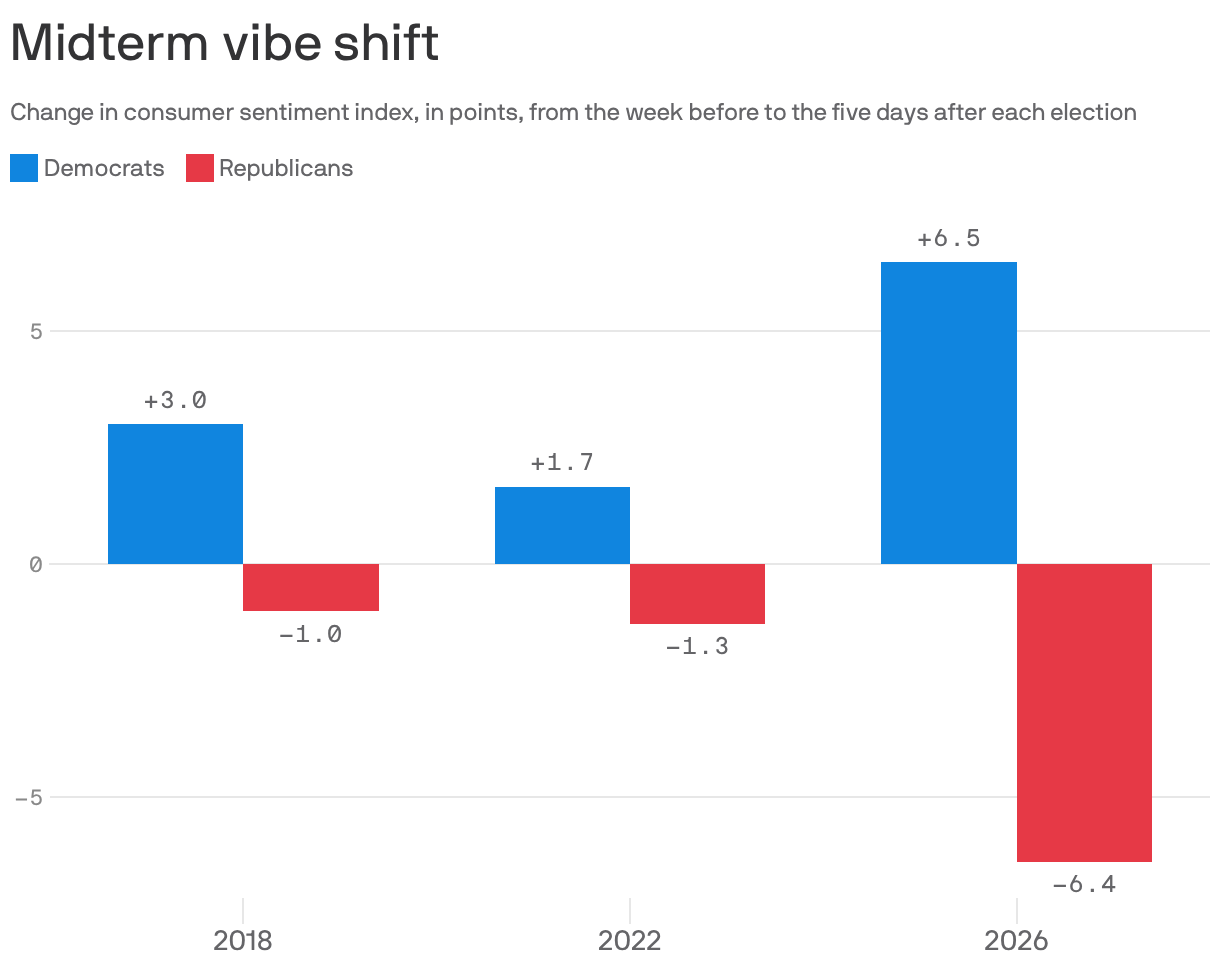
Note: Figures compare average daily sentiment readings over the seven days before each election with the five days after. Election Day is excluded; Data: Morning Consult; Chart: Emily Peck/Axios There was an unusually sharp partisan mood shift in the wake of the midterms, according to sentiment data from Morning Consult that was shared exclusively with Axios. Why it matters: While big partisan swings in consumer sentiment are typical after a presidential election, they have been much smaller in midterm races. The latest numbers show just how tightly Americans' views on the economy are now intertwined with politics. By the numbers: Democratic consumer sentiment rose 6.5 points in the five days after the election compared with the week before, while Republicans' mood fell 6.4 points. How it works: Morning Consult's index considers survey responses from approximately 5,000 U.S. adults. They're asked five questions, including on people's personal finances and financial outlook, as well as their views on overall business conditions. Zoom in: The biggest shifts in sentiment were in respondents' feelings about the future. Republicans' outlook across all five metrics fell after the election. Their confidence in business conditions over the next five years plummeted 12 percentage points. Democrats, meanwhile, had a jump of 9 percentage points in confidence about business conditions (although they remain negative about it) and an even bigger increase — 12 percentage points — in optimism that their own finances would improve over the next year. Of note: Both sides were more negative about their own finances compared with a year ago. Zoom out: Overall sentiment, which includes Independents, barely moved — ticking up less than one point, per Morning Consult. The opposing partisan shifts appear to have canceled each other out. Reality check: It's early days, and sentiment could shift quickly. Between the lines: Consumer sentiment was once a telling measure of how people would ac
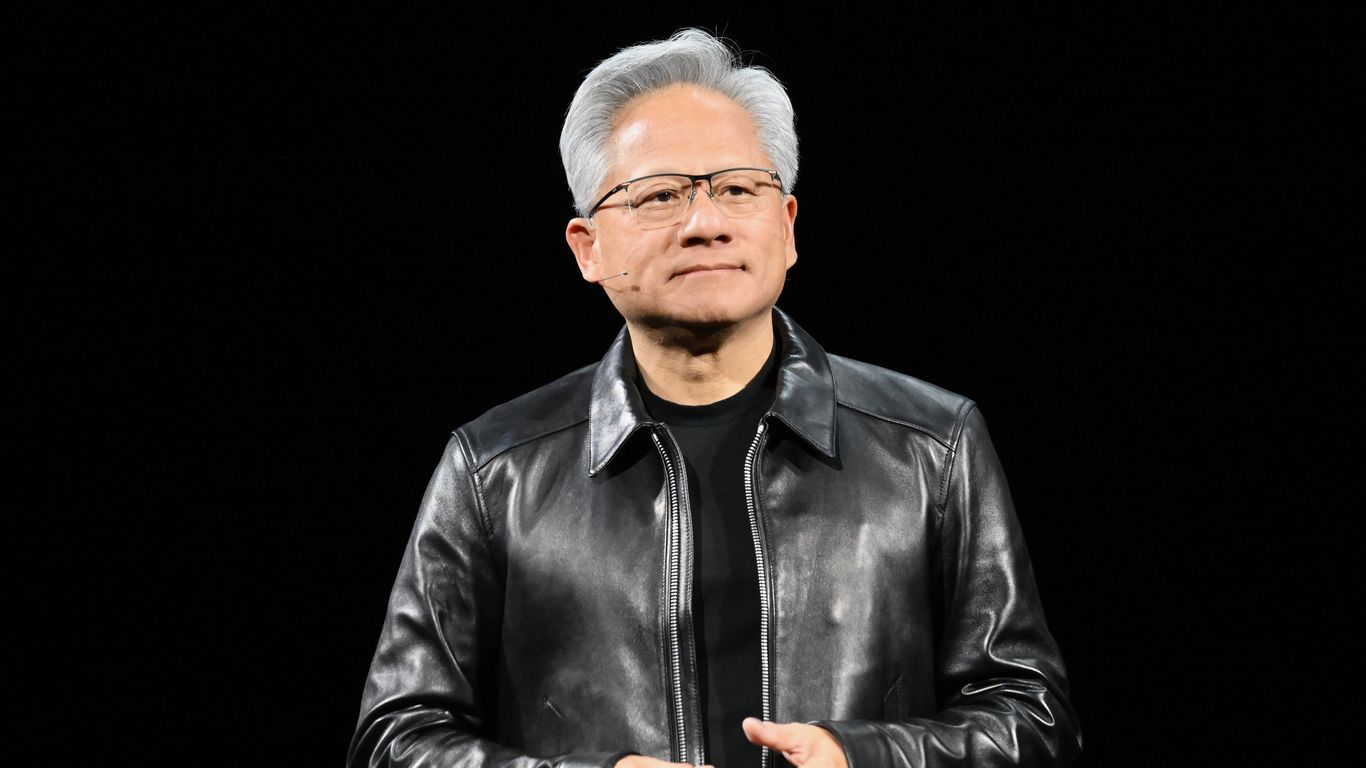
Shares in Nvidia sank Wednesday night after the New York Times reported CEO Jensen Huang had a second affair with a senior executive who reports to him. Why it matters: The report adds to mounting scrutiny of Huang, already under investigation over an affair with a purported Chinese spy. The potential impact goes beyond one man and one business, though. Huang is arguably the world's most powerful CEO at the moment, his company serving as the beating heart of the AI revolution. He also has no obvious successor . Driving the news: Huang, 63, had a relationship with Kimberly Powell, 48, Nvidia's vice president of health care, according to the Times. Both are married to other people. The two were reportedly seen being affectionate at a hotel during Nvidia's annual developer conference in San Jose in March. A bystander recorded the interaction, and Huang's security team made an offer to the person to sign a nondisclosure agreement, per the Times. The paper reported that Nvidia declined to issue a statement, and Powell did not respond to a request for comment. By the numbers: Nvidia shares fell nearly 5% in after-hours trading Wednesday. The company's lost about $1 trillion in market cap since the Times first reported on Oct. 29 that Huang had a "close relationship" with a suspected spy. On the prediction market Kalshi, the odds of Huang being out as CEO by Jan. 1 doubled after the report. Zoom out: This new report comes after Huang confirmed in a company email that he had been unfaithful in his marriage. Nvidia has an independent panel investigating, and hired the law firm Wachtell, Lipton, Rosen & Katz to handle the probe. What we're watching: How Nvidia handles the growing scandal could have affects far beyond just its walls.

In recent years, Texas Republicans have enthusiastically welcomed Elon Musk and his companies to their state. Would that change when Democrats take charge of the state government?