
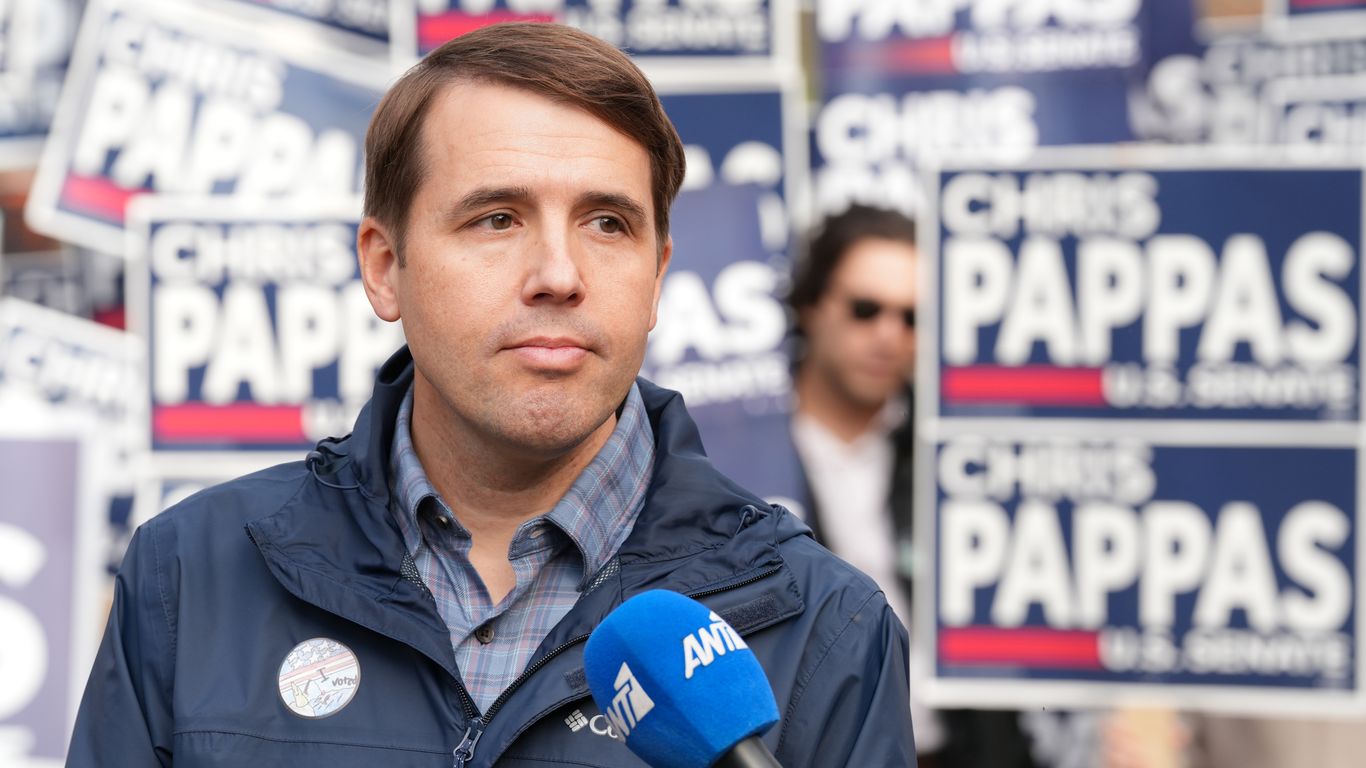
Democratic Rep. Chris Pappas defeated former GOP Sen. John Sununu in the New Hampshire Senate race, AP projects. Why it matters: Pappas' victory keeps the seat in Democratic hands and could boost the party's chances of taking control of the Senate. Driving the news: Pappas led Sununu 61% to 38% with 20% of the votes counted. He'll replace retiring Sen. Jeanne Shaheen (D-N.H.) in January. Catch up quick: Republicans saw New Hampshire as a top pickup opportunity, with Senate Majority Leader John Thune campaigning for Sununu in the competitive race, despite polls showing Pappas ahead. Most polls compiled by the New York Times in the weeks before Election Day showed the Democratic Pappas leading Sununu by 5 to 8 percentage points. Zoom in: Although President Trump endorsed him, Sununu has shown daylight with the president, criticizing his trade war with Canada and his so-called anti-weaponization fund — and he backed Trump's primary opponents in 2016 and 2024. Still, prominent New Hampshire Republicans — including Don Bolduc , the Trump -endorsed 2022 Senate nominee — endorsed Pappas in mid-October, accusing Sununu of being too beholden to the president. Between the lines: Republicans welcomed Sununu's entry into the race because of his family's long ties to New Hampshire politics. Sununu served in the Senate from 2003 to 2009 before losing to Shaheen in 2008. His brother Chris served as governor for eight years. Senate GOP Whip John Barrasso (R-Wyo.) posted on X in October 2025 that Sununu's decision to run catapulted New Hampshire to "a top-tier U.S. Senate race." The bottom line: Pappas' win reflects a preference New Hampshire voters expressed in pre-election polling : They wanted a check on Trump's power. Go deeper: Trump's former Senate pick backs Democrat in New Hampshire
Results for “chris pappas”

Representative Chris Pappas beat a former Republican senator, John E. Sununu. He will succeed the Democratic incumbent, Jeanne Shaheen, who did not run for re-election.

The two blue states had appeared competitive, but recent surveys have showed promising signs for Chris Pappas and Peggy Flanagan.

The Democratic senator from Connecticut, who is 53, began experiencing symptoms while attending his son’s hockey game on Saturday, his office said.

Republican John Sununu tries to distance himself from unpopular president in race against Chris Pappas that has gone from ‘toss-up to ‘lean Democrat’ Chris Pappas is stopping himself from getting too excited ahead of Tuesday’s midterm election. “I take nothing for granted,” said the four-term US representative and Democratic nominee for New Hampshire’s open Senate seat. “This is a very purple, competitive state. Elections are never in the bag here.” Continue reading...
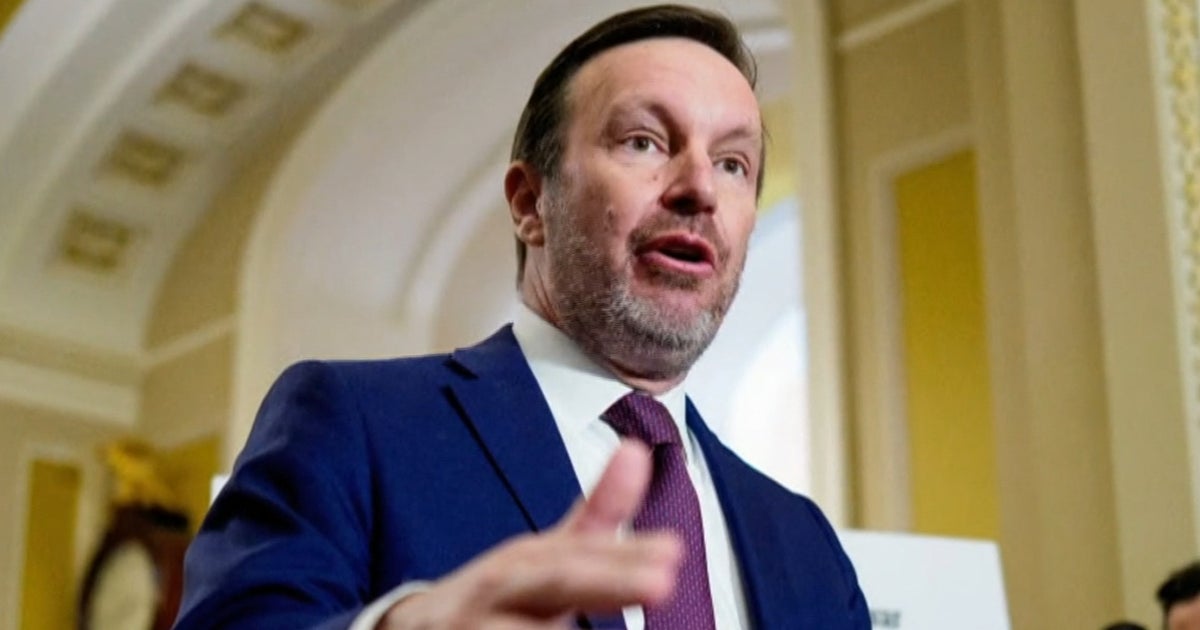
Connecticut Sen. Chris Murphy's office said the 53-year-old Democrat began feeling numbness in his arms while attending his son's hockey game, and he was taken to the hospital. It was discovered there that he had experienced a stroke.

Sen. Chris Murphy (D-Conn.) suffered a stroke Saturday and is being treated at Johns Hopkins Hospital, his office said Sunday. The big picture: Murphy is one of the Senate's more visible Democrats and has been traveling the country campaigning ahead of Tuesday's midterms. Driving the news: Murphy, 53, began experiencing numbness in his arm while attending his son's hockey game Saturday, according to a statement from his chief of staff, Allison Herwitt. He was taken to a hospital where doctors determined he had suffered a stroke and transferred him to Johns Hopkins for monitoring. What they're saying: "The doctors are encouraged by his progress, he is awake and alert, and we are optimistic he will make a full recovery," Herwitt said in a statement. What's next: The statement did not specify the severity of the stroke or when Murphy might be discharged.
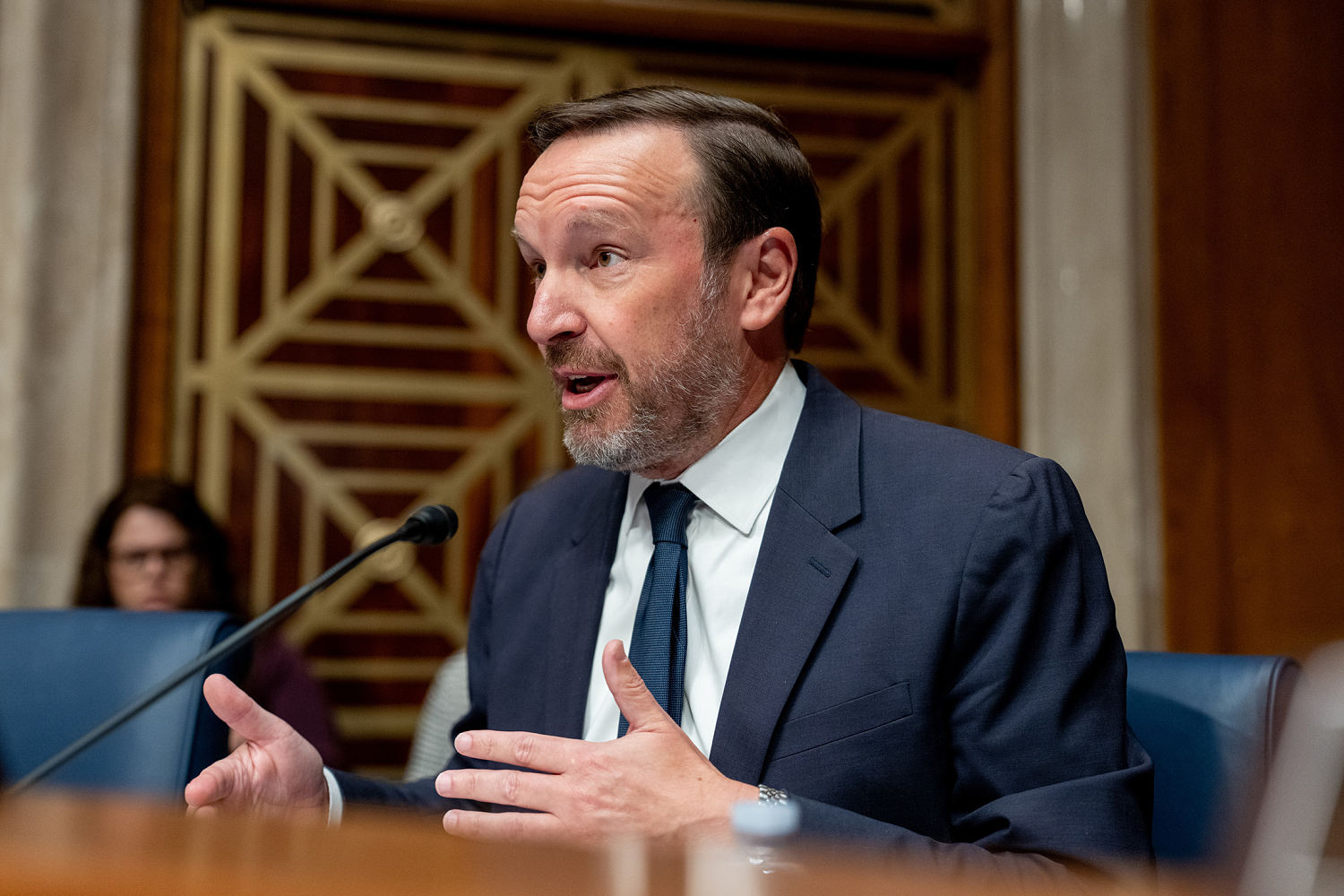
Sen. Chris Murphy, D-Conn., was hospitalized Saturday after a stroke, a spokesperson for the senator said on Sunday.

Right after Tuesday's midterms, OpenAI will unleash a policy and PR blitz to try to get in sync with the new Washington, including an effort to rebrand data centers as "AI compute campuses." Why it matters: After two years of a friendly White House, AI companies will face a harsher Washington after Tuesday, when Democrats will likely win the House. OpenAI also aims to help frame the AI debate for the big field of 2028 presidential contenders that'll start forming on Wednesday. "You can try to chase the moment, or seek to inform the moment via the power of ideas," OpenAI chief global affairs officer Chris Lehane tells us, calling Tuesday an "electoral portal from one era to the next." Since August, Lehane and his team have been stockpiling policy proposals, some new and some repackaged, to drive urgency and steer the AI debate. It'll all start during the lame-duck session of Congress — the awkward but often consequential weeks between the election and the swearing-in of new members and senators on Jan. 3. This year's lame duck opens Nov. 9. The big picture: Other tech companies are also positioning themselves for a potential blue wave. Meta is taking steps to strengthen its ties with Democrats, Axios' Sara Fischer scooped Saturday . Other big AI and tech players can be expected to do the same. Tech titans who enjoy close relationships with President Trump will be top targets for Democrats, who are eager to ramp up scrutiny and regulatory pressure on the industry. OpenAI's plans, being revealed here for the first time, all involve control — trying to send the message that AI is being built for people, not to displace people. The proposals include: Speed limits: Building on earlier proposals , OpenAI plans to unveil new ideas for mandatory safeguards for the most powerful AI systems — speed limits for AI that will allow humans to keep their hands on the wheel. This'll include a more aggressive congressional drive. "You're going to see us talk more and more about the co

If Democrats gain full control of Congress next week, as many polls and prediction markets suggest they will, private equity could once again find itself in the political crosshairs. The big picture: Private equity has become a rhetorical punching bag for a number of Democratic House and Senate candidates, including in debates and on the stump, as an affordability bête noire. Most of this has related to housing, both single-family and mobile homes, but also has extended to health care. What they're saying: "It's no doubt that housing is way out of control and a big part of that is because private equity has come into Maine," said Troy Jackson in an Oct. 6 debate with Sen. Susan Collins. "I do think we have to go after private equity, make it so that they can't buy these things and charge outrageous prices." Chris Pappas, running for an open Senate seat in New Hampshire, said during a campaign stop at a mobile home community: "We need to... address the housing crisis that we're seeing, including addressing the corporate private equity influence that we're seeing in housing that's making it less affordable and is causing a lot of consternation here at this park." Rep. Marcy Kaptur (D-Ohio) decried PE ownership of residential care facilities during a public event, saying: "Those people know nothing about health care." State of play: Congress passed a bipartisan bill this past summer to restrict PE ownership of single-family homes, with the Treasury Department last week issuing related regulations . The legislation became law despite not being signed by President Trump, who supported it but was in a snit over the Senate not passing his voter identification bill. Zoom in: A Democratic sweep would likely result in Sen. Elizabeth Warren (D-Mass.) taking the Banking, Housing and Urban Affairs Committee gavel, which means she'd go from writing strongly worded letters to holding hearings and guiding legislation. "Americans are sick and tired of private equity's playbook of ro

Top Democrats poised for powerful roles next year are demanding that major banks and ports preserve any records they have tied to potential imports or other deals involving Russian diesel . Why it matters: Probing President Trump's agreement with Moscow will be a priority if Democrats regain control of either or both chambers of Congress. The new demand shows that inquiries will extend beyond the White House and into C-suites. Driving the news: "[A]ny importation of Russian diesel into the U.S. raises significant legal questions and may be subject to legal action, as well as congressional investigations," a new letter obtained by Axios states. It's signed by Sens. Chris Coons (D-Del.), Elizabeth Warren (D-Mass.), Ron Wyden (D-Ore.), and Sheldon Whitehouse (D-R.I.). They're in line to lead the powerful Foreign Relations, Banking, Finance and Judiciary Committees, respectively, if Democrats regain the Senate. Rep. Greg Meeks (D-N.Y.), who's in line for the Foreign Affairs Committee gavel if House control changes, also signed. It's led by Sen. Jeanne Shaheen (D-N.H.), the top Foreign Relations Democrat who is not seeking reelection. Sen. Thom Tillis (R-N.C.), who is also retiring, signed as well. State of play: The Wall Street recipients of Saturday's letter are J.P. Morgan, Bank of America, Citi, Wells Fargo, Goldman Sachs and Morgan Stanley. The same letter went to port authorities for the ports of Houston, Beaumont, and Corpus Christi, Texas, and New York/New Jersey. Catch up quick: Earlier this month Trump claimed an agreement to bring escalating Russian exports to global and U.S. markets, and the Treasury Department waived sanctions to help enable it. Friction point: The lawmakers and other critics say it runs afoul of a bipartisan 2022 law barring imports of Russian oil, gas, and petroleum products. "The potential arrangement to import Russian diesel also raises significant national security concerns, given that it would finance Russia's brutal and illegal war ag