
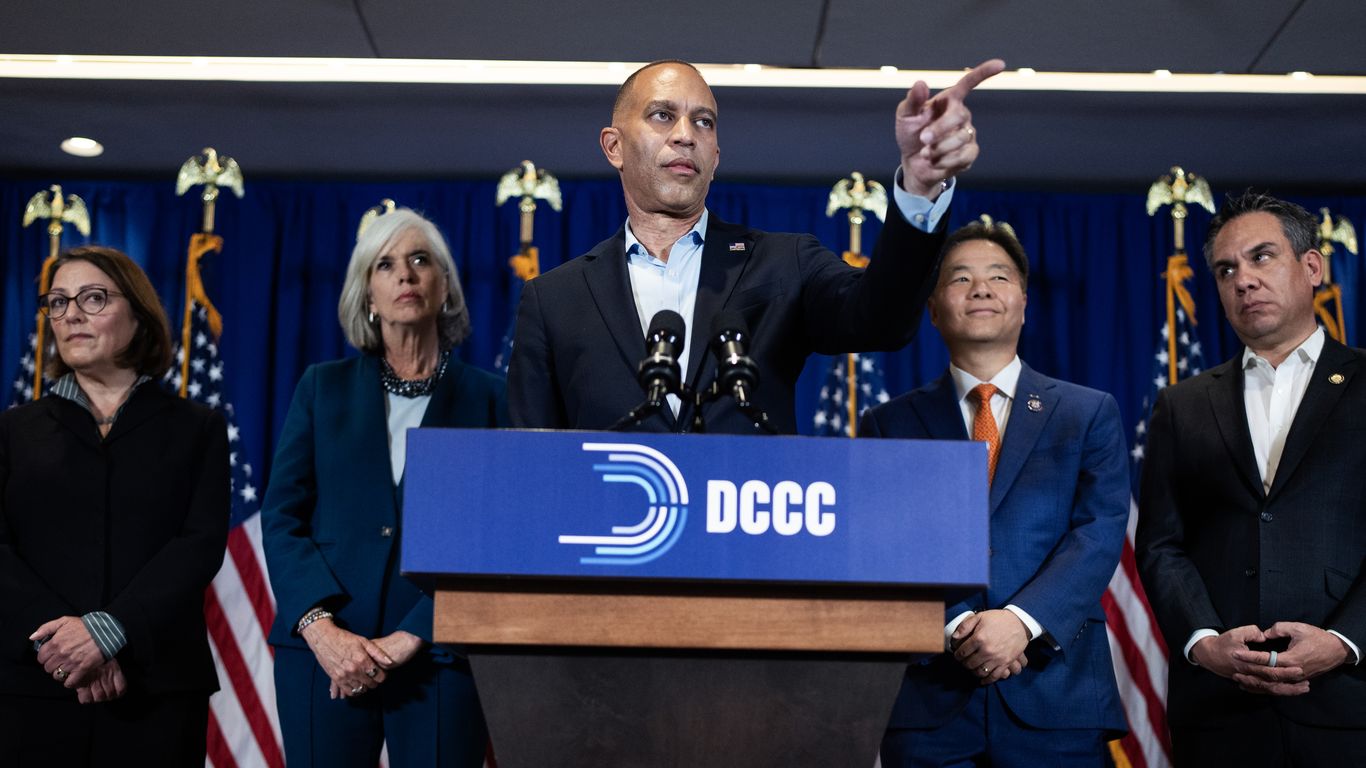
House Democrats channeled anti-Trump fury into a landslide victory over Republicans. Now comes the hard part: Figuring out what to do with their huge majority . Why it matters: That question is already igniting a power struggle between Democrats' ideological factions as they lay out contradictory visions for what the next two years of governing looks like. This story is based on interviews with more than a dozen sitting and incoming House Democrats from across the political spectrum. "Last night was a rebuke of the status quo," progressive Rep. Delia Ramirez (D-Ill.) told Axios, adding that "for the left it was an affirmation and a validation that we are on the right track." There is "absolutely no excuse," Ramirez said, for House Democrats not to do "the most over the next two years, and as quickly as possible." Rep. Josh Gottheimer (D-N.J.), a centrist, said Tuesday was a "gigantic night for the middle ground," and that the mandate is far more modest: "We need to crush high costs and corruption." State of play: House Democrats are on track to win more than 250 seats, which would give them a comfortable majority of dozens of votes. That blows up the plans of a cohort of incoming progressives known as the "Bloc" to demand concessions from leadership in exchange for voting with the party. The potential concessions included changes to House rules, plum committee assignments and votes to enact Medicare-for-All , defund ICE and cut off U.S. aid to Israel. What we're hearing: The left's new tactic is to try to convince the Congressional Progressive Caucus to, as one sitting House Democrat put it, "assert its authority in a way it has never done before." "That should definitely be part of the game plan," an incoming Bloc member told Axios, "we've got so many members of the CPC and I think we're adding 25 more." Said Rep. Pramila Jayapal (D-Wash.), a former CPC chair: "We have certainly used our power many times ... and we will do that again." The CPC is currently around 1
Results for “democrats sweep”

NBC News projects Democrats have won control of the House and Senate in the midterms. NBC News’ Ryan Nobles looks at some of the historic wins in states like Texas and Michigan along with Republican reaction.

A two-term Democratic governor and a suburban revolt against President Trump laid the groundwork for Adam Hamilton’s victory.

Democrats are clinging to small leads in both states, and it may take quite a while until the winners are known.

Democrats’ sweep of Congress further whittled the already small ranks of Republican women.


Democrats' midterm tsunami obscured a major polling miss: Surveys correctly anticipated a blue wave, but failed to capture its full force. Why it matters: Pollsters appear to have underestimated Democrats by a wider margin than they underestimated Republicans in 2016 or 2024 — even if they got the headline outcome right this time. By the numbers: Democrats are on track to win the national House popular vote by roughly 13 percentage points, compared with a final Silver Bulletin polling average of 8.9 points, according to an initial analysis by The Argument's Lakshya Jain . That roughly 4-point gap is similar to the 2020 polling miss that underestimated Republicans and larger than the average partisan errors in 2016 and 2024, though comparisons to presidential years are imperfect. The big picture: Pollsters entered the 2026 midterms having underrated Trump's support in three consecutive presidential elections. Their central challenge was accounting for Republican voters who might be missing from their surveys. Many polling organizations have sought to compensate by weighting results based on party affiliation or how respondents voted in previous elections. A Pew analysis found that nearly 70% of national polls used such political weighting in 2024. In an October analysis , The Washington Post warned that a collapse in turnout among Trump voters could cause polls calibrated to the 2024 electorate to underestimate Democrats. Tuesday's results raise questions about whether the industry's efforts to correct past polling misses contributed to a new one. Reality check: Some of the pollsters that projected the largest Democratic margins appear to have come closest to the final result. AtlasIntel placed itself first in a ranking of final national House polls based on its projection of the popular-vote margin. It's the second straight election where the pollster stood out for its accuracy. AtlasIntel's final poll showed Democrats leading by 14.1 points, just 0.3 points from th

Democrats will have a real chance to govern in Texas for the first time in about 25 years, and they’re facing pressure to deliver.

Republicans barely had time to absorb their sweeping midterm losses before President Trump returned to a familiar comfort zone: D.C. construction projects. Why it matters: Voters just delivered an overwhelming rebuke of the administration, demanding that politicians focus on the cost of living, yet the president remains fixed on remaking the nation's capital in his image. Driving the news: Trump hosted reporters at the White House on Wednesday for a previously unscheduled event to update them on the East Wing ballroom's construction, marking his first remarks to the White House press pool since the election. He spent the majority of his remarks discussing planned architectural changes around D.C., including a proposed Triumphal Arch, the National Garden of American Heroes and a planned expansion of a publicly owned golf course that would likely eliminate popular running and biking paths. His remarks came after a pre-election appearance Monday, during which he praised the new pipes installed at the Reflecting Pool and a proposed promenade from the Lincoln Memorial to the Potomac River. What they're saying: Trump addressed criticism he sometimes receives for working on his construction projects, saying he was "doing it because the White House is the ultimate symbol of America, and it's got to be pristine." "It's got to be perfect. And if you take a look at it, that's what it is right now. You have no idea how much work we had to do." He also noted that he spends "very little time" working on the White House, but said he does it because "it's relaxing …I love construction." Catch up quick: Democrats outperformed expectations in Tuesday's midterms, flipping the Senate before the night was over and then the House a few hours later, according to the AP. Democrats have gained complete control of at least five previously divided state governments while ending Republican trifectas in several other states. In ruby-red Texas, the white whale of potential pickups, Democrats fli
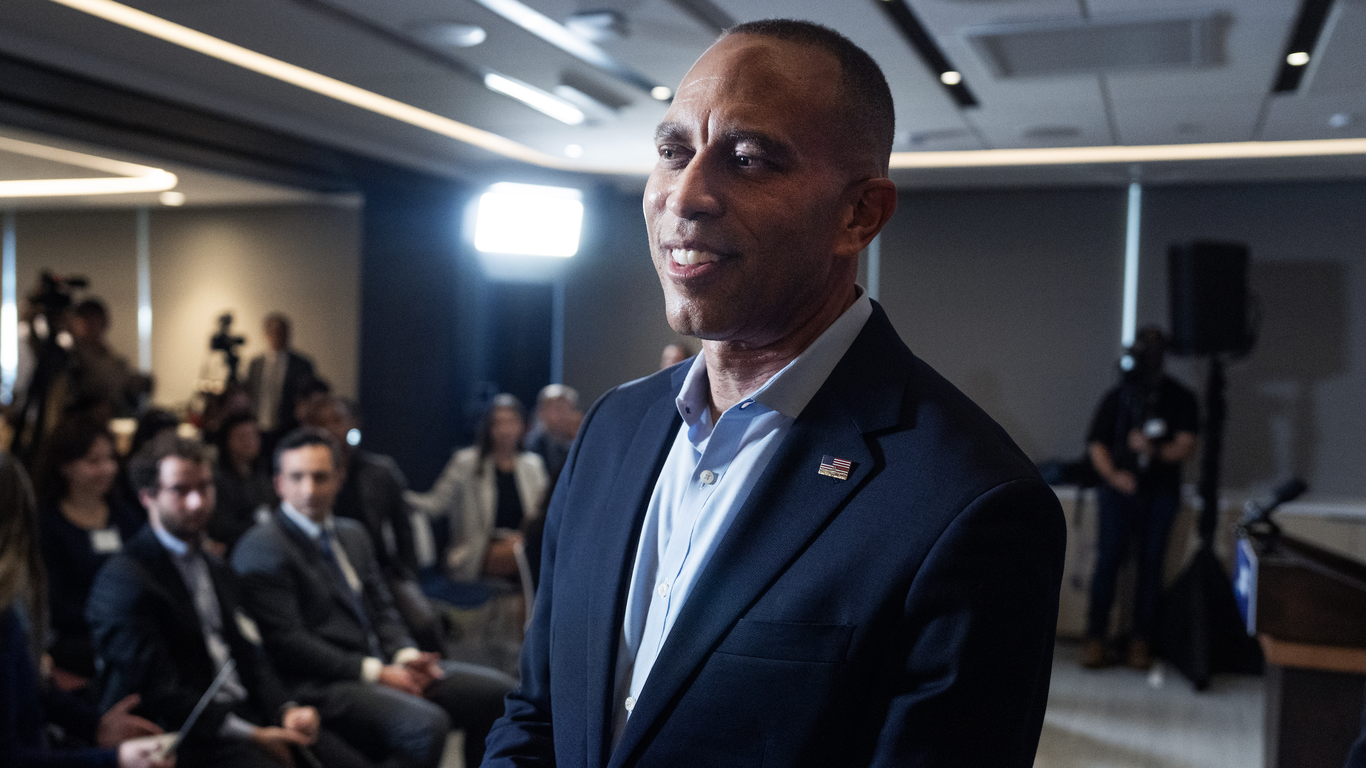
House Minority Leader Hakeem Jeffries (D-N.Y.) formally launched his bid for speaker of the House on Wednesday in a letter to colleagues obtained by Axios. Why it matters: Jeffries is widely expected to become speaker after House Democrats' landslide midterm win. He would make history as the first African American to serve in the role. What he's saying: "I write to humbly request your support in connection with my candidacy to serve as the next Speaker of the House of Representatives," Jeffries wrote. He added: "We must now deliver the dramatic change the American people are demanding in the majority." Read the letter in full, via DocumentCloud :

Troy Jackson, in just 101 days, bested the Republican, preventing her sixth Senate term: ‘You can’t eat road salt’ The political demise of Susan Collins – a fixture of Maine and Washington politics for three decades – recalls the famous line in Ernest Hemingway’s The Sun Also Rises about how one of the novel’s characters experienced bankruptcy: gradually, then suddenly. In the run up to Tuesday’s stunning Democrat “blue wave” election triumph, it seemed obvious that Collins’ 30-year tenure as Maine’s Republican senator was vulnerable to the challenge of Troy Jackson, the Democrats’ explicitly working-class candidate as voters prepared to unleash pent-up anger with Donald Trump ’s presidency. Continue reading...

When a new Congress is sworn in, it will have the power to hold hearings and issue subpoenas, prompting one representative to advise White House officials and others to “lawyer up.”

Data: Financial Modeling Prep ; Chart: Ben Geman/Axios Oil prices fell sharply Wednesday as traders weigh signs — including a widely circulated post by Vice President JD Vance — that the midterm election will add pressure on the White House to find an offramp from the Iran conflict. Why it matters: Elections have consequences. Wednesday's price drop — around $8 per barrel — deepened after Vance posted on X that "everyone knows" the war is why Republicans got pummeled and "any honest conversation about where we go from here must start there." Sen. Chuck Schumer (D), the likely Senate majority leader in the next Congress, vowed that Democrats will push to end the war. "This crude price drop is entirely about the U.S. election and the belief that Trump will de-escalate rather than escalate on Iran. JD Vance's statement amplified that sentiment," Ben Cahill, a nonresident senior fellow with the Atlantic Council, told Axios via email. What they're saying: Pavel Molchanov, an analyst with Raymond James, said in remarks circulated to reporters that Vance's post was a "key catalyst" for today's oil price plunge. "The market is saying that Congress and members of his own administration are likely to start acting as a constraint on President Trump's war in Iran," Seb Barker, a strategist with the hedge fund, Marshall Wace, tells the Financial Times. Catch up quick: Oil prices were already falling to start the week on signs of new U.S.-Iran diplomacy. What we're watching: "[I]t remains unclear whether Vance's comments signal a more dovish stance toward Iran," Molchanov said. "For oil prices to sustainably move lower, a durable off-ramp is needed," he added.

Republicans tried to redraw congressional maps to tilt more seats in their favor. Democrats captured many of the new districts instead.

Tuesday's election was great for Democrats. It was bad for Defense Secretary Pete Hegseth and some of the White House's most ambitious national security projects. Why it matters: Surprise wins across the map for Democrats — including in the Deep South — complicate a lot for the Trump administration. Republicans have relied on a simple-majority funding mechanism known as reconciliation to pay for marquee projects like Golden Dome. That option is now a long shot over the next few months, and impossible after that. Outrage over the Iran war, well beyond the half-year mark, is sure to turbocharge a long list of congressional inquiries. And lawmakers on both sides of the aisle, including Reps. Pat Ryan (D-N.Y.) and Thomas Massie (R-Ky.), have suggested impeaching Hegseth. Follow the money: Defense analysts agree prospects for the administration's full $1.5 trillion defense budget look grim. A Wednesday note from TD Cowen's Washington Research Group warned "Trump 'branded' projects are dead." Golden Dome, Golden Fleet and "other signature efforts," it added, "will be curbed." Meanwhile, Todd Harrison, an American Enterprise Institute defense budget expert, said it's unlikely the lame-duck congressional session will pass reconciliation and instead will keep the defense budget operating under a continuing resolution into next year. "They're all at risk," Harrison said of reconciliation-backed programs. "My base expectation is nothing happens on the defense budget." The other side: The Pentagon did not respond to a request for comment. Between the lines: Some of the most powerful Republican lawmakers on defense matters were defeated or are on pace to lose. Sen. Susan Collins, the appropriations chairwoman, lost to Troy Jackson in Maine . Sen. Darline Graham, also on appropriations, lost to Annie Andrews in South Carolina . Rep. Jen Kiggans, a member of the armed services and veterans affairs committees , lost to Elaine Luria in Virginia . And as of Wednesday afternoon, Reps.

The real question in my mind is whether Democrats will take advantage of the new age of populism The great sleeping giant of the US has awakened, taken a hard look at what’s become of the nation, and roared a thunderous “NO!” What occurred on Tuesday was not – as some are saying – the inevitable midterm swing of the pendulum against the party in power. Texas hasn’t elected a Democratic senator since 1988. The last time Kansas elected a Democratic senator was 1932. Robert Reich, a former US secretary of labor, is a professor of public policy emeritus at the University of California, Berkeley. He is a Guardian US columnist and his newsletter is at robertreich.substack.com . His new book, Coming Up Short: A Memoir of My America, is out now in the US and in the UK Continue reading...

Democrats' sweeping statehouse gains Tuesday have opened a path to effectively replacing the Electoral College with a national popular vote in time for the 2028 presidential election — without needing to amend the Constitution. Why it matters: The results could give Democrats the legislative power to fundamentally change how America picks its president, potentially ending the possibility of winning the White House while losing the national popular vote. Driving the news: Democrats have won control of the governorship and both legislative chambers in Pennsylvania, Michigan, Arizona, Wisconsin and Nevada, enough to push an agreement called the National Popular Vote Interstate Compact beyond the 270-vote threshold required to take effect. The compact has been enacted by 18 states and Washington, D.C. since launching in 2006, representing 222 electoral votes so far. The agreement only kicks in when participating states collectively control at least 270 electoral votes. The five new Democratic trifectas could bring the total to 283. How it works: Americans don't directly elect the president. Instead, they actually cast ballots to choose electors, whose votes determine the winner every four years. Nearly every state awards all its electoral votes to the statewide winner. Maine and Nebraska also award electors based on congressional district results. But the Constitution explicitly gives states power to appoint electors "in such Manner as the Legislature thereof may direct." Under the compact, participating states would instead award their electoral votes to the national popular-vote winner once the agreement reaches 270 electoral votes. Yes, but: The five states would still need to enact the compact, and it's not clear if it will be a priority for the new Democratic states. The Electoral College would formally remain in place, and the compact could face constitutional challenges, including over whether congressional approval is required. Michigan failed to enact it during

Democrats have won a historic sweep in the US midterm elections, winning back control of Congress in a major setback for Donald Trump. Senate seats went blue in traditional Republican strongholds such as Texas, South Carolina and Kansas, where the Democrats had their first win since 1932. Voters have sent a strong message of discontent to the Trump administration over the economy, the cost of living and rising gas prices. Trump is now a lame-duck president for the rest of his term. Lucy Hough speaks to our Washington editor, Ankita Rao Continue reading...

Voters have delivered a damning verdict on Donald Trump’s presidency with this Congressional landslide Bitter experience made Democrats wary of believing that the blue wave predicted by polls would materialise. What arrived was not just victory but a rout: control of Congress and a Republican wipeout . It was an astounding humiliation for a president whose political brand is power. Donald Trump won it back in 2024 by promising voters lower prices and no foreign wars. He lost it by launching an illegal conflict that hit them in the pocket and imposing hefty tariffs too. He urged voters to pretend that he was on the ticket and they delivered a verdict that could not have been more damning. Two years ago, retaking the House looked like a genuine fight for Democrats, and the Senate a long shot. On Tuesday, they needed to flip four more seats to gain a 51-seat Senate majority. Within hours of polls closing, they had 54, with two more races in the balance, and had easily passed the 218 seats needed for a House majority. This appears to be the biggest congressional landslide since 1976 , in Watergate’s aftermath. Continue reading...

As tech bosses get richer and ordinary Americans struggle, Democrats put the case against the US’s grotesque unfairness – and voters responded Remember the “vibe shift”? Just last year, columnists and corporate boardrooms alike declared that the second coming of Donald Trump meant the old rules of politics and even everyday civility were roadkill. “I feel liberated,” one top banker told the Financial Times . “We can say ‘retard’ and ‘pussy’ without the fear of getting cancelled … it’s a new dawn.” Continue reading...
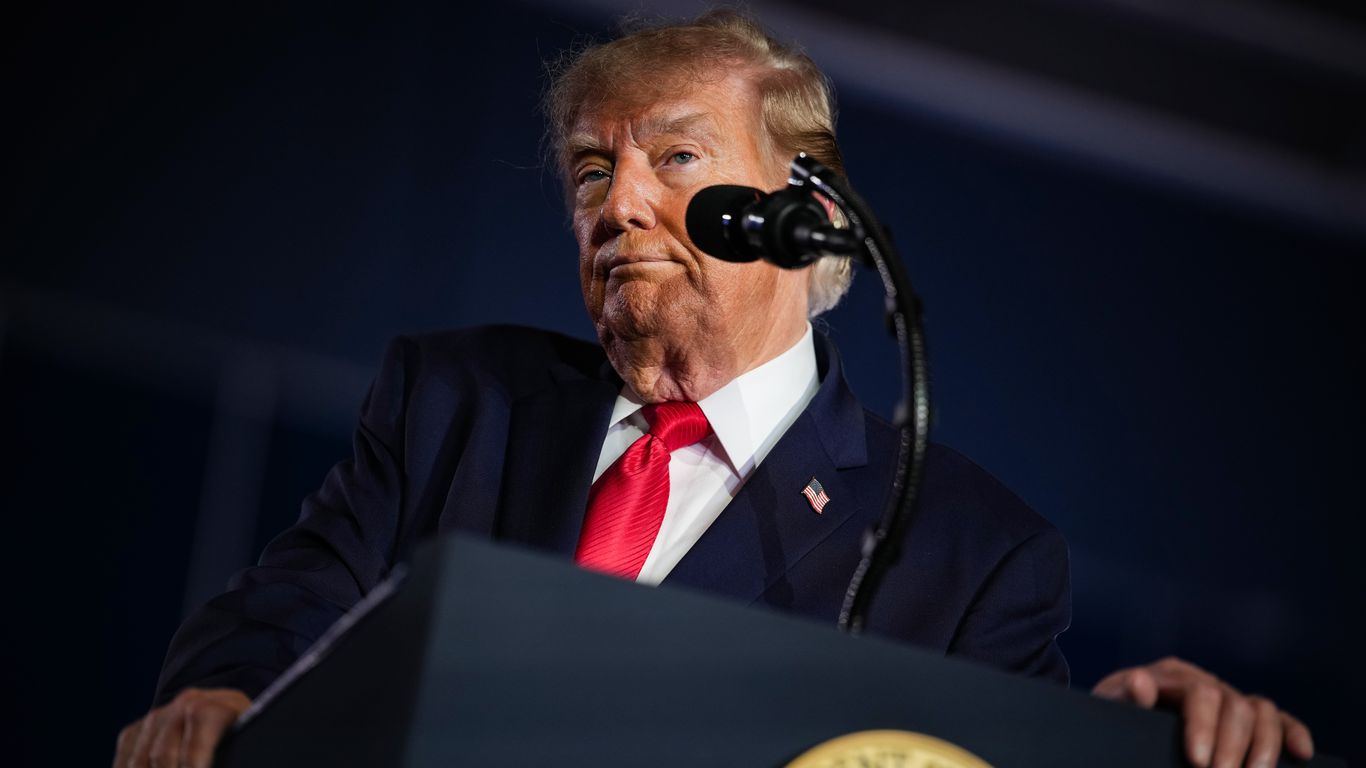
Democrats wasted no time gloating and warning the Trump administration about a pending flood of subpoenas and investigations once the 2026 midterm blue wave became clear. Why it matters: Democrats are eager to exercise their oversight powers over the president and his allies, but they must navigate that while addressing Americans' No. 1 election concern — the high cost of living. Driving the news: Before the AP even called the House for Democrats, expected House Oversight Chair Robert Garcia (D-Calif.) said in a statement that the president's allies should "[l]awyer up." He seconded the sentiment in a Wednesday post to X. Sen. Ron Wyden posted on X Tuesday night, "[s]ubpoenas." In response to a post from former Homeland Security Secretary Kristi Noem, who said the Trump administration was "too successful" during its first year, Sen. Maggie Hassan (D-N.H.) responded, "[w]ant to say that under oath?" The big picture: Voters aren't necessarily asking Democrats to choose between the cost of living and accountability. They want action on both. About half of voters said the high cost of living and government corruption were "crucial" to their votes for Congress, per the AP's Voter Poll. Roughly four in 10 voters said the economy was the top issue facing the country, compared with three in 10 who said it was democracy. Seven in 10 said Congress isn't doing enough to check presidential power. What they're saying: When asked about Wyden and Garcia's comments in an interview Wednesday morning, House Minority Leader Hakeem Jeffries (D-N.Y.) — the overwhelming favorite to become House Speaker — told TODAY that the "American people clearly don't want us to try and get even." "They want us to get things done to make their life more affordable. At the same period of time, what we have seen is unprecedented corruption unleashed on America, the likes of which we have never seen before." "And when you have people in high office who are so focused on enriching themselves, their family
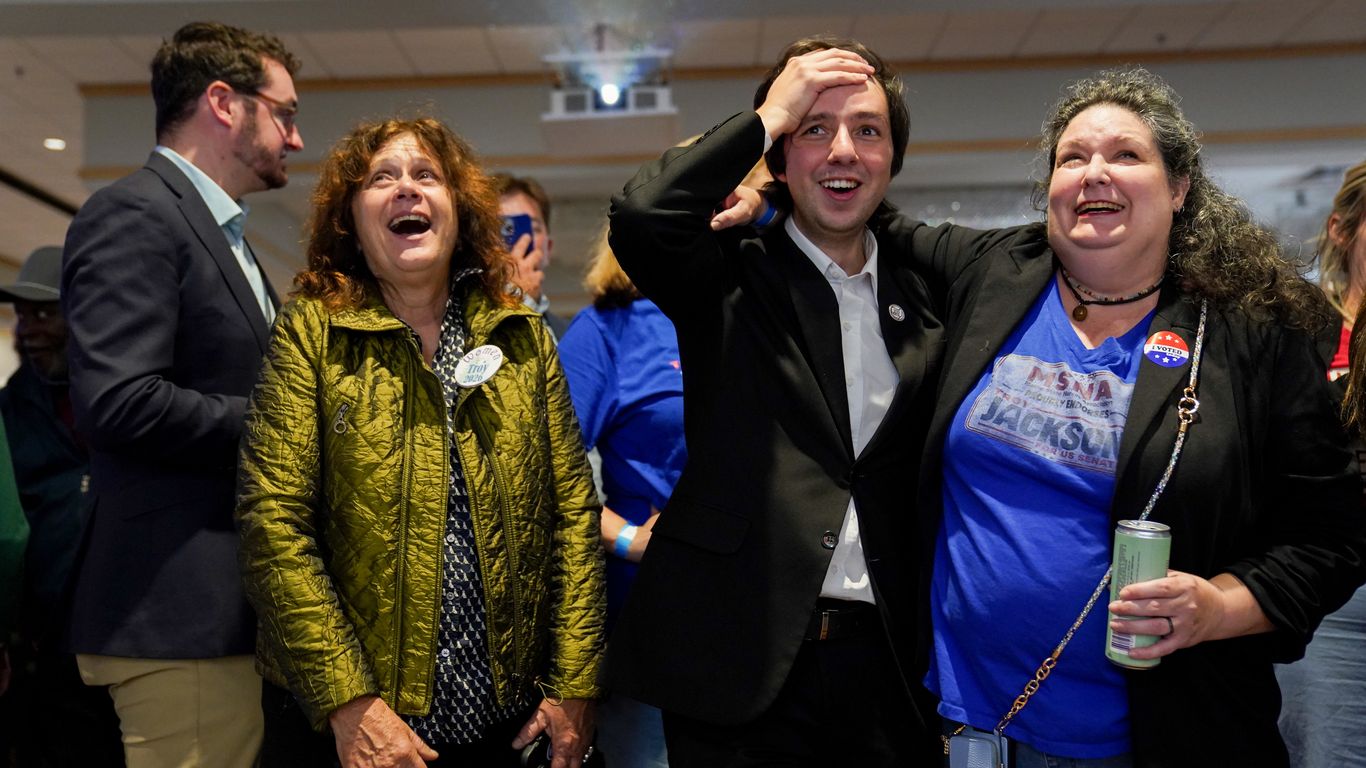
World leaders are reacting to Democrats' comprehensive midterm wins, which saw them retake the Senate and flip the House on Tuesday night. Why it matters: The results could reshape President Trump's final two years in office, with major implications for U.S. relations with allies and adversaries alike. Zoom in: As Trump faces competing calls over whether to resume military action in Iran, Iranian officials supported the Democratic victories as a sign of opposition to the war. Iran's Parliament Speaker Mohammad Bagher Ghalibaf wrote on X , "Conscience or the cost of living, Americans said NO TO WAR, and we endorse this message." Prior to the election, regional mediators led by Qatar were trying to reach a diplomatic deal to restart negotiations between the U.S. and Iran to avoid reentering the war, three U.S., Israeli and regional sources said, but renewed fighting remains on the table. But while Israeli Prime Minister Benjamin Netanyahu wants to resume fighting in Iran, his political future remains uncertain, with neither bloc securing the 61-seat majority needed to form a government in Israel's recent election. Zoom out: Trump's second-term decisions have significantly strained relationships with U.S. allies and partners, leading countries to increasingly view Washington as unreliable, self-interested and less committed to global cooperation , according to Pew Research Center data. But Tuesday's election results appear to have infused renewed hope about relations from international leaders. Spanish Prime Minister Pedro Sánchez applauded Americans for voting "against policies that only make people poorer," and against "hate," "sexism," "climate denial" and "elite privilege," in a post on X ." South African President Cyril Ramaphosa told reporters he believes Democratic control of Congress will "introduce a new era in world relations," adding that he hopes for improved collaboration on geopolitics, trade and investment, Bloomberg reported. Trump, who has repeatedly c
Democrats took five new seats for a total of 29, giving them a majority for the first time in years. The wins could expand state-level resistance to the Trump administration.

Democrats clinched control of Congress, but the full scale of the party’s landslide, and Republicans’ losses, remained unknown.
Democrats clinched control of Congress, but the full scale of the party’s landslide, and Republicans’ losses, remained unknown.

Democrats have taken back the House and Senate in the 2026 midterms. Here’s what a majority in Congress means for them – and for Trump Tell us: what do you want to know about the midterm election results? Democrats win control of Senate as US voters reject Trump’s agenda US midterm elections – live updates Track live results from all 50 states Democrats have flipped the US Senate and House of Representatives in a massive rebuke of Republicans and Donald Trump’s agenda. With Democrats majorities in both chambers, the final two years of Trump’s presidency will look markedly different from the first half. But what can Democrats actually do with with congressional power? Continue reading...

The Iran war was the reason for the Democrats' blue tsunami that stunned Washington, Vice President Vance said in an X post Wednesday morning. Why it matters: The VP offered a surprisingly blunt assessment of why the GOP got crushed Tuesday night — and started to open at least a little daylight with President Trump's actions as the 2028 cycle begins. Vance's comments come hours after President Trump admitted the Iran war partly played a role in pushing Democrats over the edge in the midterm elections. Driving the news: "The reason we lost is the war. The president himself said so last night," Vance wrote on X . "If you'd like to argue it was worth it, that losing the Senate for the next 6 years was worth it, then do so. Argue it was a worthwhile cost to pay. Agree or disagree, that's at least honest." This is a breaking news story and will be updated.

Donald Trump and his Republican party have been dealt a devastating blow in the midterm elections with Democrats taking control of the House and Senate Continue reading...

The Dow surged more than 1,200 points, while other stock indexes jumped as investors digested the impact of the midterms.

Democrats' big night gives them a chance to turn voter anger over high energy prices into legislative action and congressional oversight, but divisions within the party could complicate their plans. Why it matters: This was an energy election . High gasoline prices, record diesel costs, and rising power bills fueled discontent with President Trump and his party. Voters' rebukes of data centers could slow the buildout of power-hungry AI infrastructure. The latest: Stunning Senate wins in red states and House wins nationwide propelled Democrats to control of both chambers, and flipped several governor's mansions. Energy costs were prominent in key races, such as Democrats hitting GOP rivals over farmers' bills in Iowa, Kansas and Ohio. Texas Governor-elect Gina Hinojosa (D) bashed Greg Abbott (R) over his prior embrace of data centers in the state where developers are planning big projects. The data center backlash also featured in Ohio and Pennsylvania, where Sherrod Brown defeated Sen. Jon Husted (R) and Paige Cognetti unseated Rep. Rob Bresnahan (R). Both Republicans faced criticism over their support for data centers. State of play: A detailed Democratic energy agenda hasn't emerged, but there are early clues. Democratic Leader Chuck Schumer tied Republicans to electricity costs in his first comments after returns came in. Likely Speaker-in-waiting Hakeem Jeffries has vowed to quickly push an affordability agenda, with energy as a key pillar. He tasked Reps. Nikki Budzinski (D-Ill.) and Mike Levin (D-Calif.) with leading a "Gas and Utilities Affordability Working Group" that crafted ideas, though they remain under wraps. Another potential source of ideas: Hundreds of proposals backed this year by the 100-plus member House Sustainable Energy and Environment Coalition. Some could gain bipartisan backing, like support for advanced nuclear power. But other areas would be largely symbolic, like restoring some IRA tax credits. Catch up quick: In the Senate, Schumer has

Voters watched results in near disbelief as James Talarico claimed victory in Senate race and Gina Hinojosa was elected state’s first Latina governor US midterms 2026 live – latest updates Track live results from all 50 states Tell us: what do you want to know about the midterm election results? “This is amazing,” exclaimed Tiffany Dunsmore, 44, the owner of Austin Scavenger Hunt, as the city skyline gleamed in the distance on a balmy night. “I cannot believe Texas went blue!” For 32 long years, turning Texas blue had been an elusive prize for Democrats in the US’s second biggest state. There were false dawns, nearly men and broken dreams. But on Tuesday the party’s agony finally came to an end. Continue reading...

The Democrats have taken control of the Senate and the House of Representatives. These charts and maps reveal the key trends and races behind this result The Republicans have lost seven Senators, 25 House districts and five governor races. As of 8.00am Eastern Time (ET) on Wednesday, more than 1,800 of nearly 2,500 counties with Senate elections had returned more than 90% of their votes. Americans did not turn out in significant numbers for the Republicans amid high fuel prices and dissatisfaction with the president. Continue reading...

With Democrats in power, Trump may be under siege and lose his dominance over the Republican party – but his id will relish at the prospect of fighting US midterms 2026 live – latest updates Tell us: what do you want to know about the midterm election results? Donald Trump posted a document on social media this summer by a supposed historian that compared him with, among others, Napoleon Bonaparte and Adolf Hitler. That now seems fitting: the US president has himself fought one battle too many, and appears to have brought about his own destruction. Tuesday’s US midterm elections were a thumping, shellacking and extinction-level event rolled into one. Ruby-red Republican strongholds once deemed safe toppled like dominoes. Democrats won Senate seats for the first time in Kansas since 1932, in Texas since 1988 and in South Carolina since 1998. Continue reading...

Democrats will be able to take plenty of messaging votes on health care after their blowout wins Tuesday — but they'll face too many limits and internal disagreements to force all of the big policy changes they want. Why it matters: They'll have a tough time repealing Medicaid cuts or restoring enhanced Affordable Care Act subsidies while President Trump is still in office, and their own divisions will hold them back on other issues. And Medicare for All ? Last night gave the idea a big boost, but don't hold your breath. Friction point: With control of both the Senate and House, Democrats will have powerful new leverage — but that leverage will also expose fault lines. Until now, progressives backing Medicare for All and centrists favoring more incremental changes were united in opposing Trump administration policies and blaming the president and the Republican Congress for the health affordability crisis. They'll try to use their power in the next Congress to promote sweeping changes with an eye toward the 2028 elections while also advancing more piecemeal policies, hoping to force some deals with Republicans. But they'll still face divisions over how to expand the federal government's role in the health system, or how to bend the steep health cost curve. Driving the news: House Democrats have already signaled their opening moves with a 100-hour/100-day agenda agenda that prominently features health policies like reinstating the enhanced ACA tax credits that expired at the end of 2025. There will also be votes to roll back the steep cuts to federal Medicaid spending that Republicans included in their "One Big Beautiful Bill," per an 84-page memo from a health care working group to Democratic Leader Hakeem Jeffries (D-N.Y.). Other near-term agenda items include expanding Medicare drug price negotiations to private insurance, restoring withheld National Institutes of Health research funding and ending the use of AI in authorizing certain services in traditional Medic

The Democrats have had a resounding win, taking control of the Senate and the House of Representatives in a historic midterms result. Hosts Reged Ahmad and Jonathan Yerushalmy examine what went wrong for the Republicans and why voters turned out in droves to deliver the blue wave so many predicted. But perhaps the biggest surprise of the night was Donald Trump accepting the result and vowing to work with the Democrats. So will he? Or could this make him more dangerous? Read more: Democrats win control of Senate as US voters reject Trump’s agenda US voters rebuke Trump as Democrats win control of Congress in ‘blue wave’ Analysis: Resounding wins for Democrats a wholesale rebuke of Trump’s Maga movement Continue reading...

Get all the stories you need-to-know from the most powerful name in news delivered first thing every morning to your inbox.

Make no mistake: Democrats won by epic, sometimes historic margins across red and blue states, up and down ballots, obliterating almost everything President Trump, and a Republican Party remade wholly in his image, built over the past decade in American politics. Why it matters: Trump and Republicans are left with a mostly white, mostly old House and Senate minority, confronting a younger, more diverse ascendant Democratic Party with power and margins it hasn't held in 18 years, since the dawn of the Obama era. The results speak louder than any words we can write: Democrats won Senate races in Texas, Kansas, South Carolina, Ohio, and perhaps Mississippi en route to what could be a 55-seat majority. Democrats won swing districts all across red America, with national average margins of victory of roughly 13 points, according to a New York Times estimate . Texas is now a Democratic state, top to bottom — unthinkable mere months ago. James Talarico crushed Ken Paxton ( 55% to 43% ) like it was Connecticut. State Representative Gina Hinojosa will become the first Democratic governor of Texas in 32 years . Pastor Adam Hamilton is the first Democrat to win a Senate seat in Kansas in 94 years. North Carolina looks like a true-blue state after Democrats flipped the Senate seat and likely ousted Rep. Richard Hudson (R-N.C.), chair of the National Republican Congressional Committee (NRCC) — meaning he led the GOP drive to keep the House. North Carolina's congressional delegation could swing from 10R-4D to 5R-9D. Georgia was even worse for Republicans, where they lost all power at the state and U.S. Senate levels. Florida Gov. Ron DeSantis (R) predicted on X that the losses were so widespread, so deep, so severe that Republicans might not "have a shot at Senate control until 2032." How to think about last night more broadly: This is a 50-50 nation with fast, whiplash shifts in power at the federal level due to persistent discontent with the party in power. So, on one hand, this
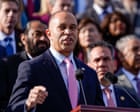
An impeachment investigation would enhance transparency and allow Congress to reassert its authority In Tuesday’s midterm elections, voters sent the Republican party an unmistakable message: their love affair with Trumpism is coming to an end. The overwhelming victory for Democrats in both the US House of Representatives and the US Senate, was foreshadowed by a number of polls showing growing disenchantment with Donald Trump – and it was personal. Continue reading...

Voters showed deep distrust of the AI race Tuesday, approving dozens of data center moratoriums and electing a raft of candidates who favor slowing a $10 trillion buildout, including in Texas — the epicenter of the boom. Why it matters : In an election that hinged on an affordability crisis for many Americans, voters made it clear they view Silicon Valley's AI ambitions not as a technological miracle, but as a resource-draining threat to their wallets and communities. The results were a warning shot to some of the nation's wealthiest and most powerful executives, many of whom are already working on ways to build a more palatable version of the revolution they are dead-set on winning. "What we just witnessed was an AI earthquake," Brad Carson, co-founder of Americans for Responsible Innovation, told Axios. "Voters just sent a clear message that they want rules for AI and data centers." Driving the news: Democratic challenger Gina Hinojosa's surprise victory in the Texas governor's race fundamentally scrambles the math for the AI buildout. Hinojosa campaigned on keeping a moratorium on data center construction in place until the state passes legislation tackling impacts on water, electricity, air and property rights in the legislative session that ends in mid-2027. While most 2027 U.S. data centers expected are already under construction, a hold for more than six months would bring extended delays to Texas, which accounts for 41% of new U.S. capacity in 2028, according to the research firm SemiAnalysis. Democrats won all three of the states that follow Texas for new data center capacity, including Ohio, Georgia and Arizona. The winners in Ohio and Georgia favor restrictive policies, although it's not yet clear how those will take shape. Between the lines: All told, nearly two-thirds of 2028 data center capacity could face delays, although most political analysts don't see Democrats permanently blocking construction. What they're saying: A host of candidates and politi

House Minority Leader Hakeem Jeffries (D-N.Y.) is set to preside over a commanding Democratic majority after his party swept districts President Trump carried by double digits. Why it matters: Democrats' landslide win will make it much, much easier for the likely next speaker to secure the gavel without a sweat and ignore the demands of his progressive wing. Rep. Greg Stanton (D-Ariz.), a leader of the center-left New Democrat Coalition, told Axios in an interview Tuesday night that Jeffries "now has the space to utilize his full talents as speaker." The size of Democrats' victory, Stanton said, "allows him to govern without worrying about being leveraged by anyone." Driving the news: Jeffries is on track to enjoy a majority of dozens of votes, with the New York Times projecting Democrats to win as many as 256 seats to Republicans' 178. Democrats flipped districts where the national parties didn't even spend money, likely unseating Republicans such as Reps. Lauren Boebert and Richard Hudson who were considered safe just months ago. It's a major partisan win for Democrats as a whole, but the party's centrist wing is also hailing the result as a much-needed strategic victory over the left. Zoom in: Progressives — particularly "The Bloc," a group made up of hard-charging leftists like Darializa Avila Chevalier and Adam Hamawy — had hoped to use a small majority to extract concessions from Jeffries. Many of them have declined to commit to supporting Jeffries as speaker and signaled they would use their votes as leverage force votes on progressive legislation such as Medicare-for-All, defunding ICE and cutting aid to Israel. But the left's strategy is "going to look different from what it would have been with a smaller margin," one incoming House progressive told Axios, noting that "leaders have more flexibility when they have big majorities." Progressives "can't really extract much now [with this] colossal majority," a progressive strategist acknowledged, adding that "w

President Trump's Republican Party suffered an electoral humiliation Tuesday night that stretched across the battleground map and into some of the deepest-red territory in America. Why it matters: The 2026 midterms will go down as one of the most sweeping repudiations of a sitting president in modern American history, on a scale reminiscent of the post-Watergate reckoning of 1974. The big picture: Two years after Trump's comeback appeared to herald a historic political realignment , voters delivered a devastating verdict on his second presidency. Democrats seized control of both chambers of Congress, on course to gain as many as 40 House seats and at least seven Senate seats — eclipsing their wildest pre-election expectations. The wave swept deep into Republican territory, from Texas and Georgia to both Carolinas, flipping hundreds of legislative seats and delivering Democratic trifectas in the unlikeliest of states. 5 takeaways 1. Texas turns blue: After decades of dashed hopes, Democrats finally conquered the nation's most coveted Republican stronghold — in a landslide so sweeping that even three-term Gov. Greg Abbott was driven from office. Gina Hinojosa became the state's first Latina governor, while James Talarico defeated Trump-backed Ken Paxton to become the first Texas Democrat elected to the Senate since 1988. The Democratic onslaught extended across statewide offices and possibly Texas' House of Representatives, suggesting that the state's political future could be up for grabs after 32 years of GOP dominance. 2. Democrats storm Senate: What once looked like an impossibly difficult map for Democrats gave way to a historic rout, as Republicans watched their 53-seat majority crumble in states Trump carried by double digits. Democrats broke a 94-year losing streak in Kansas, ousted Republicans in Ohio , Iowa and North Carolina , and captured South Carolina for the first time since 1998. In Maine, Democrats finally toppled five-term Sen. Susan Collins after ma

Aaron Ford, the state’s attorney general, will be Nevada’s first Black governor.

It was a drubbing on a scale that neither side saw coming: Democrats pummeled Republicans across the battleground map and into some of the most MAGA-friendly terrain in the country. Why it matters: The results were an emphatic rejection of Donald Trump's second term in office — and set the stage for two years of corruption investigations and legislative frustration for the lame-duck president. Here's a rundown of what you need to know about last night's historic GOP beatdown. The size of the Dem majorities It was clear early in the night that Democrats would flip the Senate. Few predicted how big their majority would end up. Democrats will have at least 54 Senate seats, and another two — in Alaska and Mississippi — were too close to call early Wednesday. The New York Times projects Democrats will win 257 seats vs. 178 for Republicans — a 79-seat majority. Those numbers could change as more races are called, but in any scenario it will be an astounding majority. The big surprises 1. Texas turns blue: After decades of dashed hopes, Democrats conquered the nation's most coveted Republican stronghold — in a landslide so sweeping that even three-term Gov. Greg Abbott was driven from office. Gina Hinojosa will be the state's first Latina governor, while James Talarico defeated Trump-backed Ken Paxton to become the first Texas Democrat elected to the Senate since 1988. The Democratic onslaught extended across statewide offices and into the legislature, suggesting that the entire state's political future could be up for grabs after 32 years of GOP dominance. 2. More red-state romps: Democrats broke a 94-year losing streak in Kansas, ousted Republicans in Ohio , Iowa and North Carolina , and captured South Carolina for the first time since 1998. 3. House district reversals. Tennessee's 4th Congressional District race hadn't been called as of the wee hours Wednesday. But the returns were stunning regardless of the outcome. Trump carried the district two years ago by 24 points

We’d like to hear from people in the US and around the world about their reactions to the results and what they could mean for the future We’d like to hear from people in the US and around the world about their reactions to the midterm election results, which saw Democrats win control of both houses of Congress after a series of sweeping victories over Donald Trump’s Republican party . Were you surprised by the scale of the Democratic victories? How are you feeling about the outcome, and what does it mean to you? Continue reading...

Texas woke up red on Tuesday and went to bed blue. Why it matters: Just months ago, Democratic campaigns in the MAGA heartland appeared quixotic — obligatory more than realistic. Now those Democratic candidates have swept to power, led by two state representatives from liberal Austin — James Talarico , soon to be seated in the U.S. Senate, and Gina Hinojosa , who will take her place in the new year in the governor's mansion. Zoom in: The Democratic victories were comprehensive. State Rep. Vikki Goodwin (D-Austin) unseated three-term Republican Lt. Gov. Dan Patrick, per the Associated Press. Democrat Nathan Johnson , a state senator from Dallas, defeated Republican Mayes Middleton, state senator from Galveston, in the race for attorney general. What they're saying: "We shocked the world tonight. With a Texas chip on our shoulder, we showed the world that anything is possible tonight," Hinojosa said. "We just took back Texas," Talarico told his supporters. What happened: An unpopular president and high gas and grocery prices deep-sixed red-state GOP candidates across the country. But the Texas GOP was further hampered by an unpopular U.S. Senate candidate (even members of his own party impeached him) — Texas Attorney General Ken Paxton. And Greg Abbott, who had served as governor since 2015, was unwilling to debate his gubernatorial opponent. Meanwhile, the Democrats were disciplined, with Talarico and Hinojosa staying on message about affordability even as their Republican opponents tried to make the race about social issues. Follow the money: Republicans went down despite a rescue mission from Elon Musk, who gave north of $150 million in support of Paxton's campaign in a single quarter this year — and gave at least $5.5 million to Abbott's campaign this cycle. The big picture: The Democratic wins have huge implications for the 2028 presidential race. Democrats have proven, after years of flailing, that they could win statewide in Texas, potentially putting the Lone

Democrats of all stripes declared victory on Tuesday night in clearest sign yet voters have had enough of Trumpism No single Democratic coalition can claim victory after Tuesday’s resounding midterm results – all parts of the Democratic coalition can. Their wins were so sweeping, so resounding, that factional divisions fail to explain them. This year, the most important thing Democrats had to be to win was, simply, not Republicans. Continue reading...
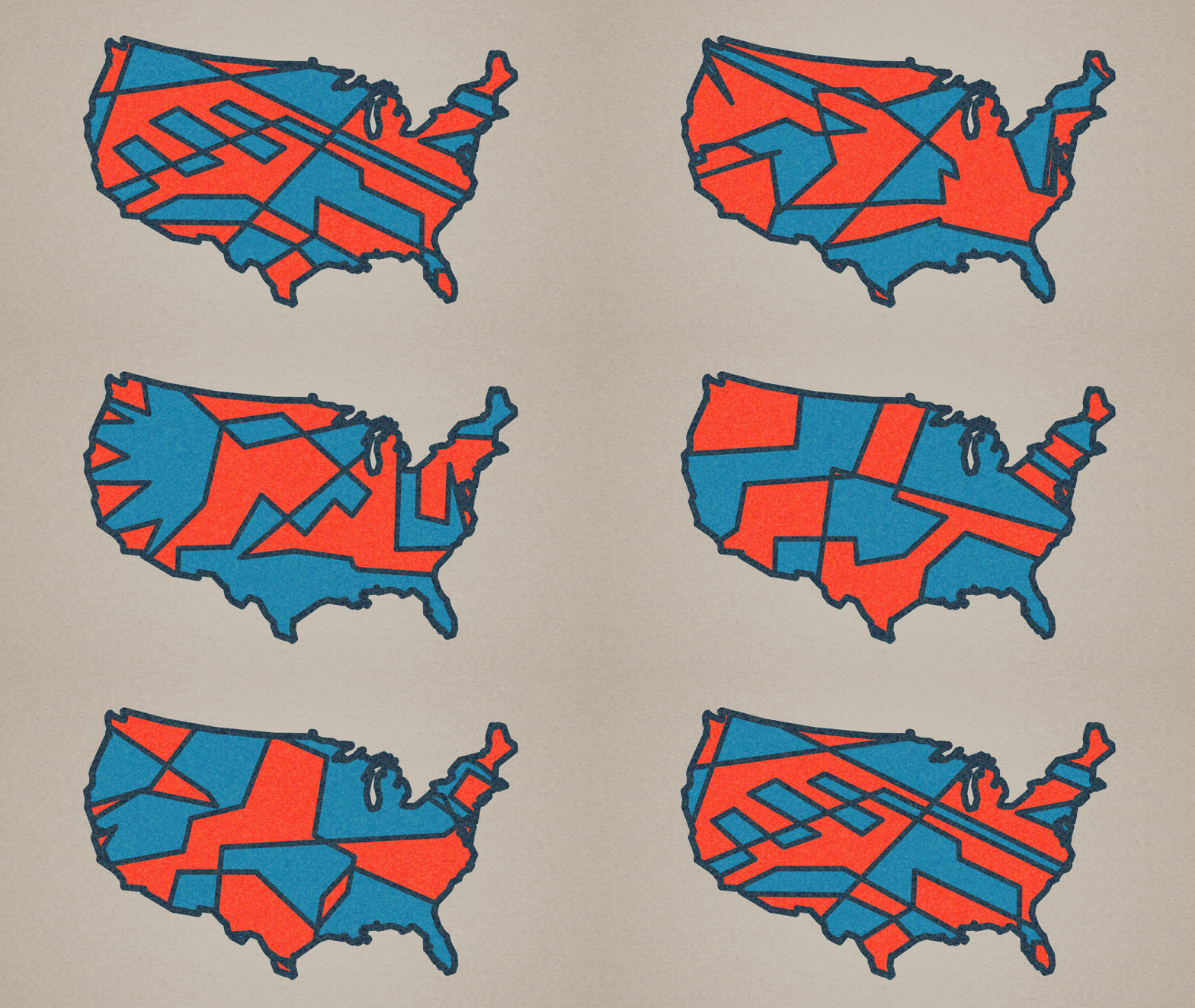
Republicans tried to save their House majority with a bold wave of mid-cycle redistricting. It failed in spectacular fashion on Tuesday. Why it matters: Republicans not only fell short of winning seats in several districts they redrew to favor their candidates, they put some GOP incumbents in danger of losing by spreading their support thin. Rep. Scott DesJarlais (R-Tenn.), who has mostly won landslide reelections since entering Congress in 2010, trailed his Democratic opponent by 200 votes, according to the Tennessee secretary of state's unofficial final results . Republican state legislators carved up his district in an effort to shore up neighboring Republicans, making his district nearly 20 percentage points less GOP-leaning. State of play: While Republicans succeeded in picking up a Democratic district in Tennessee to make up for that loss, they largely failed to pick up the seats they tried to make reliably Republican in other states. Florida: Republicans are set to go 0-for-4 in redistricted seats, failing to unseat Democratic Reps. Darren Soto, Kathy Castor and Jared Moskowitz, or capture a new seat that Democrat Pia Dandiya won. Texas: Republicans are set to narrowly win just one of the five districts they redrew heavily in their favor, with Democrats easily hanging onto several Rio Grande Valley and San Antonio-area seats. Ohio: Democratic Reps. Greg Landsman and Marcy Kaptur held on despite Republicans drawing them into more hostile territory. Alabama: Democratic Rep. Shomari Figures is also set for a comfortable win in a district Republicans had planned to fall into their hands. Louisiana: The district of retiring Democrat Rep. Cleo Fields, which Republicans made significantly more GOP-leaning will go to a December runoff between Democrat Patricia Moore and Republican Gabe Firment. One of the most stunning results of the night was Democrats' multiple apparent victories in North Carolina, where House candidates were boosted by Sen-elect Roy Cooper's stron

Dr. Abdul El-Sayed will become the nation’s first Muslim senator. He triumphed in one of the country’s most bitter and expensive races, keeping his party in control of a crucial seat.

Democrat Abdul El-Sayed defeated Republican Mike Rogers in Michigan's closely watched U.S. Senate race, the Associated Press projected. He will become the nation's first Muslim senator. Why it matters: El-Sayed's win shows how an unapologetically progressive candidate can win in a battleground state President Trump carried just two years ago. The two candidates competed for the seat vacated by retiring Democratic Sen. Gary Peters, with Republicans hoping to flip a seat Democrats have held for decades. But the GOP failed in its endeavor — and already lost its Senate majority. The race took a stunning turn in its final days, when Democratic U.S. Rep. Haley Stevens, who narrowly lost the August primary to El-Sayed, endorsed Rogers . The move sparked furious backlash from Democrats and prompted several of Stevens' staffers, including her chief of staff, to resign. The big picture: El-Sayed, a former Detroit health director, ran on a progressive platform centered on Medicare for All, taxing billionaires, and reducing corporate influence in politics. His victory comes after a contentious Democratic primary and a bitter general election campaign that featured personal attacks over his background, medical credentials and Muslim faith. Rogers, a former congressman and FBI agent who narrowly lost a 2024 Senate bid, sought to portray El-Sayed as too extreme for Michigan . El-Sayed cast Rogers as a Washington insider aligned with Trump. Trump himself escalated the attacks in the final stretch of the race, questioning El-Sayed's loyalty to the U.S., and making unsubstantiated allegations of extremist ties. El-Sayed rejected the accusations. Between the lines: El-Sayed's win offers progressives a powerful new argument in the Democratic Party's debate over how to win back voters. Zoom out: Both candidates put affordability at the center of their campaigns, but offered sharply different solutions. El-Sayed called for universal health care, tackling medical debt and higher taxes on

In red states and blue, Republicans suffered losses on a scale even Democrats would never have dared to dream about 24 hours ago. Why it matters: Democrats worried that polls showing a blue wave were overestimating the party's strength. It turned out polls underestimated the size of the Democratic romp — by a lot. The margins Democrats racked up in red states were stunning: Georgia: Sen. Jon Ossoff won reelection by nearly 18 percentage points. North Carolina: Former Gov. Roy Cooper won his Senate race by roughly 19 points. Texas: State Rep. James Talarico cruised to victory by approximately 12 points. These weren't nail-biters in competitive states. They were landslides in states President Trump carried just two years ago. The Texas trifecta Democrats won the Texas House, Senate and governor's mansion, giving the party unified control of state government for the first time since 1995. The sweep came alongside Talarico's double-digit victory in the U.S. Senate race. Texas, long the GOP's biggest electoral stronghold, delivered Democrats victories up and down the ballot. North Carolina was a bloodbath The man in charge of steering House Republicans to victory — Rep. Richard Hudson, chair of the National Republican Congressional Committee — lost his own seat. He'll join the ranks of other defeated party leaders — Speaker Tom Foley in 1994 and DCCC Chair Sean Patrick Maloney in 2022 — who spent so much time trying to build a majority that they failed to protect themselves. The carnage extended across the state. North Carolina's congressional delegation could shift from 10 Republicans and four Democrats to five Republicans and nine Democrats. The ridiculously cheap wins Democrats are leading in districts that received little or no outside spending from the Democratic Congressional Campaign Committee (DCCC) or House Majority PAC, the party's main House super PAC, according to AdImpact. In North Carolina's 6th, 9th and 13th districts, Missouri's 2nd and Tennessee's 4th, D