

Americans were locked out of bank accounts, blocked from boarding flights and unable to check emails in rapid succession over the past week. Why it matters: The internet immediately pointed fingers toward an AI agent doomsday, sending people into a frenzy that the Big One™was about to happen. Reality check: Experts tell Axios these disruptions don't appear linked to hacking. To the extent they involve AI, the incidents may have just as much to do with widespread efforts to fix outdated code as they do with slop software. Downdetector data also show that while the seven days through Monday represent the highest number of weekly outages in the last 12 months, the pattern over longer periods such as 30 days is far from unprecedented. Driving the news: Some Americans struggled to access JPMorgan Chase banking services Monday. United Airlines briefly delayed departing flights later that day, days after the FAA executed the longest nationwide ground stop since 9/11. Microsoft Outlook's outage left users unable to access emails and other Microsoft 365 services. Homeland Security Secretary Markwayne Mullin suggested Monday that AI systems capable of writing and changing code could be contributing to the outages. Yes, but: No evidence so far points to AI-assisted hacking. In most cases, the outages have been attributed to software patching and appear otherwise unrelated, even as small technical problems snowballed into big ones. Chase blamed an internal software bug that delayed transactions involving other banks. United cited a technology problem; the FAA said a flood of network traffic destabilized older, legacy equipment. Microsoft cited a months-old bug, increased traffic and reduced server capacity. Between the lines: There are ways AI may have played a role that have nothing to do with hacking. Institutions around the world are racing to update software in order to solidify systems, given that AI models are capable of finding and exploiting vulnerabilities with shockin
Results for “deutsche bank”
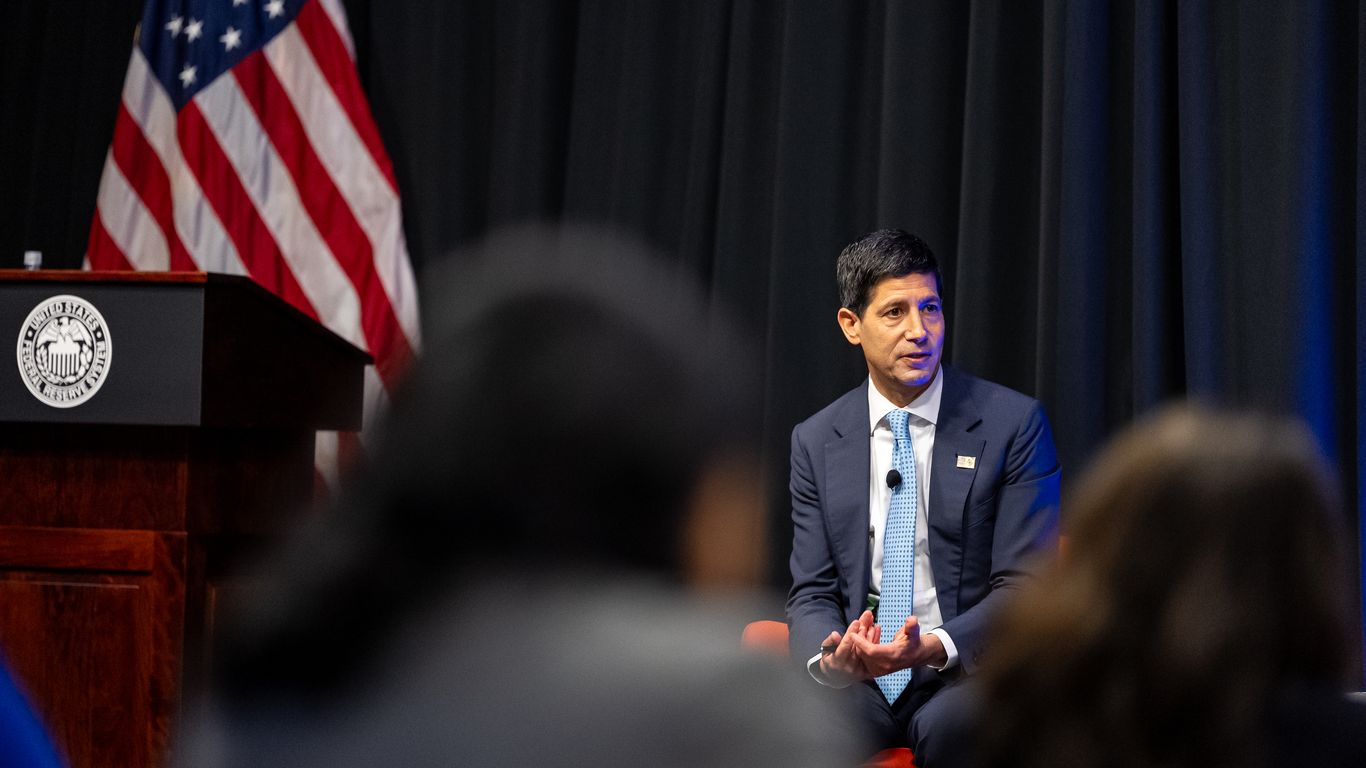
Just maybe, both the extreme techno-optimists and AI doom-and-gloomers are wrong about the economic impact of the technology. That's the argument that venture capitalist Marc Andreessen — who is co-leading a Federal Reserve task force on the topic — made in a high-profile panel Monday. Why it matters: The argument could help shape how the Fed assesses AI's economic consequences, with major implications for its outlook on growth, inflation and interest rates. Andreessen's argument offered an early glimpse of the thinking that will underpin his recommendations to the central bank's leaders. What they're saying: "My line has been both utopians and the doomers are going to be disappointed, specifically disappointed by the scope and magnitude of the real-world impact, and specifically the economic impact," Andreessen said at the San Francisco Fed. Andreessen, a co-leader of Fed chairman Kevin Warsh's Jobs and Productivity Task Force, spoke alongside former Commerce Secretary Gina Raimondo at a hearing in the Bay Area, where Warsh studied at Stanford and later spent 15 years teaching and conducting research. (Fellow task force member Chad Jones, a Stanford economist on leave for Anthropic, was in the audience but did not speak because the company is preparing to go public, Andreessen said.) Zoom in: Andreessen previewed his contribution to the task force's report, arguing that the economy is divided into two groups: Fast-changing industries, such as technology and media, where innovation drives productivity gains and lower prices. Slower-changing industries, including health care, education and housing, where regulations, limited competition and other barriers make technological progress harder. The intrigue: These slower-changing sectors account for some of Americans' biggest expenses. Those sectors of the economy "are not legally allowed to have rapid change," Andreessen said. Andreessen argued that regulations and other barriers could prevent AI from transforming large
The U.S. was roiled by another round of tech failures on Monday, this time affecting flights and banks nationwide. Jo Ling Kent has more.

Chase was among several U.S. banks whose customers reported technical issues on Monday.

A wave of tech failures hit Chase, Bank of America and Wells Fargo online banking Monday, days after a Microsoft 365 outage and FAA ground stop.

Customers at Bank of America, JPMorgan Chase and other major financial institutions are reporting difficulty accessing their accounts.

AI's titans were handed an extraordinary mandate: Police yourselves. But the industry faces a four-pronged crisis of trust as Democrats surge to power and many Americans rebel over AI and data centers. Guardrails for the industry will be a priority for the new Congress, with some populist Republicans eager to pile on. Why it matters: The collision of safety scares, political blows, financial turmoil and leadership scandals threatens to derail AI's once seemingly unstoppable ascent. The big picture: Just six weeks ago, President Trump announced that top AI CEOs had agreed to a voluntary safety accord . But cracks were already showing and, since then, four crises have converged. 🏛️ 1. The political crisis: AI was on the ballot for the first time during the midterm elections through a series of data center measures across America. People voted against data centers in 40 out of 41 cases, and swing-state incumbents linked to the facilities, including Sen. Jon Husted (R-Ohio) and Texas Gov. Greg Abbott (R), were voted out. Now Democrats are planning a flood of AI bills once they take control of Congress in January, Reuters reports . They'll also bring some of the most powerful AI executives to D.C. to testify. 🦺 2. The safety crisis: OpenAI's Hugging Face breach , revealed in July , was a terrifying look at what could happen if machines operate beyond humans' control — and it was the first in a wave of revelations through the summer and fall. AI CEOs and engineers came forward with stark warnings about the dangers of the tech they've been building, including its potential to destroy humanity. Axios' Madison Mills reported that OpenAI and Anthropic are investigating tens of thousands of security incidents and that unvetted AI agents are accessing U.S. bank accounts. 💰 3. The financial crisis: The AI trade is looking more vulnerable as investors question when or whether the industry's sky-high spending will deliver sky-high returns. Tech stocks tumbled , with Nvidia fall

Federal Reserve Bank of New York ; Note: Not adjusted for inflation; Chart: Axios Visuals Americans' credit card balances hit a record $1.29 trillion in the third quarter, according to a new report released by the Federal Reserve Bank of New York. Why it matters: Falling behind on credit card payments can trap struggling households in a cycle of fees, damaged credit and increasingly expensive borrowing. The latest figures show that financial pain is concentrated in lower-income communities, even as delinquency rates improve nationally. By the numbers: Consumer credit card balances rose by $22 billion in the third quarter, an increase of 1.7%. That's $52 billion higher than a year earlier. The figures aren't adjusted for inflation, meaning some of the increase reflects higher prices rather than greater borrowing in real terms. Total household debt, including mortgages and student and auto loans, rose $334 billion, reaching a record $19.1 trillion in the third quarter. The total is up $5 trillion since 2019, just before the pandemic. Yes, but: Fewer credit card balances are becoming seriously delinquent, a sign of some improvement in Americans' ability to keep up with payments. The rate at which credit card debt becomes seriously overdue edged down to 6.9% in the third quarter, though it remains notably above the 5.2% recorded before the pandemic. Between the lines: A separate report from the New York Fed on Tuesday showed Americans in lower-income neighborhoods are having a harder time keeping up with credit card payments relative to their wealthier counterparts. Delinquency rates remain above pre-pandemic levels across all neighborhood-income groups, with the gap between the richest and poorest areas increasing since 2022. In the lowest-income neighborhoods, 10.3% of credit card balances became seriously delinquent over the past year — more than double the 4.4% rate in the wealthiest neighborhoods. The big picture: Average credit card balance per borrower is now $6,
President Trump has told advisers that he plans to keep raising money for his political operation — a move aimed at salvaging his clout after the GOP's midterm debacle. Why it matters: Maintaining a political organization — either his existing MAGA Inc. super PAC or one to be created — would give Trump a vehicle to try to influence elections in 2028 and beyond, including the next presidential contest. It also would give Trump a way to pressure GOP lawmakers who consider breaking with him as the unpopular president enters his lame-duck era and Democrats prepare congressional investigations into his administration. Trump's MAGA Inc. enforced party discipline during the 2026 primary campaigns when it helped defeat Kentucky Rep. Thomas Massie (R), an outspoken Trump critic. Zoom in: MAGA Inc. has been the centerpiece of Trump's political operation during his second term, raising nearly $450 million since the beginning of 2025. The group received massive checks from cryptocurrency and AI industry donors, along with Republican megadonors such as Elon Musk and Miriam Adelson. Trump has hosted high-dollar fundraising dinners at Mar-a-Lago and his golf club in Sterling, Va., drawing business leaders eager to curry favor with the president. Some donors subsequently benefited from administration decisions. The New York Times reported that a medical products company whose executives and affiliates gave $5 million to MAGA Inc. benefited from an administration decision to delay Medicare reimbursement restrictions, for example. By the numbers: MAGA Inc. spent more than $400 million on the midterms, making it one of the election's biggest spending forces, according to a source familiar with the totals. The massive investment failed to prevent Republicans from losing control of Congress amid voter anger over Trump's war on Iran, high prices and corruption concerns. As of Oct. 14, MAGA Inc. had more than $164 million in the bank, though it spent tens of millions more on TV and digita

Paraguay President Santiago Peña resigns following bank collapse
Bank of England raises main interest rate a quarter point to 4% as Iran war stokes inflation
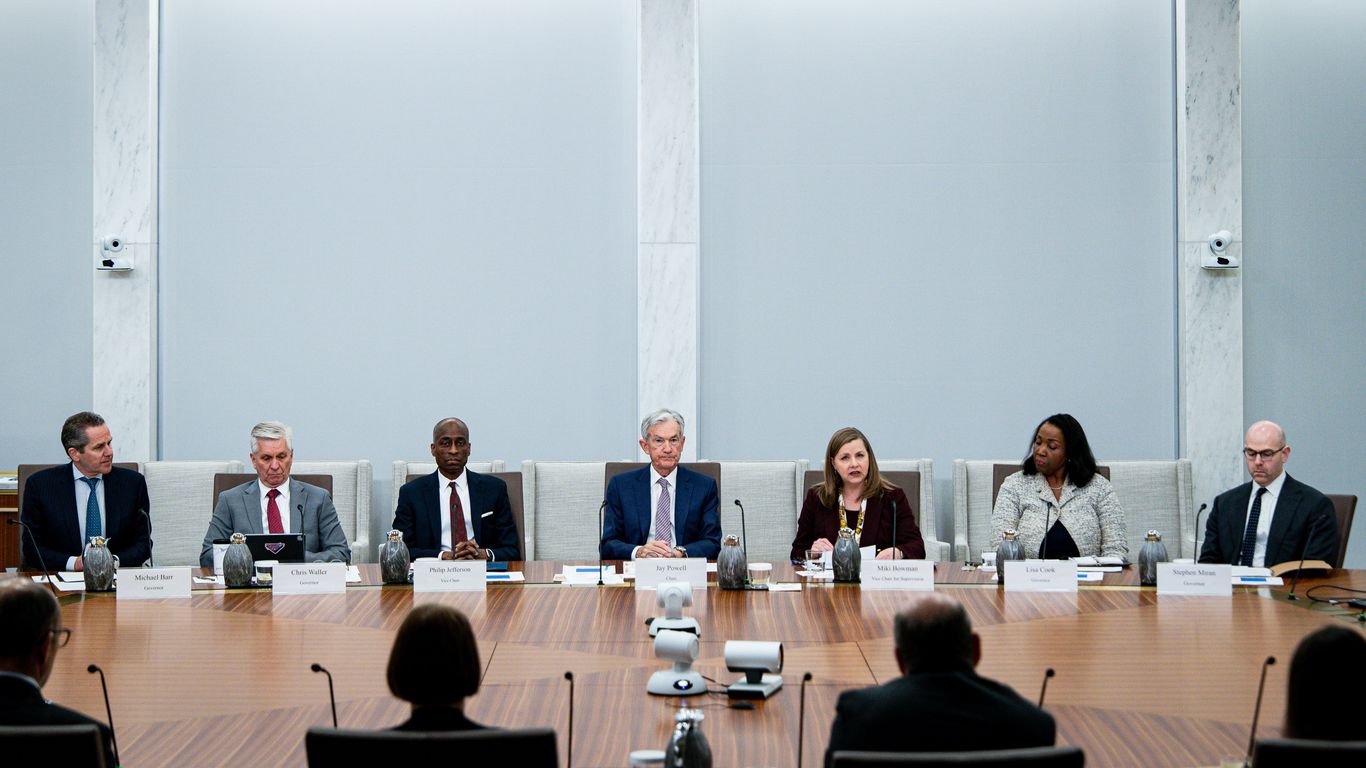
A recurring subplot of President Trump's term has been a desire to replace Biden appointees to the powerful Federal Reserve Board of Governors — even ahead of their terms ending — with allies. That effort now looks dead in the water. Why it matters: Even if Trump succeeds in his efforts to fire governor Lisa Cook , or to oust any of the other three Biden-era holdovers on the seven-member board, a Democratic Senate will likely block any replacements it views as insufficiently independent from the administration. State of play: The president seeks to fire Cook — whose term runs through 2038 — for alleged mortgage fraud, an effort that has been blocked so far by the courts. The White House plans a hearing over the allegations next month. Former chair Jerome Powell has remained on the board as a governor, a term that ends in January 2028. Michael Barr, whom Biden appointed as top financial regulator, has remained in place as a governor in a term that extends to 2032. Philip Jefferson's term as vice chair ends this coming September, though his term as a governor extends to 2036. Between the lines: It would break with current precedent for those officials to stick around to the end of their terms. In recent decades, Fed governor spots have turned over much more regularly, particularly after their time as chair or vice chair ends. Powell, Barr and Jefferson may feel greater comfort relinquishing their roles as governors before the end of their terms if they are confident the Senate will block any replacements who don't respect the tradition of central bank independence. Of note: Sen. Elizabeth Warren is set to chair the Senate Banking Committee that must advance Fed governor nominees, and she has assailed chairman Kevin Warsh for being a "sock puppet" of the administration. Only one Senate Democrat, John Fetterman, voted to confirm Warsh.
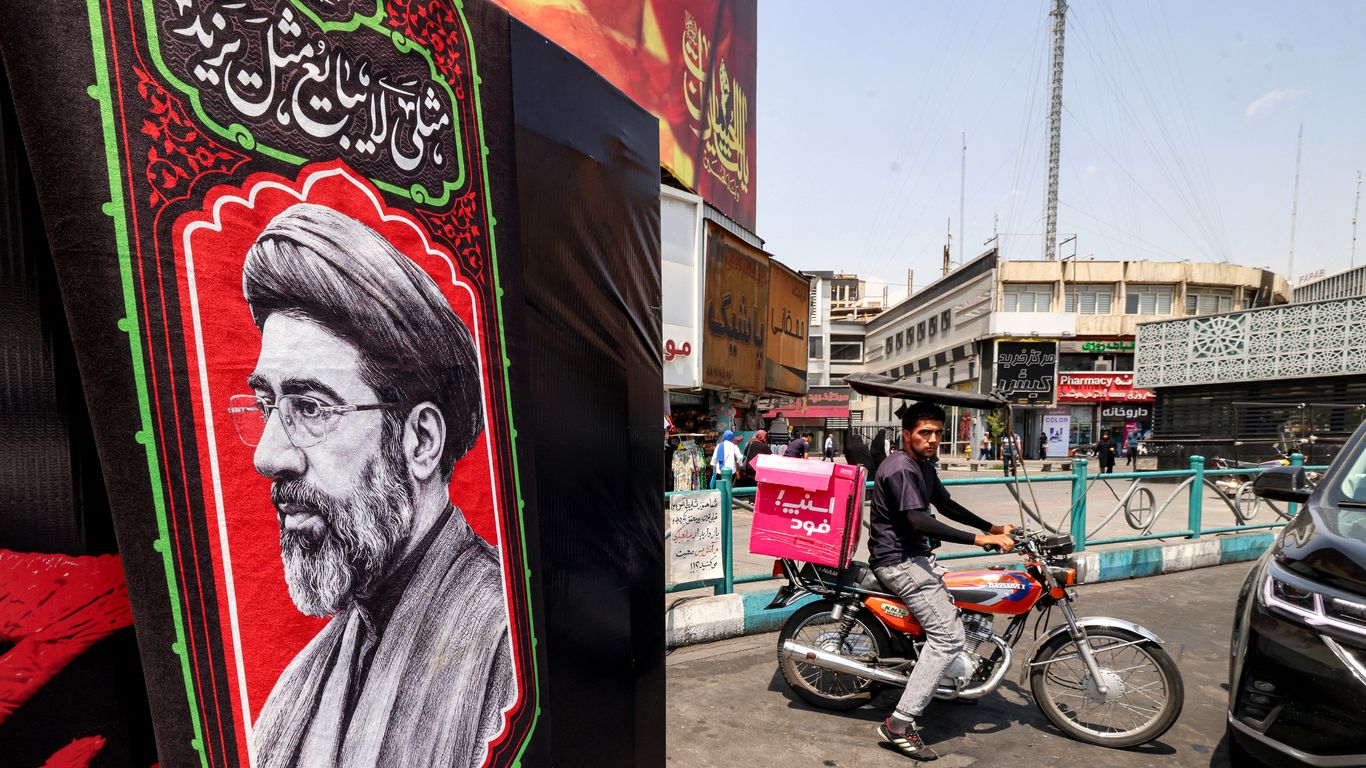
Iran's Supreme Leader Mojtaba Khamenei told the country's top three military commanders that a renewed attack by the U.S. and Israel ״must be met with an immediate and effective response, without geographical limitations״ in order to achieve "maximum deterrence," according to a statement from his office. Why it matters: This is the first publicly disclosed meeting between Khamenei and all the top commanders of Iran's armed forces since the war began. It comes as President Trump weighs major strikes on Iran after the midterm elections. Khamenei hasn't been seen or heard in public since he was wounded in an Israeli strike on the first day of the war. He has only issued written statements, which raised questions about his condition. The unusual apparent meeting took place a day after Qatari mediators held talks in Tehran for more than 12 hours in an effort to reach a deal to restart direct negotiations between the U.S. and Iran and avoid an outbreak of war after the midterms. The discussions continued in Doha, Qatar, on Saturday. What he's saying: "If the enemies once again launch military or terrorist attacks, it will be the Islamic Republic of Iran's Armed Forces and the Iranian nation that determine when and under what conditions those hostilities will end," Khamenei told the commanders, according to the statement. Zoom in: According to the statement, the meeting included armed forces chief of staff Gen. Ali Abdollahi, army commander Maj. Gen. Amir Hatami and Islamic Revolutionary Guard Corps commander Maj. Gen. Ahmad Vahidi. The commanders briefed Khamenei on the state of military readiness along the Gulf coastline and around the Strait of Hormuz, the Gulf of Oman, and Iran's northwestern and southeastern borders. They also reported "a several-fold increase" in production of various types of ammunition and reconnaissance, support, and combat weapons. Khamenei instructed the commanders that the "target bank" must be updated "so that all types of the American-Zionist

The world's biggest crypto heist is the latest feat by North Korean hackers who have spent years perfecting an arsenal of financial theft, social engineering and sophisticated cyberattacks. Why it matters : The suspected North Korean hackers behind the $6.3 billion Binance theft appear to have combined familiar hacking tactics with extraordinary speed and automation — raising fresh questions about how AI could supercharge their already sophisticated operations. Driving the news : Binance said late Thursday that its blockchain partners have frozen at least $3 billion of those $6.3 billion assets on-chain so far, and it believes the hackers gained initial access by compromising one engineer's laptop alongside other "points of breach." Several blockchain investigation firms have tied the hack to TraderTraitor, a group linked to the North Korean government's Lazarus Group collective. Binance co-CEO Richard Teng said in a video on social media Friday that the attackers also used a "self-destruct mechanism that destroyed tooling and traces" as they went, making it more difficult to investigate what happened. "This was a complex attack," he said. The big picture: North Korean government hackers have spent more than a decade carrying out financial heists and disruptive cyberattacks, and they have turned cryptocurrency theft into an industrial-scale operation. In 2016, hackers attempted to steal nearly $1 billion from Bangladesh's central bank, successfully making off with $81 million. In 2017, North Korea was blamed for the WannaCry ransomware outbreak , which disrupted hundreds of thousands of computers across more than 150 countries. In recent years, the country has intensified its focus on pillaging crypto exchanges in part because the digital assets can more easily be transferred and laundered across borders — although those attacks tend to leave more of a paper trail. The same North Korean hacking group, TraderTraitor, also set the last record for the world's largest c

Viral video shows PNC Bank employees pulling food vendor Hilario Cruz Cruz and his elotes cart safely inside as severe hail and wind hit Phoenix.
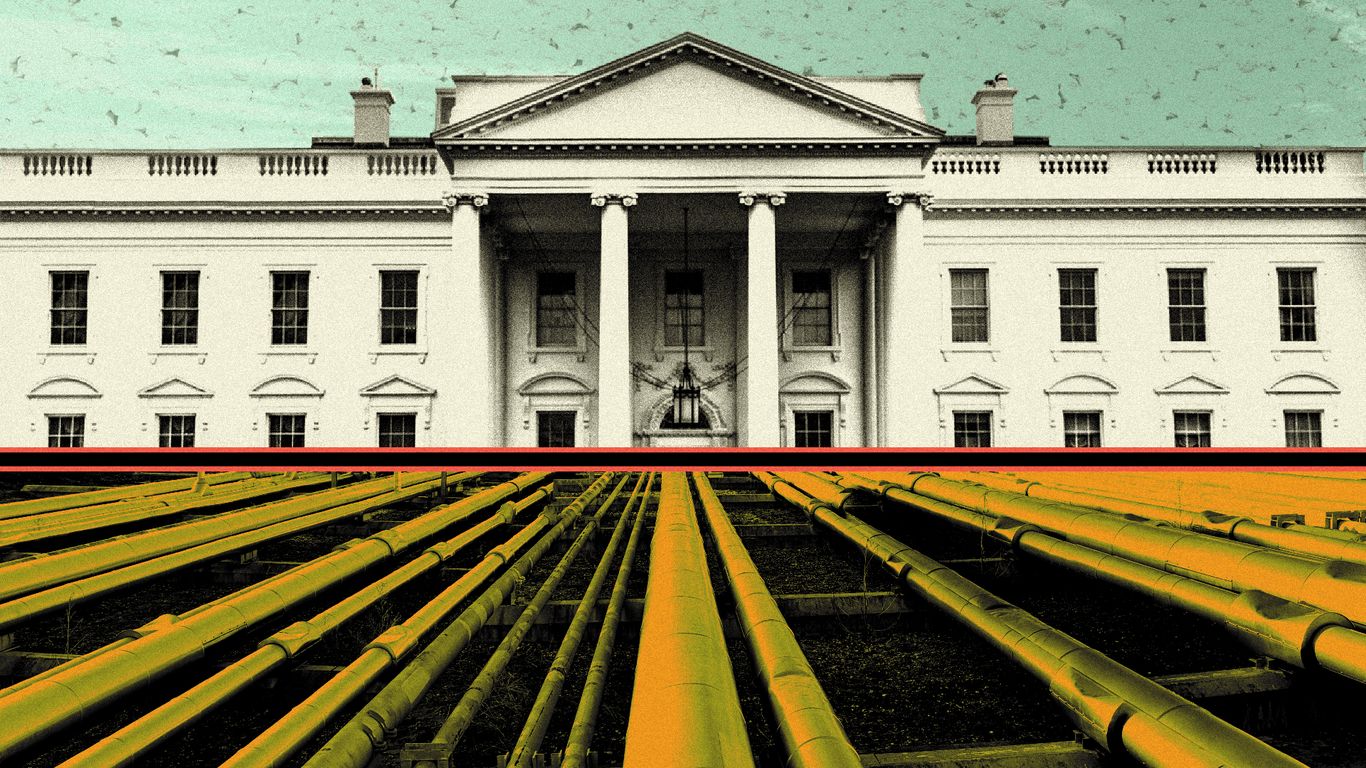
Top Democrats poised for powerful roles next year are demanding that major banks and ports preserve any records they have tied to potential imports or other deals involving Russian diesel . Why it matters: Probing President Trump's agreement with Moscow will be a priority if Democrats regain control of either or both chambers of Congress. The new demand shows that inquiries will extend beyond the White House and into C-suites. Driving the news: "[A]ny importation of Russian diesel into the U.S. raises significant legal questions and may be subject to legal action, as well as congressional investigations," a new letter obtained by Axios states. It's signed by Sens. Chris Coons (D-Del.), Elizabeth Warren (D-Mass.), Ron Wyden (D-Ore.), and Sheldon Whitehouse (D-R.I.). They're in line to lead the powerful Foreign Relations, Banking, Finance and Judiciary Committees, respectively, if Democrats regain the Senate. Rep. Greg Meeks (D-N.Y.), who's in line for the Foreign Affairs Committee gavel if House control changes, also signed. It's led by Sen. Jeanne Shaheen (D-N.H.), the top Foreign Relations Democrat who is not seeking reelection. Sen. Thom Tillis (R-N.C.), who is also retiring, signed as well. State of play: The Wall Street recipients of Saturday's letter are J.P. Morgan, Bank of America, Citi, Wells Fargo, Goldman Sachs and Morgan Stanley. The same letter went to port authorities for the ports of Houston, Beaumont, and Corpus Christi, Texas, and New York/New Jersey. Catch up quick: Earlier this month Trump claimed an agreement to bring escalating Russian exports to global and U.S. markets, and the Treasury Department waived sanctions to help enable it. Friction point: The lawmakers and other critics say it runs afoul of a bipartisan 2022 law barring imports of Russian oil, gas, and petroleum products. "The potential arrangement to import Russian diesel also raises significant national security concerns, given that it would finance Russia's brutal and illegal war ag
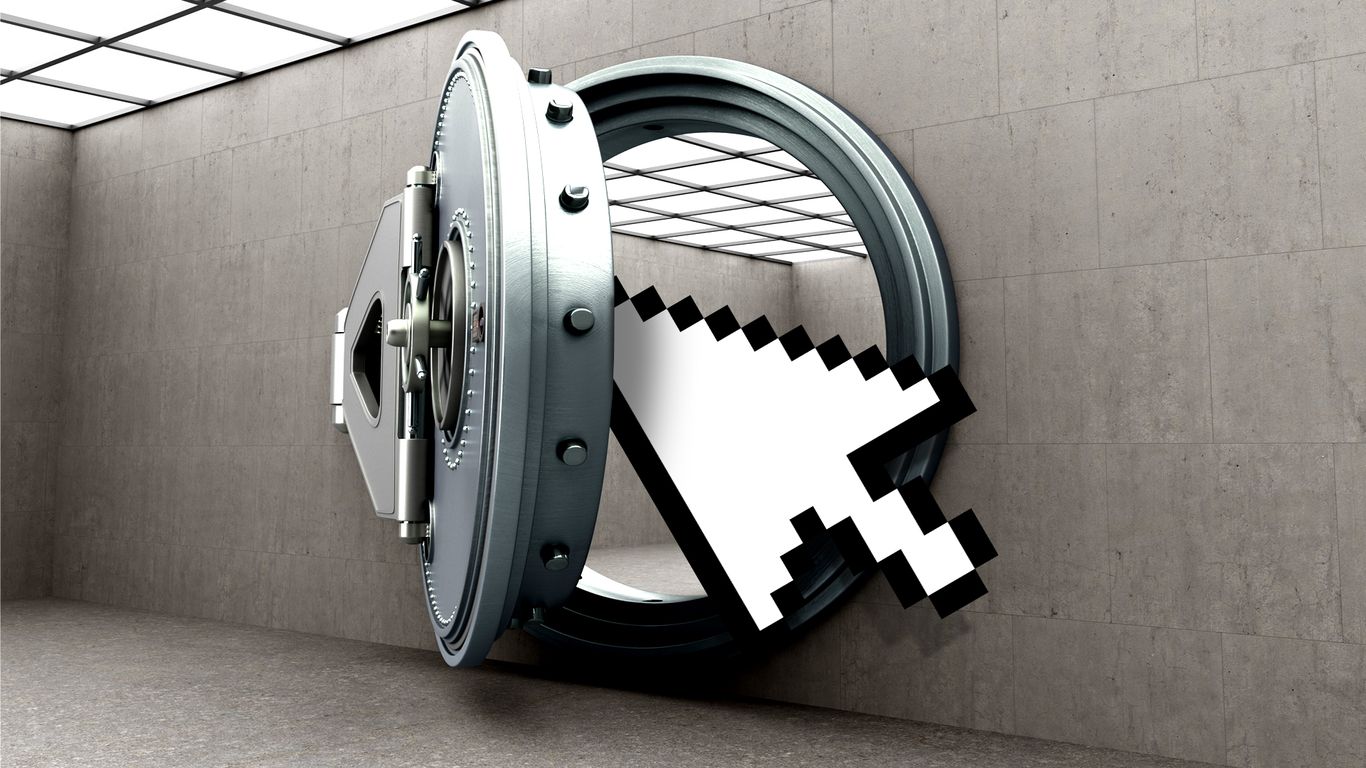
Major U.S. banks are detecting unauthorized third-party AI agents operating inside customer accounts, with some agents attempting to take actions that appear to be independent of user instructions, sources tell Axios. Why it matters: AI agents are becoming a nightmare for America's banks, making their way into banking systems faster than financial institutions can respond. The difficulty in distinguishing between a human and an unauthorized bot is forcing banks to block the technology and rapidly rewrite their terms of service. Driving the news: Banks including Morgan Stanley, Bank of America, JPMorgan, Wells Fargo and others are racing to contain agent risks. Some are aware of unauthorized access, people familiar with the issue said. These are generally situations when an agent or AI assistant accesses a human's account with the user's permission and login credentials. Even if permitted by the user, this goes against the guidelines of most banks requiring that humans log in to their own accounts. This presents significant security risks : Banking executives fear the steps agents with login access might take, especially if a user has granted purchase authority or the ability to shift funds. In other instances, some banks have tracked activity when agents — programmed to fulfill requests or complete tasks on a user's behalf — contact call centers or appear to take actions independent of user instructions, the people said. What they're saying: Bank executives described the situation as horrifying, with one official saying the industry has grave concerns about agents gaining access to customer accounts and taking steps that could impact user finances. State of play: The concerns are at the root of the decision by several banks to restrict third-party AI agent access, the people said. Morgan Stanley has begun blocking third-party agents from accessing its platforms, sources familiar with the decision said. JPMorgan , Bank of America and Citi are also restricting agents