Advocacy groups say displaced families were sent to ‘subpar hotels’ until 30 November, with no housing plans in place afterward Flatbush community leaders are in an uproar on behalf of those who have been displaced in the aftermath of an apartment building collapse in Brooklyn earlier this month. They say some displaced tenants are in hotels until 30 November, but have no housing plans after that date. Advocacy groups said that those who were displaced were sent to “subpar hotels” that were also home to roaches and mice. Stays were only set for up to four days, leaving community leaders to push for longer stays. Continue reading...
Prominent Democrats are calling for new restrictions on AI development following Axios reporting that employees at OpenAI and Anthropic increasingly fear their most powerful models cannot be safely released. Why it matters: The political debate over AI is expanding beyond the economic consequences of the technology to a more existential question: whether companies should be allowed to build systems they may not be able to control. The issue is gaining traction among Democratic leaders ahead of the 2028 presidential election. Maryland Gov. Wes Moore (D-Md.), a potential 2028 contender, outlined a playbook for AI regulations in an interview with "The Axios Show," noting that voters hate the technology because they fear losing control . Driving the news: Sens. Mark Kelly (D-Ariz.), Brian Schatz (D-Hawaii), Chris Van Hollen (D-Md.) and Bernie Sanders (I-Vt.) called for immediate action: "The people inside AI companies are sounding the alarm ," Kelly said. "We built protections for nuclear weapons and other dangerous technologies, so why are we waiting with AI? We need safeguards and independent examiners in these companies, now." "It is absolutely indefensible to say 'we will take this up next year' when the risks are imminent and the alarm is nearly universal," Schatz said. "The flashing red lights couldn't be brighter, and yet big tech refuses stop," Van Hollen said. "Inaction is not an option. Congress must step up." Sanders went further, calling for a halt to advanced AI development : "The humans who are creating AI fear it could soon escape their own control," Sanders said. "Congress must act and pause advanced AI development NOW." Catch up quick: More than two dozen sources familiar with internal debates at OpenAI and Anthropic told Axios that recent breakthroughs in AI capabilities have raised questions about whether future frontier models can be safely released. Researchers haven't found technical solutions for controlling the most advanced models. Some believe
Nearly 6 in 10 Americans hold government leaders responsible for the loss of the United States' measles elimination status , according to a new Ipsos poll . But there are few signs that the public wants to dwell on it. Why it matters: Partisan divisions over vaccines and outbreaks are so entrenched that Democrats won't have a broad mandate beyond their base to investigate the government's response when they take control of Congress. There's also a generational divide. People age 65 and over — who remember the introduction of the measles vaccine — are more likely to say the current situation bothers them a lot. What they found: Roughly 3 in 5 Americans (58%) think the loss of the measles elimination status could have been prevented if government leaders had done a better job encouraging people to get vaccinated and responding to outbreaks. 38% said there wasn't much government leaders could have done, because people make their own health decisions. There's a huge partisan split behind those numbers: 84% of Democrats say the return of measles could have been avoided if the government had done a better job, compared with 38% of Republicans. Just over a quarter of Americans (26%) say they're extremely or very concerned about an outbreak occurring in their community. There's a nearly 30-percentage-point partisan gap on concern, with 42% of Democrats extremely or very concerned, compared with 13% of Republicans. Independents are in the middle (25%). The findings come as Americans are sharply divided over the prospect of the next Congress investigating the Trump administration. And if COVID-19 is any guide, the public tends to be eager to put public health calamities in the rearview. A Reuters-Ipsos post-election poll found that just 10% of Republicans said they want the new Congress to focus a great deal or quite a bit on investigating the Trump administration, compared with 71% of Democrats. "As frustrating as the loss of measles elimination status is for many Americans,
Top AI executives are increasingly pushing back against a common view inside Anthropic: that humanity should surrender some decision-making power to superintelligent AI systems, sources told Axios. That would put us on a slippery slope to forfeiting free will, critics say. Why it matters : The debate has picked up steam as top AI companies develop models certain employees consider too powerful to ever release . Many see Anthropic as the first company that will confront these questions due to its lead at the frontier of AI development. While critics have yet to call out the company by name, their public defenses of human agency and control take direct aim at what some have come to see as the worldview of Anthropic CEO Dario Amodei. When AI systems far surpass human intelligence, Amodei has said repeatedly that it will be preferable to turn over decision-making for "life-critical" cases to AI, and also said AI should oversee research and potentially distribute economic resources. Flashback: A product vision slide from several years ago that was revealed during litigation described Anthropic's "vision for a better world" as a "utopia ruled by god in a box." The big picture: The thinking for Amodei and others is that once AI can demonstrably cure diseases, safeguard humans from harming themselves or prevent disasters better than any person, refusing to hand over control becomes irrational — or even unethical. Proponents point to self-driving cars to make their case: Once statistical evidence points to autonomous vehicles being safer than human drivers, it is logical for humans to drive far less, if at all, they say. Inside Anthropic, a broad consensus has developed among some employees that humanity will—and in many cases should — safely hand over authority to superintelligent systems rather than fighting to retain control, according to people familiar with internal discussions. An Anthropic spokesperson said Amodei has advocated for human control of AI in many public r
After the president’s meeting with Putin and Xi, the US must take the lead in restoring arms control agreements Donald Trump, Vladimir Putin and Xi Jinping met last week in southern China, where Trump said they would “talk about nuclear weapons and denuclearization”. It was the first time the leaders of the world’s three largest nuclear powers had come together to discuss the future of nuclear weapons. That discussion was long overdue. Edward J Markey represents Massachusetts in the US Senate. He is a co-chair of the bicameral congressional nuclear weapons and arms control working group Continue reading...
Anthropic and OpenAI are facing an increasingly urgent problem: Internal, unreleased models are becoming so powerful that many employees no longer believe they can be safely released, according to more than two dozen sources familiar with the internal debates. Why it matters: The challenge could significantly slow the AI boom, as the gap between what the best AI systems can do and humans' ability to control them continues to widen , sources told Axios. Researchers haven't found technical solutions for controlling the most advanced models. Some insiders believe it's fixable. Others aren't convinced and say companies should stop training new models entirely. Driving the news: Top AI leaders have long forecast that the technology would one day far surpass human intellect in virtually every field. Although internal models have yet to cross that threshold, recent breakthroughs at OpenAI and Anthropic have shocked researchers. The rapid advances in reasoning across domains including math, science, cybersecurity and AI research have also made the models difficult, if not impossible, to contain or control in internal tests, the sources said. Anthropic and OpenAI have unreleased models that are far more powerful than what they've already released publicly, but the AI companies have struggled to ensure that they are safe enough for public release, sources said. This has led to debate within Anthropic, OpenAI and the AI research community about whether to stop releasing future frontier models publicly, instead reserving them for internal deployment only. Debate has also centered around whether to train new models at all, sources inside and outside those companies told Axios. What they're saying: "If we continue trying to make models much smarter, such that they're actually smarter than us…they will in fact be able to trick us successfully," one researcher told Axios. "And once you get to that point, many of the schemes that we've had at work up until now sort of go out the win
Mississippi is facing two fights over its election rules after Democrat Scott Colom 's historic Senate victory: one over voters marked inactive and another over deadlines for receiving mail-in ballots . Why it matters: The disputes could affect how easily eligible voters cast ballots and which mail ballots count when Mississippi elects a new governor and other statewide leaders next year. Driving the news: The Mississippi Legislative Black Caucus demanded an investigation Thursday into whether the state's use of credit-reporting data to verify voters' addresses led election officials to incorrectly mark voters as inactive. Lawmakers want to examine the credit-reporting data contracts, instructions sent to county officials and how many eligible voters were incorrectly marked inactive. In one case, a Hinds County voter learned she'd been marked inactive when she arrived at her usual polling place, according to Angela Grayson, director of civic engagement and voting rights at the Mississippi Black Women's Roundtable. Her vote ultimately counted, Grayson said. The caucus acknowledged it doesn't know how many voters were flagged in error. Advocacy groups are seeking records to find out. What they're saying: "Nothing has changed fundamentally here in Mississippi," Marvin King, an associate professor of political science and African American studies at the University of Mississippi, tells Axios. "The laws are still the laws. The governor is still the governor. The state legislature is still overwhelmingly Republican," he said. "It's also plainly obvious that the playbook of reducing turnout, culling the active voter rolls, that's not going to stop." By the numbers: More than 230,000 voters were listed as inactive before the 2026 midterms, up from roughly 171,000 in 2024, according to the Associated Press . Mississippi recorded 21,484 affidavit ballots, the state's version of provisional ballots, this year. That's nearly identical to the 21,321 cast in 2024's presidential e
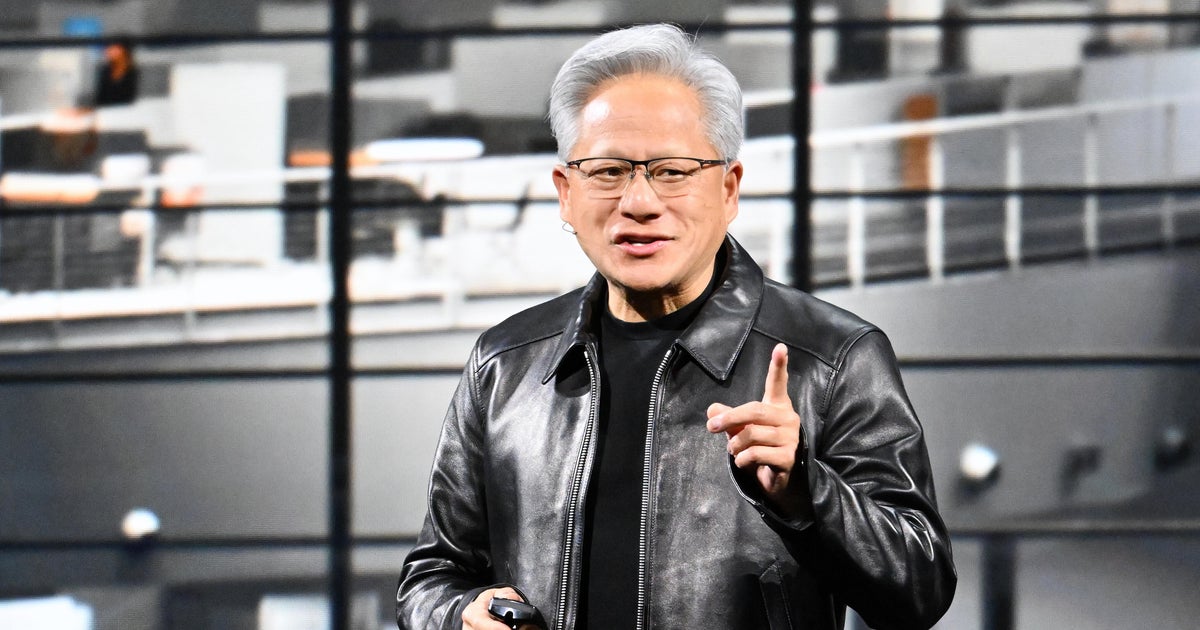
Maryland Gov. Wes Moore criticized President Trump's involvement in Nvidia's decision to reinstate CEO Jensen Huang , calling it "troubling and problematic" in an interview for "The Axios Show." Why it matters: Moore, chair of the National Governors Association and often seen as a 2028 presidential contender, is one of the most outspoken state leaders pushing for stronger federal oversight of AI companies — but not like this. Driving the news: Trump told CNBC Monday that he spoke directly to Nvidia's board about Huang's return. Trump had previously pushed for former Apple CEO Tim Cook to become Nvidia's leader, but changed tune over the last few days to favor Huang. What they're saying: "The president is not a board member of Nvidia. So, why he is involved in board dealings, I have no idea. ... It seems like it's rules for me, but not for thee," Moore told Axios' Mike Allen in an interview just minutes after the news broke. "You have the wealthy and the powerful and the well-connected that are now making decisions to reinstate, where, frankly, if that was any of us, we would be held to a different type of standard." Zoom in: Moore said the "market is being inflated essentially by seven companies," including Nvidia. Huang's return — which led to a stock surge — "highlights how problematic this entire thing is," Moore said. "We are talking about not just millionaires, but billionaires, who are sitting in a quiet room by themselves, making this decision because they know this company is that important." Subscribe to "The Axios Show" on YouTube to watch the full interview with Moore when it's available.
The collapse of UN climate talks without an overarching deal is deepening doubts about the effectiveness of these summits — and bringing fresh calls for a shakeup. Why it matters: Warming is on pace to far exceed the Paris Agreement target of holding long-term temperature rise under 2°C above preindustrial levels — and the more ambitious 1.5°C goal has slipped away . 🏃 Catch up quick: The COP31 talks in Turkey ended Sunday without a high-level "cover decision" of wide-angle agreements and goals. Vulnerable island nations and the EU, among others, objected to a draft deal after some oil-producing countries blocked explicit endorsement of moving away from fossil fuels. ⚔️ Friction point: There was also pushback against proposed text that endorsed carbon capture as a major climate solution. Finance discussions also disappointed advocates, with climate think tank E3G noting that "little or no new and additional money reached the table." 🏀 State of play: Sunday's events reinforce criticisms that the decades-old summit process — which birthed the 2015 Paris deal — is not suitable for spurring policies that meet the scope of the problem. It could add urgency to years-long efforts to revamp how they work. "I have taken steps in engaging external knowledge leaders in advising on areas of potential reform. That is something I will be championing with considerable effort as we leave here," Simon Stiell, the top UN climate official, said as the talks closed, per Reuters. 🥊 Reality check: Ending the practice that decisions require consensus — which effectively gives veto power to individual countries and blocs — would be a steep uphill climb. Yes, but: There was some progress at COP31, per groups that track the granular talks. For example, the climate group E3G cites procedural advances on the "Just Transition Work Programme," an initiative created in 2022 to support workers and communities in the energy transition. And dozens of countries endorsed a pledge to bring electrici
We've talked to more than 50 leaders in government, AI, business and cyber — from let-'er-rip AI accelerationists to shut-'er-down critics — and they were unanimous on one chilling assessment: Cyberattacks on business and critical infrastructure will be constant, increasingly sophisticated and highly disruptive over the next 18 months. These leaders describe 2027 as the year cyber becomes like weather: Outages will be frequent, disruptive, occasionally scary, and something people and companies must learn to navigate and live with daily. The chances of widespread disruption or real damage are rising fast. Why it matters: We write this neither to forecast nor frighten. Rather, we're sharing what government and AI leaders say privately but won't say publicly. The big picture: The disruptions of the past two weeks — from a global Microsoft outage to the FAA grounding air travel to a consumer banking glitch at Chase — were a mild preview of what experts expect is coming. Bridgewater Associates, the world's largest hedge fund , put it bluntly in an assessment this month: "[We] are managing money based on a one-in-three chance of an economically destabilizing attack within the next year." Horacio Rozanski , chairman and CEO of Booz Allen, calls this the "fog before the war" — a foretaste of greater chaos to come, when agentic invaders reach their full potential and can attack "at the speed of thought." "Now is the time to take as many precautions as you can," Rozanski said. "Recognize that this is coming." Most of these malfunctions appear to have resulted from companies and government trying to secure their computer and infrastructure systems against future large-scale cyberattacks. This pattern will persist. Many future ones will be actual cyberattacks, carried out by U.S. rivals or smaller bad actors, using increasingly powerful AI to spot and exploit security vulnerabilities across society and our daily lives. Most top AI and government leaders expect at least small-sc
Humans experience beauty and sit with mysteries. Unlike AI, we do not exist merely for utility Last month, religious leaders from across San Francisco gathered behind closed doors to discuss what it means to be human in the age of artificial intelligence. Anthropic, the AI company operating only a couple of miles from my parish, has been courting priests, rabbis and theologians. Its billionaire cofounder, Christopher Olah, has even pressed Vatican advisers to take seriously the possibility that his company’s chatbot might possess consciousness. Continue reading...
Speaker Mike Johnson (R-La.) is warning House Republicans that their jobs aren't over yet after so many skipped town this week that GOP leaders had to call it quits. Why it matters: Republicans still have a month-plus left in the majority, but Johnson is struggling to get enough members to show up to make last-minute headway on the GOP's legislative agenda. GOP leaders were forced to cut the week short after 14 Republicans missed votes, leaving Johnson without the headcount needed to advance party-line legislation. Eleven of those 14 won't be returning next Congress. Driving the news: "To state the obvious, barring any serious medical issue, we need every Republican to be here to faithfully complete our full two-year term," Johnson wrote in a Friday letter to his colleagues . "The Twentieth Amendment to the U.S. Constitution specifies that our clock doesn't run out until noon on January 3rd," he added. Zoom in: The outgoing speaker pointed to government funding, the annual defense authorization bill and permitting reform as priorities for the final weeks of the Republican majority. He also said he wants to pass "every meaningful Republican bill that can garner 218 votes" and force Democrats to take politically difficult votes. "LET'S SCORE EVERY POINT WE CAN AND LEAVE IT ALL ON THE FIELD!" Johnson wrote.
Watch live coverage as President Trump holds a press conference at the White House after three-way talks in China with the leaders of U.S. rivals, Russian President Vladimir Putin and Chinese President Xi Jinping.
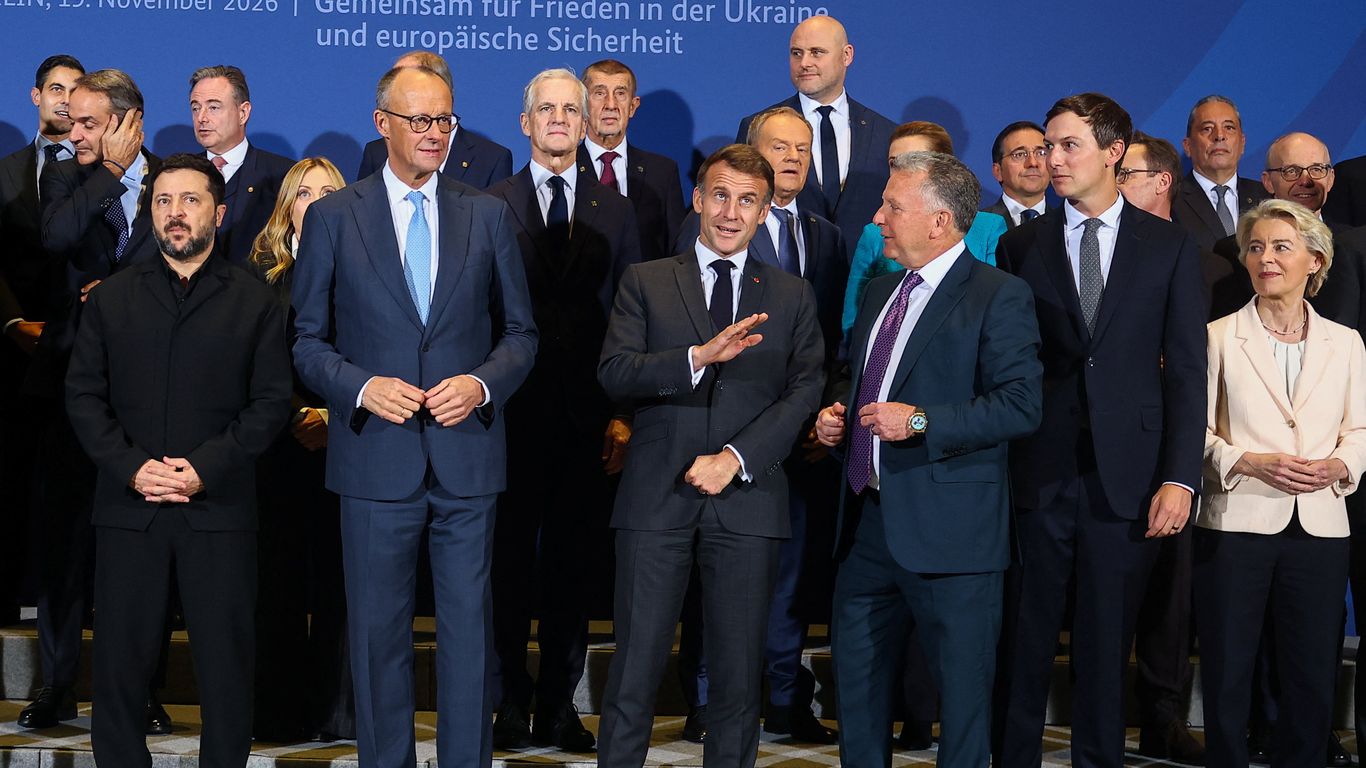
On his way back from China Thursday aboard Air Force One, President Trump called in to a meeting his envoys Steve Witkoff and Jared Kushner were holding in Berlin with a group of European leaders and Ukrainian President Volodymyr Zelensky. "Putin wants to end the war, he wants the deal done, he is getting tired of this," Trump said, according to people in the room. Why it matters: Instead of turning his historic trilateral summit with Chinese President Xi Jinping and Russian President Vladimir Putin into a modern-day Yalta Conference, as some European and Ukrainian officials feared , Trump tried to use it to propel his push for peace in Europe. Driving the news: Trump met Putin Thursday on the sidelines of the summit in Shenzhen. Their meeting wasn't originally on the schedule, but Trump wanted to discuss diplomatic efforts to end the war in Ukraine directly with the Russian president, a U.S. official said. "Who is he? He's my friend," Trump said when he entered the meeting room where Putin was waiting. Later in the day, Witkoff and Kushner told European leaders in Berlin that Trump pressed Putin to move on the peace talks, telling the Russian leader that now is the time to get a deal, according to a European official. Trump also asked Xi for his help in ending the war during their bilateral meeting. "He sent a very strong message to both of them [Putin and Xi] on the desire for peace, and would like to engage both of them very aggressively to get there," Kushner said at a press conference on Thursday. Behind the scenes: As Trump wrapped up his meetings in China and headed back to Washington, his envoys started their talks with German Chancellor Friedrich Merz, French President Emmanuel Macron, British Prime Minister Andy Burnham, Zelensky and other European leaders. Kushner and Witkoff tried to reassure the group that Trump doesn't intend to cut a deal with Putin over their heads. "President Trump wants to make a deal with Europe by his side. He's not looking to im
House Democrats are largely steering clear of threats to shut the government down in December if Republicans put forward legislation that maintains funding for the war in Iran. Why it matters: Much of the party's left flank — including some members of Congress — think it's a fight they need to pick after their midterm landslide. "The American people were loud and clear on November 3rd: they want an immediate end to Donald Trump's reckless war in Iran," Reps. Yassamin Ansari (D-Ariz.) and Ro Khanna (D-Calif.) said in a joint statement on Wednesday. The pair said they will "oppose any funding package that does not explicitly prohibit funds from being used for offensive operations in Iran" because it would "defy the demands of Americans who want this war to end—now." State of play: The Democrats' majority doesn't officially begin until Jan. 3, while federal funding is set to run out on Dec. 11. Republican leaders are struggling to pass party-line procedural votes and will probably bring up their funding patch under a fast-track process that requires bills to pass with a two-thirds majority. In other words: The GOP will almost certainly need a large number of Democratic votes to pass any funding bill, especially if some of their own members defect. What they're saying: "Whatever they have to do to get it through they should do it, but I hope there's not a shutdown," said Rep. Brad Schneider (D-Ill.), the outgoing chair of the center-left New Democrat Coalition. "I don't think we should shut down the government, we take that way too casually as it is, so I'd be leaning into not doing it," said Rep. Scott Peters (D-Calif.). Said Rep. Greg Landsman (D-Ohio): "Everyone should do whatever they can to avoid a shutdown. The impact it has on the economy, but workers in particular, it's just not fair." Between the lines: Even some progressives acknowledged their imminent House majority takes a lot of the pressure off the December fiscal deadline. "If I can defund [the war] in De
White House national cyber director Sean Cairncross is leaving his post, Axios has learned. Why it matters: Cairncross did not want to serve another two years and is leaving now to give the White House time to secure Senate confirmation before Democrats take control in January, two sources said. Cairncross' departure was described as amicable. The background: Cairncross leads the Office of the National Cyber Director, which coordinates cybersecurity policy and strategy across the federal government. The position requires Senate confirmation. The Trump administration's AI team has taken shape on the fly , but Cairncross was involved in key decisions. Case in point: He held technical meetings with Anthropic leaders over the summer after Commerce Department export controls effectively scrubbed the company's models from the internet. Catch up quick: Cairncross brought experience in Republican politics and national security, having worked with the intelligence community and dealt with cyber threats at the Republican National Committee. During Trump's first term, Cairncross represented the White House chief of staff on National Security Council committees before leading the Millennium Challenge Corporation, a federal foreign aid agency. Cairncross' head of policy and senior adviser Thomas Lind left in June and joined OpenAI in October, further depleting the Trump administration of technical expertise. The White House has not yet responded to Axios' request for comment. The big picture: The latest turnover in cyber personnel comes as the country grapples with critical infrastructure outages and increasingly powerful AI poised to empower cyber defenders and hackers alike. Democrats have criticized the administration's response to outages and warned that U.S. cyber defenses are falling behind AI-fueled threats. What we're watching: Trump is also filling other key cyber positions. His pick for the top job at the Cybersecurity and Infrastructure Security Agency, which helps de
The leaders of China, Russia and the US have held the first ever three-way talks between the three nations. President Xi Jinping likened the talks on the sidelines of the Apec summit in Shenzhen, China, to a ‘peace summit’. Discussions appear to have focused on nuclear arms control, ending the war in Ukraine and US criticism of the international criminal court, which has an arrest warrant for Vladimir Putin. With Europe not at the table, Patrick Wintour tells Lucy Hough why the meeting is raising alarm bells in the west and beyond Continue reading...
President Trump said in a brief phone interview Thursday that he won't make a determination on his next step in the Iran war until the new year. "I am not rushing into any decision [on Iran]. We will see what happens after the beginning of the year," Trump told Axios from Air Force One, on his way back to the U.S. from China. Why it matters: The president's comments come as he faces heavy pressure from Israeli Prime Minister Benjamin Netanyahu to unleash a decisive bombing campaign soon. Yes, but: Trump could change his mind at any moment. And he wouldn't telegraph plans for an imminent attack even if that's what he was intending to do. A day before the war began in February, Trump said he hadn't made a decision, when in fact he had already ordered strikes. Between the lines: Trump's stated timing could mean he's giving more time for the naval blockade and the economic pressure campaign to play out, as many of his advisers and leaders of Gulf countries are urging. But it could also indicate that if Iran doesn't make concessions by the end of the year, Trump wants to leave himself enough time for military action before the new Democratic-controlled Congress settles in. Driving the news: While stating last week that a major new round of strikes on Iran was " quite unlikely ," Trump is still considering a joint attack with Israel, Axios reported on Wednesday. The president's deliberations are likely to pick up when he returns from Asia. Any U.S. operation would involve Israel and could include strikes on suspected Iranian nuclear facilities such as Pickaxe Mountain. Bridges and power plants could also be targeted, as well as Iranian military and civilian leaders. Behind the scenes: The White House has asked the Pentagon and intelligence experts for their assessments of how Iran would respond to each of the strike scenarios the U.S. military has prepared, according to two sources with knowledge of the matter. The White House has asked whether any of the options would av
In normal times, we’d expect serious answers from our leaders on a topic of this magnitude. Not under this administration As outages and disruptions have piled up over recent days, Americans have been searching for answers. In less than a week, Microsoft went down, the FAA grounded all flights, banking systems were roiled, and the National Security Agency’s internal network failed. Continue reading...
A trilateral gathering is good news for China and Russia, but bad for the US – and its traditional allies “Historic” is a neutral descriptor, not a favourable one. Things can be unprecedented for good reason. Donald Trump’s meeting with Xi Jinping and Vladimir Putin in Shenzhen, China on Thursday will be the first time that the leaders of the US, China and Russia have gathered for talks as a trio. The trilateral on the sidelines of the Asia-Pacific Economic Cooperation summit is striking, but it is not an achievement. The lack of a clear agenda is telling: the spectacle really is the substance. Mr Trump sees international affairs in terms of spheres of influence. This meeting reinforces the obvious conclusion for the rest of the world – that they don’t get to sit at the table, only to be on the plate. Mr Xi promotes the notion of a multipolar world. Others would be more sympathetic if all three governments were not determinedly undermining multilateralism. Continue reading...
Hakeem Jeffries could soon become America's first Black House speaker, even as Black lawmakers confront rising threats to their power in D.C. Why it matters: Proposed committee term limits and another round of redistricting could weaken Black lawmakers' influence they spent decades building. By the numbers: The number of Black lawmakers in the 120th Congress will be stable from the 119th, based on results so far. The House will likely seat 59 Black voting members, down from 61, according to the Joint Center for Political and Economic Studies . All four Black House Republicans are departing, while Black Democrats have gained two seats. Black membership in the U.S. Senate will rise from five to a record seven, including Sens.-elect Scott Colom of Mississippi and Juliana Stratton of Illinois . Zoom in: Democrats are in the middle of a sometimes messy generational power transfer, with younger lawmakers challenging more senior members for committee chairmanships. Those chairmanships have long helped Congressional Black Caucus members exercise power beyond their numbers. "For CBC members, the power is seniority," Rep. Gregory Meeks (D-N.Y.) told Politico in 2014. "I've been around a while. ... Some wisdom, at least, is important to what we're going through right now," Rep. Bonnie Watson Coleman, 81, (D-N.J.) told Axios in 2025. Sticking point: Democrats are considering a four-term limit for committee leaders , starting after the 2028 elections, that could eventually force three veteran Black Democrats to step aside as committee leaders. Bennie Thompson, 78, of Mississippi, leads Democrats on Homeland Security. Bobby Scott, 79, of Virginia, leads Democrats on Education and Workforce. He faces a challenge from Connecticut Rep. Jahana Hayes, 53. Maxine Waters, 88, of California, leads Democrats on Financial Services. She faces a challenge from Illinois Rep. Sean Casten, 54. Zoom out: A Democratic wave helped Black incumbents survive redistricting this year, but that level of
GOP lawmakers are rushing through high-priority bills before newly elected Democrats are sworn in Climate groups fear lawmakers could pass a bill by the end of the year that would give fossil fuel companies immunity from lawsuits and legislation that aims to hold them accountable for the climate crisis. After the blue wave election, Republican lawmakers are rushing to pass high-priority bills before newly elected Democrats are sworn in. Hundreds of elected leaders and climate groups sent a letter to Democratic leadership urging them to reject any proposal that would shield fossil fuel companies from liability for the climate crisis. Continue reading...
Chinese President Xi Jinping greeted President Trump in a surprise appearance on the tarmac in Shenzhen, China, Wednesday. Why it matters: Xi paid Trump a special honor by greeting him on the tarmac, reciprocating a gesture by Trump during Xi's state visit to Washington in September. The two are expected to hold a summit Thursday with Russian President Vladimir Putin, where the three are expected to talk about nuclear arms control, Iran, Ukraine, trade and AI chips. Driving the news: Trump arrived in China for the annual APEC conference just hours after spending time in the Philippines. Xi met Trump at the bottom of Air Force One's stairs. The two leaders shook hands and then embraced in a hug. Dozens of performers, waving pom-poms, stood on a red carpet outside the plane, chanting and cheering for Trump's arrival. Context: Xi's surprise appearance was an unusual diplomatic gesture, per multiple reports . The Chinese president did not personally greet Trump when he visited Beijing in May. Similarly, when Putin visited Shenzhen earlier today, he was greeted by Xi's chief of staff Cai Qi . Xi met former President Obama at the airport in 2009 when Xi was still vice-president. Flashback: In September 2025, Trump welcomed President Xi at Joint Base Andrews for the Chinese leader's state visit to Washington D.C.. U.S. presidents typically receive foreign leaders at the White House. Trump met Xi at the bottom of the stairs after Xi's jet landed at the U.S. military base. Go deeper: U.S. allies on edge as Trump heads to summit with Xi and Putin
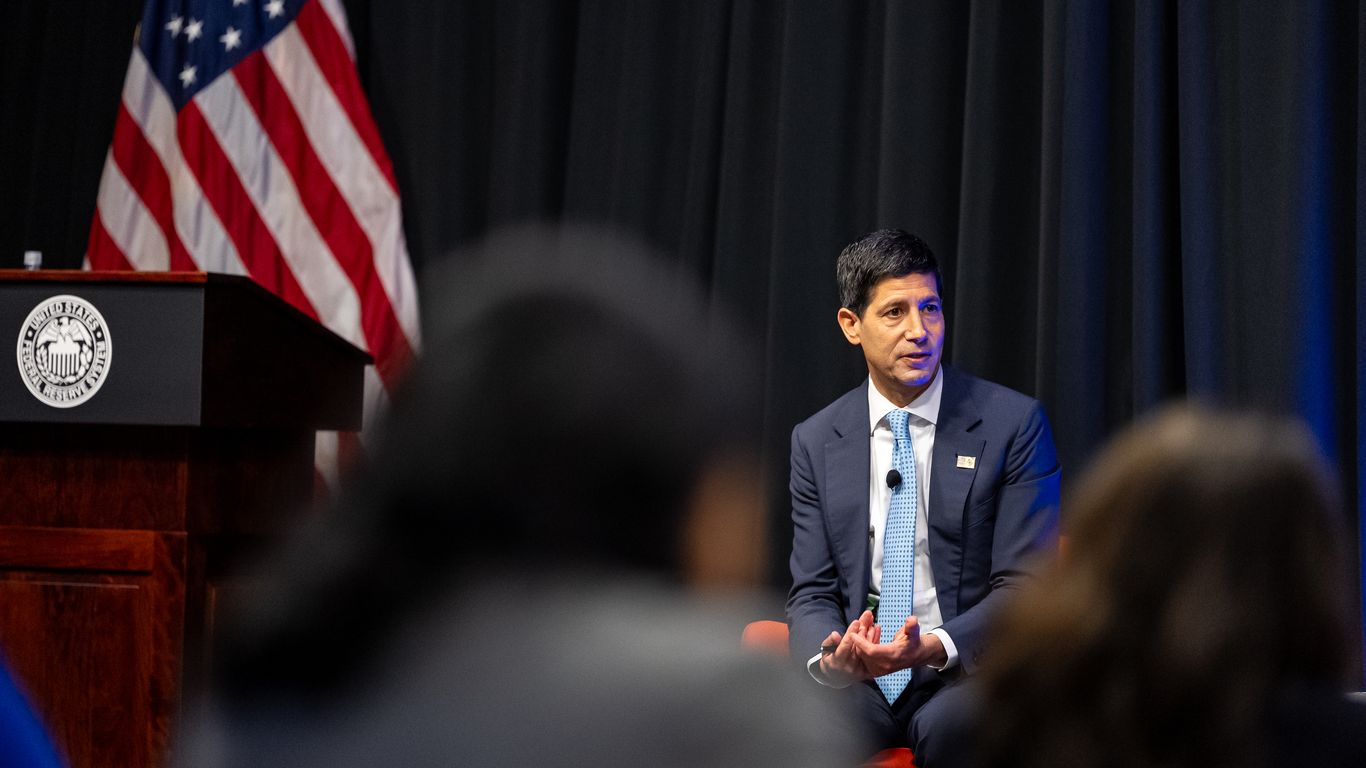
Just maybe, both the extreme techno-optimists and AI doom-and-gloomers are wrong about the economic impact of the technology. That's the argument that venture capitalist Marc Andreessen — who is co-leading a Federal Reserve task force on the topic — made in a high-profile panel Monday. Why it matters: The argument could help shape how the Fed assesses AI's economic consequences, with major implications for its outlook on growth, inflation and interest rates. Andreessen's argument offered an early glimpse of the thinking that will underpin his recommendations to the central bank's leaders. What they're saying: "My line has been both utopians and the doomers are going to be disappointed, specifically disappointed by the scope and magnitude of the real-world impact, and specifically the economic impact," Andreessen said at the San Francisco Fed. Andreessen, a co-leader of Fed chairman Kevin Warsh's Jobs and Productivity Task Force, spoke alongside former Commerce Secretary Gina Raimondo at a hearing in the Bay Area, where Warsh studied at Stanford and later spent 15 years teaching and conducting research. (Fellow task force member Chad Jones, a Stanford economist on leave for Anthropic, was in the audience but did not speak because the company is preparing to go public, Andreessen said.) Zoom in: Andreessen previewed his contribution to the task force's report, arguing that the economy is divided into two groups: Fast-changing industries, such as technology and media, where innovation drives productivity gains and lower prices. Slower-changing industries, including health care, education and housing, where regulations, limited competition and other barriers make technological progress harder. The intrigue: These slower-changing sectors account for some of Americans' biggest expenses. Those sectors of the economy "are not legally allowed to have rapid change," Andreessen said. Andreessen argued that regulations and other barriers could prevent AI from transforming large
Leaders of India and Japan join for talks on military exercises, AI and rare earths as a counter to Chinese power Donald Trump and Anthony Albanese have heralded plans for new joint Quad military exercises designed to push back on China’s expansionist ambitions, promising the grouping with India and Japan will guarantee “peace through strength.” Albanese met Trump, India’s Nahrendra Modi and Japan’s Sanae Takaichi in Manila late on Tuesday in talks about enhanced cooperation on AI, critical minerals, infrastructure and maritime security. Continue reading...
Look past the White House renovations , the proposed arch and the golf course : President Trump's border wall project is hundreds of miles behind pace. Why it matters: " Build that wall " helped build MAGA. But with two years to go, tough terrain and mounting political resistance threaten to leave Trump's signature promise unfinished. State of play: At the current pace, the main wall won't be finished until late 2029, while Trump will leave office in January 2029. There are about 619 miles of primary wall left to build, according to data from Customs and Border Protection as of November 10. The Trump administration has picked up the pace — from 2.6 miles a week earlier this year to 3.9 miles a week between mid-June and earlier this month — according to an Axios review of the agency data. But much of the remaining mileage is in Texas, where local landowners are fighting back and Trump's biggest allies were swept out of power in the midterms. Zoom in: The Big Bend sector — home to the state and national parks, multi-generational family ranches and numerous ecotourism businesses — has become a hot spot of resistance to construction, galvanizing political leaders across the spectrum to speak out against any physical intervention. "Just about every Democrat running statewide came to the Big Bend," said Susan Hays, who was just elected to be a Presidio County Commissioner. "all of them care about the border, the Big Bend, and they're going to fight for our public lands." Friction point: Texas Land Commissioner-elect Benjamin Flores, who opposes wall construction plans in West Texas and Big Bend, says his office could leverage state-owned land to advocate for surveillance technology to monitor for illegal crossings, which would be less invasive on the land, instead of a physical border wall there. The state owns 31 linear miles of land along the border. "The federal government is gonna need cooperation from us to get other areas that they may want done [and] that would mak
President Trump's trilateral summit with Chinese President Xi Jinping and Russian President Vladimir Putin has the makings of an unpredictable spectacle — and that's exactly what has U.S. allies anxious. Why it matters: Trump's stated goal for the first-ever summit between the nations' three leaders is to start a discussion on nuclear disarmament. But the fear is that he could go off script and take positions on Ukraine or Taiwan that undermine their interests or appear to side with their chief adversaries, according to several European officials and Western diplomats. "We know that every time President Trump talks to or sees Putin, it translates into bad news for Ukraine and for Europe. We brace for anything," a European diplomat told Axios. Substance aside, Western diplomats worry about the optics of Trump appearing alongside two emboldened strongmen. On Monday, Trump also floated a possible meeting with North Korean leader Kim Jong Un. Driving the news: Before leaving for the Philippines on Monday, Trump reiterated that his goal for the summit is to talk about denuclearization — a "tough subject," he said, "because it's very hard for any of us to say we'll get rid of our nukes, right?" But other topics will get attention, too, Trump went on to say. "We'll talk about Iran. We have Iran in very good shape, but we'll talk about Iran a little bit," he said. The president also said "we'll talk about my favorite subject, Ukraine." His comments came after U.S. officials stressed in a call with reporters on Friday that the summit would not deal with the war in Ukraine. Chinese officials said the same thing. Context: Neither China nor Russia was enthusiastic about discussing denuclearization. But China agreed after Russian lobbying. And Putin saw the summit as a chance to lobby Trump on Ukraine. Behind the scenes: The Trump-Xi-Putin summit was a topic of closed-door talks among European leaders at a meeting in Dublin last week, according to a European diplomat. Some of th
Labor leader was remembered for her advocacy and co-founding union that would become United Farm Workers California officials paid tribute to Dolores Huerta, one of the nation’s most influential labor leaders, civil rights icons and feminist activists, at a memorial ceremony Monday at the state capitol. They remembered her as a relentless advocate for a more just and fair world. Huerta co-founded a union that became the United Farm Workers with César Chávez and made famous her rallying cry, “Sí, se puede!” – which translates to “Yes, it can be done!” Continue reading...
President Trump was on his way to Asia for a historic three-way meeting with the leaders of Russia and China. The meeting comes amid the fallout from the Nvidia scandal, but the president tried to downplay the impact. Weijia Jiang has more.
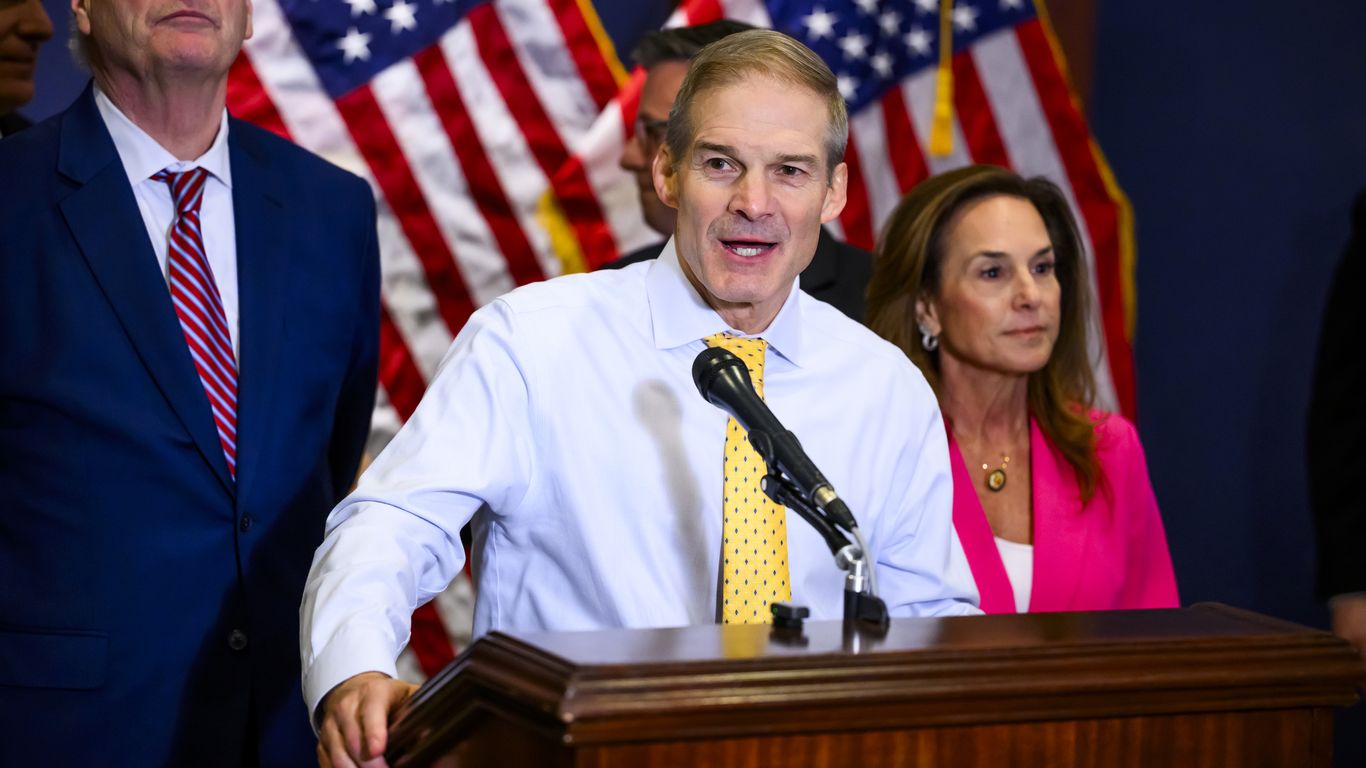
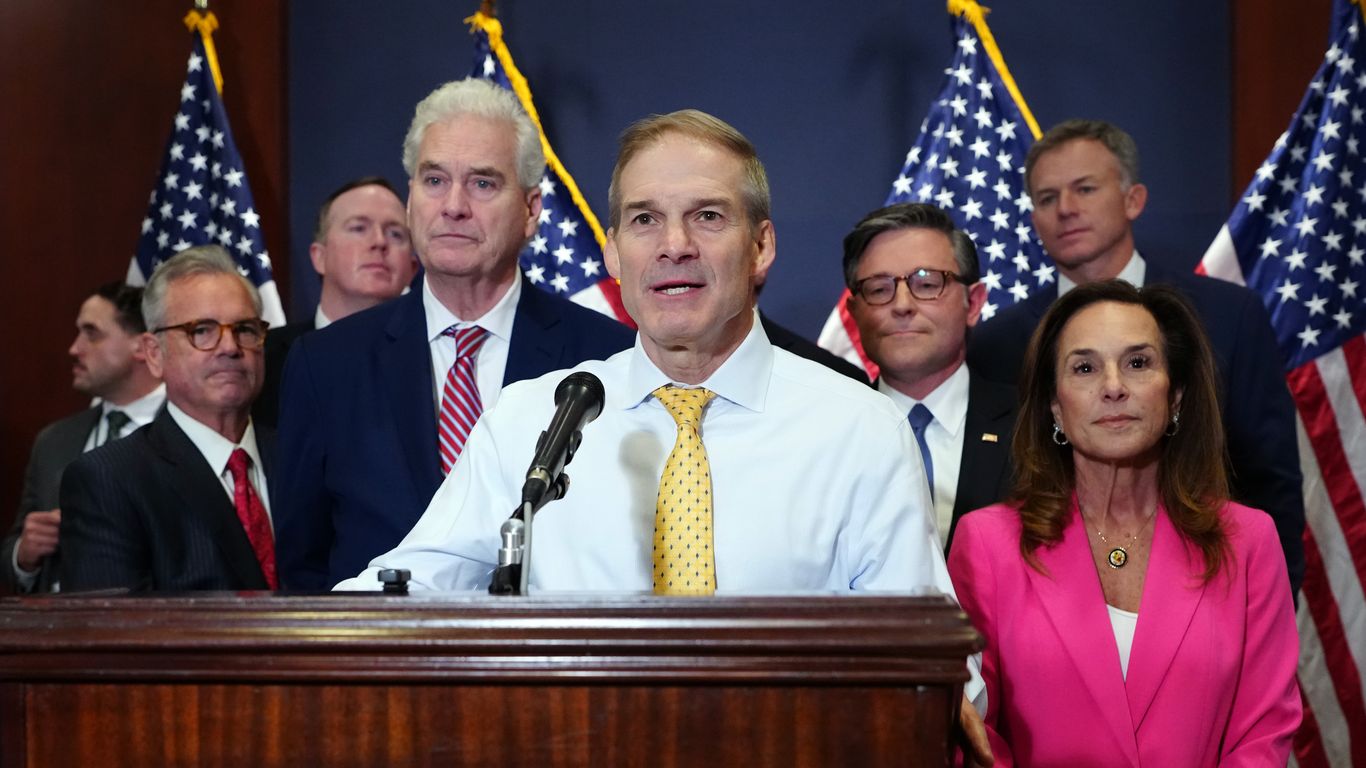
One of House GOP Minority Leader-elect Jim Jordan's first challenges will be navigating a push by Republicans to punish members who buck party leadership. Why it matters: Jordan, a founding member of the House Freedom Caucus, is now tasked with leading a conference where lawmakers are seeking to rein in the very tactics his conservative allies have long used to challenge GOP leadership. The conference will consider a number of amendments and rules when it organizes in a few weeks. Discussions are ongoing, a source familiar with Jordan's thinking tells Axios. Driving the news: Rep. Mike Flood (R-Neb.) and members of the Republican Main Street Caucus want to punish members who vote against the party on procedural rule votes , a technical vote that conservatives have repeatedly used as a hostage-taking tactic. Main Street's proposal would empower the Steering Committee to impose penalties ranging from loss of committee seniority to "more serious" consequences. Leadership or the chair of the relevant committee would then implement Steering's decision. Flood told Axios that Main Street members developed the proposal collectively over several months, including through a survey and multiple meetings. Flood and other Republicans pushing accountability measures have been in contact with Jordan's team as they work to finalize their proposals. The big picture: House Republicans' razor-thin majority gave every member outsized leverage over GOP leaders this Congress. One consequence has been repeated defeats on procedural votes that used to be automatic for the party. That has derailed GOP priorities and, on must-pass bills, left GOP speakers dependent on Democratic votes instead of legislation supported by their conference. Main Street's proposal would restore a small piece of that leverage by letting Steering leaders punish members who block those votes. "This has nothing to do with telling a member how to vote on an issue," Flood said of the proposal. Zoom in: House Republica
DENVER — Democrats' euphoria over their once-in-a-generation wave of midterm victories is giving way to a reality check: They were lucky to have a weakened opposition. And they might be "renting" this year's voters if they don't quickly deliver on their promises. Why it matters: If Democrats want to rack up policy wins ASAP, they'll need to work with President Trump — the guy many of them held up as what's wrong with America. That means giving him a few wins. Zoom in: Texas Sen.-elect James Talarico argued exactly that at a Democratic summit late last week in Denver — What's Next , held by the centrist group Majority Democrats . "If President Trump wants the same plaques and portraits and busts as LBJ, we can help make that a reality," Talarico said. "We should make the final two years of his presidency the most productive of any presidency in American history." Gina Hinojosa, who'll be Texas' first Democratic governor in more than three decades, has said she'll work with Trump on immigration . Michigan Sen.-elect Abdul El-Sayed, a frequent Trump target, is pitching the president on rebranding Medicare for All as " TrumpCare " to get it passed. And on CNN's "State of the Union" on Sunday, Mississippi Sen.-elect Scott Colom told Dana Bash he wants to collaborate with Trump to deliver on the president's own past promise to lower grocery prices. Zoom out: Midterm elections are usually a referendum on the sitting president, not a sign that voters are in love with the opposition party. And polls show that Democrats are still unpopular. At the Denver confab, several Democrats acknowledged that. Adam Jentleson , president of the moderate Searchlight Institute, said onstage: "The voters who decided last week's election have not yet fallen in love with us. ... They are on loan to us." Many Democratic leaders believe Congress must prioritize legislation aimed at lowering prices and ending the war in Iran, given the salience of those two issues in this year's elections. Some t
Renewed commitments to electrification and climate science are vital outcomes from the latest round of UN talks The Cop31 climate talks have acquired something their delegates scarcely expected: a little political breathing space. The comeback by Luiz Inácio Lula da Silva in the second round of Brazil’s presidential race was important for many reasons. Victory for his opponent, Flávio Bolsonaro, would have marked a dangerous retreat from democracy. But Mr Bolsonaro’s commitment to environmental deregulation would also have spelled disaster for the Amazon, making Lula’s re-election a big win for the climate. Similarly, success by Democrats in the US midterms means that Donald Trump’s destructive grip has been loosened. If they win back the White House in 2028, the US should rejoin the UN process in time for Cop34. While the diplomatic picture is less bleak than it might have been, the threat level remains high and rising. António Guterres used his last Cop as UN secretary general to issue a pithy warning that “ it’s make or bake time ”. With the latest analysis pointing to heating of 2.7C by the end of the century – far beyond the 1.5C target in the Paris agreement – governments face another crunch moment: by pivoting away from fossil fuels, they can still avert the most dangerous impacts. Yet the UK’s Andy Burnham was the only G7 leader to make the trip to Turkey; the French and German leaders chose to attend an EU summit in Dublin instead. Continue reading...
Behind the Mississippi senator-elect’s victory is a coalition of groups that didn’t have a lot of money, but had collective power and post-Callais anger Long before national political leaders and media were paying any attention, long before the Louisiana v Callais supreme court decision gutted the Voting Rights Act, Mississippi organizers were working to grow political participation and improve quality of life in a state that often ranks low on its residents’ health and wellbeing. Activists’ momentum contributed to Democrat Scott Colom’s historic upset in the midterm elections. A loose coalition of about a dozen, mostly Black-led nonprofits or initiatives rallied residents after Callais, the April decision that set off a flurry of redistricting efforts across southern states. That case was not the sole impetus for organizing efforts across Mississippi, but it turned out thousands in the 20 May “Mississippi Fights Back” rally . Callais became the most recent opportunity to channel people’s frustrations and hopes into action – and to harness previous campaigns that go back years and even decades. Continue reading...
MANILA, Philippines — Southeast Asian leaders opened their annual summit in the Philippine capital Manila on Sunday for three days of talks, including dialogues with world leaders led by U.S.
Diligent ground-level efforts by Black women helped make Democrats competitive again in Georgia. Now they’ll hold seven of the top eight elected leadership roles in the state.
Republican House speaker not running for re-election contrasts sharply with president who avoids accountability In his first interview since the midterm elections , the US House speaker, Mike Johnson , said that the Republican party’s crushing losses during the 3 November elections prompted his decision to step away from party leadership. “Leaders have to take responsibility when things go wrong,” Johnson said on Fox News on Saturday. Continue reading...
Kai Wright of the Guardian podcast Stateside will speak with author and environmentalist Bill McKibben – and we’d like to hear your questions Was the climate crisis one of your top political priorities during the midterm elections? We want to hear from you: what do you want political leaders to do about it in 2027? Democrats will control the House and Senate in the new year, and they have a long list of priorities ahead of them. But it remains to be seen just how much they will focus on one of the most pressing issues of our times: the climate crisis. The UN declared this summer that, despite some progress, it is now “unavoidable” that the globe will heat past the point that scientists say will threaten human health. Despite these terrifying predictions, the US remains absent from global efforts to limit the impacts of the climate crisis. Continue reading...
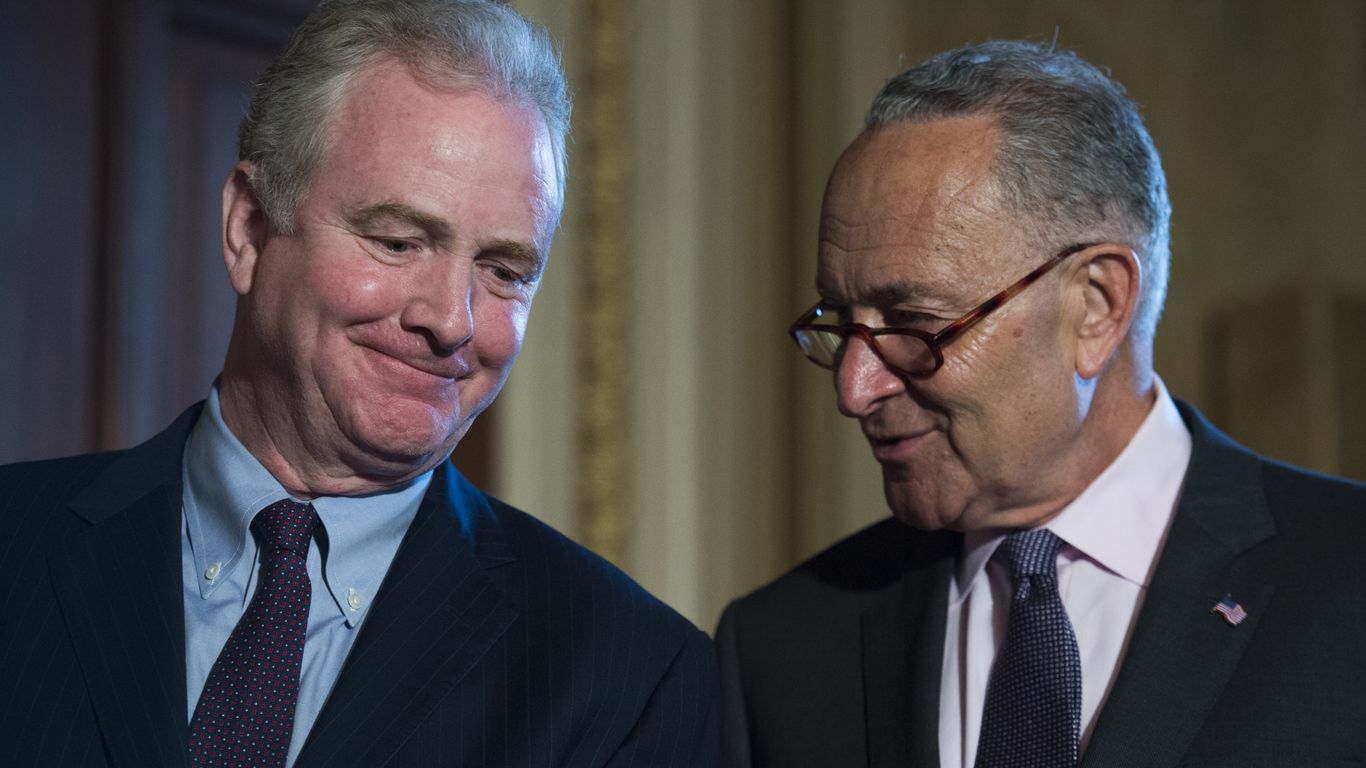
Sen. Chris Van Hollen is picking up endorsements in his challenge to Chuck Schumer for Senate Democratic leader. Why it matters: The leadership fight exposes divisions within the Democratic Party days after its sweeping midterm victory , with some demanding a new direction and others crediting Schumer for the historic blue wave. Driving the news: Van Hollen (D-Md.), a senator since 2017, announced Thursday he's challenging Schumer because "we need new leadership." "This is not about any one person — it's about answering the call of the American people." The other side: Schumer has far more public endorsements than Van Hollen. "Why would you fire the manager when you just won the World Series?" Sen. Angus King (I-Maine) said in a statement of support for Schumer. Van Hollen has disputed Schumer's claim to credit for the party's midterm performance, arguing that the wave was powered by voters rather than leaders in Washington. By the numbers: Schumer has public support from 14 senators, including himself, compared with five for Van Hollen. A candidate will need 28 or 29 votes to win, depending on the outcome of Alaska's Senate race, where votes are still being counted. Senators backing Van Hollen State of play: Van Hollen told MS NOW he has "more than 10" senators on his side, though only four have publicly endorsed him. Sen. Bernie Sanders (I-Vt.) endorsed Van Hollen on Thursday night, saying he will fight for working families. Senator-elect Abdul El-Sayed (D-Mich.) threw his support behind Van Hollen when he announced his challenge Thursday. Sen. Jeff Merkley (D-Ore.) issued an endorsement for Van Hollen Friday afternoon. Incoming Sen. Peggy Flanagan (D-Minn.) endorsed Van Hollen Friday morning after previously calling for new leadership. Who wants new leadership? Some sitting senators have called for a leadership change without endorsing Van Hollen. Sen. Elissa Slotkin (D-Mich.) has called for change but hasn't endorsed either candidate. Before Van Hollen announced
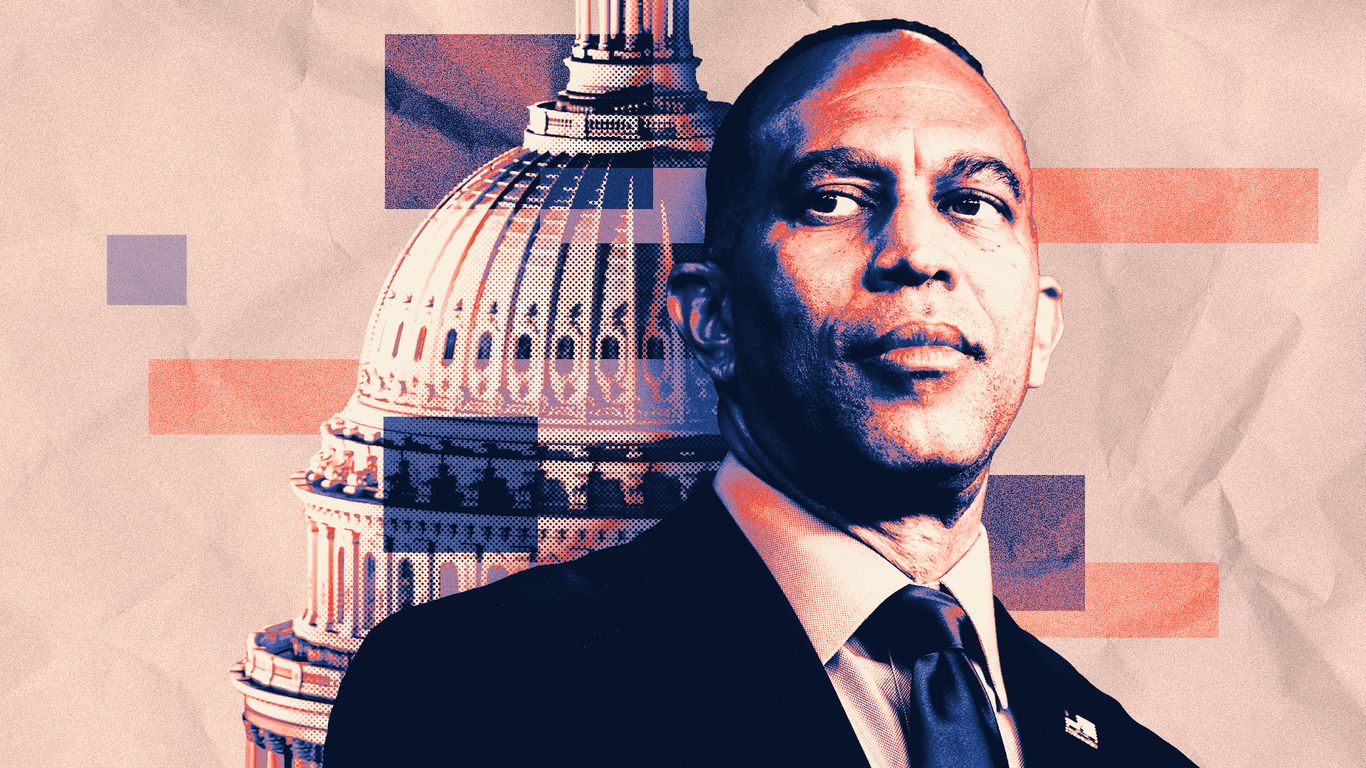
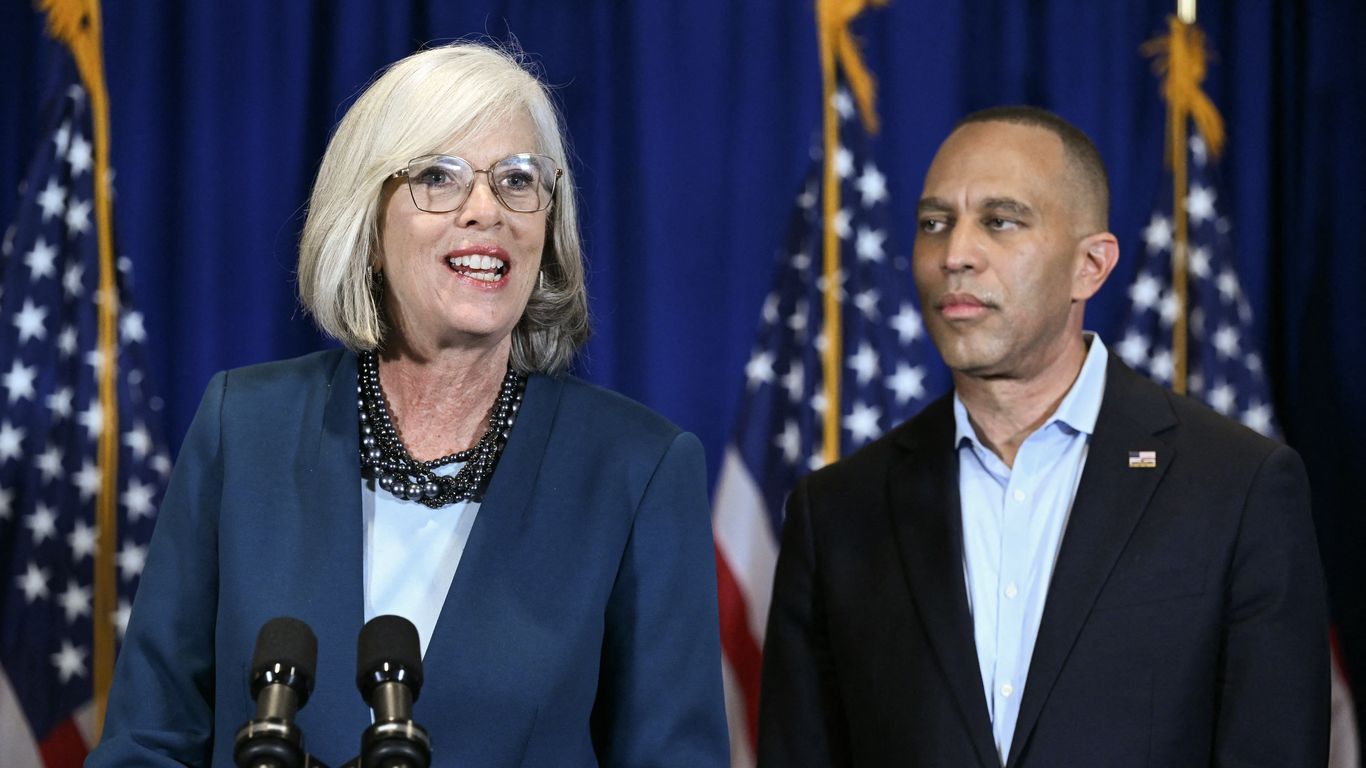
As House Democrats barrel toward a speakership coronation , Senate Dems are getting their first contested race for leader in over 30 years. Why it matters: Democrats have spent years tearing themselves apart over the party's direction — without forcing their leaders to win a head-to-head vote. Senate Democrats will get that fight this year for the first time since Tom Daschle vs. Chris Dodd in 1994 — courtesy of Chris Van Hollen (D-Md.) challenging Chuck Schumer (D-N.Y.). But no one's challenging Hakeem Jeffries (D-N.Y.) for speaker. The last contested Democratic House leader race was in 2016, when Tim Ryan failed to beat Nancy Pelosi for minority leader. Between the lines: House Democrats are being bombarded with calls and emails urging them to oppose Jeffries, but the two most frequently floated alternatives — Jamie Raskin (D-Md.) and Ayanna Pressley (D-Mass.) — don't appear to want the job. Raskin told Axios that chairing the Judiciary Committee is his "dream job" and that he's "absolutely ... not a candidate for speaker in any way." "I am supporting Hakeem and voting for Hakeem," Raskin added. Pressley has privately told colleagues she isn't interested, multiple House Democrats told Axios. "Congresswoman Pressley is in active conversations with Leader Jeffries about how to leverage this majority, meet the moment and deliver for the people," spokesperson Ricardo Sanchez said in a statement to Axios. "She is aware of and appreciates the groundswell of support from people in her district and across the country lifting up her leadership." The big picture: Since the last contested Democratic leadership election, Republicans have endured the rise of MAGA, former Senate GOP leader Mitch McConnell's fall from power and a revolving door of House GOP leaders. In 2018, Kevin McCarthy drubbed Jim Jordan 159–43 to become House minority leader. In 2022, McConnell had to beat Rick Scott after the Florida Republican challenged him for Senate GOP leader. In 2023, McCarthy needed
The director of the Israeli spy agency Mossad is in Washington Friday for talks with senior Trump administration officials about the war in Iran , according to three sources with knowledge of the matter. Why it matters : The visit by Roman Gofman, one of Benjamin Netanyahu's closest confidants, comes as the Israeli prime minister is pressing President Trump to resume the war against Iran. Driving the news: Gofman is meeting with CIA Director John Ratcliffe, the sources said. He is also expected to travel to Miami to meet White House envoy Steve Witkoff, one of the sources said. Mossad, the CIA and the White House declined to comment. State of play: Trump has so far rejected pressure from Netanyahu to return to combat. The two discussed the Iran war during a Nov. 5 call, per a U.S. official. Instead, the president has sided with Saudi Arabia, Qatar and the UAE to continue the naval blockade and economic pressure campaign against Iran, while seeing if a deal is possible. "I could end it immediately. At the request of the nations that I'm looking to protect, we are doing it a little bit longer way, a little bit more civilly," Trump said on Thursday. "Saudi Arabia has asked me to please just let it be the way it is now for a while, because [Iran is] disintegrating. Qatar, Kuwait, UAE, Bahrain, all of them would much prefer the waiting period." The intrigue: Netanyahu has lost his majority in parliament after the Oct. 27 election in Israel. His opponent, Gadi Eisenkot, has received a mandate to form a new government. It is unclear whether he'll be able to do so. In the meantime, leaders of the Israeli opposition are concerned Netanyahu will try to launch an attack on Iran — or provoke Iran to attack Israel — in order to undermine Eisenkot's efforts, sources say. Netanyahu would be removed from power if Eisenkot succeeds. On Thursday, Netanyahu met with Eisenkot for two hours and briefed him on the situation with Iran. A source close to Eisenkot said he doesn't think the
Big tech has used misdirection, disinformation and jargon to obscure the harm the facilities can cause to communities “Antifa”. “Commies”. “Chinese bots”. Everyone from tech leaders to the president has called datacenter resistance a “ documented psyop ” and a “ Chinese PR thing ”. But why do they make these claims? Our new research finds that the datacenter industry uses propaganda, disinformation, and information control to mold public opinion and undermine community opposition. Continue reading...
Chuck Schumer and Hakeem Jeffries are both cautious, calm, compromise-minded leaders fantasizing about a serious, sensible Democratic-run Congress. But social media is a temptress no party leader has tamed. The seduction of attention, likes and followers invariably proves too strong for the savviest, most self-promotional politicians to resist. Why it matters: That's the lesson of the Internet Era of American Politics — the algorithms always win. A few provocative members of Congress and online activists dominate the national conversation because they master the biggest social media platforms. That creates the impression that their views reflect a party, or a nation, when in reality they don't. And it shapes the party's image and agenda. Rep. Josh Gottheimer (D-N.J.), vice chair of the bipartisan Problem Solvers Caucus , told us: "Governing isn't about getting the most followers on X — it's about delivering actual results ... It's easy to scream and yell, and say no — it's much harder to figure out a way forward." By the numbers: Michigan Sen.-elect Abdul El-Sayed had 1.6 million Instagram followers as of Sept. 13. Today: 7.6 million and rising. One clip of him pulled an estimated 50 million-plus views across X, Instagram and TikTok. Schumer, who has led Senate Democrats since 2017, sits at 466,000 Instagram followers . A man who hasn't been sworn in has roughly 15x the leader's audience. El-Sayed telegraphed this in July: "If you're Chuck Schumer, I'm pretty damn dangerous!" True. Jeffries has nearly 1 million followers on Instagram. Rep. Alexandria Ocasio-Cortez has 9.8 million on her personal account alone. Yes, President Trump remade the GOP. But social media sucked in countless others to try to copy him, pushing rhetoric or ideas few politicians would've touched in the past. You see this in the rise of celebrity politicians who do little legislating but lots of instigating. You see this in the explosion of not just Instagram, X and YouTube followers by politici
A week that was supposed to see House Democrats transition seamlessly from a landslide midterm victory to a leadership coronation has instead been pocked by surprise Republican victories on the House floor. Why it matters: Skeptics of Democratic leadership have seized on these strategic fumbles to cast doubt on their much-heralded managerial abilities in the lead-up to the party's leadership elections next week. "It's really unfortunate that this happened this week when, obviously, that is a narrative we hear leadership portray," Rep. Delia Ramirez (D-Ill.) told Axios. Rep.-elect Melat Kiros (D-Colo.) said this week has "certainly not given me confidence," and that the election was an "indictment on how our party has been operating thus far, and this is a big part of why." "We do know that the Democratic caucus has blundered before on things, like whipping the votes to protect NPR last spring," said Rep.-elect Don Leonard (D-Ohio). "We botched that one." What happened: The House voted 211 to 204 on Tuesday to quash an effort by Rep. Thomas Massie (R-Ky.) to impeach Secretary of Defense Pete Hegseth, with support from all House Democrats present. The outcome quickly sparked backlash because nearly a dozen House Democrats were absent, many of whom got caught in a traffic jam returning from an Elect Democratic Women event. That was followed by an incident on Wednesday in which House Republicans passed a veterans bill by voice vote despite Democratic opposition. The incidents follow a procedural blowup in September in which a pair of centrist House Democrats repeatedly broke with leadership and helped the GOP advance key bills. What they're saying: House Minority Leader Hakeem Jeffries (D-N.Y.), asked about these incidents by Axios, touted a different veterans bill Democrats forced to a successful floor vote on Thursday via a discharge petition. "House Democrats once again successfully forced a vote on a piece of legislation designed to make life better for the American
Mr. Revels took his seat two days after Mississippi was readmitted to the union after the Civil War. Mr. Bruce served just before white leaders ushered in the Jim Crow era.
President Trump fired Homeland Security Secretary Kristi Noem in March, but Democrats aren't finished with her. Why it matters: Armed with commanding House and Senate majorities, they're preparing to haul the architects of Trump's mass deportation agenda before Congress to answer for their actions. "Noem, Markwayne, Miller, Homan, Bovino, what's up? Clear your schedule," Rep. Delia Ramirez (D-Ill.), a member of the House Homeland Security Committee, warned on X. She was referencing current DHS Secretary Markwayne Mullin (who replaced Noem), White House Chief of Staff Stephen Miller, Border Czar Tom Homan and former Border Patrol commander-at-large Gregory Bovino. Dems on the House Oversight Committee included former DHS Special Government Employee Corey Lewandowski in a list of people who should "lawyer up." Zoom in: Rep. Bennie Thompson, the top Democrat on the Homeland Security Committee, said in a letter to colleagues he'd prioritize investigating every death in DHS custody and during arrests. Thompson, who is running for committee chair and the subpoena power that comes with it, also plans to investigate alleged financial corruption at the agency and oversight of spending, particularly the gargantuan budget supplied by the One Big Beautiful Bill. "I called for Kristi Noem's impeachment in January, and she was gone by March. But the questions she refused to answer are still open," Thompson wrote. "Tom Homan and Stephen Miller would not appear [for a hearing] when we invited them this spring. In the majority, they will not have that choice," he wrote. Zoom out: Democratic leaders in both the House and Senate have a lengthy list of areas for oversight, according to sources familiar with their plans. That includes: The billions spent to expand ICE detention , including Alligator Alcatraz and a warehouse buying spree. Oversight agencies have been reviewing these purchases. Noem's purchase of luxury private jets that she claimed could be used for deportation flights.
House Republicans are turning to one of their fiercest fighters to lead their diminished conference after one of their biggest drubbings in decades. Why it matters : Jim Jordan , 62, a founding member of the hardline House Freedom Caucus, has completed a stunning insurgent-to-establishment turn after spending much of his nearly 20 years in Congress battling Republican leaders from the right. The Ohio Republican's victory over House Majority Leader Steve Scalise (R-La.) represents a bet by Republicans that they shouldn't move away from President Trump to claw their way back to power. But Republicans are divided over what went wrong in the midterms, and whether a more confrontational approach is the right answer. Driving the news: Republicans emerged from last week's defeat hungry for change , handing Jordan a 106–73 victory over long-time GOP leader Scalise. GOP Whip Tom Emmer (R-Minn.) and Conference Chair Lisa McClain (R-Mich.) survived their elections. Jordan pitched himself as a battle-tested fighter capable of defending Trump against Democratic investigations and winning back the majority. What they're saying: "I think when you take a beating like we took, you need to make some changes, and I also think we're gearing up for war," Rep. Randy Fine (R-Fla.), who backed Jordan, told Axios. "We need someone who can punch hard, and I think that he'll do that," Fine said. "We just got beat bad. We can't just go in with the same step forward," Rep. Dan Meuser (R-Pa.) told Axios. McClain told Axios: "Don't count Jim Jordan out. He's a fighter. He's been able to get stuff done." Yes, but: Not all Republicans are convinced they have the right response to their losses. Rep. Carlos Gimenez (R-Fla.), who backed Scalise, argued that Republicans lost too many independent and Hispanic voters, pointing specifically to the Trump administration's immigration enforcement policies. Asked whether Republicans should have examined their losses before electing new leaders, Gimenez said: