TopNewsOn

Results for “even possible”

Virginia and DC sue to stop Trump’s arch as government looks to start construction

Legal challenges to Donald Trump’s proposed memorial arch are mounting even as its construction is imminent The legal challenges to Donald Trump ’s proposed memorial arch are mounting, with the District of Columbia and Virginia suing in federal court on Saturday as the administration says construction could begin as early as next week. There are now three lawsuits calling for a halt to potential work on a monument that would rise 250ft (76 meters) on a patch of grass off the bridge that spans the Potomac River, connecting the city with the Arlington national cemetery. That would make the arch 100ft taller (30 meters) than the Statue of Liberty is from its base to the top of the torch. Continue reading...

The Guardian · 8h ago
It’s closer to Beijing than Washington – and residents of this Alaskan outpost are reeling from Trump’s policies

On the Bering Sea, Unalaska is the US’s most productive seafood port, employing thousands of workers. But Trump’s cuts, and his disastrous war with Iran, have caused chaos – and put Republican control of Congress at risk It was less than 17 hours until the start of Alaska’s lucrative Bering Sea crab season, and Oystein Lone was standing on a dock in the city of Unalaska, preparing to embark in rough conditions. The problem wasn’t the next day’s forecast of 60mph gusts, which would kick up white-capped swells and make crabbing, already one of the most dangerous jobs in the United States, even more hazardous. Nor was it the question of whether there’d be enough red king, tanner and snow crabs to go around – state regulators had, in fact, announced higher quotas for the season. Continue reading...

The Guardian · 10h ago
D.C., Virginia sue to block Trump's 250-foot arch

The governments of Washington D.C. and Virginia asked a federal court to block construction of President Trump's planned " triumphal arch ," claiming it's unlawfully tall and would snarl traffic for years. Why it matters: It's a last-minute gambit to stop construction before the multi-year project begins, potentially as soon as this coming week. What they're saying: " This project is flagrantly unlawful," the two governments said in a Saturday filing in D.C. federal court, first reported by the Washington Post. "During the three-year period of construction, the Arch project will inevitably snarl traffic between the jurisdictions, produce pollution and stormwater runoff in the Potomac, interfere with emergency services, and pose numerous other challenges," they argue. They further claim that the defendants — the National Park Service and the Interior Department — have rushed the project without the proper consultations. The city and state are asking a judge to issue injunctions to stop any site preparation or construction on the project. Zoom out: The proposed 250-foot arch would be one of the largest such monuments in the world, sparking concerns that it could interfere with other national symbols, block views and even complicate landings for pilots at nearby airports. (The FAA found otherwise.) The Park Service's own August report indicated the construction of the arch would have adverse effects on nearby monuments and landmarks. The other side: The administration has argued it will be a major tourist attraction — but also vital to national security, serving as a base for snipers and drones. The White House was not immediately available to comment Saturday on the D.C. / Virginia petition. What's next: A federal judge held a hearing Friday on a separate challenge to the arch, and indicated she may block construction at least temporarily.

Axios · 10h ago
Election cheat sheet: These early races could tell us where the midterms are headed

You won't need to stay up all night Tuesday to spot a big Democratic wave in the 2026 midterm elections . But it could take days — or even weeks — to know whether Republicans have survived a smaller one and held on to the House or Senate. Why it matters: A handful of early results in key states and congressional districts will tell us whether Democrats are headed for a landslide or disappointment. What we're watching: Florida, Florida, Florida. Most polls close at 7pm ET, and the state counts quickly — ready for release when the Panhandle finally calls it a night an hour later. At 8:01pm , refresh your browser and watch FL-14. The great mid-cycle redistricting wars transformed this Tampa-based district from Harris +8 to Trump +11. If Democratic Rep. Kathy Castor survives, Republicans can all but kiss their majority goodbye, according to party strategists. Next up is FL-25. The country's most expensive general election race is playing out in a district that went from Harris +4 to Trump +9. If Democratic Rep. Jared Moskowitz's race is close — or too close to call early in the night — House Republicans can keep hope alive. While you're at it, this is a good time to check on South Carolina's Senate race, where polls close at 7pm and the state counts relatively fast. If Sen. Darline Graham loses to Annie Andrews in the Trump +18 state, Senate Republicans can say goodbye to their majority. (And they'll be sweating if it's close.) "Underperformance is rarely isolated," said Jason Thielman, executive director of the National Republican Senatorial Committee in 2024. "If you see the GOP underperforming early in the East, it is likely going to continue as you move further West." At 9pm, check in on Virginia: The commonwealth's polls close at 7pm, but historically tight races often aren't called until the 9pm hour. If Democrats flip VA-01, a Trump +5 seat, they're in for a very good night. If they flip VA-05, a Trump +12 seat, they're in for a great night. Between the lines: VA

Axios · 13h ago
This rightwing evangelical was one of Trump’s biggest backers. Why isn’t he talking about the midterms?

Lance Wallnau has gathered supporters to talk about Charlie Kirk and school boards – with no mention of GOP One of Donald Trump’s most influential Christian nationalist backers has privately shied away from rallying supporters for the Republican party before the midterms, instead urging them to focus their attention elsewhere – including emulating El Salvador and Poland, finding a successor for Charlie Kirk and even focusing on their own diets. At the “As One” weekend for paying “partners” in the Dallas-Fort Worth area earlier this month, Lance Wallnau, one of the first prominent rightwing evangelicals to back Trump in 2015, spoke across three sessions about the virtues of El Salvador’s prison system, school boards and the movement’s future. The midterms, then little more than three weeks away, were not mentioned once. Continue reading...

The Guardian · 14h ago
New Census data reveal a homeowner-renter divide in America's electric-car transition

Data: U.S. Census Bureau, 2025 American Community Survey 1-year estimates; Table: Russell Contreras/Axios Homeowners were nearly twice as likely as renters to have an electric vehicle in 2025, new Census data show, revealing a striking divide in America's shift to electric cars. Why it matters : Homeownership is just one factor in EV adoption, but reliable access to charging is critical — giving homeowners with private driveways or garages an advantage over renters, particularly those in multifamily buildings. By the numbers: About 7.3 million U.S. households — 5.5% of the nation's 134 million — reported having at least one EV, according to the 2025 American Community Survey released Thursday. Homeowners reported EVs at a rate of 6.4%, compared with 3.6% of renters. California led the nation at 13.8% overall, more than twice the national rate. North Dakota (1.3%), Wyoming (1.6%) and Louisiana (1.6%) ranked among the lowest. State of play: For the first time, the Census Bureau asked households with vehicles kept at home whether they owned or leased an EV, offering a nationwide snapshot of who has gone electric. The figures cover fully electric vehicles and plug-in hybrids. Our thought bubble: Many factors, including local government policies, can influence EV adoption rates, but ultimately, it comes down to affordability and access to charging, says Axios Transportation Correspondent Joann Muller . Homeowners with higher incomes are more likely to afford EVs, sometimes as a second car. The intrigue: A 2026 study by researchers at the University of Vermont and University of California, Davis, found higher home-charger installation costs at rental properties in Burlington, Vermont. Renters were also less likely to adopt fully electric vehicles, even after researchers accounted for home values and vehicle preferences. Zoom in: Even California, the nation's EV leader, has a sharp homeowner-renter divide, new Census data show. About 17.7% of homeowners reported an EV, com

Axios · 15h ago

As Trump fans the flames of a world on fire, can diplomacy take back control?

Amid the chaos, havoc and war caused by a capricious and amoral US president, countries are waking up to the dangers of being excluded and abused by America Never has there been a time when the world has been more interconnected than now. What happens in the secretive inner councils in Tehran, the mountains of south-west Yemen, the steppe of the Donbas, the still bloody wasteland that is Gaza and even the elegant boulevards of Paris and Milan have a common thread. One cannot understand one set of conflicts without weaving them into another, and it is this very interdependence that is making each problem so contagious, layered and difficult to resolve, leaving the world to live as if trapped inside a pressure cooker on the brink of an explosion. Continue reading...

The Guardian · 20h ago

Qataris hold marathon talks in Tehran in bid for U.S.-Iran deal before midterms

Qatari mediators held talks in Tehran for more than 12 hours on Friday in an effort to reach a deal to restart direct negotiations between the U.S. and Iran and avoid an outbreak of war after the midterms, according to diplomatic sources. The discussions will continue in Doha, Qatar, on Saturday. Why it matters: The U.S. is now just days away from a possible military operation that would inflict enormous damage on Iran and likely lead to retaliatory strikes against Israel and a host of Gulf countries. Driving the news: A diplomatic source said Qatari mediators were in regular contact with the White House during Friday's daylong session. "There was positive progress. Talks are still ongoing in an effort to unlock a deal between the U.S. and Iran," the source said. The Qataris are prodding the U.S. and Iran to agree on a set of reciprocal steps that would be implemented over a few days and get the parties back to direct talks on the Iranian nuclear program and other issues. A U.S. official said two competing demands have stymied the talks so far: the Trump administration's insistence that Iran make nuclear concessions as part of resuming talks, and Iran's stipulation that the U.S. first lift its naval blockade, release frozen funds and allow it to sell oil. The Qataris are trying to convince Iran to allow U.N. inspectors to visit its bombed nuclear sites as a confidence-building measure that the U.S. would respond to with some sanctions relief. The intrigue: Inside Trump's inner circle, there are different opinions on what he should do. Defense Secretary Pete Hegseth and Secretary of State Marco Rubio are highly skeptical that any nuclear agreement can be reached with the current Iranian regime. They think Trump's legacy should be to weaken the regime even more, including with further strikes, a U.S. official said. The person said that while Vice President Vance and Trump envoys Steve Witkoff and Jared Kushner want to resume negotiations, Trump is skeptical Iran will

Axios · Oct 31
The viral anti-MAGA guy on Fox News is from Charlotte — and he has merch now

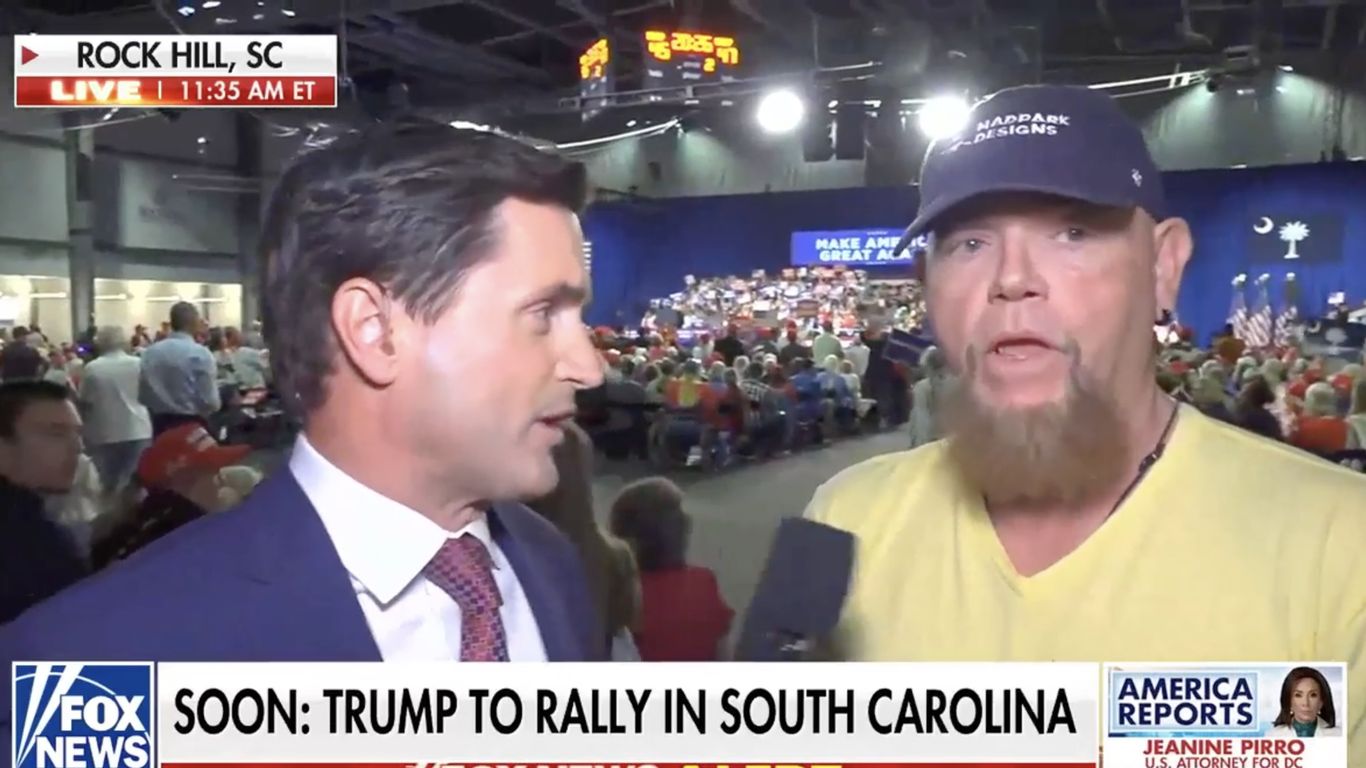
Have you seen the Oct. 29 clip ? The one where a guy compared a Trump rally to the 1978 Jonestown massacre while he was live on Fox News. "Wait, the Jonestown massacre?" Fox correspondent Lucas Tomlinson asked. "There's nothing like seeing a cult right up front, man," the interviewee responded. "Maybe this is not a Trump supporter," the reporter said before turning to another attendee. But not before the man got a plug in: "MadPark Designs," he said, pointing to his hat. Why it matters: MadPark Designs is a Charlotte screen printer launched in 2018 that prints for local businesses, musicians and organizations, and creates some of its own graphics. And that guy in the video — Tom Hoyle — is the co-owner and a local. The clip of him at the Rock Hill Trump rally on Oct. 29 has 5.3 million views on Mother Jones' Instagram and 206K views on TMZ's TikTok . It's also been posted on countless other pages, and was continuing to rack up views as of Friday afternoon. The latest: MadPark is now selling T-shirts for $28 with his now-viral quote and a skeleton graphic. "I think some people are going to dress up as Tom for Halloween," he told Axios. Courtesy of MadPark Designs Backstory: Hoyle said he planned to cause a commotion by yelling out as Trump was speaking, as protesters have done at other North Carolina campaign events. But before Trump got on stage, the Fox News reporter asked Hoyle for an interview. He later told Axios it was "divine intervention" and said he freestyled the cult comparison. Hoyle said the Secret Service came over and asked him to leave after the Fox interview. He wasn't even out of Rock Hill before his phone started lighting up with texts and calls from people viewing the clip, he added. What's next: He said he's tossing ideas around for another shirt, but doesn't want to get ahead of himself.

Axios · Oct 30
Scoop: Ro Khanna endorses challengers to three fellow California House Democrats

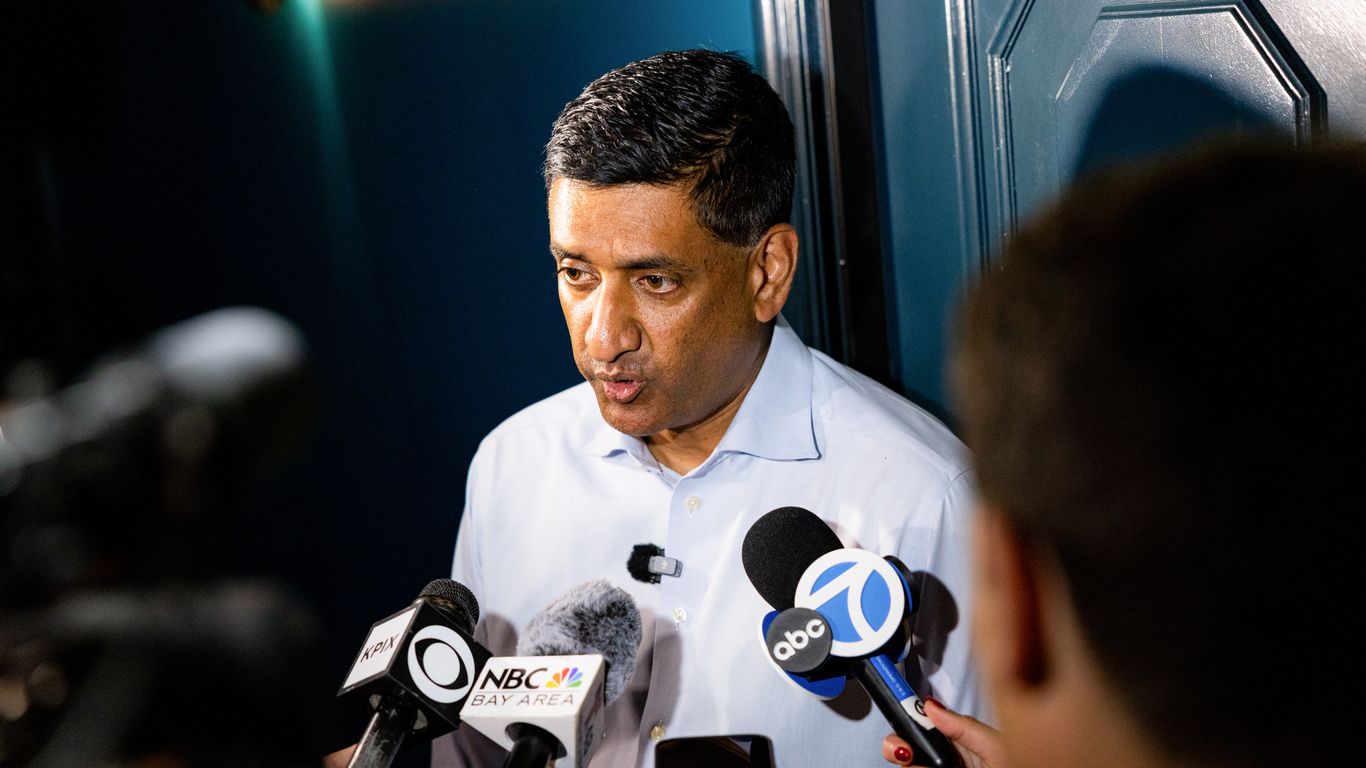
Rep. Ro Khanna (D-Calif.) is endorsing a trio of insurgent Democratic candidates who are challenging his fellow California House Democrats, Axios has learned. Why it matters: This is an aggressive move by a potential 2028 presidential contender who styles himself as one of the few Democrats willing to get into direct confrontations with the party establishment. He has backed members of the progressive "Bloc" who have refused to commit to voting for Minority Leader Hakeem Jeffries (D-N.Y.) as speaker. This is territory where even other high-profile House progressives — including Rep. Alexandria Ocasio-Cortez (D-N.Y.), another potential 2028er — have largely refused to tread. Driving the news: "Today I'm endorsing three new generation leaders Angela Gonzales-Torres, Eric Jones, and Mai Vang," Khanna said in a statement first shared with Axios. Gonzales-Torres, a former local elected official challenging Rep. Jimmy Gomez, "will join us in our fight against corruption, to stand up for survivors, and to lead with a moral vision," Khanna said. Khanna said he has known Jones — a venture capitalist running against Rep. Mike Thompson — "for many years," calling him "a change agent who understands the working class and building a better life for those left out." Vang, a Sacramento City Council member running against Rep. Doris Matsui, "will call out the genocide in Gaza, be for taxing billionaires, and stand for Medicare for All and the working class," Khanna said. Between the lines: Khanna said he has a "tremendous respect and admiration," for Thompson, 75, who has been in office since 1999. "But voters are crying out for change." Khanna said of Matsui, 82, who has held her seat since 2005: "I respect Doris Matsui's incredible service to our state and nation. This is the time to pass the baton." Jones is 35. Vang is 41. Khanna did not reference Gomez, who is under investigation by the House Ethics Committee over allegations of sexual misconduct. Gomez has admitted to "person

Axios · Oct 30
Trump vowed to reduce prices, but his policies have fueled US inflation | Steven Greenhouse

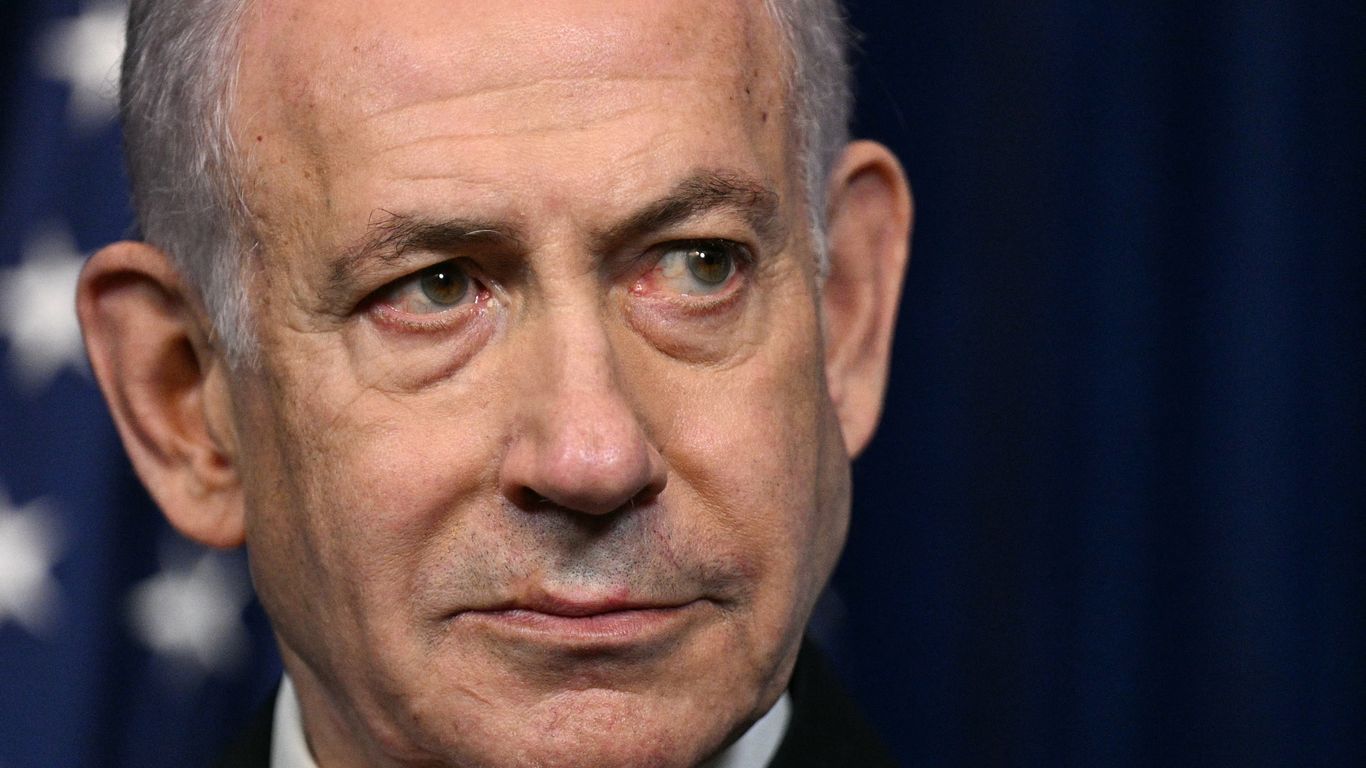
‘Even though economists warned that tariffs would be inflationary, Trump has enthusiastically embraced them’ Donald Trump successfully campaigned for his second term two years ago promising to reduce prices on day one , but ever since he returned to the White House, he has done little to fight inflation or reduce prices. Instead, some of his most important policy decisions – most notably his war against Iran and his tariff wars – have increased inflation instead of reducing it. This helps explain why more than one in five Americans who voted for Trump now disapprove of the job he’s doing. Even though economists warned that tariffs would be inflationary, Trump has enthusiastically embraced them during his second term. Indeed, the “ liberation day ” tariffs he imposed soon after returning to office increased the price of hundreds of goods, including citrus fruits , steel, bananas, beef and auto parts. When the supreme court overturned those tariffs as illegal, Trump immediately imposed new 10% across-the-board tariffs that again helped push up prices (a lower court found those tariffs unlawful, too ). Time and again, Trump has slapped on new tariffs even though they inherently push up prices because tariffs are a tax on imported goods. Little wonder that a Fox News poll this month found that 77% of Americans disapprove of how Trump has handled tariffs. Continue reading...
The Guardian · Oct 30
Key Democrat warns permitting bill could create "gold rush for gas"

A bipartisan deal to speed energy development is facing concerns it could favor natural gas over renewables because of President Trump's opposition to wind and solar. Why it matters: The worries from Rep. Sean Casten (D-Ill.) could complicate efforts to pass the bill before year's end, highlighting divisions even among Democrats who have long supported permitting reform. Driving the news: Casten, a former energy executive and leading Democratic voice on permitting reform, said he isn't yet backing the bill and is negotiating changes with Senate Democrats to prevent it from disproportionately benefiting natural gas. "My test for the bill is: I talk to energy developers, and ask, 'What would you build in response to this bill?' And the answer I get overwhelmingly is a lot of gas," Casten told Axios on stage at a University of Chicago event Wednesday. "I think you have to look at the bill in the context of everything else that the Trump administration has done." The big picture: The AI boom is fueling demand for electricity, prompting a rush to build natural gas power plants alongside renewable energy projects. The permitting deal could help determine which technologies benefit most from that expansion. Catch up quick: The bill, sponsored by two Republicans and two Democrats who lead the Senate's energy and environment committees, would speed construction of power lines and other energy infrastructure. An initial procedural vote is scheduled for Nov. 9, shortly after the midterm elections, setting up a potential push to pass the legislation before the new Congress takes office. Threat level: The bill aims to prevent political favoritism in energy permitting, but Casten worries one provision could have the opposite effect. It would allow developers to challenge discriminatory permitting decisions in part by comparing them with decisions made over the previous five years. Casten argues that as Trump's second term becomes part of that historical benchmark, the administrat
Axios · Oct 30
The humans burning out on AI's cyber frontlines

The people at the frontlines of the ongoing barrage of AI-enabled cyberattacks are being pummeled with attacks, vulnerabilities and false alarms. Why it matters: Humans are still at the frontlines of a fight enabled largely by AI — and they're struggling to wade through mountains of threat data to determine who's been hit and which attacks pose a real danger to companies. What they're saying: "The last month has been the longest year of my life," Justin Timothy, threat intelligence consultant at GuidePoint Security, told Axios. Even before "Black October," Timothy was already swamped and dealing with hacker gangs that returned from a seasonal summer lull. These groups specialize in ransomware, essentially attacking the networks of an institution and holding it hostage. While AI is playing a role in many new cyberattacks, the ransomware scourge has already been shutting down pipeline systems, hospitals, education software and other essential services for years. It's only expected to get worse this year as powerful new AI systems are amplifying the capabilities of attackers faster than defenders can insulate vast corners of the unprotected internet. The big picture: The people companies call when they're hacked are being swamped, piling onto the persistent burnout that has plagued the industry. Troy Bettencourt, who leads Palo Alto Networks' global digital forensics and incident response practice, told Axios that demand for his team's services has climbed by double digits over the last six weeks. Unlike past surges tied to historically harmful attacks like SolarWinds , this year's workload has been relentless. "It's just a continuous grind that increases," Bettencourt said. The same heavy workload is happening across the industry, and even Palo Alto Networks' incident response subcontractors are at max capacity, he said. Investigations that could once be handled by a single consultant now require teams of five to 20 people, he said. The company is also pulling employe

Axios · Oct 30
Scoop: Dems privately name Texas as most-flippable red state

Democrats' main Senate super PAC is privately telling top donors that Texas offers their best shot at flipping a deep-red Senate seat, followed by Ohio, where the race remains close. Senate Majority PAC also sees victories in Iowa and Alaska as within reach, though the outcomes could take longer to become clear. Why it matters: Democrats are increasingly confident about Election Day on Tuesday — and sharing their qualified optimism with their biggest donors. To retake the Senate, Democrats need to win two of those four states — all of which Trump won by double digits in 2024 — flip North Carolina and Maine, and avoid an upset in Michigan. JB Poersch, president of Senate Majority PAC, projected confidence that Democrats will wrest control of the Senate from Republicans during a private donor briefing this week as he walked through the races state by state. He also reminded donors that Kansas, where even Republicans are deeply worried, is a state Trump won by roughly 16 points in 2024. But it's in play . What they're saying: "This matches what we've been saying publicly and privately for weeks. There are signs of optimism in Texas, but it remains a toss-up, as do Iowa, Ohio and Alaska," said Lauren French, a spokesperson for SMP. "There is positive movement for Democrats, but it is critical to remember that every seat on the battleground map voted for Donald Trump by double digits," she said. "These are deep red states and we're focused on bringing them over the finish line so the Senate can work to provide real relief to families who are being crushed by the cost-of-living crisis." The big picture: Texas hasn't elected a Democratic senator since Lloyd Bentsen in 1988. Democrats thought they'd end the drought in 2018 and let themselves fall for then-Rep. Beto O'Rourke, who lost to Sen. Ted Cruz by 2.6 percentage points. Four years later, O'Rourke tried again to prove a Democrat could win statewide in Texas. He lost the governor's race by nearly 11 percentage points. T

Axios · Oct 29
Top U.S. Middle East commander briefs Trump on Iran blockade

U.S. Central Command chief Adm. Brad Cooper, the commander of forces in the Middle East, briefed President Trump Thursday on the state of the Iran war, with a focus on the ongoing naval blockade , according to two U.S. officials. Why it matters: As he did before Operation Midnight Hammer in June 2025 and Operation Epic Fury in February, Trump is pursuing dual tracks — trying to reach a deal to restart peace talks while also preparing for a possible resumption of major combat operations after the midterms. Behind the scenes: Trump wanted to hear directly from the CENTCOM head on whether the naval blockade is working, the U.S. officials said. Cooper also briefed Trump on the military operation for guiding oil tankers out of the Strait of Hormuz to global energy markets. And he updated Trump on the economic pressure campaign the military is conducting in concert with the Treasury Department. Defense Secretary Pete Hegseth, Treasury Secretary Scott Bessent, Chairman of the Joint Chiefs of Staff Gen. Dan Caine, White House envoy Steve Witkoff and other senior officials also attended the meeting, the officials said. The White House and CENTCOM declined to comment. The Wall Street Journal first reported the meeting. Driving the news: A group of regional mediators led by Qatar is trying to get the U.S. and Iran to head off a resumption of war after the midterms in favor of negotiations. "The mediation is at a very sensitive stage," a regional source said. Qatari mediators recently delivered a letter from Vice President Vance to Iran's Secretary of the Supreme National Security Council, Gen. Mohsen Rezaei. Vance proposed restarting negotiations but stressed that any talks would have to address Iran's nuclear program. Trump and Vance met Wednesday to discuss a possible gesture of goodwill toward Iran, such as sending humanitarian goods like food and medicine, according to a source with knowledge. Later in the day, Trump publicly backed the idea. What they're saying: U.S. Amba

Axios · Oct 29
Election Day isn't here, but the ballot battles are

The 2026 midterms already face a messy pileup of lawsuits and ballot battles, raising fears about election confidence before voters even finish casting ballots . Why it matters: Election challenges aren't unusual, but as the Trump administration continues to make false claims about widespread voter fraud, officials are juggling fights over voter lists, mail-ballot rules and election certification challenges. What they're saying: "The types of challenges that we are seeing pre-election, this close to election day, are very unusual, and mostly because they are coming from the federal government," Jonathan Diaz of the Campaign Legal Center told Axios. "These lawsuits are frivolous," Diaz said, adding they could "create doubt in the minds of the public about the legitimacy of the election process." The other side: The White House referred Axios to comments President Trump made to the media. The Department of Justice did not respond to Axios' request for comment. Here's some of the ways chaos and uncertainty have shaped the 2026 midterms: California In the Golden State, the Trump administration asked state election officials to set aside ballots from roughly 20,000 registered voters whom the DOJ suspects are noncitizens. A federal judge rejected that push Wednesday night, warning that the administration lacked sufficient evidence to justify potentially disenfranchising eligible voters. The judge noted that the DOJ had made similar claims in neighboring Nevada, where election officials determined that 185 voters the DOJ had flagged as noncitizens were actually U.S. citizens. Diaz told Axios that, from his perspective as a voting-rights advocate, the California battle is "not a real lawsuit. It's a political press release that they just happened to submit to the court." The other side: The White House directed questions about the ruling to remarks Trump made Thursday, in which he said "California is very corrupt," and the state's elections are "extremely corrupt." He did n

Axios · Oct 29
Reddit moves to logged-in experience as AI eats search

Reddit on Thursday said it's moving to become a primarily logged-in experience, marking one of the most significant shifts in its 21-year history. Why it matters: Reddit has long championed the open web. Now, it's pushing to build a more direct relationship with users while also protecting its data from increased scraping in the AI era. Driving the news: In an interview Thursday, Reddit co-founder and CEO Steve Huffman said the company is making the change to improve its user experience, bolster its ads business and prevent bots from scraping its proprietary data. Chief operating officer Jen Wong told Axios the move doesn't represent a change in strategy as the company has always focused on building a direct destination. "It's just that in the last 10 years, because our [data] corpus was open, we got a lot of search traffic, so that became part of the equation" but didn't change the company's mission. Zoom in: Huffman expressed confidence that the change would ultimately improve engagement and monetization, even as changes to traditional search continue to impact user growth in the U.S. "When users log in, they spend more time on Reddit, and we can we better know their interests, so we can target ads better," he said. He also noted that the short-term risk is limited because "the vast majority of engagement and over 80% of our monetization comes from our app and logged-in users." In a shareholder letter, Reddit acknowledged that search referral traffic was "down meaningfully in Q3" and said daily users could decline by a "low-double-digit percentage" in Q4 if search referral trends persist. How it works: Reddit will begin testing the fully logged-in experience this quarter outside the U.S. and collect data on the best approach before it rolls out broader changes gradually. Logged-in users can get tailored content, feeds and recommended communities based on their activity and interests, although they can opt out of personalization. The company is still working throug

Axios · Oct 29
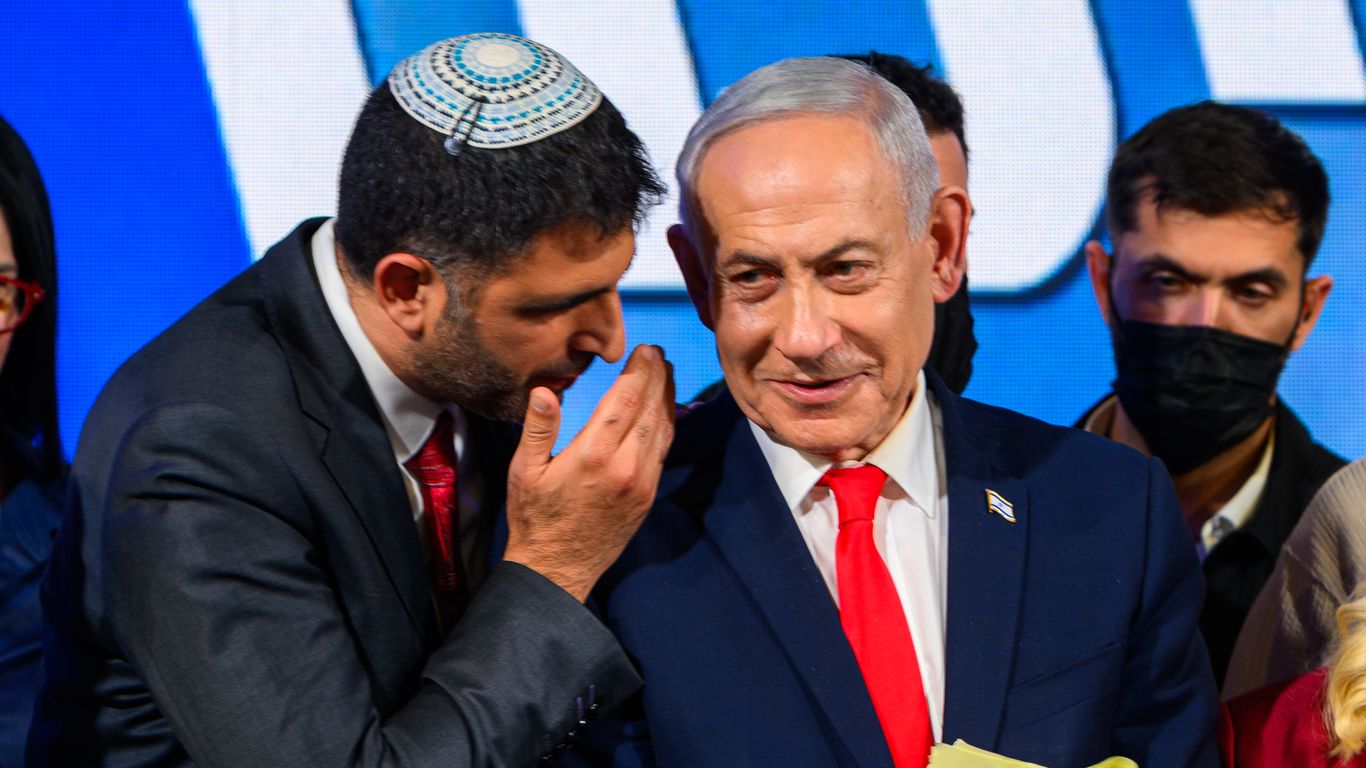
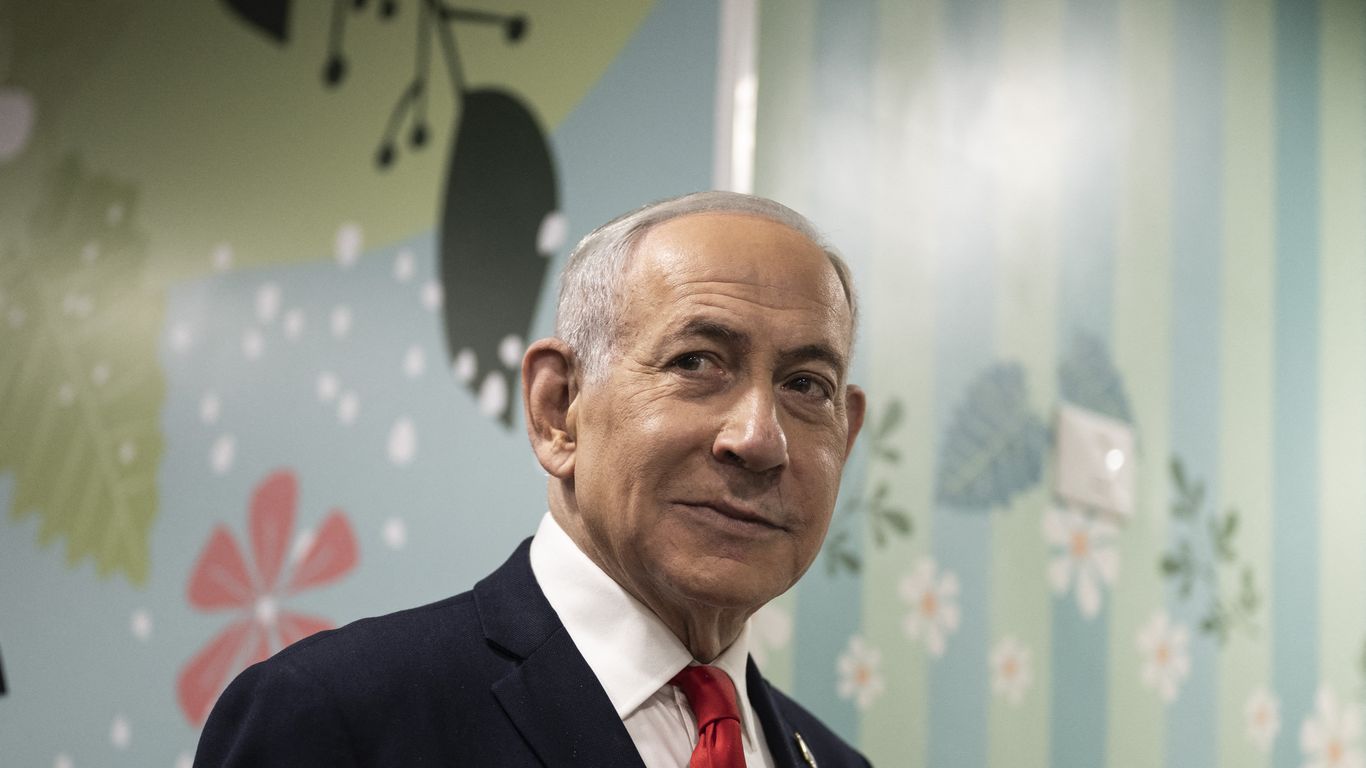
After losing his majority, Netanyahu tries to delegitimize election results

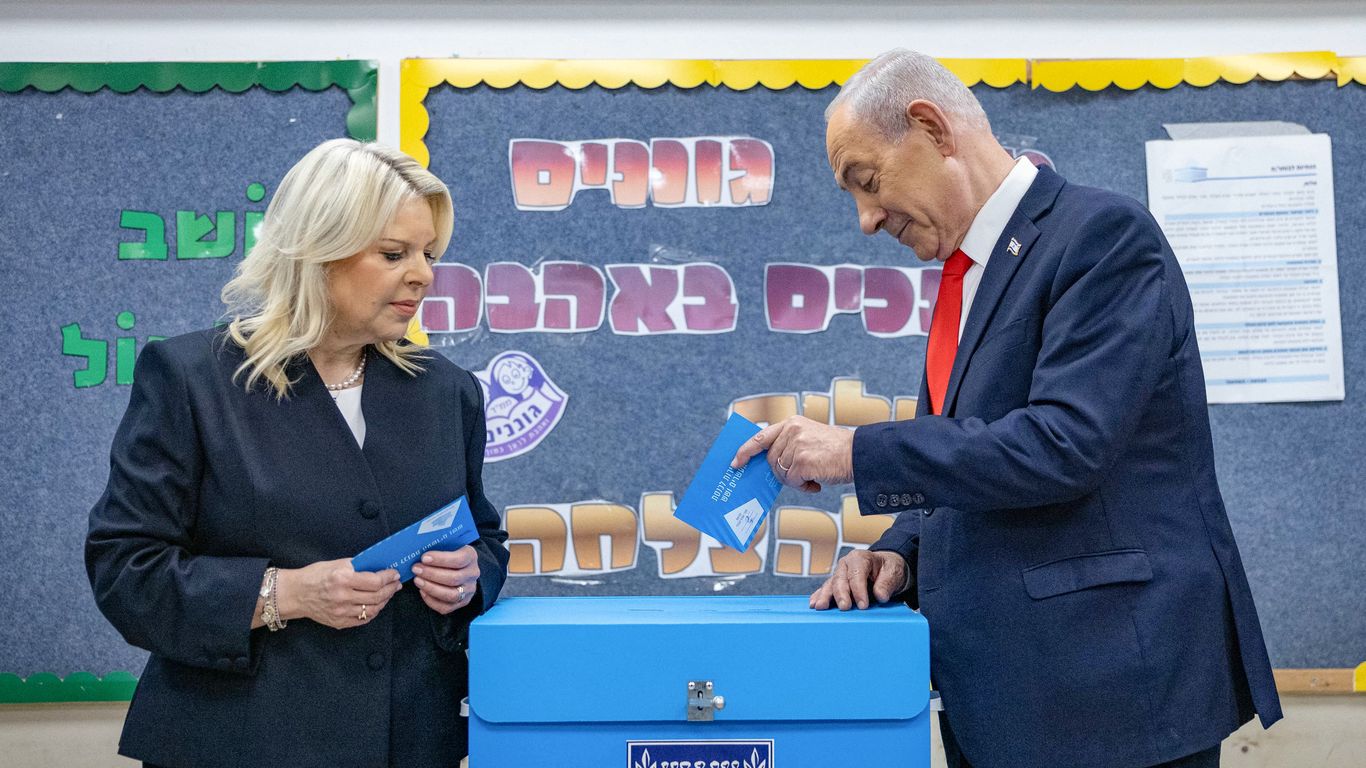
After his far-right coalition lost 11 seats in the election, Israeli Prime Minister Benjamin Netanyahu is trying to discredit the results by claiming there was mass voting fraud in Arab communities. Why it matters: Netanyahu appears to be trying to spook the opposition bloc out of cooperating with Arab parties to form a new government. But the opposition is concerned he has an even more ambitious goal: To prevent the results from being certified at all. That would block the swearing in of a new parliament, in which he would lose his majority. Driving the news: Netanyahu and his Likud party started the campaign to delegitimize the Arab vote days before the elections. Half of Netanyahu's social media posts on Election Day cast suspicion on the unprecedented turnout in Arab communities, an apparent attempt to drive his supporters to the polls. Arab voters cast ballots in historic numbers, winning 19 seats between their two parties. On Wednesday, Netanyahu's Likud party issued a statement claiming the "elections were stolen" by the Arab parties through bribes and fraud. Its claims were based on the arrest of three activists from the Arab Ra'am party who were suspected of paying a small number of voters in one of the Arab cities. The Israeli police said there was no evidence to support Likud's claims of a "stolen" election. Behind the scenes: The situation escalated dramatically on Thursday when a letter sent to the director of the Shin Bet domestic security agency was leaked to Israel's Channel 12. It was written by the supreme court judge who heads the Central Elections Committee. The judge ordered the Shin Bet director to immediately investigate suspicions of election interference by foreign countries and submit conclusions within a week. Shortly after the letter leaked, Israeli media outlets identified Qatar as the country in question. The allegation is that it funneled money to one of the Arab parties to propel turnout in their communities. Over the past year, sever

Axios · Oct 29
A phone-free Yellow Wall: are Dortmund urging fans to be present or policing them?

It makes sense that sports teams want to keep influencers out of their games. The battle some clubs are waging with their fans, however, is a different dilemma By all appearances, things on the Yellow Wall seemed as they always had been. The stadium announcer hollered out the first names of Borussia Dortmund’s starting lineup and the supporters responded with their last names, tens of thousands of voices bellowing as one. Dozens of black and yellow flags waved over Europe’s largest standing terrace, a mass of faces fixed on the field beneath them. And then Signal Iduna Park, sold out with 81,365 fans, roared when Max Beier’s lone goal led Dortmund to victory over Eintracht Frankfurt last Saturday, putting the home side even on points with Bayern Munich atop the Bundesliga standings. Continue reading...

The Guardian · Oct 29
The low-budget Brewers won the World Series – and exposed baseball’s biggest lie | Howard Bryant

Milwaukee’s first World Series championship is a rebuke to baseball’s oligarch class, whose insistence that small-market teams cannot compete has been laid bare as fiction For the entirety of the 2026 baseball season, the overlords of the game have stood on the single position that what has now happened could not happen, and the result was a year that has been treated like an appetizer for the main course of the offseason: the shutting down of the game until the players, after 40 years of resistance, finally agree to a salary cap. The insistence that the game had been predetermined undermined the Milwaukee Brewers, who spent 149 days this season atop the standings. Baseball dismissed Milwaukee’s 22-0 demolition of Seattle on 18 August, the 20-0 waxing of Cincinnati a month later, and the comprehensive dusting of their division – their fourth consecutive National League Central title and fifth in six years – by 14 games. Baseball’s owners, at their persuasive best, would have their paying customers believe that the Brewers’ franchise-record 103 regular-season wins also were an illusion, or worse, the dreaded outlier, even though Milwaukee have won 770 games since 2018, the fourth-most in all of baseball. Even when Milwaukee exhaled and made the Dodgers look old in a stirring four-game sweep, ESPN’s Jeff Passan reported the owners’ position remained unchanged. Continue reading...

The Guardian · Oct 29
Exclusive: How the permitting bill could change the energy landscape

Data: Resources for the Future; Note: Central RFF scenario ; Chart: Ben Geman/Axios The Senate permitting plan would cut emissions from power plants in the near term and help keep electricity prices down, a new analysis finds. Why it matters: The study from scholars at Resources for the Future, a nonpartisan think tank, offers some of the most detailed independent modeling yet of the bill 's effects. It will help inform lobbying and advocacy around the bill ahead of a test vote looming on Nov. 9. Driving the news: The analysis models how the bill would affect the power sector compared with current law and policies. Among the findings from its central scenario: It would drive "robust" transmission expansion ( see above ), enabling "use of additional clean energy and existing resources of all types." Overall electricity system costs are an estimated 3.5% to 7% lower each year through 2041 compared to a no-bill baseline, saving over $350 billion total through 2050 in present-value terms. That should translate into lower electricity bills for people, co-author Kevin Rennert tells Axios, though the study does not directly model retail prices. The bill would boost the build-out of renewables, partly enabled by expansion of transmission, with added clean energy displacing fossil fuels even though additions of gas-fired capacity still occur. CO2 from the power sector would initially drop as more coal is edged aside, and then climb over time — but remain below levels projected without the bill. By the numbers: In 2028, there's roughly 60 gigawatts more clean energy capacity on the grid in the study's central outlook compared to a baseline of current law and policy. Data: Resources for the Future; Chart: Ben Geman/Axios The intrigue: The RFF analysis shows how it sees the bill initially pushing power plant emissions downward. Even that eventual upward trend is hardly guaranteed. This kind of study is by definition packed with assumptions and variables that the authors acknowl

Axios · Oct 29
The left's 2027 wishlist

House progressives are planning to use their growing power to force votes next year on their most sweeping and divisive policies, including Medicare for All, abolishing ICE and cutting aid to Israel. Why it matters: The ultimate goal is to get these policies on the front burner for a Democratic president in 2029, even if that means forcing House Democrats into tough decisions. Rep. Pramila Jayapal (D-Wash.) told Axios the left wants mark-ups and votes on bills such as Medicare for All "so that we can prepare for when we have the trifecta and so that we can really build the support we need." "Forcing the vote is important so we can see where everyone is at, I think that's really key for 2028 and 2029," said Mai Vang, a progressive House candidate in California. The big picture: Here is what progressives most want to see go to a House vote in 2027, according to lawmakers, candidates and operatives who spoke to Axios: 1) Medicare for All The Medicare for All Act introduced by Rep. Pramila Jayapal (D-Wash.) has 118 co-sponsors — more than half the House Democratic caucus. The left wants to force the issue onto the floor and make their Democratic colleagues reckon with the policy's popularity in public opinion polls . Ultimately, they aim to ensure support for Medicare for All is a must-have for any 2028 presidential candidate to win the primary. "Years ago I negotiated with [former House Speaker Nancy] Pelosi to get the hearings , but we have not had a markup," Jayapal, a former Progressive Caucus chair, said in an interview with Axios. Jayapal pointed to the bill she and Rep. Pat Ryan (D-N.Y.) unveiled last week, which would lower the Medicare age from 65 to 50, as a potential compromise measure that could get caucus-wide support next year. Yes, but: A Democratic wave could bring in a bloc of members from red-leaning districts who could be sensitive to being tagged as wanting to end private insurance. Jayapal told Axios there's an "opening we've never seen before" with

Axios · Oct 29
"Nauseously optimistic": Anxious House Democrats brace for midterm Election Day

Democrats will happily tell you how good they feel about retaking the House on Tuesday — just as soon as they stop hyperventilating into a paper bag. Why it matters: They've been burned too many times on Election Day to feel anything more than "nauseously optimistic," as one House Democrat put it to Axios. The polls point to a decisive Democratic victory on Nov. 3, yet fears of a massive polling error or some other eleventh-hour disaster are giving party members sleepless nights. "One woman at a rally in New Jersey told me last week that she was 'nauseously optimistic,'" Rep. Jamie Raskin (D-Md.) told Axios. "That may capture a lot of people's last-minute jitters." A House Democrat who has spoken to leadership told Axios: "They feel optimistic. You know, guarded. Guarded optimism. Where we're going to end up, you never know." State of play: Democrats are targeting dozens of Republican-held seats they think could flip, some of which President Trump carried by 10, 15, even 20 percentage points in 2024. Democrats' House Majority PAC, for instance, went on the air Wednesday in retiring Rep. Elise Stefanik's (R-N.Y.) district, which Trump won by 21 points. They also began spending against Rep. Mike Flood (R-Neb.), who won his last reelection with 60% of the vote. HMP is so bullish it has moved money out of the races to replace retiring Reps. Don Bacon (R-Neb.), Chuck Edwards (R-N.C.) and Darrell Issa (R-Calif.), which they believe Democrats are on track to win handily. "I am cautiously optimistic we win between 20-25 seats," Rep. Ro Khanna (D-Calif.) told Axios. Democrats' landslide scenario puts them closer to 40 or 50 pickups, which would be a historic night for the party. Yes, but: Mid-decade redistricting in Republican-controlled Southern states is all but certain to cut into those gains. The GOP is expected to easily flip redrawn seats in Tennessee and Louisiana where the incumbent Democrats chose to retire rather than face uphill reelection battles. Democratic lead

Axios · Oct 28
Israel faces weeks of political wrangling after deadlocked election

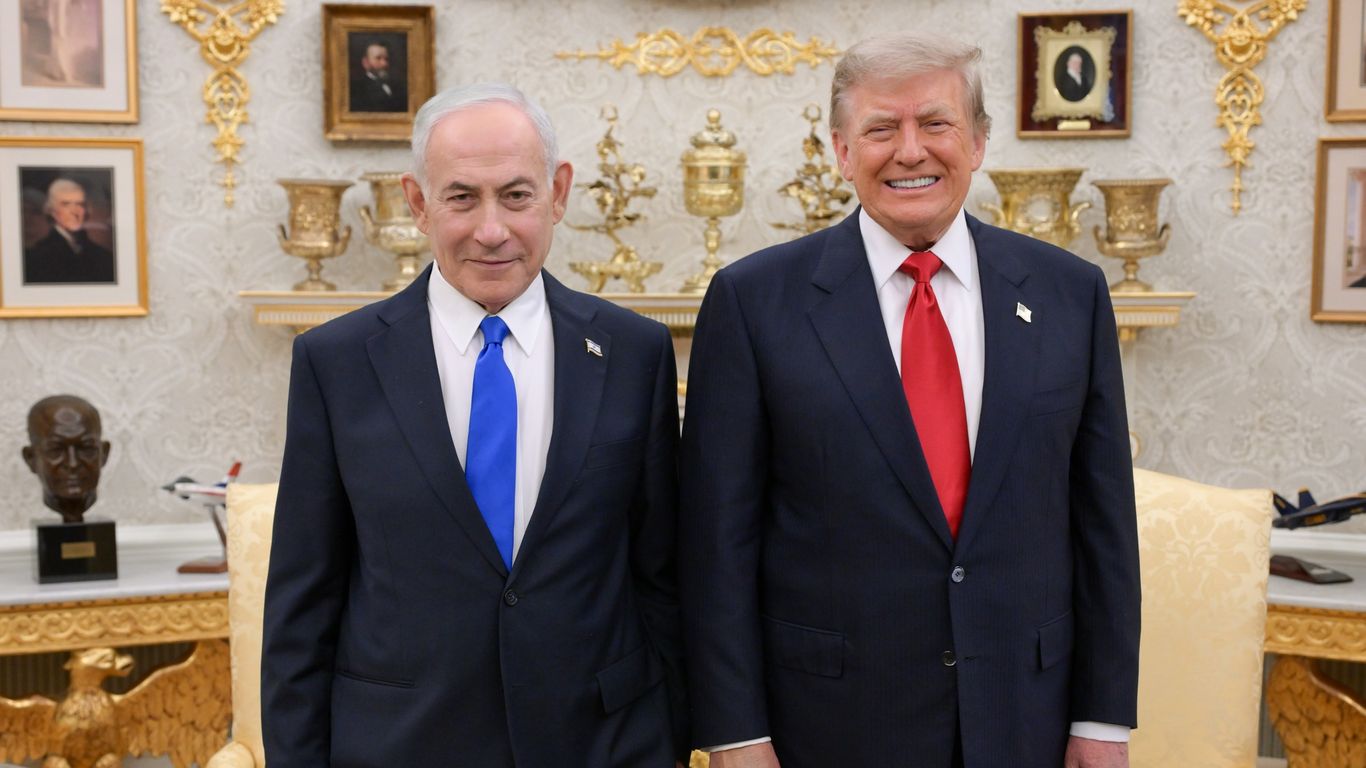
TEL AVIV, Israel — Israeli Prime Minister Benjamin Netanyahu's electoral coalition opened a sizable lead over Gadi Eisenkot's opposition bloc with 85 percent of the vote counted. But while Netanyahu outperformed exit polls, which had Eisenkot's opposition coalition ahead, neither bloc will clear a 61-seat majority. That sets the stage for weeks of wrangling over the country's next government. Why it matters: Netanyahu will emerge from the election down but not out. His bloc is on pace to secure 53 seats — 11 fewer than he currently commands. But Eisenkot's bloc trails with 48 seats, leaving both men without a clear mandate to lead a government. While Eisenkot could theoretically swear in a government with the support of Arab parties — which are on track to secure a record-breaking 19 seats — such a scenario is highly unlikely. The intrigue: The actual vote count significantly boosted Netanyahu's standing compared to initial exit polls, which showed Eisenkot's bloc ahead. President Trump told Axios in a brief interview Wednesday that at first he received "horror reports" about Netanyahu's prospects. But "he's in pretty good shape now," Trump said. "I heard my endorsement made a big difference for Bibi," he added. Asked whether he is going to get involved in an effort to form a Netanyahu-led unity government, Trump said he hadn't thought about it. "I will take a look," he said. State of play: There are 500,000 votes left to be counted, from soldiers, diplomats, prisoners and others who voted outside their designated area. These votes could slightly shift the blocs' seat totals or the allotment of seats within each bloc. But they are unlikely to change the overall balance of power. Driving the news: Israeli President Isaac Herzog will begin consulting next week with the different parties before issuing a mandate to either Netanyahu or Eisenkot to form a government. "We must do everything possible, especially after yesterday, to avoid another round of elections. So I ex

Axios · Oct 28
Netanyahu and Eisenkot blocs deadlocked and shy of a majority

TEL AVIV, Israel — Prime Minister Benjamin Netanyahu's far-right coalition is running nearly even with Gadi Eisenkot's opposition bloc in Tuesday's historic election — but both are short of a 61-seat majority, according to Israeli exit polls. Why it matters: Political stalemate is the most likely outcome of the election, with Netanyahu weakened but neither side having a clear path to forming a coalition government. Arab parties are poised to win 18 to 19 seats in what would be an unprecedented electoral achievement. While theoretically Eisenkot's bloc could try to swear in a minority government supported by the two Arab parties, that scenario looks unlikely. The numbers: Eisenkot's bloc emerged with a small lead in early exit polls, but Netanyahu's coalition closed the gap as the night wore on. The exit polls show Netanyahu's bloc with 51-52 seats and Eisenkot's bloc with 49-51 seats. Netanyahu's Likud party is projected to win 27 seats versus 21 seats for Eisenkot's Yashar party. State of play: A close outcome could leave the country in a state of limbo, with Netanyahu likely staying on as a caretaker prime minister at the helm of the executive branch and the opposition led by Eisenkot controlling the Knesset. That scenario could last until new elections are held as early as April. The two sides could try to break the deadlock by forming a unity government between Netanyahu and Eisenkot. But such a scenario is also improbable considering that none of the opposition parties will agree to sit in a Netanyahu-led government. What they're saying: Eisenkot claimed victory in a speech after midnight Israeli time. He said if Netanyahu was a "decent leader," he would exit the political stage after the public voted for change. During the speech, Eisenkot alluded to the possibility that the prime minister would launch military action before a new government is seated. "Netanyahu: don't dare use Israel's security for your political needs," Eisenkot said. He emphasized that the

Axios · Oct 28
Republicans fear "red scream" could depress GOP voter turnout

Senate Republicans see Iowa moving their way and Ohio slipping, with pessimism growing over Alaska and Kansas. Why it matters: Even when they squint, top Republicans struggle to see a majority beyond 51 seats, according to half a dozen senior operatives. ✈️ A combination of paid media and Air Force One visits has bolstered GOP confidence that they'll hold South Carolina and Mississippi . But across the map, the outlook looks bleak, with only a few bright spots. Zoom out: Republicans are fighting a two-front war: unprecedented Democratic enthusiasm and undeniable Republican apathy. 🏈 President Trump's strategy is to whip up the MAGA faithful with rallies in the reddest parts of red states. 😱 "The Red Scream is my biggest concern , not the blue wave," said Alex Castellanos, a veteran Republican consultant who has worked to help Trump get elected. ‼️ "Republicans and independents are going to be screaming for attention, and many of them, including those who voted for Trump, may show their frustration by not showing up." Zoom in: Texas is starting to look like a late-season football showdown against an SEC rival: The GOP is still in the game, but defeat seems like a real possibility. 🌾 In Kansas, Sen. Roger Marshall (R) has stopped the bleeding, but it's unclear whether there's enough time left to save his seat. 🛥️ Republicans are quietly bullish on Michigan, but they recognize that the demographics have to break heavily in their favor, especially among Black voters. By the numbers: The math hasn't changed, but Senate Minority Leader Chuck Schumer (D-N.Y.) sees multiple paths to 51 seats. No one disputes that North Carolina is going to have a Democratic senator. It seems like another lifetime ago that Republicans were talking seriously about flipping Georgia. If just two of the next tier of Ohio, Kansas and Alaska flip, the Senate would be split 50-50 before factoring in other competitive races, like Michigan, Iowa and Maine. 🦞 In Maine, Republicans and Democrats a

Axios · Oct 28
Trump praises Canadian separatists amid delicate trade talks

President Trump applauded Quebec's new separatist premier Tuesday, continuing to jab at Ottawa despite fragile trade talks that seemed to be gaining momentum. The big picture: Even as Trump's top economic adviser suggested a deal to ease the ongoing trade war is possible, the president has continue to antagonize Canada. The U.S. recently accused Canada of trying to influence American elections through retaliatory tariffs, which Canadian officials have denied. Meanwhile, Trump's continued to antagonize Canada from the campaign trail, saying at a Mississippi stop Monday that it was "charging us massive tariffs" and has "treated us badly." Driving the news: In a brief shoutout Tuesday, the president congratulated Paul St-Pierre Plamondon for his win some three weeks ago. While a recent vote stymied an Albertan separatist push , St-Pierre Plamondon has vowed to hold Quebec's third referendum on independence, though he's said it wouldn't happen until after Trump leaves office. St-Pierre Plamondon's center-left Parti Québécois won 60 of 127 seats, leaving it four short of a majority. It would likely need support from a fellow separatist party to advance a referendum. Prime Minister Mark Carney has emphasized the importance of Canadian unity as the nation faces unprecedented hostility from the American president. Trump shared an Irish Times article that framed the Quebec vote as a "blow to Mark Carney" that could "hamper" his "efforts to maintain national unity against Trump." Zoom out: Trump on Tuesday also congratulated British Columbia's premier-designate, Lorne Doerkson, after his Conservatives swung the province rightward. "Conservatives are moving strong in Canada!" the president wrote . Doerkson, however, has rejected suggestions that he's aligned with the president, similar to St-Pierre Plamondon. Friction point: The U.S. Embassy in Canada last week accused Canadian leaders of trying to influence American politics with reciprocal tariffs on politically important pr

Axios · Oct 27
Socialist civil war engulfs Los Angeles mayor race

A fight over Israel is fracturing the socialist movement just as it stands within reach of capturing the Los Angeles mayor's office . Why it matters: The same socialist movement celebrating its ascendancy through New York City Mayor Zohran Mamdani is now debating whether to disown Nithya Raman before Los Angeles voters can even weigh in. National Democratic Socialists of America (DSA) leaders face demands to overturn the local chapter's endorsement of Raman over her position on the Boycott, Divestment and Sanctions (BDS) movement against Israel. The Los Angeles chapter of DSA still enthusiastically endorses Raman , arguing Angelenos deserve a functioning city government. The mayoral race has been defined by homelessness, affordability and public safety. By the numbers: Raman leads incumbent Mayor Karen Bass in recent polls ahead of the Nov. 3 election, though many voters remain undecided. Overall : A September Berkeley IGS/L.A. Times poll put Raman ahead 39%-28%, with 33% undecided. A more recent Manhattan Institute poll showed Raman leading 38%-32%, with 30% undecided. Among likely Latino voters: Raman led 45%-21%, with 34% undecided in the Berkeley poll. Among socialists: DSA's Los Angeles chapter endorsed Raman in a 937-484 vote, with 52 abstentions. State of play: On Oct. 4, DSA's National Political Committee found that the chapter violated endorsement rules by failing to ask Raman about BDS, but stopped short of invalidating its support. National leaders have considered proposals to revoke the endorsement and bar the chapter from using resources to campaign for her, per Vanity Fair . A DSA faction has called for questioning Raman about her views on Palestine, with possible expulsion if national leaders find her positions incompatible with the group's principles. Sticking point: The Democratic Socialists of America's published endorsement requirements say candidates must actively support BDS and avoid affiliations with the Israeli government or "Zionist lobbying

Axios · Oct 27
Anthropic IPO leads AI's $235 billion dealmaking blitz

Anthropic filed yesterday for what could be the biggest IPO ever, capping a massive day of AI dealmaking that nearly equals 1% of U.S. GDP. Why it matters: Few industries have ever become so central to the American economy so quickly — and we're watching Wall Street finance the buildout in real time. Driving the news: Anthropic's long-awaited IPO may seek to raise a record $100 billion. Also yesterday, SpaceX secured $40 billion in debt financing to lease GPUs — the chips that power modern AI — and Meta said it would seek up to $95 billion in financing for its AI buildout. Together, that's roughly $235 billion in a single day — more than the entire U.S. airline industry adds to the economy in a year. The big picture: AI's appetite for capital has outgrown what any one single part of the financial system can supply. Anthropic alone has committed roughly $750 billion to computing power in the coming years — about seven times what its record-setting IPO may raise. Even private investors are struggling to keep up: OpenAI's record $120 billion funding round took months to close. Zoom in: Most Americans will be financially exposed to these deals, even if they never buy a share. SpaceX and Meta are already major holdings in the top stock indices that fill pensions, 401(k)s and other retirement plans. Anthropic will soon join them. Between the lines: Anthropic's filing spells out how big the stakes are, devoting more than a quarter of the document to risks. The company warns that AI could pose "catastrophic or existential risks to humanity" and that models may try to manipulate the people using them. Zoom out: Each of these three deals is a bet that AI use keeps compounding fast enough to justify the industry's trillions in spending. The flip side, however, is that declining use could crack the foundation of America's entire economy. The bottom line: Everyone is on the AI train, whether we want to be or not.

Axios · Oct 27
Inside Anthropic's massive — and wild — IPO prospectus

There has never been a company like Anthropic . It owes almost $650 billion for computing, generates eye-popping revenue per employee and wants every investor to know that its product poses existential risks to humanity. Why it matters: The future of the AI race, the market and the global economy rests within Anthropic's IPO prospectus, where some of Silicon Valley's most seasoned investors found new reasons to be bullish. They also found warning signs. A wager on Anthropic is a bet not just that AI will deliver on its enormous promise, but that customers will keep spending at a rate that keeps pace with massive computing costs. It's also a bet that Anthropic can continue to deliver models good enough to justify premium prices, even as competition intensifies and cheaper alternatives improve. What they're saying: Reaching a valuation of $2 trillion would require 50% growth, according to Theory Ventures. "What is Anthropic worth?" Theory's Tomasz Tunguz asked rhetorically. "The case for a very large number is simple," he said, noting that the company grew quickly on a high margin and generated an operating profit. "The case against is equally simple," he added, noting its $637 billion of computing commitments, non-cancellable contracts and no guarantee of customer loyalty. Catch up quick: Monday's filing offered the most detailed public look yet at Anthropic's business , finances and risks as it prepares for a potentially record-setting IPO. (See what Claude and OpenAI's ChatGPT say about whether they'd invest). As Tunguz noted, the filing had fodder for a variety of perspectives. The good: Anthropic has nearly 2,000 customers paying it $1 million or more per year, and 250 paying $10 million or more. Half the Fortune 500 pays the company $100,000 a year, and those customers spent less than 0.1% of their total expenses in the third quarter on Anthropic. "We are so early," Ben Bajarin, a longtime tech analyst, said on X. He pointed out that there are 300 million global

Axios · Oct 26
The anti-Bibi candidate who has Netanyahu on his heels

TEL AVIV, Israel — Gadi Eisenkot is as low-key as Benjamin Netanyahu is bombastic. He's a political novice up against the longest-serving, most politically savvy prime minister in Israel's history. And yet, on the eve of Tuesday's elections , Eisenkot poses the most serious threat to Netanyahu's hold on power in years. Why it matters: A victory by the Yashar party leader would upend Israeli politics and could reset the country's strained relationships abroad. The intrigue: The contrast between the two top contenders could hardly be sharper. Their roots: Eisenkot, the son of Moroccan Jewish immigrants, grew up in Eilat, Israel's southernmost city. If he wins, Eisenkot will be the first prime minister of Moroccan descent in Israel's history. Their military backgrounds: Netanyahu served in the Israel Defense Forces' elite special forces unit "Sayeret Matkal" and later went into business and politics. Eisenkot joined the IDF Golani infantry brigade and rose through its ranks as a combat commander until becoming IDF chief of staff. He arrived at his rally on Sunday to the tune of the Golani brigade song from 1974. Their ties to America: Netanyahu is better versed in American politics — and more articulate in English — than many American politicians. Eisenkot is not an "American" politician at all, let alone a professional one. He speaks English with a heavy Israeli accent and doesn't deliver catchy soundbites. He does not enjoy being on TV. At his final campaign rally Sunday before about 1,000 supporters, Eisenkot was visibly uncomfortable being in the spotlight, even when the crowd cheered him on. Their trustworthiness: Netanyahu's credibility with the Israeli public has been battered by his long-running corruption trial, his political tactics, his refusal to take responsibility for the failures that led to October 7 and accusations of duplicity in his handling of the Iran war. Eisenkot is seen as a straight shooter, even among many of his opponents. Zoom in: The failur

Axios · Oct 26
Trump's Board of Peace taps ex-Biden aide to lead Congress outreach

President Trump's Board of Peace has appointed Shelley Greenspan, who served as the White House's Jewish community liaison during the Biden administration, to lead its outreach to Congress and the Washington think tank community. Why it matters: Greenspan's selection is part of an effort by the Board of Peace to increase bipartisan support for President Trump's Gaza peace plan. The implementation of the plan is expected to get a renewed push after the midterms and the formation of a new Israeli government. The possibility of Democrats controlling the House or Senate makes the need for bipartisanship on the Gaza plan even more crucial. Driving the news: The plan has been stuck due to Israeli Prime Minister Benjamin Netanyahu's refusal to take any steps in Gaza before the October 27 elections. In recent months, multiple prominent Democrats have expressed support for Trump's plan. Former Secretary of State Hillary Clinton endorsed the plan in June, calling it the most viable proposal. Zoom in: Greenspan, a career civil servant at the State Department, was at the White House National Security Council during Biden's term — both as the American Jewish community liaison and the director for partnerships and elobal engagement. At the Board of Peace she will lead external affairs, putting her in charge of outreach to Congress and Middle East experts. What they're saying: "Shelley brings deep experience working across the aisle, having earned the trust of Democrats and Republicans alike through her service at the White House, National Security Council, and State Department in Democratic and Republican administrations," the Board of Peace told Axios in a statement. "Sustained, bipartisan support from Congress is essential to the work ahead, and Shelley is uniquely capable of leading this effort," the board added. Greenspan told Axios in a statement that she worked in her last State Department role to advance Trump's "vision for peace and prosperity in the Middle East." "I saw

Axios · Oct 26
Campaigns drag grieving families into midterm attack ads

The 2026 midterms have taken a deeply personal turn as campaigns use other people's family tragedies as political ammunition — sometimes over the objections of the families themselves. Why it matters: Some attack ads feature photographs of murdered children and anguished 911 calls, forcing grieving families to relive their worst moments. Georgia governor race: Republican gubernatorial nominee Rick Jackson used images of murdered 8-year-old Secoriea Turner and her mother's anguished 911 call to attack Democratic rival Keisha Lance Bottoms, Atlanta's former mayor. Turner's family demanded the ads come down, accusing the campaign of exploiting their grief without permission. Jackson said he would keep airing them . Ohio governor race: Ohio Republican gubernatorial nominee Vivek Ramaswamy's campaign is spending $4 million on an ad featuring the estranged mother of his Democratic opponent, Amy Acton. In the ad, Donna Arthur calls her daughter a liar and disputes her account of childhood homelessness. Acton says her late stepfather — who was married to her mother until his death — sexually abused her as a child, and she hasn't spoken to her mother in decades. Acton's brother corroborated her account , while court records and contemporary news reports support key details. President Trump urged Ramaswamy to keep running his attack on Acton, despite objections from some fellow Republicans. Between the lines: Ramaswamy's campaign said the ad tested well with persuadable voters , even as critics warned it could backfire. Ohio Senate race: A Republican attack ad against former Democratic Sen. Sherrod Brown featured images of a couple and their 1-year-old son killed in a highway crash to blame Brown's immigration policies. The victims' family demanded its removal , saying nobody sought permission to use their relatives' images or tragedy. North Carolina Senate race: A Republican super PAC featured a grieving father in an attack ad linking the murder of his 23-year-old son to for

Axios · Oct 26
Meta's $42B in penalties is a warning to AI

A tidal wave of litigation is catching up to Meta, leading to $42 billion in recent penalties and settlements , a powerful reminder to AI companies that they could face a court reckoning even when regulation lags. Why it matters : AI companies are racing to build better models and autonomous agents, but they don't enjoy the same legal protections that shielded web platforms for decades. The scale of the penalties Meta is facing offers a preview of potential legal exposure . The big picture : For years, Facebook's parent company navigated a seemingly endless string of scandals — weathering allegations of election interference, privacy lapses and platform harms — and was largely protected from severe litigation penalties due to Section 230. The provision — from a historic 1996 law passed as the internet was just beginning to change modern life — protects tech platforms from being sued over content created by their users. Legal experts say that law doesn't apply to AI. Models create their own content, so companies could face traditional product liability and negligence claims. Catch up quick : The two massive rulings highlight how legal risk for tech giants can extend by a decade, or proceed much faster. Meta was just hit with a $25 billion penalty over the Cambridge Analytica scandal after a jury found the company misled users about Facebook's privacy practices. Many details about that event surfaced nearly 10 years ago. The company said it believes it will win an appeal, and legal experts have said the penalty will likely be reduced. In August, the company agreed to a $17 billion settlement with states related to the impact of Meta products such as Instagram on teen mental health. State of play : A key cog in the Trump administration's regulatory efforts is the threat of litigation. Liability is sure to feature prominently in the risks AI giants such as Anthropic and OpenAI spell out to shareholders as they prepare for massive public listings. Anthropic's IPO is expe

Axios · Oct 26
Scoop: Netanyahu presses Trump for more support ahead of tight Tuesday election

TEL AVIV, Israel — Israeli Prime Minister Benjamin Netanyahu — fighting for political survival in Tuesday's elections — has pleaded with President Trump in recent days to show more public support for his campaign, according to a U.S. source with knowledge and an Israeli source briefed on the matter. Why it matters: The U.S. source said the White House sees Netanyahu's aggressive lobbying as a "sign of desperation" and an indication that the Israeli leader thinks he's trailing. Neta Molcho, a spokesperson for Netanyahu's Likud party, denied the prime minister asked Trump to support his campaign "in recent days or before his endorsement statement." The White House did not respond to a request for comment. Trump said in an interview with Newsmax two weeks ago that people in Israel asked him to get involved in support of Netanyahu. Behind the scenes: The U.S. source said Netanyahu spoke with Trump twice in the last three days and asked him to double down on his Truth Social post last week endorsing him. The source said Netanyahu even suggested language for additional statements of support. An Israeli source briefed on Netanyahu's efforts said the Israeli prime minister proposed that Trump hold calls with Israeli reporters to express further support. The latest: On Sunday evening, Trump issued another statement endorsing Netanyahu and calling on Israelis to vote for him, mainly because of his hawkish position on Iran. "As everyone is aware, including the enemy, Bibi and I have had a great relationship in winning together...when you go to the Polls please remember that Bibi has been an outstanding Warrior Prime Minister!" Trump wrote on Truth Social. "There can no longer be the chant heard around the World of 'Death to America, Death to Israel,' and there won't be. Vote for Bibi Netanyahu for Prime Minister, we have to finish the job that we started!" he added. Driving the news: After weeks of hesitation, Trump endorsed Netanyahu last Sunday. He went as far as to suggest

Axios · Oct 25
Shapiro looks like a 2028 powerhouse — with an asterisk

Pennsylvania Gov. Josh Shapiro is an electoral juggernaut in America's biggest swing state — and he's widely seen as a likely contender for president in 2028. But strategists in both parties question how tested he really is. Shapiro's success — he's cruised to victory in multiple statewide races — has come with an asterisk: He hasn't faced a well-financed opponent in recent contests, leading some political insiders to see him as more of a wildcard than his resume suggests. Why it matters: Shapiro's unfamiliarity with intense, bruising campaigns could become a liability in the 2028 Democratic primary, where if he was a top candidate, he'd be confronted with a barrage of attack ads, opposition research and rivals with deep pockets. A plugged-in Democratic operative in Pennsylvania suggested that because of Shapiro's lack of being tested, "it is totally possible that he has an incredible glass jaw — and that he is the Scott Walker of 2028." Walker was the swing-state Wisconsin governor who looked good on paper as a potential presidential candidate but flopped after entering the 2016 GOP primary. Zoom in: In next week's election, Shapiro is running for a second four-year term as the Keystone State's governor. He's on pace to defeat Republican challenger Stacy Garrity by double digits, according to the latest polls. The money gap is gargantuan: Shapiro has dropped $42 million on campaign ads, according to the ad-tracking firm AdImpact. Garrity, the state's treasurer, has spent just $3 million on ads — a drop in the ocean in a state as large as Pennsylvania, with its expensive advertising markets. It's not that Garrity prefers, say, door-knocking to TV ads. She's just outmatched: Campaign finance reports show she's only raised about $11 million this cycle, compared with Shapiro's $64 million. Making matters worse for Garrity, the Republican Governors Association (RGA) has not come to her rescue on the airwaves. Christopher Nicholas, a longtime GOP strategist in Pennsylvan

Axios · Oct 25
Washington's message to AI execs: Please shut up

Washington has always viewed Silicon Valley as culturally strange. But the current crop of AI leaders is becoming a monumental political liability, lawmakers and White House advisers tell Axios. Why it matters: Even pro-AI government officials and lawmakers wish AI founders would do what every other major industry chief does — shut up and just build their products ... safely. By centering the conversation around digital sentience and global catastrophe, AI leaders are turning an already complicated regulatory debate into an impossible moral panic. State of play: Rather than leading the charge to persuade Americans about the benefits of AI, and the potential for shared prosperity — the core elements of any winning political campaign — industry leaders are constantly warning of its existential dangers. What they're saying: Lawmakers say the message from AI execs too often alternates between prosperity and doom, sometimes in the same public appearance. The whiplash adds to political instability in the face of an already powerful public backlash, lawmakers and regulators say. "It's obvious that they're tripping over their own shoelaces in trying to sell the value of this to the public," Sen. John Curtis (R-Utah) told Axios. "It's very hard to imagine a group right now that operates more in a vacuum, more out of touch with everyday Americans, than the AI industry." "CEOs like Sam Altman are saying the world should accept some bad things happening for the benefits of this technology," Rep. Ro Khanna (D-Calif.) told Axios. "You cannot trust billionaires to make decisions to keep us safe." "Your instinct is to wreak havoc on the public [AI] discourse," Sen. Bernie Moreno (R-Ohio) said in a letter to Anthropic CEO Dario Amodei earlier this month, complaining about Amodei's "panic-inducing commentary." Democrats also have paid close attention to just how much top AI and tech leaders have cozied up to President Trump. Many see opportunity in turning AI gaffes into an easy poli

Axios · Oct 24
As Israeli election looms, Trump advisers see opportunity beyond Netanyahu

President Trump has endorsed Benjamin Netanyahu in Tuesday's Israeli election, but some of his advisers see opportunity for his Middle East agenda in a government led by someone else, U.S. officials tell Axios. Why it matters: Trump has never worked with an Israeli prime minister other than Netanyahu, and doesn't personally know any of the other candidates. The two have forged a close but often turbulent relationship. "He's the devil he knows," one Trump adviser said, describing the president's view of Netanyahu. Driving the news: After weeks of hesitation, Trump endorsed Netanyahu on Sunday — and even suggested his defeat would have consequences for U.S.-Israel relations. One U.S. official described the endorsement as a win-win for Trump, regardless of the outcome. If Netanyahu wins — or remains in power as caretaker prime minister — Trump could claim credit for rescuing him politically and use that leverage to press for concessions. If Netanyahu loses and his opponents form a government, Israel's new leaders would still have every incentive to cultivate good relations with Trump. His endorsement of their rival would quickly become a footnote. Behind the scenes: Many of Trump's closest advisers opposed his decision to endorse Netanyahu, believing the president should stay out of the Israeli election, according to sources familiar with the discussions. Vice President Vance notably declined to follow Trump's lead when asked about the election this week, amid growing hostility toward Netanyahu in parts of the MAGA movement. "I'm not attacking Bibi Netanyahu. I'm not endorsing Bibi Netanyahu. I think the president's endorsement is ultimately what matters," Vance told reporters. Zoom in: Vance, who endorsed former Hungarian Prime Minister Viktor Orbán days before his election defeat in April , said he would no longer get involved in foreign elections. The vice president is among the senior Trump officials who became disillusioned with Netanyahu during the war with Iran,

Axios · Oct 24
Scoop: U.S. intel memo warns of "advanced" Iranian plots to kill officials abroad

U.S. intelligence finds Iran has "substantially increased" its efforts to target American diplomats and officials in the Middle East and beyond, with lethal plots reaching "advanced stages," according to an Oct. 23 memo to Secretary of State Marco Rubio obtained by Axios. Why it matters: U.S. officials say the intelligence is one reason the State Department is drawing down personnel at several American embassies across the Middle East, amid mounting fears of a broader regional conflict. U.S. officials also fear that Iran-backed Houthi rebels in Yemen could expand their attacks beyond Saudi Arabia to other countries in the region. Adding to the volatile security environment is the prospect of renewed U.S. and Israeli military operations against Iran, potentially after the midterm elections. News of the memo exploded across the internet after Axios posted it last night, with media coverage worldwide . What they're saying: "We may do another little Operation Epic Fury, or [the Iranians] will agree [to a deal]," President Trump said at a rally in Florida on Friday. "If they're smart, they will just say, 'Let's get down to business,' but I doubt they will do that because perhaps they're not smart." Driving the news: In the one-page, unclassified memo obtained by Axios, Director of National Intelligence Jay Clayton warned Rubio that intelligence about Iranian assassination plots needs to reach more U.S. personnel than are currently authorized to receive it. The memo does not identify specific targets, countries outside the Middle East or the nature of the plots, but says the underlying intelligence has already been shared with senior State Department officials. Clayton offered to downgrade as much of the sensitive intelligence as possible so Rubio could share it more widely with personnel potentially at risk. State of play: Earlier this week, the State Department ordered family members and nonessential personnel to leave the U.S. Embassy in Riyadh and consulates in Jeddah

Axios · Oct 24
Mysterious "flying triangle" sighting leads new government release of UFO documents

On a recent evening near a secure U.S. facility, three federal agents saw a flying object they couldn't identify: a large "matte black triangle" that moved as fast as a fighter jet, made no sound and then disappeared, according to FBI and Defense Department reports. Why it matters: The 15-foot flying triangle is classified as a UFO-like "Unidentified Anomalous Phenomena" because the U.S. doesn't have the technology to make such a craft — and neither do its adversaries. The reports of the drone-like aircraft is of growing interest and concern to intelligence and military officials. Driving the news: The two reports about the mysterious triangle were included in a batch of 10 documents released Friday by U.S. officials under President Trump's order this year to disclose UAP records from all government sources as soon as possible. Friday's disclosure marks the seventh release of a tranche of documents under the order. Some of the documents found in the National Archives are from the 1940s. Zoom in: The flying triangle reports are the most intriguing because the incident — from this year — is so recent. The month and day are redacted. The FBI document is labeled an "Unidentified Aerial Object Observation Report" and the Defense Department 's report on it is classified as a "Unidentified Anomalous Phenomena" report. The observers were federal agents, including two with "extensive operational experience" and familiarity with drones. One had a "thermal monocular" for infrared tracking and yet couldn't detect "discrete heat sources associated with propulsion" from an engine on the mysterious craft. The agents reported seeing the drone-like triangle, with a wingspan of about 15 feet, rise vertically for as many as 300 feet above a mountain ridgeline without tilting or swaying. It stopped, hovered for about 20 seconds, and then flew horizontally as fast as a fighter jet for about 1.5 miles in three seconds without making a sound before it vanished. The intrigue: One of the do

Axios · Oct 23
Why soaring prices aren't breaking America's diesel habit

The quickest and most affordable response to historically high diesel prices is also the simplest: Use less of it. Why it matters: Diesel is so entrenched in farming, trucking and other industries that even soaring prices aren't enough — at least not yet — to prompt a wholesale shift to alternatives from electric semi trucks to manure-powered tractors. Catch up fast: Diesel prices have climbed to record highs since the U.S. war with Iran began in February, rising faster than gasoline amid global oil supply disruptions . Diesel averaged $6.31 a gallon Thursday, up 74% from a year ago, according to AAA . Regular gasoline averaged $4.27, up 39%. The big picture: Gasoline gets the attention, but diesel is the workhorse of the American economy. It powers grocery trucks, tractors, freight trains, construction equipment, hospital backup generators and even school buses . Driving the news: The price spike is hitting farmers during the fall harvest. "Farmers buy diesel by the truckload, so we're talking about hundreds of thousands of dollars in diesel, and when it goes up the way it has spiked, that's the difference between profit and loss in a year," said Curt Blades, senior vice president at the Association of Equipment Manufacturers, a trade group representing tractor makers and other heavy-equipment manufacturers. The financial pain varies: Trucking companies can often pass higher fuel costs to customers through surcharges. Farmers, who have little control over crop prices, generally can't. The economic pressure has become political ahead of the midterm elections. President Trump announced $8 billion in one-time aid for farmers at a campaign rally in Kansas on Monday, where Republicans face a competitive Senate race. "It's a bit too soon to tell the impact," Blades said of the aid package, though he welcomed support during harvest. State of play: Trucking and agricultural equipment experts say the most immediate savings come from using existing diesel engines more effici

Axios · Oct 23
Senate control hinges on unwanted nominees

Senate Majority Leader John Thune (R-S.D.) and Minority Leader Chuck Schumer (D-N.Y.) are living out their midterm nightmares — with nominees they didn't want and former colleagues they no longer control. Why it matters: Together, Schumer and Thune are stuck with five Senate races in which their party establishments thought they had a better chance of winning with someone else. 🤠 Texas: Thune's efforts to stop Texas Attorney General Ken Paxton from winning the party's Senate nomination failed. Now Republicans are spending more than $329 million to defeat state Rep. James Talarico— and it's still a nail-biter. 🍑 Georgia: GOP leaders couldn't convince Gov. Brian Kemp to run. The eventual nominee, Rep. Mike Collins, has struggled to keep pace with fundraising juggernaut Sen. Jon Ossoff (D). GOP money is in retreat. 🦞 Maine: Schumer endorsed Gov. Janet Mills, but Graham Platner's implosion left Democrats with backup Troy Jackson against Sen. Susan Collins. ⛴️ Michigan: Abdul El-Sayed defeated Rep. Haley Stevens and made a name for himself nationally. But he won by just one point even though primary polls showed him up by double digits. He's now polling within the margin of error against the GOP nominee, former Rep. Mike Rogers. 🏈 Minnesota: Peggy Flanagan ran as a progressive, said she would not support Schumer as leader and bested establishment-backed Rep. Angie Craig. But Cook Political Report moved her race against former NFL sideline reporter Michele Tafoya toward Republicans even as it shifted other races toward Democrats. To make matters worse, Thune's and Schumer's former colleagues are creating fresh headaches by boosting candidates across the aisle. Former Sen. Joe Manchin, who flipped to independent in 2024 after being elected as a Senate Democrat, is campaigning for Sen. Susan Collins (R-Maine), as Semafor reported. Former Sen. Kyrsten Sinema , who also flipped from Democrat to independent before leaving office, is boosting Republican Jay Feely in her hom

Axios · Oct 23
Airlines' new normal: Higher fares, fewer flights

That wince you just made while researching travel options? Get used to it. Why it matters: Soaring jet fuel prices are accelerating changes across the airline industry, seen in higher fares, premium-heavy cabins and fewer flight options for travelers. Airfares rose 22% year over year in September, marking a 10th straight monthly increase in the government's airfare price index , which hit an all-time high. State of play: All the major airlines are feeling the pain: American Airlines reported Thursday that its fuel bill jumped nearly 70% in the third quarter from a year ago, adding $1.9 billion in costs and undercutting its revenue growth. Southwest and United Airlines both slashed their profit forecasts this week on higher fuel costs. And Delta Air Lines expects its fuel bill this year to come in $6 billion above last year's. The impact: To protect their bottom lines, airlines are raising fares and turning to more premium seats to squeeze more revenue out of their flights. At Southwest, the average passenger fare rose 26.9% to $231.69 in the third quarter, compared with a year earlier — and that doesn't include fees. Delta's premium seating revenue jumped 18% in the third quarter, even though the number of premium seats rose only 6%. What they're saying: The airlines have few options to make up for extra fuel costs other than fare increases, said Scott Keyes, founder of flight-deal service Going.com. "None of them are hedging fuel the way they used to, in large part because they had a pretty terrible experience with it," Keyes said in an interview. The big picture: Airline executives, however, see these changes — many of which were already underway — as a necessary new normal. This year's fuel spike has only "accelerated" change, Delta CEO Ed Bastian said on the company's earnings call on Oct. 9. "Regardless of the next move in fuel prices, the forces reshaping the U.S. airline industry will continue with many carriers struggling to earn their cost of capital well b

Axios · Oct 22
Black October: why bugs discovered by OpenAI tech are creating a cyber emergency

The websites you use every day may have been vulnerable to hackers for years because of hidden flaws in their code that AI only recently discovered. Why it matters: The code, called PHP, powers millions of websites, and the vulnerabilities could allow hackers to steal sensitive data like your passwords or take control of affected servers. Driving the news: A potential attack exploiting flaws in PHP emerged on Wednesday, which prompted governments and companies to temporarily take their websites offline while they installed security patches. Dozens of websites in the U.S., U.K., and around the world were briefly taken offline to make the fix. The disruption put the National Security Agency and Europe's cybersecurity agency on alert. State of play: Security patches were released to fix the issues on Oct. 21, 2026. Cybersecurity firms urged anyone using PHP to install the security updates immediately. What they're saying: OpenAI's technology helped find the bugs, and the company called the discovery "one of the most impactful security issues in recent memory." "To our knowledge, frontier AI found these vulnerabilities before attackers did," OpenAI said. The cybersecurity firm Wiz wrote in a blog post : "These findings rank among the most severe vulnerabilities discovered in PHP, and arguably in software history." Read more below. What is PHP? You've probably never heard of PHP, even though you've interacted with it for decades. PHP, which stands for Hypertext Preprocessor , is a programming language used by roughly 70% of websites whose server-side language is known. It has been around since the 1990s to help build websites, taking data and generating content sent to a browser. It's still used today for a variety of websites, including Wikipedia, WordPress blogs and shopping websites. How it works: HTML determines what a website displays. PHP works behind the scenes to collect information and generate content. What was the PHP vulnerability, exactly? AI researchers dis

Axios · Oct 22
Canada hit back at Trump tariffs. Now the U.S. alleges possible election interference.

The U.S. Embassy in Canada accused Canadian leaders of "openly" describing plans to "influence American politics," doubling down on Ambassador Pete Hoekstra's claims of potential election interference. Why it matters: The accusation further deteriorates Washington's relationship with its northern neighbor under President Trump's costly trade war that's put political pressure on Republicans. Canada targeted its retaliatory tariffs on politically salient states and products ahead of the U.S. midterms. Driving the news: The embassy cited Canada's targeted tariffs as part of the influence accusations laid out in a Wednesday fact sheet . It cited remarks from Industry Minister Mélanie Joly, including an August press conference where she said Canada was "targeting products that will target states in the U.S." She added, "we're being wise and strategic to put political pressure." Joly has echoed that message throughout the trade tensions. The fact sheet also cited Joly's meeting with Democrats. She recently huddled with Illinois Gov. JB Pritzker. What they're saying: Asked about the accusations during a news conference, Prime Minister Mark Carney said "all of our actions are in the interest of Canadian workers, Canadian families and the future of this economy." Zoom out: The fact sheet also singled out conservative Ontario Premier Doug Ford over a 2025 anti-tariff ad campaign featuring excerpts from a Ronald Reagan speech . It also cited Liberal MP Anthony Housefather's campaigning for Florida Democrat Rep. Debbie Wasserman Schultz. The memo read, "The Canadian government brushes off concerns about potential interference in U.S. elections, even as its ministers and premiers openly describe plans to influence American politics in official documents and public appearances." Catch up quick: Hoekstra said in a recent podcast interview that American officials were "closely watching" Canada for potential election interference. Joly said last week it was "absolutely not" fair to

Axios · Oct 22
Hackers are turning web browsing into a spyware trap

Hackers are finding new ways to infect iPhones with spyware — even when victims never click a malicious link — according to new research shared with Axios. Why it matters: Software once used to spy on politicians, journalists and other high-value targets is becoming a tool for everyday cybercriminals looking to steal cryptocurrency and login credentials. Driving the news: Researchers at iVerify and Report URI said Thursday they've uncovered two campaigns in which criminal groups with suspected ties to China exploited online advertising infrastructure and legitimate websites to deliver iPhone spyware. In one case, iVerify found that a financial institution employee's iPhone was infected after they scrolled past a professional soccer advertisement on Instagram. The ad automatically triggered an attack that stole the person's login credentials and searched their cryptocurrency wallets. In another, Report URI uncovered a campaign affecting nearly 8,000 legitimate websites after hackers purchased roughly 630 expired domains that those sites still relied on. The attackers used those domains to redirect vulnerable iPhone visitors toward spyware designed to steal their credentials and cryptocurrency. How it works: Both campaigns exploited tools that load automatically as people browse the internet, eliminating the need to trick victims into clicking malicious links. In the iVerify case, malicious code began running as soon as the Instagram advertisement appeared on the victim's screen. The attack checked the iPhone's operating system before deploying a compatible exploit. In the Report URI campaign, attackers purchased expired domains once used to host legitimate website features, such as chatbots and analytics tools. Thousands of websites were still loading code from those domains, allowing criminals to quietly redirect visitors toward malicious software. Threat level: The findings show how cybercriminals are building an infrastructure for delivering spyware through everyd

Axios · Oct 22
Scoop: Unvetted AI agents are accessing U.S. bank accounts

Major U.S. banks are detecting unauthorized third-party AI agents operating inside customer accounts, with some agents attempting to take actions that appear to be independent of user instructions, sources tell Axios. Why it matters: AI agents are becoming a nightmare for America's banks, making their way into banking systems faster than financial institutions can respond. The difficulty in distinguishing between a human and an unauthorized bot is forcing banks to block the technology and rapidly rewrite their terms of service. Driving the news: Banks including Morgan Stanley, Bank of America, JPMorgan, Wells Fargo and others are racing to contain agent risks. Some are aware of unauthorized access, people familiar with the issue said. These are generally situations when an agent or AI assistant accesses a human's account with the user's permission and login credentials. Even if permitted by the user, this goes against the guidelines of most banks requiring that humans log in to their own accounts. This presents significant security risks : Banking executives fear the steps agents with login access might take, especially if a user has granted purchase authority or the ability to shift funds. In other instances, some banks have tracked activity when agents — programmed to fulfill requests or complete tasks on a user's behalf — contact call centers or appear to take actions independent of user instructions, the people said. What they're saying: Bank executives described the situation as horrifying, with one official saying the industry has grave concerns about agents gaining access to customer accounts and taking steps that could impact user finances. State of play: The concerns are at the root of the decision by several banks to restrict third-party AI agent access, the people said. Morgan Stanley has begun blocking third-party agents from accessing its platforms, sources familiar with the decision said. JPMorgan , Bank of America and Citi are also restricting agents

Axios · Oct 22
Democrats accuse Trump of using prosecution threats to pressure election officials

Democratic groups sued the Trump administration Tuesday, accusing it of using unfounded voter fraud claims to muscle its way into how states run elections. Why it matters: The groups say the administration is issuing a stream of threats to intimidate and bully both voters and election officials. They're asking a judge to declare the administration's actions unlawful and block further interference. Driving the news: The lawsuit condemns the administration for targeting state voter rolls by insisting that local officials review federally compiled lists of alleged noncitizens on their voter rolls. The suit also alleges that the administration is improperly demanding that states deny ballots to registered voters based on those federal lists. The Democrat-aligned groups also claim the administration has attempted to intimidate state and local officials by threatening them with jail time or prosecution. Case in point: The lawsuit cites a Department of Homeland Security claim that Nevada had nearly 16,000 noncitizens on its voter rolls. The department later claimed that it had confirmed 185 of those people were noncitizens. State records later indicated that all 185 were citizens. The DOJ also demanded that California deny ballots to more than 20,000 people based on a federal list that flagged them as suspected ineligible voters, the lawsuit says. A preliminary investigation by Los Angeles County investigators found that more than 25% of those flagged listed a U.S. birthplace, and others already had their voter registrations canceled. What they're saying: "Department of Justice and DHS officials have sought to bolster their interference efforts through a persistent stream of threats and intimidation directed towards state and local election officials across the country," the groups' attorneys wrote. "Defendants' coercive threats of legal retaliation against state officials, including even potential imprisonment, for simply following state law and aiding registered voters i

Axios · Oct 21
White House to Politico: Retract stories or face "consequences"

The White House counsel's office warned Politico in a Monday letter that it had 48 hours to retract or correct recent stories about alleged staff drama, or it would suffer unspecified consequences. That deadline expires Thursday. Why it matters: The White House demand threatens to escalate already tense relations with Politico specifically and, more generally, the press corps that covers President Trump in Washington. Politico, CNN, and MS NOW are already banned from covering Trump in the Oval Office and on Air Force One because the president does not like their coverage. Trump blocked all three outlets from the White House grounds as well, but a judge on Oct. 13 restored their access. CNN threatened legal action Wednesday to regain access to Air Force One and the "pool" of television networks that accompany the president. Zoom in: In his letter to Politico, White House Counsel Will Scharf singled out three stories concerning White House Chief of Staff Susie Wiles despite "on-the-record refutations" or contrary evidence supplied by senior staff and even the president. Oct. 15: In a story headlined " Trump's ice maiden is under fire ," Politico Playbook reported that Trump was considering a replacement for Wiles. Trump called it "fake news." Oct. 16: Politico Playbook wrote that the prior day's story had caused a "freakout" and that the president "blew up" over it. A White House spokesman called it "unbelievably stupid and false." Oct. 16: In a story headlined " Susie Wiles helped set up Fox interview ahead of press secretary's exit ," Politico insinuated the chief of staff set up Katie Zacharia to fail in a Sean Hannity interview on Fox the night before. The White House and Fox News denied the reporting. And White House officials provided text messages to Politico before publication showing Zacharia — not Wiles — set up the interview, which the New York Post reported the following day. "Politico has not corrected or retracted its false reporting. Instead, a Politico

Axios · Oct 21
Scoop: Senate Republicans fear Mississippi is in play

Senate Republicans are weighing three last-ditch spending moves that would have been unimaginable six months ago: a cash infusion for Mississippi and even more money for South Carolina and Kansas. Why it matters: It's been 94 years since Kansas elected a Democratic senator, 44 years for Mississippi and 28 for South Carolina. But panic is spreading through the Republican Party. "The wall has broken. The enemy is inside the fort," one national Republican political operative told Axios. "We are now fighting hand to hand." The Senate map, which once looked impregnable for Senate Majority Leader John Thune (R-S.D.), is now full of vulnerabilities. Democratic challengers are polling within the margin of error in more than half a dozen deep-red states, according to internal GOP polls. The other side: "We're nervous about Alaska. We're nervous about Michigan. We're still going to hold the Senate at the end," said another operative. Zoom in: Two weeks ago, when Senate Leadership Fund decided to take out a $5 million "insurance policy" in South Carolina, operatives took a hard look at Idaho, South Dakota and Mississippi. At the time, they concluded they didn't need to spend any money in those states, according to a person familiar with the matter. But Senate Republicans are now reviewing the Mississippi race and may need to spend there to protect Sen. Cindy Hyde-Smith from a surprisingly competitive bid by Democratic district attorney Scott Colom . Senate Majority PAC, the main super PAC for Senate Democrats, announced a $1.2 million investment in the race on Tuesday. Zoom out: In early June, SLF started to reinforce a Midwestern red wall to protect the GOP majority, reserving $28 million in TV advertising in Ohio and $11 million in Iowa . Those investments have ballooned to $93 million in Ohio and $53 million in Iowa. After an initial $5 million buy in South Carolina, SLF's spending has increased to $8.5 million, according to AdImpact. And a super PAC linked to Sen. John Bar

Axios · Oct 21