Jason Reding Quiñones led investigation into whether Trump’s rights were violated during 2020 election inquiry A US attorney overseeing the so-called “grand conspiracy” investigation into Donald Trump ’s rivals announced on Friday he is leaving the Department of Justice, one of several officials to leave the department in recent days after sweeping Democratic wins in the midterm elections . Jason Reding Quiñones, the US attorney for the southern district of Florida, and John Eisenberg, who led the justice department’s national security division, are both leaving. Democrats have pledged to use their majorities in the US House and Senate to conduct aggressive oversight of the justice department, among other agencies. Continue reading...
Results for “jason beck”
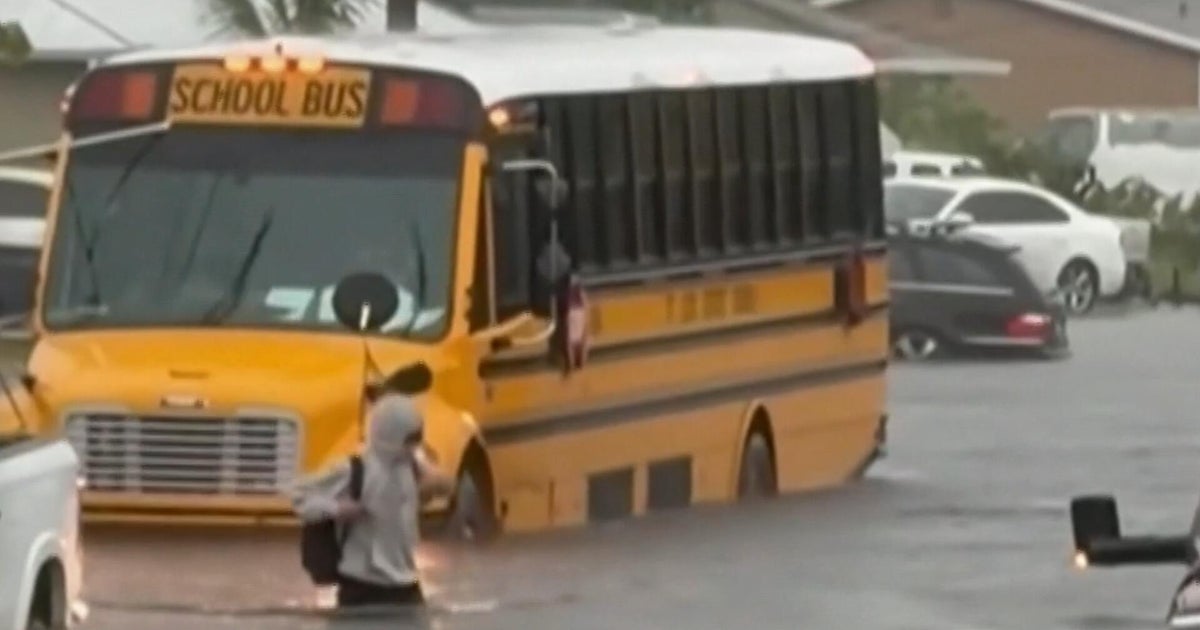
At least eight counties in Florida are dealing with widespread flooding after a major rain event. Jason Allen has the story.
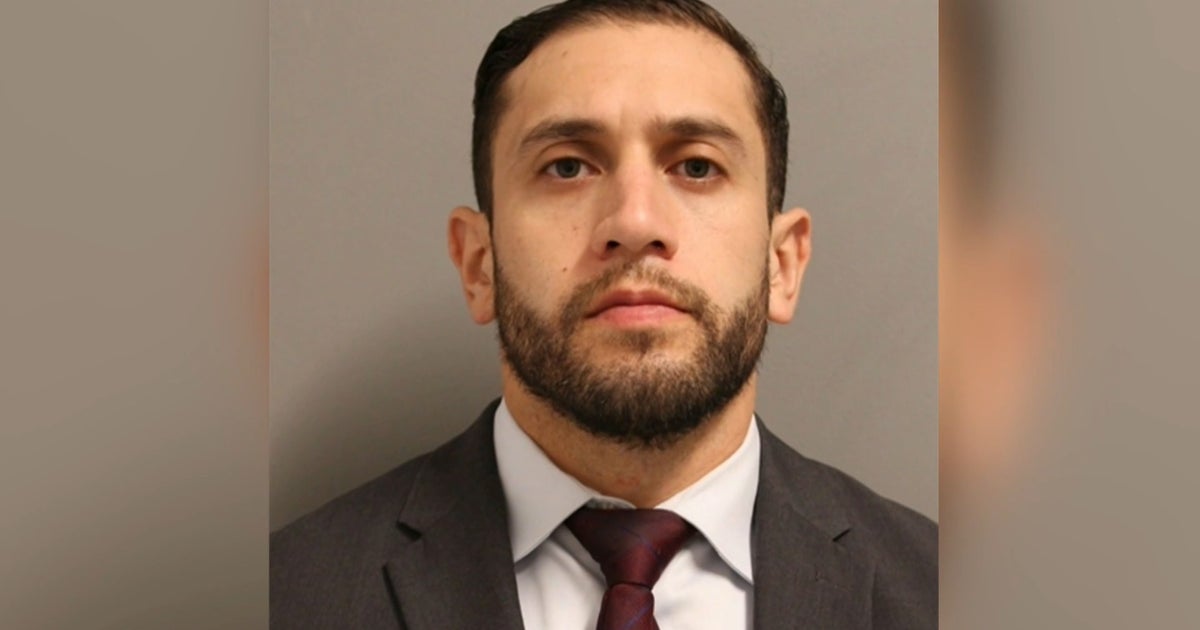
An Immigration and Customs Enforcement officer has been charged in Houston with aggravated assault with a deadly weapon for allegedly hitting a man with his car. Jason Allen reports.
An ICE officer turned himself in on Monday after being indicted on an assault charge in Texas for allegedly running down an immigrant with his SUV, leaving the man, who had been in the state for decades, hospitalized for weeks. Jason Allen reports.
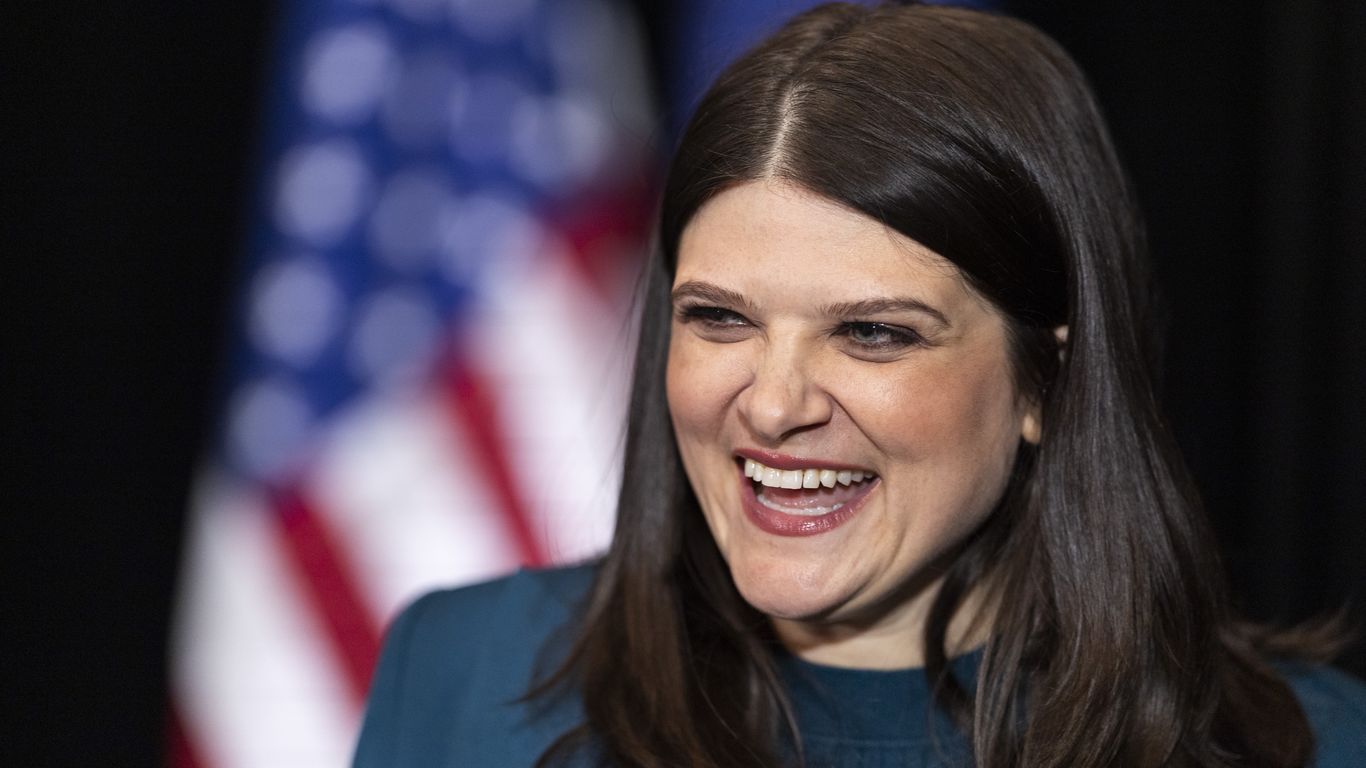
Rep. Haley Stevens (D-Mich.) appeared Sunday at Detroit's Perfecting Church alongside Republican Senate candidate Mike Rogers , praising his support for Black-owned businesses just two days before he faces the Democratic nominee she previously endorsed. Stevens then tweeted an endorsement for Rogers. Why it matters: The appearance gives Rogers a striking moment as his party tries to peel away Black and Jewish voters in a tight race that could determine control of the Senate. Driving the news: Stevens' appearance with Rogers came after plans for her to attend a Detroit church service alongside Democratic nominee Abdul El-Sayed and Rep. Jim Clyburn (D-S.C.) collapsed. Her appearance with Rogers was arranged at the last minute after the two spoke this morning, per a person familiar. The intrigue: A video posted by Detroit journalist Sam Robinson showed Stevens entering the church and praising Rogers . Rep. Debbie Dingell (D-Mich.), who helped organize the original planned appearance with El-Sayed, told CNN she asked Stevens not to attend because the dispute had become distracting. Stevens narrowly lost the August Democratic primary to El-Sayed but endorsed him afterward. Catch up quick: The bitter primary rivalry erupted again last week when Stevens' fiancé, Jason Turkish, announced he would vote for Rogers, citing concerns about El-Sayed's rhetoric on Israel. Stevens subsequently demanded that El-Sayed condemn an outside group's ad linking U.S. support for Israel to higher grocery prices, and remove a campaign ad featuring Tucker Carlson. El-Sayed accused Stevens of re-litigating the primary. On Saturday, he explicitly rejected the outside ad's contents, prompting Stevens to welcome his remarks. What we're watching: Michigan voters choose between Rogers and El-Sayed on Tuesday, with Democrats facing a crucial test of whether they can reunite their coalition.
You won't need to stay up all night Tuesday to spot a big Democratic wave in the 2026 midterm elections . But it could take days — or even weeks — to know whether Republicans have survived a smaller one and held on to the House or Senate. Why it matters: A handful of early results in key states and congressional districts will tell us whether Democrats are headed for a landslide or disappointment. What we're watching: Florida, Florida, Florida. Most polls close at 7pm ET, and the state counts quickly — ready for release when the Panhandle finally calls it a night an hour later. At 8:01pm , refresh your browser and watch FL-14. The great mid-cycle redistricting wars transformed this Tampa-based district from Harris +8 to Trump +11. If Democratic Rep. Kathy Castor survives, Republicans can all but kiss their majority goodbye, according to party strategists. Next up is FL-25. The country's most expensive general election race is playing out in a district that went from Harris +4 to Trump +9. If Democratic Rep. Jared Moskowitz's race is close — or too close to call early in the night — House Republicans can keep hope alive. While you're at it, this is a good time to check on South Carolina's Senate race, where polls close at 7pm and the state counts relatively fast. If Sen. Darline Graham loses to Annie Andrews in the Trump +18 state, Senate Republicans can say goodbye to their majority. (And they'll be sweating if it's close.) "Underperformance is rarely isolated," said Jason Thielman, executive director of the National Republican Senatorial Committee in 2024. "If you see the GOP underperforming early in the East, it is likely going to continue as you move further West." At 9pm, check in on Virginia: The commonwealth's polls close at 7pm, but historically tight races often aren't called until the 9pm hour. If Democrats flip VA-01, a Trump +5 seat, they're in for a very good night. If they flip VA-05, a Trump +12 seat, they're in for a great night. Between the lines: VA
Harvard economist Jason Furman told Axios that if he were to return to his old job as chairman of the White House Council of Economic Advisers today, he would rely on AI tools over staff economists for much of the council's day-to-day analytical work. The big picture: Unsurprisingly, this made some waves in the online discourse, particularly the loose-knit community formerly known as Econ Twitter. Many veterans of the economic policy trenches see real risks in future policymakers becoming overly reliant on AI — or at a minimum think that Furman is underestimating the importance of human economists in advising the nation's leaders. What they're saying: "CEA work, at least in my experience, is highly bespoke as you're explaining the data flow (and much else) to very busy people who don't want only market-shop analysis," Jared Bernstein, the CEA chair under President Biden, wrote on Substack . "Yes, they want and need that — what will the markets make of this CPI, jobs, GDP, etc. report — but more so they want to know how this report fits into our narrative, our agenda, the president's trip today to Iowa." He adds that within a White House, "the human skill of reading-the-room is paramount. I'm far from an AI expert, but my sense is it sucks at that and probably always will, a conclusion that derives in no small part from listening to its creators!" Zoom in: Claudia Sahm, a former Federal Reserve economist, raised an issue that we've often heard from senior people in fields like consulting and investment banking: If you get rid of junior positions, where will future senior leaders come from? Furman's staff "went on to found the Yale Budget Lab, run Treasury economic policy and a Fed institute, serve in later [administrations], and publish research on trade, environment, and taxes. That's what '20 staff' become," she wrote on X . "No model does that." Bloomberg chief U.S. economist Anna Wong argues that the "ability to now not depend on anyone, as a senior person, is ve
Eye-opening revelations this past week have solidified my personal fears about the year ahead: As a nation and as a globe, we're facing a record number of wild risks that are way outside our control. My growing hunch about this scenario has been bolstered by daily conversations with CEOs, government insiders and top investors. Why it matters: It feels likely — not certain — that between now and 2028, we'll face society-level disruptions, possibly including cyberattacks and fast-twitch economic shocks. What we're facing: We've navigated single-shot crises like the financial meltdown of 2008 and the pandemic of 2020. This next year will be different. The real risk is a chain reaction: One shock sets off others — faster than we can process, and caused by AI dynamics we don't fully understand. Call it chain-reaction chaos . And that's against the backdrop of this age of post-processable velocity : The speed of change exceeds the ability of any individual, company, market or government to fully absorb, understand and respond. The reason this scenario looks so likely is that so many obvious risks, all with relatively high probabilities, keep piling up. Any one of them will rock already highly volatile markets and politics: Cyber chaos. This past week was a big flashing siren. AI-detected flaws in PHP, the code behind millions of websites, knocked government sites offline worldwide and prompted the National Security Agency to warn organizations to patch immediately or go dark. Major banks found unauthorized AI agents inside customer accounts, some trying to take actions customers never asked for. And Anthropic's deputy chief information security officer, Jason Clinton , warned that as bad as the past several days had been, cyber threats will get "a lot worse before they get better." Salesforce CEO Marc Benioff quickly agreed , writing on X: "Code red." As Madison Mills reported for Axios , the AI companies and the banks are scrambling for "day after" planning, fully antici