Trump administration officials had sought admissions data from Harvard, including student application essays, to see if the school was complying with a court decision banning affirmative action.
Results for “nwsl decision”
Stevens’ decision sparked fierce backlash from members of the party, while Donald Trump praised the sudden switch Michigan Democrat Haley Stevens’ shocking last-minute endorsement of Mike Rogers, a Republican Senate candidate, has sparked fierce backlash from members of her party. Stevens, who narrowly lost in the Democratic primary for Senate to Abdul El-Sayed, announced her support for Rogers after a feud with the El-Sayed campaign over an outside group’s campaign ad that blamed the high cost of living on US support for Israel. Continue reading...
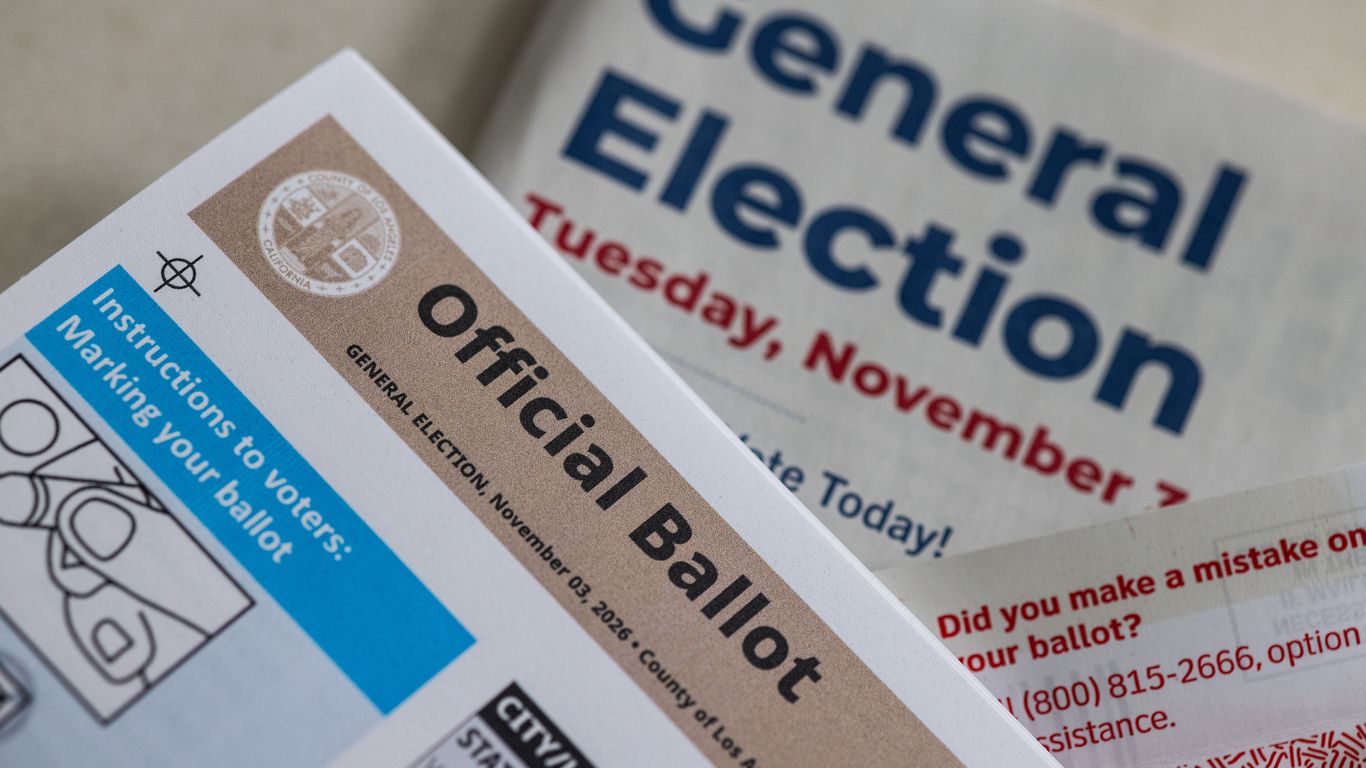
A federal appeals court rejected the Justice Department's emergency bid to set aside mail ballots tied to more than 20,000 California voters the Trump administration suspects are noncitizens. Why it matters: The 2–1 ruling leaves California's election procedures intact just days before the midterms, with the judges citing doubts about the DOJ's voter list and the risk of disenfranchising eligible voters. The ruling is a major setback for a DOJ that has doubled down on unsubstantiated claims of widespread voter fraud in the Golden State. What they're saying: The majority cited the lower court's finding that the DOJ's process for identifying suspected noncitizens was "not credible," undermining its claims. "Granting [the United States]'s request would provoke catastrophic change, upending the administration of the election," it wrote, quoting the district court's finding. "There is a material risk that granting the United States its requested relief would result in disenfranchisement and could jeopardize [Los Angeles] County's entire election." The other side: Ninth U.S. Circuit Judge Patrick Bumatay dissented, arguing that counting votes from noncitizens dilutes the power of citizens. "The federal government proposes a modest remedy—stopping California from mixing the ballots of citizens and suspected noncitizens. This solution would not cancel any vote but would allow time to verify the eligibility of suspected noncitizens." The White House and the Justice Department did not immediately respond to Axios' request for comment. Catch up quick: The DOJ sued California in mid October for refusing to segregate the ballots it asserted were sent to noncitizens. A district court denied the request for an injunction, deciding that the federal law the DOJ was relying on to bring the suit did not supersede existing state law. The Trump administration appealed, leading to Friday's decision. The administration can now appeal again to the Supreme Court. Zoom out: Trump has continu
Some experts express concern about ‘lack of transparency’ as agency removes warnings on three estrogen patches Three more patches for treating menopause will no longer carry black-box warnings about cardiovascular disease, breast cancer and dementia, officials at the US Food and Drug Administration (FDA) said on Friday. The FDA did not convene an advisory committee and offered few details on the scientific basis for the decision in the press briefing. The news follows the removal of black-box warnings from six menopause treatments in February, as patients across the US struggle with shortages of the patches. Continue reading...
The president cancelled the events in favor of tele-rallies, as Republicans face a fight to retain control of Congress Donald Trump cancelled, and then promptly uncancelled, two in-person rallies in Kansas and Iowa this weekend as polls suggest US midterm election races in the previous Republican strongholds could go down to the wire. On Thursday, just five days before election day, the Republican National Committee (RNC) announced the president would no longer host the Kansas and Iowa rallies and instead participate in “a large number of tele-rallies”. The RNC claimed it felt it was in a “strong position” in Kansas and Iowa. Continue reading...
President Trump's energy policies and investment deals could become major targets of Democratic investigations if the party wins control of either chamber of Congress. Why it matters: Congressional probes could expose new details about the administration's dealings with major companies and foreign governments. What they're saying: House Democrats are likely to take a "shotgun" approach of "throwing everything out there and then seeing what sticks in the realm of popular opinion," TD Cowen analyst John Miller said via email. Democrats will be looking for agencies that exceeded their authority, deals involving administration officials' families, or both, Miller said. The big picture: Scratch the surface of Democrats' biggest potential oversight targets, and energy is everywhere. Russia. Trump's dealings with Moscow will again be front and center — and so will the energy dimension. Democrats in both chambers are likely to investigate Trump's diesel deal with Moscow, which they claim violates a 2022 law barring imports of Russian fuels. The inquiries could also extend to U.S. banks and ports, which lawmakers have already warned could face congressional investigation. Venezuela. "We expect Venezuela to be the subject of a number of inquiries," RBC Capital Markets analysts said in a note. Democrats have already raised questions about whether any oil companies knew about plans to depose Nicolás Maduro. Investigations could also examine the legality of the Pentagon's 35% stake in the corporate parent North American Blue Energy Partners and the terms of the deal, the note states. The Iran war. High gasoline and diesel prices give Democrats another reason to scrutinize the decision to attack Iran, especially if pain at the pump persists. Sens. Sheldon Whitehouse (D-R.I.) and Elizabeth Warren (D-Mass.) have already pressed major oil and gas companies about their profits during the conflict. AI and data centers. Wider and intense oversight of AI will touch on data centers' ener
President Trump accused Democrats and Mary Peltola's campaign of fraud and perjury Wednesday after the New York Times reported that Peltola aides helped recruit another candidate named Dan Sullivan. Why it matters: The revelations add a new twist to Alaska's tight Senate race, where a second Dan Sullivan on the ballot could complicate the Republican incumbent's reelection bid. Zoom out: "Mary got in this race because Alaskans deserve a champion who is fighting to lower their costs and put Alaska first, and no tweet or threat from any DC politician will keep her away from that fight," an "Alaskans for Mary" spokesperson said in a Wednesday night email. "The Alaskans for Mary campaign has no involvement with either Sullivan campaign." The campaign confirmed no assertions have been made in federal court about how Dan J. Sullivan's candidacy came to be or who was involved in his decision to run. Driving the news: The New York Times reported Wednesday that Peltola campaign aides worked with a veteran Democratic operative named Jerid Kurtz, whom the Times described as experienced in ballot-related political tactics. A Peltola staffer was reportedly told to search for every Dan Sullivan in the state. The effort ultimately located Dan J. Sullivan, a retired teacher who registered as a Republican shortly before filing to run for office, per the Times. Dan J. Sullivan previously said he voted for Democrats in the last three presidential elections. He later changed his party registration to undeclared and will appear on November's ballot without a political party label. The latest: Alaska Gov. Mike Dunleavy ordered an investigation into Peltola's campaign Wednesday as a result of the Times report, posting on X that: "Alaskans have a fundamental right to vote for the candidate they actually intend to support." "Deliberately tricking voters into casting their ballots for someone else strikes at the integrity of our elections," he said. Peltola called the Times report a distracti
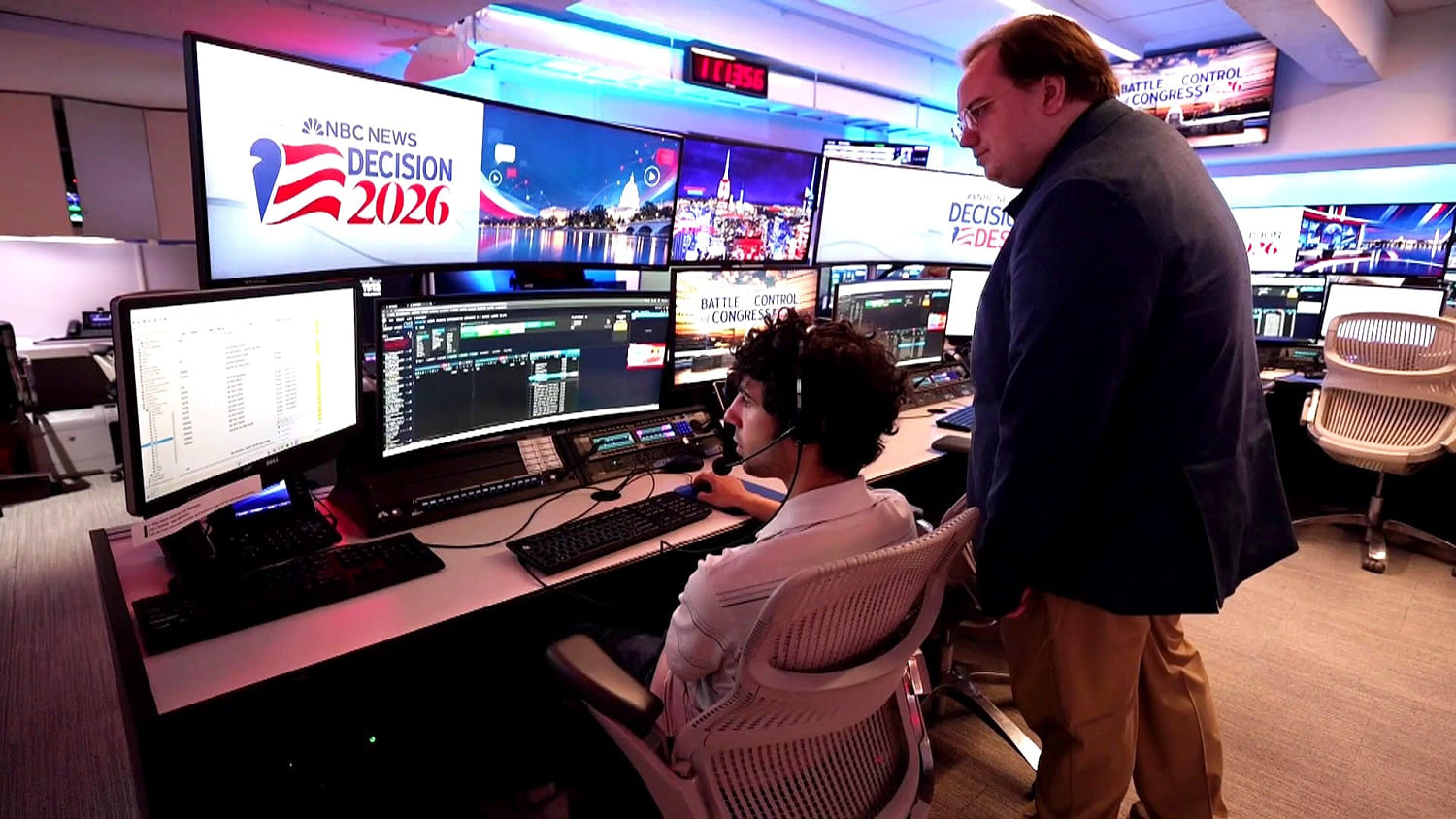
TODAY’s Savannah Guthrie goes behind-the-scenes with the NBC News team tasked with calling election night’s pivotal races from coast-to-coast.
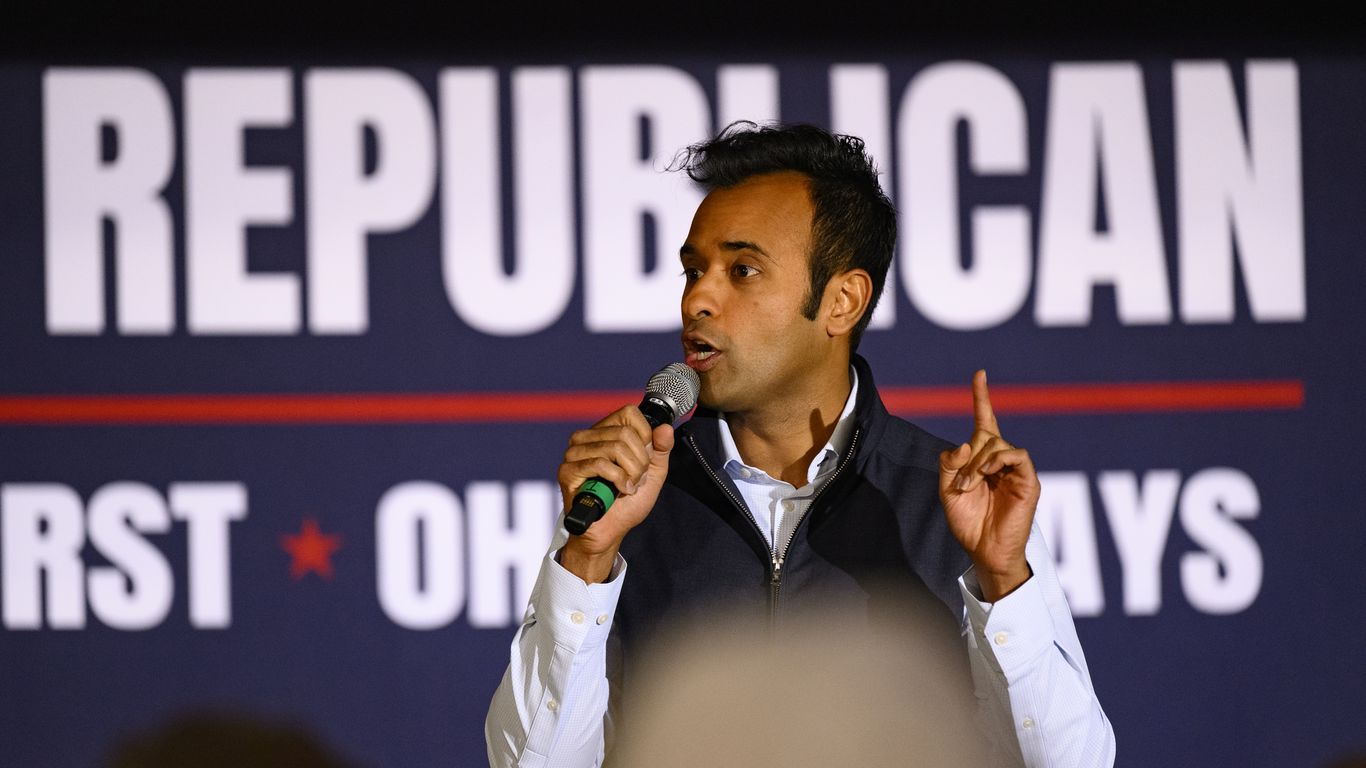
Republicans fear that Vivek Ramaswamy 's explosive attack ad featuring his opponent's estranged mother could cost them the Ohio governor's race, based on new internal polling that shows him falling further behind, Axios has learned. Why it matters: The poll's findings underscore Republicans' anxiety over Ramaswamy's decision to air the deeply personal attack on Democrat Amy Acton despite warnings from some fellow Republicans that it crossed a line. Driving the news: The private poll, commissioned by a Republican group and obtained by Axios, found Acton leading Ramaswamy by eight points — up from a two-point lead in the same poll earlier this month, before the ad began circulating on Oct. 19. The ad "is having a significant effect on the gubernatorial race," a memo attached to the poll states. Catch up quick: The ad at the center of the controversy features Donna Arthur, Acton's estranged mother, who accuses her daughter of lying about her childhood and urges Ohioans not to vote for her. Acton has said she was sexually abused by her stepfather when she was 12 and that her mother sided with her abuser. The stepfather was charged with sexual assault but fled to Pennsylvania, where he died in 2004 as a fugitive. Acton and her brother were removed from their mother's custody. Acton has said she hasn't seen her mother since 1978. Zoom out: As Axios first reported , Ramaswamy's campaign treated the ad as a game-changer in the campaign for governor, committing $4 million to airing the commercial statewide despite warnings from other Republicans that it could backfire. Ohio Gov. Mike DeWine (R), who worked closely with Acton when she was the state's health director, said that airing the ad was wrong and urged Ramaswamy to take it down. But President Trump and Vice President Vance backed Ramaswamy. Vance told the bipartisan critics of the ad to "stop whining." The intrigue: The new poll done for Republicans indicates that the ad was indeed a game-changer — just not the type R
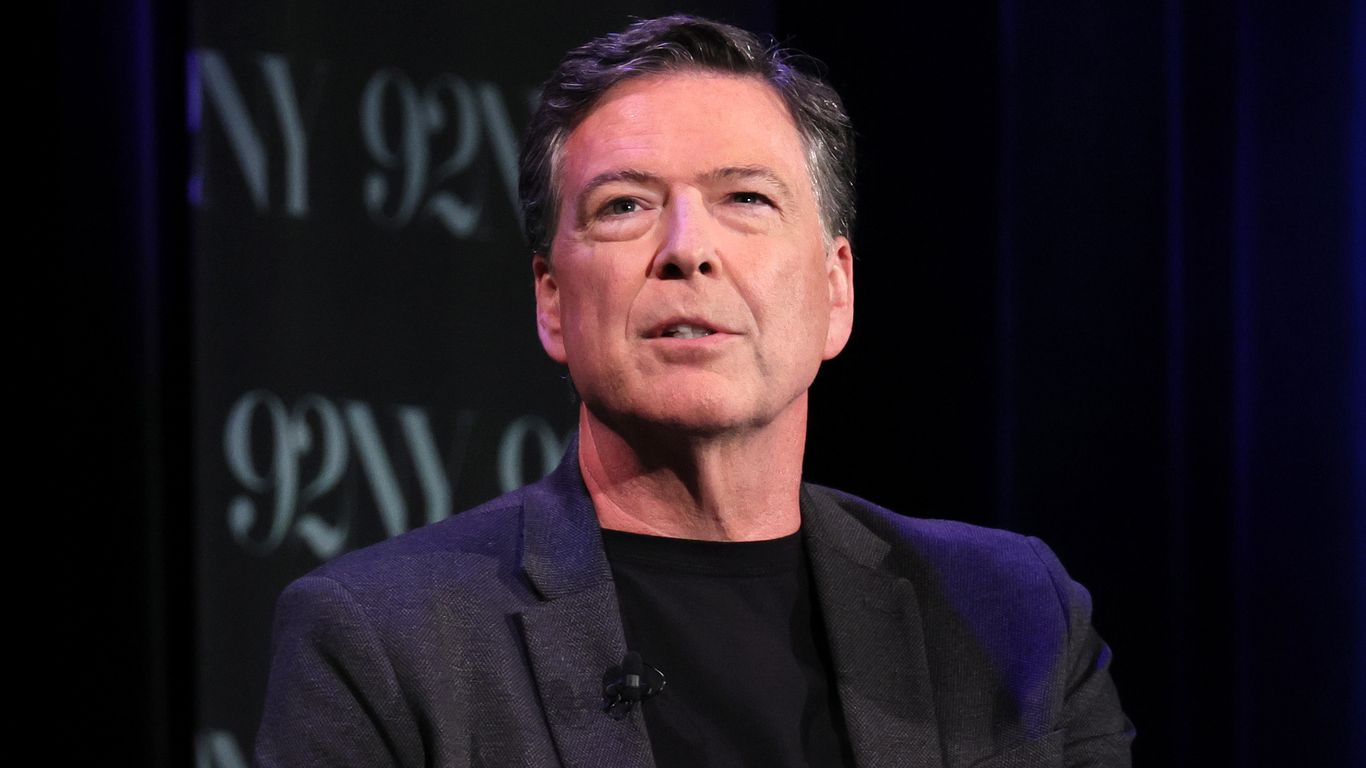
Former FBI Director James Comey is facing new federal charges, according to a charging document made public Monday. Why it matters: This marks the third time the Trump administration has charged Comey. He has been a subject of the president's ire since his dismissal from the first Trump administration in 2017. Driving the news: Prosecutors allege Comey directed the disclosure of national defense information to a reporter through one or more co-conspirators in October 2016, while he was serving as FBI director . He is charged with participating in the transmission of national defense information and conspiracy to transmit national defense information. The case has been ongoing under seal since early October. What they're saying: A U.S. Department of Justice spokesperson told Axios that the case is an "ongoing criminal investigation" and declined to comment further. The White House referred Axios to the DOJ for comment. The other side: Comey's attorney Patrick Fitzgerald said in a statement posted to Comey's Instagram account that the former FBI director "steadfastly maintains his innocence" and will fight the latest charges. Fitzgerald said the case concerns an Oct. 5, 2016, New York Times article that two separate teams of prosecutors investigated during President Trump's first administration. Both teams decided not to bring charges, he said. He also welcomed U.S. District Judge Trevor McFadden's decision to unseal the case. Catch up quick: Trump fired Comey in 2017 amid the FBI's investigation into alleged Russian interference in the 2016 election. His dismissal led to the appointment of Robert Mueller as special counsel, tasked with uncovering any links to Russian interference in the election. Mueller's investigation report — released in 2019 — documented extensive Russian interference in the 2016 election but did not establish a criminal conspiracy between Trump's campaign and Russia. Zoom out: The charges were made public the same day a federal judge ruled that
President Trump and MAGA-world influencers are echoing Brazilian presidential candidate Flávio Bolsonaro's claims of a rigged election after the Trump-aligned populist fell to the incumbent president in Sunday's election. The big picture: President Luiz Inácio Lula da Silva's runoff victory has been widely seen as a counterweight to the global right's surge in Latin America. But Bolsonaro, like his father , isn't accepting defeat. What they're saying: "It looked like another rigged election, frankly," Trump told reporters Monday. He added, "Elections have to be indisputable, and it looked very bad to me." The White House did not respond to Axios' request for comment. Friction point: Bolsonaro told reporters it was "impossible to recognize the result of this election in the context of how these things have happened," according to a translation . He also vowed to ask for the results to be annulled. Brazilian Supreme Court Justice Cristiano Zanin's two-hour extension to Sunday's voting has fueled Bolsonaro's claims. Zanin previously served as Lula's lawyer. But both Bolsonaro and Lula's camps requested more time for voters. Lula's team requested the extension because of public transit issues, while Bolsonaro sought additional time in certain states because of weather, Bloomberg reported . The extension was reportedly given as many polling stations were already wrapping up. Multiple outlets noted that the decision risked setting the stage for candidates to dispute the results, despite Brazil's voting system being widely recognized for its reliability. Zoom out: Several prominent voices in the online MAGA movement backed Bolsonaro's refusal to accept the election results, and some urged the Trump administration to act. "The math just ain't mathin'," podcaster Benny Johnson said in a Monday edition of his show where he criticized the election results. He was joined by Florida Attorney General James Uthmeier, who argued Brazil looked like "a banana republic." Former Trump
President Trump has endorsed Benjamin Netanyahu in Tuesday's Israeli election, but some of his advisers see opportunity for his Middle East agenda in a government led by someone else, U.S. officials tell Axios. Why it matters: Trump has never worked with an Israeli prime minister other than Netanyahu, and doesn't personally know any of the other candidates. The two have forged a close but often turbulent relationship. "He's the devil he knows," one Trump adviser said, describing the president's view of Netanyahu. Driving the news: After weeks of hesitation, Trump endorsed Netanyahu on Sunday — and even suggested his defeat would have consequences for U.S.-Israel relations. One U.S. official described the endorsement as a win-win for Trump, regardless of the outcome. If Netanyahu wins — or remains in power as caretaker prime minister — Trump could claim credit for rescuing him politically and use that leverage to press for concessions. If Netanyahu loses and his opponents form a government, Israel's new leaders would still have every incentive to cultivate good relations with Trump. His endorsement of their rival would quickly become a footnote. Behind the scenes: Many of Trump's closest advisers opposed his decision to endorse Netanyahu, believing the president should stay out of the Israeli election, according to sources familiar with the discussions. Vice President Vance notably declined to follow Trump's lead when asked about the election this week, amid growing hostility toward Netanyahu in parts of the MAGA movement. "I'm not attacking Bibi Netanyahu. I'm not endorsing Bibi Netanyahu. I think the president's endorsement is ultimately what matters," Vance told reporters. Zoom in: Vance, who endorsed former Hungarian Prime Minister Viktor Orbán days before his election defeat in April , said he would no longer get involved in foreign elections. The vice president is among the senior Trump officials who became disillusioned with Netanyahu during the war with Iran,
The Trump administration sued Alaska on Thursday to delay certification of election results if incumbent Republican Sen. Dan Sullivan loses. Why it matters: The race between incumbent Sullivan, Democrat Mary Peltola , and retired teacher Dan Sullivan has been marked by controversy, with Republicans accusing Democrats of trying to confuse voters by planting a candidate with the same name. Alaska's use of ranked-choice voting, which eliminates candidates in rounds if no one gets 50% of the initial vote, complicates matters. "An election result may be impacted by voter confusion if: (1) Senator Sullivan does not win the election; and (2) had all votes cast for Daniel J. Sullivan been cast instead for Senator Sullivan and Alaska's rank-choice process played out accordingly, Senator Sullivan would have won the election," the lawsuit , filed in Alaska District Court, states. Zoom in: Because of a previous Alaska Supreme Court decision and Sullivan's name already being on the ballot, the administration contended in the lawsuit that the only means to ensure that the winner of the race is voters' choice "is to ensure that the certification is not impacted" by his candidacy. The lawsuit requests a delay in certification until after an investigation determines "whether votes cast for Daniel J. Sullivan were meant to be cast for Senator Sullivan." What they're saying: "Alaska's Division of Elections determined that Mr. Daniel J. Sullivan's candidacy was intended to mislead voters and compromise the fairness of the ballot," a DOJ spokesperson said in a statement. "Therefore, the Justice Department, consistent with the National Voter Registration Act enacted by Congress, is taking the necessary steps to ensure that this frivolous candidacy does not undermine the integrity of Alaska's election or the will of its voters." The White House referred Axios to the DOJ. President Trump told reporters Friday that he told the DOJ to file the suit against Alaska. He then explained the situa
Major U.S. banks are detecting unauthorized third-party AI agents operating inside customer accounts, with some agents attempting to take actions that appear to be independent of user instructions, sources tell Axios. Why it matters: AI agents are becoming a nightmare for America's banks, making their way into banking systems faster than financial institutions can respond. The difficulty in distinguishing between a human and an unauthorized bot is forcing banks to block the technology and rapidly rewrite their terms of service. Driving the news: Banks including Morgan Stanley, Bank of America, JPMorgan, Wells Fargo and others are racing to contain agent risks. Some are aware of unauthorized access, people familiar with the issue said. These are generally situations when an agent or AI assistant accesses a human's account with the user's permission and login credentials. Even if permitted by the user, this goes against the guidelines of most banks requiring that humans log in to their own accounts. This presents significant security risks : Banking executives fear the steps agents with login access might take, especially if a user has granted purchase authority or the ability to shift funds. In other instances, some banks have tracked activity when agents — programmed to fulfill requests or complete tasks on a user's behalf — contact call centers or appear to take actions independent of user instructions, the people said. What they're saying: Bank executives described the situation as horrifying, with one official saying the industry has grave concerns about agents gaining access to customer accounts and taking steps that could impact user finances. State of play: The concerns are at the root of the decision by several banks to restrict third-party AI agent access, the people said. Morgan Stanley has begun blocking third-party agents from accessing its platforms, sources familiar with the decision said. JPMorgan , Bank of America and Citi are also restricting agents