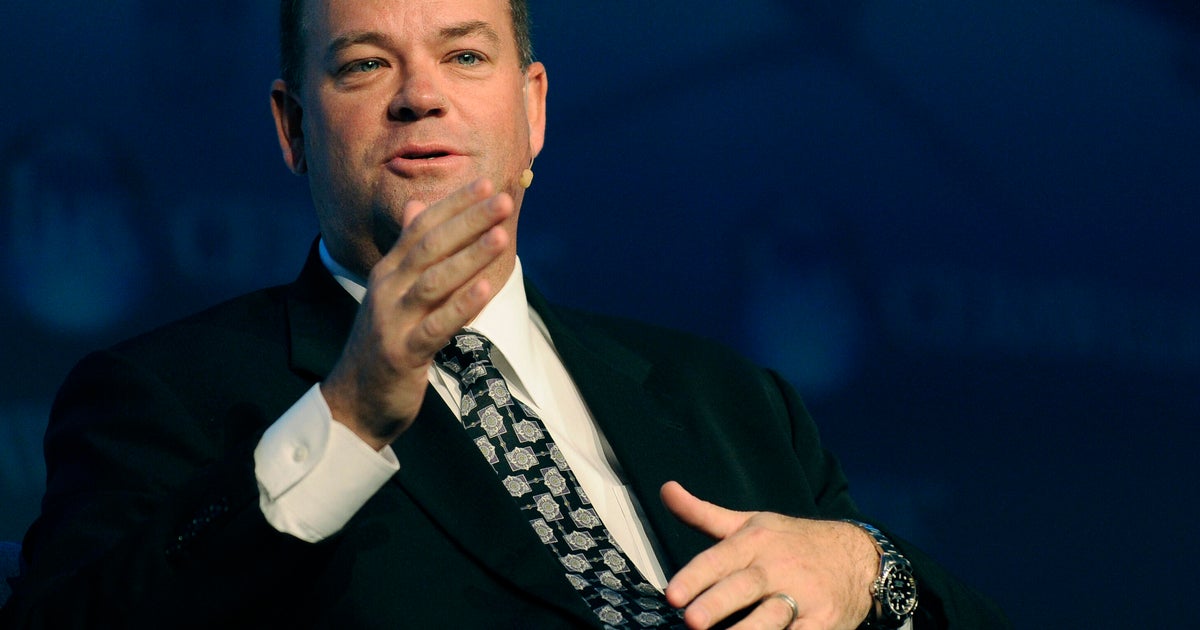
The mayor and the governor have had harsh words in recent days for the plant’s operator, and Gov. Josh Green signed an executive order requiring immediate reporting of any oil spill.
Data: Financial Modeling Prep ; Chart: Ben Geman/Axios Brent crude is trading below $90 per barrel to start the week and briefly dipped to its lowest level since late August. Why it matters: Recent declines should help gasoline prices keep falling. The average U.S. retail price is $3.61 per gallon, down nearly 70 cents over the last month, per AAA data. The big picture: "The prospect of negotiations has eased some immediate concerns over Middle East supply, particularly as crude exports from the Persian Gulf have remained relatively resilient despite continued disruption around the Strait of Hormuz," ING analysts write. Catch up quick: Qatar's prime minister met with Vice President JD Vance at the White House on Monday to discuss talks with Iran, according to Axios' Barak Ravid. Reality check: Major risks remain, with the Strait of Hormuz and the wider region remaining a very dangerous place, so don't assume the downward trend will continue. And nothing is really back to normal. The market intelligence firm Kpler finds tanker traffic through the Strait of Hormuz was 42% below prewar levels in the seven days through Nov. 21, the WSJ reports. Flashback: The International Energy Agency on Nov. 13 predicted the global oil market will return to a surplus this quarter with supply rising and oil demand lowered by the conflict. The bottom line: "The status quo is growing ever more bearish," Sparta Commodities' Aaron Kildow said in a note Monday. Sign up here for Axios' Future of Energy newsletter.
Attacks from the Mediterranean to eastern Europe to the Baltic Sea are a rebuke to western complacency. Trump is a liability, and he must be bypassed to ensure peace Ukraine’s spectacularly successful weekend drone attack on a spanking new Russian warship docked in the Libyan port city of Benghazi, more than 1,300 miles (2,200km) from Kyiv, is further proof, if it were needed, that the catastrophic full-scale war Vladimir Putin launched in 2022 is escalating and spreading uncontrollably. The sinking follows a similar incident in the Baltic last week, which crippled a Russian cargo ship, and previous Ukrainian attacks on oil tankers and Russian navy ships and bases in the Black Sea region. Last week, Russia was blamed for a missile and drone strike on Nato member Poland , which Donald Tusk, the Polish prime minister, claimed was intentional, and for deliberately targeting western diplomatic compounds in Kyiv. While Moscow’s murderous winter bombing of Ukrainian civilians and energy infrastructure continues apace, provocative and disruptive Russian hybrid warfare operations across all of Europe, including sabotage, arson and cyber-attacks, are becoming daily occurrences. Simon Tisdall is a Guardian foreign affairs commentator Continue reading...
The collapse of UN climate talks without an overarching deal is deepening doubts about the effectiveness of these summits — and bringing fresh calls for a shakeup. Why it matters: Warming is on pace to far exceed the Paris Agreement target of holding long-term temperature rise under 2°C above preindustrial levels — and the more ambitious 1.5°C goal has slipped away . 🏃 Catch up quick: The COP31 talks in Turkey ended Sunday without a high-level "cover decision" of wide-angle agreements and goals. Vulnerable island nations and the EU, among others, objected to a draft deal after some oil-producing countries blocked explicit endorsement of moving away from fossil fuels. ⚔️ Friction point: There was also pushback against proposed text that endorsed carbon capture as a major climate solution. Finance discussions also disappointed advocates, with climate think tank E3G noting that "little or no new and additional money reached the table." 🏀 State of play: Sunday's events reinforce criticisms that the decades-old summit process — which birthed the 2015 Paris deal — is not suitable for spurring policies that meet the scope of the problem. It could add urgency to years-long efforts to revamp how they work. "I have taken steps in engaging external knowledge leaders in advising on areas of potential reform. That is something I will be championing with considerable effort as we leave here," Simon Stiell, the top UN climate official, said as the talks closed, per Reuters. 🥊 Reality check: Ending the practice that decisions require consensus — which effectively gives veto power to individual countries and blocs — would be a steep uphill climb. Yes, but: There was some progress at COP31, per groups that track the granular talks. For example, the climate group E3G cites procedural advances on the "Just Transition Work Programme," an initiative created in 2022 to support workers and communities in the energy transition. And dozens of countries endorsed a pledge to bring electrici
A permitting reform bill in the Senate could help speed the development of renewable energy projects, but it's splitting environmentalists over other provisions that help the oil and gas industry.
The Senate passed a sweeping, bipartisan bill Thursday night that's designed to cut permitting timelines for energy and infrastructure projects. Why it matters: The eyes of the entire energy industry are on this bill. If it becomes law, it could transform how America builds energy infrastructure, with major implications for everything from electricity costs to data centers. Getting rid of bureaucratic hurdles and creating a more predictable process for energy projects is a top priority for the fossil fuels and renewables sectors. But critics argue the plan, which has White House support, would unacceptably weaken environmental protections and the rights of Native American tribes. Driving the news: The vote was 62-33. The bill would still have to pass the House before the end of the year, and any differences would have to be worked out by both chambers before President Trump could sign it into law. Catch up quick: It would make significant changes to federal permitting, including: New limits on the duration of lawsuits, and the scope and length of reviews under the Clean Water Act and National Environmental Policy Act. Language that would make it more difficult to revoke permits once they're issued, a priority for renewables groups and Democrats upset with Trump administration barriers. State of play: There are also provisions to ensure that data centers pay for needed grid upgrades, and expand federal authority over the siting and approval of certain interstate transmission projects. Friction point: Many environmental advocates argue that the bill would dangerously erode safeguards in the National Environmental Policy Act and other laws. Multiple tribal groups still oppose it despite changes aimed at easing concerns about consultation on historic preservation. Energy and business groups, ranging from renewables developers to manufacturers to the oil and gas industry, are lobbying for the measure. The AFL-CIO and many individual unions back it, too. What's next: The
If the sweeping Senate permitting bill becomes law, it will reflect a rare convergence of political and market forces strong enough to trump the Beltway aversion to big, bipartisan deals. Why it matters: The bill could transform how America builds energy infrastructure, with major implications for everything from electricity costs to data centers. Getting rid of bureaucratic hurdles for energy projects is a top priority for the fossil fuels and renewables sectors. But critics argue the plan would unacceptably weaken environmental protections and the rights of Native American tribes. The latest: A vote on final passage of the White House-backed bill could occur Thursday after the Senate plows through some more amendments. The big picture: Many industries — pipelines, transmission, housing, you name it — call permitting a long bureaucratic and judicial maze that stymies projects. Yes, but: That, on its own, isn't nearly enough to get this far. Here are other reasons the bill has a path to becoming law after years of failed efforts to upend permitting. 🗳️ The cost-of-living election. The midterms were soaked in affordability politics at a time of rising energy bills. While critics can call the projected savings modest, cost is politically front and center. The Rhodium Group estimates that big provisions it analyzed would cut average residential power prices by 3%-4% in 2035. Third Way, a group that favors the bill, supported the research firm's work. 📈 Rising electricity demand. U.S. power thirst has been rising in the last few years after staying largely flat for decades, driven partly by AI and wider electrification of the economy. 🦋 A maturing clean energy industry. As sectors like renewables and storage become more mainstream, " more developers and companies are seeing the real-world challenges" of doing projects, clean energy lobbyist Jeff Navin notes via email. That puts them in agreement with utilities and oil and gas companies. "They all run into problems ge
GOP lawmakers are rushing through high-priority bills before newly elected Democrats are sworn in Climate groups fear lawmakers could pass a bill by the end of the year that would give fossil fuel companies immunity from lawsuits and legislation that aims to hold them accountable for the climate crisis. After the blue wave election, Republican lawmakers are rushing to pass high-priority bills before newly elected Democrats are sworn in. Hundreds of elected leaders and climate groups sent a letter to Democratic leadership urging them to reject any proposal that would shield fossil fuel companies from liability for the climate crisis. Continue reading...
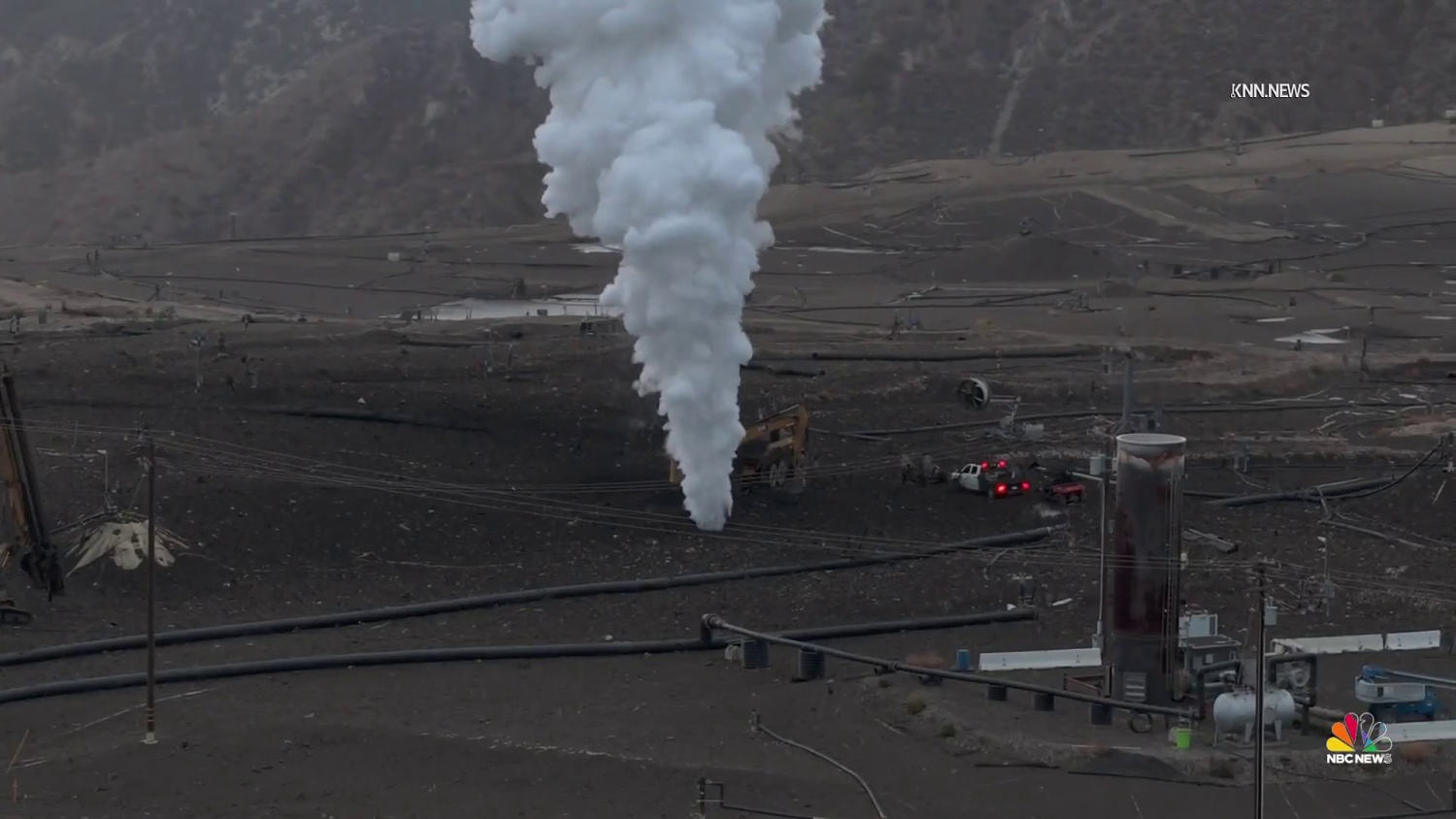
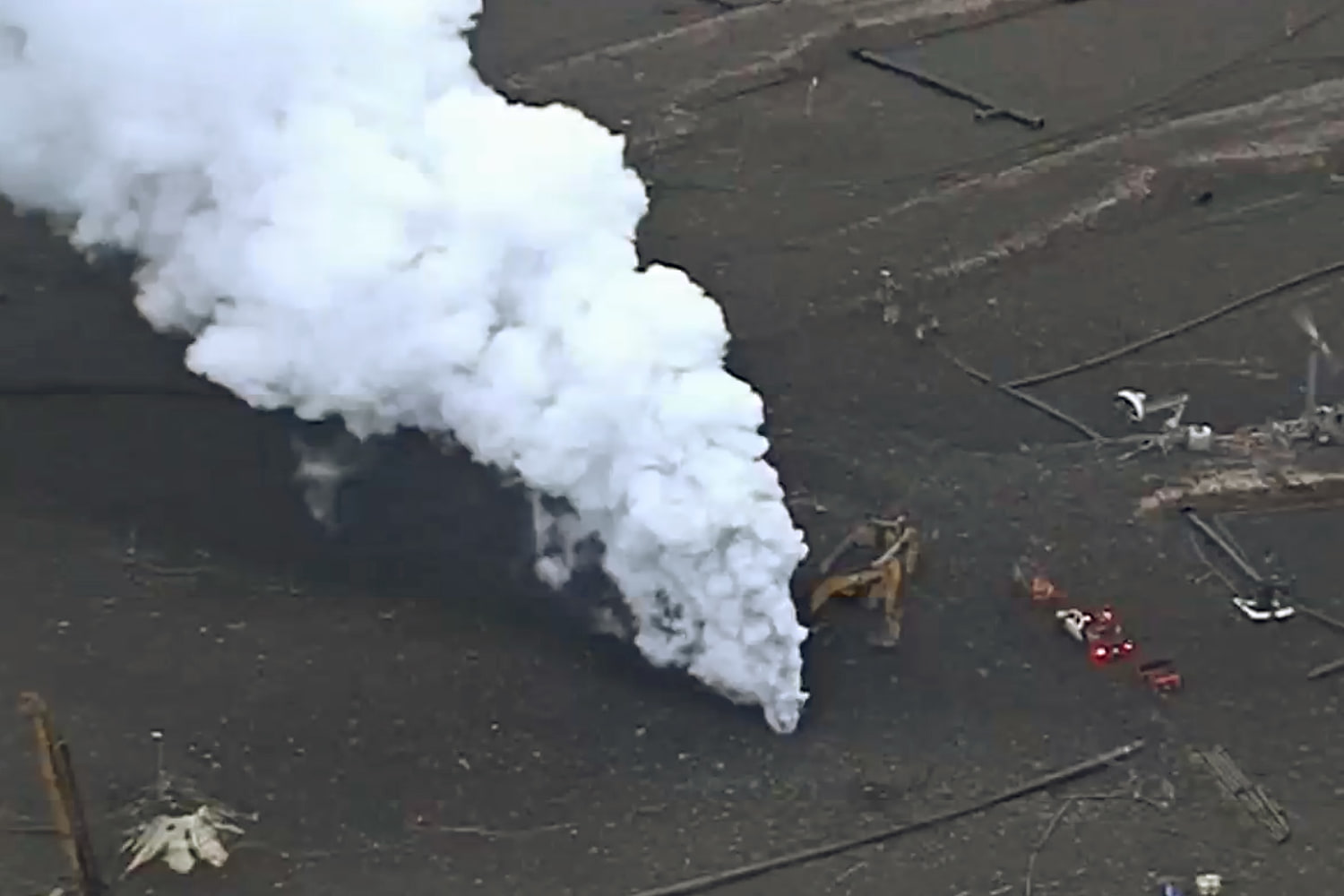
A plume of gas and debris erupted high into the sky as crews were drilling at a Los Angeles County landfill Monday. Families nearby evacuated, concerned the gas shooting into the air could be toxic. NBC News’ Liz Kreutz reports.
Pungent odors wafting from the Chiquita Canyon Landfill has prompted Los Angeles County officials to order the company responsible to pay to relocate nearby residents after a drilling issue unleashed a geyser of trash and fumes.
A large plume of gas billowed high into the air after crews drilling at a landfill in Los Angeles County caused a rush of gas to escape along with decomposing garbage
Data: AAA; Chart: Ben Geman/Axios Average U.S. diesel prices inched below $6 per gallon on Monday for the first time since Sept. 10 amid lower oil prices recently, per AAA data. Why it matters: Diesel soared even more than gasoline during the Iran war, and those costs rippled throughout the economy. Democrats featured high prices, especially for farmers, en route to midterm wins in typically red agricultural states. Zoom out: The worldwide diesel supply crunch remains acute even as the broader oil market is starting to fitfully stabilize. Ukrainian attacks on Russian refineries, damage to Middle Eastern production and shipments, throttled oil supplies, and expanded U.S. exports to meet overseas demand helped raise domestic costs. The bottom line: Prices are now far below the Sept. 22 record of nearly $6.53 per gallon. The recent relief is real, but it's limited. Average U.S. prices remain well above the prior record $5.82 per gallon set in 2022.
A river boat with over 100 passengers was struck on Friday by a much larger tanker ship, capsizing the cruise vessel and prompting a major rescue effort in the Mississippi River near the French Quarter.
The U.S. Coast Guard launched an investigation into a so-called "magic pipe" case, in which a ship transfers its oil discharge into its gray water system.
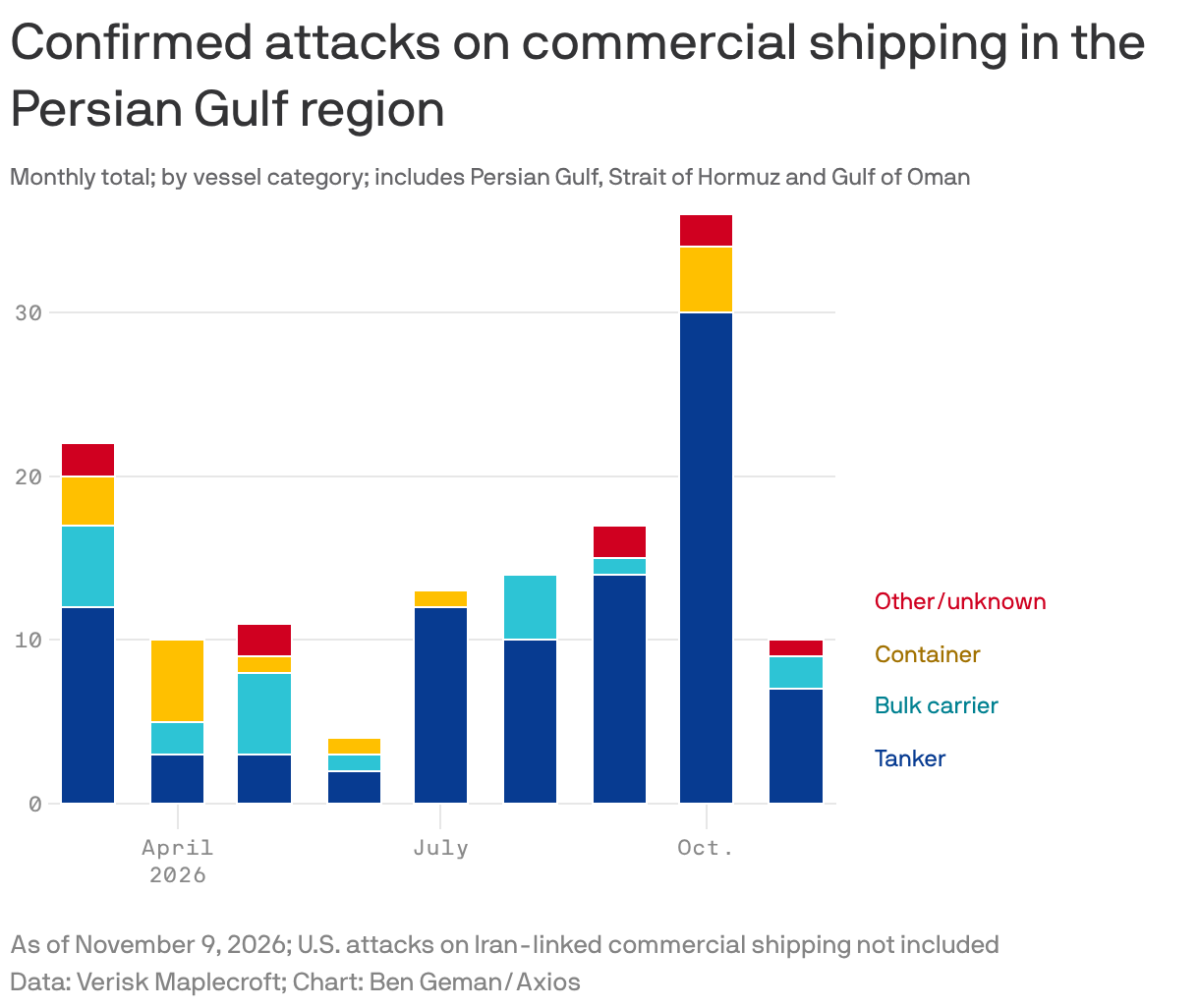
Oil markets are heading into an unusual period as the Iran conflict remains in dangerous limbo: The supply crunch is easing, but prices could stay stubbornly high. Why it matters: While gasoline prices have dropped lately, don't expect pre-war levels anytime soon even as Middle East exports fitfully recover. Getting oil out of the region is expensive, which filters down to consumers. The threat of new attacks can keep oil costs higher, too, thanks to the risk premium embedded in prices. The big picture: Traders are watching the state of potential diplomacy — and the possibility of a prolonged stalemate. Oil prices jumped yesterday after President Trump said on his Truth Social that "we don't need a deal with Iran. Those days have long since passed." Driving the news: Export levels bounce around, but have recently returned to pre-war levels at times, barrel-tracking firms and analysts say. Yet shipping threats will "persist in 2027," and attacks spiked last month ( see the chart above ), per political risk intelligence firm Verisk Maplecroft. A new agreement on navigating the Strait of Hormuz would just be a piece of the puzzle — if it ever happens. "The threat of a renewed wave of shipping attacks will remain high as long as the underlying confrontation over Iran's nuclear and missile programmes remains unresolved," the firm's analysis states. Catch up quick: Tracking how much supply is returning is a moving target, and higher production from countries outside the Middle East — including the U.S. — matters too. The oil market is "showing tentative signs of rebalancing, with global oil supplies surpassing demand for the first time since the outbreak of the war in Iran," the International Energy Agency said this morning. Crude oil exports from the Persian Gulf region rose to 82% of pre-war levels last month, though recovery of refined product shipments is weaker, its monthly analysis states. With supply rising and oil demand lowered by the conflict, IEA predicts the g
The Banila Co cleansing balm can remove stubborn makeup, dirt and waterproof products. It’s currently 30% off and at its lowest price in 90 days; it’s a great stocking stuffer for a beauty lover.
Find the best turkey fryer for Thanksgiving, including oil-free infrared options and oversized stainless steel kits, plus tips on how to fry a turkey safely.
ExxonMobil has signed a memorandum of understanding with the Venezuelan government and its state-owned oil company to explore opportunities in the country.
Data: Axios analysis of FactSet data; Note: Correlation over preceding 30 trading sessions between daily change in West Texas Intermediate crude and change in 10-year U.S. Treasury yield; Chart: Neil Irwin/Axios For much of this year, on any given day, you could look at the price of oil and correctly guess what happened to bond yields. In the last few weeks, that correlation has evaporated. Why it matters: It's a sign that growth risks may be supplanting inflation worries as the dominant economic concern. State of play: It's not obvious whether an energy supply shock should affect inflation or growth more. On the one hand, more expensive fuel can ripple through prices for everything else. On the other, more expensive energy acts like a tax on consumers and businesses that consume it. Since the attack on Iran in late February , markets have treated the former concern as the central dynamic in the global economy. Zoom in: As such, on days when oil futures pointed to higher prices, bonds almost always sold off and their yields — which move in the opposite direction from their prices — rose. Traders were pricing in a world where inflation is higher for longer, and central banks react by raising rates more — and betting, implicitly, that growth would prove resilient despite the energy price headwind. For the 30 trading days ended Sept. 10, the correlation between the one-day move in West Texas Intermediate crude and 10-year U.S. Treasury yield reached a stunning 77%. The Financial Times noted in late September that the correlation was the highest it had been since the Persian Gulf War of the early 1990s. Yes, but: Now, that correlation has collapsed — and is about negative 10% over the last 30 trading days. In other words, on days when oil rises, it's more likely than not that bond yields fall. Between the lines: It's probably not a coincidence that this shift has occurred at the same time cracks have appeared in the debt market that's financing the AI buildout. As long
Democrats have made climate change a centerpiece of their campaigns for years — but this year they barely mentioned it. Why it matters: The midterms showed just how far the topic has fallen down the political priority list, even within the party most committed to addressing it — and suggest affordability will shape how Democrats govern next year. Driving the news: Democrats up and down the ballot campaigned overwhelmingly on affordability, including fuel prices surging amid President Trump's Iran war and rising electricity bills, accentuated by the AI boom. The big picture: The relative absence of climate change is striking considering that Democrats of all political stripes won big. Zoom in: Even some of the party's most prominent climate advocates emphasized affordability over climate change — or reconsidered ambitious climate policies in response to rising costs. New York Gov. Kathy Hochul, who previously championed the state's ambitious climate agenda, pushed to weaken parts of its landmark climate law this year, citing affordability concerns. Sen. Ed Markey (D-Mass.), who co-authored the Green New Deal, played down the proposal during his reelection campaign, emphasizing affordability and other priorities instead. Texas Sen.-elect James Talarico, who has previously warned about fossil fuels' impact on the planet, campaigned on protecting oil and gas jobs alongside expanding renewable energy and lowering electricity bills. Flashback: The political shift has been underway since the 2024 presidential election, when even climate-focused groups began de-emphasizing climate change in their political advertising, a trend that persisted through the midterms. State of play: On a call with reporters the day after the election, leading environmental groups celebrated Democrats' victories as a rejection of Trump's energy policies, arguing that his attacks on clean energy contributed to higher electricity bills. "Trump's energy agenda was an economic disaster for families a
Democrats won the midterms on voter frustration with high prices . Now they face the same problem that sank Republicans: Americans want lower prices, and there is little that policymakers can do to deliver them quickly. Why it matters: Prices for necessities like groceries and gas can fall in a healthy economy. But the kind of broad price declines that would reverse years of price gains would likely come with job losses and falling incomes, leaving households worse off than before. It sets up an early test for the incoming Democratic-controlled Congress and Democrats in statehouses across the country: delivering relief that voters can actually feel in their household budgets. What they're saying: "Can you bring prices back to 2019 levels? No," Brendan Duke, senior director for federal budget policy at the Center on Budget and Policy Priorities, tells Axios. "But a lot of the price shocks are policy-induced, so there are ways that policy can reverse them." Duke points to reversing food assistance cuts, restoring health insurance subsidies and ending the Iran war as possible sources of relief, with the "big, fat asterisk" that President Trump might not sign off. Other economic problems — a potential rise in unemployment or the AI bubble bursting — could overshadow affordability without solving it, Duke says. The big picture: Democrats have limited power over sources of pressure on household budgets. Their midterm sweep helped lower oil prices through market expectations. But Trump still controls the next steps in the war, and further relief heavily depends on his next moves. Congress could vote to repeal tariffs, potentially reducing costs for imported goods and American manufacturers. But Trump could simply veto that legislation (and more generally, there is no guarantee that businesses would pass all the savings on to consumers). Plans to restore expired Affordable Care Act subsidies or reverse Medicaid cuts could hit a wall because of internal divisions or Trump's
From energy prices to datacenters, climate became a cost-of-living issue – and a winning one Climate-forward Democrats swept into power Tuesday night as a blue tsunami flipped the Senate, House and several governors’ races. Voters were laser-focused on affordability, and experts said Democrats succeeded in linking cost-of-living concerns with rising energy prices, datacenters and, to some extent, the climate crisis. They may have even created a path for a “new climate politics”. The results delivered a sharp rebuke of Donald Trump, who started a war with Iran that raised gas pump prices across the country and exposed the fragility of fossil fuels, all while the US oil industry earned $130bn in profits since the war began. Household energy costs soared, driven by various factors including constraints on renewables , climate disasters and a datacenter boom. Continue reading...
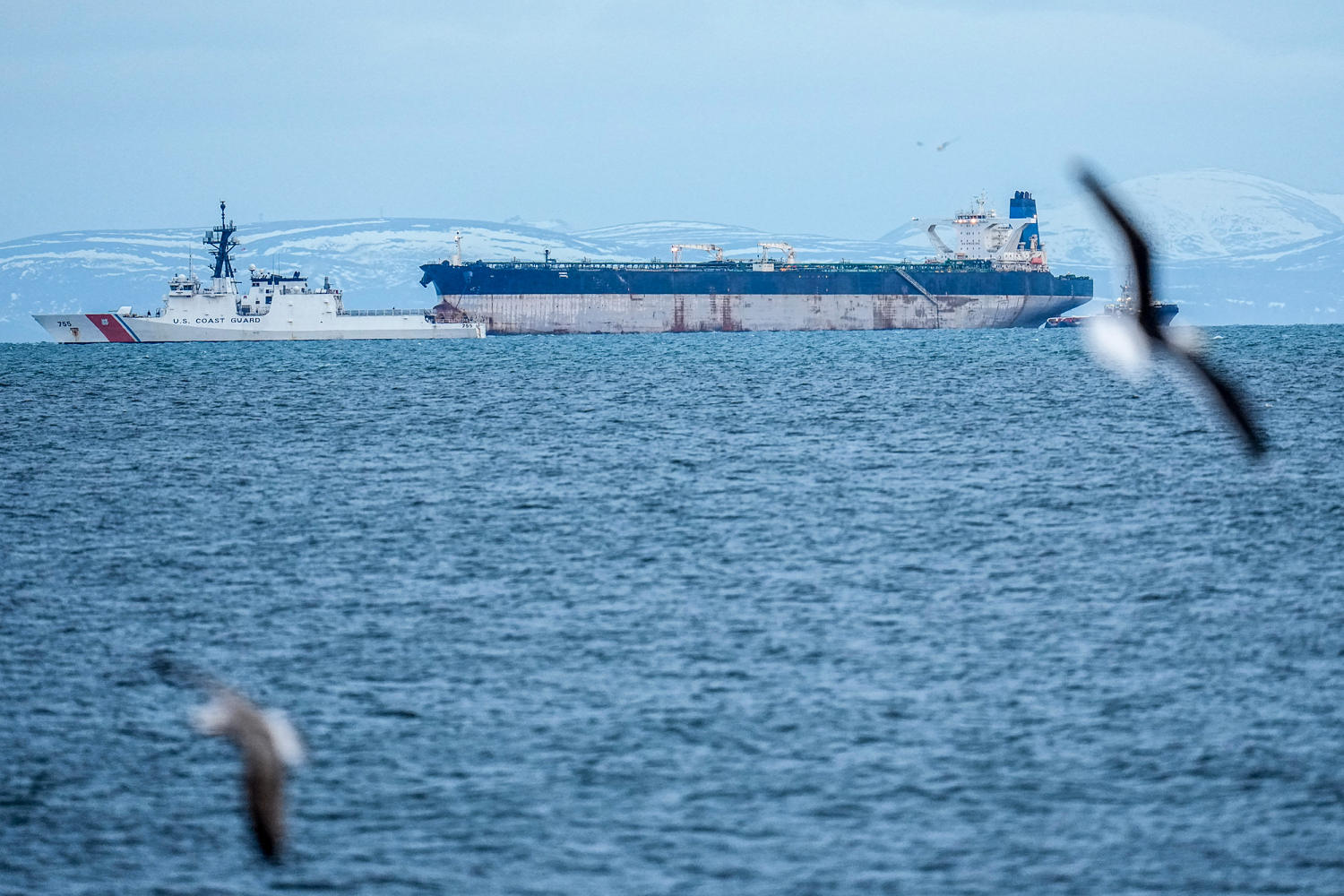
U.S. authorities sold a seized Russian oil tanker to a maritime scrap dealer for well under market value in an “economically irrational” deal meant to thwart the owner’s bid to recover the vessel, the company lawyers said in court papers.
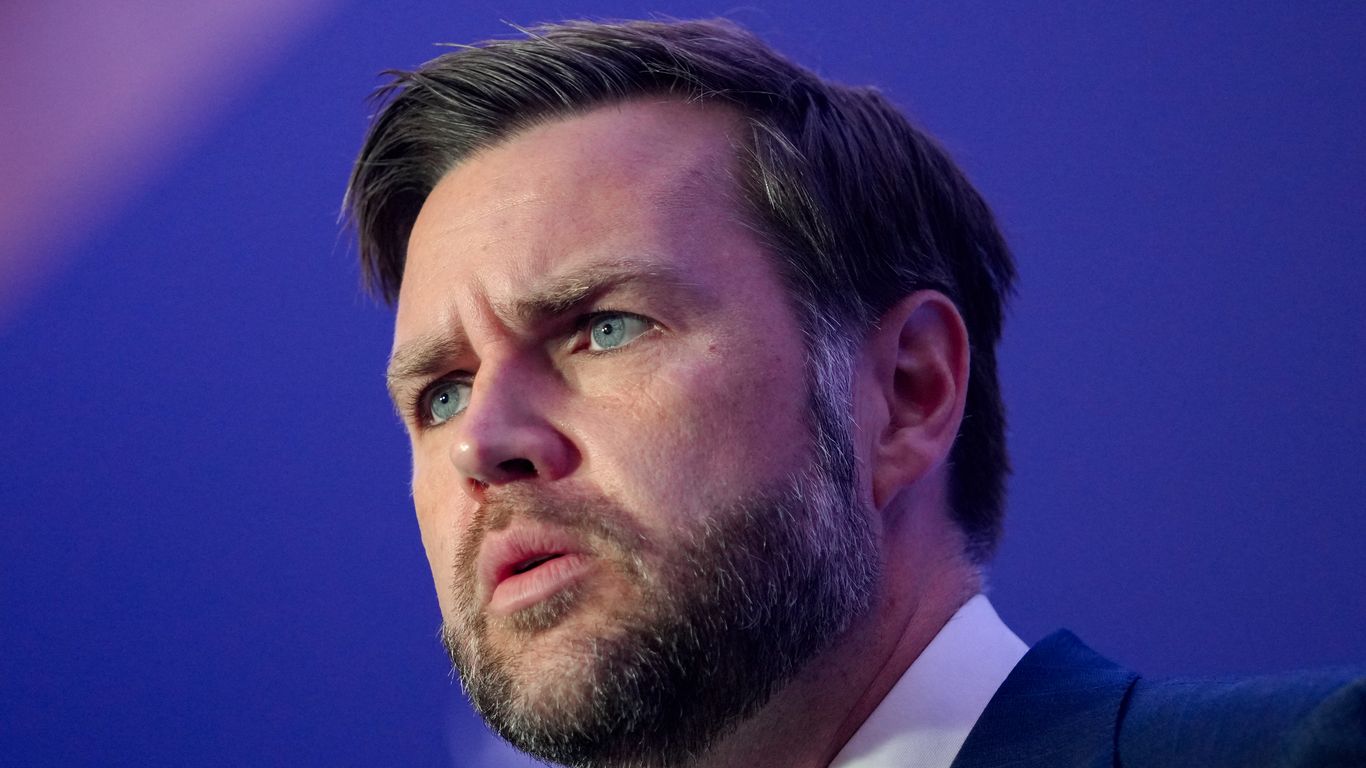
Data: Financial Modeling Prep ; Chart: Ben Geman/Axios Oil prices fell sharply Wednesday as traders weigh signs — including a widely circulated post by Vice President JD Vance — that the midterm election will add pressure on the White House to find an offramp from the Iran conflict. Why it matters: Elections have consequences. Wednesday's price drop — around $8 per barrel — deepened after Vance posted on X that "everyone knows" the war is why Republicans got pummeled and "any honest conversation about where we go from here must start there." Sen. Chuck Schumer (D), the likely Senate majority leader in the next Congress, vowed that Democrats will push to end the war. "This crude price drop is entirely about the U.S. election and the belief that Trump will de-escalate rather than escalate on Iran. JD Vance's statement amplified that sentiment," Ben Cahill, a nonresident senior fellow with the Atlantic Council, told Axios via email. What they're saying: Pavel Molchanov, an analyst with Raymond James, said in remarks circulated to reporters that Vance's post was a "key catalyst" for today's oil price plunge. "The market is saying that Congress and members of his own administration are likely to start acting as a constraint on President Trump's war in Iran," Seb Barker, a strategist with the hedge fund, Marshall Wace, tells the Financial Times. Catch up quick: Oil prices were already falling to start the week on signs of new U.S.-Iran diplomacy. What we're watching: "[I]t remains unclear whether Vance's comments signal a more dovish stance toward Iran," Molchanov said. "For oil prices to sustainably move lower, a durable off-ramp is needed," he added.
Qatari mediators held talks in Tehran for more than 12 hours on Friday in an effort to reach a deal to restart direct negotiations between the U.S. and Iran and avoid an outbreak of war after the midterms, according to diplomatic sources. The discussions will continue in Doha, Qatar, on Saturday. Why it matters: The U.S. is now just days away from a possible military operation that would inflict enormous damage on Iran and likely lead to retaliatory strikes against Israel and a host of Gulf countries. Driving the news: A diplomatic source said Qatari mediators were in regular contact with the White House during Friday's daylong session. "There was positive progress. Talks are still ongoing in an effort to unlock a deal between the U.S. and Iran," the source said. The Qataris are prodding the U.S. and Iran to agree on a set of reciprocal steps that would be implemented over a few days and get the parties back to direct talks on the Iranian nuclear program and other issues. A U.S. official said two competing demands have stymied the talks so far: the Trump administration's insistence that Iran make nuclear concessions as part of resuming talks, and Iran's stipulation that the U.S. first lift its naval blockade, release frozen funds and allow it to sell oil. The Qataris are trying to convince Iran to allow U.N. inspectors to visit its bombed nuclear sites as a confidence-building measure that the U.S. would respond to with some sanctions relief. The intrigue: Inside Trump's inner circle, there are different opinions on what he should do. Defense Secretary Pete Hegseth and Secretary of State Marco Rubio are highly skeptical that any nuclear agreement can be reached with the current Iranian regime. They think Trump's legacy should be to weaken the regime even more, including with further strikes, a U.S. official said. The person said that while Vice President Vance and Trump envoys Steve Witkoff and Jared Kushner want to resume negotiations, Trump is skeptical Iran will
Business is booming for two biggest US oil companies, with both benefiting from higher prices and record production ExxonMobil and Chevron both reported better than expected quarterly results on Friday as the oil majors benefited from higher prices and record production. The boon for oil companies has simultaneously been a major pain point for consumers, who say the higher cost of living, especially gas prices, will affect how they vote in the upcoming midterm elections that will determine control of Congress. Continue reading...
Congress must act to ensure that families are able to heat their homes before the start of the season Heating oil may be the clearest warning yet of how the war in Iran is deepening the US’s energy affordability crisis. Families who heat their homes with oil are facing bills that could be 50% higher this winter, adding nearly $900 to the cost of keeping their homes warm. These families were already struggling before the war began. As the Guardian recently reported , research by my organization found that electricity shutoffs in 10 states had increased 28% over the past two years. Millions of Americans were already falling behind on their utility bills, forced to choose between paying for energy, food, medicine and rent. Now they face another round of increases in gasoline, electricity and home heating costs. Continue reading...
President Trump's energy policies and investment deals could become major targets of Democratic investigations if the party wins control of either chamber of Congress. Why it matters: Congressional probes could expose new details about the administration's dealings with major companies and foreign governments. What they're saying: House Democrats are likely to take a "shotgun" approach of "throwing everything out there and then seeing what sticks in the realm of popular opinion," TD Cowen analyst John Miller said via email. Democrats will be looking for agencies that exceeded their authority, deals involving administration officials' families, or both, Miller said. The big picture: Scratch the surface of Democrats' biggest potential oversight targets, and energy is everywhere. Russia. Trump's dealings with Moscow will again be front and center — and so will the energy dimension. Democrats in both chambers are likely to investigate Trump's diesel deal with Moscow, which they claim violates a 2022 law barring imports of Russian fuels. The inquiries could also extend to U.S. banks and ports, which lawmakers have already warned could face congressional investigation. Venezuela. "We expect Venezuela to be the subject of a number of inquiries," RBC Capital Markets analysts said in a note. Democrats have already raised questions about whether any oil companies knew about plans to depose Nicolás Maduro. Investigations could also examine the legality of the Pentagon's 35% stake in the corporate parent North American Blue Energy Partners and the terms of the deal, the note states. The Iran war. High gasoline and diesel prices give Democrats another reason to scrutinize the decision to attack Iran, especially if pain at the pump persists. Sens. Sheldon Whitehouse (D-R.I.) and Elizabeth Warren (D-Mass.) have already pressed major oil and gas companies about their profits during the conflict. AI and data centers. Wider and intense oversight of AI will touch on data centers' ener
U.S. Central Command chief Adm. Brad Cooper, the commander of forces in the Middle East, briefed President Trump Thursday on the state of the Iran war, with a focus on the ongoing naval blockade , according to two U.S. officials. Why it matters: As he did before Operation Midnight Hammer in June 2025 and Operation Epic Fury in February, Trump is pursuing dual tracks — trying to reach a deal to restart peace talks while also preparing for a possible resumption of major combat operations after the midterms. Behind the scenes: Trump wanted to hear directly from the CENTCOM head on whether the naval blockade is working, the U.S. officials said. Cooper also briefed Trump on the military operation for guiding oil tankers out of the Strait of Hormuz to global energy markets. And he updated Trump on the economic pressure campaign the military is conducting in concert with the Treasury Department. Defense Secretary Pete Hegseth, Treasury Secretary Scott Bessent, Chairman of the Joint Chiefs of Staff Gen. Dan Caine, White House envoy Steve Witkoff and other senior officials also attended the meeting, the officials said. The White House and CENTCOM declined to comment. The Wall Street Journal first reported the meeting. Driving the news: A group of regional mediators led by Qatar is trying to get the U.S. and Iran to head off a resumption of war after the midterms in favor of negotiations. "The mediation is at a very sensitive stage," a regional source said. Qatari mediators recently delivered a letter from Vice President Vance to Iran's Secretary of the Supreme National Security Council, Gen. Mohsen Rezaei. Vance proposed restarting negotiations but stressed that any talks would have to address Iran's nuclear program. Trump and Vance met Wednesday to discuss a possible gesture of goodwill toward Iran, such as sending humanitarian goods like food and medicine, according to a source with knowledge. Later in the day, Trump publicly backed the idea. What they're saying: U.S. Amba
Vice President Vance sent a letter to Iran's national security chief stressing that any negotiations to head off U.S. military strikes "require discussions on the nuclear issue," a U.S. official said. Why it matters: The letter to Mohsen Rezaei, which focused on the possibility of restarting negotiations between the U.S. and Iran, is the most senior-level outreach by the U.S. to Iran in several months. It comes as President Trump considers resuming major combat operations in Iran after the midterm elections. Behind the scenes: Vance suggested sending the letter to Rezaei, who is one of the top national security officials in Iran and has a direct line to Supreme Leader Mojtaba Khamenei. "The President was enthusiastic about the letter," said the U.S. official, who declined to say when it was sent. The Wall Street Journal first reported the letter. Zoom out: One of the key sticking points in efforts to relaunch negotiations is Iran's demand that the U.S. first lift its naval blockade, release frozen funds, and allow oil sales. The U.S. wants Iran to restart nuclear negotiations before receiving any sanctions relief. What he's saying: Trump told reporters Wednesday that Vance's letter was about helping Iran obtain needed medical supplies. "Basically, it's getting supplies in to help people that are not well," he said.
A day after Venezuela's exiled opposition leader returned to Caracas with great fanfare, U.S. Secretary of State Marco Rubio issued a veiled warning against interfering with the country's fragile democratic transition pushed by the Trump administration. "You're not going to street-protest your way into a democracy," Rubio told reporters Monday without explicitly mentioning María Corina Machado . Why it matters: Machado's demands for elections next year — and her criticism of a massive U.S. oil deal struck with the current Caracas regime — have put administration officials on edge after her surprise return. "Rubio is on a political edge," said a White House source familiar with his thinking. "Venezuela is the top foreign policy achievement of this administration, and if the progress we made gets undone and Machado is a spoiler, nobody wins." A Machado spokesperson didn't return messages seeking comment. Zoom in: Machado and U.S. officials agree that Venezuela needs to hold elections. But she has demanded they be held in 2027, while U.S. officials aren't sure. They want three things to happen first: Reform Venezuela's Supreme Court. It's stocked with loyalists of Nicolás Maduro , who was seized Jan. 3 by the U.S. and spirited to New York City to face narcotrafficking charges. The State Department hopes a new court is picked by year's end. Reform Venezuela's National Electoral Council. It's also filled with Maduro's people, and with the Supreme Court it helped him steal his last two elections as president. The State Department hopes a new council will be in place by early next year. Fix Venezuela's debt. Venezuela has one of the world's largest sovereign debt problems — $300 billion, more than its gross domestic product. The hoped-for timeline regarding this hurdle is less clear, and Rubio didn't explicitly discuss it Monday. Between the lines: As Axios first reported in September, Trump discussed all three of those issues with Rodriguez when he also told her privately
Top Democrats poised for powerful roles next year are demanding that major banks and ports preserve any records they have tied to potential imports or other deals involving Russian diesel . Why it matters: Probing President Trump's agreement with Moscow will be a priority if Democrats regain control of either or both chambers of Congress. The new demand shows that inquiries will extend beyond the White House and into C-suites. Driving the news: "[A]ny importation of Russian diesel into the U.S. raises significant legal questions and may be subject to legal action, as well as congressional investigations," a new letter obtained by Axios states. It's signed by Sens. Chris Coons (D-Del.), Elizabeth Warren (D-Mass.), Ron Wyden (D-Ore.), and Sheldon Whitehouse (D-R.I.). They're in line to lead the powerful Foreign Relations, Banking, Finance and Judiciary Committees, respectively, if Democrats regain the Senate. Rep. Greg Meeks (D-N.Y.), who's in line for the Foreign Affairs Committee gavel if House control changes, also signed. It's led by Sen. Jeanne Shaheen (D-N.H.), the top Foreign Relations Democrat who is not seeking reelection. Sen. Thom Tillis (R-N.C.), who is also retiring, signed as well. State of play: The Wall Street recipients of Saturday's letter are J.P. Morgan, Bank of America, Citi, Wells Fargo, Goldman Sachs and Morgan Stanley. The same letter went to port authorities for the ports of Houston, Beaumont, and Corpus Christi, Texas, and New York/New Jersey. Catch up quick: Earlier this month Trump claimed an agreement to bring escalating Russian exports to global and U.S. markets, and the Treasury Department waived sanctions to help enable it. Friction point: The lawmakers and other critics say it runs afoul of a bipartisan 2022 law barring imports of Russian oil, gas, and petroleum products. "The potential arrangement to import Russian diesel also raises significant national security concerns, given that it would finance Russia's brutal and illegal war ag
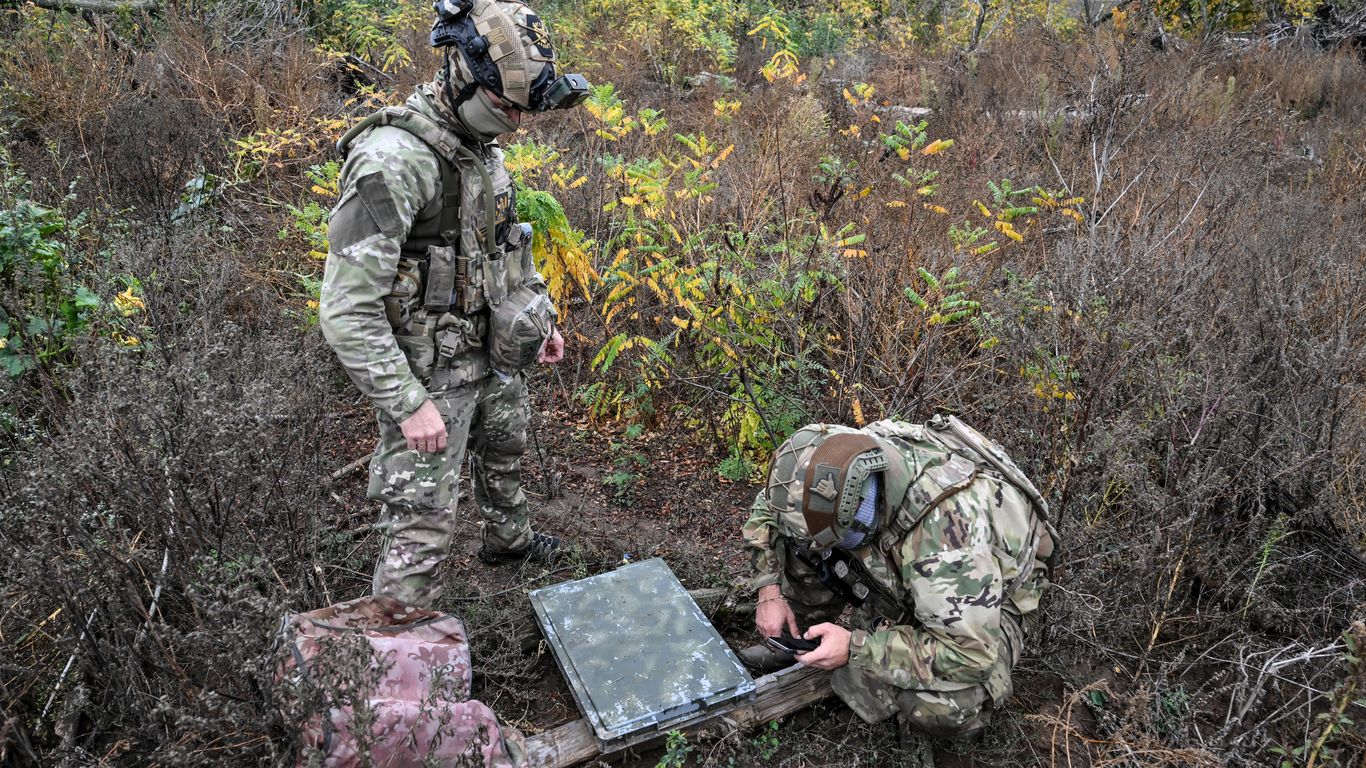
The speed of the Elon Musk-owned satellite system used by the Ukrainian military has been fully restored after two weeks of restrictions, the country's ministry of defense said in a statement on Saturday. Why it matters: The restrictions limited the Ukrainian military from using drones to intercept Russian attack drones, and from using its own drones to send supplies to soldiers on the front lines. The restrictions were at the center of the recent crisis between the Trump administration and the Ukrainian government. Ukrainian President Volodymyr Zelensky saw the restrictions as retaliation by President Trump and Musk for his refusal to halt strikes against Russian oil refineries. The crisis led to bipartisan criticism and pressure and generated a blame game between the White House and SpaceX founder and CEO Musk. Catch up quick: The Ukrainian military uses SpaceX's Starlink satellite communications system to control and operate its reconnaissance and intercept drones. When Starlink doesn't operate at full capacity, Ukraine's ability to gather intelligence, use interceptor drones and conduct long-range strikes against Russia is impeded. Ukraine relies on two satellite systems: One is SpaceX's Starlink, which it uses for communications, ground forces, logistics and defensive drones — ones that shoot down incoming drones. The other is Starshield, which is controlled by the U.S. government and used for offensive military purposes. President Trump denied that the White House was involved in restricting the system and for several days claimed it was fully back on. On Friday Trump denied reports that he spoke to Musk, but said that if the system was still restricted he would speak to Musk about it. What they are saying: "Our monitoring systems are detecting a restoration of Starlink/Starshield speeds. We are recording speeds exceeding 400 kilometers per hour, with stable connectivity," the Ukrainian ministry of defense said. The ministry said the restrictions were lifted a
The quickest and most affordable response to historically high diesel prices is also the simplest: Use less of it. Why it matters: Diesel is so entrenched in farming, trucking and other industries that even soaring prices aren't enough — at least not yet — to prompt a wholesale shift to alternatives from electric semi trucks to manure-powered tractors. Catch up fast: Diesel prices have climbed to record highs since the U.S. war with Iran began in February, rising faster than gasoline amid global oil supply disruptions . Diesel averaged $6.31 a gallon Thursday, up 74% from a year ago, according to AAA . Regular gasoline averaged $4.27, up 39%. The big picture: Gasoline gets the attention, but diesel is the workhorse of the American economy. It powers grocery trucks, tractors, freight trains, construction equipment, hospital backup generators and even school buses . Driving the news: The price spike is hitting farmers during the fall harvest. "Farmers buy diesel by the truckload, so we're talking about hundreds of thousands of dollars in diesel, and when it goes up the way it has spiked, that's the difference between profit and loss in a year," said Curt Blades, senior vice president at the Association of Equipment Manufacturers, a trade group representing tractor makers and other heavy-equipment manufacturers. The financial pain varies: Trucking companies can often pass higher fuel costs to customers through surcharges. Farmers, who have little control over crop prices, generally can't. The economic pressure has become political ahead of the midterm elections. President Trump announced $8 billion in one-time aid for farmers at a campaign rally in Kansas on Monday, where Republicans face a competitive Senate race. "It's a bit too soon to tell the impact," Blades said of the aid package, though he welcomed support during harvest. State of play: Trucking and agricultural equipment experts say the most immediate savings come from using existing diesel engines more effici
The fragile Senate permitting deal is a major priority across the energy industry, per newly filed lobbying disclosures. Why it matters: The filings reveal behind-the-scenes efforts by powerful interests and companies representing oil and gas, mining, renewables, environmentalists and plenty in between to shape the legislation. The big picture: The bill title (Bipartisan American Affordability and Jobs Act), its acronym (BAAJA) and its bill number appear throughout third-quarter lobbying disclosures. The bill was introduced Sept. 30, the last day of the third quarter. The disclosures, due Oct. 20, offer a window into efforts to influence the legislation during its drafting and negotiations. The lobbying extends beyond groups that specifically named the bill in their filings. Many others with a stake in the bill — like the U.S. Chamber of Commerce and the National Association of Manufacturers — list permitting legislation in other ways. Driving the news: Here's just a small subset of the parties in the arena. Industry groups like the American Petroleum Institute, the Edison Electric Institute, the American Forest & Paper Association, the National Mining Association, and the Data Center Coalition. Green groups including Earthjustice, the Nature Conservancy, and Defenders of Wildlife. Low-carbon power trade groups such as the Solar Energy Industries Association. State of play: The lobbying goes far beyond trade associations, with many individual companies also involved. They range from Chevron and BP to power giants like Duke Energy and Southern Company to geothermal startup Fervo. Industrial and equipment heavyweights like Caterpillar, Schneider Electric and Cummins are there, too. Zoom in: The disclosures also offer clues about which provisions attracted lobbying attention. For example: The National Mining Association identified BAAJA provisions that would change Clean Water Act permitting, including state water quality reviews and limits on lawsuits challenging perm