TopNewsOn

Results for “prostate cancer”

Employer health cost crunch is worse than projected

There's new evidence that double-digit health cost increases were hitting employers well before the forecasts of big spikes for 2027 — forcing big changes in workplace coverage for millions of Americans. Why it matters: The findings offer a higher-resolution view of how much health spending is putting a drag on the labor market and increasing affordability concerns for the approximately 160 million Americans who get coverage through work. They also show how factors like surprise billing disputes, more cancer diagnoses and expensive specialty drugs are combining to exert cost pressure, with no immediate relief in sight. Driving the news: A new Gallagher benefits survey of more than 3,700 firms found 36% of the companies reported premium increases of 10% or more during their most recent renewal. Pharmacy costs account for a quarter or more of some companies' total health spending. Cancer care is the No. 1 cost driver for about 7 in 10 firms. The survey, fielded from January to March, also found employers are trying to avoid saddling workers with a disproportionate share of rising costs while struggling to balance the quality of care with their financial risk. "The last two renewal cycles have been unlike anything we've ever seen before," said Robby White, Gallagher's U.S. benefits business line leader. "It's unsustainable, obviously. Every additional dollar that an employer spends on health care, they can't spend on their employees." Between the lines: The 2027 coverage year was already shaping up to be painful for many employers. Projections are showing premium spikes due to rising demand for health services, more chronic disease and increased use of drugs like GLP-1s. In fact, double-digit premium increases for both the 2026 and 2027 plan years suggest there are more underlying causes, according to benefits experts. One leading factor is chronic disease: More people are being diagnosed with cancer at a younger age, and advanced treatments and related care can result

Axios · Nov 16
Trump takes 500 actions to weaken cancer protections, new report says

Natural Resources Defense Council shows how federal rules changes will spike up public’s exposure to carcinogens Amid a surge in early onset cancer , the Trump administration has taken more than 500 actions to systematically dismantle protections against carcinogens once in place across the federal government, an October report alleges . The Natural Resources Defense Council report, and comments from current and former officials from the Environmental Protection Agency, bring into focus how myriad changes in federal rules or protocol will dramatically increase the public’s exposure to carcinogens. These are taking effect at a time when some forms of early onset cancer are spiking by about 30% per decade. Continue reading...

The Guardian · Nov 5
Pharma's next cash cows could be specialized treatments

Pharmaceutical companies facing a steep patent cliff are concluding the key to future profits may be customized treatments tailored to patients' genes and lifestyles — not blockbusters aimed at large patient populations. Why it matters: The pivot could influence which diseases get treated in the decades to come, and how much the health system pays. The stakes are huge. More than $500 billion in brand-name drug sales is potentially at risk from generic competition between 2026 and 2032, according to the consulting firm Evaluate. The latest: The race is on to find new treatments that each generate at least $2.4 billion in global sales, a new Iqvia Institute report finds. They're increasingly specialty treatments, biologics and rare disease drugs — with a small group of flagship products accounting for an outsized share of industry sales. GLP-1 drugs like Novo Nordisk's Ozempic and Eli Lilly's Zepbound now define that elite category. The next wave could include "biological missiles" that combine antibodies with chemotherapy to target specific cancer cells. "As precision medicine continues to advance, similar approaches may extend beyond oncology into areas such as immunology, metabolic disease and neurology," the report states. Reality check: It's not clear whether all of the innovation will cure more people, or just make health care more expensive. Novel RNA drugs and cell and gene therapies are expensive, hard to make and target small groups of patients. Challenges identifying eligible patients and getting insurers to pay for treatments have already revealed a disconnect between promising R&D and patient benefit. Widespread concern over high drug prices will force manufacturers to find more unmet needs and build sales more quickly after a drug's launch, according to the report. Context: Top-selling drugs historically were aimed at large patient populations with chronic conditions like high cholesterol. The ulcer drug Tagamet became the first to exceed $1 billion in s

Axios · Nov 2
Pope Leo XIV becomes first pope to vote in U.S. election

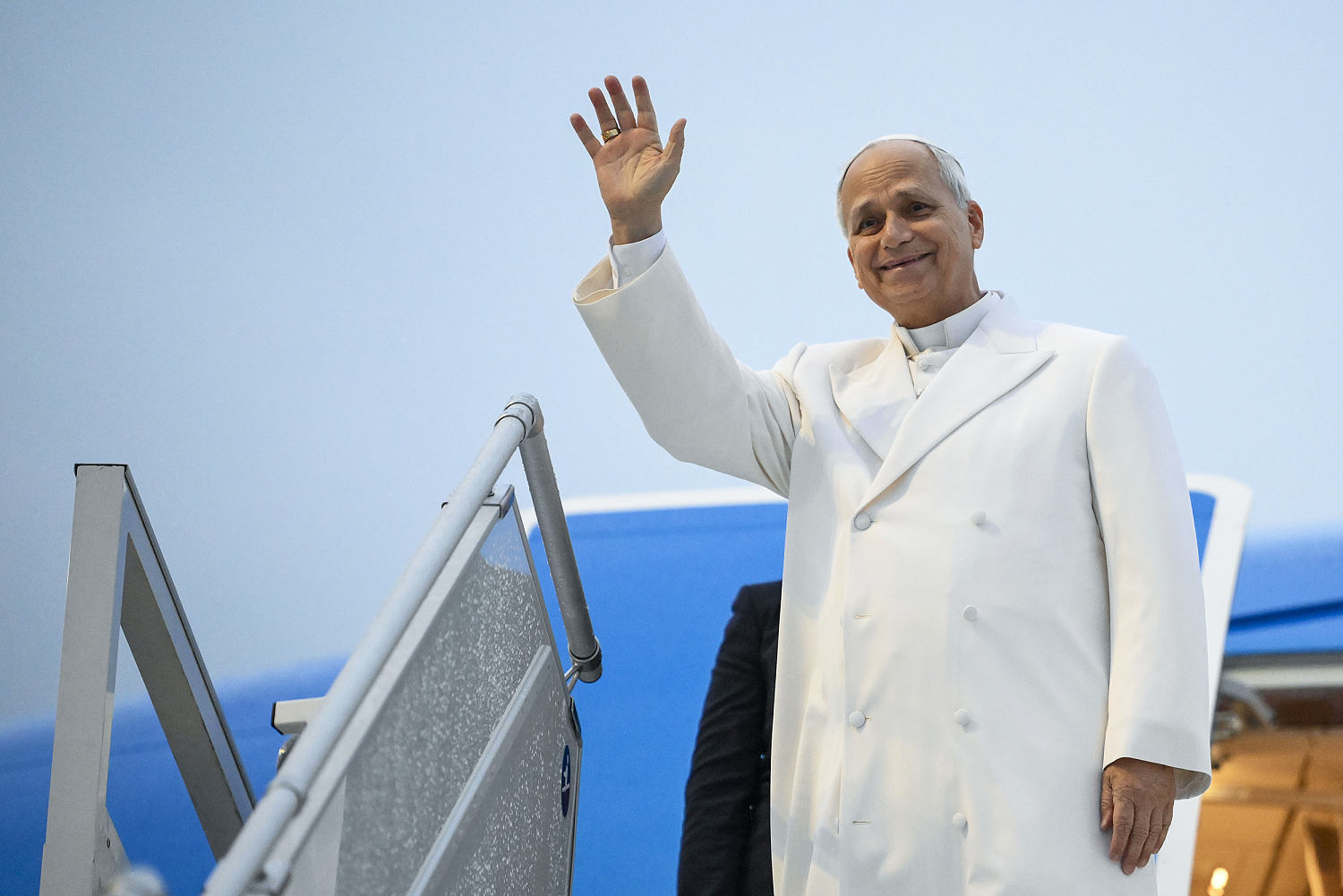
Pope Leo XIV voted in the 2026 Illinois midterm elections using a mail-in ballot, the Vatican confirmed Friday, becoming the first sitting pope known to vote in an American election. Why it matters: The pontiff, an American citizen, may be the first to vote in any secular democratic election. Joliet radio station WJOL first reported Oct. 23 that Leo had requested a mail-in ballot. What they're saying: The pope believes "in the right and the duty of citizens to participate in democratic processes," the Holy See Press Office said in a statement . The Vatican said Leo "has exercised his right to vote as a United States citizen, whenever he was eligible to do so" and that "in keeping with this long-standing practice of civic participation, he has submitted his mail-in ballot in Chicago." Pope Leo also voted whenever eligible during his years living in Peru, the Vatican's statement said. Zoom in: The pope's ballot includes Illinois Gov. JB Pritzker 's reelection bid, the race to succeed Sen. Dick Durbin and a House contest between Democratic Rep. Jonathan Jackson and Republican Christian Maxwell. Jackson, the son of the late Rev. Jesse Jackson, won his district handily in 2024. The pontiff's ballot will have to travel from Vatican city to Joliet, Illinois. Worth noting : Leo has voted in both Democratic and Republican primaries in the last two decades. Leo requested Democratic primary ballots in 2008 and 2010 when he lived in heavily blue Cook County, per the AP. He then started voting in GOP primaries in subsequent elections when he moved to the more conservative Will County, where he is currently registered to vote. He's also voted as an undeclared voter off and on in recent elections, according to the Will County clerk's office. His party affiliation is currently undeclared. Zoom out: The pope, who has been recovering from lung cancer surgery , met with Chicago-area advocates Wednesday who are supporting immigrants at an ICE facility in Broadview , Illinois. He's also

Axios · Oct 30
FDA again bypasses advisers to remove black-box warnings from menopause treatments

Some experts express concern about ‘lack of transparency’ as agency removes warnings on three estrogen patches Three more patches for treating menopause will no longer carry black-box warnings about cardiovascular disease, breast cancer and dementia, officials at the US Food and Drug Administration (FDA) said on Friday. The FDA did not convene an advisory committee and offered few details on the scientific basis for the decision in the press briefing. The news follows the removal of black-box warnings from six menopause treatments in February, as patients across the US struggle with shortages of the patches. Continue reading...

The Guardian · Oct 30
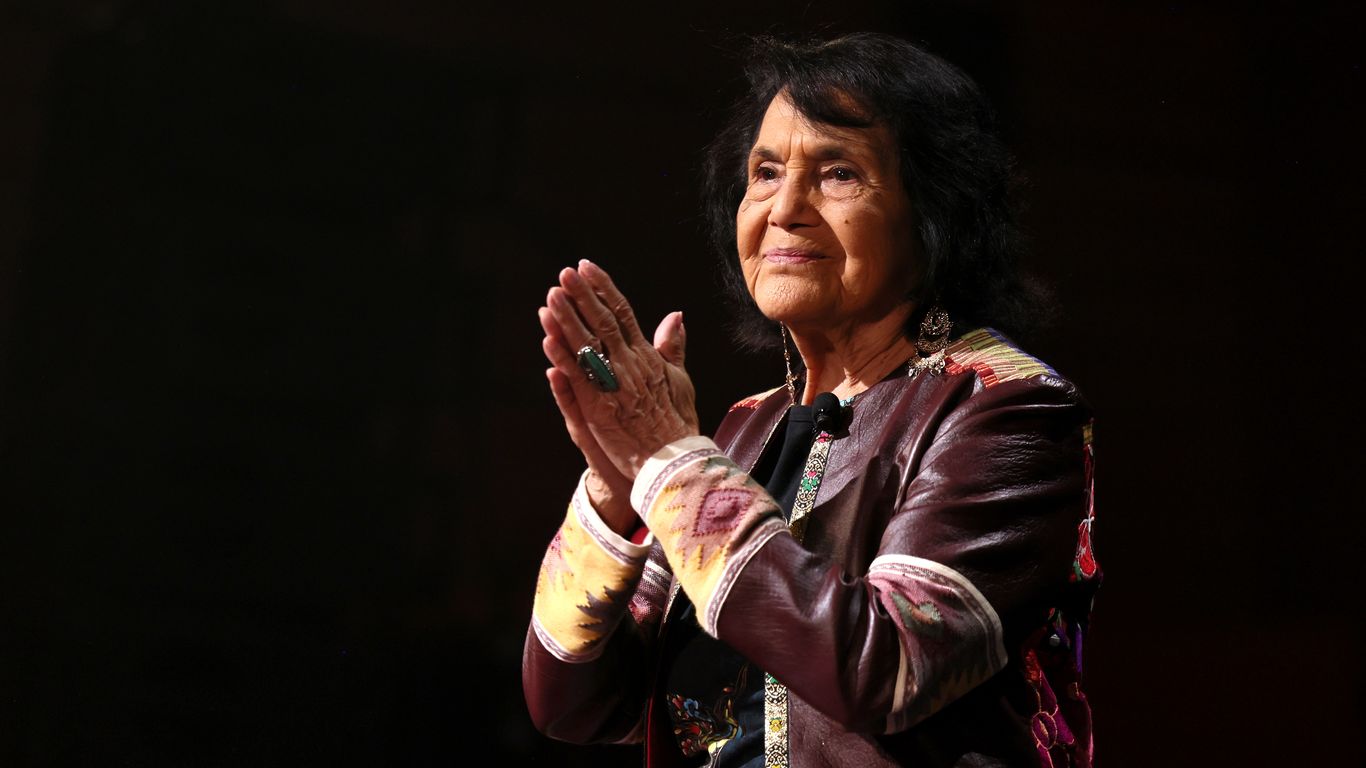
Dolores Huerta, pioneering labor activist, dies at 96

Dolores Huerta , the pioneering labor organizer who co-founded the United Farm Workers and coined the rallying cry "Sí, se puede," died Wednesday at 96, her family announced on her Instagram account. Why it matters: The civil rights legend helped lead strikes and boycotts, fought to expand rights for Hispanic Americans and became a powerful kingmaker in politics. What they're saying: "We are deeply saddened to announce that our beloved mother, Dolores Huerta, has passed away today at the age of 96," her family wrote in a statement posted on Instagram . "As you can imagine, this is an incredibly difficult time for us, and we ask for privacy as we grieve this incredible loss to our family. We know that many of you around the world share in our mourning, and we will be following up on plans to recognize and celebrate her incredible life and legacy." Her cause of death was cancer, per the New York Times. Zoom in: Huerta worked alongside farmworker leader César Chávez, organizing workers who were routinely subjected to poor labor conditions on farms. The pair founded UFW with fellow activist Gilbert Padilla. Huerta also stood next to Sen. Robert F. Kennedy moments before he was fatally shot after his 1968 California primary win, after having worked to get Mexican American voters to support him. She would befriend the widows of RFK and Martin Luther King Jr., Ethel Kennedy and Coretta Scott King, as they fought together for civil rights. Dolores Huerta, co-founder of the United Farm Workers group, with a union flag that reads 'Viva La Causa', 1970s. Photo: Cathy Murphy/Getty Images Catch up quick: Chávez, who died in 1993, allegedly sexually abused multiple women and girls during his time as UFW leader, which only came to light this year following a New York Times investigation. Huerta said that she was raped by Chávez decades ago, becoming the most high-profile figure to accuse him of misconduct . "I carried this secret for as long as I did because building the movement

Axios · Oct 28