

Milwaukee’s first World Series championship is a rebuke to baseball’s oligarch class, whose insistence that small-market teams cannot compete has been laid bare as fiction For the entirety of the 2026 baseball season, the overlords of the game have stood on the single position that what has now happened could not happen, and the result was a year that has been treated like an appetizer for the main course of the offseason: the shutting down of the game until the players, after 40 years of resistance, finally agree to a salary cap. The insistence that the game had been predetermined undermined the Milwaukee Brewers, who spent 149 days this season atop the standings. Baseball dismissed Milwaukee’s 22-0 demolition of Seattle on 18 August, the 20-0 waxing of Cincinnati a month later, and the comprehensive dusting of their division – their fourth consecutive National League Central title and fifth in six years – by 14 games. Baseball’s owners, at their persuasive best, would have their paying customers believe that the Brewers’ franchise-record 103 regular-season wins also were an illusion, or worse, the dreaded outlier, even though Milwaukee have won 770 games since 2018, the fourth-most in all of baseball. Even when Milwaukee exhaled and made the Dodgers look old in a stirring four-game sweep, ESPN’s Jeff Passan reported the owners’ position remained unchanged. Continue reading...
Results for “protests sweep”

If Democrats gain full control of Congress next week, as many polls and prediction markets suggest they will, private equity could once again find itself in the political crosshairs. The big picture: Private equity has become a rhetorical punching bag for a number of Democratic House and Senate candidates, including in debates and on the stump, as an affordability bête noire. Most of this has related to housing, both single-family and mobile homes, but also has extended to health care. What they're saying: "It's no doubt that housing is way out of control and a big part of that is because private equity has come into Maine," said Troy Jackson in an Oct. 6 debate with Sen. Susan Collins. "I do think we have to go after private equity, make it so that they can't buy these things and charge outrageous prices." Chris Pappas, running for an open Senate seat in New Hampshire, said during a campaign stop at a mobile home community: "We need to... address the housing crisis that we're seeing, including addressing the corporate private equity influence that we're seeing in housing that's making it less affordable and is causing a lot of consternation here at this park." Rep. Marcy Kaptur (D-Ohio) decried PE ownership of residential care facilities during a public event, saying: "Those people know nothing about health care." State of play: Congress passed a bipartisan bill this past summer to restrict PE ownership of single-family homes, with the Treasury Department last week issuing related regulations . The legislation became law despite not being signed by President Trump, who supported it but was in a snit over the Senate not passing his voter identification bill. Zoom in: A Democratic sweep would likely result in Sen. Elizabeth Warren (D-Mass.) taking the Banking, Housing and Urban Affairs Committee gavel, which means she'd go from writing strongly worded letters to holding hearings and guiding legislation. "Americans are sick and tired of private equity's playbook of ro

A day after Venezuela's exiled opposition leader returned to Caracas with great fanfare, U.S. Secretary of State Marco Rubio issued a veiled warning against interfering with the country's fragile democratic transition pushed by the Trump administration. "You're not going to street-protest your way into a democracy," Rubio told reporters Monday without explicitly mentioning María Corina Machado . Why it matters: Machado's demands for elections next year — and her criticism of a massive U.S. oil deal struck with the current Caracas regime — have put administration officials on edge after her surprise return. "Rubio is on a political edge," said a White House source familiar with his thinking. "Venezuela is the top foreign policy achievement of this administration, and if the progress we made gets undone and Machado is a spoiler, nobody wins." A Machado spokesperson didn't return messages seeking comment. Zoom in: Machado and U.S. officials agree that Venezuela needs to hold elections. But she has demanded they be held in 2027, while U.S. officials aren't sure. They want three things to happen first: Reform Venezuela's Supreme Court. It's stocked with loyalists of Nicolás Maduro , who was seized Jan. 3 by the U.S. and spirited to New York City to face narcotrafficking charges. The State Department hopes a new court is picked by year's end. Reform Venezuela's National Electoral Council. It's also filled with Maduro's people, and with the Supreme Court it helped him steal his last two elections as president. The State Department hopes a new council will be in place by early next year. Fix Venezuela's debt. Venezuela has one of the world's largest sovereign debt problems — $300 billion, more than its gross domestic product. The hoped-for timeline regarding this hurdle is less clear, and Rubio didn't explicitly discuss it Monday. Between the lines: As Axios first reported in September, Trump discussed all three of those issues with Rodriguez when he also told her privately
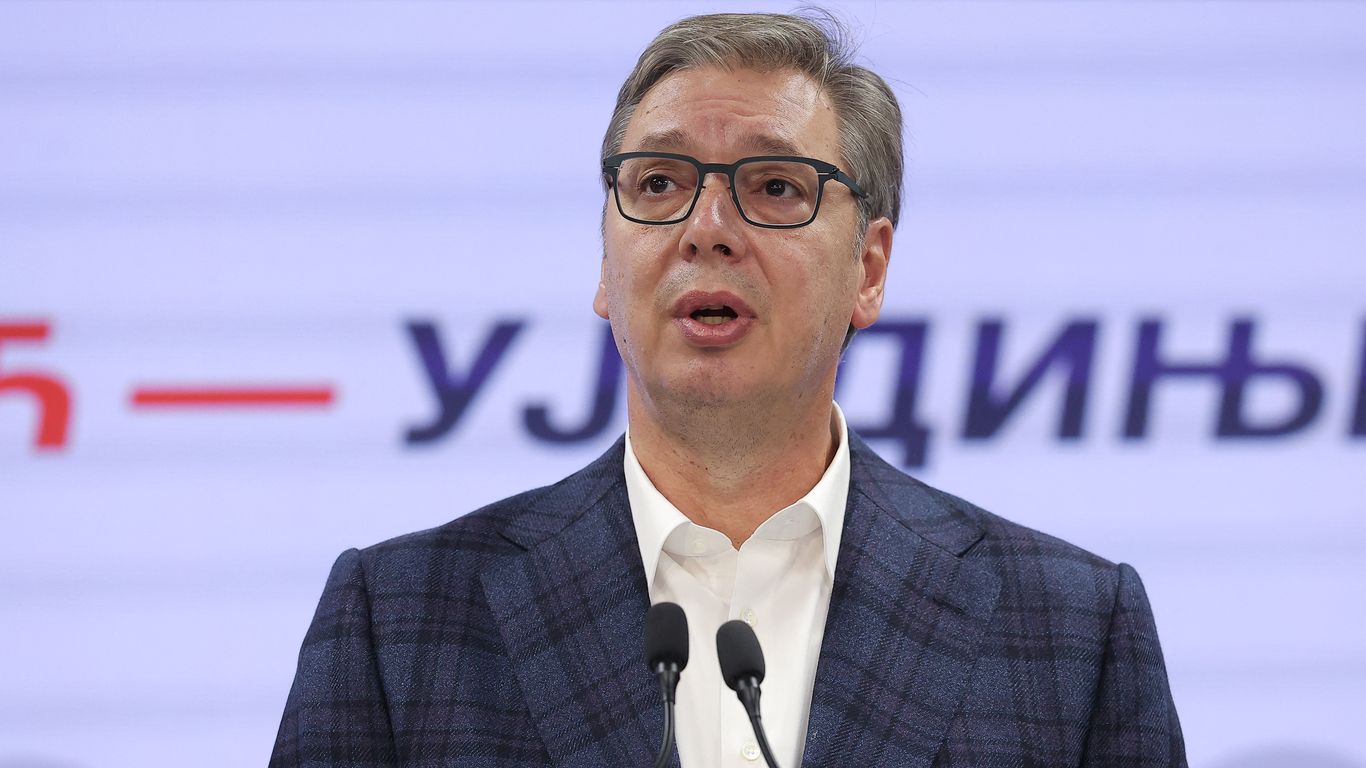
A student-led protest movement has ended the 14-year rule of Serbia's right-wing party, former President Aleksandar Vučić conceded Sunday. Why it matters: The historic upset sidelines a Balkan strongman who courted President Trump's family and allies, raising questions about future U.S. relations with a country that has balanced ties with Russia and the West. Vučić 's outreach has included the president's son Donald Trump Jr. and longtime ally Richard Grenell, while a proposed development involving Trump's son-in-law Jared Kushner became embroiled in controversy. The big picture: The movement's electoral breakthrough reflects a broader wave of youth activism in Europe, where young people have mobilized over corruption, education and economic pressures. The victory could usher in democratic reforms in Serbia, where Vučić consolidated power. Driving the news: Vučić said Sunday evening it was "clear" that his Serbian Progressive Party had lost to the student-backed electoral movement, although official results had yet to be announced, according to translations of his announcement . He projected the Student List would win between 135 and 140 seats in the 250-seat parliament, compared with 105 for his coalition. Cardiologist Ilija Srdanović heads the Student List, though the grassroots movement emphasized its decentralized leadership. The result echoes the student-led movement that helped topple Slobodan Milošević in 2000 , with Serbians reviving that era's "He's finished!" rallying cry as they celebrated Sunday. Context: The movement emerged from mass protests after the November 2024 collapse of a railway station canopy in Novi Sad that killed 16 people, fueling public anger over alleged government corruption. It subsequently evolved into an electoral movement campaigning for accountability and institutional reform. What's next: The Student List must choose a prime minister and form a government while Serbia faces a separate presidential election in December to replace