
President Trump's energy policies and investment deals could become major targets of Democratic investigations if the party wins control of either chamber of Congress. Why it matters: Congressional probes could expose new details about the administration's dealings with major companies and foreign governments. What they're saying: House Democrats are likely to take a "shotgun" approach of "throwing everything out there and then seeing what sticks in the realm of popular opinion," TD Cowen analyst John Miller said via email. Democrats will be looking for agencies that exceeded their authority, deals involving administration officials' families, or both, Miller said. The big picture: Scratch the surface of Democrats' biggest potential oversight targets, and energy is everywhere. Russia. Trump's dealings with Moscow will again be front and center — and so will the energy dimension. Democrats in both chambers are likely to investigate Trump's diesel deal with Moscow, which they claim violates a 2022 law barring imports of Russian fuels. The inquiries could also extend to U.S. banks and ports, which lawmakers have already warned could face congressional investigation. Venezuela. "We expect Venezuela to be the subject of a number of inquiries," RBC Capital Markets analysts said in a note. Democrats have already raised questions about whether any oil companies knew about plans to depose Nicolás Maduro. Investigations could also examine the legality of the Pentagon's 35% stake in the corporate parent North American Blue Energy Partners and the terms of the deal, the note states. The Iran war. High gasoline and diesel prices give Democrats another reason to scrutinize the decision to attack Iran, especially if pain at the pump persists. Sens. Sheldon Whitehouse (D-R.I.) and Elizabeth Warren (D-Mass.) have already pressed major oil and gas companies about their profits during the conflict. AI and data centers. Wider and intense oversight of AI will touch on data centers' ener
Results for “russian-occupied oleshky”
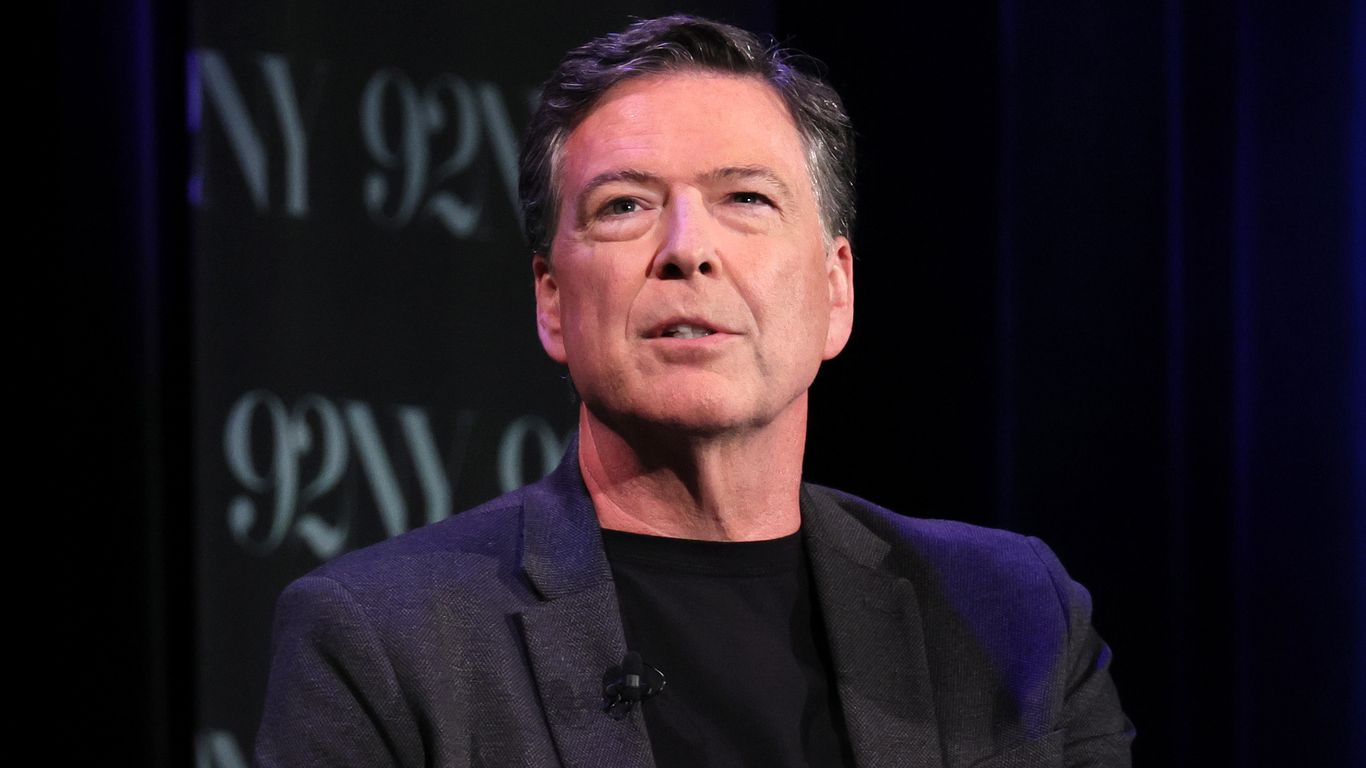
Former FBI Director James Comey is facing new federal charges, according to a charging document made public Monday. Why it matters: This marks the third time the Trump administration has charged Comey. He has been a subject of the president's ire since his dismissal from the first Trump administration in 2017. Driving the news: Prosecutors allege Comey directed the disclosure of national defense information to a reporter through one or more co-conspirators in October 2016, while he was serving as FBI director . He is charged with participating in the transmission of national defense information and conspiracy to transmit national defense information. The case has been ongoing under seal since early October. What they're saying: A U.S. Department of Justice spokesperson told Axios that the case is an "ongoing criminal investigation" and declined to comment further. The White House referred Axios to the DOJ for comment. The other side: Comey's attorney Patrick Fitzgerald said in a statement posted to Comey's Instagram account that the former FBI director "steadfastly maintains his innocence" and will fight the latest charges. Fitzgerald said the case concerns an Oct. 5, 2016, New York Times article that two separate teams of prosecutors investigated during President Trump's first administration. Both teams decided not to bring charges, he said. He also welcomed U.S. District Judge Trevor McFadden's decision to unseal the case. Catch up quick: Trump fired Comey in 2017 amid the FBI's investigation into alleged Russian interference in the 2016 election. His dismissal led to the appointment of Robert Mueller as special counsel, tasked with uncovering any links to Russian interference in the election. Mueller's investigation report — released in 2019 — documented extensive Russian interference in the 2016 election but did not establish a criminal conspiracy between Trump's campaign and Russia. Zoom out: The charges were made public the same day a federal judge ruled that
Top Democrats poised for powerful roles next year are demanding that major banks and ports preserve any records they have tied to potential imports or other deals involving Russian diesel . Why it matters: Probing President Trump's agreement with Moscow will be a priority if Democrats regain control of either or both chambers of Congress. The new demand shows that inquiries will extend beyond the White House and into C-suites. Driving the news: "[A]ny importation of Russian diesel into the U.S. raises significant legal questions and may be subject to legal action, as well as congressional investigations," a new letter obtained by Axios states. It's signed by Sens. Chris Coons (D-Del.), Elizabeth Warren (D-Mass.), Ron Wyden (D-Ore.), and Sheldon Whitehouse (D-R.I.). They're in line to lead the powerful Foreign Relations, Banking, Finance and Judiciary Committees, respectively, if Democrats regain the Senate. Rep. Greg Meeks (D-N.Y.), who's in line for the Foreign Affairs Committee gavel if House control changes, also signed. It's led by Sen. Jeanne Shaheen (D-N.H.), the top Foreign Relations Democrat who is not seeking reelection. Sen. Thom Tillis (R-N.C.), who is also retiring, signed as well. State of play: The Wall Street recipients of Saturday's letter are J.P. Morgan, Bank of America, Citi, Wells Fargo, Goldman Sachs and Morgan Stanley. The same letter went to port authorities for the ports of Houston, Beaumont, and Corpus Christi, Texas, and New York/New Jersey. Catch up quick: Earlier this month Trump claimed an agreement to bring escalating Russian exports to global and U.S. markets, and the Treasury Department waived sanctions to help enable it. Friction point: The lawmakers and other critics say it runs afoul of a bipartisan 2022 law barring imports of Russian oil, gas, and petroleum products. "The potential arrangement to import Russian diesel also raises significant national security concerns, given that it would finance Russia's brutal and illegal war ag
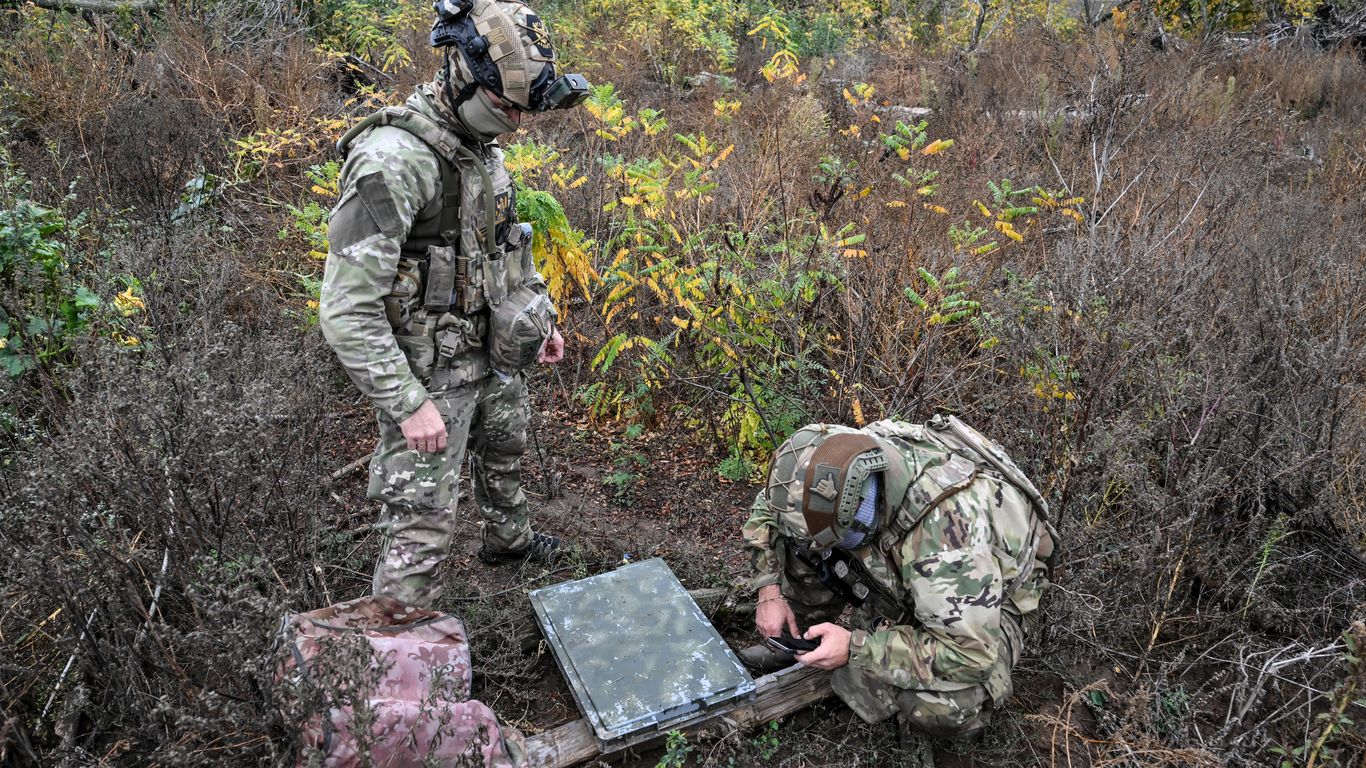
The speed of the Elon Musk-owned satellite system used by the Ukrainian military has been fully restored after two weeks of restrictions, the country's ministry of defense said in a statement on Saturday. Why it matters: The restrictions limited the Ukrainian military from using drones to intercept Russian attack drones, and from using its own drones to send supplies to soldiers on the front lines. The restrictions were at the center of the recent crisis between the Trump administration and the Ukrainian government. Ukrainian President Volodymyr Zelensky saw the restrictions as retaliation by President Trump and Musk for his refusal to halt strikes against Russian oil refineries. The crisis led to bipartisan criticism and pressure and generated a blame game between the White House and SpaceX founder and CEO Musk. Catch up quick: The Ukrainian military uses SpaceX's Starlink satellite communications system to control and operate its reconnaissance and intercept drones. When Starlink doesn't operate at full capacity, Ukraine's ability to gather intelligence, use interceptor drones and conduct long-range strikes against Russia is impeded. Ukraine relies on two satellite systems: One is SpaceX's Starlink, which it uses for communications, ground forces, logistics and defensive drones — ones that shoot down incoming drones. The other is Starshield, which is controlled by the U.S. government and used for offensive military purposes. President Trump denied that the White House was involved in restricting the system and for several days claimed it was fully back on. On Friday Trump denied reports that he spoke to Musk, but said that if the system was still restricted he would speak to Musk about it. What they are saying: "Our monitoring systems are detecting a restoration of Starlink/Starshield speeds. We are recording speeds exceeding 400 kilometers per hour, with stable connectivity," the Ukrainian ministry of defense said. The ministry said the restrictions were lifted a