
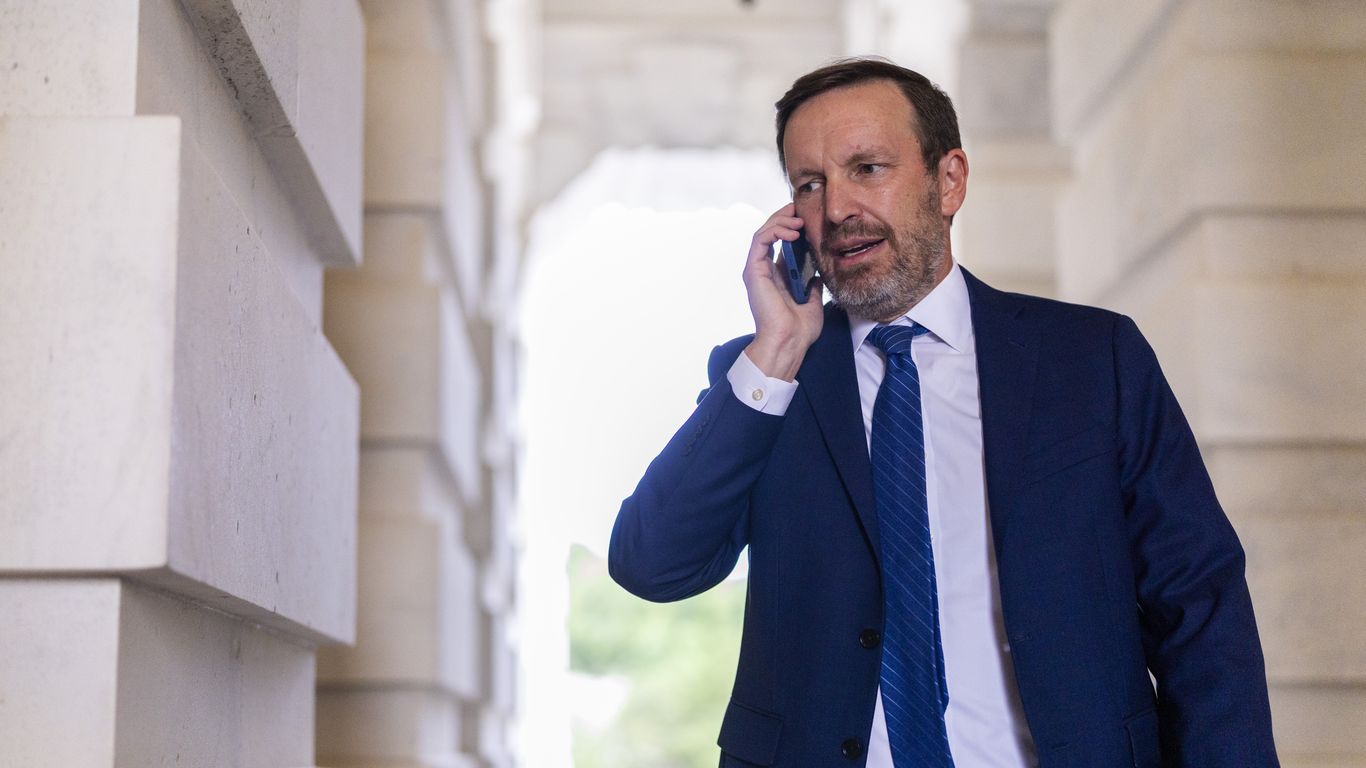
Sen. Chris Murphy (D-Conn.) suffered a stroke Saturday and is being treated at Johns Hopkins Hospital, his office said Sunday. The big picture: Murphy is one of the Senate's more visible Democrats and has been traveling the country campaigning ahead of Tuesday's midterms. Driving the news: Murphy, 53, began experiencing numbness in his arm while attending his son's hockey game Saturday, according to a statement from his chief of staff, Allison Herwitt. He was taken to a hospital where doctors determined he had suffered a stroke and transferred him to Johns Hopkins for monitoring. What they're saying: "The doctors are encouraged by his progress, he is awake and alert, and we are optimistic he will make a full recovery," Herwitt said in a statement. What's next: The statement did not specify the severity of the stroke or when Murphy might be discharged.
Results for “sen”
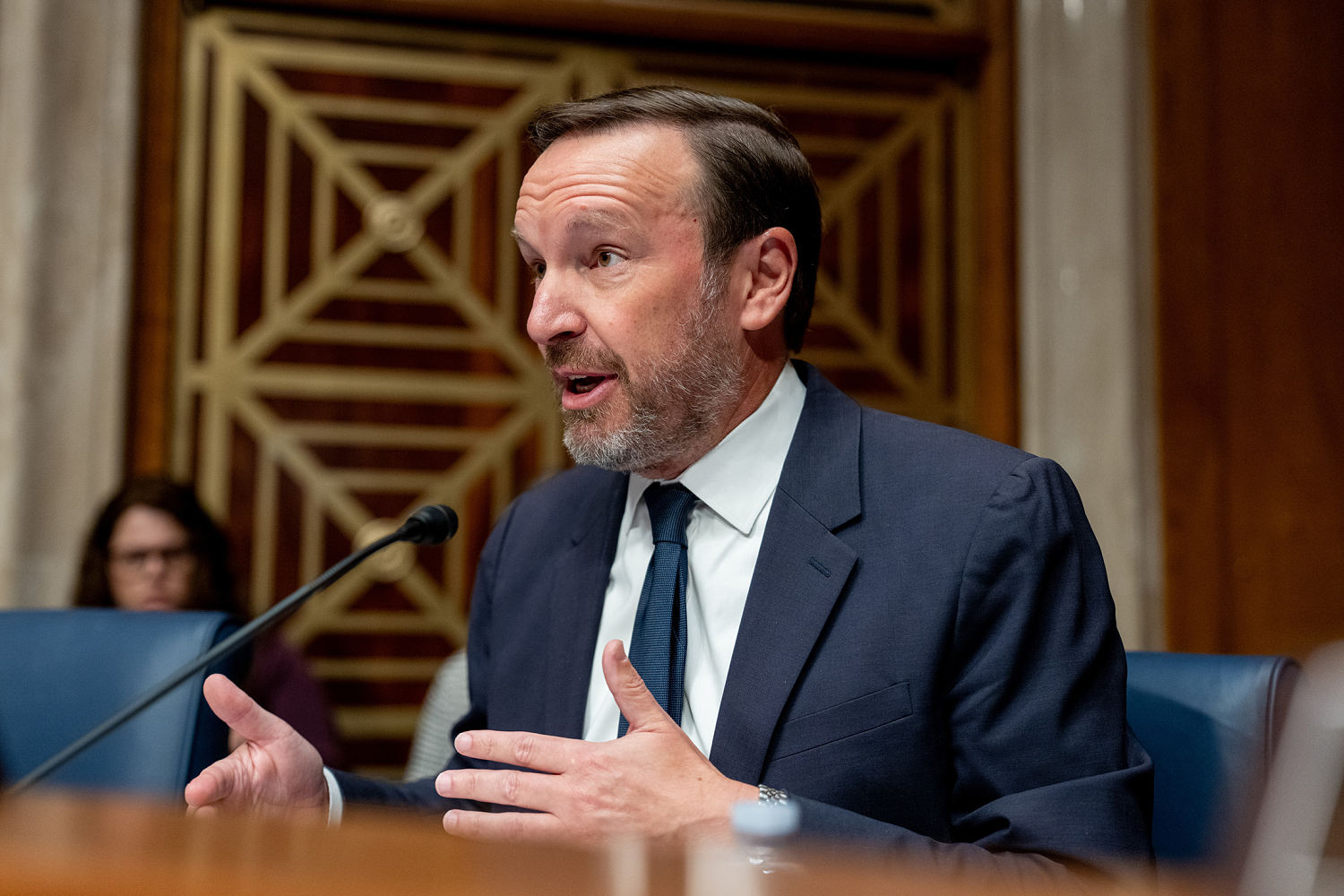
Sen. Chris Murphy, D-Conn., was hospitalized Saturday after a stroke, a spokesperson for the senator said on Sunday.
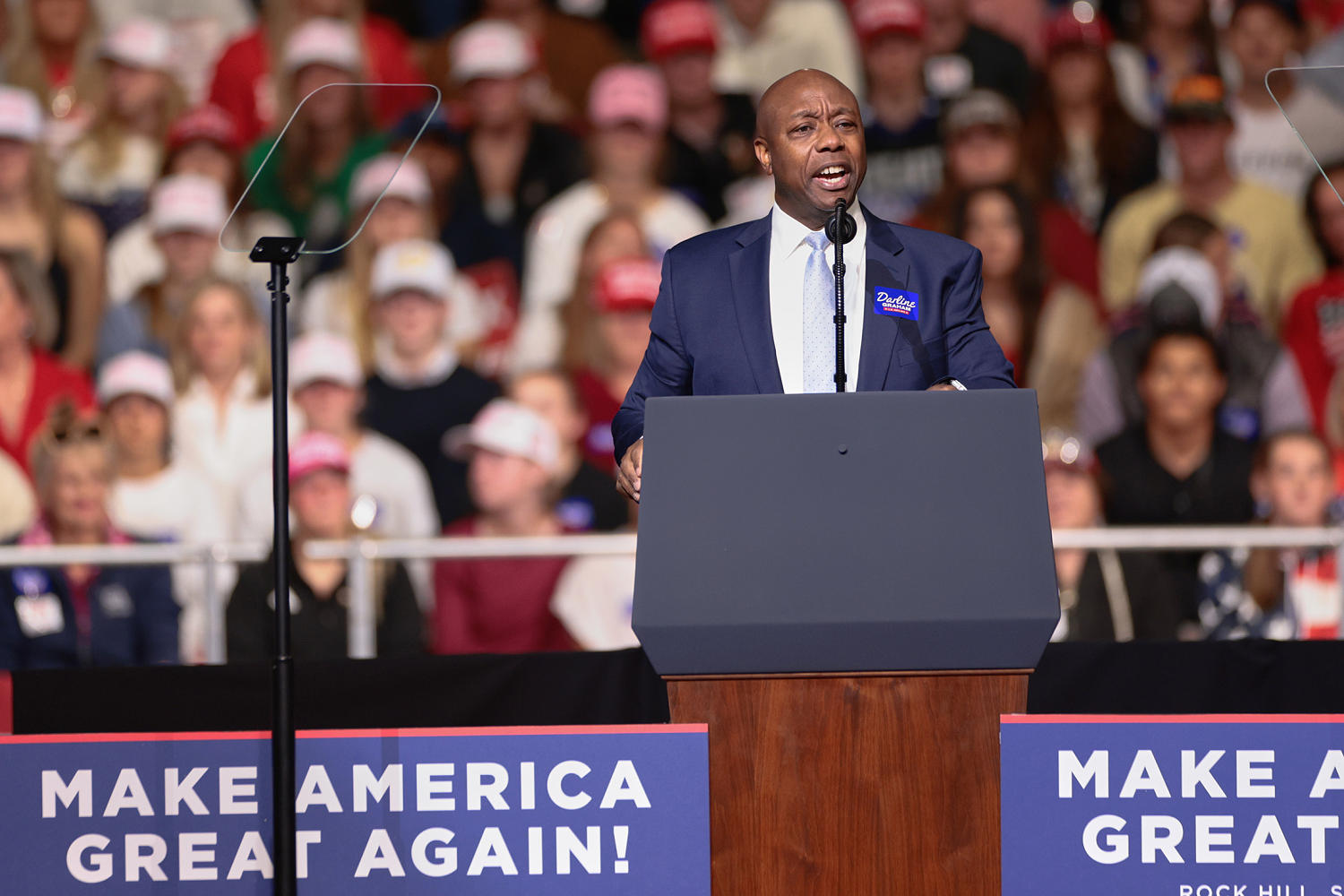
Sen. Tim Scott, R-S.C., declined to say whether he would accept the results of the Alaska Senate race if Democrat Mary Peltola wins the battleground seat
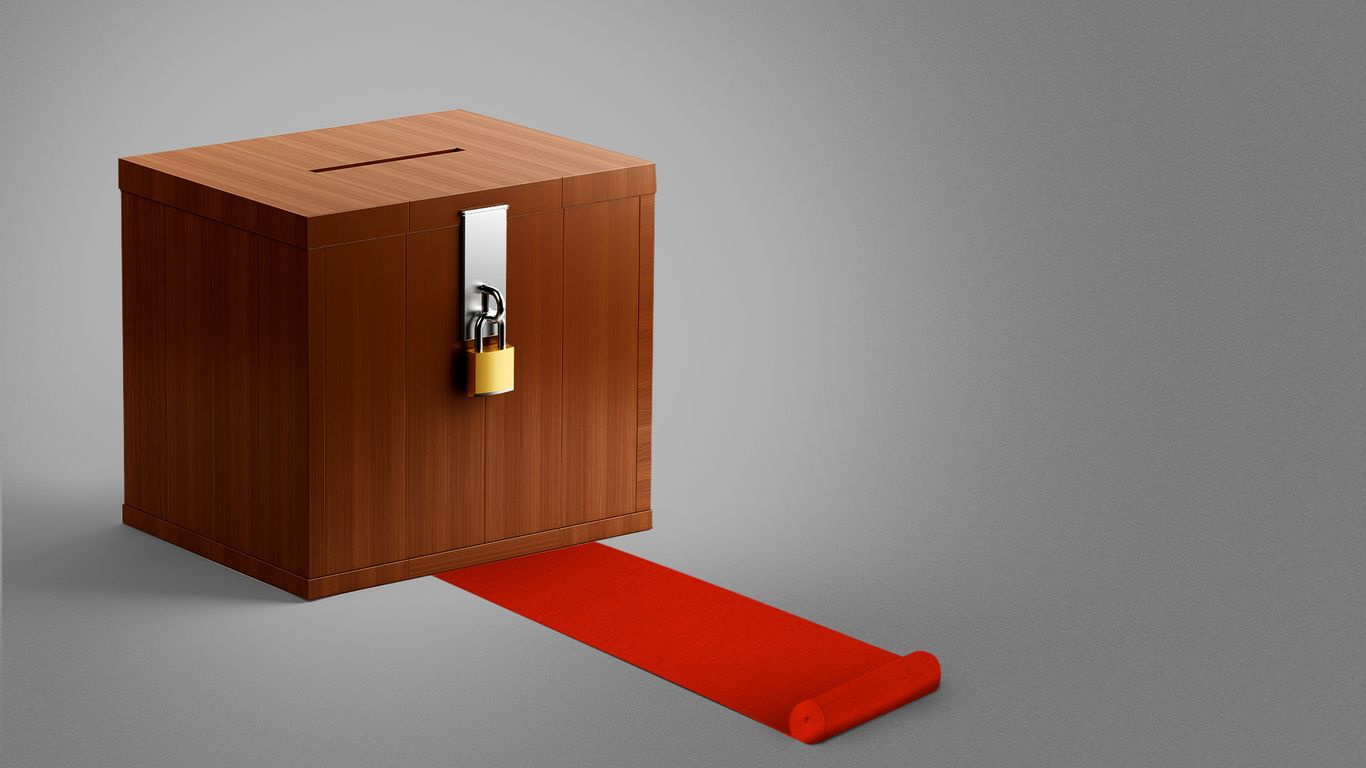
On the eve of midterms, President Trump is facing setbacks left and right in his push to investigate alleged election fraud . But in Georgia, he has an opening. Why it matters: Six years ago, Georgia was at the epicenter of Trump's efforts to overturn the 2020 presidential election. Now the state's own election board has invited his administration to investigate its voting system. Georgia features two high-stakes statewide campaigns: Sen. Jon Ossoff (D) against Rep. Mike Collins (R) for Senate, and former Atlanta Mayor Keisha Lance Bottoms (D) against businessman Rick Jackson (R) for governor. The big picture: The Justice Department disclosed in court on Friday that the administration has sent letters to officials in California, Washington, Pennsylvania, New Jersey and Nevada, asking some states to segregate mail-in ballots from suspected noncitizen voters. A federal judge on Friday issued an emergency order that blocks federal officials from threatening to charge election officials who count ballots from voters the DOJ claims are ineligible. In October, a federal judge restricted the Department of Homeland Security's investigations into suspected noncitizen voters. But Georgia is different . "We've managed with duct tape and bubble gum to be able to bootstrap our way through one last round, but that's not a way of running elections," a Georgia election official told Axios. Georgia's State Election Board asked the Justice and Homeland Security departments to review and potentially investigate the state's voting system and handling of election data. The Sept. 30 letter cited outdated software, threats to ballot secrecy and QR-code ballots it says may violate the Help America Vote Act. A DOJ spokesperson said in response to the letter: "We take seriously allegations that election officials have failed to adequately maintain election equipment and otherwise comply with federal law. We are evaluating the request and will investigate and, if appropriate, bring an enforce

More than 40 third-party candidates in pivotal House and Senate races across the country are receiving support from outside super PACs, many of which have ties to the two major parties, an Axios analysis has found. Why it matters: The sums being thrown around, which total more than $16.5 million, are far greater than virtually any of those candidates have raised or spent on their own. The super PACs have spent an average of $375,000 more than the third-party candidates they are supporting. More than half of the 43 candidates haven't filed any financial paperwork with the Federal Election Commission. While it is a comparative drop in the bucket for a midterm that has already seen billions in ad spending nationally, the money will likely play an outsized role in races that are set to be decided by razor-thin margins. Those races, in turn, will help decide the balance of power in Congress next year. Data: Federal Election Commission; Note: Heikes is a self-identified Republican, but Sen. Dan S. Sullivan is the Republican Party-endorsed candidate in the race; Table: Andrew Solender/Axios The top spenders nationwide have been a pair of obscure groups which, like many of the other "pop-up" super PACs in this story, were formed this month and therefore won't have to disclose their donors until after Election Day. Buckeye Freedom PAC has reported spending more than $3.8 million on ads in Ohio's U.S. Senate election supporting Libertarian Bill Redpath and opposing Republican Sen. John Husted, who is in a tight race with Democratic former Sen. Sherrod Brown. Alaska Values PAC has disclosed spending $3.8 million backing Gerald Heikes, a self-identified Republican running on Alaska's ranked-choice U.S. Senate ballot with Republican Sen. Dan S. Sullivan and Democrat Mary Peltola. Between the lines : Third-party candidates in Alaska are facing national scrutiny after the New York Times reported that Heikes and another self-proclaimed Republican on the ballot, Dan J. Sullivan, wer
You won't need to stay up all night Tuesday to spot a big Democratic wave in the 2026 midterm elections . But it could take days — or even weeks — to know whether Republicans have survived a smaller one and held on to the House or Senate. Why it matters: A handful of early results in key states and congressional districts will tell us whether Democrats are headed for a landslide or disappointment. What we're watching: Florida, Florida, Florida. Most polls close at 7pm ET, and the state counts quickly — ready for release when the Panhandle finally calls it a night an hour later. At 8:01pm , refresh your browser and watch FL-14. The great mid-cycle redistricting wars transformed this Tampa-based district from Harris +8 to Trump +11. If Democratic Rep. Kathy Castor survives, Republicans can all but kiss their majority goodbye, according to party strategists. Next up is FL-25. The country's most expensive general election race is playing out in a district that went from Harris +4 to Trump +9. If Democratic Rep. Jared Moskowitz's race is close — or too close to call early in the night — House Republicans can keep hope alive. While you're at it, this is a good time to check on South Carolina's Senate race, where polls close at 7pm and the state counts relatively fast. If Sen. Darline Graham loses to Annie Andrews in the Trump +18 state, Senate Republicans can say goodbye to their majority. (And they'll be sweating if it's close.) "Underperformance is rarely isolated," said Jason Thielman, executive director of the National Republican Senatorial Committee in 2024. "If you see the GOP underperforming early in the East, it is likely going to continue as you move further West." At 9pm, check in on Virginia: The commonwealth's polls close at 7pm, but historically tight races often aren't called until the 9pm hour. If Democrats flip VA-01, a Trump +5 seat, they're in for a very good night. If they flip VA-05, a Trump +12 seat, they're in for a great night. Between the lines: VA
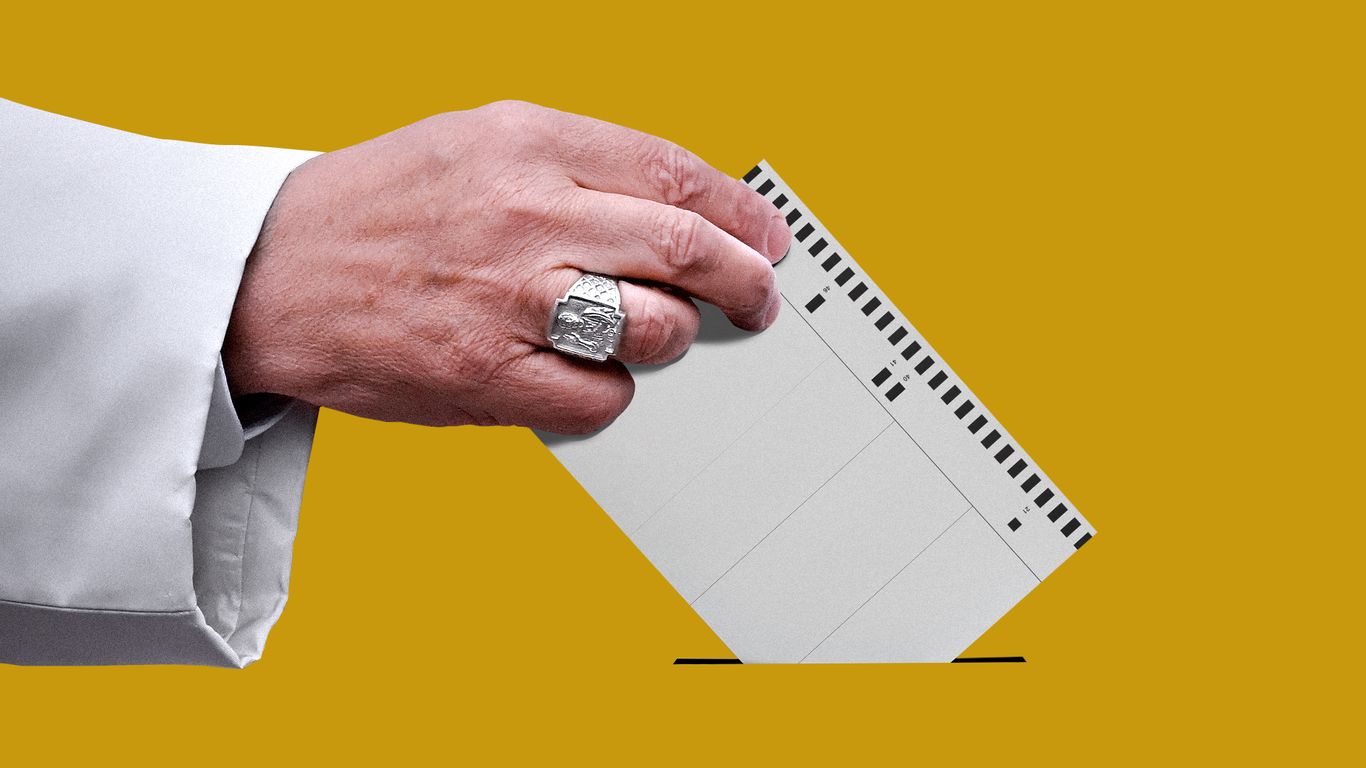
Pope Leo XIV voted in the 2026 Illinois midterm elections using a mail-in ballot, the Vatican confirmed Friday, becoming the first sitting pope known to vote in an American election. Why it matters: The pontiff, an American citizen, may be the first to vote in any secular democratic election. Joliet radio station WJOL first reported Oct. 23 that Leo had requested a mail-in ballot. What they're saying: The pope believes "in the right and the duty of citizens to participate in democratic processes," the Holy See Press Office said in a statement . The Vatican said Leo "has exercised his right to vote as a United States citizen, whenever he was eligible to do so" and that "in keeping with this long-standing practice of civic participation, he has submitted his mail-in ballot in Chicago." Pope Leo also voted whenever eligible during his years living in Peru, the Vatican's statement said. Zoom in: The pope's ballot includes Illinois Gov. JB Pritzker 's reelection bid, the race to succeed Sen. Dick Durbin and a House contest between Democratic Rep. Jonathan Jackson and Republican Christian Maxwell. Jackson, the son of the late Rev. Jesse Jackson, won his district handily in 2024. The pontiff's ballot will have to travel from Vatican city to Joliet, Illinois. Worth noting : Leo has voted in both Democratic and Republican primaries in the last two decades. Leo requested Democratic primary ballots in 2008 and 2010 when he lived in heavily blue Cook County, per the AP. He then started voting in GOP primaries in subsequent elections when he moved to the more conservative Will County, where he is currently registered to vote. He's also voted as an undeclared voter off and on in recent elections, according to the Will County clerk's office. His party affiliation is currently undeclared. Zoom out: The pope, who has been recovering from lung cancer surgery , met with Chicago-area advocates Wednesday who are supporting immigrants at an ICE facility in Broadview , Illinois. He's also
Democrats' main Senate super PAC is privately telling top donors that Texas offers their best shot at flipping a deep-red Senate seat, followed by Ohio, where the race remains close. Senate Majority PAC also sees victories in Iowa and Alaska as within reach, though the outcomes could take longer to become clear. Why it matters: Democrats are increasingly confident about Election Day on Tuesday — and sharing their qualified optimism with their biggest donors. To retake the Senate, Democrats need to win two of those four states — all of which Trump won by double digits in 2024 — flip North Carolina and Maine, and avoid an upset in Michigan. JB Poersch, president of Senate Majority PAC, projected confidence that Democrats will wrest control of the Senate from Republicans during a private donor briefing this week as he walked through the races state by state. He also reminded donors that Kansas, where even Republicans are deeply worried, is a state Trump won by roughly 16 points in 2024. But it's in play . What they're saying: "This matches what we've been saying publicly and privately for weeks. There are signs of optimism in Texas, but it remains a toss-up, as do Iowa, Ohio and Alaska," said Lauren French, a spokesperson for SMP. "There is positive movement for Democrats, but it is critical to remember that every seat on the battleground map voted for Donald Trump by double digits," she said. "These are deep red states and we're focused on bringing them over the finish line so the Senate can work to provide real relief to families who are being crushed by the cost-of-living crisis." The big picture: Texas hasn't elected a Democratic senator since Lloyd Bentsen in 1988. Democrats thought they'd end the drought in 2018 and let themselves fall for then-Rep. Beto O'Rourke, who lost to Sen. Ted Cruz by 2.6 percentage points. Four years later, O'Rourke tried again to prove a Democrat could win statewide in Texas. He lost the governor's race by nearly 11 percentage points. T

President Trump seems to think he can save a vulnerable Ohio Republican senator's ass by talking about how strong it is. Why it matters: Republicans are getting hammered over the war in Iran, gas prices and data centers. But they're playing along with Trump's ogling of male candidates, which he's described as an election strategy. "I don't do this with men very often. I started examining his body because I didn't know he was a great athlete. And I looked and I watched up and down and I looked at his ass," Trump said of Sen. Jon Husted (R-Ohio) at an Ohio rally. "My wife and I have a good sense of humor, and we know he's doing all he can to help us win," Husted told Axios. "We have made sure to hit the gym during the busy campaign to uphold the high standards the president has set for us." Zoom in: In five rallies over three weeks across the country, Trump gave a head-to-toe appraisal of his most vulnerable Republican senator. "His ass was like a big piece of muscle," Trump said in Michigan last week. "Then I looked at his legs and I said, 'Man, his feet are big,' " Trump said in North Carolina. Polling has shown Husted narrowly behind or tied with former Sen. Sherrod Brown (D), and Republicans view him as the most vulnerable GOP incumbent. Zoom out: Husted is getting the most love, but he's not alone. "You know, he's a very handsome guy," Trump said about Sen. Tim Sheehy (R-Mont.) at a Montana rally earlier this month. "I like the white hair, I like the big, strong build. Big, strong guy." Trump said of Rep. Mike Collins (R-Ga.), who is running for Senate in Georgia. Trump called him "all man." "I actually think that Rick Jackson's a very handsome, distinguished, beautiful-looking guy," Trump said about the Republican gubernatorial candidate in Georgia. "Look at this beautiful guy," Trump said of House candidate Ed Gallrein (R-Ky.). Trump called him: "Central casting." Between the lines: Senate Majority Leader John Thune (R-S.D.) has also joined the fun: "I know tha
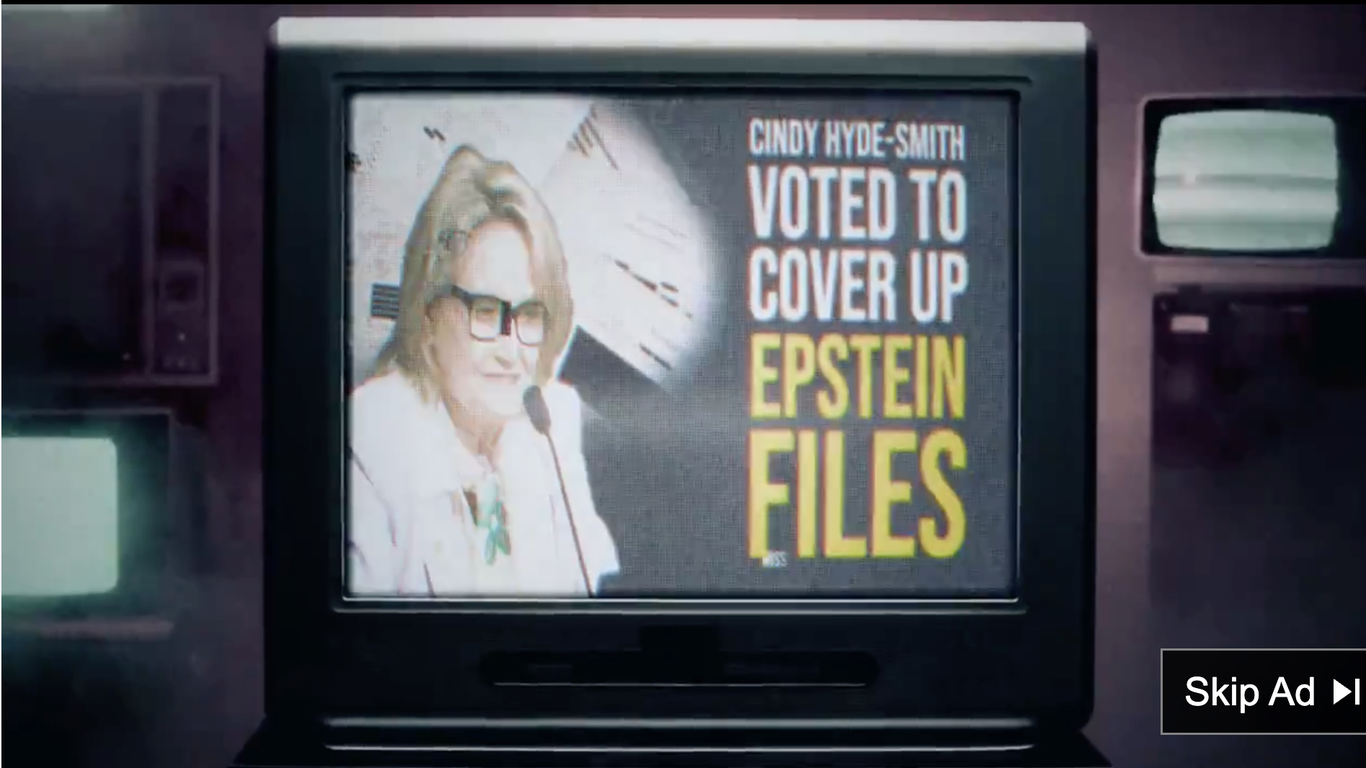
The most-aired ad in the closing stretch of Mississippi's Senate race features a Jeffrey Epstein survivor attacking GOP Sen. Cindy Hyde-Smith for voting against releasing files related to the convicted human trafficker. Why it matters: In the past week, Hyde-Smith has been outgunned on the airwaves. AdImpact data shows that only one of the eight most-aired spots portrays her positively. Five of the ads either positively portray her Democratic challenger, Scott Colom , or attack Hyde-Smith for her Senate record, largely painting her as an out-of-touch senator who cares more about her rich donors. The other two ads are for down-ballot races. Zoom out: The Epstein survivor ad has aired more than 1,200 times over the last week, costing the left-leaning New Deal for All super PAC over $329K, per AdImpact. In the ad, Jena-Lisa Jones condemns Hyde-Smith for her vote on the Epstein files and urges Mississippians to vote against her to protect their children. That vote, which passed 51-49 last year, indefinitely postponed an amendment that would have required the full release of the Epstein files by then-Attorney General Pam Bondi. "I do want transparency, and I support releasing information that can legally be released while protecting Epstein's victims. But a procedural vote on one amendment is not the same thing as saying the Epstein files should remain secret," Hyde-Smith said in a statement to the Mississippi Free Press. Hyde-Smith's campaign cut its own attack against Colom, calling him the "transgender defender" and naming him the "most radical Senate candidate of our lifetime." The ad played over 2,800 times across Mississippi and Memphis, Tenn., television markets in the 30 days since its Sept. 10 debut, costing the senator's campaign over $854K, per AdImpact. Hyde-Smith's campaign appears to have pulled back on the ad, spending less than $150,000 to air it between Oct. 19 and Oct. 26. The bottom line: Hyde-Smith is still expected to win, but the race is far tighter
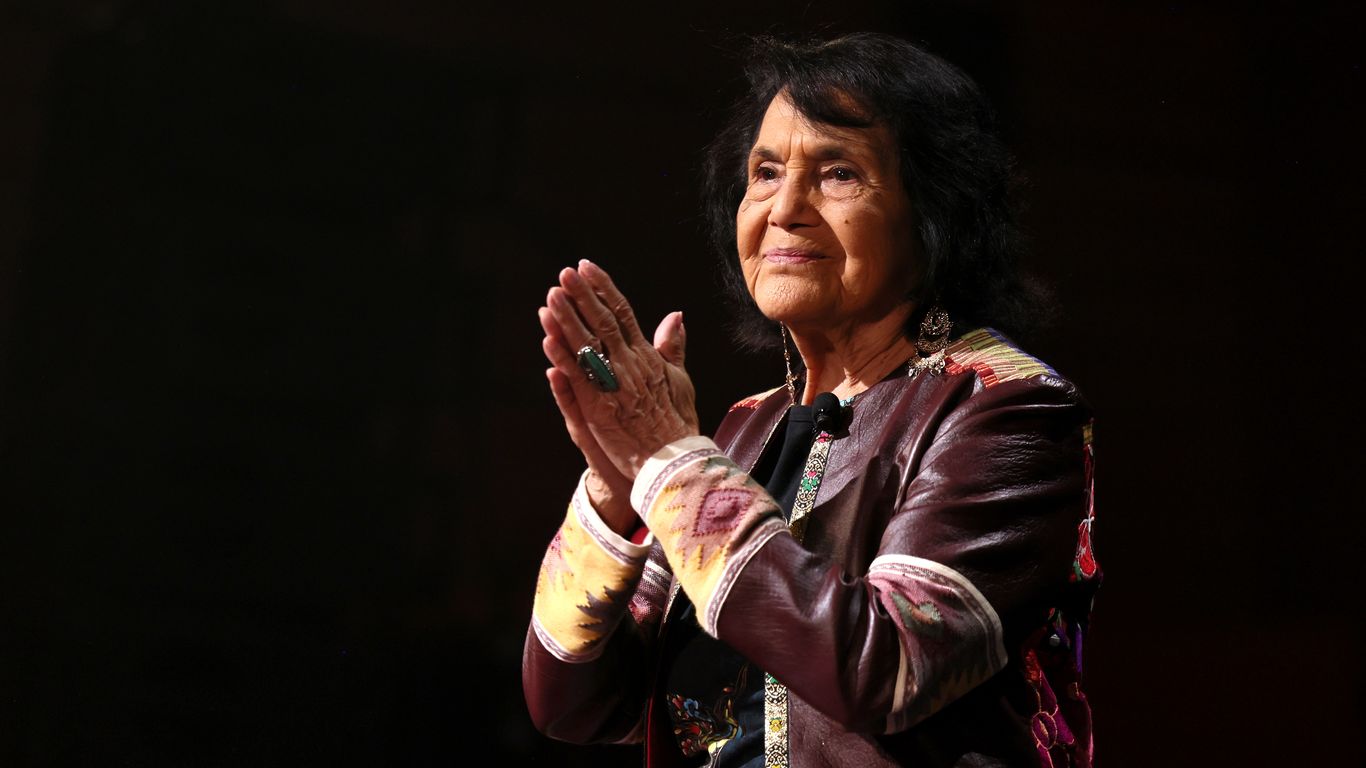
Dolores Huerta , the pioneering labor organizer who co-founded the United Farm Workers and coined the rallying cry "Sí, se puede," died Wednesday at 96, her family announced on her Instagram account. Why it matters: The civil rights legend helped lead strikes and boycotts, fought to expand rights for Hispanic Americans and became a powerful kingmaker in politics. What they're saying: "We are deeply saddened to announce that our beloved mother, Dolores Huerta, has passed away today at the age of 96," her family wrote in a statement posted on Instagram . "As you can imagine, this is an incredibly difficult time for us, and we ask for privacy as we grieve this incredible loss to our family. We know that many of you around the world share in our mourning, and we will be following up on plans to recognize and celebrate her incredible life and legacy." Her cause of death was cancer, per the New York Times. Zoom in: Huerta worked alongside farmworker leader César Chávez, organizing workers who were routinely subjected to poor labor conditions on farms. The pair founded UFW with fellow activist Gilbert Padilla. Huerta also stood next to Sen. Robert F. Kennedy moments before he was fatally shot after his 1968 California primary win, after having worked to get Mexican American voters to support him. She would befriend the widows of RFK and Martin Luther King Jr., Ethel Kennedy and Coretta Scott King, as they fought together for civil rights. Dolores Huerta, co-founder of the United Farm Workers group, with a union flag that reads 'Viva La Causa', 1970s. Photo: Cathy Murphy/Getty Images Catch up quick: Chávez, who died in 1993, allegedly sexually abused multiple women and girls during his time as UFW leader, which only came to light this year following a New York Times investigation. Huerta said that she was raped by Chávez decades ago, becoming the most high-profile figure to accuse him of misconduct . "I carried this secret for as long as I did because building the movement

If Democrats gain full control of Congress next week, as many polls and prediction markets suggest they will, private equity could once again find itself in the political crosshairs. The big picture: Private equity has become a rhetorical punching bag for a number of Democratic House and Senate candidates, including in debates and on the stump, as an affordability bête noire. Most of this has related to housing, both single-family and mobile homes, but also has extended to health care. What they're saying: "It's no doubt that housing is way out of control and a big part of that is because private equity has come into Maine," said Troy Jackson in an Oct. 6 debate with Sen. Susan Collins. "I do think we have to go after private equity, make it so that they can't buy these things and charge outrageous prices." Chris Pappas, running for an open Senate seat in New Hampshire, said during a campaign stop at a mobile home community: "We need to... address the housing crisis that we're seeing, including addressing the corporate private equity influence that we're seeing in housing that's making it less affordable and is causing a lot of consternation here at this park." Rep. Marcy Kaptur (D-Ohio) decried PE ownership of residential care facilities during a public event, saying: "Those people know nothing about health care." State of play: Congress passed a bipartisan bill this past summer to restrict PE ownership of single-family homes, with the Treasury Department last week issuing related regulations . The legislation became law despite not being signed by President Trump, who supported it but was in a snit over the Senate not passing his voter identification bill. Zoom in: A Democratic sweep would likely result in Sen. Elizabeth Warren (D-Mass.) taking the Banking, Housing and Urban Affairs Committee gavel, which means she'd go from writing strongly worded letters to holding hearings and guiding legislation. "Americans are sick and tired of private equity's playbook of ro

Senate Republicans see Iowa moving their way and Ohio slipping, with pessimism growing over Alaska and Kansas. Why it matters: Even when they squint, top Republicans struggle to see a majority beyond 51 seats, according to half a dozen senior operatives. ✈️ A combination of paid media and Air Force One visits has bolstered GOP confidence that they'll hold South Carolina and Mississippi . But across the map, the outlook looks bleak, with only a few bright spots. Zoom out: Republicans are fighting a two-front war: unprecedented Democratic enthusiasm and undeniable Republican apathy. 🏈 President Trump's strategy is to whip up the MAGA faithful with rallies in the reddest parts of red states. 😱 "The Red Scream is my biggest concern , not the blue wave," said Alex Castellanos, a veteran Republican consultant who has worked to help Trump get elected. ‼️ "Republicans and independents are going to be screaming for attention, and many of them, including those who voted for Trump, may show their frustration by not showing up." Zoom in: Texas is starting to look like a late-season football showdown against an SEC rival: The GOP is still in the game, but defeat seems like a real possibility. 🌾 In Kansas, Sen. Roger Marshall (R) has stopped the bleeding, but it's unclear whether there's enough time left to save his seat. 🛥️ Republicans are quietly bullish on Michigan, but they recognize that the demographics have to break heavily in their favor, especially among Black voters. By the numbers: The math hasn't changed, but Senate Minority Leader Chuck Schumer (D-N.Y.) sees multiple paths to 51 seats. No one disputes that North Carolina is going to have a Democratic senator. It seems like another lifetime ago that Republicans were talking seriously about flipping Georgia. If just two of the next tier of Ohio, Kansas and Alaska flip, the Senate would be split 50-50 before factoring in other competitive races, like Michigan, Iowa and Maine. 🦞 In Maine, Republicans and Democrats a

Senate leaders could be guessing who will control the chamber well into November, thanks to a slew of tight races and state-specific voting rules. Why it matters: A GOP majority would ease the pressure on Senate Majority Leader John Thune to move quickly on nominations, while a Democratic majority would give Senate Minority Leader Chuck Schumer more leverage in the lame-duck session. If the chamber splits 50/50, leaders will have to start negotiating their power-sharing agreement. Zoom in: Four states could leave the majority in limbo. Alaska: Sen. Dan Sullivan (R) is trying to fend off former Rep. Mary Peltola (D). Alaska election results have taken weeks to finalize because of the vast state's transportation challenges, mail ballots and ranked-choice tabulation. The Trump Justice Department is preemptively trying to block results from being finalized if Sullivan narrowly loses. Maine's ranked-choice voting could lengthen the vote tallying if neither Sen. Susan Collins (R-Maine) nor Democratic nominee Troy Jackson gets more than 50% in the first round. Kansas' three-day grace period for mail-in ballots could delay results in the race between Democratic nominee Adam Hamilton and Sen. Roger Marshall (R-Kan.). It is far closer than expected. In Texas, a dragged-out recount could be coming. A candidate can request one if the margin is less than 10% of the winner's vote total — which is likely to happen between state Attorney General Ken Paxton (R) and state Rep. James Talarico (D). The candidate who requests it has to pay. The clock: Congress currently plans to leave for the holidays on Dec. 18. But if Republicans lose both the House and Senate , Sen. Bernie Moreno (R-Ohio) wants senators to stay in town through the holidays (yes, Thanksgiving and Christmas) to work on a massive GOP reconciliation package they can pass without Democratic support. The big picture: Congress has a long to-do list either way, including funding the government past Dec. 11, passing emergency

Top Democrats poised for powerful roles next year are demanding that major banks and ports preserve any records they have tied to potential imports or other deals involving Russian diesel . Why it matters: Probing President Trump's agreement with Moscow will be a priority if Democrats regain control of either or both chambers of Congress. The new demand shows that inquiries will extend beyond the White House and into C-suites. Driving the news: "[A]ny importation of Russian diesel into the U.S. raises significant legal questions and may be subject to legal action, as well as congressional investigations," a new letter obtained by Axios states. It's signed by Sens. Chris Coons (D-Del.), Elizabeth Warren (D-Mass.), Ron Wyden (D-Ore.), and Sheldon Whitehouse (D-R.I.). They're in line to lead the powerful Foreign Relations, Banking, Finance and Judiciary Committees, respectively, if Democrats regain the Senate. Rep. Greg Meeks (D-N.Y.), who's in line for the Foreign Affairs Committee gavel if House control changes, also signed. It's led by Sen. Jeanne Shaheen (D-N.H.), the top Foreign Relations Democrat who is not seeking reelection. Sen. Thom Tillis (R-N.C.), who is also retiring, signed as well. State of play: The Wall Street recipients of Saturday's letter are J.P. Morgan, Bank of America, Citi, Wells Fargo, Goldman Sachs and Morgan Stanley. The same letter went to port authorities for the ports of Houston, Beaumont, and Corpus Christi, Texas, and New York/New Jersey. Catch up quick: Earlier this month Trump claimed an agreement to bring escalating Russian exports to global and U.S. markets, and the Treasury Department waived sanctions to help enable it. Friction point: The lawmakers and other critics say it runs afoul of a bipartisan 2022 law barring imports of Russian oil, gas, and petroleum products. "The potential arrangement to import Russian diesel also raises significant national security concerns, given that it would finance Russia's brutal and illegal war ag

The 2026 midterms have taken a deeply personal turn as campaigns use other people's family tragedies as political ammunition — sometimes over the objections of the families themselves. Why it matters: Some attack ads feature photographs of murdered children and anguished 911 calls, forcing grieving families to relive their worst moments. Georgia governor race: Republican gubernatorial nominee Rick Jackson used images of murdered 8-year-old Secoriea Turner and her mother's anguished 911 call to attack Democratic rival Keisha Lance Bottoms, Atlanta's former mayor. Turner's family demanded the ads come down, accusing the campaign of exploiting their grief without permission. Jackson said he would keep airing them . Ohio governor race: Ohio Republican gubernatorial nominee Vivek Ramaswamy's campaign is spending $4 million on an ad featuring the estranged mother of his Democratic opponent, Amy Acton. In the ad, Donna Arthur calls her daughter a liar and disputes her account of childhood homelessness. Acton says her late stepfather — who was married to her mother until his death — sexually abused her as a child, and she hasn't spoken to her mother in decades. Acton's brother corroborated her account , while court records and contemporary news reports support key details. President Trump urged Ramaswamy to keep running his attack on Acton, despite objections from some fellow Republicans. Between the lines: Ramaswamy's campaign said the ad tested well with persuadable voters , even as critics warned it could backfire. Ohio Senate race: A Republican attack ad against former Democratic Sen. Sherrod Brown featured images of a couple and their 1-year-old son killed in a highway crash to blame Brown's immigration policies. The victims' family demanded its removal , saying nobody sought permission to use their relatives' images or tragedy. North Carolina Senate race: A Republican super PAC featured a grieving father in an attack ad linking the murder of his 23-year-old son to for
With just nine days until the midterms, the Trump administration is escalating its assault on two of the Department of Justice's most sacred guardrails: Independence from the White House. Restraint before elections. Why it matters: President Trump's DOJ has shattered the traditional calm of a pre-election period with a barrage of politically sensitive investigations, prosecutions and eleventh-hour efforts to influence the vote. Zoom in: The Justice Department's most aggressive election intervention yet came this week in Alaska, where a preemptive lawsuit seeks to delay certification of the state's U.S. Senate results — if the Democrat wins. The DOJ argues that a second candidate, Dan J. Sullivan Jr., could confuse voters and siphon support from the Republican incumbent, Sen. Dan S. Sullivan. The administration wants certification halted if Sen. Sullivan loses to Democrat Mary Peltola but could have won with votes cast for the other Sullivan, pending an investigation into voter intent. Between the lines: Alaska's Supreme Court already ruled that the second Sullivan belongs on the ballot, and the state's ranked-choice system allows voters to rank both candidates. Legal experts question the DOJ's authority to block certification of a state-run election, or how officials could determine voters' intentions without compromising ballot secrecy. Peltola's campaign and national Democrats have moved to intervene in the lawsuit, challenging the administration's preemptive attempt to halt certification. Zoom out: Alaska is just one front in an October offensive aimed at rooting out alleged election fraud, investigating prominent Democrats and relitigating Trump's oldest political grievances. On Oct. 7, Trump established a White House committee to investigate alleged mortgage fraud by Federal Reserve governor Lisa Cook , authorizing DOJ personnel to participate in proceedings that could lead to her removal. Cook denies wrongdoing. On Oct. 12, federal agents searched Rep. Ilhan O

Washington has always viewed Silicon Valley as culturally strange. But the current crop of AI leaders is becoming a monumental political liability, lawmakers and White House advisers tell Axios. Why it matters: Even pro-AI government officials and lawmakers wish AI founders would do what every other major industry chief does — shut up and just build their products ... safely. By centering the conversation around digital sentience and global catastrophe, AI leaders are turning an already complicated regulatory debate into an impossible moral panic. State of play: Rather than leading the charge to persuade Americans about the benefits of AI, and the potential for shared prosperity — the core elements of any winning political campaign — industry leaders are constantly warning of its existential dangers. What they're saying: Lawmakers say the message from AI execs too often alternates between prosperity and doom, sometimes in the same public appearance. The whiplash adds to political instability in the face of an already powerful public backlash, lawmakers and regulators say. "It's obvious that they're tripping over their own shoelaces in trying to sell the value of this to the public," Sen. John Curtis (R-Utah) told Axios. "It's very hard to imagine a group right now that operates more in a vacuum, more out of touch with everyday Americans, than the AI industry." "CEOs like Sam Altman are saying the world should accept some bad things happening for the benefits of this technology," Rep. Ro Khanna (D-Calif.) told Axios. "You cannot trust billionaires to make decisions to keep us safe." "Your instinct is to wreak havoc on the public [AI] discourse," Sen. Bernie Moreno (R-Ohio) said in a letter to Anthropic CEO Dario Amodei earlier this month, complaining about Amodei's "panic-inducing commentary." Democrats also have paid close attention to just how much top AI and tech leaders have cozied up to President Trump. Many see opportunity in turning AI gaffes into an easy poli
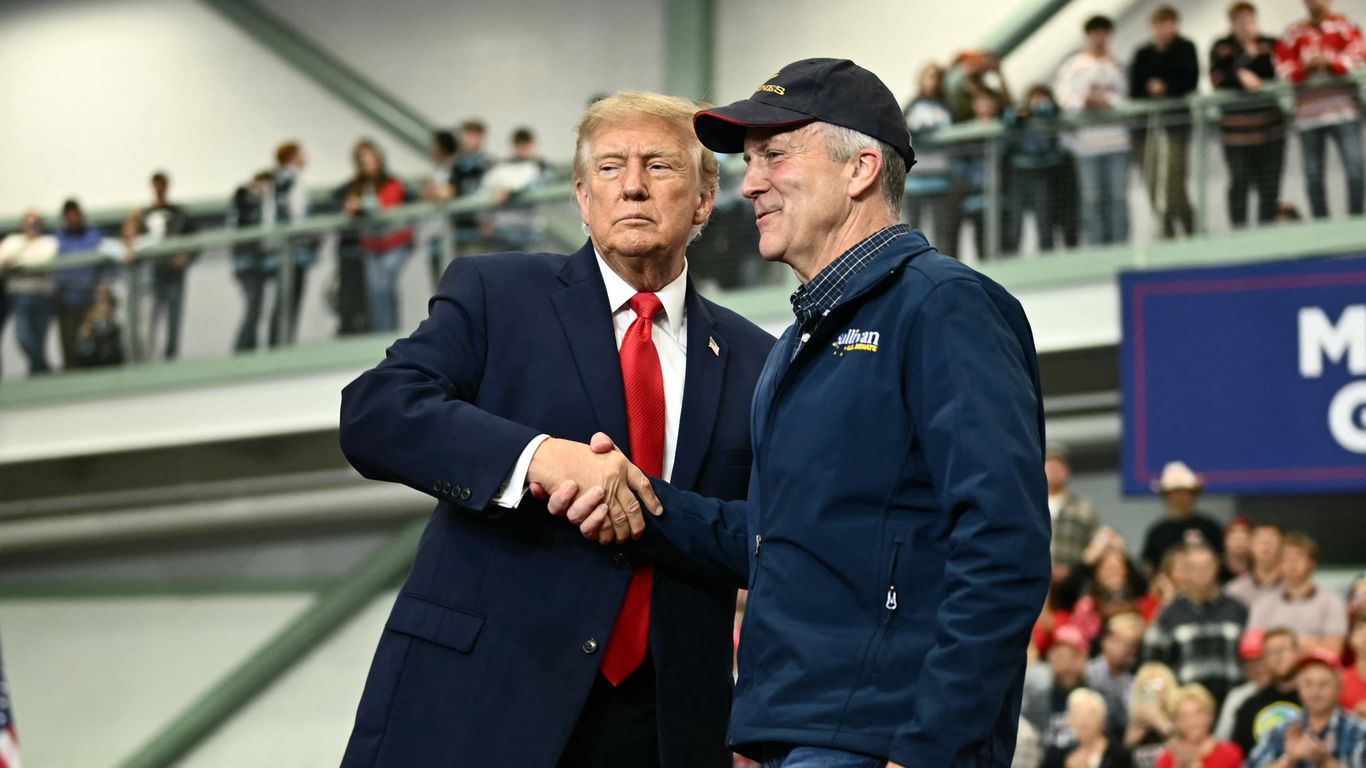
The Trump administration sued Alaska on Thursday to delay certification of election results if incumbent Republican Sen. Dan Sullivan loses. Why it matters: The race between incumbent Sullivan, Democrat Mary Peltola , and retired teacher Dan Sullivan has been marked by controversy, with Republicans accusing Democrats of trying to confuse voters by planting a candidate with the same name. Alaska's use of ranked-choice voting, which eliminates candidates in rounds if no one gets 50% of the initial vote, complicates matters. "An election result may be impacted by voter confusion if: (1) Senator Sullivan does not win the election; and (2) had all votes cast for Daniel J. Sullivan been cast instead for Senator Sullivan and Alaska's rank-choice process played out accordingly, Senator Sullivan would have won the election," the lawsuit , filed in Alaska District Court, states. Zoom in: Because of a previous Alaska Supreme Court decision and Sullivan's name already being on the ballot, the administration contended in the lawsuit that the only means to ensure that the winner of the race is voters' choice "is to ensure that the certification is not impacted" by his candidacy. The lawsuit requests a delay in certification until after an investigation determines "whether votes cast for Daniel J. Sullivan were meant to be cast for Senator Sullivan." What they're saying: "Alaska's Division of Elections determined that Mr. Daniel J. Sullivan's candidacy was intended to mislead voters and compromise the fairness of the ballot," a DOJ spokesperson said in a statement. "Therefore, the Justice Department, consistent with the National Voter Registration Act enacted by Congress, is taking the necessary steps to ensure that this frivolous candidacy does not undermine the integrity of Alaska's election or the will of its voters." The White House referred Axios to the DOJ. President Trump told reporters Friday that he told the DOJ to file the suit against Alaska. He then explained the situa
America's largest banks are working to prevent AI worst-case scenarios. But they're also preparing for the "day after" a catastrophe, Axios has learned. Why it matters: America's financial institutions have joined the largest AI companies in scenario-planning for disaster, a prudent but worrisome signal about the extent of the risk that major corporations see on the horizon. State of play: Banks are experiencing unvetted AI agent activity, primarily driven by customers providing login credentials to agents, which in some cases appear to have taken actions independent of user prompts, Axios reported Thursday . The activity is distinct from the rogue behavior involved in a summer attack on a startup called Hugging Face , where an AI agent swarm hacked its platform in an episode that kicked off an industry security crisis. Instead, banks fear the ripple effects and risks that extend from users allowing agents to log in to their accounts and take action, especially since agents could take steps users haven't sanctioned. Concerns about frontier AI systems, not AI agents, have led banks to invest in prevention and to plan for the worst. Zoom in: The Axios report came amid growing concerns about a burgeoning cybersecurity crisis. Salesforce CEO Marc Benioff posted "code red" on X, quoting an Anthropic security employee who said "as bad as things have gotten in the past 4 days, they are going to get a lot worse before they get better." The Anthropic employee was referring to security researchers finding major vulnerabilities in a programming language used to run millions of websites, marking one of the most consequential cybersecurity discoveries yet made with AI . The Axios report on banks, which referred to agentic AI, not frontier AI systems, sparked calls for regulation from across the political spectrum, including Sen. Bernie Sanders (I-Vt.), Florida Gov. Ron DeSantis and Sen. Mark Warner (D-Va.). Former White House AI czar David Sacks said banks should support user-di
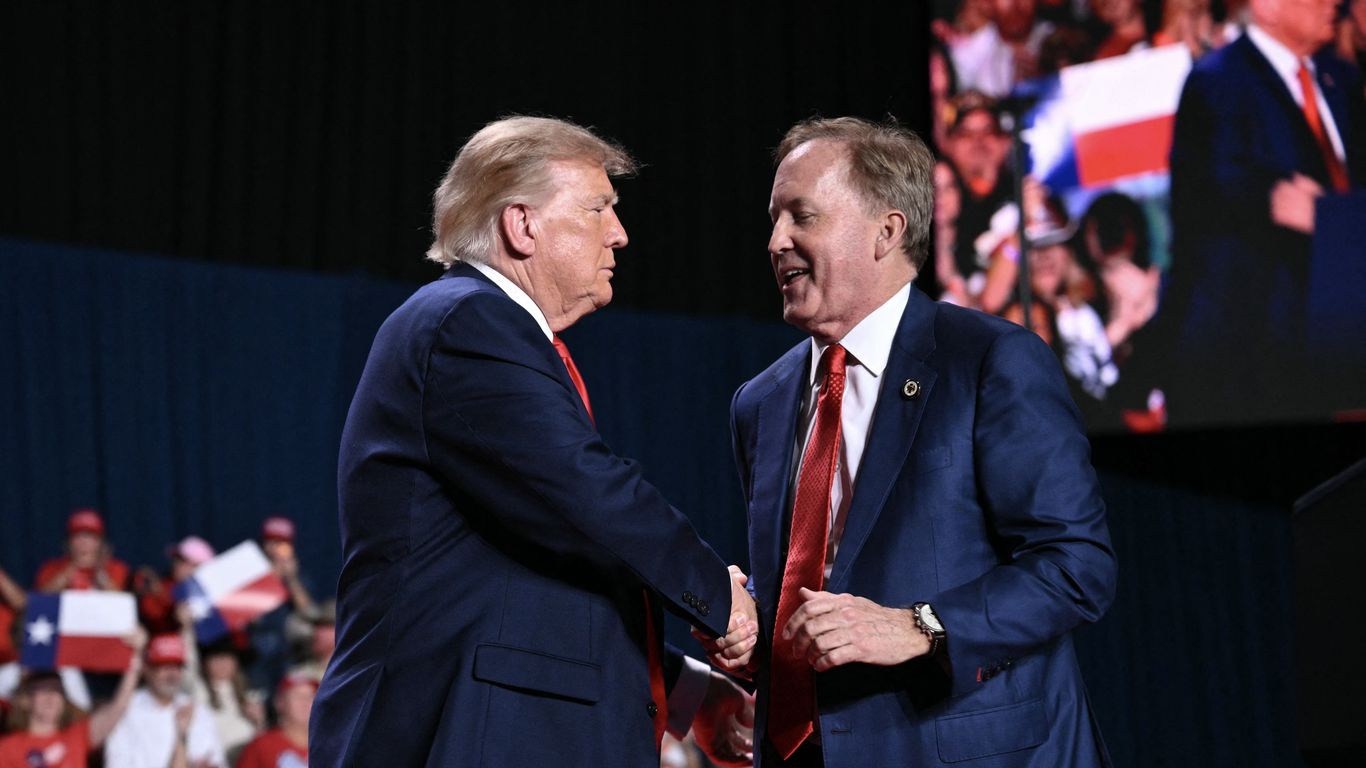
Senate Majority Leader John Thune (R-S.D.) and Minority Leader Chuck Schumer (D-N.Y.) are living out their midterm nightmares — with nominees they didn't want and former colleagues they no longer control. Why it matters: Together, Schumer and Thune are stuck with five Senate races in which their party establishments thought they had a better chance of winning with someone else. 🤠 Texas: Thune's efforts to stop Texas Attorney General Ken Paxton from winning the party's Senate nomination failed. Now Republicans are spending more than $329 million to defeat state Rep. James Talarico— and it's still a nail-biter. 🍑 Georgia: GOP leaders couldn't convince Gov. Brian Kemp to run. The eventual nominee, Rep. Mike Collins, has struggled to keep pace with fundraising juggernaut Sen. Jon Ossoff (D). GOP money is in retreat. 🦞 Maine: Schumer endorsed Gov. Janet Mills, but Graham Platner's implosion left Democrats with backup Troy Jackson against Sen. Susan Collins. ⛴️ Michigan: Abdul El-Sayed defeated Rep. Haley Stevens and made a name for himself nationally. But he won by just one point even though primary polls showed him up by double digits. He's now polling within the margin of error against the GOP nominee, former Rep. Mike Rogers. 🏈 Minnesota: Peggy Flanagan ran as a progressive, said she would not support Schumer as leader and bested establishment-backed Rep. Angie Craig. But Cook Political Report moved her race against former NFL sideline reporter Michele Tafoya toward Republicans even as it shifted other races toward Democrats. To make matters worse, Thune's and Schumer's former colleagues are creating fresh headaches by boosting candidates across the aisle. Former Sen. Joe Manchin, who flipped to independent in 2024 after being elected as a Senate Democrat, is campaigning for Sen. Susan Collins (R-Maine), as Semafor reported. Former Sen. Kyrsten Sinema , who also flipped from Democrat to independent before leaving office, is boosting Republican Jay Feely in her hom
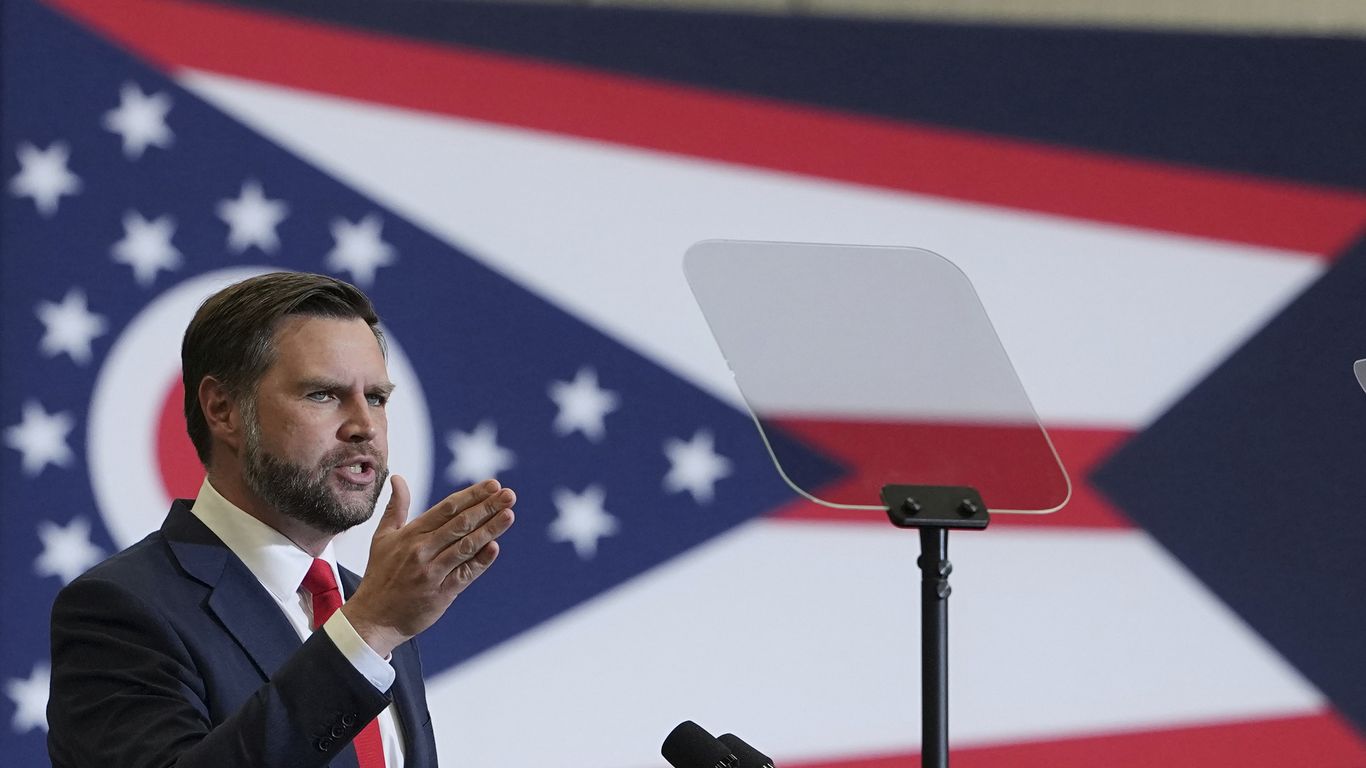
Vice President Vance 's call for fellow Republicans to "stop whining" about Vivek Ramaswamy's controversial attack ad in Ohio's race for governor showed a key part of his political mindset ahead of his expected run for president in 2028: Never back down. Why it matters: Channeling President Trump, Vance has shown contempt for what he sees as the old-guard GOP's reflex to cave under pressure from Democrats and the media. He thinks too many Republicans sacrifice allies to make controversies go away, and that giving critics a political scalp only encourages them to demand another, according to people familiar with his thinking. It's an approach with some risk — namely whether Vance, entering a critical period in his political career, has the political muscle to get away with Trump's no-apologies approach. Driving the news: Vance on Wednesday defended Ramaswamy amid bipartisan outrage over an ad featuring the estranged mother of Ramaswamy's Democratic opponent, Amy Acton . In the deeply personal ad, Acton's mother calls her daughter a liar, and says Ohioans shouldn't vote for her for governor. Not mentioned in the ad: Acton and her brother were removed from the mother's care as children after Acton accused her stepfather of sexual abuse. Her mother sided with the stepfather, leading to an estrangement that has lasted nearly 50 years. Appearing at a campaign stop for Ramaswamy in Ohio, Vance showed little concern about the criticism over the ad. Vance said he was "disgusted" by fellow Republicans criticizing it, telling them to "stop whining." Asked whether the ad was appropriate, Vance said it was "not really my concern," and that politics is tough. The other side: The backlash has included Republicans and Democrats who believe the ad crossed a moral line by exploiting Acton's traumatic childhood. "I would not have run that ad," Ohio Sen. Jon Husted, who appeared alongside Vance and Ramaswamy at a campaign rally Wednesday, told the AP . Former UN ambassador Nikki Haley
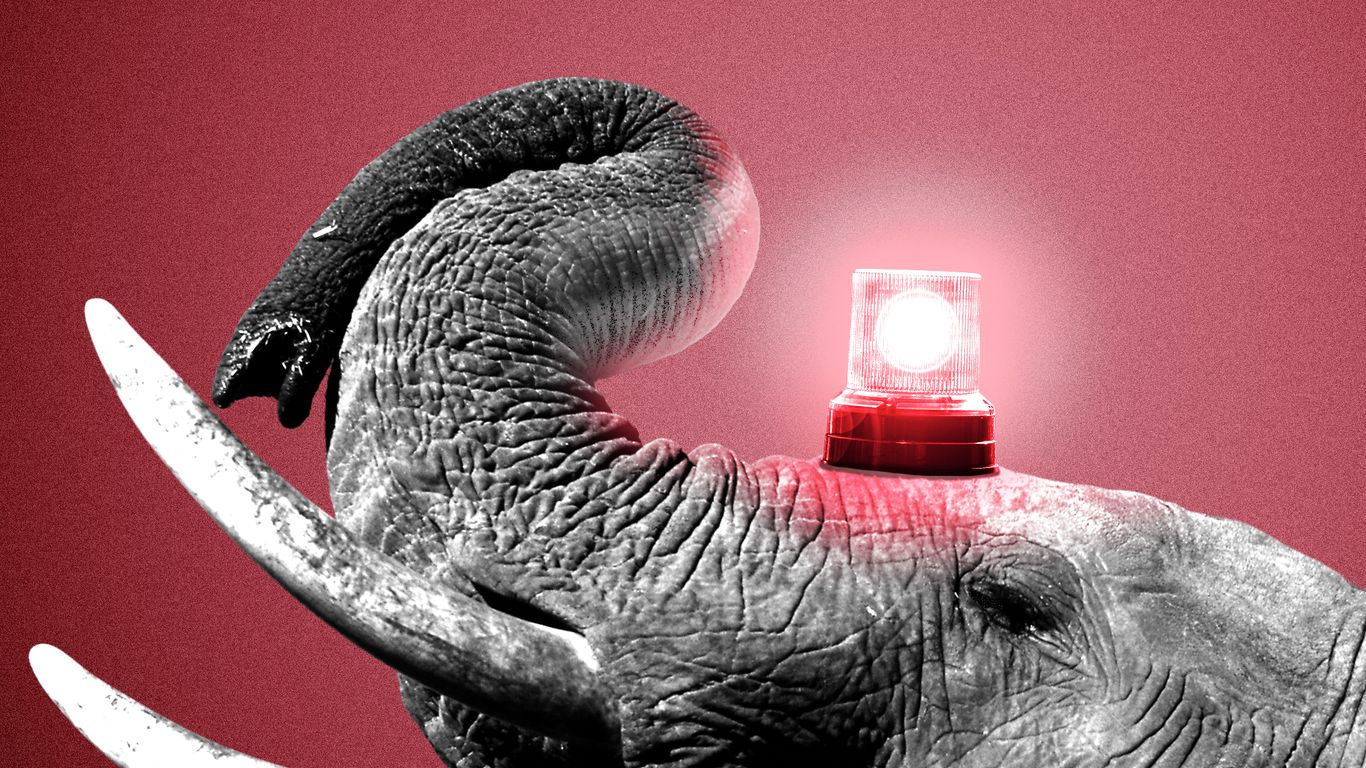
Senate Republicans are weighing three last-ditch spending moves that would have been unimaginable six months ago: a cash infusion for Mississippi and even more money for South Carolina and Kansas. Why it matters: It's been 94 years since Kansas elected a Democratic senator, 44 years for Mississippi and 28 for South Carolina. But panic is spreading through the Republican Party. "The wall has broken. The enemy is inside the fort," one national Republican political operative told Axios. "We are now fighting hand to hand." The Senate map, which once looked impregnable for Senate Majority Leader John Thune (R-S.D.), is now full of vulnerabilities. Democratic challengers are polling within the margin of error in more than half a dozen deep-red states, according to internal GOP polls. The other side: "We're nervous about Alaska. We're nervous about Michigan. We're still going to hold the Senate at the end," said another operative. Zoom in: Two weeks ago, when Senate Leadership Fund decided to take out a $5 million "insurance policy" in South Carolina, operatives took a hard look at Idaho, South Dakota and Mississippi. At the time, they concluded they didn't need to spend any money in those states, according to a person familiar with the matter. But Senate Republicans are now reviewing the Mississippi race and may need to spend there to protect Sen. Cindy Hyde-Smith from a surprisingly competitive bid by Democratic district attorney Scott Colom . Senate Majority PAC, the main super PAC for Senate Democrats, announced a $1.2 million investment in the race on Tuesday. Zoom out: In early June, SLF started to reinforce a Midwestern red wall to protect the GOP majority, reserving $28 million in TV advertising in Ohio and $11 million in Iowa . Those investments have ballooned to $93 million in Ohio and $53 million in Iowa. After an initial $5 million buy in South Carolina, SLF's spending has increased to $8.5 million, according to AdImpact. And a super PAC linked to Sen. John Bar