Democrat Sherrod Brown wins the Ohio Senate race, NBC News projects
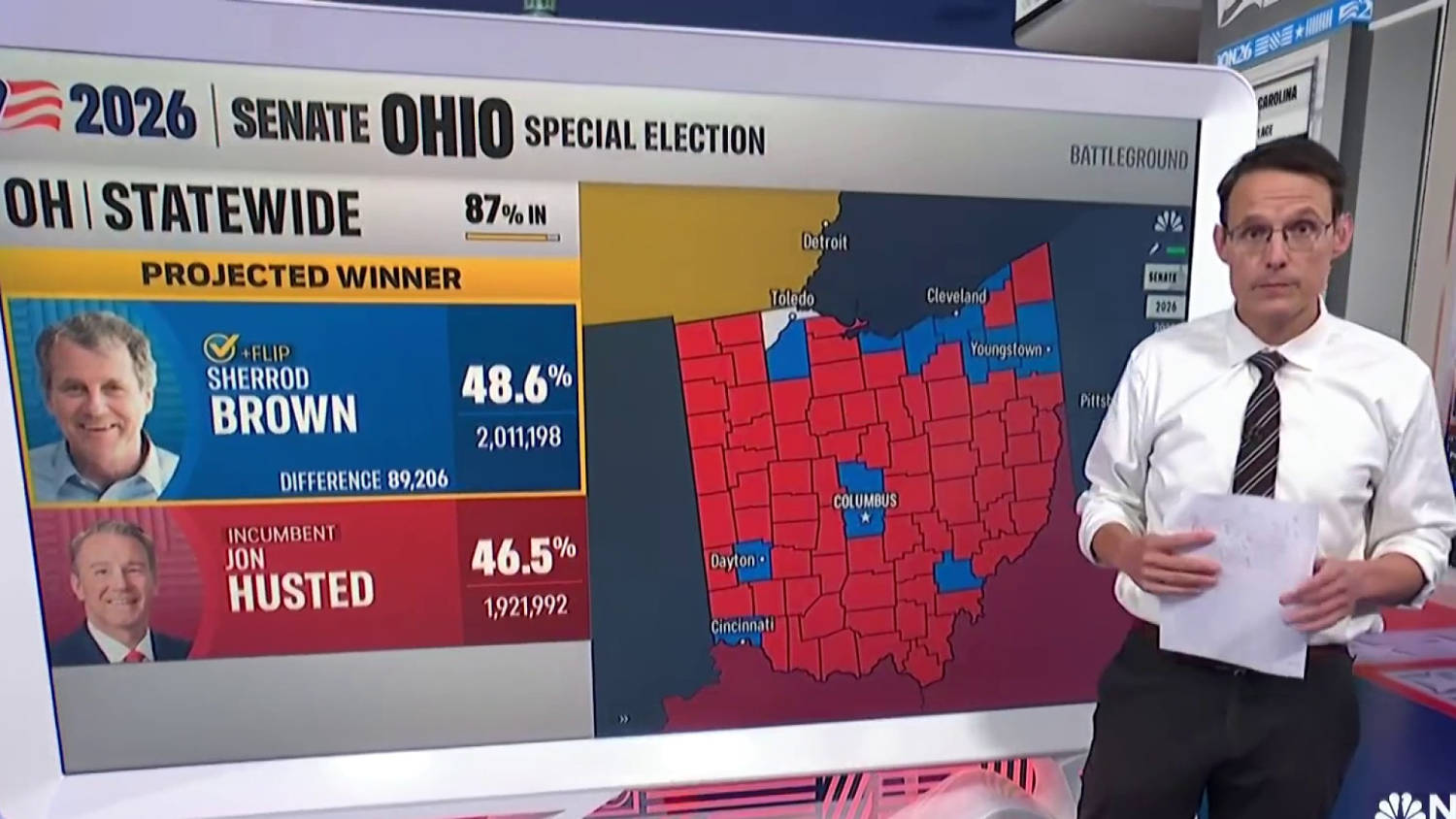
NBC News projects that Democrat Sherrod Brown has defeated Republican Jon Husted in the Ohio Senate race. NBC News’ Steve Kornacki analyzes Ohio’s voting results.
NBC News · 45m ago

NBC News projects that Democrat Sherrod Brown has defeated Republican Jon Husted in the Ohio Senate race. NBC News’ Steve Kornacki analyzes Ohio’s voting results.
Ousted two years ago by a Republican challenger, Mr. Brown returns to Washington in the seat once held by Vice President JD Vance.
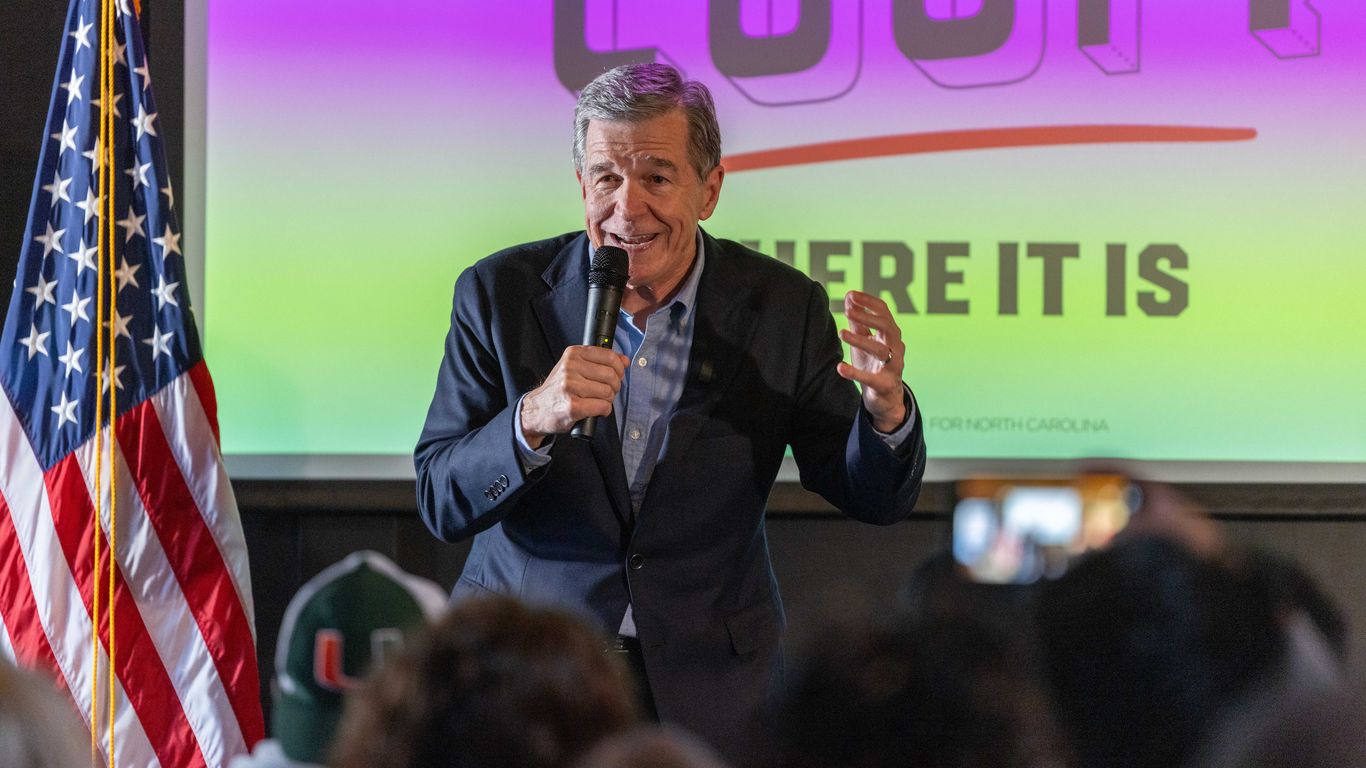
Democrat Roy Cooper has defeated President Trump's handpicked candidate, Michael Whatley, flipping one of North Carolina's two GOP-held U.S. Senate seats. Why it matters : Cooper, the popular two-term governor, delivered Democrats one of their best shots at flipping a Republican-held Senate seat. Even in a state that voted all three times for Trump, Cooper has never lost an election. The big picture: While the race was originally expected to be tight and expensive, Cooper consistently widened his polling lead throughout campaign season. His name recognition boosted his chances against Whatley, a lawyer who served as Republican National Committee chair but had never run for office himself. As enthusiasm lagged behind Whatley, GOP-aligned super PACs canceled their ads and redirected spending to more promising states, even as Trump still campaigned for Whatley in North Carolina. Catch up quick: Cooper will succeed Republican Sen. Thom Tillis, who decided not to seek reelection after clashing with Trump over the "big, beautiful bill" and its associated Medicaid cuts. Trump had threatened to back a primary challenger against Tillis. On the trail: Cooper focused his campaign on affordability, blaming Republicans for high gas prices and tying GOP policies to inflation. Meanwhile, Whatley centered his platform on helping execute the Trump agenda, despite the president's historically low approval rating. Whatley attempted to paint Cooper as the "soft-on-crime candidate" and continued to recite a debunked claim that Cooper is responsible for freeing Decarlos Brown Jr. , the man accused of stabbing and killing a 23-year-old Ukrainian refugee on Charlotte's light rail. Trump alleged North Carolina had become "one of the most violent" states under Democratic leadership while campaigning for Whatley. What's next: Cooper will take office in January. He will be the first Democrat to represent North Carolina in the Senate in over a decade.
Many of the leads for Sherrod Brown and Adam Hamilton have fallen within the margins of error, underscoring that they could be quite competitive.
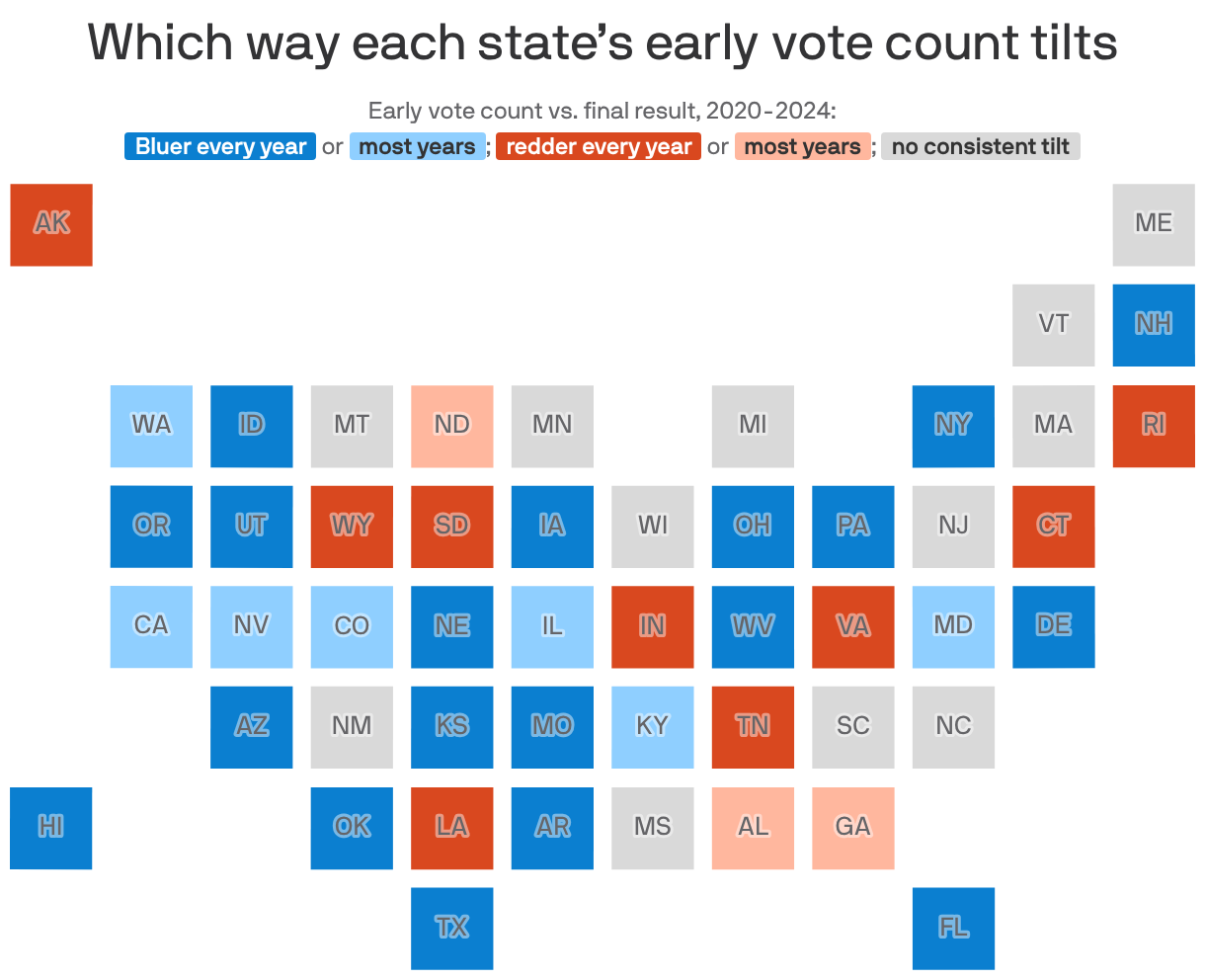
Data: AP via The New York Times and Axios research; Chart: Andrew Pantazi/Axios The first votes counted Tuesday night will almost certainly look redder than the final result, and control of the House and Senate could take days to settle. Why it matters: Early leads can create false impressions of who's winning and suspicion when those leads vanish. Election night is really election week. By the numbers: AP didn't call control of the House until seven or eight days after Election Day in each of the past three elections . The Senate was settled by 10:44pm on election night in 2018 and at 12:06am the next morning in 2024 . In 2022, it took four days , and in 2020, it wasn't called until Georgia's January runoffs , two months later. State of play: Republicans hold 53 Senate seats . Democrats need a net gain of four for a majority. The red head start: In every national election since 2018, the House and Senate votes counted by 9pm ET were 4 to 9 percentage points more Republican than the final result, an Axios analysis of AP and Edison Research vote counts found. It's mostly geography. Fast-counting Florida and other right-leaning states report first. At 9pm on election night 2022, Florida accounted for 40% of all Senate votes counted nationwide. By 11pm, more House races had been called for Republicans than Democrats in all four elections, including 2018 and 2020, when Democrats won the House. The tilt fades, slowly. At 6am Wednesday, the national House count was still 2 to 3 points more Republican than the final, largely because California, Washington and Oregon count for days. Data: Axios research; Chart: Andrew Pantazi/Axios Zoom in: Each state tilts its own way, depending on which ballots and which counties it counts first. States that count early and mail ballots first tend to start bluer than they finish. States that count Election Day votes first start redder. Ohio, Nebraska, Texas, Kansas and Iowa start blue. Sherrod Brown and Bernie Moreno were tied at 9pm in 2
More than 40 third-party candidates in pivotal House and Senate races across the country are receiving support from outside super PACs, many of which have ties to the two major parties, an Axios analysis has found. Why it matters: The sums being thrown around, which total more than $16.5 million, are far greater than virtually any of those candidates have raised or spent on their own. The super PACs have spent an average of $375,000 more than the third-party candidates they are supporting. More than half of the 43 candidates haven't filed any financial paperwork with the Federal Election Commission. While it is a comparative drop in the bucket for a midterm that has already seen billions in ad spending nationally, the money will likely play an outsized role in races that are set to be decided by razor-thin margins. Those races, in turn, will help decide the balance of power in Congress next year. Data: Federal Election Commission; Note: Heikes is a self-identified Republican, but Sen. Dan S. Sullivan is the Republican Party-endorsed candidate in the race; Table: Andrew Solender/Axios The top spenders nationwide have been a pair of obscure groups which, like many of the other "pop-up" super PACs in this story, were formed this month and therefore won't have to disclose their donors until after Election Day. Buckeye Freedom PAC has reported spending more than $3.8 million on ads in Ohio's U.S. Senate election supporting Libertarian Bill Redpath and opposing Republican Sen. John Husted, who is in a tight race with Democratic former Sen. Sherrod Brown. Alaska Values PAC has disclosed spending $3.8 million backing Gerald Heikes, a self-identified Republican running on Alaska's ranked-choice U.S. Senate ballot with Republican Sen. Dan S. Sullivan and Democrat Mary Peltola. Between the lines : Third-party candidates in Alaska are facing national scrutiny after the New York Times reported that Heikes and another self-proclaimed Republican on the ballot, Dan J. Sullivan, wer
President Trump seems to think he can save a vulnerable Ohio Republican senator's ass by talking about how strong it is. Why it matters: Republicans are getting hammered over the war in Iran, gas prices and data centers. But they're playing along with Trump's ogling of male candidates, which he's described as an election strategy. "I don't do this with men very often. I started examining his body because I didn't know he was a great athlete. And I looked and I watched up and down and I looked at his ass," Trump said of Sen. Jon Husted (R-Ohio) at an Ohio rally. "My wife and I have a good sense of humor, and we know he's doing all he can to help us win," Husted told Axios. "We have made sure to hit the gym during the busy campaign to uphold the high standards the president has set for us." Zoom in: In five rallies over three weeks across the country, Trump gave a head-to-toe appraisal of his most vulnerable Republican senator. "His ass was like a big piece of muscle," Trump said in Michigan last week. "Then I looked at his legs and I said, 'Man, his feet are big,' " Trump said in North Carolina. Polling has shown Husted narrowly behind or tied with former Sen. Sherrod Brown (D), and Republicans view him as the most vulnerable GOP incumbent. Zoom out: Husted is getting the most love, but he's not alone. "You know, he's a very handsome guy," Trump said about Sen. Tim Sheehy (R-Mont.) at a Montana rally earlier this month. "I like the white hair, I like the big, strong build. Big, strong guy." Trump said of Rep. Mike Collins (R-Ga.), who is running for Senate in Georgia. Trump called him "all man." "I actually think that Rick Jackson's a very handsome, distinguished, beautiful-looking guy," Trump said about the Republican gubernatorial candidate in Georgia. "Look at this beautiful guy," Trump said of House candidate Ed Gallrein (R-Ky.). Trump called him: "Central casting." Between the lines: Senate Majority Leader John Thune (R-S.D.) has also joined the fun: "I know tha
The 2026 midterms have taken a deeply personal turn as campaigns use other people's family tragedies as political ammunition — sometimes over the objections of the families themselves. Why it matters: Some attack ads feature photographs of murdered children and anguished 911 calls, forcing grieving families to relive their worst moments. Georgia governor race: Republican gubernatorial nominee Rick Jackson used images of murdered 8-year-old Secoriea Turner and her mother's anguished 911 call to attack Democratic rival Keisha Lance Bottoms, Atlanta's former mayor. Turner's family demanded the ads come down, accusing the campaign of exploiting their grief without permission. Jackson said he would keep airing them . Ohio governor race: Ohio Republican gubernatorial nominee Vivek Ramaswamy's campaign is spending $4 million on an ad featuring the estranged mother of his Democratic opponent, Amy Acton. In the ad, Donna Arthur calls her daughter a liar and disputes her account of childhood homelessness. Acton says her late stepfather — who was married to her mother until his death — sexually abused her as a child, and she hasn't spoken to her mother in decades. Acton's brother corroborated her account , while court records and contemporary news reports support key details. President Trump urged Ramaswamy to keep running his attack on Acton, despite objections from some fellow Republicans. Between the lines: Ramaswamy's campaign said the ad tested well with persuadable voters , even as critics warned it could backfire. Ohio Senate race: A Republican attack ad against former Democratic Sen. Sherrod Brown featured images of a couple and their 1-year-old son killed in a highway crash to blame Brown's immigration policies. The victims' family demanded its removal , saying nobody sought permission to use their relatives' images or tragedy. North Carolina Senate race: A Republican super PAC featured a grieving father in an attack ad linking the murder of his 23-year-old son to for