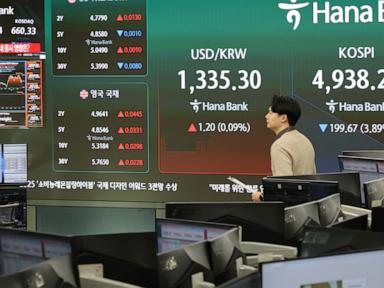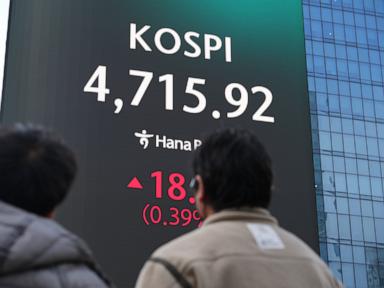
Asian shares mostly rise ahead of Wall Street's reopening after the Thanksgiving holiday (opens ABC News in a new tab)
Asian shares are mostly higher, following a market holiday on Wall Street for Thanksgiving
ABC News · 21m ago

Asian shares are mostly higher, following a market holiday on Wall Street for Thanksgiving
The Trump administration has approved Elon Musk’s plan to create datacentres in space. US federal regulators have authorised the launch of one million Starmind orbital satellites, which are built by Musk’s SpaceX, to process data in space. Supporters argue the project will be more energy-efficient and reduce the environmental impact of datacentres on Earth as the AI industry grows. But how realistic is the plan and what could the consequences be? Michael Safi speaks to Guardian global technology editor Dan Milmo Continue reading...
Every child in the U.S. will receive one share of SpaceX from the company and one from Elon Musk.
Doctors, nurses and staffers at New York-Presbyterian Morgan Stanley Children’s Hospital got an early start to the Thanksgiving holiday spirit. They threw a special parade complete with floats, balloons and costumes all chosen and designed by patients themselves. TODAY’s Laura Jarrett shares the Morning Boost.
New Orleans Chef Alon Shaya's new cookbook shares stories of resilience from World War II, centered around food.
Elon Musk on Wednesday pledged two SpaceX shares for every child in America, doubling an offer he made just last month. Why it matters: The $18 billion-plus giveaway roughly triples Michael Dell's once record-breaking Trump accounts gift . What they're saying: " Every child in America will receive two SpaceX shares, one from the company and one from me personally," he said in a post to X. On Oct. 19, he promised that every child would receive one share next year, adding it would be the "first of many." By the numbers: With about 72 million minors in the U.S. per Census estimates, and at SpaceX's closing price Wednesday, the gift would be worth around $18.35 billion. Musk owns billions of SpaceX shares, and the company has billions of shares outstanding, so the giveaway likely wouldn't have much impact on him or investors. Yes, but: The stock's fallen about 13% since he made the initial promise, amid a broader sell-off in AI-linked stocks. Zoom in: Musk's pledge isn't the first from SpaceX. In July the company's COO Gwynne Shotwell said she'd gift a share of the stock to each of 2 million Trump accounts. What's next: Musk did not offer a timing for the new distribution.
The Trump administration has given SpaceX the green light to deploy 1 million satellites that it said would create data centers in space
In an X post on Wednesday, SpaceX CEO Elon Musk said the satellites will be a "great asset to America and the world."
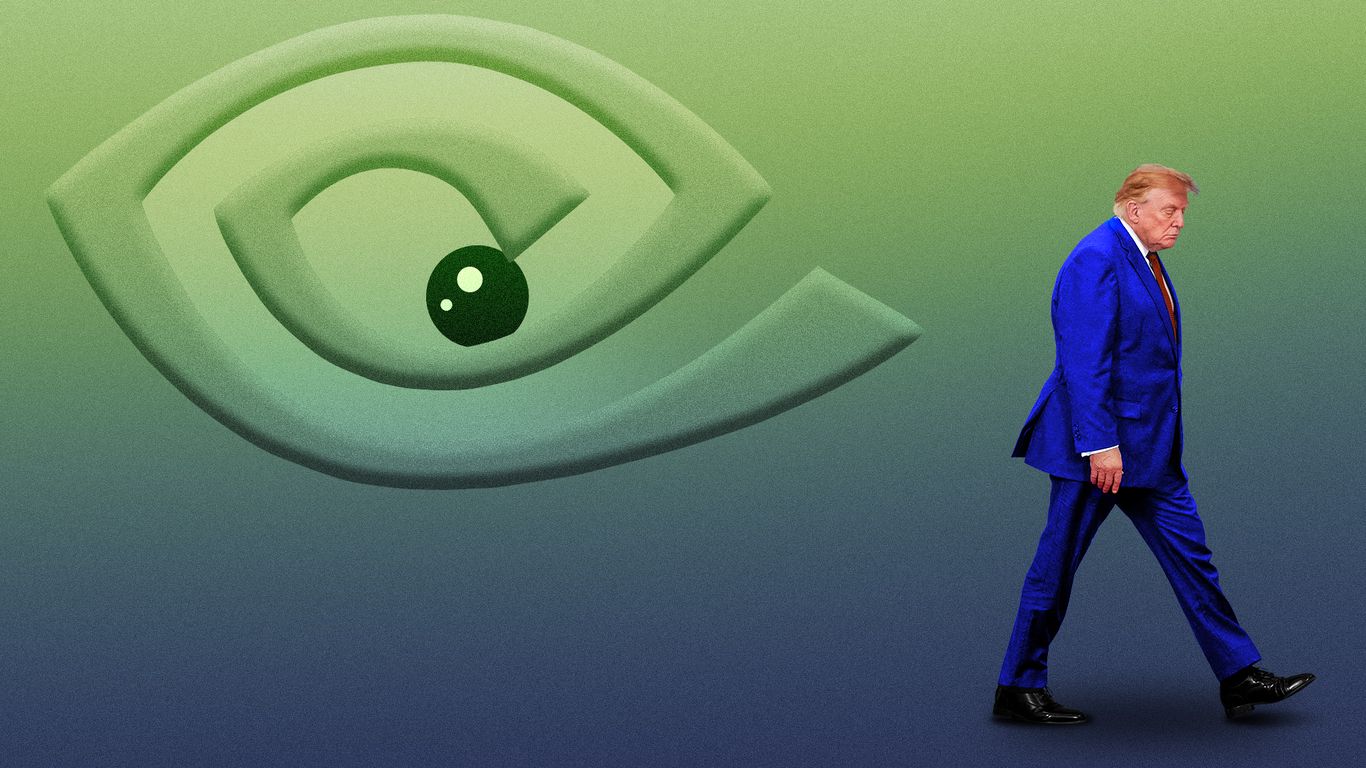
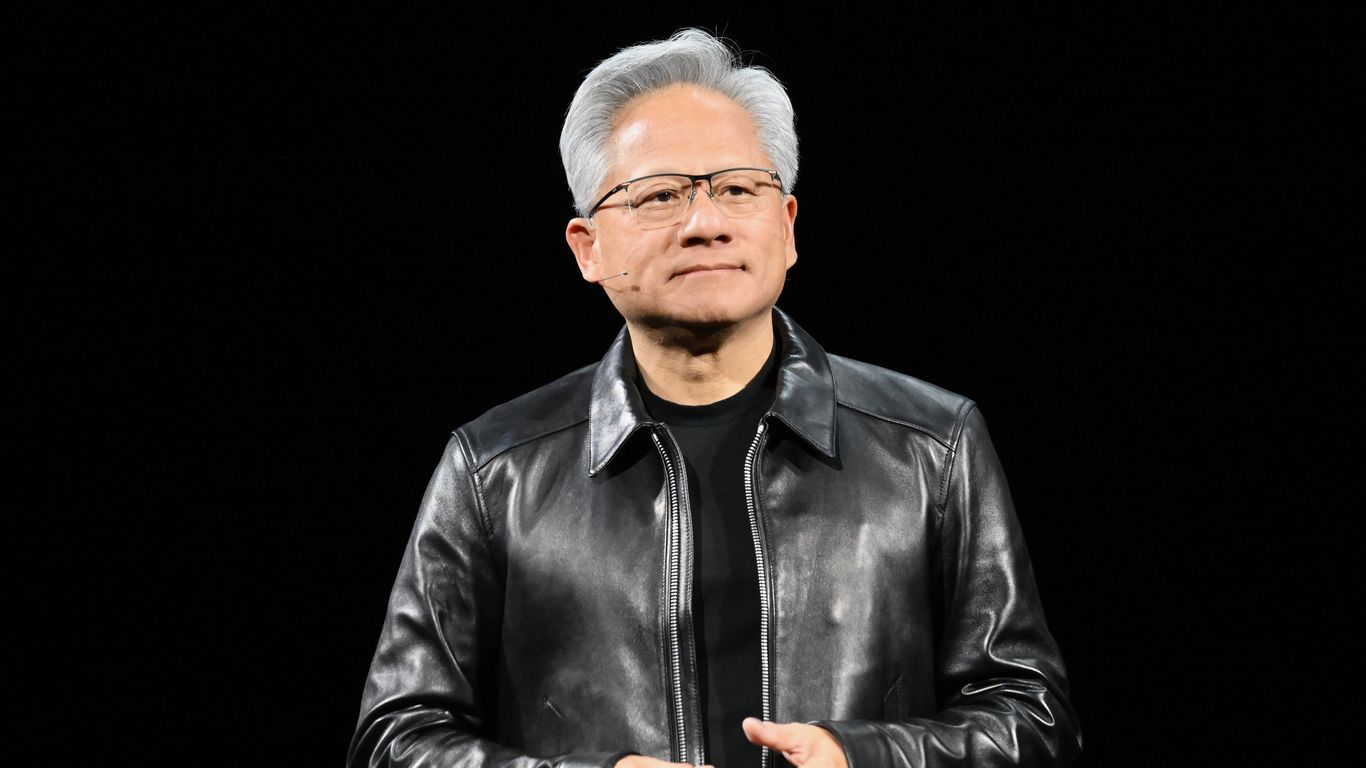
A euphoric Wall Street erupted Monday as President Trump personally secured Jensen Huang's return to Nvidia, trading on the end of a scandal that — in reality — has only just begun. Why it matters: By assuring Nvidia's board that Huang poses no national security risk, Trump has staked the credibility of the U.S. government on a CEO who lied about his relationship with a suspected Chinese spy. It's among the most extraordinary presidential interventions in corporate history — a de facto bailout of the AI industry that will be scrutinized, in excruciating detail, by a hawkish and hostile Congress. Zoom in: Six days after Nvidia's chairman publicly ruled out Huang's return, the board unanimously reinstated him after a secretive White House operation that blindsided even the company's top executives. Trump joined Sunday's board meeting by phone, with one source telling Axios that the president pushed harder for Huang's reinstatement than Huang himself. Nvidia acknowledged relying on assurances from "senior levels" of the U.S. government, even as its own investigation into the suspected Chinese espionage operation remained unfinished. The market reaction was staggering: Nasdaq 100 futures surged to their 7% overnight trading limit, following a brutal week that had raised fears of a broader collapse in AI stocks. Nvidia shares rocketed nearly 31%, adding hundreds of billions to the company's market value and helping Wall Street recover more than half of last week's losses. Trump took a victory lap in an hour-long, freewheeling CNBC interview , declaring Huang "exonerated" and claiming the board ultimately "decided to do what we wanted them to do." Screenshot via Truth Social Between the lines: In orchestrating Huang's comeback, Trump drew on instincts that have defined own tumultuous political career — starting with his conviction that presidential power has "no limits." Never surrender: Trump, the master of the political comeback, appears to see a fellow survivor in Huan
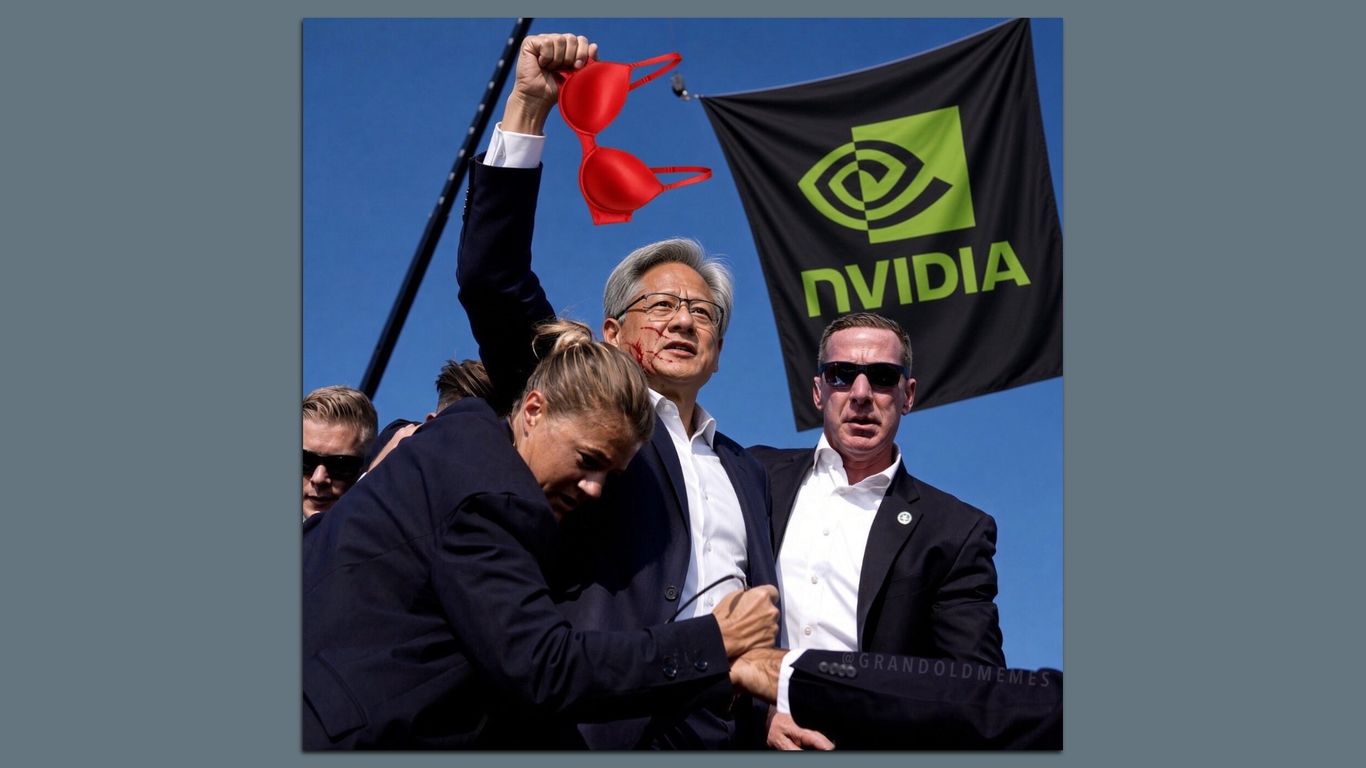
President Trump posted a doctored image of newly reinstated Nvidia CEO Jensen Huang holding a red bra in front of a Nvidia flag, posing as Trump after his viral assassination attempt at a rally in Pennsylvania in 2024. The post came shortly after the embattled Huang was reinstated Monday. Why it matters: The post highlights just how much the White House views Huang as an ally and how the president appears to see Huang's fall from grace and comeback as similar to his own history-making return, despite warnings about national security risks. Driving the news: Nvidia's board reinstated Huang early Monday, declaring him the right person to lead the company. After the announcement, Nvidia shares surged more than 30% by midday, lifting the broader stock market. The reinstatement followed reported pressure from the Trump administration and prompted accountability experts to question the board's judgment . What Nvidia's saying: "The NVIDIA Board of Directors has made the correct and proper decision to return Jensen Huang to the position of CEO," Trump wrote in a separate Truth Social post Monday. "The United States Government has no reason to believe that Jensen's return to NVIDIA poses any risk to National Security. The Attorney General of the United States has confirmed that the U.S. Government does not possess evidence that he has engaged in any unlawful conduct." "On a personal note, I have gotten to know Jensen, and he is a Great Patriot and National Treasure. Separately, NVIDIA should continue its thorough internal investigation of the Company's compliance with U.S. export controls in order to ensure that it is fulfilling its legal obligations and Patriotic Duty to protect U.S. National Security," Trump wrote. Catch up quick: Huang was ousted after he admitted an affair with a suspected Chinese spy, who allegedly used her relationship with Huang to help funnel Nvidia chips to China. Reports also alleged he had affairs with at least two subordinates. What Trump's sayin
Shares are volatile amid jitters over tech and AI – but think carefully before you decide to ditch investments too Business live – latest updates It has been a volatile time on global stock markets. There have been signs in recent weeks that investors are getting cold feet over the outlook for AI companies and selling off technology stocks. Last week, the AI company Anthropic launched on to the market and had a record-breaking first day , but on Friday stock markets around the world tumbled and the US Nasdaq closed 5% below its mark on 1 January . Continue reading...
The company’s co-founders are now wildly rich, while countless Americans face AI-driven threats to their jobs and fears of a stock bubble The sultans of Silicon Valley and the wizards of Wall Street rejoiced this week when Anthropic raised an eye-popping $81bn in the largest initial public offering in history. They saw the AI company’s IPO as a gung-ho affirmation of Silicon Valley’s and Wall Street’s marriage of technology and capitalism. For many employees at the company that developed Claude, the public offering must have been a thing of dreams. With the IPO valuing Anthropic at $1.5tn, the company’s seven co-founders each came away with stakes worth about $20bn , while, by one estimate , 600 of Anthropic’s more than 5,000 employees will have holdings topping $100m and 2,800 others will have shares worth more than $10m. Continue reading...
President Trump said Saturday he'd gladly work with Democrats to cap interest and fees on credit cards , arguing that card companies simply make too much money now. Why it matters: Though some argue capping rates would save consumers billions of dollars a year, the banking industry is equally adamant that it would deny credit to millions of Americans by making lending too risky. Driving the news: Trump, in a Fox News interview Saturday morning, was asked whether a rate cap on cards was something on which he could find common ground with Democrats. Sen. Elizabeth Warren (D-Mass.), poised to be the new chair of the Senate Banking Committee, is an outspoken advocate for such caps and has recently said she's ready to work with Trump to pass a bill. What they're saying: " I would do it. These credit card companies have made a lot — and the credit card fees that they charge. I'm all into it," Trump said . "I know that some people would say it's not free enterprise. But what's free enterprise when you're sitting home and you get a bill that some guy set up in an office on Park Avenue and they said 'let's charge a fee that's too high.' So I'm all for that," Trump said. "The credit card companies, they're getting too much. The fees are too high and the interests are too high." Context: The credit card industry argues that capping interest rates would reduce the revenue needed to cover losses when borrowers default, prompting lenders to reject more applicants. Reality check: This isn't the first time Trump has said he'd cap card rates. In January, he said on Truth Social he'd set a 10% cap for one year and any lender that didn't comply would face legal consequences. Nothing came of the threat, which credit unions claimed could deprive more than 47 million people of access to cards. Nonetheless, the mere idea was enough to send shares in major card issuers lower, and prompt a full-throated response from the industry. What to watch: As much as both Warren and Trump support the
Cincinnati Zoo’s director of animal health, Dr. Mike Wenninger, said a postmortem examination has revealed where the hat was lodged inside Fiona’s digestive tract.
A bruising stock market sell off looked set to continued despite a record-setting IPO by Anthropic and hopes it would revive sentiment on the AI trade.
Asian shares are dropping during a wide selloff in issues related to artificial intelligence and computer chips
Anthropic raised a record $81.3 billion, catapulting it past SpaceX, which raised $75 billion when it went public in June.
Anthropic on Thursday priced its long-awaited IPO at $83 per share, Axios has confirmed, which would give the Claude maker an initial market cap of $1.08 trillion and a fully diluted value of around $1.5 trillion. Why it matters: Wall Street expects the AI boom to continue, despite some recent tumult. Zoom in: Anthropic priced much higher than its planned range of $70 to $78 per share. The company also could raise significantly more money if underwriters exercise their so-called "greenshoe" option, while Anthropic also will receive $26 billion via a concurrent private placement from tech giants like Nvidia, Google and Microsoft. Axios has not yet been able to confirm the number of shares offered. Anthropic had said it planned to sell 825 million shares, which would work out to a $68.5 billion raise (plus the private placement), but it may increase the share count. Allocation decisions are expected to last several hours on Thursday evening. For context: Anthropic was valued at $965 billion in its most recent private round. The apples-to-apples comparison would be with the fully diluted value. SpaceX raised $75 billion in its IPO and a total of $86.25 billion with the exercised greenshoe, at a higher valuation than Anthropic. What we're watching: Shares are expected to begin trading Thursday, Nov. 19, on the Nasdaq under the ticker "ANT."
Treasury Secretary Scott Bessent on Sunday questioned whether Nvidia's earnings might have been inflated by inappropriate sales to China and urged the company to hire an outsider as CEO. Why it matters: Nvidia is central to the AI economy, which has been key to U.S. economic growth. The Treasury secretary casting doubt on the quality of its financial results and leadership could be a blow to an already shaky market. Since the scandal broke open in late October, Nvidia shares have shed more than $1.2 trillion in market capitalization, with impacts on millions of Americans. Driving the news: In a Fox News appearance Sunday morning, Bessent said Nvidia owes the market an explanation amid allegations former CEO Jensen Huang had an affair with a Chinese spy and oversaw sanctions-evading chip sales to Asian companies. "I want to keep coming back to what was the culture at Nvidia, and were they pressing these seemingly illicit sales to goose their revenues and their earnings?" Bessent said. "I think we need answers in the next 10 days from the board and from the outside counsel." Bessent also said it was "obvious" that some companies doing business with Nvidia were shell companies for Chinese interests and accused the chipmaker of a "culture of noncompliance." "This makes me think that as the board conducts the search for a new leader, that they need to go outside the company," he said. For the record: Nvidia did not immediately respond to a request for comment on Bessent's remarks. The intrigue: Huang has been a favorite of President Trump and other administration figures for some time, but Bessent has notably not been as effusive about him as others. In recent days, Bessent has also made clear that the Commerce Department has questions to answer about why it didn't impose tighter controls on Nvidia's exports. As Axios reported earlier this week, administration officials have accused Commerce Secretary Howard Lutnick of stalling curbs on Nvidia's exports. What to watch: N
Nvidia's near-30% stock plunge in the last month is a drag on the retirement savings of millions of Americans, many who may not realize just how much their investments are tied to the scandal-engulfed chip giant. Why it matters: Nvidia's enormous weight in popular index funds means even those who have never purchased a single share of the company could feel the pain of its corporate upheaval in their 401(k)s. The resignation of CEO Jensen Huang after he had an affair with an alleged Chinese spy may have cost an average Baby Boomer thousands of dollars, according to an Axios analysis of outside estimates. By the numbers: Index funds held nearly half of the assets in large private-sector 401(k) plans in 2023, according to the Investment Company Institute. Those funds include investments tracking the S&P 500, and Nvidia accounts for roughly 8% of that index, according to Tom Graff, chief investment officer at financial planning firm Facet. That exposure rises to around 14% in growth-style index funds and can reach 25% to 30% in some technology and semiconductor funds commonly found in retirement plans, Graff said. Zoom in : For an investor with $100,000 in an S&P 500 fund, a 30% drop in Nvidia shares would knock about $2,400 off the value of that investment given an 8% S&P holding, assuming other stocks in the fund stayed flat. For a growth-style tech fund with 25% exposure to Nvidia, that decline would amount to $7,500 in lost value. An average Baby Boomer holds about $260,000 in their 401(k), according to Fidelity . A tech-style exposure applied to that amount of holdings would equate to about a $20,000 reduction. Yes, but: Remember, a drop in your investment's value doesn't mean you've actually lost that cash — unless you sell your holdings. Zoom out: The potential fallout extends beyond Nvidia itself. About 40% of the S&P 500 is tied to the AI buildout, for which Nvidia is central, providing much of the financing and infrastructure needed to fuel the tech boom. If
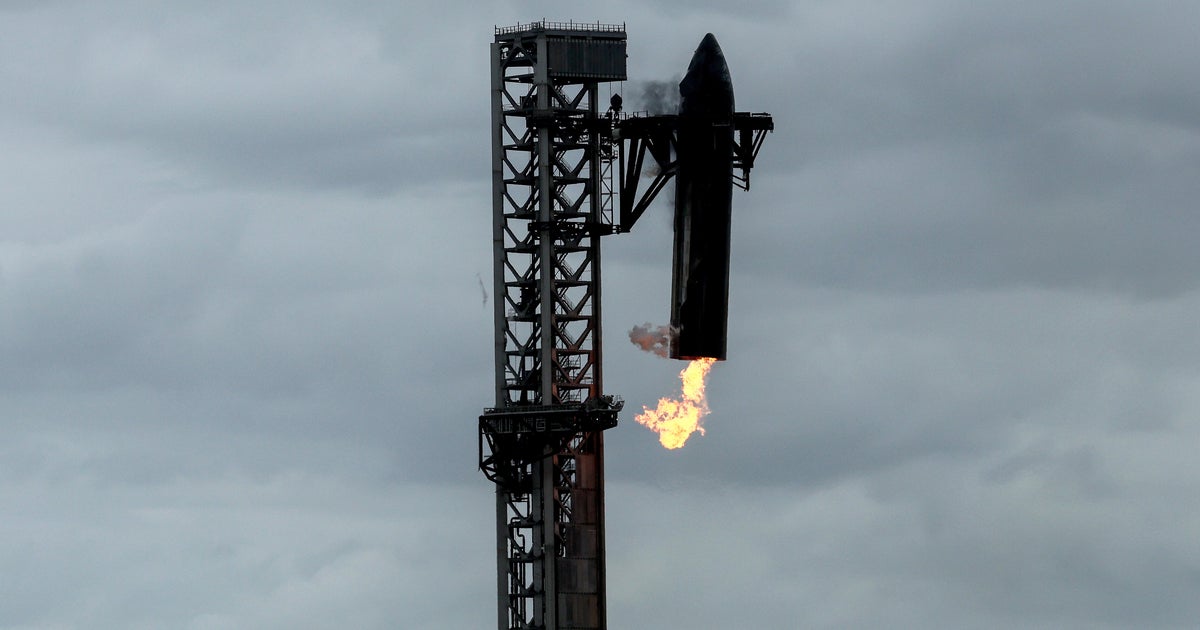
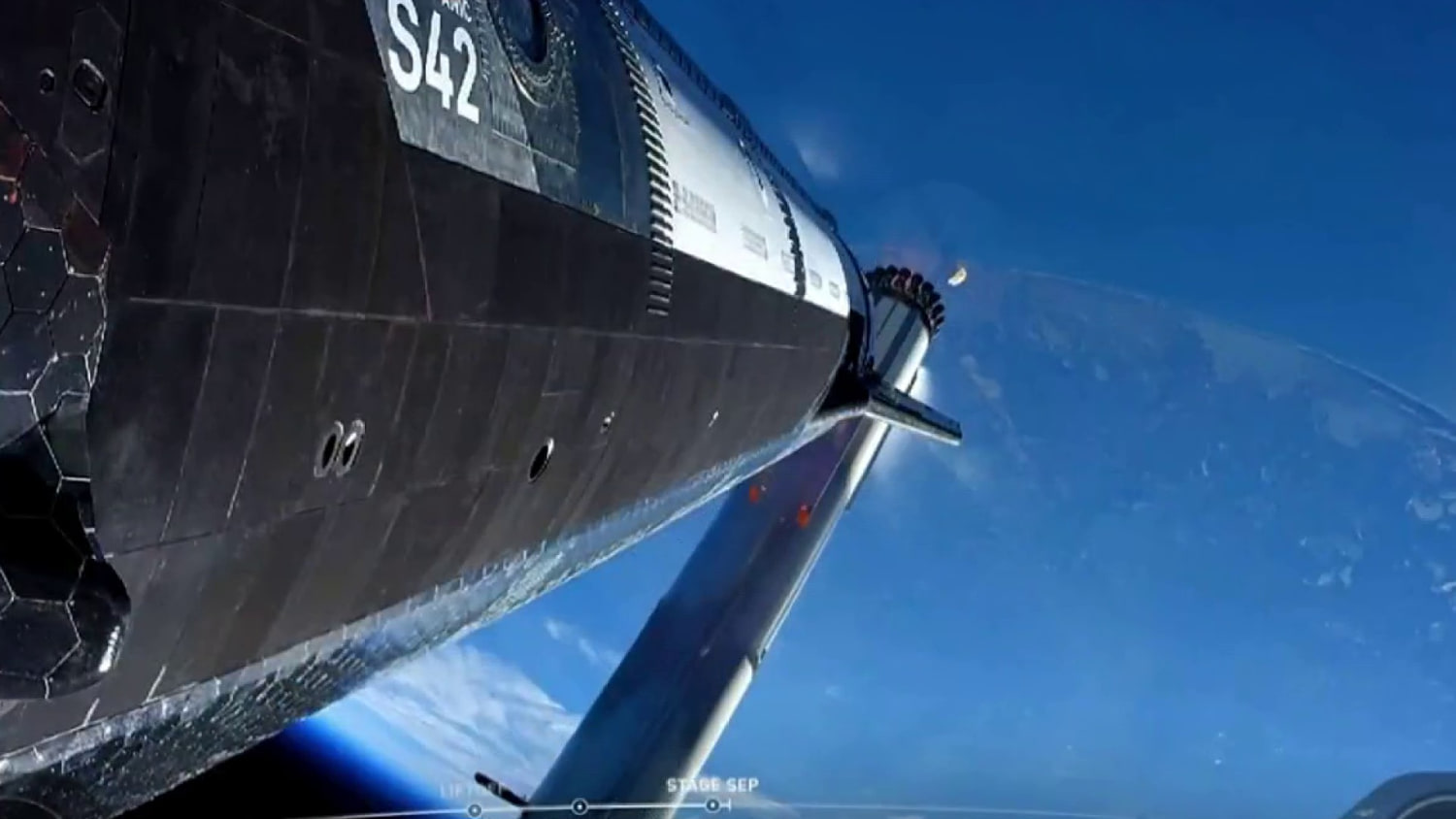
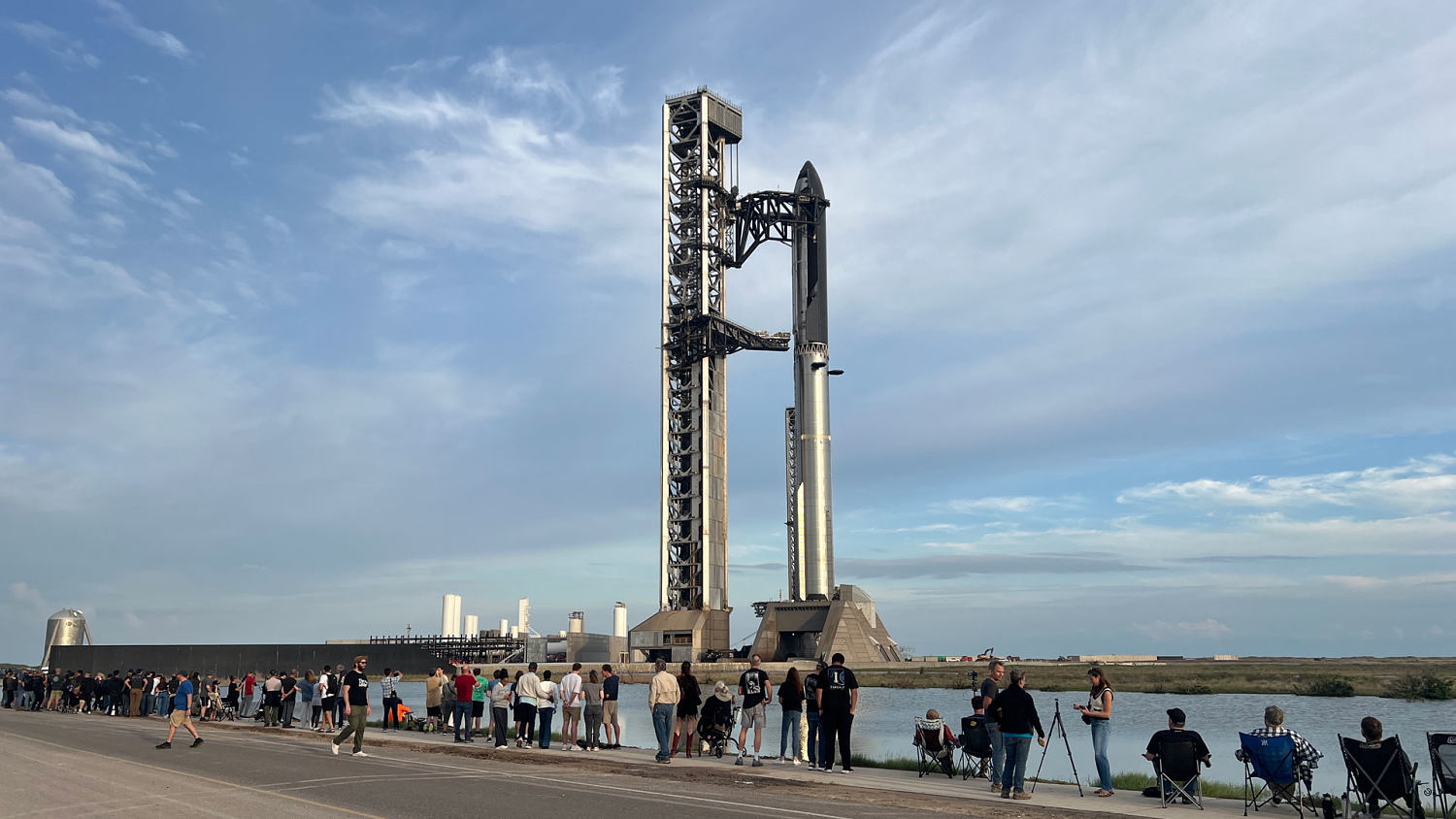
The top part of SpaceX’s megarocket Starship returned to its Texas launch tower on Saturday, a milestone in the company’s efforts to make the craft suitable for human spaceflight. Starship’s 15th test flight was envisioned as a historic double-catch mission, where all parts of the rocket would be returned intact, but the lower booster section malfunctioned and activated an automated abort, exploding over the ocean SpaceX’s Starship returns to launch pad from orbit in victory for company Continue reading...
Sprawling networks of space data centers could make it nearly impossible for humans to stargaze. That's just one of the many risks that come with placing tens of thousands of AI computers into orbit, according to a new report. Why it matters: Most Americans don't want data centers built near them, but putting them in space brings a new set of problems. Threat level: "Companies and policymakers should proceed with great caution," top academic researchers warn in a report for the Innovation for Cool Earth Forum, an annual event hosted by the Japanese government. If space data centers proliferate, the "most visible points of light in the sky during much of the night in much of the world could be satellites, not stars," the report said, mirroring astronomers ' worries. If the U.S. military adopts the technology, the data centers could become potential targets during future space conflicts . Thousands of orbital data centers whipping around the Earth at 17,000 miles per hour mean a growing "risk of collisions" and dangerous space debris . Space data centers are solar-powered, but the vast number of rocket launches needed to put them in orbit generate greenhouse gases and black carbon emissions . What they're saying: Columbia University's David Sandalow, the report's lead author, told Axios there are still "unknown unknowns" about space data center impacts. "If this is going to happen, it should happen slowly and with care," Sandalow said. "Not just launching lots and lots of these things and, kind of, seeing what happens. ... There's big risks." By the numbers: Despite those concerns, investors and tech innovators are all in on space data centers. In 2025, around $197 million in investments were tied to orbital data centers, per market research firm Quilty Space. That figure has swelled to $1.11 billion so far this year. SpaceX has applied for a constellation of 1 million data center satellites, according to the Secure World Foundation . Starcloud and Blue Origin's Proje
It was the first recovery of a Starship from orbit, a major milestone for a rocket SpaceX founder Elon Musk says will dramatically lower launch costs.
SpaceX’s attempt for a Starship double catch was thwarted when the booster ended up in the gulf
Anderson Velez, who lived in the Brooklyn building that collapsed on Wednesday while his wife and two children were inside, tells Lilia Luciano what he thought when he saw video of the moment the building came down.
One of the few flights taking off tonight was SpaceX's Starship rocket. How were they allowed to do that, and what’s the goal of the mission? NBC News’ Gadi Schwartz reports.
Millions of Americans are exposed to Nvidia shares through their retirement plans. That's not as bad as it sounds (really!).
Watch live coverage as SpaceX launches its Starship rocket on its first flight to return both Starship and Super Heavy to the launch site. Starship is expected to orbit Earth over a more than 22-hour flight.
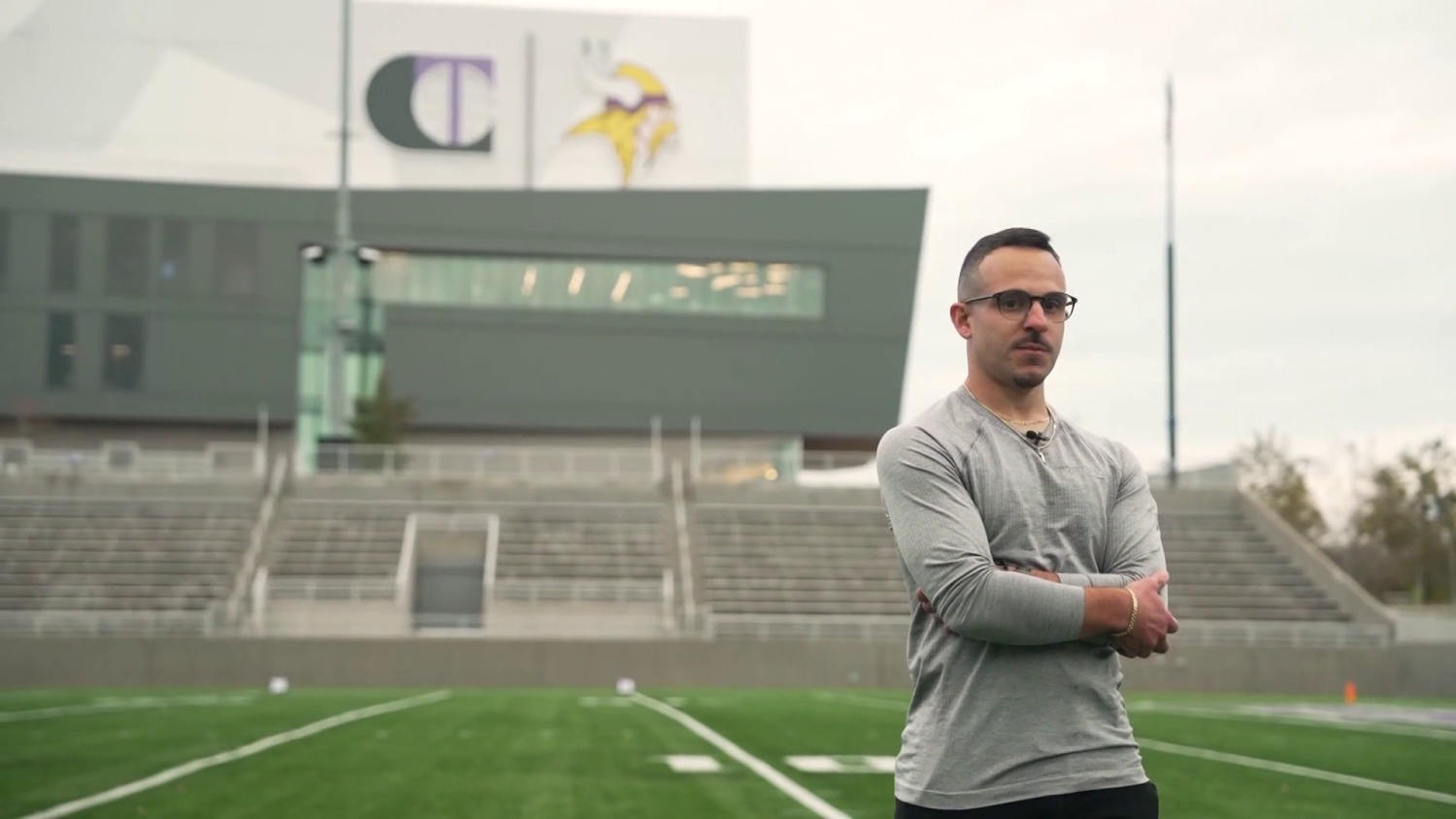
Chenzo Funari decided to quit his job as a rocket scientist at SpaceX to pursue his passion for football. Now, he’s an NFL Defensive Backs Coach for the Minnesota Vikings. NBC News’ Sam Brock caught up with Funari to talk about his journey from space to the gridiron.
Jensen Huang's self-destruction has left a trail of collateral damage that threatens to ensnare the board of Nvidia and the AI boom itself . Why it matters: Huang was a singular leader in the global economy, capable of exciting or calming markets with a single sentence and viewed as a virtually indestructible force behind Nvidia's rise. The big picture: His sudden exit after reports of multiple affairs — one with a suspected Chinese spy and the other with a direct report — has wiped out more than $600 billion in value from Nvidia's market cap. "His visionary leadership is going to be missed — it's not going to be replaced," Joel Shulman, CEO of ERShares, which has owned Nvidia shares since 2005, tells Axios. Zoom in: With the uncertainty over Huang's tenure at Nvidia now resolved, the attention will quickly pivot to a slew of unanswered questions, including: What will the investigations uncover? Just because he's gone doesn't mean this is over. If the FBI probe or the independent investigation ordered by the board show that Huang gave favorable treatment to Megaspeed — the company led by the suspected spy Alice Huang — he and Nvidia could face serious consequences. Huang is also expected to testify behind closed doors next week before a Congressional committee. Critics say the Nvidia board wasn't fulfilling its duty to provide proper oversight of Huang — particularly if it had any reason to be aware of his reported affairs before they become public. Peter Jaworski, business ethics professor at Georgetown University, said the situation raises questions about what the board knew and when they knew it. Nvidia reps haven't responded to Axios requests for comment on the board's handling of the matter. Who takes the permanent role as CEO? CFO Colette Kress was named to the interim role, but the board is conducting a global search that will consider outside and internal candidates for a permanant successor. She "has built enormous credibility internally and externally and
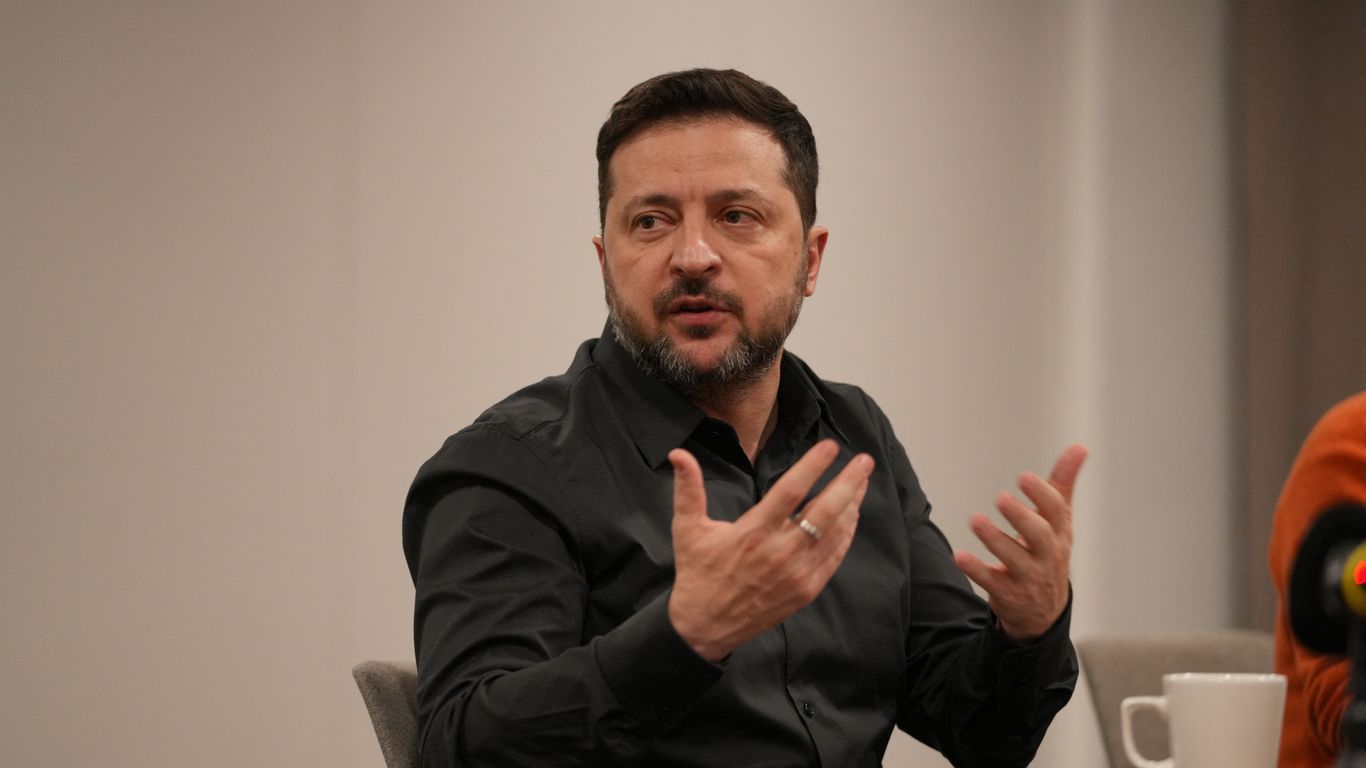
The Ukrainian government has asked the Pentagon and SpaceX to explain new restrictions it says are disrupting the satellite system its military uses to intercept Russian drones. Why it matters: This is the second time in recent weeks that Ukraine reported that Starshield, made by Elon Musk's SpaceX, was impeded. The Ukrainian military uses Starshield — the military version of SpaceX's Starlink satellite communications system — to control and operate its reconnaissance and to intercept drones. Driving the news: Ukrainian President Zelensky said Thursday he was briefed by the minister of defense and the commander of the Ukrainian military that "units have been recording significant disruptions to Starshield's operations" along the entire front line and in the parts of Ukraine occupied by Russia. "The Ukrainian military have already investigated the circumstances, and these are not random errors but systematic speed restrictions," he wrote on X. "We are trying to establish all the circumstances with the American side." Zoom in: A Ukrainian official said the restrictions have been happening for three days. "On the first day there were 10% limitations, on the second day 50%, and today 100% of the missions fail because of restrictions," the official said. Ukraine's charge d'affaires to the U.S., Denys Sienik, said the Starshield system shuts down when drones fly at more than 100 miles per hour. "We don't have clarification from SpaceX or Pentagon at the moment," he said. State of play: Zelensky said the new restrictions began shortly before President Trump's envoys Jared Kushner and Steve Witkoff met at the Kremlin with Russian President Vladimir Putin on Thursday. Kushner and Witkoff are expected to meet Zelensky later on Thursday in Dublin. Catch up quick: Ukraine relies on two SpaceX satellite services. Starlink, the commercial service, supports battlefield communications and logistics. Starshield is designed for government and military customers. Ukraine accesses it t
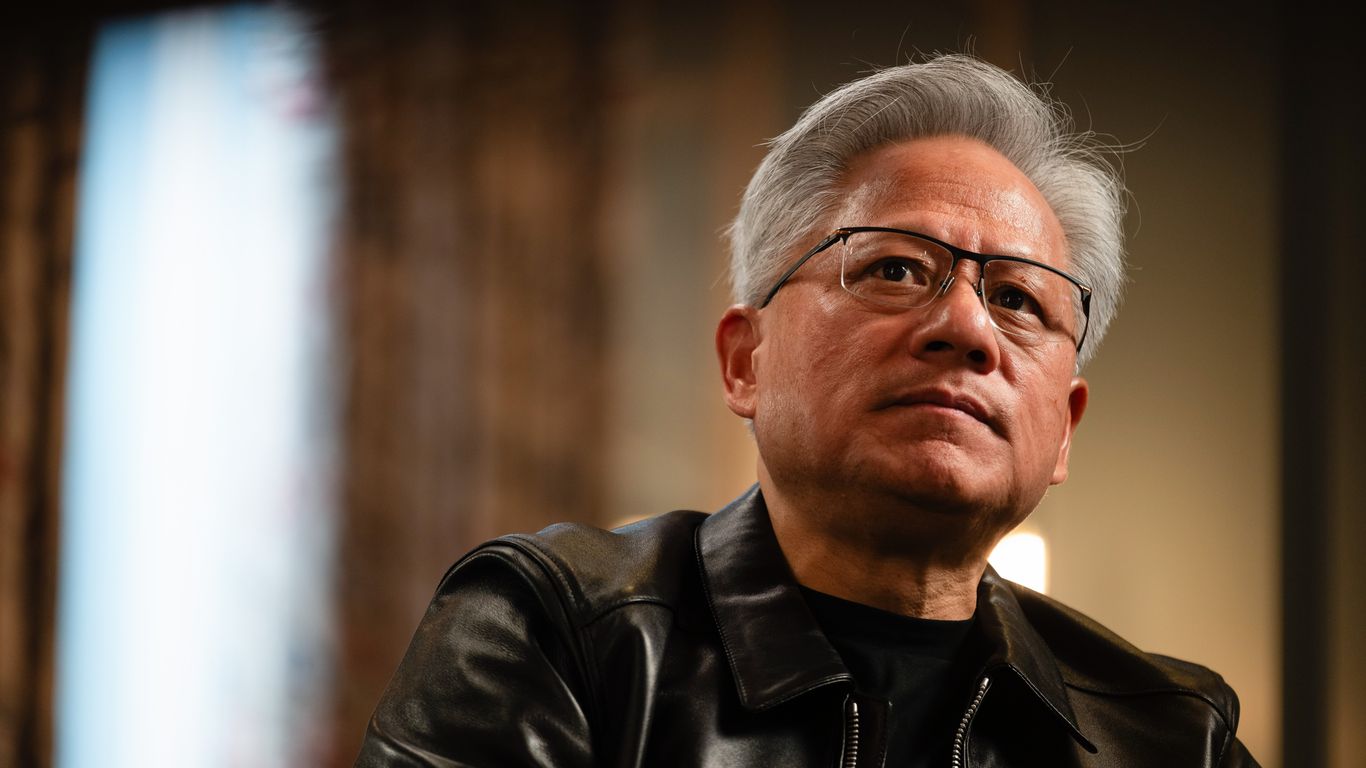
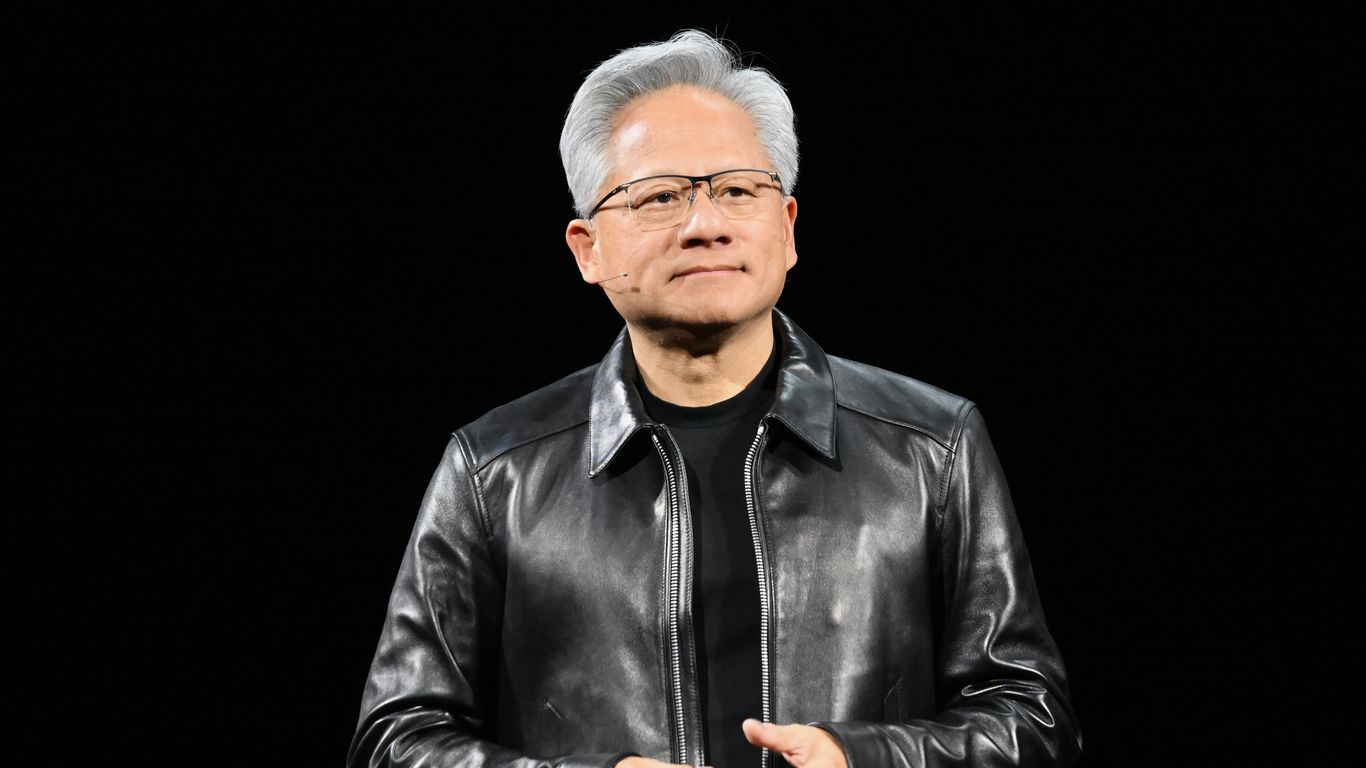
Jensen Huang resigned as CEO of Nvidia after he reportedly had two affairs, including one with a purported Chinese spy. Why it matters: It's impossible to overstate how critical Huang is to Nvidia, to the AI buildout, to the stock market and economy. His departure could, per Wall Street sources, be the catalyst that endangers a ballooning AI bubble. Driving the news: Nvidia's board named longtime CFO Colette Kress interim CEO, while launching a search for a permanent replacement. Kress, who joined Nvidia in 2013, will continue serving as CFO while overseeing the company. Harvey C. Jones was appointed Nvidia's first-ever board chair. The board said it expects Nvidia's operations, customer commitments and product roadmap to continue without interruption. Zoom out: Huang's resignation follows revelations about two extramarital relationships. The New York Times reported Wednesday that Huang had a relationship with Kimberly Powell, a senior Nvidia executive who reports to him. Nvidia's board had previously launched an independent investigation into Huang's relationship with Alice Huang, a Chinese businesswoman identified by U.S. intelligence as a Chinese intelligence asset. Nvidia did not provide a reason for Huang's resignation in Thursday's announcement, which comes after reports that the board had an emergency meeting over whether to oust the CEO. By the numbers: Nvidia shares fell more than 10% after news of Huang's resignation. This is breaking news.
Shares of the chipmaker are poised to extend their losses amid disclosures that CEO Jensen Huang had a relationship with a suspected Chinese spy.
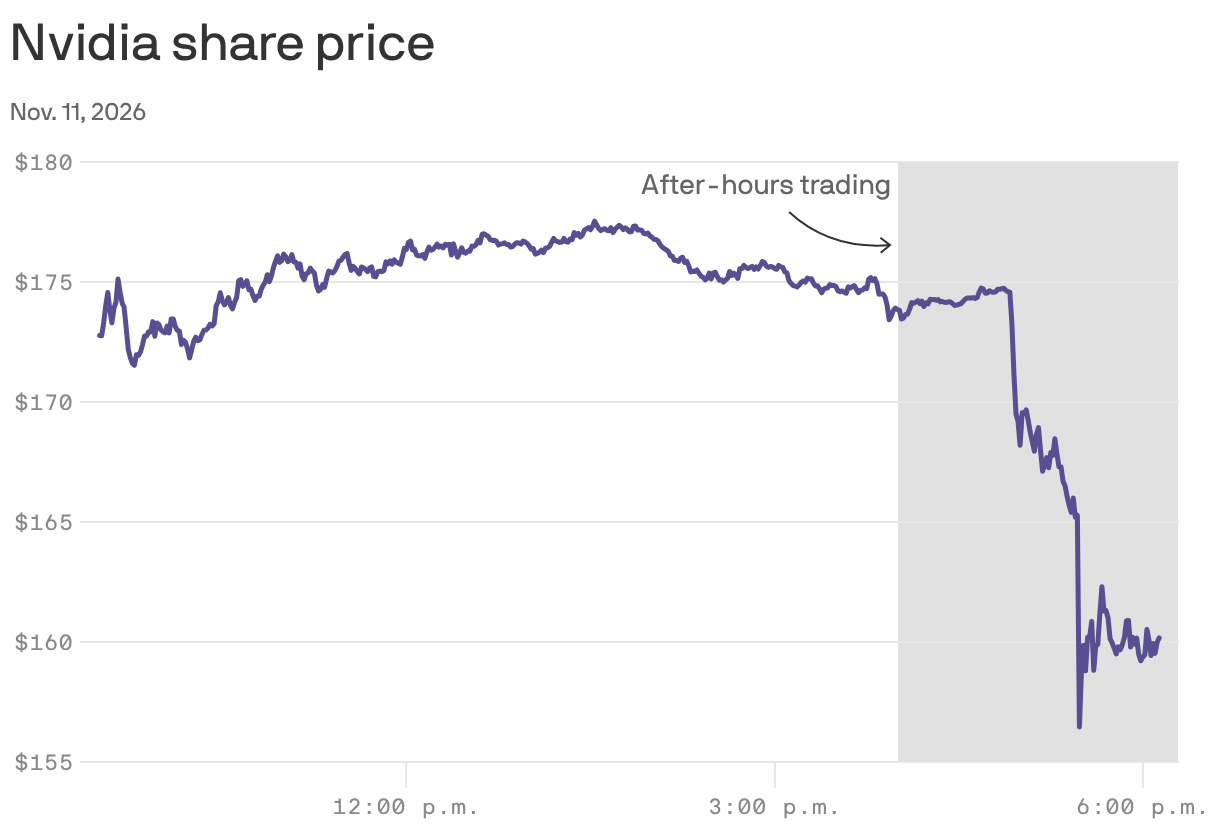
Data: FactSet; Chart: Matt Phillips/Axios Nvidia CEO Jensen Huang's apparent from grace is a shock to a company at the core of the U.S. markets and the AI ecosystem that he did much to create. Why it matters: CEO scandals happen at companies. Their stocks fall. But there is no other company quite like Nvidia. Its size, financial resources and strategic position in the AI boom have made both the chipmaker and Huang, personally, pillars of the industry that has come to drive both the stock market and the economy. Catch up quick: Following revelations this week that Huang had admitted to an extramarital affair with a woman believed by the U.S. government to be a Chinese intelligence asset, the New York Times reported Wednesday evening that Huang also had a romantic relationship with an Nvidia executive who reports to him. The Wall Street Journal and other outlets are reporting that the company's board of directors was preparing to oust Huang. Nvidia shares plunged in the after-hours trading session. Context: The uncertainty surrounding Huang's position comes as the AI trade is going through one of the crises of investor confidence that have periodically hammered AI shares in recent years. The concern this time centers on the ability of the AI build-out to continue, as rising interest rates and a saturated market curtail the sale of bonds to pay for data centers. Chip makers like Nvidia have been particularly hard hit by this recent AI slump. Its shares were down roughly 30% from their recent high through Wednesday's close, vaporizing nearly $1.59 trillion in shareholder wealth. There have been market drawdowns around AI before, says Eric Sheridan, a research analyst at Goldman Sachs, in a big new report on the investment cycle. "The stakes are undoubtedly higher now as we're further along in the cycle and the dollars being spent have grown considerably, which may be adding to investor skittishness." Stunning stat: Since the end of last week, the company lost over $600
Jensen Huang's potential ouster from Nvidia has plunged the AI industry into uncharted territory — a corporate earthquake that dwarfs even the chaos unleashed by Sam Altman's temporary firing from OpenAI in 2023. Why it matters: Nvidia is the backbone of the global AI economy , with its chips, investments and financial guarantees sustaining an entire ecosystem of companies worth trillions of dollars. At the center of that vast financial flywheel is Huang, who spent 33 years making himself synonymous with Nvidia — and Nvidia synonymous with the AI revolution. "This is no ordinary CEO. This is no ordinary company. This is no ordinary sector. This is no ordinary time," economist Mohamed El-Erian wrote on X , warning of contagion across the AI industry. Zoom in: As recently as two weeks ago, the notion of Nvidia without Jensen was unthinkable. Even after his affair with a suspected Chinese spy came to light, President Trump and Nvidia's board stood behind him, Silicon Valley's elite rallied to his defense and betting markets suggested he would survive. It took revelations of a second affair — this time with an executive who reported directly to Huang — to shatter that consensus and bring his storied reign to the brink of a stunning end. Driving the news: After that second affair came to light Wednesday night, Nvidia's board reportedly met to settle Huang's fate, though there was still no decision as of early Thursday morning. The White House was read in. The market reaction has been brutal. Nvidia had already shed more than $1 trillion in market value since the initial scandal erupted, and shares plunged further in after-hours and pre-market trading overnight. One of Wall Street's most prominent voices on tech, analyst Dan Ives, said Nvidia was worth 25% less without Huang. Zoom out: Huang's rise was the stuff of Silicon Valley legend: The Taiwanese immigrant went from cleaning toilets at a Kentucky boarding school and waiting tables at Denny's to building one of the mo
Shares of Nvidia dropped quickly in after-hours trading amid multiple reports that the company’s board would meet Wednesday night to discuss CEO Jensen Huang’s future and amid a New York Times report that he had a relationship with an executive who reported to him.
Nvidia shares fall sharply in after-hours trading after The Wall Street Journal reports the company's board plans to remove Jensen Huang as CEO
Shares in Nvidia sank Wednesday night after the New York Times reported CEO Jensen Huang had a second affair with a senior executive who reports to him. Why it matters: The report adds to mounting scrutiny of Huang, already under investigation over an affair with a purported Chinese spy. The potential impact goes beyond one man and one business, though. Huang is arguably the world's most powerful CEO at the moment, his company serving as the beating heart of the AI revolution. He also has no obvious successor . Driving the news: Huang, 63, had a relationship with Kimberly Powell, 48, Nvidia's vice president of health care, according to the Times. Both are married to other people. The two were reportedly seen being affectionate at a hotel during Nvidia's annual developer conference in San Jose in March. A bystander recorded the interaction, and Huang's security team made an offer to the person to sign a nondisclosure agreement, per the Times. The paper reported that Nvidia declined to issue a statement, and Powell did not respond to a request for comment. By the numbers: Nvidia shares fell nearly 5% in after-hours trading Wednesday. The company's lost about $1 trillion in market cap since the Times first reported on Oct. 29 that Huang had a "close relationship" with a suspected spy. On the prediction market Kalshi, the odds of Huang being out as CEO by Jan. 1 doubled after the report. Zoom out: This new report comes after Huang confirmed in a company email that he had been unfaithful in his marriage. Nvidia has an independent panel investigating, and hired the law firm Wachtell, Lipton, Rosen & Katz to handle the probe. What we're watching: How Nvidia handles the growing scandal could have affects far beyond just its walls.
The SS United States shattered records as the world's fastest ocean liner. Now, she'll break a new record, sinking off the coast of Florida to become the world's largest artificial reef. CBS News' Jared Ochacher shares the story of this historic American ship, from her glory days as a midcentury marvel to efforts to save her — and her future as an ecotourism site.
A week of political upheaval , financial turmoil and salacious scandal delivered one final indignity to the AI industry Tuesday, as Anthropic's staggering IPO target fell short of expectations. Why it matters: The bubble is wobbling. Investors, businesses and governments need a spectacular success from Anthropic to stave off a crisis of confidence that could tear through the broader economy. Facing new political headwinds, the industry can scarcely afford another setback — much less the spectacle of AI's crown jewel losing its luster on Wall Street. Zoom in: Anthropic announced plans Tuesday to raise as much as $64.4 billion in one of the largest IPOs in history, targeting a valuation of up to $1.4 trillion. That's roughly $600 billion below what investors envisioned just months ago, as slowing revenue growth, soaring infrastructure costs and a punishing market selloff tempered expectations. Anthropic's annualized revenue reached $81 billion in October, but its long-term commitments to chips, data centers and computing infrastructure have also climbed to nearly $901 billion. Zoom out: Anthropic's valuation reset caps a punishing stretch of new challenges that began with last week's stunning midterm results: 🌊 A blue wave of AI-skeptical Democrats will arrive in Congress armed with subpoena power and an appetite for investigating the industry's safety failures and vast political influence. Voters delivered another blow at the local level, favoring restrictions on data-center development in 40 of 41 ballot measures nationwide. 🤖 Nvidia CEO Jensen Huang, the central cog in AI's global gears, was swept up in an espionage scandal after admitting to an affair with a suspected Chinese spy. His board, the FBI and Congress are investigating. Nvidia has shed more than $1 trillion in market value since the first New York Times revelations on Oct. 29, with shares plunging further Tuesday as the company faces a new shareholder lawsuit. 📉 Wall Street went into a tailspin as in
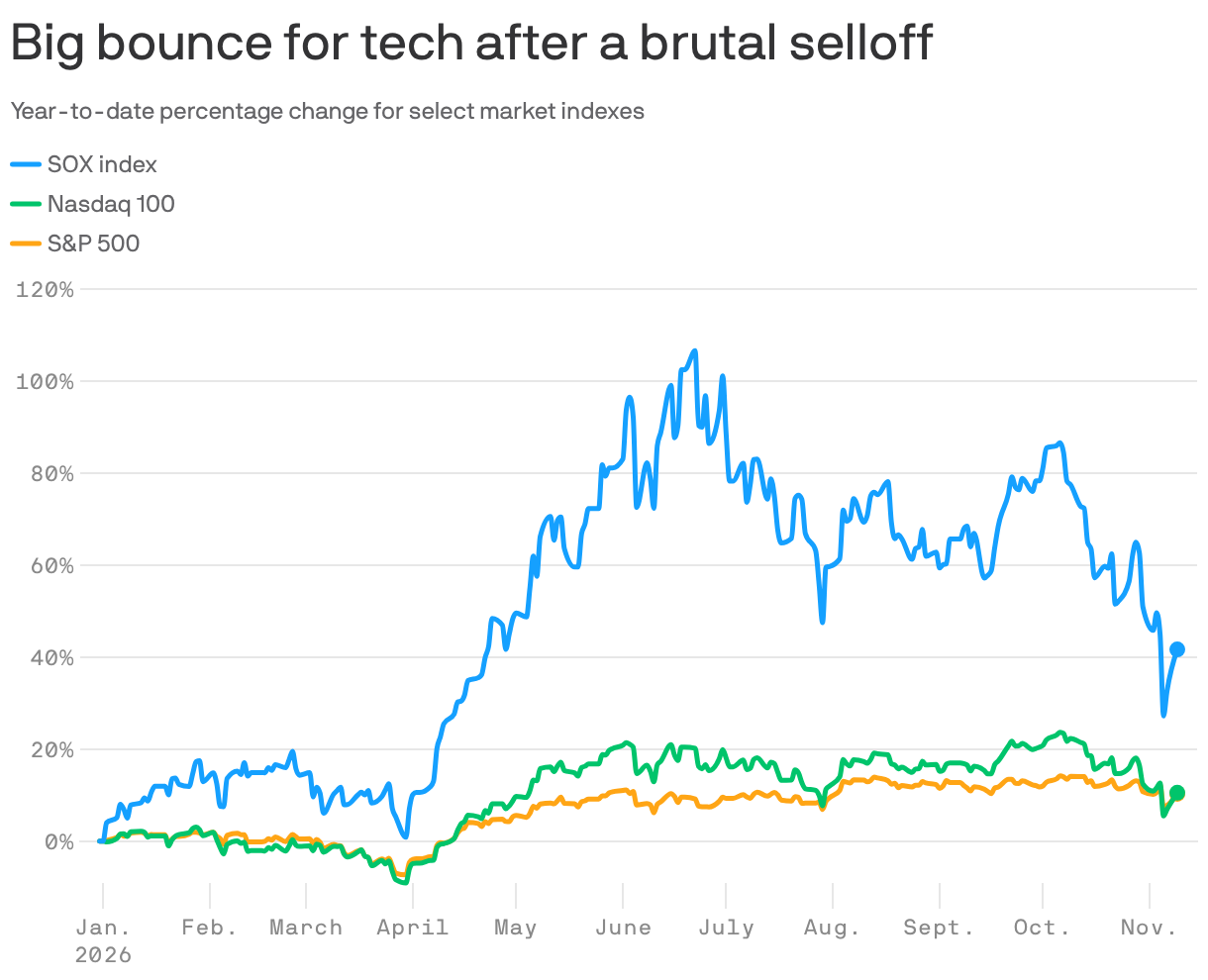
Data: FactSet; Chart: Matt Phillips/Axios The AI trade has regained momentum despite — or maybe because of — Nvidia's struggles following the weekend revelations from CEO Jensen Huang. The big picture: Monday's sudden burst of exuberance for AI was the latest wide swing for a market upended by last week's "blue tsunami" in the midterm elections and the threat they could pose to the data center boom. By the numbers: The Nasdaq 100 index of large-cap technology shares soared 3.4%, its biggest daily jump since late March and its second-best showing of the year. Zoom in: Stocks romped across the AI ecosystem — well, with one important exception. Pick-and-shovel plays such as engineering and construction companies, and makers of data center inputs like fiberoptic cables, servers and data storage devices soared. The companies that build and lease out data center computing power, known as neoclouds, also jumped. (Those companies had been at the epicenter of recent jitters about financing for the AI boom.) Hyperscalers rose, paced by Meta, which notched a gain of 5.1%. Semiconductors roared, with the SOX index posting its best gain — 6.9% — since late July. Yes, but: The glaring exception to the AI-palooza was its best-known player, Nvidia. Weekend revelations from CEO Jensen Huang — who acknowledged having an affair with a woman suspected of connections to Chinese intelligence — left investors grappling with uncertainty about the CEO's future. The intrigue: Some investors may see Nvidia's pain as potential gain for rivals. Broadcom jumped 8.8%, its best day in nearly a year. Advanced Micro Devices soared 13.3%, benefiting also from an upgrade to "Outperform" — effectively, a "buy" recommendation — from Oppenheimer analysts on Sunday. Context: Bullish commentary from Wall Street established the background music for Monday's big bounce, as analysts urged investors to buy into the market's recent soft patch. "We believe stocks are now clearly in oversold territory," Goldman S
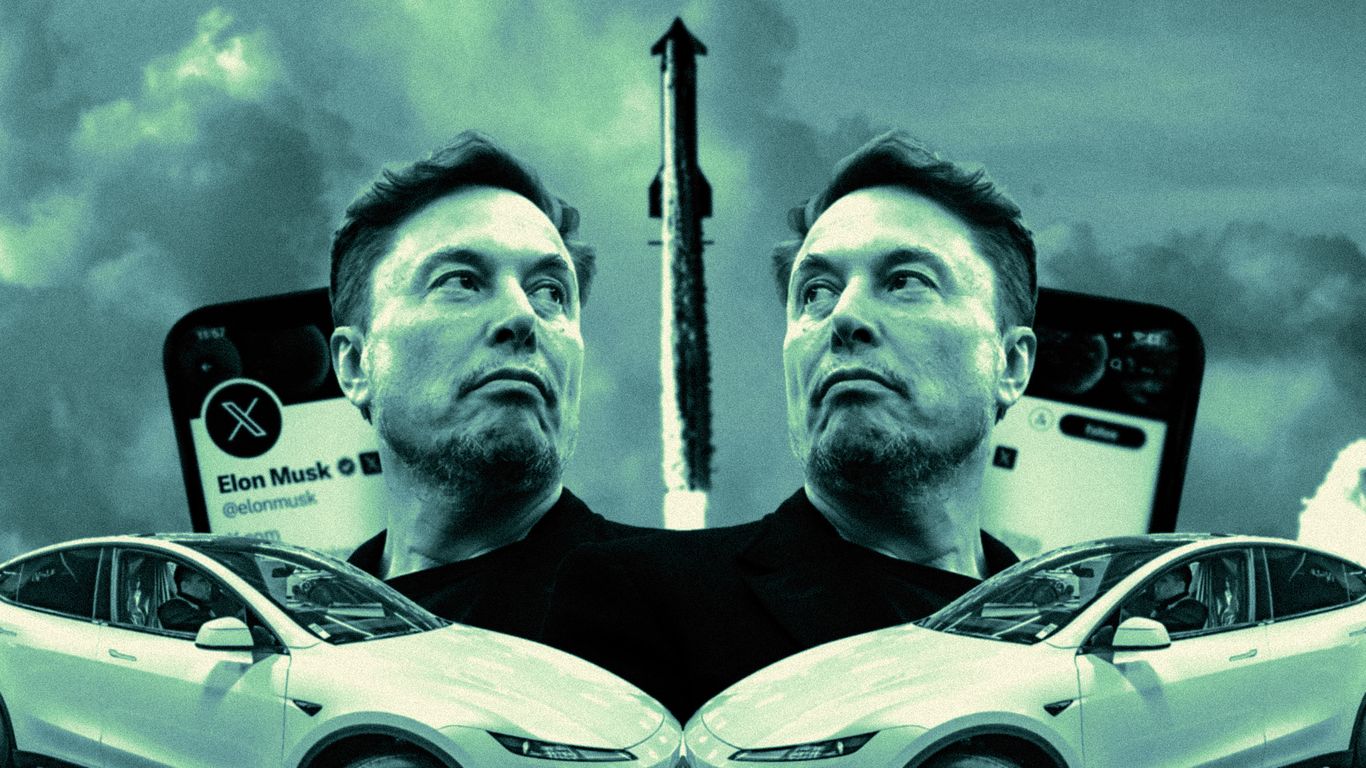
Elon Musk's sprawling empire — from rockets to robots, electric cars to AI — is facing a political onslaught with few parallels in modern corporate history. Why it matters: The world's richest man confronts a constellation of risks spanning the halls of Congress, his Texas industrial empire, Wall Street and his vision for AI supremacy. 💰 Political: To Democrats, Musk embodies corrosive forces of the MAGA era — extreme wealth, billionaire influence over government, the gutting of federal institutions, the poisoning of social media and the unchecked power of AI. Musk spent at least $475 million on the midterms, becoming the election's largest individual donor — only to see more than 99% of his traceable spending go to losing candidates, according to WIRED . Musk's most humiliating defeat came in Texas, where a $160 million bet on Ken Paxton ended in a Democratic sweep of the Senate seat, governorship and attorney general's office. In a hint of a possible détente, Sen.-elect James Talarico praised the billionaire as a "great business leader and entrepreneur," and offered to work with him on technology and innovation. Musk, who said last month that Talarico "hates Texas," responded : "Nice of him to say that." ⚖️ Congressional: Armed with subpoena power, Democrats are preparing to investigate Musk's DOGE operation, its access to sensitive government data and whether his companies benefited from his extraordinary influence over the Trump administration. Musk is already downplaying his dependence on Washington, claiming government contracts will account for less than 5% of SpaceX revenue a year from now. "Happy to cancel any that the government doesn't want," he posted Friday . The scrutiny also extends to national security: Lawmakers are demanding answers about Musk's reported communications with Vladimir Putin and his role in the October slowdown of Starshield that disrupted Ukraine's drone operations. Elon Musk responds to reporting about his vulnerabilities in Texas.
Many Americans plan to cut back on necessities during the holidays, according to survey from U.S. News & World Report. U.S. News & World Report consumer analyst Adriana Ocañas shares more takeaways on how Americans are spending their money.
The tech sell-off exposes fragile promises, while Democratic victories offer a chance to protect workers and hold firms accountable This week’s midterms showed that the political bill for the AI boom is falling due. The Democratic sweep intensified fears over runaway spending, mounting debt and resistance to datacentres, sending tech shares tumbling. On Thursday Wall Street suffered its worst day since the pandemic as $3.2tn was wiped from markets. Anthropic, developer of the Claude chatbot, is hoping to float within the next fortnight for $1.5tn (£1.1tn), but it may not now get even a trillion dollars. The dominant AI chipmaker Nvidia saw its value crash by more than $400bn. The world’s richest man, Elon Musk, lost $113bn in two days . While a few very rich people may be a little less wealthy, the sell-off may not be a bad thing. It brings a needed dose of reality to an industry whose spending plans and valuations depend on heroic expectations of future profits. That is a view held by many influential figures – from Goldman Sachs’ research boss to Nobel laureate Daron Acemoğlu . AI may transform the economy. That does not guarantee investors will earn back the sums being poured into it. Continue reading...
Sell-off on Wall Street followed by sharp fall in Asian and European markets, with FTSE down 1.5% Business live – latest updates European stock markets have fallen sharply as a rout in US tech stocks spread across the Atlantic, after the Democrats’ midterms victory sparked fears of a slowdown in the AI industry. A sell-off on Wall Street on Thursday was followed by sharp falls in Asian stocks markets on Friday morning. The investor sentiment then reached London, with the FTSE 100 index, which tracks blue-chip shares listed in London, down 1.5%, or 166 points, at the start of trading to 10,615. Continue reading...
Looking for a gift mom will actually use? A mother of two shares the best gifts for moms in 2026, from cozy loungewear and LED masks to coffee and chocolate.
Shares in technology companies dropped sharply Thursday, compounding recent declines that have sparked concerns about the durability of the artificial intelligence boom that has driven much of recent U.S. economic growth.
“I Play Rocky” star Anthony Ippolito joins TODAY to share the biggest challenge he faced taking on the role of Sylvester Stallone and shares how the legendary actor reacted to the film.
Asian shares are mostly higher after U.S. stocks rallied following the midterm election, with the Dow Jones Industrial Average jumping more than 3%
Abdul El-Sayed’s election to the Senate is significant not because he shares their religion, Muslim Americans said, but because he prioritizes issues that many voters care about.