Miami embraces its Vice City alter ego, seizing buzz around ‘GTA VI’ release
The Grand Theft Auto video game franchise is returning to Miami-inspired Vice City
ABC News · Nov 17

The Grand Theft Auto video game franchise is returning to Miami-inspired Vice City
Federal Reserve Bank of New York ; Note: Not adjusted for inflation; Chart: Axios Visuals Americans' credit card balances hit a record $1.29 trillion in the third quarter, according to a new report released by the Federal Reserve Bank of New York. Why it matters: Falling behind on credit card payments can trap struggling households in a cycle of fees, damaged credit and increasingly expensive borrowing. The latest figures show that financial pain is concentrated in lower-income communities, even as delinquency rates improve nationally. By the numbers: Consumer credit card balances rose by $22 billion in the third quarter, an increase of 1.7%. That's $52 billion higher than a year earlier. The figures aren't adjusted for inflation, meaning some of the increase reflects higher prices rather than greater borrowing in real terms. Total household debt, including mortgages and student and auto loans, rose $334 billion, reaching a record $19.1 trillion in the third quarter. The total is up $5 trillion since 2019, just before the pandemic. Yes, but: Fewer credit card balances are becoming seriously delinquent, a sign of some improvement in Americans' ability to keep up with payments. The rate at which credit card debt becomes seriously overdue edged down to 6.9% in the third quarter, though it remains notably above the 5.2% recorded before the pandemic. Between the lines: A separate report from the New York Fed on Tuesday showed Americans in lower-income neighborhoods are having a harder time keeping up with credit card payments relative to their wealthier counterparts. Delinquency rates remain above pre-pandemic levels across all neighborhood-income groups, with the gap between the richest and poorest areas increasing since 2022. In the lowest-income neighborhoods, 10.3% of credit card balances became seriously delinquent over the past year — more than double the 4.4% rate in the wealthiest neighborhoods. The big picture: Average credit card balance per borrower is now $6,
Power Four conference title games to be eliminated Five teams will auto-qualify with rest picked by panel The College Football Playoff will double in size to 24 teams beginning next year, bringing an end to a three-decade era of conference title games that used to be among the marquee events of the season. College leaders announced the new format Monday, after ESPN agreed to rework its contract to add the 11 new games. Terms were not announced, though ESPN said it was a deal for five years and an additional $1.7bn, on top of the $7.8bn contract that runs through the 2031 season. Continue reading...
The world's biggest crypto heist is the latest feat by North Korean hackers who have spent years perfecting an arsenal of financial theft, social engineering and sophisticated cyberattacks. Why it matters : The suspected North Korean hackers behind the $6.3 billion Binance theft appear to have combined familiar hacking tactics with extraordinary speed and automation — raising fresh questions about how AI could supercharge their already sophisticated operations. Driving the news : Binance said late Thursday that its blockchain partners have frozen at least $3 billion of those $6.3 billion assets on-chain so far, and it believes the hackers gained initial access by compromising one engineer's laptop alongside other "points of breach." Several blockchain investigation firms have tied the hack to TraderTraitor, a group linked to the North Korean government's Lazarus Group collective. Binance co-CEO Richard Teng said in a video on social media Friday that the attackers also used a "self-destruct mechanism that destroyed tooling and traces" as they went, making it more difficult to investigate what happened. "This was a complex attack," he said. The big picture: North Korean government hackers have spent more than a decade carrying out financial heists and disruptive cyberattacks, and they have turned cryptocurrency theft into an industrial-scale operation. In 2016, hackers attempted to steal nearly $1 billion from Bangladesh's central bank, successfully making off with $81 million. In 2017, North Korea was blamed for the WannaCry ransomware outbreak , which disrupted hundreds of thousands of computers across more than 150 countries. In recent years, the country has intensified its focus on pillaging crypto exchanges in part because the digital assets can more easily be transferred and laundered across borders — although those attacks tend to leave more of a paper trail. The same North Korean hacking group, TraderTraitor, also set the last record for the world's largest c
‘Even though economists warned that tariffs would be inflationary, Trump has enthusiastically embraced them’ Donald Trump successfully campaigned for his second term two years ago promising to reduce prices on day one , but ever since he returned to the White House, he has done little to fight inflation or reduce prices. Instead, some of his most important policy decisions – most notably his war against Iran and his tariff wars – have increased inflation instead of reducing it. This helps explain why more than one in five Americans who voted for Trump now disapprove of the job he’s doing. Even though economists warned that tariffs would be inflationary, Trump has enthusiastically embraced them during his second term. Indeed, the “ liberation day ” tariffs he imposed soon after returning to office increased the price of hundreds of goods, including citrus fruits , steel, bananas, beef and auto parts. When the supreme court overturned those tariffs as illegal, Trump immediately imposed new 10% across-the-board tariffs that again helped push up prices (a lower court found those tariffs unlawful, too ). Time and again, Trump has slapped on new tariffs even though they inherently push up prices because tariffs are a tax on imported goods. Little wonder that a Fox News poll this month found that 77% of Americans disapprove of how Trump has handled tariffs. Continue reading...
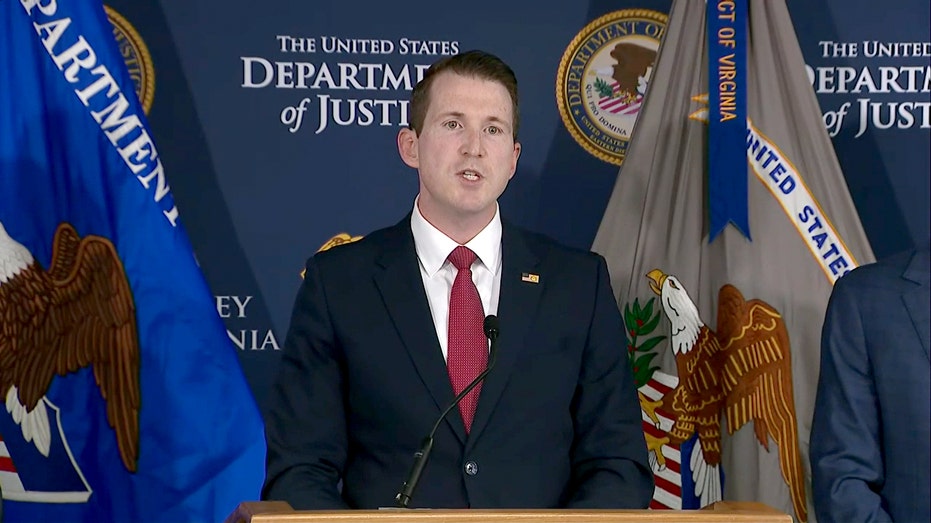
Operation Ghostbusters targets ghost students and identity theft in a student aid fraud scheme with potentially hundreds of millions in taxpayer losses.
The post After Millions in Stolen SNAP Benefits, Trump Administration Moves to Fight Theft appeared first on ProPublica .