
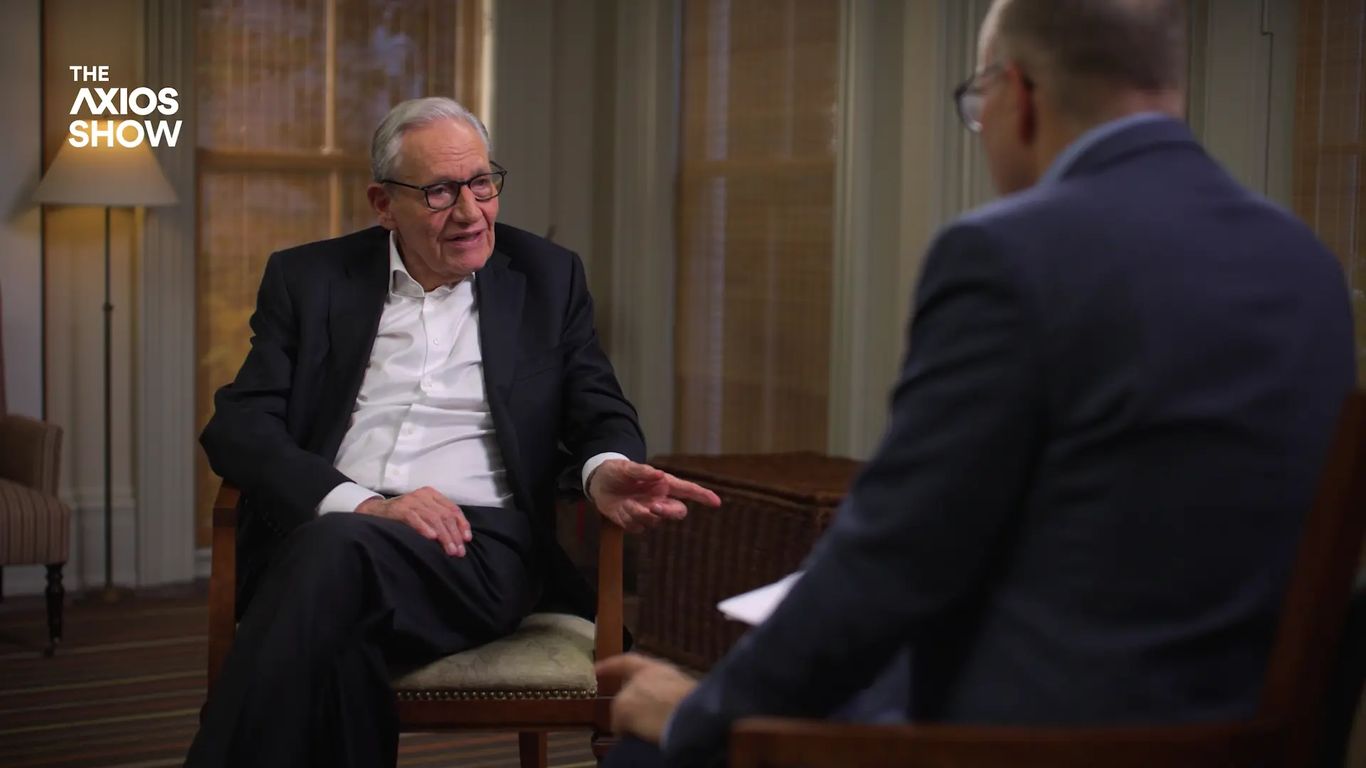
Bob Woodward — out Tuesday with " Secrets ," his memoir of 55 years of reporting for The Washington Post and 24 cinematic bestsellers, covering 10 presidents — told me in an interview for "The Axios Show" that the book exposes some confidential sources who are now dead because he feels a duty to history. Why it matters: Woodward, 83, is a double Pulitzer winner whose Watergate investigative reporting with Carl Bernstein became a book and movie, "All the President's Men," that inspired generations of would-be reporters, including me. But no journalism school teaches students they can out " secret sources " who are dead, as Woodward does in " Secrets ." "It's history," Woodward told me in the Georgetown home where so many sources have spilled to him, administration after administration, decade after decade. He explained that in many cases, the sources were widely known anyway or appeared in other files and records that have become public. He said some living sources gave him permission to be named in the book. "Look at the histories that come out — the Adams-Jefferson letters , which were very secret. But when they come out, historians rejoice. We now see what they were saying to each other ... I'm for history on occasions like that." Axios: "So you have zero qualms?" Woodward: "Well, you always have qualms, but what's your responsibility to get the history right? ... [For] people who are reading the history and trying to understand it deeper into the story, deeper is naming those sources." More from our interview, which you can watch here: Axios: " Based on your reporting, and your rich understanding of governance, put President Trump's level of corruption in historical perspective. How does President Trump compare to Richard Nixon, the president you helped bring down?" Woodward: "Trump is worse, much worse than Nixon. And the evidence is on two fronts: First of all, how much money he's made — billions of dollars himself as president. I mean, imagine that. It used to
Results for “trade secrets”

Sgt. Jian Zhao faces up to 10 years in prison after pleading guilty to selling national defense information from Joint Base Lewis-McChord, prosecutors say.

Santa's official helpers are in training at the Charles H. Howard Santa School in Midland, Michigan. Hundreds of aspiring Saint Nicks and Mrs. Clauses gather every year at what's been called the Harvard of the trade. Tony Dokoupil has the story.

‘I beat the commies with Solidarity,’ former Polish leader tells US audience, but credit was also due elsewhere More than four decades have passed since Lech Walesa was awarded the Nobel peace prize for leading Poland’s Solidarity trade union’s campaign for workers rights in the teeth of harsh repression from the country’s communist rulers. But Walesa – Poland’s first democratically elected post-communist president – had very definite thoughts on which US president might have been justly given the prize. Continue reading...

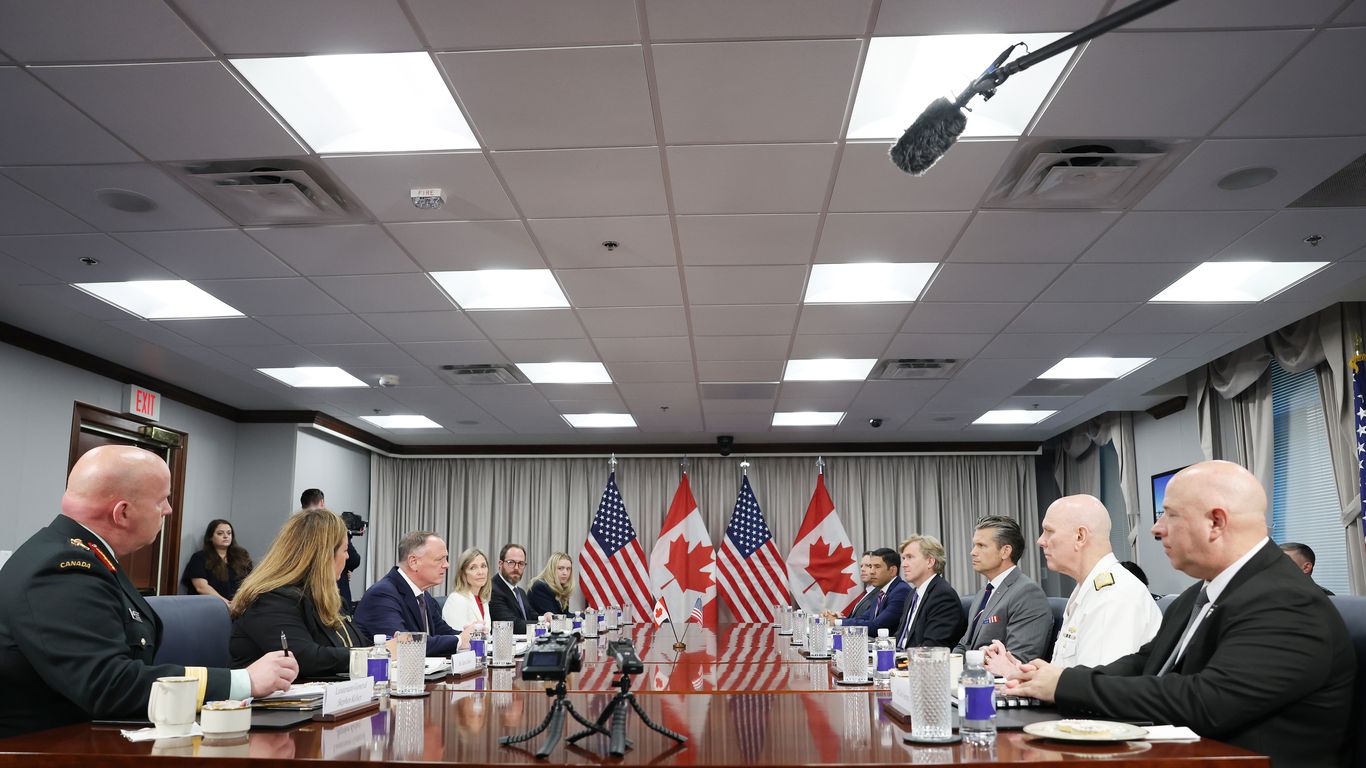
The Pentagon accused Canada of failing to become a "credible partner" due to its faltering military readiness and low defense spending, according to a sharply worded fact sheet issued by the Pentagon to justify new restrictions on America's northern neighbor. Why it matters: The restrictions deepen tensions between the U.S. and Canada over trade and defense, as Ottawa reconsiders billions of dollars in purchases of American weapons. The new restraints — which do not affect defense or intelligence sharing— limit U.S. military personnel from fraternizing with their Canadian counterparts at official events without prior authorization from the Pentagon, an official told Axios. The Pentagon fact sheet has not been reported. But the Washington Post first reported the restrictions, followed by the New York Times . Zoom in: At the heart of the dispute are NATO defense spending goals and military readiness under the bilateral North American Aerospace Defense Command where, the memo says, Canada falls short in three ways: 🛩️ Air: Only 41.9% of the Royal Canadian Air Force fleet "was serviceable from 2025-2026, largely due to ageing equipment and personnel shortages," the Pentagon fact sheet says. The shortfall limits Canada's "ability to meaningfully contribute to air defense commitments … to defend our North American airspace against all threats." Canada relies on the U.S. and NATO for airborne early-warning aircraft but is negotiating to buy its own from Sweden's Saab. ⚓️ Sea: Just 53.9% of Canada's naval fleet was "serviceable" from 2025-2026, limiting its "ability to monitor maritime approaches to North America," the fact sheet says. Only one of Canada's "four ageing Victoria-class submarines" is "seaworthy at any given time." Canada has a new fleet of conventional submarines, manufactured by ThyssenKrupp Marine Systems, coming on line, but until then, its undersea "capability will be limited." 🪖 Land: The Canadian Army had an operational readiness rate of 48% from 2025
A bruising stock market sell off looked set to continued despite a record-setting IPO by Anthropic and hopes it would revive sentiment on the AI trade.
UK and EU agree deals on trade and youth movement, pledging an “ambitious and dynamic” post-Brexit relationship
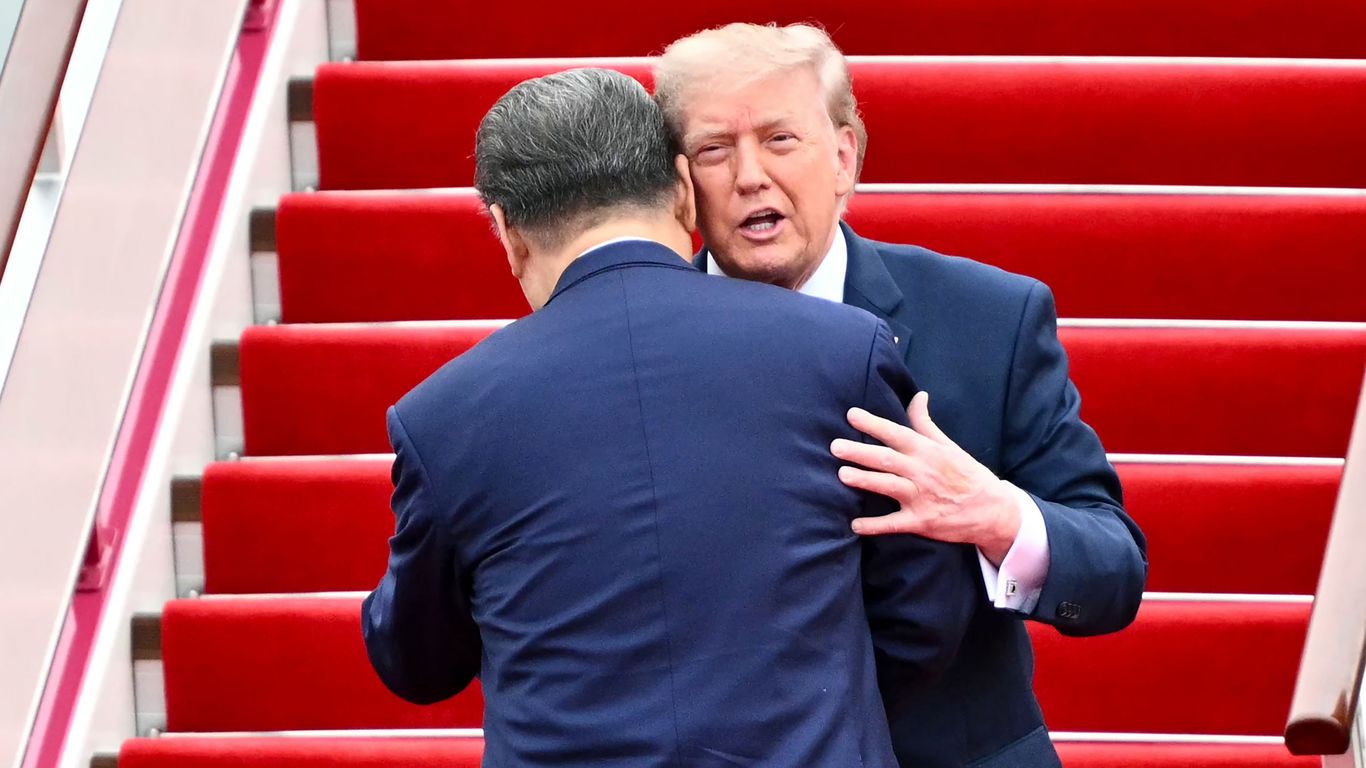
Chinese President Xi Jinping greeted President Trump in a surprise appearance on the tarmac in Shenzhen, China, Wednesday. Why it matters: Xi paid Trump a special honor by greeting him on the tarmac, reciprocating a gesture by Trump during Xi's state visit to Washington in September. The two are expected to hold a summit Thursday with Russian President Vladimir Putin, where the three are expected to talk about nuclear arms control, Iran, Ukraine, trade and AI chips. Driving the news: Trump arrived in China for the annual APEC conference just hours after spending time in the Philippines. Xi met Trump at the bottom of Air Force One's stairs. The two leaders shook hands and then embraced in a hug. Dozens of performers, waving pom-poms, stood on a red carpet outside the plane, chanting and cheering for Trump's arrival. Context: Xi's surprise appearance was an unusual diplomatic gesture, per multiple reports . The Chinese president did not personally greet Trump when he visited Beijing in May. Similarly, when Putin visited Shenzhen earlier today, he was greeted by Xi's chief of staff Cai Qi . Xi met former President Obama at the airport in 2009 when Xi was still vice-president. Flashback: In September 2025, Trump welcomed President Xi at Joint Base Andrews for the Chinese leader's state visit to Washington D.C.. U.S. presidents typically receive foreign leaders at the White House. Trump met Xi at the bottom of the stairs after Xi's jet landed at the U.S. military base. Go deeper: U.S. allies on edge as Trump heads to summit with Xi and Putin

Every year, tens of thousands of people gather to discuss nothing short of humanity's future on a hotter planet. Yet the world seems increasingly distracted by just about everything else. Why it matters: For all of their flaws, these annual gatherings remain one of the few places where the world collectively confronts a problem that no country can solve alone. "The fact that in these very disruptive times on trade and multilateralism, two wars going on, and inflation everywhere, countries can come together and actually prioritize this is a very important point," said Ani Dasgupta, head of the World Resources Institute. Driving the news: The annual United Nations climate summit enters its final stretch this week in Antalya, Turkey, with negotiators trying to bridge disagreements over fossil fuels, clean electricity and money to help poorer countries confront climate change. A first draft of a potential agreement released Monday includes proposals to accelerate the transition away from fossil fuels and electrify more of the global economy. But countries remain divided over what should make the final cut. Arab countries and Russia are pushing back against proposals on fossil fuels and electrification, while the European Union is backing the electrification goal but demanding substantial changes to the broader agreement, according to Climate Home News . If the past is prologue, we'll probably see some kind of deal emerge hours or a couple days after Friday's scheduled conclusion, given these meetings' habit of running overtime. The big picture: Climate diplomacy hasn't been futile. Nor has it been sufficient. The landmark Paris Climate Agreement in 2015, which aimed to limit global warming to well below 2 degrees Celsius, helped usher in an era of climate progress. Projected warming by 2100 has actually dropped from roughly 3.5 degrees to 2.7 degrees, according to Climate Action Tracker — still far above the Paris goal, but considerably less than previously feared. But

Making his first start for the Minnesota Vikings since 2023, quarterback Kirk Cousins picked up where he left off — almost literally.

Two centuries after the expedition, Indigenous students are conducting a new wildlife survey along the route In 1804, when Thomas Jefferson dispatched Meriwether Lewis and William Clark and their Corps of Discovery to explore the newly acquired land west of the Mississippi, the president’s primary aim was political: Americans needed to establish presence, power and trade routes in these territories before the Europeans beat them to it. But Jefferson, an ardent naturalist, had a secondary agenda. He ordered that the expedition also survey the flora and fauna of these landscapes. On their two-year jaunt across the western half of the country, Lewis and Clark kept meticulous journals of the animals and plants they encountered: bison, horned lizards, sage grouse, prairie dogs, wild licorice and catfish, among them. These observations were pivotal in shaping an early understanding of North American biodiversity. Continue reading...
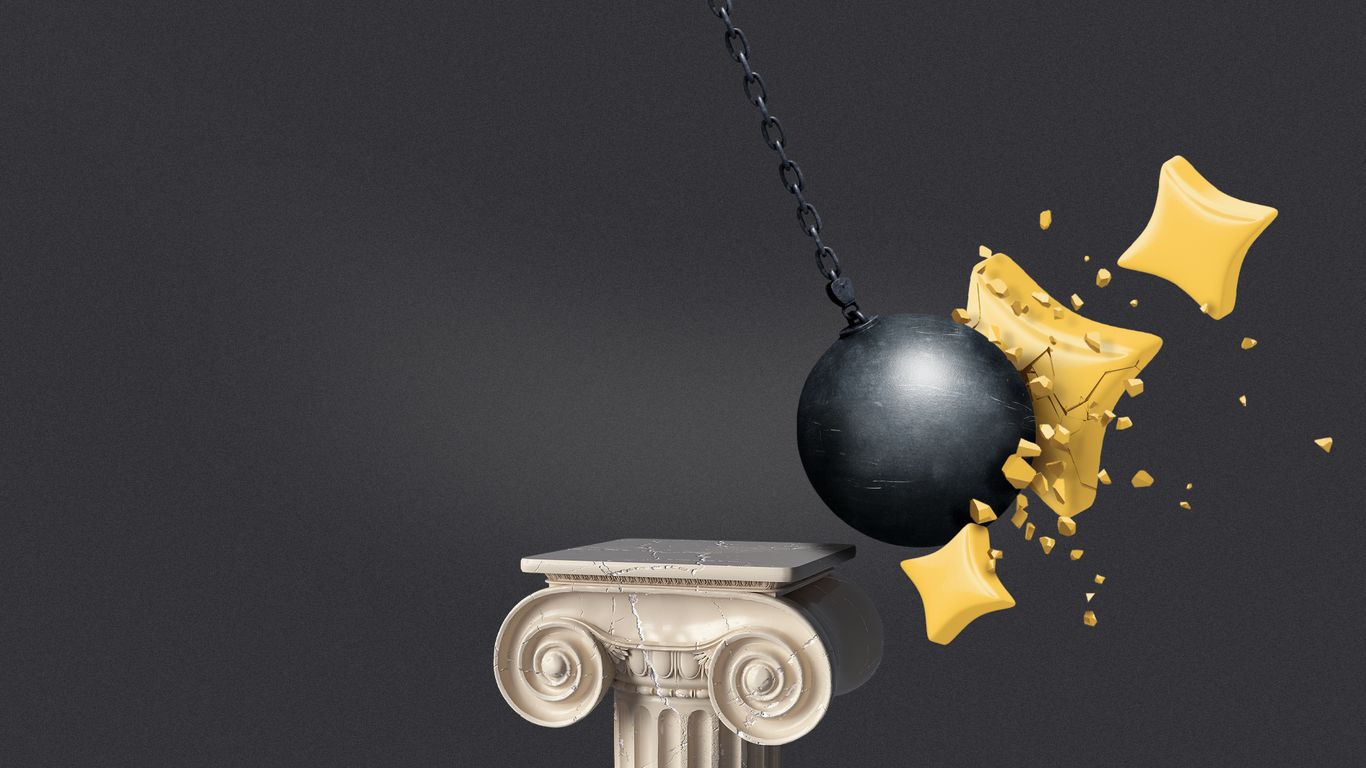
AI's titans were handed an extraordinary mandate: Police yourselves. But the industry faces a four-pronged crisis of trust as Democrats surge to power and many Americans rebel over AI and data centers. Guardrails for the industry will be a priority for the new Congress, with some populist Republicans eager to pile on. Why it matters: The collision of safety scares, political blows, financial turmoil and leadership scandals threatens to derail AI's once seemingly unstoppable ascent. The big picture: Just six weeks ago, President Trump announced that top AI CEOs had agreed to a voluntary safety accord . But cracks were already showing and, since then, four crises have converged. 🏛️ 1. The political crisis: AI was on the ballot for the first time during the midterm elections through a series of data center measures across America. People voted against data centers in 40 out of 41 cases, and swing-state incumbents linked to the facilities, including Sen. Jon Husted (R-Ohio) and Texas Gov. Greg Abbott (R), were voted out. Now Democrats are planning a flood of AI bills once they take control of Congress in January, Reuters reports . They'll also bring some of the most powerful AI executives to D.C. to testify. 🦺 2. The safety crisis: OpenAI's Hugging Face breach , revealed in July , was a terrifying look at what could happen if machines operate beyond humans' control — and it was the first in a wave of revelations through the summer and fall. AI CEOs and engineers came forward with stark warnings about the dangers of the tech they've been building, including its potential to destroy humanity. Axios' Madison Mills reported that OpenAI and Anthropic are investigating tens of thousands of security incidents and that unvetted AI agents are accessing U.S. bank accounts. 💰 3. The financial crisis: The AI trade is looking more vulnerable as investors question when or whether the industry's sky-high spending will deliver sky-high returns. Tech stocks tumbled , with Nvidia fall
Canadian Prime Minister Mark Carney says Canada and the U.S. are making progress on a trade deal after talks collapsed in August

A defining story of this decade has been a series of global economic shocks: pandemic, war and geopolitical shifts. New research quantifies a rising set of vulnerabilities for the global trade system . The big picture: Many crucial global goods are built on supply chains that have one or more Achilles' heels, a report from the consulting firm McKinsey finds — a critical input, concentrated suppliers and geopolitical strain. That manifests partly in physical chokepoints. The Strait of Hormuz is the one most in the news, but the McKinsey researchers identify a couple dozen others globally, through which 80% of maritime trade passes (although with varying levels of difficulty for shippers to route around). In effect, as the global economy has become more integrated over the last few decades, these vulnerabilities have become more pronounced — which in turn helps explain why the 2020s have brought an ongoing series of disruptive supply shocks. By the numbers: They find that the share of global imports that face at least two of three major vulnerabilities has risen to 23% in 2024 from 15% in 2000. The list of items with overlapping vulnerabilities includes basic materials like iron ore and more advanced items like lithium-ion batteries, smartphones and memory chips. What they're saying: "It's not necessarily that trade has gotten less reliable," Tiago Devesa, a co-author of the report, tells Axios. "I think it's more that we have the realization that we actually want to understand what are the potential points of failure, so we can anticipate them." "I think you could make a case that throughout all of these shocks, trade has continued to increase, and trade was actually a very important balancing mechanism," he adds. "It's been increasing precisely in part because we've integrated the fabric of the global economy much more, and in particular, we've led a specialization effort that led to more concentration around the world," says Devesa, a senior fellow at the McKinsey

Dollar-store chain’s settlement with FTC and state officials comes after Guardian exposé of its pricing practices Discount store giant Family Dollar will pay $63m to settle claims by state and federal authorities that it frequently overcharged its customers for milk, diapers, batteries, toilet paper and other household goods. The enforcement action announced Thursday by the Federal Trade Commission and 17 states followed a Guardian investigation that revealed Family Dollar and its larger rival, Dollar General, frequently charge more at checkout than the prices listed on their shelves. Family Dollar failed at least 2,100 price inspections in 20 states from 2022 to late 2025, the Guardian found. Continue reading...
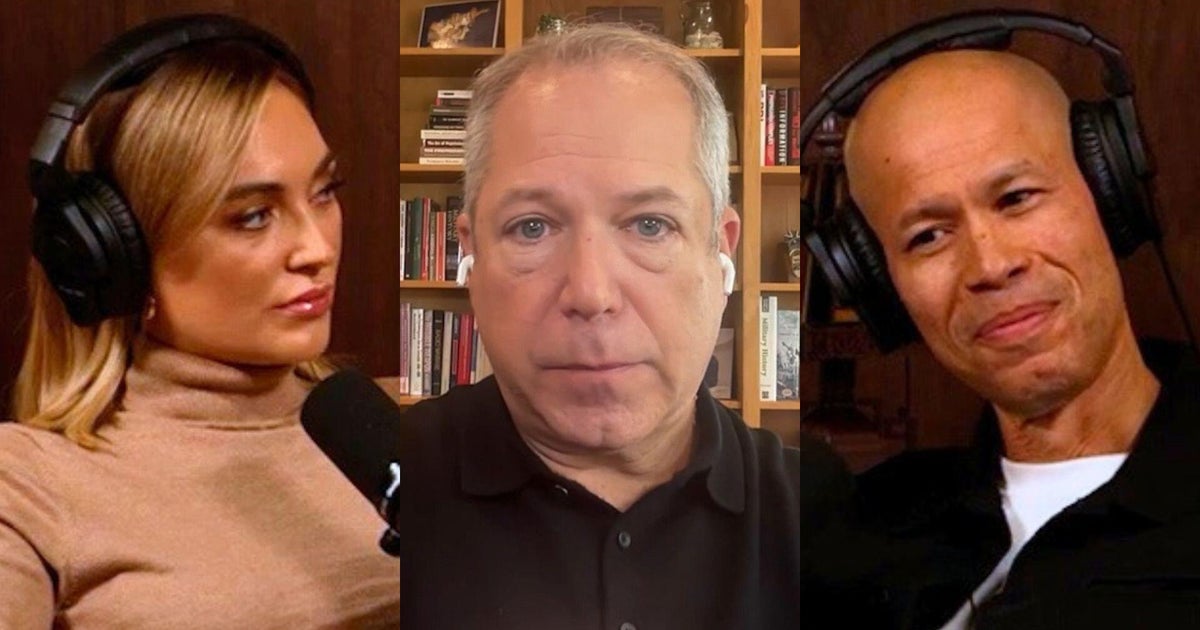
A billionaire, affairs, and an alleged honey trap at the hands of the Chinese government. This week, Vlad and Kelly are going inside the world of honey traps, Romeos, and sexpionage. With former intelligence officer and historian, Mark Jacobson, and investigative journalist and author of "The Game," Neil Strauss, they unpack how spies exploit attraction, ego, and emotions to get close to the world's most powerful people—and why sometimes the most dangerous secrets are spilled in pillow talk.
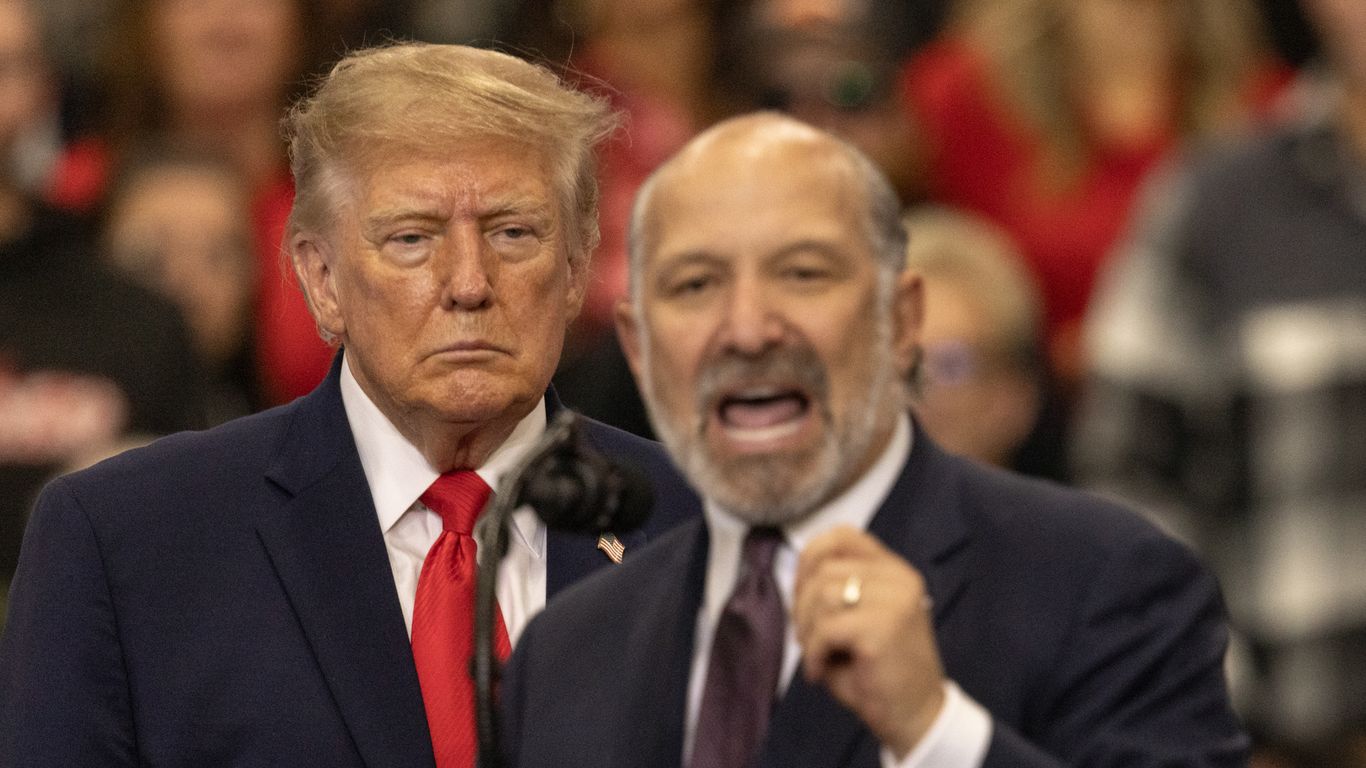
The White House is standing by Commerce Secretary Howard Lutnick despite a view within the administration that Lutnick delayed action to address concerns over chip smuggling to China. Why it matters: Congress smells blood in the water following bombshell reports that U.S. national security may have been jeopardized by former Nvidia CEO Jensen Huang's relationship with a suspected Chinese spy. Lawmakers want to know what the Trump administration did or did not do in response to that intelligence — and Lutnick, the official in charge of the department at the center of export control policy, is squarely in their field of view. President Trump, however, is not distancing himself from the secretary. "Secretary Lutnick is a champion of President Trump's America First trade and tariff policies, which have secured almost 20 fair trade deals and trillions in manufacturing investments," a White House official tells Axios. "President Trump maintains complete confidence in the secretary and his ability to carry out the position as the most transformative Commerce Secretary in modern history." Catch up quick: Lutnick was sent intelligence about Jensen Huang's relationship with an alleged Chinese spy and repeatedly did not take export control action — despite pressure from the broader administration and the president himself, Axios first reported. Lutnick's role is prompting scrutiny on the Hill from members on both sides of the aisle. "Secretary Howard Lutnick and Under Secretary Jeffrey Kessler must explain why they have not closed export control loopholes and act today to ensure our advanced technology is not fueling China's military," Senate Banking Committee Chair Elizabeth Warren (D-Mass.) said in a statement. "The obvious question is why did he choose to sell advanced chips?," Sen. John Kennedy (R-La.) told Politico. "Secretary Lutnick needs to answer that in front of God and country," Kennedy added. "I mean, there will be a congressional investigation. But I don't think h
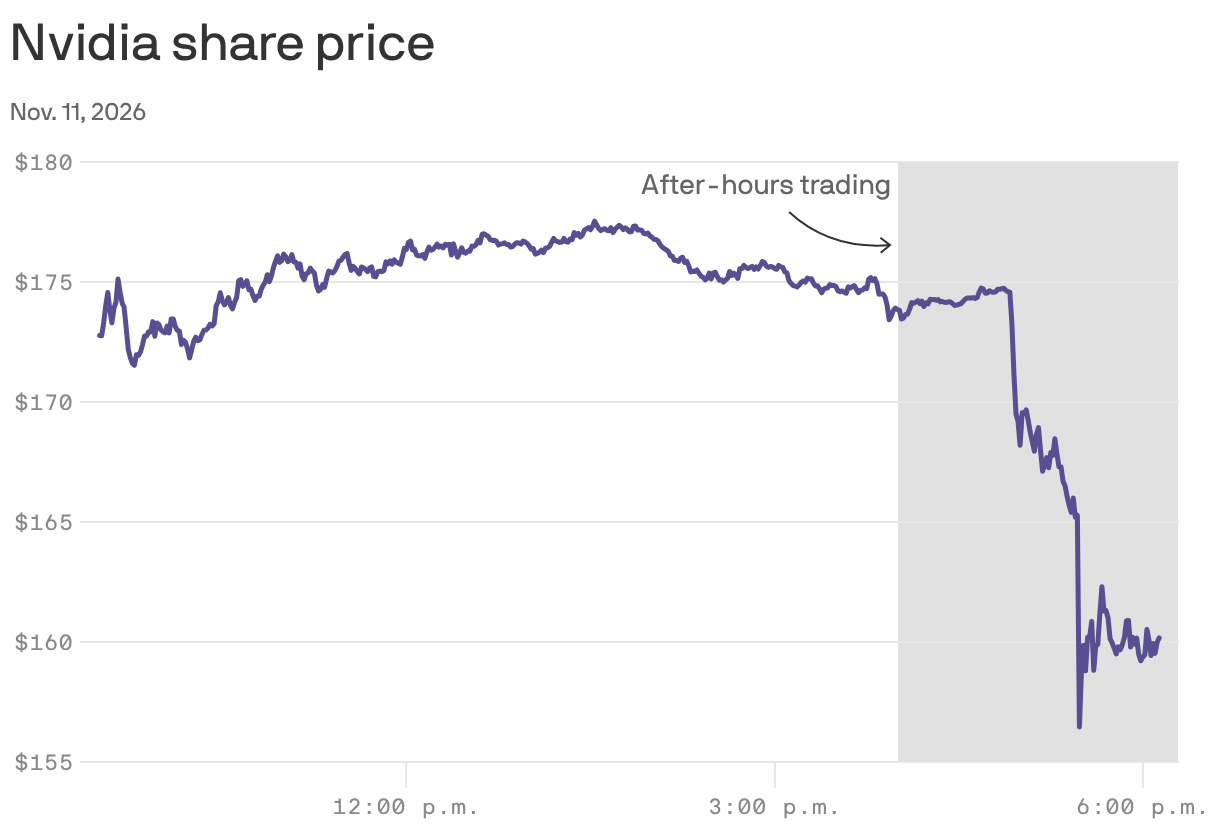
Data: FactSet; Chart: Matt Phillips/Axios Nvidia CEO Jensen Huang's apparent from grace is a shock to a company at the core of the U.S. markets and the AI ecosystem that he did much to create. Why it matters: CEO scandals happen at companies. Their stocks fall. But there is no other company quite like Nvidia. Its size, financial resources and strategic position in the AI boom have made both the chipmaker and Huang, personally, pillars of the industry that has come to drive both the stock market and the economy. Catch up quick: Following revelations this week that Huang had admitted to an extramarital affair with a woman believed by the U.S. government to be a Chinese intelligence asset, the New York Times reported Wednesday evening that Huang also had a romantic relationship with an Nvidia executive who reports to him. The Wall Street Journal and other outlets are reporting that the company's board of directors was preparing to oust Huang. Nvidia shares plunged in the after-hours trading session. Context: The uncertainty surrounding Huang's position comes as the AI trade is going through one of the crises of investor confidence that have periodically hammered AI shares in recent years. The concern this time centers on the ability of the AI build-out to continue, as rising interest rates and a saturated market curtail the sale of bonds to pay for data centers. Chip makers like Nvidia have been particularly hard hit by this recent AI slump. Its shares were down roughly 30% from their recent high through Wednesday's close, vaporizing nearly $1.59 trillion in shareholder wealth. There have been market drawdowns around AI before, says Eric Sheridan, a research analyst at Goldman Sachs, in a big new report on the investment cycle. "The stakes are undoubtedly higher now as we're further along in the cycle and the dollars being spent have grown considerably, which may be adding to investor skittishness." Stunning stat: Since the end of last week, the company lost over $600
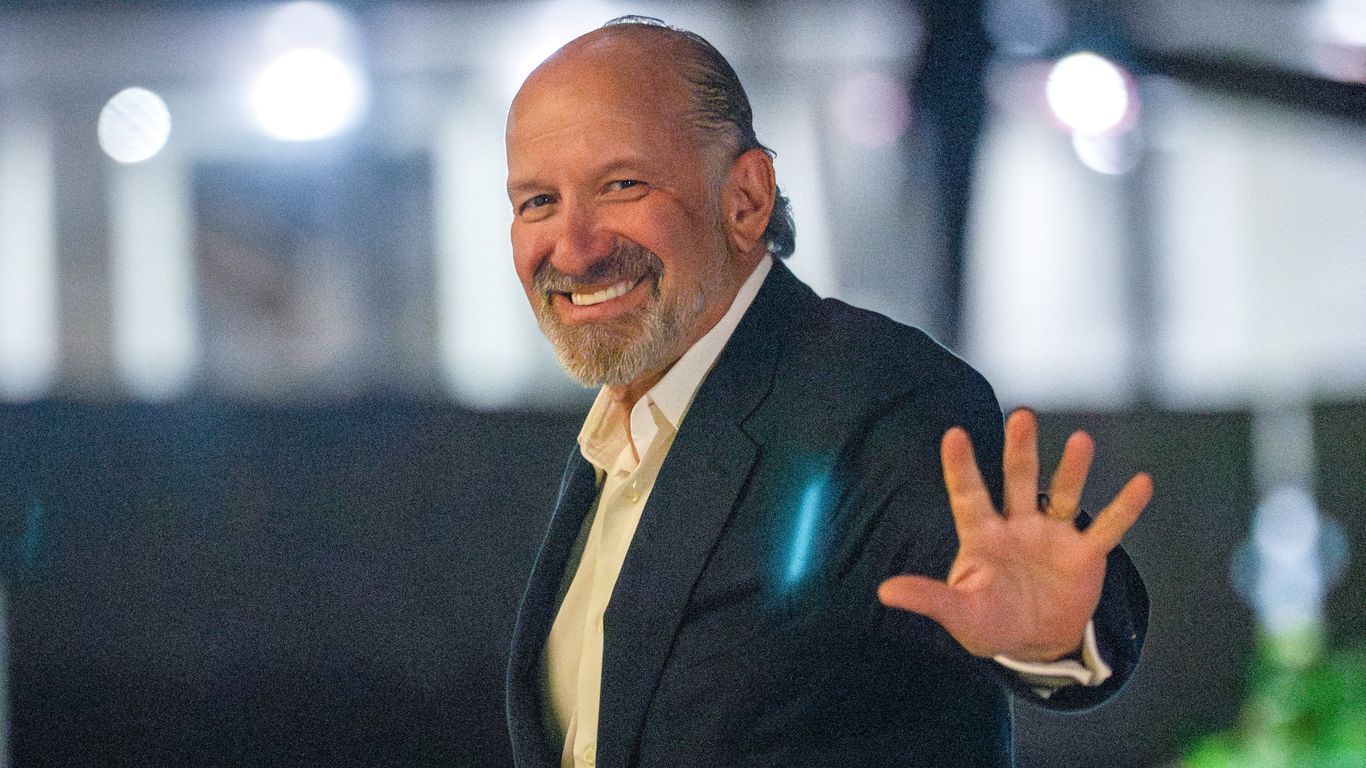
President Trump on Thursday authorized a crack down on companies suspected of diverting Nvidia's advanced AI chips to China for the third time this year — even consulting Elon Musk before giving the go-ahead. One administration official has repeatedly stood in the way: Commerce Secretary Howard Lutnick. Why it matters: This standoff illustrates a breakdown in efforts to keep American technology out of China's hands as the world wonders why the Trump administration has not taken action against the company at the center of suspected chip smuggling — and an espionage scandal. This report was assembled from interviews with six high-level sources who were briefed on or, in some cases, heard the discussions. Inside the room: On Thursday, as the spy scandal rocked the administration, Lutnick met in the Situation Room with Treasury Secretary Scott Bessent, Defense Secretary Pete Hegseth, U.S. Trade Representative Jamieson Greer and National Security Adviser and Secretary of State Marco Rubio. During the meeting, Bessent confronted Lutnick about why his department has resisted implementing the export controls, particularly on Megaspeed, the company at the center of the spy scandal. The group sided with Bessent. Lutnick appeared to agree, but then muttered under his breath, "I need to check with the president." Friction point: Lutnick's seemingly innocuous comment raised concerns, the sources said, because officials have repeatedly believed the Commerce Department would impose the export controls, only to have nothing happen. "He's stalling it out," said one official, describing how Lutnick had previously met privately with the president to change his mind about the export limit. "This is an ongoing concern with Howard and this issue," said another. This time , one person in the room called his bluff by saying: "Great. Why don't we do it today?" Around 5pm, the group headed to the Oval Office. Trump called tech advisor Elon Musk and agreed to move forward. Musk supported Rubi
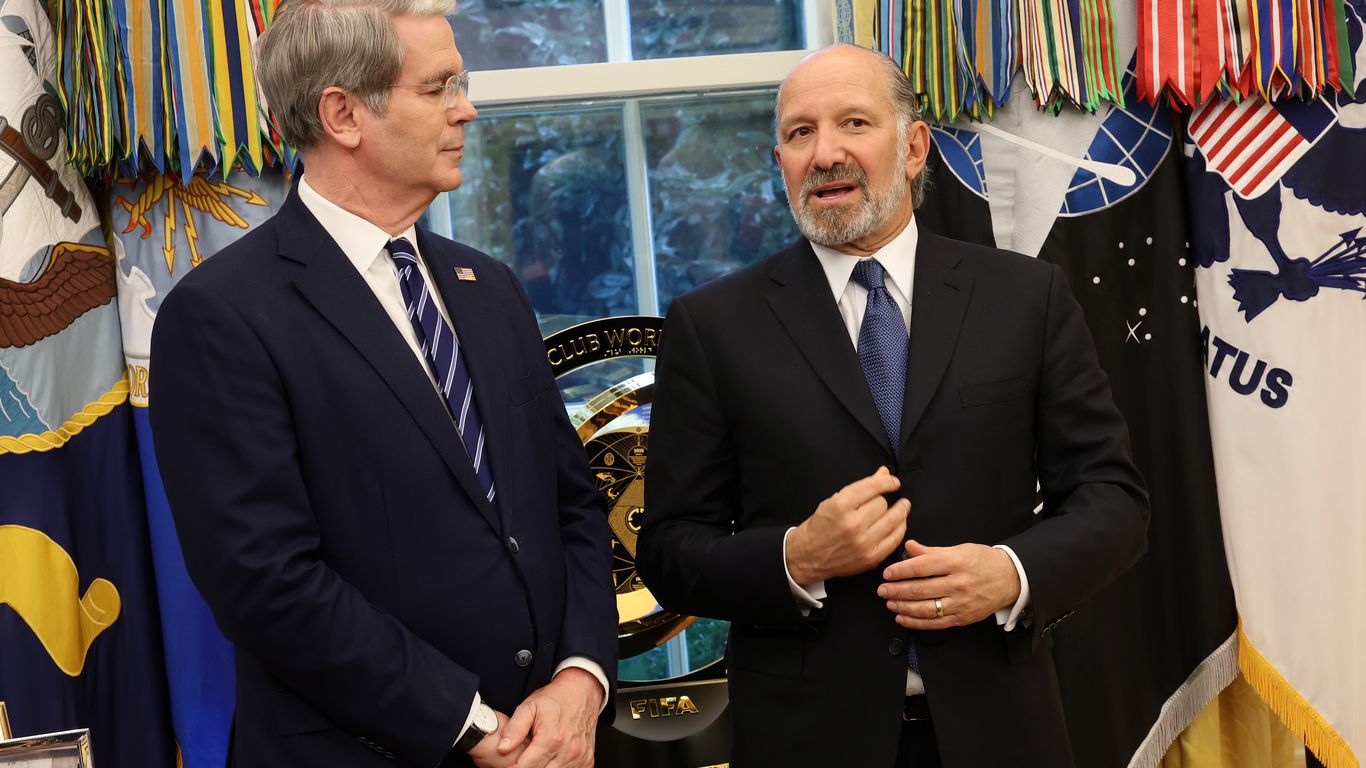
Treasury Secretary Scott Bessent confronted Commerce Secretary Howard Lutnick over a failure to place Nvidia customer Megaspeed on a list of companies that pose national security concerns, sources familiar told Axios. Why it matters: The Commerce Department oversees the export of sensitive U.S. technologies and Lutnick's actions — or lack thereof — are increasingly under scrutiny following revelations that Nvidia CEO Jensen Huan g had an affair with Megaspeed employee and suspected Chinese spy Alice Huang. Driving the news: At a White House Situation Room meeting on Thursday after the midterm elections, Bessent pressed Lutnick on why Megaspeed was had not been added to the Commerce Department's entity list, to which Lutnick responded he would "look into it." Commerce Undersecretary Jeff Kessler also was repeatedly warned about Megaspeed in deputy meetings. But sources told Axios that Lutnick has spent the last year "undoing" efforts by other administration officials to hold Megaspeed — a company accused of illegally diverting U.S. chips to China — accountable because of concerns it would escalate the trade war with China. Catch up quick: The Commerce Department is increasingly at the center of scrutiny over the broader Trump administration's handling of an intelligence memo overseen by State Department head Marco Rubio. Lutnick was among the officials who received the report in May, ahead of a trip to China, Axios first reported. On Tuesday, the New York Times reported Commerce Undersecretary Kessler abruptly stopped an investigation into Megaspeed after Nvidia intervened. The Financial Times reported the department was delaying efforts to blacklist Megaspeed despite several U.S. government agencies pushing it to do so. Inside the room: White House and intelligence officials have pressed Lutnick and his top advisers to take action against Megaspeed since the fall of 2025, sources tell Axios. But they refused, so Bessent spoke up Thursday. "How come Megaspeed isn't o

All the latest news and deals before the today’s deadline Jaguars add Davis to help defense; Simmons boosts Bears Follow the buildup to the 4pm ET cutoff and fallout Hello and welcome to our live coverage of the 2026 NFL trade deadline. After weeks of splashy moves, swirling rumors and increasingly frantic speculation, we’re finally approaching the moment of truth. The clock is ticking and all 32 teams have until 4pm ET (9pm GMT) to get their affairs in order. It’s already been an eventful trading season. The Chicago Bears made the biggest splash by acquiring All-Pro defensive tackle Jeffery Simmons from the Tennessee Titans for a package including two first-round draft picks. The Jacksonville Jaguars made a trio of moves to bolster their defense, headlined by a trade with Philadelphia to land defensive tackle Jordan Davis. The Indianapolis Colts have been busy dismantling their roster, shipping eight-time Pro Bowl guard Quenton Nelson to Seattle and defensive tackle DeForest Buckner to San Francisco. Meanwhile, Marvin Harrison Jr has landed in Houston, Joey Porter Jr has joined Dallas and the injury-ravaged Baltimore Ravens have brought in veteran quarterback Jacoby Brissett. Continue reading...
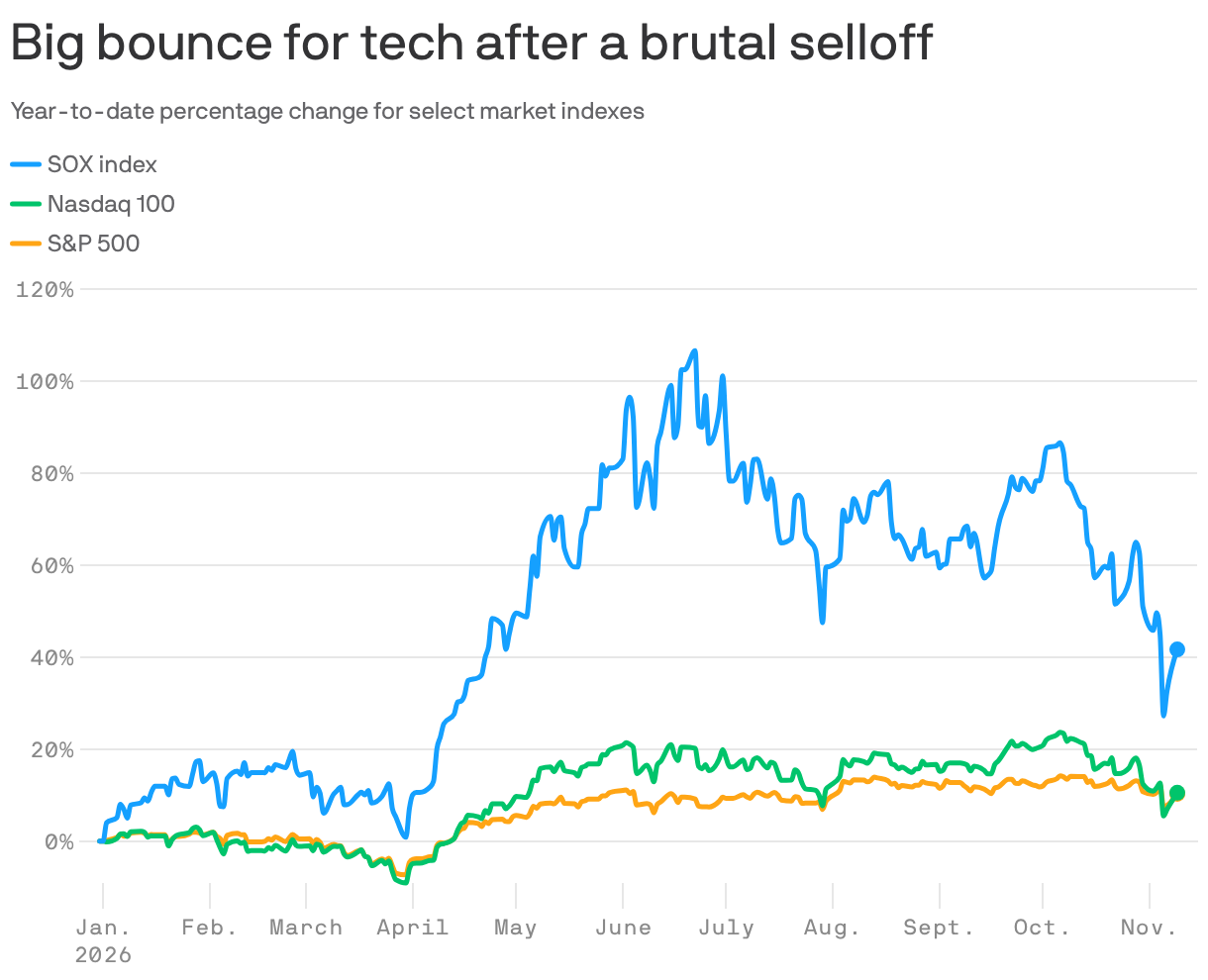
Data: FactSet; Chart: Matt Phillips/Axios The AI trade has regained momentum despite — or maybe because of — Nvidia's struggles following the weekend revelations from CEO Jensen Huang. The big picture: Monday's sudden burst of exuberance for AI was the latest wide swing for a market upended by last week's "blue tsunami" in the midterm elections and the threat they could pose to the data center boom. By the numbers: The Nasdaq 100 index of large-cap technology shares soared 3.4%, its biggest daily jump since late March and its second-best showing of the year. Zoom in: Stocks romped across the AI ecosystem — well, with one important exception. Pick-and-shovel plays such as engineering and construction companies, and makers of data center inputs like fiberoptic cables, servers and data storage devices soared. The companies that build and lease out data center computing power, known as neoclouds, also jumped. (Those companies had been at the epicenter of recent jitters about financing for the AI boom.) Hyperscalers rose, paced by Meta, which notched a gain of 5.1%. Semiconductors roared, with the SOX index posting its best gain — 6.9% — since late July. Yes, but: The glaring exception to the AI-palooza was its best-known player, Nvidia. Weekend revelations from CEO Jensen Huang — who acknowledged having an affair with a woman suspected of connections to Chinese intelligence — left investors grappling with uncertainty about the CEO's future. The intrigue: Some investors may see Nvidia's pain as potential gain for rivals. Broadcom jumped 8.8%, its best day in nearly a year. Advanced Micro Devices soared 13.3%, benefiting also from an upgrade to "Outperform" — effectively, a "buy" recommendation — from Oppenheimer analysts on Sunday. Context: Bullish commentary from Wall Street established the background music for Monday's big bounce, as analysts urged investors to buy into the market's recent soft patch. "We believe stocks are now clearly in oversold territory," Goldman S

China says its trade surplus exceeded $1 trillion for a 2nd straight year, as exports in October surged 35%
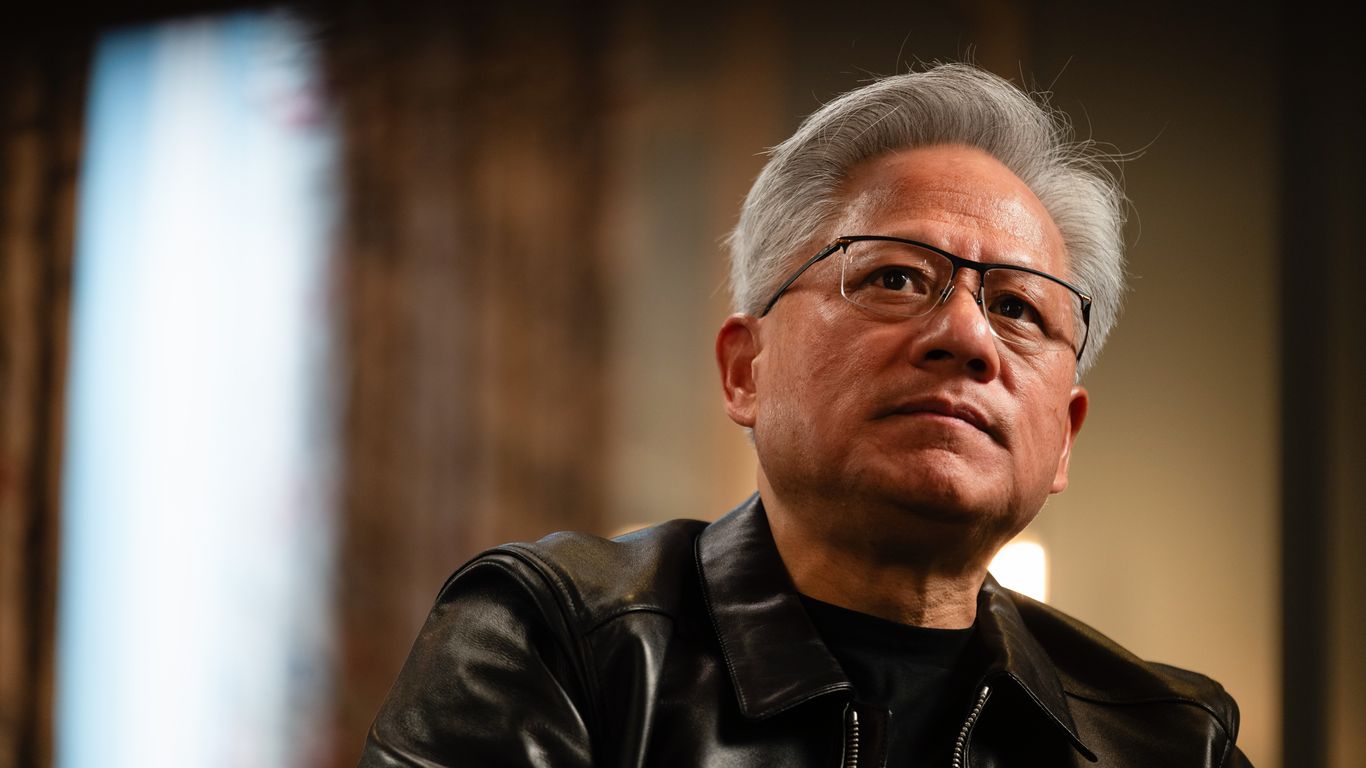
Nvidia CEO Jensen Huang's affair with a woman suspected of spying for China echoes past controversies involving prominent Americans whose romantic relationships raised national security concerns. Why it matters: Foreign intelligence operatives can use romantic relationships to gain access to political intelligence, corporate secrets and classified information — posing serious national security risks. Driving the news: Jensen Huang acknowledged an extramarital affair in a message to employees Sunday, following reports that he had a relationship with a suspected Chinese spy. Per The New York Times , U.S. authorities suspected China's Ministry of State Security of recruiting Alice Huang to seek information about Jensen Huang and influence his feelings about selling AI chips to Chinese firms. Nvidia's board says it has no reason to believe company secrets or national security were compromised. China has also denied the allegations. Zoom out: The evidence of foreign intelligence involvement varies, with some cases involving actual security breaches, while others raised concerns about possible foreign spying. Read more below. Jensen Huang State of play: Reports about Jensen Huang's relationship with Alice Huang have raised questions about whether Chinese intelligence gained access to Nvidia's secrets or sought to influence its business decisions. AFP and Reuters photos showed them together in 2024 and 2025. Employees reported seeing Jensen Huang at Megaspeed's offices, where Alice Huang worked as an executive, according to Culper Research, a short-seller that published a report on Nvidia's China business in May 2026. An employee told Culper that Jensen and Alice had a "very close" relationship. What's next: Three Republican House committee chairs have requested a briefing with Huang about his relationship with Alice Huang and Nvidia's safeguards against foreign threats. James J. Smith and Katrina Leung A 2006 DOJ report found that counterintelligence agent James J. Smith

American activist and trade unionist who fought for the rights of farm workers Although she was never the president of the United Farm Workers union, Dolores Huerta , who has died aged 96, was one of the most significant American trade union leaders of the 20th century. Her battle cry, “ Sí, se puede! ”, coined in the midst of tensions with police in Arizona in the 1970s, was adapted to the English “Yes, we can” and became Barack Obama’s slogan during his successful campaign for the US presidency in 2008. While the UFW leader Cesar Chavez was the public face of the union as its president, Huerta was the organiser who helped break the resistance of California’s grape growers by building bridges to secondary boycotts by unions packing and transporting grapes, and by organising boycotts of national supermarket chains such as A&P and Finast, who sold them. “To take on agriculture, which to this day is still a powerhouse, that took a lot of guts,” her son Emilio said. Continue reading...
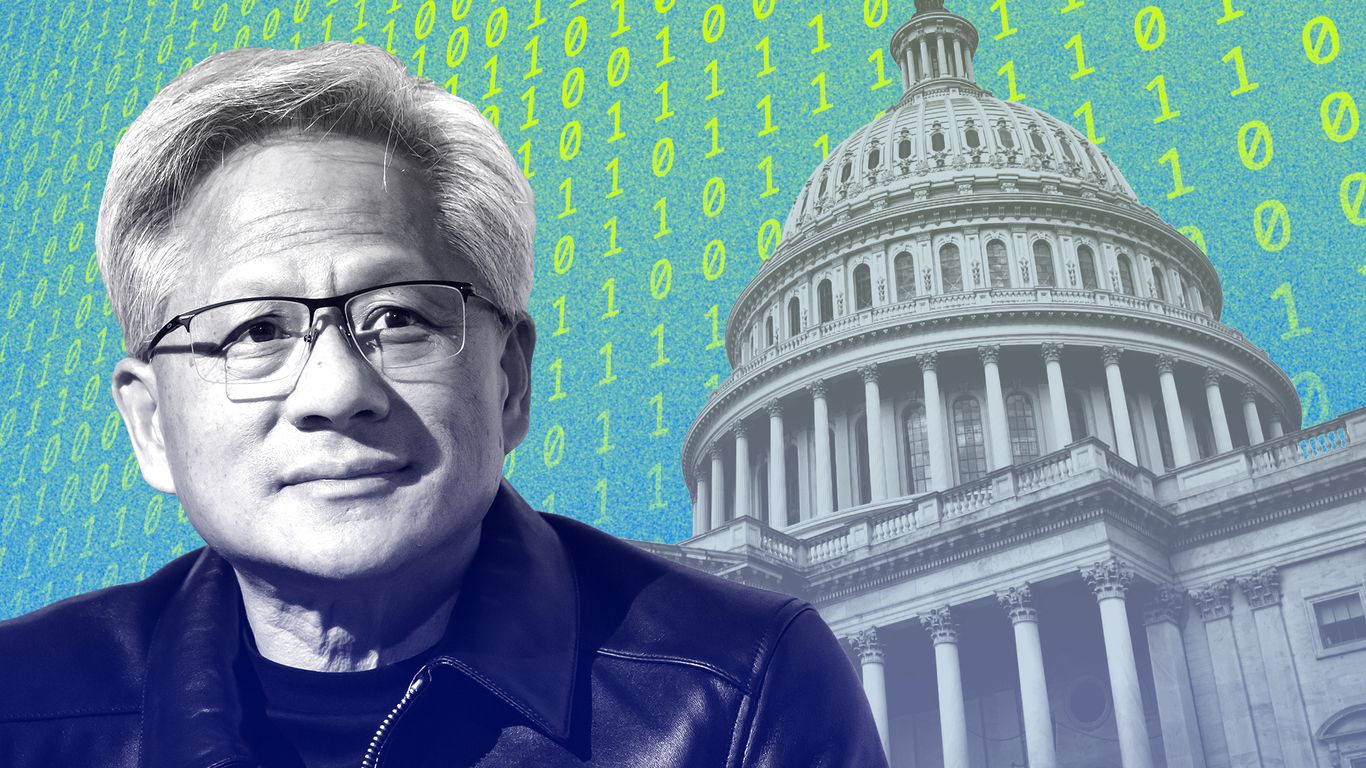
There is no Nvidia — nor an AI boom as we know it — without Jensen Huang. He has reassured jittery markets with his words, bankrolled a trillion-dollar buildout and put economies on his shoulders. Now, the world is wondering if he can save himself . Why it matters: Global markets must confront a terrifying reality: The AI ecosystem's first "too big to fail" executive is suddenly vulnerable, and there is no backup plan if he is forced to step down. Catch up quick : Huang apologized Sunday and Nvidia's board launched an independent probe after he admitted to having a relationship with a woman named Alice Huang, an alleged Chinese operative. Nvidia's board expressed confidence in his leadership and said it had no reason to believe national security or company secrets were compromised. President Trump stood by Huang, calling him "an honorable guy." The big picture: Keeping his job is one thing. Maintaining the ability to steady markets, finance customers and shape government policy is another. These are the five questions that now loom over the AI boom : 1. What happens to Nvidia? Forged 33 years ago (initially using a Denny's as an impromptu office), Nvidia is a uniquely founder-driven company, making any potential leadership transition incredibly perilous. Investors have little precedent for valuing the company without him. "It's very hard to envision Nvidia run by anybody else," said Dan Gallagher, an analyst with Washington Post Intelligence and long a keen observer of the chip titan. Huang has more than 60 direct reports, eschews traditional corporate layers and hasn't been publicly grooming a successor. "I don't know if anyone's going to know how to value Nvidia" without him, Gallagher told Axios. 2. What happens to the market? Huang has repeatedly rescued the AI trade from bearish sentiment. On multiple occasions, he has offered backstops to shore up growth plans for companies across the AI landscape, from CoreWeave to OpenAI. In July, he argued that cheaper open

Efforts to fight climate change, conserve nature and build clean energy have long unfolded on competing tracks. Now, they're colliding — and exposing tough trade-offs for environmentalists. Why it matters: Congress' sweeping permitting debate is forcing those competing priorities into the same conversation, with major consequences for climate action and conservation. Driving the news: The Senate is set to hold an initial procedural vote Monday on a sprawling bipartisan bill that would make it easier to build power lines and energy projects of all kinds, including clean energy and fossil fuels. At the heart of the debate is how much public scrutiny projects should face before they're approved — and how much protection those approvals should receive afterward. Supporters say the current system takes too long, delaying clean energy and other infrastructure. Opponents warn that speeding things up could come at the expense of wildlife, public lands and tribal rights. Between the lines: The dilemma reflects a fundamental tension within the environmental movement: Building the infrastructure needed to combat climate change can threaten nature, while protecting nature can complicate efforts to build that infrastructure. Wind and solar farms, for example, can require large expanses of land, potentially disrupting wildlife habitats even as they help reduce greenhouse gas emissions. "The part of my organization that cares about climate sees great opportunity and the part that cares about nature sees some dangers," said a leader of one organization that focuses on both causes, speaking anonymously to discuss the proposal candidly. The big picture: Both parties broadly agree Washington needs to overhaul federal permitting, a perennial goal that has eluded Congress for years. The question is what reforms can attract enough support to pass both chambers. The bill's bipartisan sponsors and the White House want action before year's end. But some Democrats, emboldened by their midter
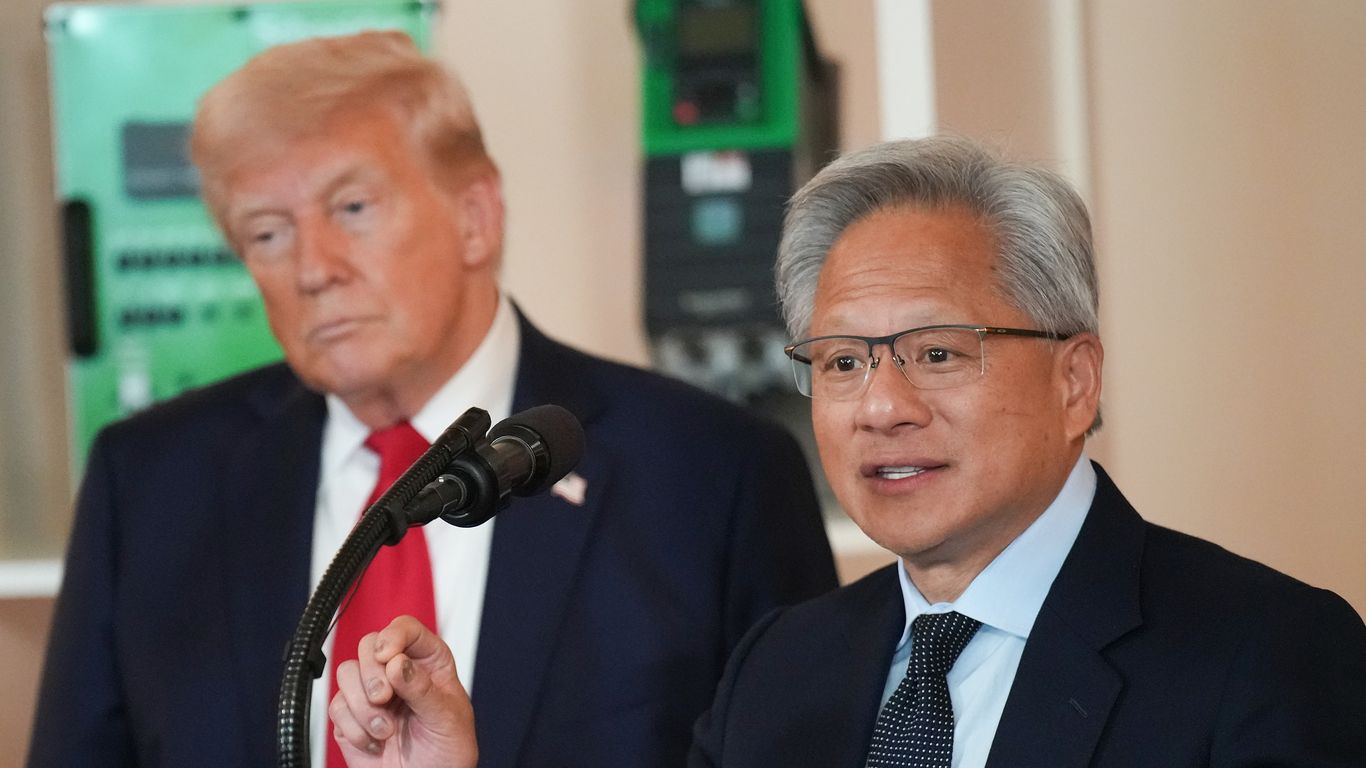
The world's most powerful AI executive admitted Sunday to an affair with a suspected Chinese spy, sending shock waves through an industry built on his singular influence. Why it matters: Nvidia CEO Jensen Huang has fashioned himself as the indispensable leader of an indispensable company — a $4.5 trillion behemoth with unparalleled clout in Silicon Valley, on Wall Street and inside President Trump's White House. Trump stood by Huang on Sunday evening, telling reporters that the Nvidia CEO is "an honorable guy" and "probably has an excuse" for his infidelity. The big picture: Huang, who has led Nvidia since founding the chipmaker 33 years ago, has become the AI boom's chief evangelist and most authoritative voice. He has brushed aside fears of both a speculative bubble and technological catastrophe, joining forces with Trump to calm markets and the public as warnings of an AI apocalypse reached fever pitch. For almost any other CEO, an affair with a suspected foreign intelligence operative could be career-ending. Huang's grip on Nvidia — and the company's extraordinary importance to the AI economy — may insulate him from the same fate. Driving the news: Huang confessed to the affair in a letter to staff Sunday, apologizing to his family as Nvidia's board launched an independent probe into the suspected Chinese intelligence operation. U.S. officials believe Alice Huang, an executive at Nvidia customer Megaspeed, was recruited by Beijing's top spy agency to gather information and potentially influence Nvidia's campaign to expand advanced chip sales to China. Nvidia's board said it had no reason to believe national security or company secrets were compromised and expressed confidence in Jensen Huang, who intends to remain CEO during the investigation. Zoom in: The New York Times first exposed the suspected Chinese espionage operation on Oct. 29, reporting that a woman believed to be working for Beijing had developed a close relationship with Nvidia's CEO. The company po
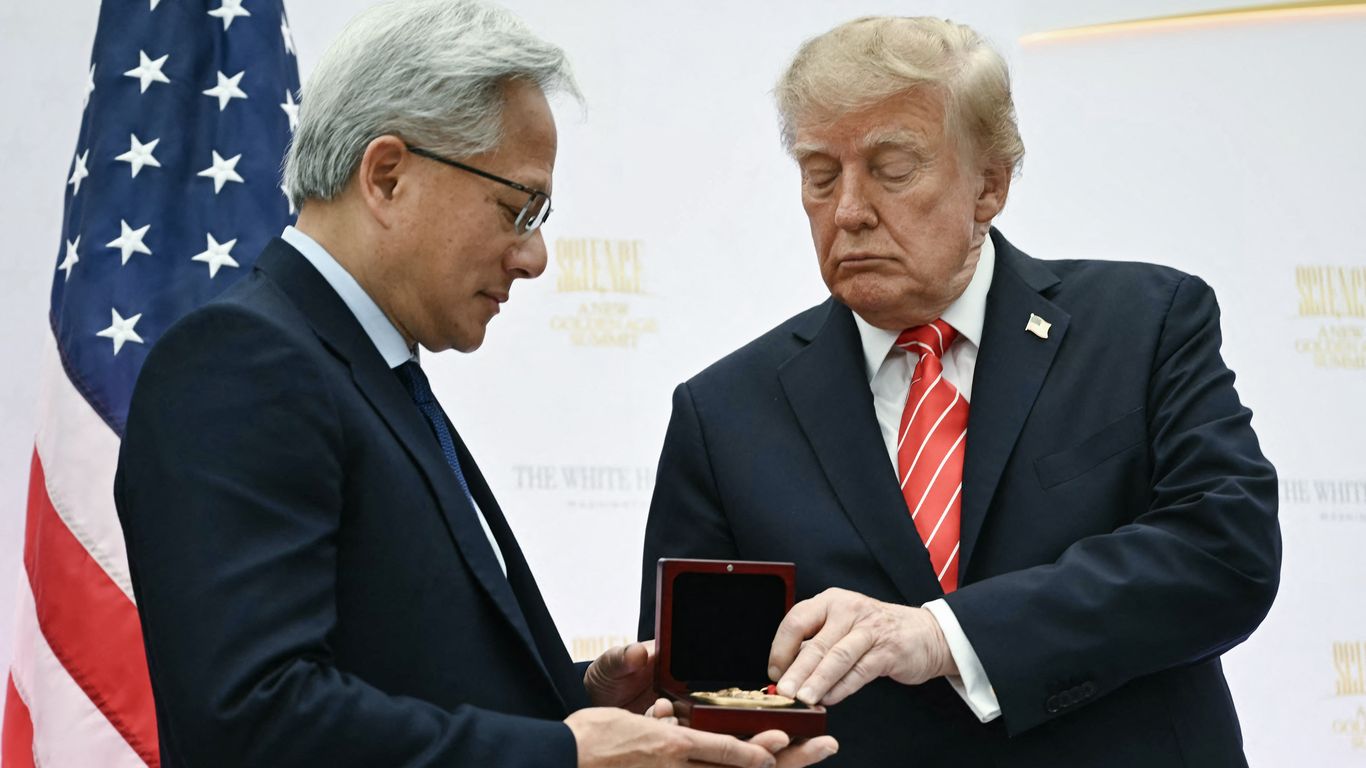
President Trump defended Nvidia CEO Jensen Huang on Sunday night, even as the company's board launched an investigation into his affair with a suspected Chinese spy. Why it matters: The blowback to Huang's relationship is only getting more intense by the hour, with multiple members of Congress calling for probes and investors saying the news could put a cloud over the entire AI trade. What they're saying: Trump was asked Sunday night if he's taking Huang with him on an Asia trip next week. "I don't know, but I'd certainly take him," the president told reporters. "I haven't heard that he's done anything wrong," Trump added. "He dealt with somebody but, you know, so does everybody else." The intrigue: The New York Times reported in late October that Trump was briefed earlier this year about Huang's relationship with the potential spy but chose not to act. Huang has been one of Trump's favorite corporate executives since his return to office, frequently appearing at White House events. He also traveled with Trump to China earlier this year, even after the reported memo warning the president of Huang's relationship. What's next: A group of House Republican committee chairs have asked Huang to agree by Nov. 11 to a date for a briefing on his relationship and Nvidia's national security controls.
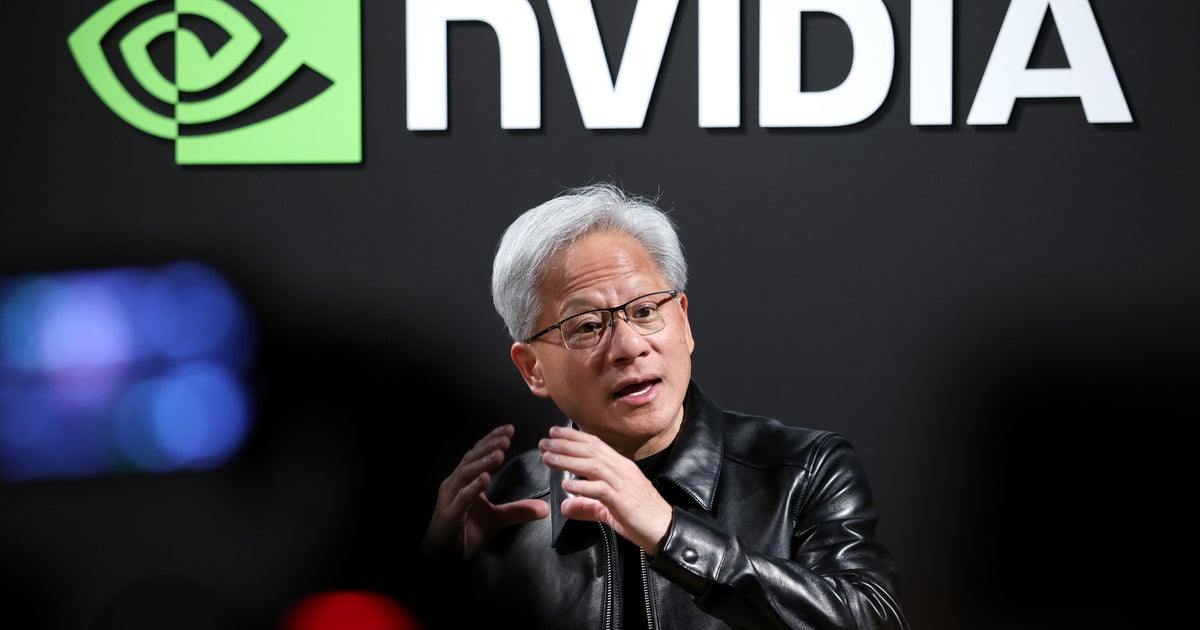
The board of Nvidia said it had no reason to believe that the company's secrets or national security were compromised.
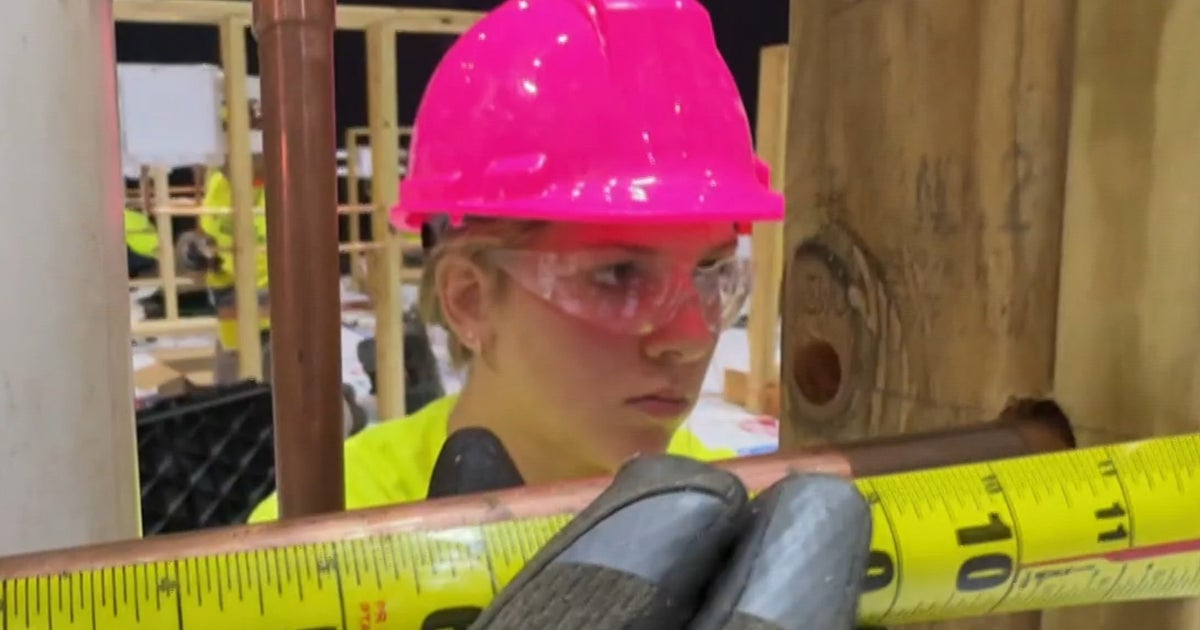
The Georgia Skills Challenge, an annual series of competitions, brings together the state's best young tradespeople. There is glory at stake, but also money from real jobs. Tony Dokoupil has more.

Lamar Jackson is out indefinitely with injured thumb Backup Huntley to miss rest of season with turf toe Rookie Fagnano will start for Baltimore on Thursday Veteran quarterback Jacoby Brissett is heading from the Arizona Cardinals to the Baltimore Ravens, a person with knowledge of the trade told the Associated Press on Wednesday. The person spoke to the AP on condition of anonymity because the deal hasn’t been completed. Continue reading...
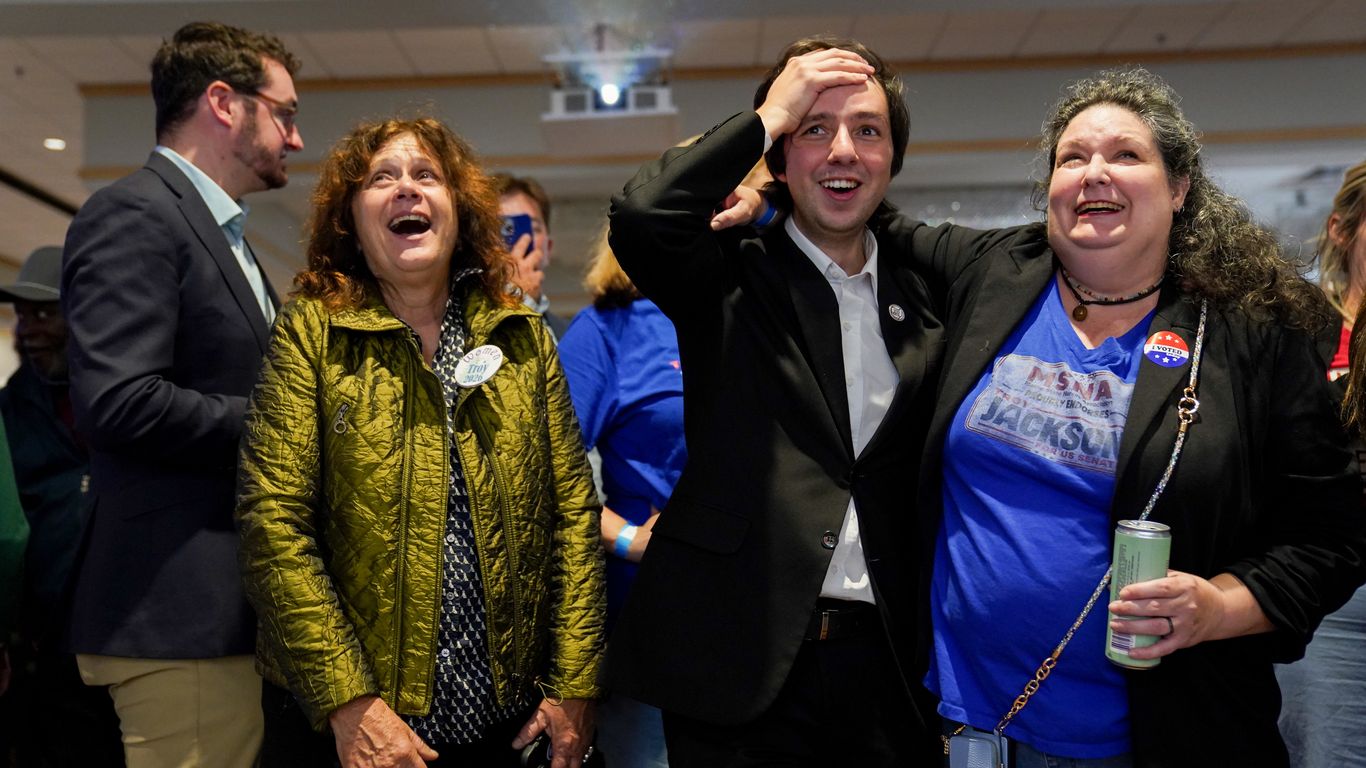
World leaders are reacting to Democrats' comprehensive midterm wins, which saw them retake the Senate and flip the House on Tuesday night. Why it matters: The results could reshape President Trump's final two years in office, with major implications for U.S. relations with allies and adversaries alike. Zoom in: As Trump faces competing calls over whether to resume military action in Iran, Iranian officials supported the Democratic victories as a sign of opposition to the war. Iran's Parliament Speaker Mohammad Bagher Ghalibaf wrote on X , "Conscience or the cost of living, Americans said NO TO WAR, and we endorse this message." Prior to the election, regional mediators led by Qatar were trying to reach a diplomatic deal to restart negotiations between the U.S. and Iran to avoid reentering the war, three U.S., Israeli and regional sources said, but renewed fighting remains on the table. But while Israeli Prime Minister Benjamin Netanyahu wants to resume fighting in Iran, his political future remains uncertain, with neither bloc securing the 61-seat majority needed to form a government in Israel's recent election. Zoom out: Trump's second-term decisions have significantly strained relationships with U.S. allies and partners, leading countries to increasingly view Washington as unreliable, self-interested and less committed to global cooperation , according to Pew Research Center data. But Tuesday's election results appear to have infused renewed hope about relations from international leaders. Spanish Prime Minister Pedro Sánchez applauded Americans for voting "against policies that only make people poorer," and against "hate," "sexism," "climate denial" and "elite privilege," in a post on X ." South African President Cyril Ramaphosa told reporters he believes Democratic control of Congress will "introduce a new era in world relations," adding that he hopes for improved collaboration on geopolitics, trade and investment, Bloomberg reported. Trump, who has repeatedly c

Winnipeg had been on nine-game losing streak Comeback on Tuesday night breaks NHL record The Winnipeg Jets had every reason to stop believing. They were down four goals in the third period, less than three minutes from a 10th straight defeat, in their fifth game in eight nights. Their coach was on the hot seat. Their season had been rocked from the start when former MVP goalie Connor Hellebuyck asked for a trade. The Bell Centre was roaring and a Montreal Canadiens win looked certain, but Kyle Connor still had faith. Continue reading...
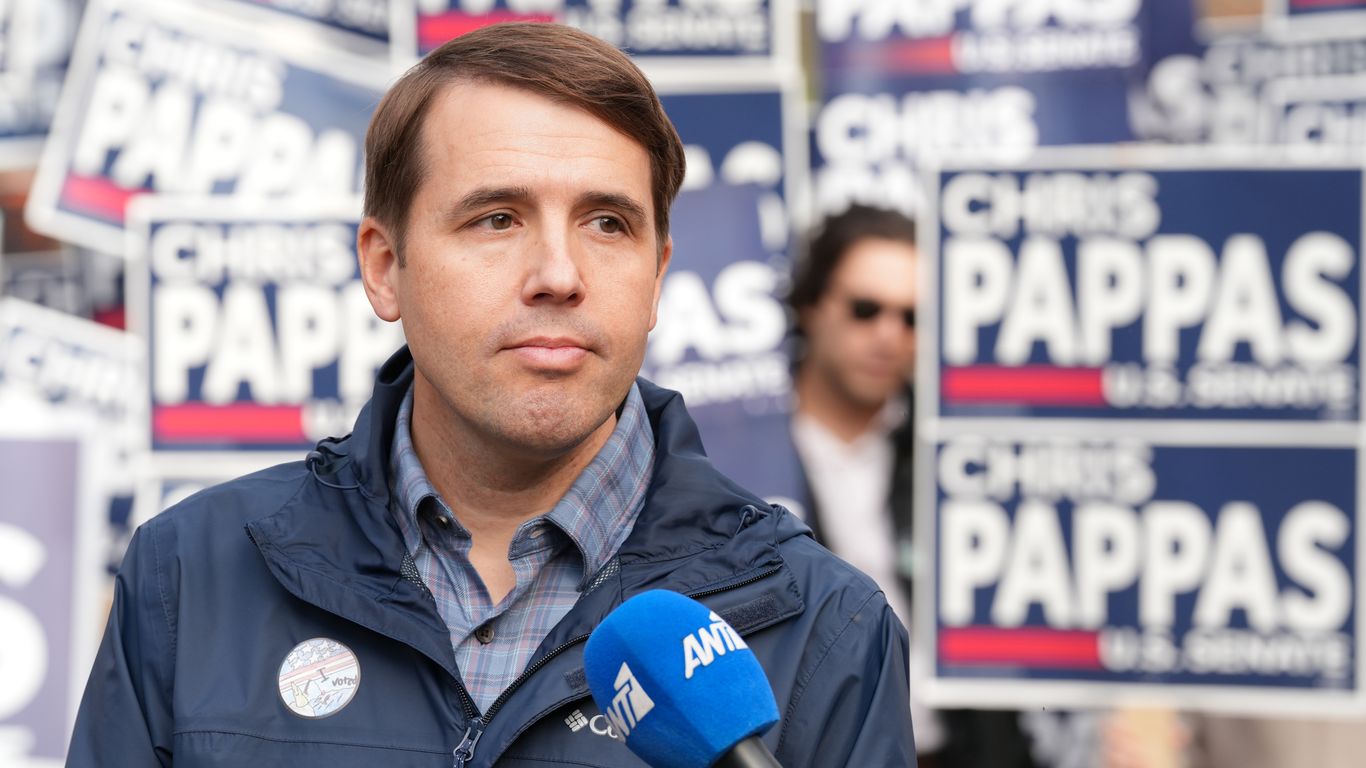
Democratic Rep. Chris Pappas defeated former GOP Sen. John Sununu in the New Hampshire Senate race, AP projects. Why it matters: Pappas' victory keeps the seat in Democratic hands and could boost the party's chances of taking control of the Senate. Driving the news: Pappas led Sununu 61% to 38% with 20% of the votes counted. He'll replace retiring Sen. Jeanne Shaheen (D-N.H.) in January. Catch up quick: Republicans saw New Hampshire as a top pickup opportunity, with Senate Majority Leader John Thune campaigning for Sununu in the competitive race, despite polls showing Pappas ahead. Most polls compiled by the New York Times in the weeks before Election Day showed the Democratic Pappas leading Sununu by 5 to 8 percentage points. Zoom in: Although President Trump endorsed him, Sununu has shown daylight with the president, criticizing his trade war with Canada and his so-called anti-weaponization fund — and he backed Trump's primary opponents in 2016 and 2024. Still, prominent New Hampshire Republicans — including Don Bolduc , the Trump -endorsed 2022 Senate nominee — endorsed Pappas in mid-October, accusing Sununu of being too beholden to the president. Between the lines: Republicans welcomed Sununu's entry into the race because of his family's long ties to New Hampshire politics. Sununu served in the Senate from 2003 to 2009 before losing to Shaheen in 2008. His brother Chris served as governor for eight years. Senate GOP Whip John Barrasso (R-Wyo.) posted on X in October 2025 that Sununu's decision to run catapulted New Hampshire to "a top-tier U.S. Senate race." The bottom line: Pappas' win reflects a preference New Hampshire voters expressed in pre-election polling : They wanted a check on Trump's power. Go deeper: Trump's former Senate pick backs Democrat in New Hampshire
Republicans don't know if they'll lose big or small on Tuesday, but they're already bracing for an epic blame game. Why it matters: Privately, Republicans acknowledge it's not a complicated version of Clue. The leading suspect: Mr. President, in the Oval Office, with an assortment of weapons — and one war. Returning Republican senators are unlikely to blame President Trump publicly. There's a price for that. And don't expect Trump to shoulder the responsibility. But do expect departing GOP lawmakers to take shots at Trump or his team, and Trump to fire back at Senate Republicans, whom he's never been shy about torching. The irony of Trump's second midterm: With Republicans privately resigned to losing the House, Trump can still credibly claim victory if they hold the Senate. "It's Donald Trump's midterms. He gets all the credit if we win. He gets all the credit if we lose," one national GOP strategist told Axios. The Iran war: From Alaska to Maine, Trump's decision to go to war with Iran — and the resulting spike in gas and diesel prices — has become a major political liability for Republican Senate nominees. "It's not tariffs … it's the war, it's gas prices, it's diesel," Texas Attorney General Ken Paxton said at a closed-door fundraiser in September, Axios reported last month . Tariffs: Trump's trade policies have compounded Republicans' affordability problems, particularly in farm country, where producers have faced higher costs and uncertainty over export markets. "We need to end this tariff war now," former Rep. Mike Rogers (R-Mich.) , the GOP Senate nominee, said in an October campaign ad, breaking with Trump over his tariffs on Canada. Bad candidates: Trump's preferred nominees are also drawing blame, GOP strategists tell Axios. Paxton in Texas and Sen. Darline Graham in South Carolina have forced Republicans to spend heavily defending races that should have been easier — and where the party had other options. Complacent incumbents: Sens. Roger Marshall (R-Ka

Despite the US president’s ratings being at rock bottom, undoing his legacy will be difficult, not least because the Democrats are in disarray The stats and polling all suggest one thing: the Republicans are set for a hammering in the midterms. Donald Trump has the lowest approval rating of any US president going into a midterm election since Harry Truman. And it’s still dropping. The Democrats are projected to win by a margin of 11 percentage points , the largest swing by any party in almost 20 years. It is possible that the Democrats flip the Senate and secure a large majority in Congress. Those majorities would make a material difference, perhaps finally establishing oversight of the policies Trump has brought in during his second term: immigration enforcement, trade disputes, gutting the federal workforce, the Iran war, to say nothing of his own family’s corruption. The tide seems to be turning, and one question is on everyone’s mind: is the Trump era really ending? “Nobody wants to jinx it,” wrote David Wallace-Wells of the New York Times, but: “All the signs we have suggest that, historic or not, these midterms are likely to mark the end of a political era.” What that gives way to is a much more complicated picture in which the US will be delivered from Trump himself, but remains a country riven and undermined by what he has unleashed. By the time he is gone, Trump will have been president for eight years, and a toxic force for more than 12. That is a long time even for a normal politician. Under one who shatters norms and forces himself into the centre of everything, Trump’s effect is as if he were president for decades. Continue reading...

The latest wave of hyperscaler earnings is spooking Wall Street. Bulls and bears alike have evidence to validate their wildest dreams — or their worst nightmares. Why it matters : The market's AI obsession has entered its Jekyll and Hyde era, with the latest earnings from tech giants offering contrary signals about the AI boom. Driving the news : The tech-heavy Nasdaq briefly sank into correction territory, falling 10% from its prior peak, losing $1.2 trillion in value for the month of October, after a slew of earnings reports pointed to AI's big risks. But it wasn't all horror: within the earnings statements, some investors found proof that the AI bet is going exactly as it should. Here are three examples of the AI trade's deepest contradictions — the good and the scary — from the earnings releases and calls of the Big Tech hyperscalers. Google: The scary: AI overviews are cannibalizing Google's core business: ad revenue from search. Yes, search queries are up, but results in AI mode have lower margins. The company has lost more than $500 billion in market value post-earnings, bringing the broader tech sector along with it. The good: Google Cloud is closing in on Microsoft's Azure cloud revenue, a stunning development given that Google was an also-ran in the cloud game only a few years ago. Much of Google's success is tied to demand for its TPU chips, which analysts expect to see massive growth in coming quarters. The takeaway: Google's predicament mirrors the problems of many tech giants, where AI represents a true threat to the golden goose but presents new opportunities if they can move fast enough. Microsoft and Amazon: The good: Both companies had explosive cloud growth, though the market was disappointed Amazon's wasn't higher. Microsoft touted its OpenAI investment and Amazon its Anthropic holdings. The iffy: Those private AI investments can help or hurt: Amazon's net income fell despite soaring operating profits, as it didn't repeat the pretax gain from its
Disappointing earnings reports from Alphabet, Amazon and Intel renewed fears on Friday that the AI trade could unravel.
Top diplomats from the G20, the group of the world's largest economies, are meeting in Atlanta as they face deep rifts over global crises that threaten international security and trade
President Trump applauded Quebec's new separatist premier Tuesday, continuing to jab at Ottawa despite fragile trade talks that seemed to be gaining momentum. The big picture: Even as Trump's top economic adviser suggested a deal to ease the ongoing trade war is possible, the president has continue to antagonize Canada. The U.S. recently accused Canada of trying to influence American elections through retaliatory tariffs, which Canadian officials have denied. Meanwhile, Trump's continued to antagonize Canada from the campaign trail, saying at a Mississippi stop Monday that it was "charging us massive tariffs" and has "treated us badly." Driving the news: In a brief shoutout Tuesday, the president congratulated Paul St-Pierre Plamondon for his win some three weeks ago. While a recent vote stymied an Albertan separatist push , St-Pierre Plamondon has vowed to hold Quebec's third referendum on independence, though he's said it wouldn't happen until after Trump leaves office. St-Pierre Plamondon's center-left Parti Québécois won 60 of 127 seats, leaving it four short of a majority. It would likely need support from a fellow separatist party to advance a referendum. Prime Minister Mark Carney has emphasized the importance of Canadian unity as the nation faces unprecedented hostility from the American president. Trump shared an Irish Times article that framed the Quebec vote as a "blow to Mark Carney" that could "hamper" his "efforts to maintain national unity against Trump." Zoom out: Trump on Tuesday also congratulated British Columbia's premier-designate, Lorne Doerkson, after his Conservatives swung the province rightward. "Conservatives are moving strong in Canada!" the president wrote . Doerkson, however, has rejected suggestions that he's aligned with the president, similar to St-Pierre Plamondon. Friction point: The U.S. Embassy in Canada last week accused Canadian leaders of trying to influence American politics with reciprocal tariffs on politically important pr

Harvard economist Jason Furman told Axios that if he were to return to his old job as chairman of the White House Council of Economic Advisers today, he would rely on AI tools over staff economists for much of the council's day-to-day analytical work. The big picture: Unsurprisingly, this made some waves in the online discourse, particularly the loose-knit community formerly known as Econ Twitter. Many veterans of the economic policy trenches see real risks in future policymakers becoming overly reliant on AI — or at a minimum think that Furman is underestimating the importance of human economists in advising the nation's leaders. What they're saying: "CEA work, at least in my experience, is highly bespoke as you're explaining the data flow (and much else) to very busy people who don't want only market-shop analysis," Jared Bernstein, the CEA chair under President Biden, wrote on Substack . "Yes, they want and need that — what will the markets make of this CPI, jobs, GDP, etc. report — but more so they want to know how this report fits into our narrative, our agenda, the president's trip today to Iowa." He adds that within a White House, "the human skill of reading-the-room is paramount. I'm far from an AI expert, but my sense is it sucks at that and probably always will, a conclusion that derives in no small part from listening to its creators!" Zoom in: Claudia Sahm, a former Federal Reserve economist, raised an issue that we've often heard from senior people in fields like consulting and investment banking: If you get rid of junior positions, where will future senior leaders come from? Furman's staff "went on to found the Yale Budget Lab, run Treasury economic policy and a Fed institute, serve in later [administrations], and publish research on trade, environment, and taxes. That's what '20 staff' become," she wrote on X . "No model does that." Bloomberg chief U.S. economist Anna Wong argues that the "ability to now not depend on anyone, as a senior person, is ve
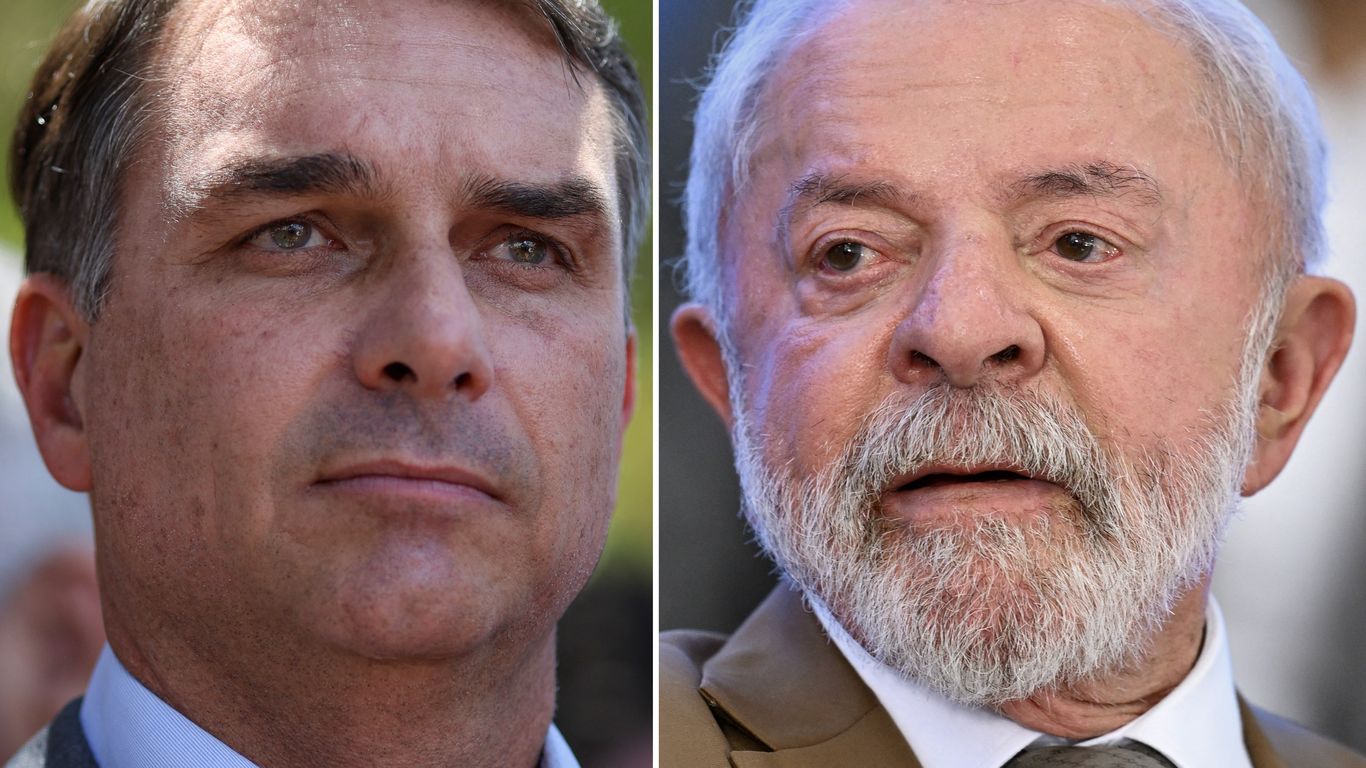
Brazil President Luiz Inácio Lula da Silva was elected to a fourth, nonconsecutive term in the nation's presidential election , according to early results released Sunday evening. Why it matters: Lula's victory deals a setback to Brazil's right-wing populist movement and preserves a major counterweight to President Trump 's influence in Latin America, with tensions over trade and tariffs threatening to persist. Lula, the incumbent candidate, was facing Flávio Bolsonaro, the son of former Brazilian President Jair Bolsonaro . Flávio was widely seen as the heir to the nation's right-wing populist movement. The latest: Lula thanked the Brazilian people after his election win, but Bolsonaro told reporters he would not accept the results and said they should be annulled, according to translations . The big picture: The election has been shaped by the impact of U.S. tariffs, climate change and the Amazon rainforest, 60% of which is in Brazil. Bolsonaro campaigned on public security and tackling corruption, presenting himself as a continuation of his father's political legacy, while Lula emphasized defending Brazilian sovereignty against U.S. pressure. Yet substantive policy debate was limited, with both candidates focusing instead on corruption allegations levied against the opposing camp, wrote Matthew Taylor, a Brazil politics expert at American University. Zoom in: After the U.S. imposed additional 25% tariffs on some Brazilian goods this summer, Lula accused Bolsonaro of being "Trump's candidate" and the U.S. president of wanting to "colonize" Brazil. Lula has enacted climate policies aimed at reversing environmental deregulation under the previous administration, while Bolsonaro denied climate change and pledged to continue his father's political legacy. Amazon deforestation has fallen 71% since 2022, the year before Lula returned to office, reaching its lowest annual level on record in 2026. Yet Lula's environmental record is complicated by his support for expanded o

The quickest and most affordable response to historically high diesel prices is also the simplest: Use less of it. Why it matters: Diesel is so entrenched in farming, trucking and other industries that even soaring prices aren't enough — at least not yet — to prompt a wholesale shift to alternatives from electric semi trucks to manure-powered tractors. Catch up fast: Diesel prices have climbed to record highs since the U.S. war with Iran began in February, rising faster than gasoline amid global oil supply disruptions . Diesel averaged $6.31 a gallon Thursday, up 74% from a year ago, according to AAA . Regular gasoline averaged $4.27, up 39%. The big picture: Gasoline gets the attention, but diesel is the workhorse of the American economy. It powers grocery trucks, tractors, freight trains, construction equipment, hospital backup generators and even school buses . Driving the news: The price spike is hitting farmers during the fall harvest. "Farmers buy diesel by the truckload, so we're talking about hundreds of thousands of dollars in diesel, and when it goes up the way it has spiked, that's the difference between profit and loss in a year," said Curt Blades, senior vice president at the Association of Equipment Manufacturers, a trade group representing tractor makers and other heavy-equipment manufacturers. The financial pain varies: Trucking companies can often pass higher fuel costs to customers through surcharges. Farmers, who have little control over crop prices, generally can't. The economic pressure has become political ahead of the midterm elections. President Trump announced $8 billion in one-time aid for farmers at a campaign rally in Kansas on Monday, where Republicans face a competitive Senate race. "It's a bit too soon to tell the impact," Blades said of the aid package, though he welcomed support during harvest. State of play: Trucking and agricultural equipment experts say the most immediate savings come from using existing diesel engines more effici
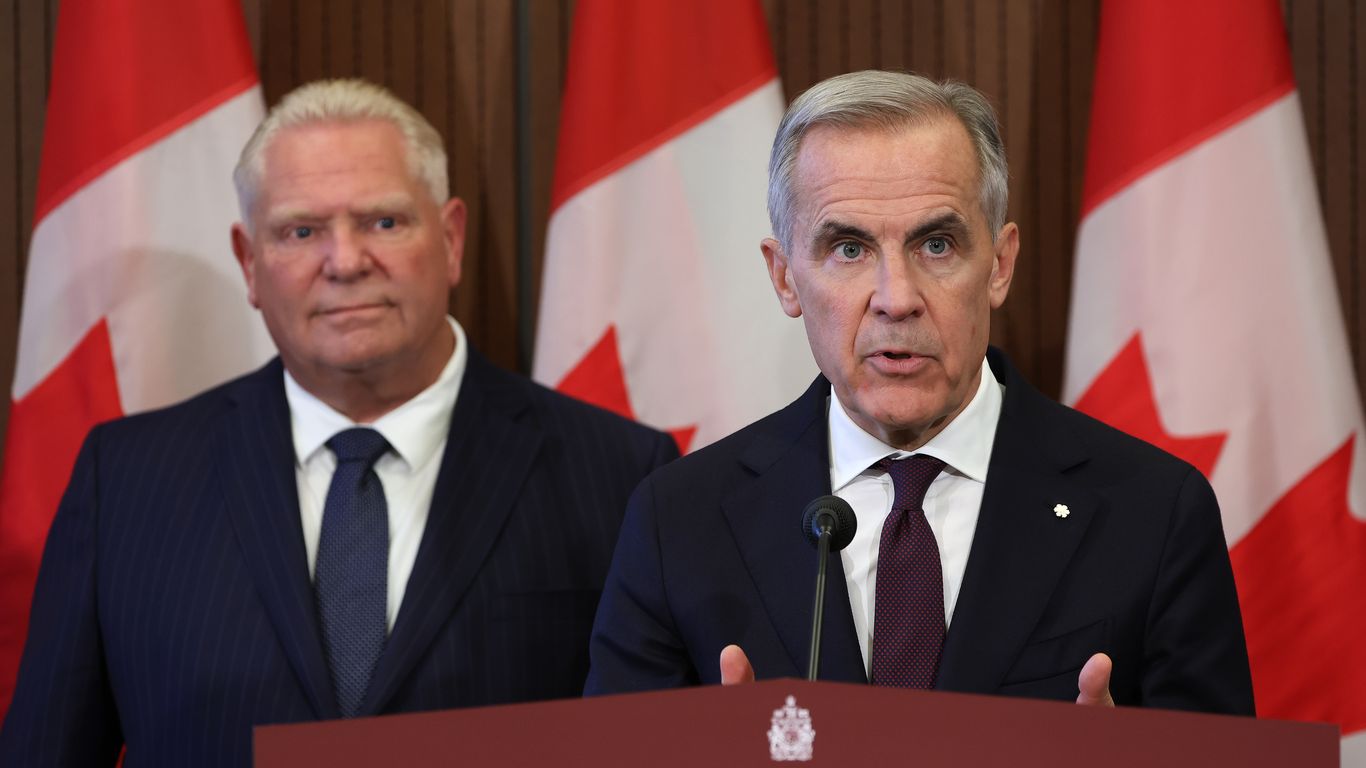
The U.S. Embassy in Canada accused Canadian leaders of "openly" describing plans to "influence American politics," doubling down on Ambassador Pete Hoekstra's claims of potential election interference. Why it matters: The accusation further deteriorates Washington's relationship with its northern neighbor under President Trump's costly trade war that's put political pressure on Republicans. Canada targeted its retaliatory tariffs on politically salient states and products ahead of the U.S. midterms. Driving the news: The embassy cited Canada's targeted tariffs as part of the influence accusations laid out in a Wednesday fact sheet . It cited remarks from Industry Minister Mélanie Joly, including an August press conference where she said Canada was "targeting products that will target states in the U.S." She added, "we're being wise and strategic to put political pressure." Joly has echoed that message throughout the trade tensions. The fact sheet also cited Joly's meeting with Democrats. She recently huddled with Illinois Gov. JB Pritzker. What they're saying: Asked about the accusations during a news conference, Prime Minister Mark Carney said "all of our actions are in the interest of Canadian workers, Canadian families and the future of this economy." Zoom out: The fact sheet also singled out conservative Ontario Premier Doug Ford over a 2025 anti-tariff ad campaign featuring excerpts from a Ronald Reagan speech . It also cited Liberal MP Anthony Housefather's campaigning for Florida Democrat Rep. Debbie Wasserman Schultz. The memo read, "The Canadian government brushes off concerns about potential interference in U.S. elections, even as its ministers and premiers openly describe plans to influence American politics in official documents and public appearances." Catch up quick: Hoekstra said in a recent podcast interview that American officials were "closely watching" Canada for potential election interference. Joly said last week it was "absolutely not" fair to
The fragile Senate permitting deal is a major priority across the energy industry, per newly filed lobbying disclosures. Why it matters: The filings reveal behind-the-scenes efforts by powerful interests and companies representing oil and gas, mining, renewables, environmentalists and plenty in between to shape the legislation. The big picture: The bill title (Bipartisan American Affordability and Jobs Act), its acronym (BAAJA) and its bill number appear throughout third-quarter lobbying disclosures. The bill was introduced Sept. 30, the last day of the third quarter. The disclosures, due Oct. 20, offer a window into efforts to influence the legislation during its drafting and negotiations. The lobbying extends beyond groups that specifically named the bill in their filings. Many others with a stake in the bill — like the U.S. Chamber of Commerce and the National Association of Manufacturers — list permitting legislation in other ways. Driving the news: Here's just a small subset of the parties in the arena. Industry groups like the American Petroleum Institute, the Edison Electric Institute, the American Forest & Paper Association, the National Mining Association, and the Data Center Coalition. Green groups including Earthjustice, the Nature Conservancy, and Defenders of Wildlife. Low-carbon power trade groups such as the Solar Energy Industries Association. State of play: The lobbying goes far beyond trade associations, with many individual companies also involved. They range from Chevron and BP to power giants like Duke Energy and Southern Company to geothermal startup Fervo. Industrial and equipment heavyweights like Caterpillar, Schneider Electric and Cummins are there, too. Zoom in: The disclosures also offer clues about which provisions attracted lobbying attention. For example: The National Mining Association identified BAAJA provisions that would change Clean Water Act permitting, including state water quality reviews and limits on lawsuits challenging perm

Data: Harvard Youth Poll, Fall 2026; Chart: Emily Peck/Axios Nearly two in three U.S. adults younger than 30 who plan to vote in next month's congressional midterm elections say their main motivation is to oppose President Trump and his policies, according to a newly released Harvard Youth Poll . The big picture: Seventy-seven percent of respondents disapprove of the president's handling of the economy, including about half of young Republicans. And just 9% say the U.S. is headed in the right direction — the lowest in the survey's history. Why it matters: Economic populism is driving emotions, along with concerns about war, AI, billionaires, deportation tactics, social policies and corruption. Majorities of respondents support Medicare for All, a wealth tax and bans on congressional stock trading. What we're watching: Just one in three Americans ages 18-29 say they'll definitely vote — a substantial drop from 40% who said so in 2022. Notably, most of that drop is driven by Republicans. Only 34% of Republican respondents said they'll definitely vote, down from 46%; 50% of young Democrats say they'll definitely vote, essentially unchanged. Just 22% of independents they'll definitely vote, down from 26%. Data: Harvard Youth Poll; Chart: Emily Peck/Axios Zoom in: Topping the list of what young people consider serious threats to their long-term financial security: rising prices and the cost of living (79%), followed by the power of large corporations (68%) and trade wars (68%). Nearly half said their household is struggling to make ends meet or getting by with limited financial security. By the numbers: 63% say their votes for U.S. House or Senate will be cast in opposition to Trump, while 14% say they're motivated by support of the president and 17% say he's not a factor. Two-thirds disapprove of the job Democrats are doing in Congress; 74% disapprove of congressional Republicans' performance. Stunning stats: For the first time in the poll's history, the share of young