

The Senate GOP's last-ditch effort to pass a defense-heavy, $350 billion reconciliation package is dead on arrival without accompanying spending cuts, House Republicans tell Axios. Why it matters: House Republicans have just 16 days left in session before Democrats take control in January. Many don't want to spend their final days in power adding to the national debt. "My concern is we squander these very few days we have left on something that won't get out of the House," outgoing House Budget Chair Jodey Arrington (R-Texas) told Axios of the Senate's emerging plan. Republicans have already passed two party-line reconciliation bills this Congress: The "one big, beautiful bill" in the summer of 2025, and nearly $70 billion for immigration enforcement in the summer of 2026. Zoom in: Finding spending offsets could reopen some of the most contentious fights from the GOP's first reconciliation package. Arrington told Axios that Senate Republicans worry that finding cost savings in health care spending could open the door to amendment votes that undo Medicaid cuts in the One Big, Beautiful Bill Act. But Arrington, who didn't run for reelection in 2026, told Axios he doesn't believe the Senate's proposal has the votes to pass the House without offsets. State of play: Arrington said he raised his concerns with Senate Budget Chair Ron Johnson (R-Wis.), and argued Republicans shouldn't let the risks deter them from pursuing additional spending cuts. "Some Republican members of the Senate might go rogue and might decide to, I don't know, repeal some of the reforms that we put in the 'big, beautiful bill.' Maybe they do it out of spite for President Trump," he said. "The midterms have passed us. We lost, but we still have this window to do what we think is right," he said. Between the lines: Senate Republicans haven't committed to moving forward with another reconciliation package. Leaving a Wednesday night meeting on reconciliation, Sen. Johnson told reporters the Senate "pro
Results for “training session”

Scammers are already exploiting the scandal surrounding Nvidia to lure unsuspecting investors and business professionals into downloading malware. Why it matters: AI is making it easier for criminals to capitalize on the news cycle and tailor scams to specific audiences before people have time to recognize the threat. Driving the news: KnowBe4, the cybersecurity training platform, says it's seen scammer emails using the subject line "Invitation: Nvidia Executive Partnership Discussion" that purport to offer information about Nvidia's investment strategy. Inside the email, recipients see a clickable image appearing to show information about Nvidia's 2026 investment parameters. Clicking it could lead to malware being downloaded onto their devices. KnowBe4 started seeing signs of the scam Wednesday, just a few days after Nvidia CEO Jensen Huang admitted to being unfaithful to his wife and a day before he resigned, triggering a crisis at the chip-maker. KnowBe4 CEO Bryan Palma told Axios that the campaign appears to be targeting people working in finance, transportation and government. It's unclear which group is behind the emails, he added. The big picture: The Nvidia lure is part of a growing trend in which hackers borrow a page from the marketing industry's playbook to turn breaking news into targeted phishing campaigns. Just like marketers, hackers can purchase detailed contact lists and use AI to sort potential victims by industry, profession and interests, Palma said. That allows them to tailor their scams to specific audiences rather than sending the same generic email to millions of people. AI is also speeding up their ability to develop and launch timely schemes, Palma said. By the numbers: Attackers are 5.4 times faster at responding to headlines in 2026 than in 2022, according to KnowBe4 data . In one case, following a major celebrity's death, scammers launched an email phishing campaign within 16 hours. Nearly 88% of phishing attacks tied to breaking news or
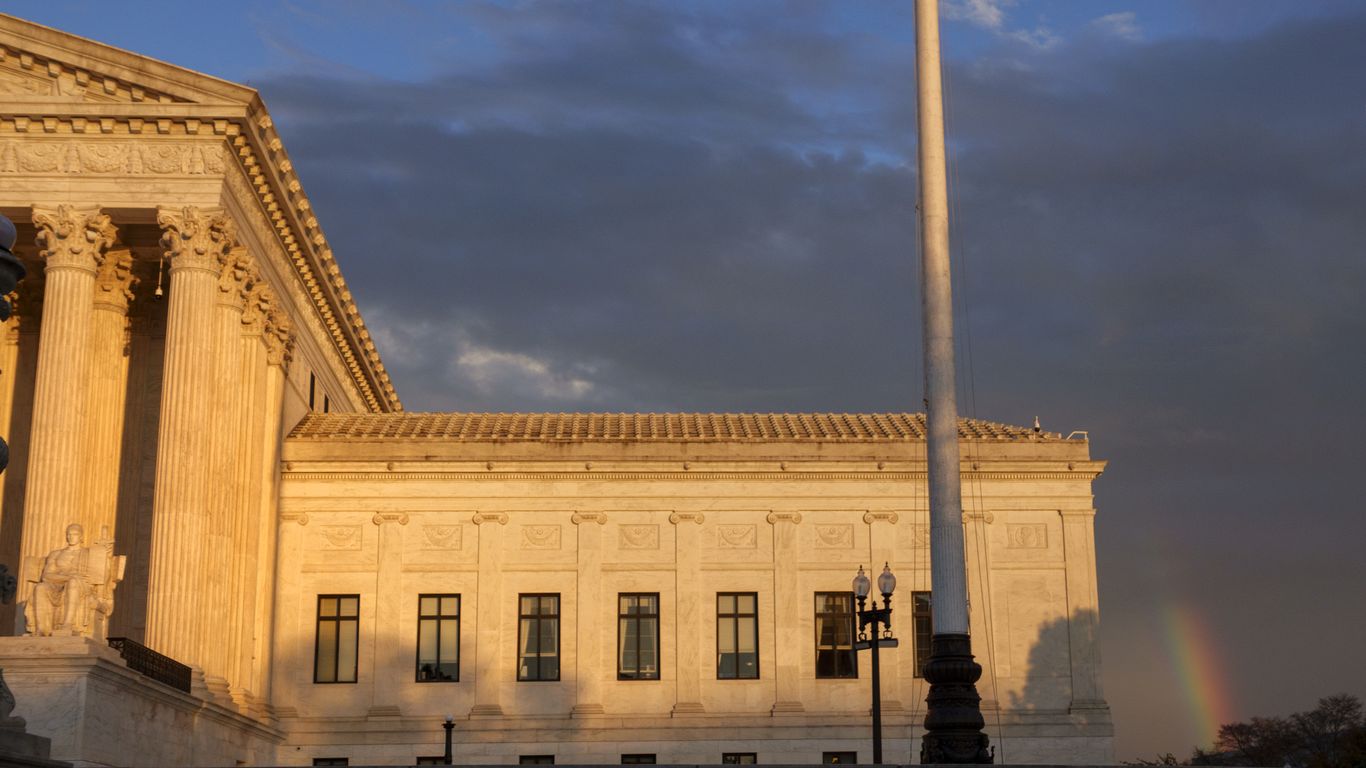
The Supreme Court on Monday declined to hear three conservative appeals tied to battles over diversity, equity and inclusion , leaving lower-court rulings intact in disputes over federal research grants, medical training and transgender-related speech. The big picture: The denials mark a reprieve after years of backlash against DEI, though the justices stopped short of settling the underlying constitutional debates. One of those Monday decisions set back President Trump's administration push to cancel swaths of DEI-related research grants. Driving the news: The justices rejected President Trump's bid to revive cuts to federal research grants awarded to University of California researchers over their perceived DEI-related viewpoints. A U.S. Ninth Circuit Court of Appeals panel ruled in May that challengers were likely to succeed on their First Amendment claim that their grants were terminated because of the "perceived expression of DEI, DEIA, or environmental justice viewpoints." That decision partly upheld a preliminary injunction from U.S. District Judge Rita Lin reinstating grants terminated over perceived DEI-related viewpoint, while reversing relief for a separate group. What they're saying: Trump's DOJ argued to the high court that allowing the grants to continue would force taxpayers to fund ideologies "their public stewards reject." A DOJ spokesperson told Axios the department will continue fighting the preliminary injunction and "will continue to advocate for the Executive Branch's lawful authority to administer federal funding programs and for the termination of taxpayer-funded DEI initiatives." Catch up quick: The challenged funding represents just a slice of the DEI-related grants ensnared in the administration's terminations and ensuing litigation. Trump has led a top-down campaign to undermine federal and corporate DEI efforts, disputes over state policies have also crept onto the national stage. Case in point: The Supreme Court also declined to hear a

James ‘Fergie’ Chambers, a Cox Enterprises heir, faced a two-hour hearing about alleged support for Hamas A two-hour hearing in Spain’s high court Friday on the US extradition request of wealthy leftwing activist and philanthropist James “Fergie” Chambers turned out to be a study in contrasts. Chambers’s defense took most of the session to query the US citizen and detail irregularities in the Trump administration’s extradition request – several of which the Guardian has reported on – as well as the figures of Spanish law that would lead the three-judge panel to deny the request; while the prosecutor sped through his case, head down, asking Chambers no questions at all. Continue reading...

Coach was ‘transparent’ in dealings with club, federation Pochettino had signed deal to stay with US through 2030 There were always going to be tears at Mauricio Pochettino’s news conference at US Soccer’s national training center on Friday. It was only a matter of when. Pochettino is famously emotional, and nobody in attendance had to wait long for the waterworks – they came during his introductory remarks, as he thanked the US Soccer executives flanking him for the opportunity to guide the US men. He grew emotional again as he addressed his impending departure for Manchester United, one announced just hours earlier. “I think [the decision was],” Pochettino said, pausing to compose himself, “one of the most difficult decisions of our careers. Thank you guys. Thank you so much.” Continue reading...
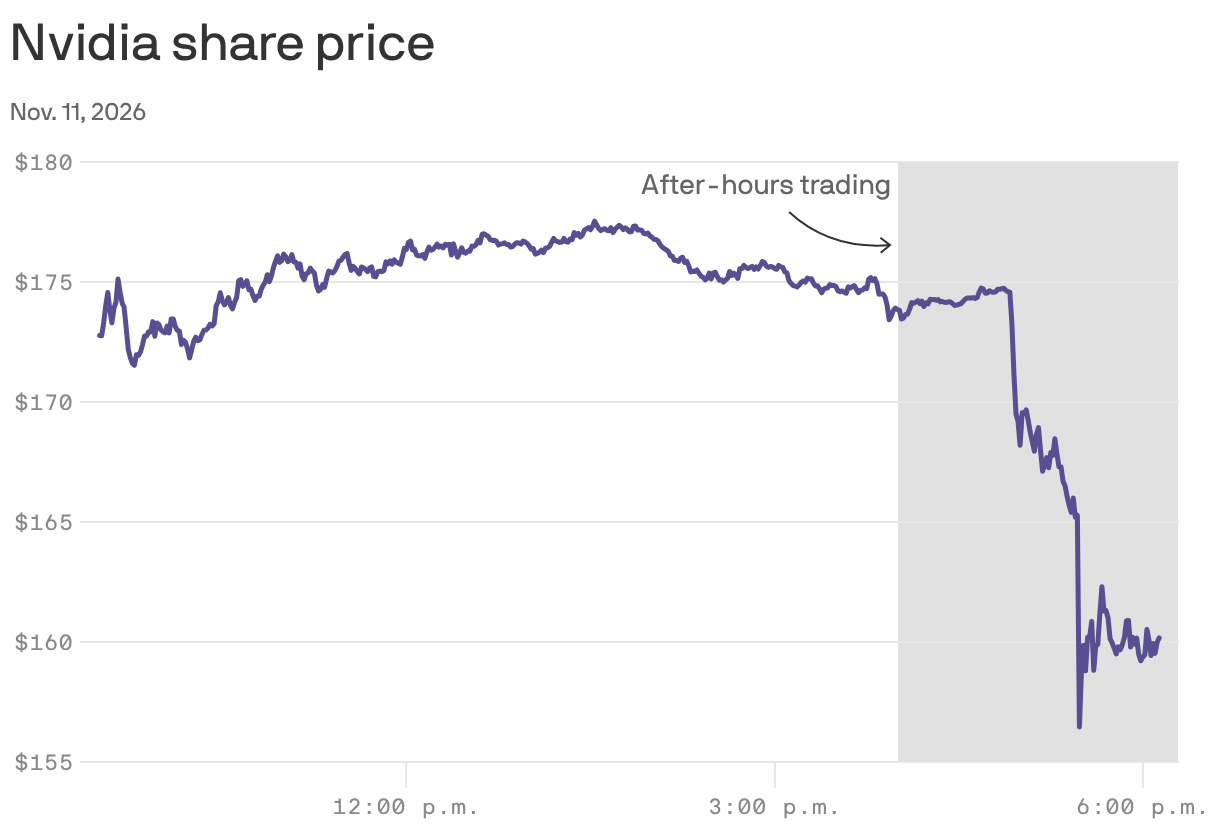
Data: FactSet; Chart: Matt Phillips/Axios Nvidia CEO Jensen Huang's apparent from grace is a shock to a company at the core of the U.S. markets and the AI ecosystem that he did much to create. Why it matters: CEO scandals happen at companies. Their stocks fall. But there is no other company quite like Nvidia. Its size, financial resources and strategic position in the AI boom have made both the chipmaker and Huang, personally, pillars of the industry that has come to drive both the stock market and the economy. Catch up quick: Following revelations this week that Huang had admitted to an extramarital affair with a woman believed by the U.S. government to be a Chinese intelligence asset, the New York Times reported Wednesday evening that Huang also had a romantic relationship with an Nvidia executive who reports to him. The Wall Street Journal and other outlets are reporting that the company's board of directors was preparing to oust Huang. Nvidia shares plunged in the after-hours trading session. Context: The uncertainty surrounding Huang's position comes as the AI trade is going through one of the crises of investor confidence that have periodically hammered AI shares in recent years. The concern this time centers on the ability of the AI build-out to continue, as rising interest rates and a saturated market curtail the sale of bonds to pay for data centers. Chip makers like Nvidia have been particularly hard hit by this recent AI slump. Its shares were down roughly 30% from their recent high through Wednesday's close, vaporizing nearly $1.59 trillion in shareholder wealth. There have been market drawdowns around AI before, says Eric Sheridan, a research analyst at Goldman Sachs, in a big new report on the investment cycle. "The stakes are undoubtedly higher now as we're further along in the cycle and the dollars being spent have grown considerably, which may be adding to investor skittishness." Stunning stat: Since the end of last week, the company lost over $600
Republicans are returning to work this week, facing the prospect of an especially lame lame-duck session after a bruising midterm election that set off a countdown clock on their control of Congress. Why it matters: Democrats have little incentive to help Republicans advance their agenda before January, while departing GOP lawmakers could complicate matters further by skipping votes or defying party leaders. As a result, most of the items on their to-do list could get kicked to the new Congress. That's aside from a few items House GOP leaders would rather avoid altogether: another Jeffrey Epstein bill and an impeachment vote . Lawmakers also have just over a month before another potential government funding lapse. Driving the news: Rep. Thomas Massie — who GOP voters kicked to the curb in favor of a more Trump-aligned Republican — is pushing another Epstein-related vote, an additional headache for the administration and GOP leaders. He also plans to try to force a vote this week on his impeachment resolution against Defense Secretary Pete Hegseth. Republicans lose their House and Senate majorities Jan. 3, ending their ability to set both chambers' legislative agendas. Reality check: Trump still wields the presidential veto power. Rodell Mollineau, a Democratic strategist and former communications director for the late Senate Majority Leader Harry Reid, said Democrats may postpone some legislative fights until January, when they'll have more negotiating leverage. "I think there's some things that Democrats would be happy to kick down the road," he said. Yes, but: Congress still faces major legislative hurdles. Lawmakers need to pass the annual National Defense Authorization Act, potentially setting up a fight over the Iran war as some Republicans grow more willing to criticize the conflict. A bipartisan permitting bill could overhaul how energy and infrastructure projects are approved. Senate Republicans are also racing to confirm more Trump administration officials

Global tech stocks have plunged after the Democrats’ victory in the US midterm elections, with fears of a slowdown in AI development. Major tech corporations including Apple, Tesla and Nvidia shed about $1tn in a single trading session. Is this stock market jitters, or a sign the AI bubble might be about to burst? Lucy Hough speaks to senior economics correspondent Richard Partington Continue reading...

The Warriors’ freshman has spent his first weeks in the NBA antagonizing superstars, speaking his mind and emerging as one of the league’s most compelling personalities If a screen-addled pickup basketball player teleported into the body of a high-level athlete, they might resemble Yaxel Lendeborg. The most commonly cited fact about Lendeborg is that he used to spend 12 to 14 hours a day gaming , and didn’t debut on his high school basketball team until he was an upperclassman. Professional athletes often have origin stories that resemble the superhero more than the mortal, but Lendeborg really was just like us at one point. Lendeborg has also said that prior to entering the NBA, he didn’t really watch it, either. The Puerto Rican forward racked up more than enough accolades in college to qualify for the NBA, but still. Any of you reading this could smoke the man who may be this season’s rookie of the year in trivia about his profession. The 24-year-old Lendeborg is a forward on the Golden State Warriors, a team caught between the ancient, gleaming remnants of the most fearsome dynasty of the 2010s and its future. The balance didn’t work out last season, as the Warriors produced flashes of old greatness to win one play-in game before flaming out in the next. Such results are a frustrating waste of Stephen Curry’s wonderful form even at 38 years old. Lendeborg is the best hope in a while to help maximize it. But even more importantly, Lendeborg is the character of the season so far. He’s spent its first two weeks antagonizing superstars, firing off unselfconscious takes in the press and vacuuming up the spotlight from his blander peers. What a joy to bear witness to an athlete who probably didn’t even hear the words “media training” until college. Continue reading...

Tuesday's election was great for Democrats. It was bad for Defense Secretary Pete Hegseth and some of the White House's most ambitious national security projects. Why it matters: Surprise wins across the map for Democrats — including in the Deep South — complicate a lot for the Trump administration. Republicans have relied on a simple-majority funding mechanism known as reconciliation to pay for marquee projects like Golden Dome. That option is now a long shot over the next few months, and impossible after that. Outrage over the Iran war, well beyond the half-year mark, is sure to turbocharge a long list of congressional inquiries. And lawmakers on both sides of the aisle, including Reps. Pat Ryan (D-N.Y.) and Thomas Massie (R-Ky.), have suggested impeaching Hegseth. Follow the money: Defense analysts agree prospects for the administration's full $1.5 trillion defense budget look grim. A Wednesday note from TD Cowen's Washington Research Group warned "Trump 'branded' projects are dead." Golden Dome, Golden Fleet and "other signature efforts," it added, "will be curbed." Meanwhile, Todd Harrison, an American Enterprise Institute defense budget expert, said it's unlikely the lame-duck congressional session will pass reconciliation and instead will keep the defense budget operating under a continuing resolution into next year. "They're all at risk," Harrison said of reconciliation-backed programs. "My base expectation is nothing happens on the defense budget." The other side: The Pentagon did not respond to a request for comment. Between the lines: Some of the most powerful Republican lawmakers on defense matters were defeated or are on pace to lose. Sen. Susan Collins, the appropriations chairwoman, lost to Troy Jackson in Maine . Sen. Darline Graham, also on appropriations, lost to Annie Andrews in South Carolina . Rep. Jen Kiggans, a member of the armed services and veterans affairs committees , lost to Elaine Luria in Virginia . And as of Wednesday afternoon, Reps.

Gov. Brian Kemp, a Republican, declined to call a special session to draw new congressional maps or weaken the power of the governor’s office before a Democrat takes office.

Voters showed deep distrust of the AI race Tuesday, approving dozens of data center moratoriums and electing a raft of candidates who favor slowing a $10 trillion buildout, including in Texas — the epicenter of the boom. Why it matters : In an election that hinged on an affordability crisis for many Americans, voters made it clear they view Silicon Valley's AI ambitions not as a technological miracle, but as a resource-draining threat to their wallets and communities. The results were a warning shot to some of the nation's wealthiest and most powerful executives, many of whom are already working on ways to build a more palatable version of the revolution they are dead-set on winning. "What we just witnessed was an AI earthquake," Brad Carson, co-founder of Americans for Responsible Innovation, told Axios. "Voters just sent a clear message that they want rules for AI and data centers." Driving the news: Democratic challenger Gina Hinojosa's surprise victory in the Texas governor's race fundamentally scrambles the math for the AI buildout. Hinojosa campaigned on keeping a moratorium on data center construction in place until the state passes legislation tackling impacts on water, electricity, air and property rights in the legislative session that ends in mid-2027. While most 2027 U.S. data centers expected are already under construction, a hold for more than six months would bring extended delays to Texas, which accounts for 41% of new U.S. capacity in 2028, according to the research firm SemiAnalysis. Democrats won all three of the states that follow Texas for new data center capacity, including Ohio, Georgia and Arizona. The winners in Ohio and Georgia favor restrictive policies, although it's not yet clear how those will take shape. Between the lines: All told, nearly two-thirds of 2028 data center capacity could face delays, although most political analysts don't see Democrats permanently blocking construction. What they're saying: A host of candidates and politi
There's a lot at stake for energy in the midterms, from the fate of the bipartisan permitting deal to the growing backlash against data centers and electricity prices. Why it matters: The results could spotlight which energy topics resonate with voters — and which have become political liabilities. Gasoline and diesel prices have been big on the campaign trail, offering a chance to see how much voter frustration over energy costs matters at the ballot box. Data center politics: There are sharp differences between the parties, even though data centers aren't especially popular with either party's slate of candidates. Why it matters: The pace of the AI buildout affects power demand and emissions. State of play: 32.4% of Democratic candidates support moratoriums at the federal, state, or local level, compared to just 3.4% of Republicans, per Data Center Watch, which tracked hundreds of races. Zoom in: Meanwhile, Ballotpedia is tracking dozens of ballot measures on data centers, many of which would impose new restrictions. Ohio is a hot spot. Control and permitting: The outcome will affect the politics of the lame-duck session — and that means the politics of the bipartisan permitting deal. What they're saying: If Democrats take both chambers, "leaders might opt to wait until they hold the gavels next year to renegotiate compromises," the research firm ClearView Energy Partners said in a note. Yes, but: A reminder that backers of the current bill think it's folly to expect political space to write a more liberal bill that President Trump would sign, or that could even pass the Senate. Threat level: What if the results are very close? ClearView notes that if Trump and allies contest the results, "weeks of post-election skirmishing could complicate passage of any bill." Political lessons: The results could offer clues about where energy and climate policy are headed. State of play: Exit polling is not famously precise, but it could provide a barometer of how much voters t

The USMNT striker scored his first goal since the World Cup in a losing effort against Paris FC. Could it lead to something more? Before this weekend, the last time Folarin Balogun scored was in the United States’ 2-0 win over Bosnia and Herzegovina at this past summer’s World Cup. In the immediate aftermath, the outlook for Balogun seemed rosy; an ascendant player who could muster a goal in tense games. At half-time against Bosnia, US fans weren’t just wondering how far his team could advance – they were sizing Balogun up against some of the world’s best strikers. But for most of the ensuing four months, Balogun has been in limbo. His breakout World Cup was overshadowed by a red card in that same game against Bosnia and Herzegovina, followed by a scandal of which he wanted no part. Just as it seemed a summer move away from Monaco could get his club career on track, he broke off a possible deadline-day move to Everton after a lengthy visit to the training grounds and a medical he felt was improperly handled. Continue reading...

Right after Tuesday's midterms, OpenAI will unleash a policy and PR blitz to try to get in sync with the new Washington, including an effort to rebrand data centers as "AI compute campuses." Why it matters: After two years of a friendly White House, AI companies will face a harsher Washington after Tuesday, when Democrats will likely win the House. OpenAI also aims to help frame the AI debate for the big field of 2028 presidential contenders that'll start forming on Wednesday. "You can try to chase the moment, or seek to inform the moment via the power of ideas," OpenAI chief global affairs officer Chris Lehane tells us, calling Tuesday an "electoral portal from one era to the next." Since August, Lehane and his team have been stockpiling policy proposals, some new and some repackaged, to drive urgency and steer the AI debate. It'll all start during the lame-duck session of Congress — the awkward but often consequential weeks between the election and the swearing-in of new members and senators on Jan. 3. This year's lame duck opens Nov. 9. The big picture: Other tech companies are also positioning themselves for a potential blue wave. Meta is taking steps to strengthen its ties with Democrats, Axios' Sara Fischer scooped Saturday . Other big AI and tech players can be expected to do the same. Tech titans who enjoy close relationships with President Trump will be top targets for Democrats, who are eager to ramp up scrutiny and regulatory pressure on the industry. OpenAI's plans, being revealed here for the first time, all involve control — trying to send the message that AI is being built for people, not to displace people. The proposals include: Speed limits: Building on earlier proposals , OpenAI plans to unveil new ideas for mandatory safeguards for the most powerful AI systems — speed limits for AI that will allow humans to keep their hands on the wheel. This'll include a more aggressive congressional drive. "You're going to see us talk more and more about the co

Qatari mediators held talks in Tehran for more than 12 hours on Friday in an effort to reach a deal to restart direct negotiations between the U.S. and Iran and avoid an outbreak of war after the midterms, according to diplomatic sources. The discussions will continue in Doha, Qatar, on Saturday. Why it matters: The U.S. is now just days away from a possible military operation that would inflict enormous damage on Iran and likely lead to retaliatory strikes against Israel and a host of Gulf countries. Driving the news: A diplomatic source said Qatari mediators were in regular contact with the White House during Friday's daylong session. "There was positive progress. Talks are still ongoing in an effort to unlock a deal between the U.S. and Iran," the source said. The Qataris are prodding the U.S. and Iran to agree on a set of reciprocal steps that would be implemented over a few days and get the parties back to direct talks on the Iranian nuclear program and other issues. A U.S. official said two competing demands have stymied the talks so far: the Trump administration's insistence that Iran make nuclear concessions as part of resuming talks, and Iran's stipulation that the U.S. first lift its naval blockade, release frozen funds and allow it to sell oil. The Qataris are trying to convince Iran to allow U.N. inspectors to visit its bombed nuclear sites as a confidence-building measure that the U.S. would respond to with some sanctions relief. The intrigue: Inside Trump's inner circle, there are different opinions on what he should do. Defense Secretary Pete Hegseth and Secretary of State Marco Rubio are highly skeptical that any nuclear agreement can be reached with the current Iranian regime. They think Trump's legacy should be to weaken the regime even more, including with further strikes, a U.S. official said. The person said that while Vice President Vance and Trump envoys Steve Witkoff and Jared Kushner want to resume negotiations, Trump is skeptical Iran will

Senate leaders could be guessing who will control the chamber well into November, thanks to a slew of tight races and state-specific voting rules. Why it matters: A GOP majority would ease the pressure on Senate Majority Leader John Thune to move quickly on nominations, while a Democratic majority would give Senate Minority Leader Chuck Schumer more leverage in the lame-duck session. If the chamber splits 50/50, leaders will have to start negotiating their power-sharing agreement. Zoom in: Four states could leave the majority in limbo. Alaska: Sen. Dan Sullivan (R) is trying to fend off former Rep. Mary Peltola (D). Alaska election results have taken weeks to finalize because of the vast state's transportation challenges, mail ballots and ranked-choice tabulation. The Trump Justice Department is preemptively trying to block results from being finalized if Sullivan narrowly loses. Maine's ranked-choice voting could lengthen the vote tallying if neither Sen. Susan Collins (R-Maine) nor Democratic nominee Troy Jackson gets more than 50% in the first round. Kansas' three-day grace period for mail-in ballots could delay results in the race between Democratic nominee Adam Hamilton and Sen. Roger Marshall (R-Kan.). It is far closer than expected. In Texas, a dragged-out recount could be coming. A candidate can request one if the margin is less than 10% of the winner's vote total — which is likely to happen between state Attorney General Ken Paxton (R) and state Rep. James Talarico (D). The candidate who requests it has to pay. The clock: Congress currently plans to leave for the holidays on Dec. 18. But if Republicans lose both the House and Senate , Sen. Bernie Moreno (R-Ohio) wants senators to stay in town through the holidays (yes, Thanksgiving and Christmas) to work on a massive GOP reconciliation package they can pass without Democratic support. The big picture: Congress has a long to-do list either way, including funding the government past Dec. 11, passing emergency

Four Senate Democrats are pressing Trump officials to begin restoring billions of dollars in clean energy grants before a key vote on the permitting deal. Why it matters: The path for the bipartisan bill in the lame duck session just got steeper. The big picture: Before the first vote, the senators — Tammy Duckworth (Ill.), Ron Wyden (Ore.), Ed Markey (Mass.), and Jeff Merkley (Ore.) — want Trump aides to tell the Energy Department to: Begin reinstating grants terminated in October 2025 that have not already been restored with a clear timeline for completion, and allow recipients to draw on the funds under the original terms. Pledge in writing not to cancel grants based on the political hue of a state or its officials. Driving the news: Their new letter to the bill's authors stops shy of an ultimatum, but says it would be "compelling" if these steps occurred. It shows deep misgivings about the bill, arguing it could provide new tools for Trump to favor fossil fuels. "[T]he promise of BAAJA will only succeed if President Trump takes care that it is faithfully executed. The Trump administration's record gives us no basis to assume that he will," the letter states, calling the bill by its acronym. Catch up quick: The letter recounts the scuttling of Biden-era grants, and White House budget chief Russ Vought listing states that did not vote for President Trump in 2024. The Energy Department has acknowledged , in a court filing , that selections of grants for termination in October 2025 were based on politics. Restoring "unlawfully terminated DOE clean energy awards would be a small but important first step" toward fairness in permitting, it states. Friction point: Co-authors Sens. Sheldon Whitehouse (D-R.I.) and Martin Heinrich (D-N.M.) want to see more federal approvals of stalled renewables projects. They've called some recent administration moves a step in the right direction. But the new letter shows that other lawmakers have separate asks of the administration. Alr