Long Beach Shuts Down Its Coastal Waters After Sewage Spill
A wastewater pipe burst and dumped nearly 30,000 gallons of raw sewage, forcing the coastal California city to close its open swimming sites.
The New York Times · 16h ago

A wastewater pipe burst and dumped nearly 30,000 gallons of raw sewage, forcing the coastal California city to close its open swimming sites.
Voting sites in 18 far-flung communities failed to open, the suit claims.
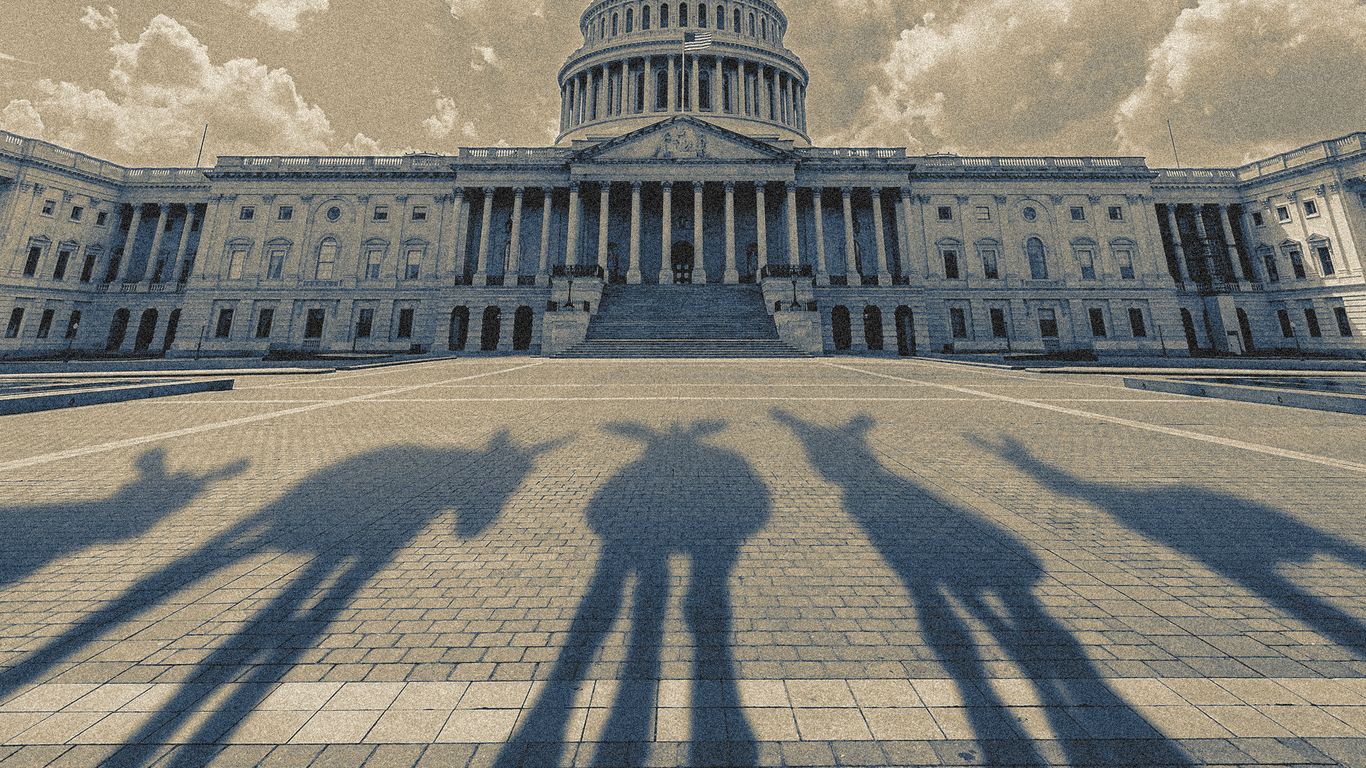
America's corporate titans greeted President Trump's 2024 victory with open checkbooks , 12-figure investment pledges and fawning tributes to his coming "Golden Age." Two years later, on the eve of a potential blue wave, Democrats are preparing to greet those same executives with a stack of subpoenas . Why it matters: The CEOs who staked their reputations and fortunes on MAGA's staying power could spend the final two years of Trump's presidency defending their dealings under oath. The big picture: A Democratic House would carry its campaign against billionaire power and corruption deep into corporate America, scrutinizing the relationships between Trump's White House and the executives who courted him . Corporate leaders now face a delicate balancing act: rebuilding ties with Democrats while avoiding retaliation from a president who still controls federal contracts, tariffs and regulators. Already, companies that scrambled to dismantle DEI programs or fund Trump's ballroom are hiring Democratic lobbyists , pushing back against the administration and rediscovering the virtues of bipartisanship. Zoom in: Elon Musk is taking a more confrontational approach. The billionaire, who has poured $445 million into Republican super PACs this election cycle alone, has threatened retaliation against Democrats preparing to investigate his sprawling business empire and tenure in the White House. DOGE: As head of Trump's short-lived cost-cutting initiative, Musk gutted USAID, drove mass federal layoffs and gave his team access to sensitive government systems. Investigators want to know whether his companies benefited from contracts or regulatory decisions while he wielded power inside the White House. Ukraine: A fierce critic of President Volodymyr Zelensky, Musk ordered Starlink restrictions that disrupted Ukraine's military satellite communications. Democrats are now demanding records of his communications with Trump and Vladimir Putin . Musk responds to reports that Democrats pla
Reddit on Thursday said it's moving to become a primarily logged-in experience, marking one of the most significant shifts in its 21-year history. Why it matters: Reddit has long championed the open web. Now, it's pushing to build a more direct relationship with users while also protecting its data from increased scraping in the AI era. Driving the news: In an interview Thursday, Reddit co-founder and CEO Steve Huffman said the company is making the change to improve its user experience, bolster its ads business and prevent bots from scraping its proprietary data. Chief operating officer Jen Wong told Axios the move doesn't represent a change in strategy as the company has always focused on building a direct destination. "It's just that in the last 10 years, because our [data] corpus was open, we got a lot of search traffic, so that became part of the equation" but didn't change the company's mission. Zoom in: Huffman expressed confidence that the change would ultimately improve engagement and monetization, even as changes to traditional search continue to impact user growth in the U.S. "When users log in, they spend more time on Reddit, and we can we better know their interests, so we can target ads better," he said. He also noted that the short-term risk is limited because "the vast majority of engagement and over 80% of our monetization comes from our app and logged-in users." In a shareholder letter, Reddit acknowledged that search referral traffic was "down meaningfully in Q3" and said daily users could decline by a "low-double-digit percentage" in Q4 if search referral trends persist. How it works: Reddit will begin testing the fully logged-in experience this quarter outside the U.S. and collect data on the best approach before it rolls out broader changes gradually. Logged-in users can get tailored content, feeds and recommended communities based on their activity and interests, although they can opt out of personalization. The company is still working throug
If Democrats gain full control of Congress next week, as many polls and prediction markets suggest they will, private equity could once again find itself in the political crosshairs. The big picture: Private equity has become a rhetorical punching bag for a number of Democratic House and Senate candidates, including in debates and on the stump, as an affordability bête noire. Most of this has related to housing, both single-family and mobile homes, but also has extended to health care. What they're saying: "It's no doubt that housing is way out of control and a big part of that is because private equity has come into Maine," said Troy Jackson in an Oct. 6 debate with Sen. Susan Collins. "I do think we have to go after private equity, make it so that they can't buy these things and charge outrageous prices." Chris Pappas, running for an open Senate seat in New Hampshire, said during a campaign stop at a mobile home community: "We need to... address the housing crisis that we're seeing, including addressing the corporate private equity influence that we're seeing in housing that's making it less affordable and is causing a lot of consternation here at this park." Rep. Marcy Kaptur (D-Ohio) decried PE ownership of residential care facilities during a public event, saying: "Those people know nothing about health care." State of play: Congress passed a bipartisan bill this past summer to restrict PE ownership of single-family homes, with the Treasury Department last week issuing related regulations . The legislation became law despite not being signed by President Trump, who supported it but was in a snit over the Senate not passing his voter identification bill. Zoom in: A Democratic sweep would likely result in Sen. Elizabeth Warren (D-Mass.) taking the Banking, Housing and Urban Affairs Committee gavel, which means she'd go from writing strongly worded letters to holding hearings and guiding legislation. "Americans are sick and tired of private equity's playbook of ro
Media is changing at AI speed : the open web deteriorating, search shriveling, LLMs rising, hyper-personalization surging, old revenue models breaking. AI threatens to finish what the algorithms started: wholly upending journalism as we know it. The only certainty: What follows will be as different as the pre- and post-digital eras. After studying and experimenting with AI for the past two years, we're placing a series of big bets on how serious journalism can flourish in an AI world. The big idea: We believe the value of verified, reported, distinctive truth and curated human connection will spike. The yearning for human connection, and demand for human expertise, will only increase. The big picture : At Axios, we're doing what we did a decade ago when we launched, and two decades ago at Politico: building for the direction that technology and the world are headed. We're sharing our thesis — and our plans — to help spark deeper industrywide debate about preserving the best of media in what's to come. Some parts are controversial or based on our own assumptions. We welcome the pushback. What's next: We assume Einstein-level intelligence will be available on all topics to all people. We envision media consumption shifting to new AI platforms and devices that know us as intimately as we know ourselves. Our lives and minds will be curated beyond imagination. Our knowledge, habits, tastes and work will fully fuse into our screens, or pins, or bracelets. The biggest threat in this coming reality: Who needs "news" from journalists when their AI tells them what they need to know, when they want to know it? Indeed, we assume passive news consumers will find AI curation fully satiating, much like they did scrolling. So general, indistinctive news withers. But for serious news consumers — those who routinely seek out high-quality information about their world, passions and community — the demand for human-vetted and human-verified content will surge. This holds true for both
Security officials are sounding the alarm over two critical vulnerabilities in a programming language used to run millions of websites, marking one of the most consequential cybersecurity discoveries yet made with AI . Why it matters: The bugs, which researchers found partly with an OpenAI model, proves AI can uncover critical flaws humans missed for decades — raising the stakes for defenders racing to fix vulnerabilities before attackers can exploit them at machine speed. What they're saying: Matthew Prince, the CEO of Cloudflare, a global connectivity and internet security company, said the company saw thousands of attempts to exploit the flaws in the 10 hours before it was publicly announced. "That jumped to tens of thousands in the 45 minutes post announcement, hundreds of thousands within 2 hours, and millions now," he wrote on X. Driving the news: There are two problems hackers could easily exploit in an open-source programming language known as PHP that's used on nearly 70% of all websites . Government officials from the U.S. to Japan are warning companies to apply a patch to fix the bugs, or consider taking down their sites to avoid an attack. OpenAI touted the role its model played in discovering one of the vulnerabilities, which allowed PHP researchers to create a fix. Between the lines: Security researchers have been skeptical of AI-generated vulnerability reports, many of which have turned out to be minor bugs or false alarms. But the PHP discovery could force the cybersecurity community to reckon with the reality of AI threats. "It highlights how AI can uncover security flaws with internet-scale impact, but the same capabilities can also help attackers rapidly develop offensive tools and exploits," OpenAI said in a blog post Wednesday. Threat level: If exploited, the PHP flaws would allow malicious hackers to take control of vulnerable web servers without needing a password or other credentials. Since PHP runs under a wide variety of internet applicatio