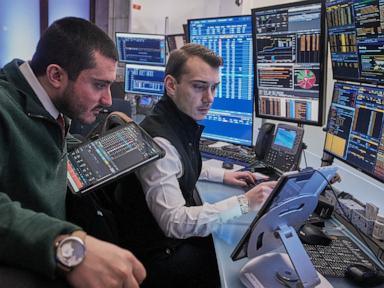
Oil prices slide in biggest drop since July on hope for more Iran talks
Oil prices posted their sharpest drop in three months after investors got fresh hope that the U.S. would end the Iran war without further escalation.
NBC News · 1h ago

Oil prices posted their sharpest drop in three months after investors got fresh hope that the U.S. would end the Iran war without further escalation.
More than 40 third-party candidates in pivotal House and Senate races across the country are receiving support from outside super PACs, many of which have ties to the two major parties, an Axios analysis has found. Why it matters: The sums being thrown around, which total more than $16.5 million, are far greater than virtually any of those candidates have raised or spent on their own. The super PACs have spent an average of $375,000 more than the third-party candidates they are supporting. More than half of the 43 candidates haven't filed any financial paperwork with the Federal Election Commission. While it is a comparative drop in the bucket for a midterm that has already seen billions in ad spending nationally, the money will likely play an outsized role in races that are set to be decided by razor-thin margins. Those races, in turn, will help decide the balance of power in Congress next year. Data: Federal Election Commission; Note: Heikes is a self-identified Republican, but Sen. Dan S. Sullivan is the Republican Party-endorsed candidate in the race; Table: Andrew Solender/Axios The top spenders nationwide have been a pair of obscure groups which, like many of the other "pop-up" super PACs in this story, were formed this month and therefore won't have to disclose their donors until after Election Day. Buckeye Freedom PAC has reported spending more than $3.8 million on ads in Ohio's U.S. Senate election supporting Libertarian Bill Redpath and opposing Republican Sen. John Husted, who is in a tight race with Democratic former Sen. Sherrod Brown. Alaska Values PAC has disclosed spending $3.8 million backing Gerald Heikes, a self-identified Republican running on Alaska's ranked-choice U.S. Senate ballot with Republican Sen. Dan S. Sullivan and Democrat Mary Peltola. Between the lines : Third-party candidates in Alaska are facing national scrutiny after the New York Times reported that Heikes and another self-proclaimed Republican on the ballot, Dan J. Sullivan, wer
Asian trading is mixed as worries about the future of artificial intelligence grow after Alphabet’s stock drop dragged on U.S. markets
Data: Resources for the Future; Note: Central RFF scenario ; Chart: Ben Geman/Axios The Senate permitting plan would cut emissions from power plants in the near term and help keep electricity prices down, a new analysis finds. Why it matters: The study from scholars at Resources for the Future, a nonpartisan think tank, offers some of the most detailed independent modeling yet of the bill 's effects. It will help inform lobbying and advocacy around the bill ahead of a test vote looming on Nov. 9. Driving the news: The analysis models how the bill would affect the power sector compared with current law and policies. Among the findings from its central scenario: It would drive "robust" transmission expansion ( see above ), enabling "use of additional clean energy and existing resources of all types." Overall electricity system costs are an estimated 3.5% to 7% lower each year through 2041 compared to a no-bill baseline, saving over $350 billion total through 2050 in present-value terms. That should translate into lower electricity bills for people, co-author Kevin Rennert tells Axios, though the study does not directly model retail prices. The bill would boost the build-out of renewables, partly enabled by expansion of transmission, with added clean energy displacing fossil fuels even though additions of gas-fired capacity still occur. CO2 from the power sector would initially drop as more coal is edged aside, and then climb over time — but remain below levels projected without the bill. By the numbers: In 2028, there's roughly 60 gigawatts more clean energy capacity on the grid in the study's central outlook compared to a baseline of current law and policy. Data: Resources for the Future; Chart: Ben Geman/Axios The intrigue: The RFF analysis shows how it sees the bill initially pushing power plant emissions downward. Even that eventual upward trend is hardly guaranteed. This kind of study is by definition packed with assumptions and variables that the authors acknowl
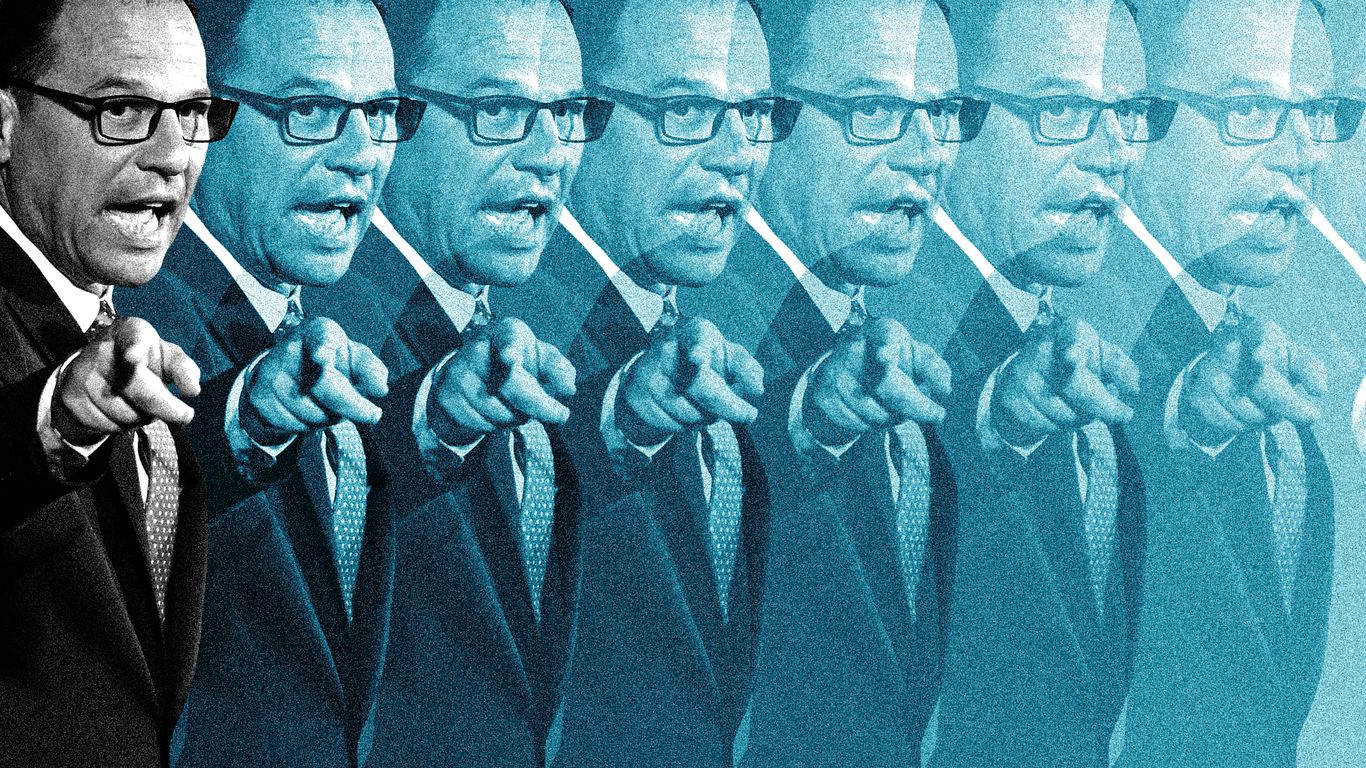
Pennsylvania Gov. Josh Shapiro is an electoral juggernaut in America's biggest swing state — and he's widely seen as a likely contender for president in 2028. But strategists in both parties question how tested he really is. Shapiro's success — he's cruised to victory in multiple statewide races — has come with an asterisk: He hasn't faced a well-financed opponent in recent contests, leading some political insiders to see him as more of a wildcard than his resume suggests. Why it matters: Shapiro's unfamiliarity with intense, bruising campaigns could become a liability in the 2028 Democratic primary, where if he was a top candidate, he'd be confronted with a barrage of attack ads, opposition research and rivals with deep pockets. A plugged-in Democratic operative in Pennsylvania suggested that because of Shapiro's lack of being tested, "it is totally possible that he has an incredible glass jaw — and that he is the Scott Walker of 2028." Walker was the swing-state Wisconsin governor who looked good on paper as a potential presidential candidate but flopped after entering the 2016 GOP primary. Zoom in: In next week's election, Shapiro is running for a second four-year term as the Keystone State's governor. He's on pace to defeat Republican challenger Stacy Garrity by double digits, according to the latest polls. The money gap is gargantuan: Shapiro has dropped $42 million on campaign ads, according to the ad-tracking firm AdImpact. Garrity, the state's treasurer, has spent just $3 million on ads — a drop in the ocean in a state as large as Pennsylvania, with its expensive advertising markets. It's not that Garrity prefers, say, door-knocking to TV ads. She's just outmatched: Campaign finance reports show she's only raised about $11 million this cycle, compared with Shapiro's $64 million. Making matters worse for Garrity, the Republican Governors Association (RGA) has not come to her rescue on the airwaves. Christopher Nicholas, a longtime GOP strategist in Pennsylvan
Data: Harvard Youth Poll, Fall 2026; Chart: Emily Peck/Axios Nearly two in three U.S. adults younger than 30 who plan to vote in next month's congressional midterm elections say their main motivation is to oppose President Trump and his policies, according to a newly released Harvard Youth Poll . The big picture: Seventy-seven percent of respondents disapprove of the president's handling of the economy, including about half of young Republicans. And just 9% say the U.S. is headed in the right direction — the lowest in the survey's history. Why it matters: Economic populism is driving emotions, along with concerns about war, AI, billionaires, deportation tactics, social policies and corruption. Majorities of respondents support Medicare for All, a wealth tax and bans on congressional stock trading. What we're watching: Just one in three Americans ages 18-29 say they'll definitely vote — a substantial drop from 40% who said so in 2022. Notably, most of that drop is driven by Republicans. Only 34% of Republican respondents said they'll definitely vote, down from 46%; 50% of young Democrats say they'll definitely vote, essentially unchanged. Just 22% of independents they'll definitely vote, down from 26%. Data: Harvard Youth Poll; Chart: Emily Peck/Axios Zoom in: Topping the list of what young people consider serious threats to their long-term financial security: rising prices and the cost of living (79%), followed by the power of large corporations (68%) and trade wars (68%). Nearly half said their household is struggling to make ends meet or getting by with limited financial security. By the numbers: 63% say their votes for U.S. House or Senate will be cast in opposition to Trump, while 14% say they're motivated by support of the president and 17% say he's not a factor. Two-thirds disapprove of the job Democrats are doing in Congress; 74% disapprove of congressional Republicans' performance. Stunning stats: For the first time in the poll's history, the share of young