Prosecutor declines to charge white officer who fatally shot Black man in Wisconsin
A Wisconsin prosecutor is not filing criminal charges against the police officer who shot and killed a 38-year-old Black man in Madison in July
ABC News · Nov 19

A Wisconsin prosecutor is not filing criminal charges against the police officer who shot and killed a 38-year-old Black man in Madison in July
Demonstrators blocked traffic for days last summer after a Madison police officer shot and killed a man during a confrontation.
He is responsible for the health of the American people. On his watch, thousands have become seriously ill At least 11 Americans have died of measles since January 2025 – the month before Robert F Kennedy Jr became secretary of Health and Human Services. One of Friday’s victims was a child, in Wisconsin, where a baby died of measles the week before. Pennsylvania has not disclosed the age of the other person. Continue reading...
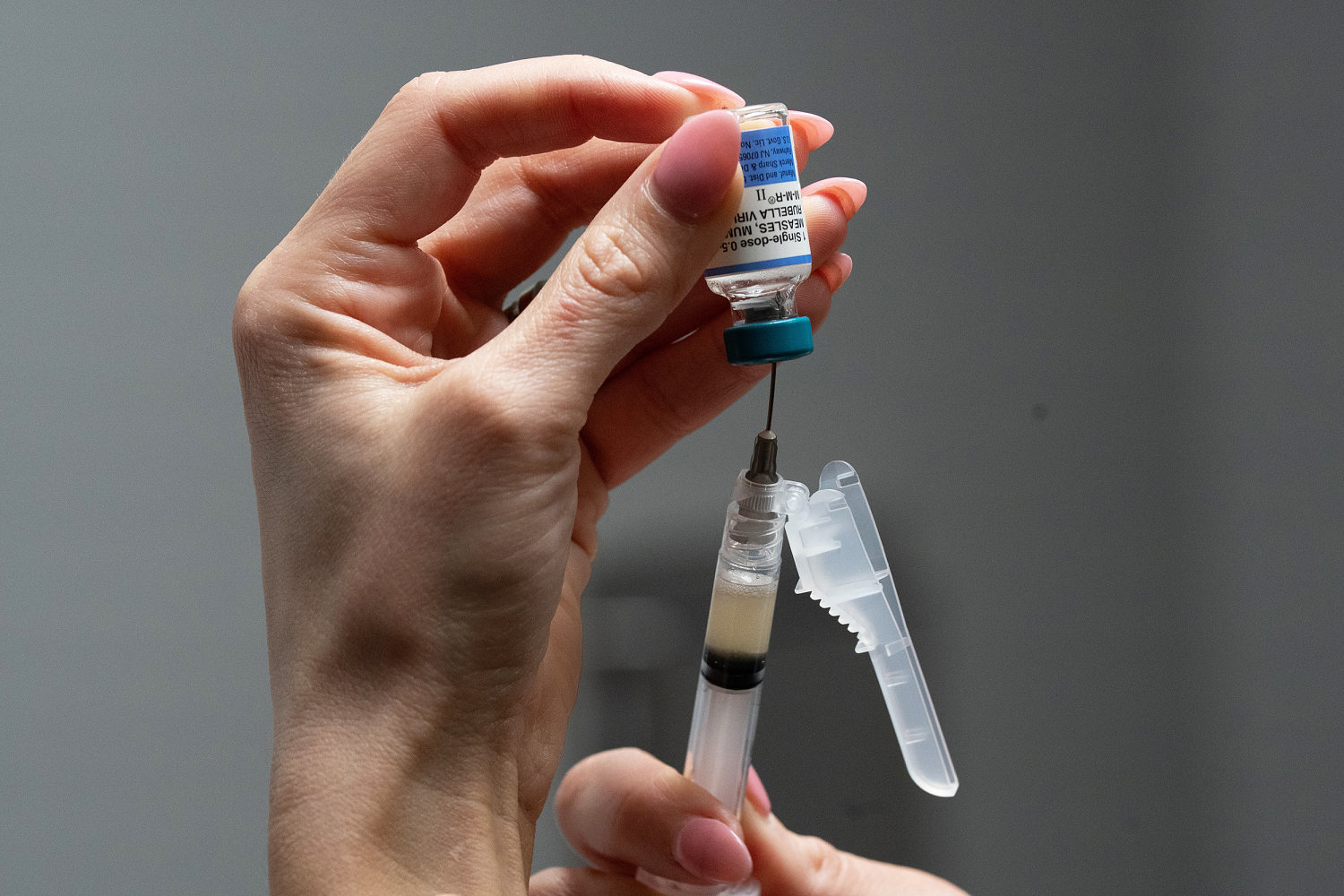
Total measles deaths in the United States this year rose to 10 on Friday, a grim milestone in an outbreak that has seen a record number of infections and prompted state and local health departments to ramp up vaccination efforts.
Many hemp companies are shipping their remaining inventory to Wisconsin, Minnesota and Tennessee, which have different regulations At midnight this morning in Illinois, hemp-derived THC drinks transformed from grocery store commodities into illegal narcotics, and manufacturers have been rushing to sell their inventory or ship it out of state. Republicans tacked a last-minute provision on to last year’s spending bill that ended the government shutdown, banning all hemp-derived THC products, including the THC-infused alcohol alternatives sold at liquor stores and grocery stores . Under the new law, no container can have more than 0.4mg THC total. Continue reading...
Carel Aaron Van Der Merwe immigrated to US at 14 and has been waiting seven years for asylum case to be heard A Wisconsin state patrol trooper, whom federal immigration agents detained on Thursday at an airport, has been released from their custody. Immigration and Customs Enforcement (ICE) agents approached Carel Aaron Van Der Merwe, a South African national, as he waited to board a domestic flight, according to his law firm Christopher & De León. Continue reading...
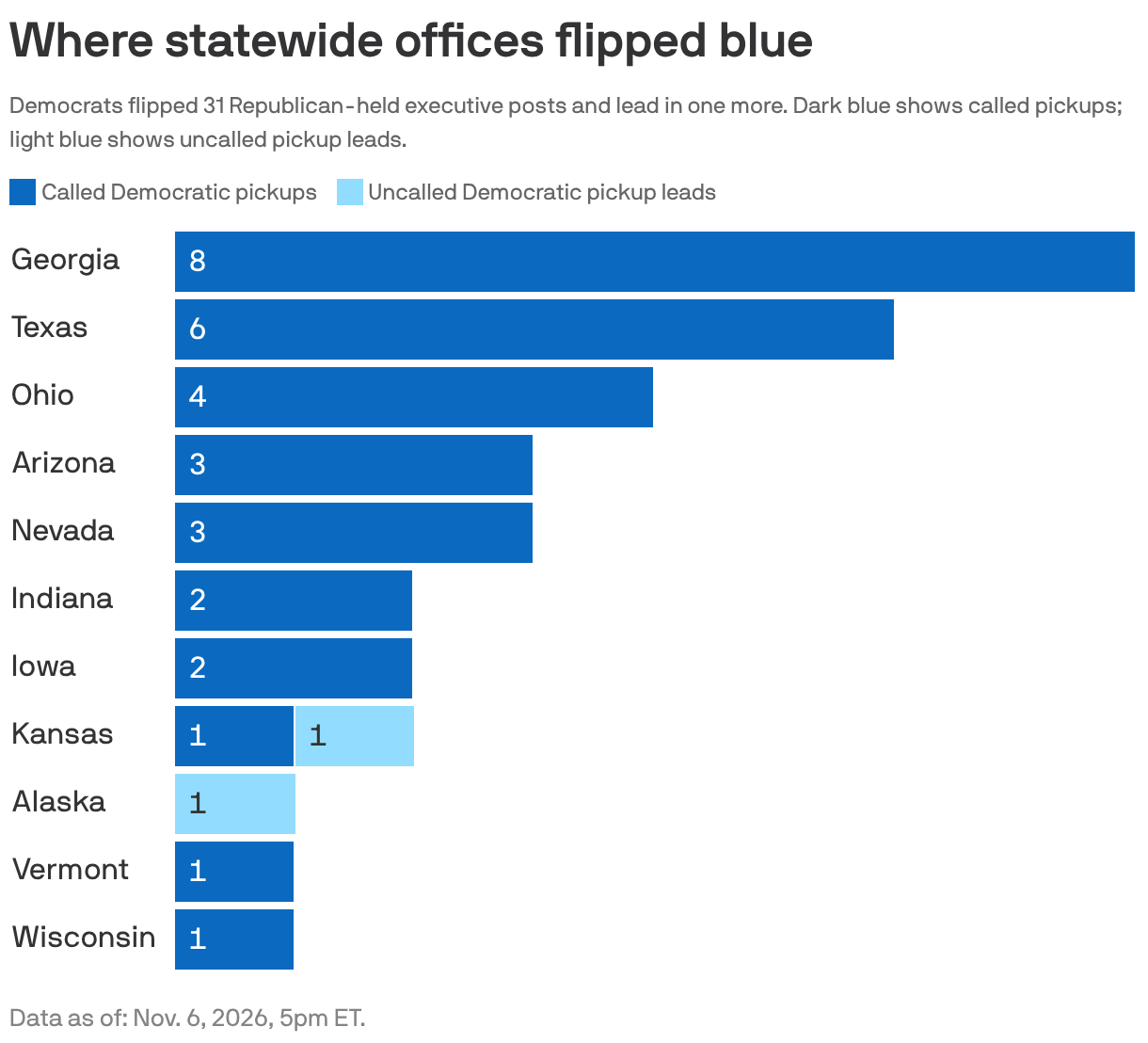
Single-holder executive offices only; excludes courts, commissions and federal offices. Data: Associated Press; Axios analysis; Chart: Andrew Pantazi/Axios Democrats' midterm gains extended deep into the machinery of state government: They swept every statewide executive office on the ballot in Texas, Georgia, Nevada, Wisconsin and Arizona. Why it matters: These low-profile victories will shape what millions of Americans pay for electricity, what their kids read in class and which party runs the 2028 presidential election in key states. The big picture: Democrats captured five Republican governorships, in Texas, Georgia, Ohio, Iowa and Nevada. But the scale of their gains becomes clearer farther down the ballot. Georgia: Democrats wrested all eight statewide executive offices on the ballot, including governor, attorney general, secretary of state and school superintendent. Texas: They flipped all six posts, defeating Gov. Greg Abbott and Lt. Gov. Dan Patrick in a state that hadn't elected a Democrat to statewide office in 32 years. Nevada: Democrats won all six executive offices, flipping governor, lieutenant governor and controller. Wisconsin: Democrats completed their Badger State domination, picking up the office of treasurer, the sole statewide office still held by a Republican. Arizona: Democrats held governor, attorney general and secretary of state. They lead in the three other executive races: treasurer, school superintendent and mine inspector. Data: Associated Press; Axios analysis Between the lines: The Democratic gains reach offices that decide which policies advance, which don't and which get challenged in court. Attorneys general: Nathan Johnson in Texas and Tanya Miller in Georgia will decide when their states sue the Trump administration and what corporations they investigate. Secretaries of state: Democrats flipped these offices in Georgia, Ohio and Indiana, putting new officials in charge of running the 2028 presidential election there. Texas' lieu
The 21-year-old came to the country legally as a child from South Africa and is included in his father’s asylum application, according to attorneys.
An infant in Wisconsin has died of measles, the state health department said — the third measles-related death reported in the U.S. this week.
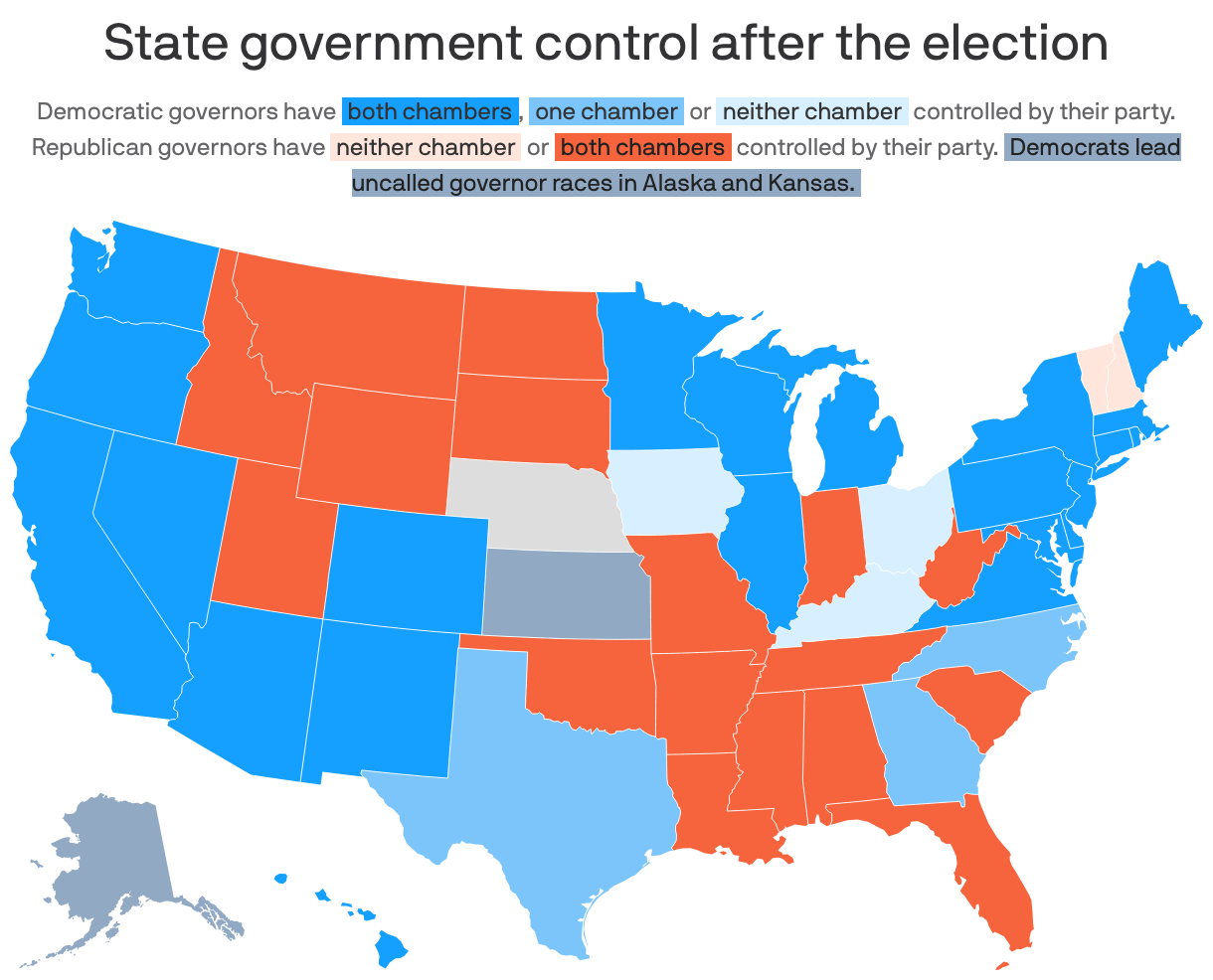
Data: Axios research; Map: Andrew Pantazi/Axios Democrats are on track to take control of a majority of legislative chambers, ending 16 years of Republican dominance over America's statehouses. If current leads hold, 75% of Americans will live in a state with a Democratic governor, and 53% will live in Democratic trifectas. Why it matters: Statehouses are the front line of American federalism, and Tuesday's gains dramatically expand Democrats' power to increase minimum wages, protect abortion access, and set voting rules ahead of 2028 for most Americans. Driving the news: The party is set to flip 12 legislative chambers, dismantle five Republican state trifectas, shatter 11 GOP supermajorities and build 12 of its own, according to AP returns as of 6pm ET on Wednesday. If leads hold, Democrats will control the governor's office and both chambers in five of the seven 2024 presidential battlegrounds: Arizona, Michigan, Nevada, Pennsylvania and Wisconsin. They have also broken Republican one-party rule in the sixth (Georgia) and flipped the House in the seventh (North Carolina). Democrats flipped five GOP-held governorships (Georgia, Iowa, Nevada, Ohio and Texas) and lead in Alaska. Republicans haven't flipped any, despite targeting Arizona, Michigan, Oregon and Wisconsin. Kansas, where Democrat Cindy Holscher was leading by about half a point Wednesday evening, is uncalled. The big picture: Ever since the 2010 Tea Party wave, Republicans have used their grip on statehouses to reshape American life: banning abortion, loosening gun laws, restricting collective bargaining and expanding private-school vouchers. They drew maps that kept them in power even in years Democrats won more votes statewide. Tuesday's Democratic gains broke that firewall. By the numbers: Republicans entered Election Day with 23 trifectas (control of the governor's office and both chambers) to Democrats' 16. If leads hold, Democrats will have 22 and Republicans 18. 24% of Americans will live under a
Democrats' sweeping statehouse gains Tuesday have opened a path to effectively replacing the Electoral College with a national popular vote in time for the 2028 presidential election — without needing to amend the Constitution. Why it matters: The results could give Democrats the legislative power to fundamentally change how America picks its president, potentially ending the possibility of winning the White House while losing the national popular vote. Driving the news: Democrats have won control of the governorship and both legislative chambers in Pennsylvania, Michigan, Arizona, Wisconsin and Nevada, enough to push an agreement called the National Popular Vote Interstate Compact beyond the 270-vote threshold required to take effect. The compact has been enacted by 18 states and Washington, D.C. since launching in 2006, representing 222 electoral votes so far. The agreement only kicks in when participating states collectively control at least 270 electoral votes. The five new Democratic trifectas could bring the total to 283. How it works: Americans don't directly elect the president. Instead, they actually cast ballots to choose electors, whose votes determine the winner every four years. Nearly every state awards all its electoral votes to the statewide winner. Maine and Nebraska also award electors based on congressional district results. But the Constitution explicitly gives states power to appoint electors "in such Manner as the Legislature thereof may direct." Under the compact, participating states would instead award their electoral votes to the national popular-vote winner once the agreement reaches 270 electoral votes. Yes, but: The five states would still need to enact the compact, and it's not clear if it will be a priority for the new Democratic states. The Electoral College would formally remain in place, and the compact could face constitutional challenges, including over whether congressional approval is required. Michigan failed to enact it during
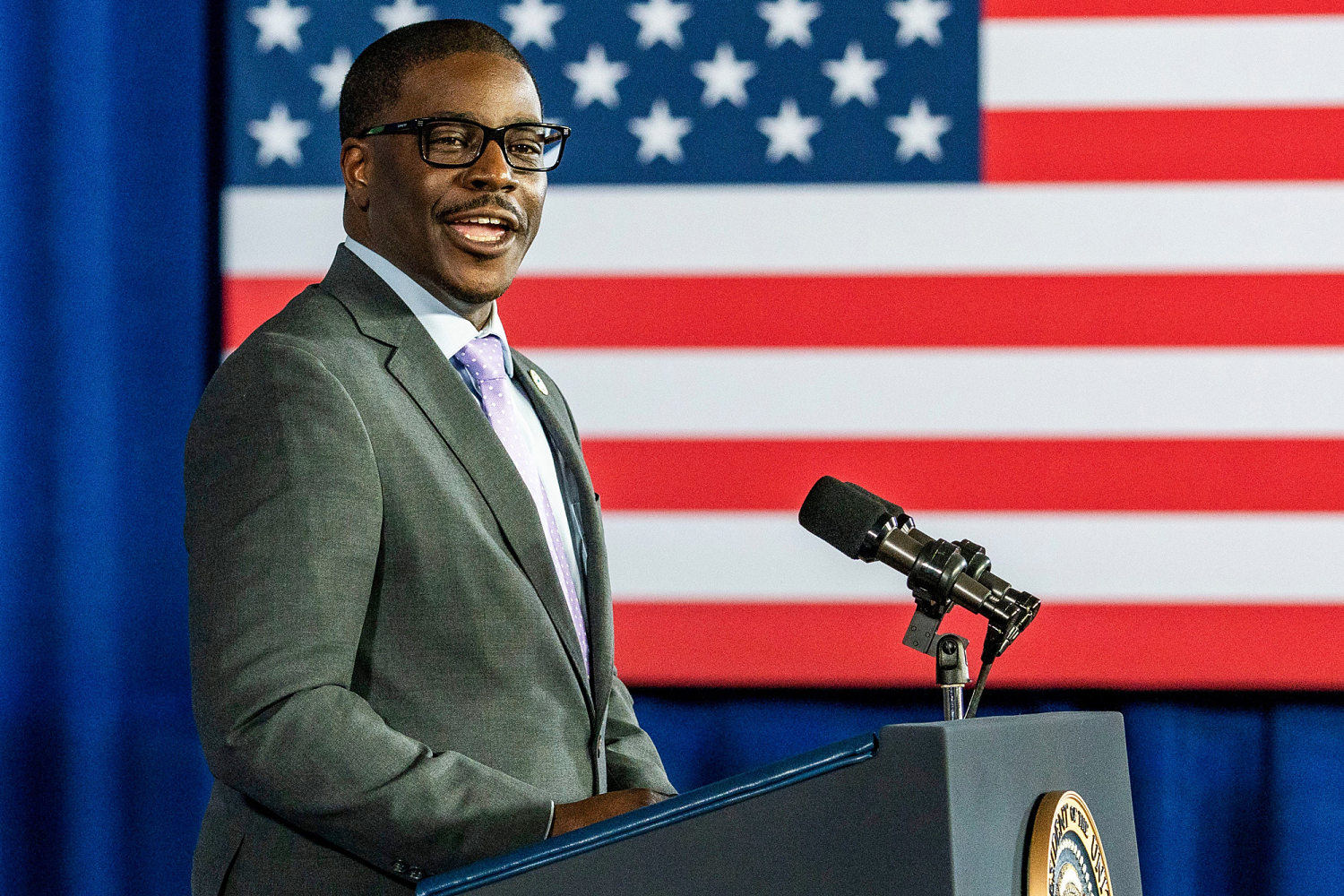
Democrats will retain control of the governor’s mansion after voters elected David Crowley, the Milwaukee County executive.
Milwaukee County Executive David Crowley has won Wisconsin’s race for governor, NBC News projects, defeating Republican Rep. Tom Tiffany.
Affordability and small businesses’ economic woes feature heavily in the House race for Wisconsin’s third district After 18 years in business, Erin Klaus is closing her storefront, a handmade artisan market in downtown Eau Claire, Wisconsin, at the end of the year. She opened Tangled Up in Hue amid a recession, during a time when downtown was “kind of a ghost town”, weathering construction and the pandemic. But the current economic crisis proved too much. She’s seen a downward trend in sales for two years, and was dipping into her own pocket from her other job, as the executive director of business non-profit Downtown Eau Claire Inc, to pay staff. Continue reading...
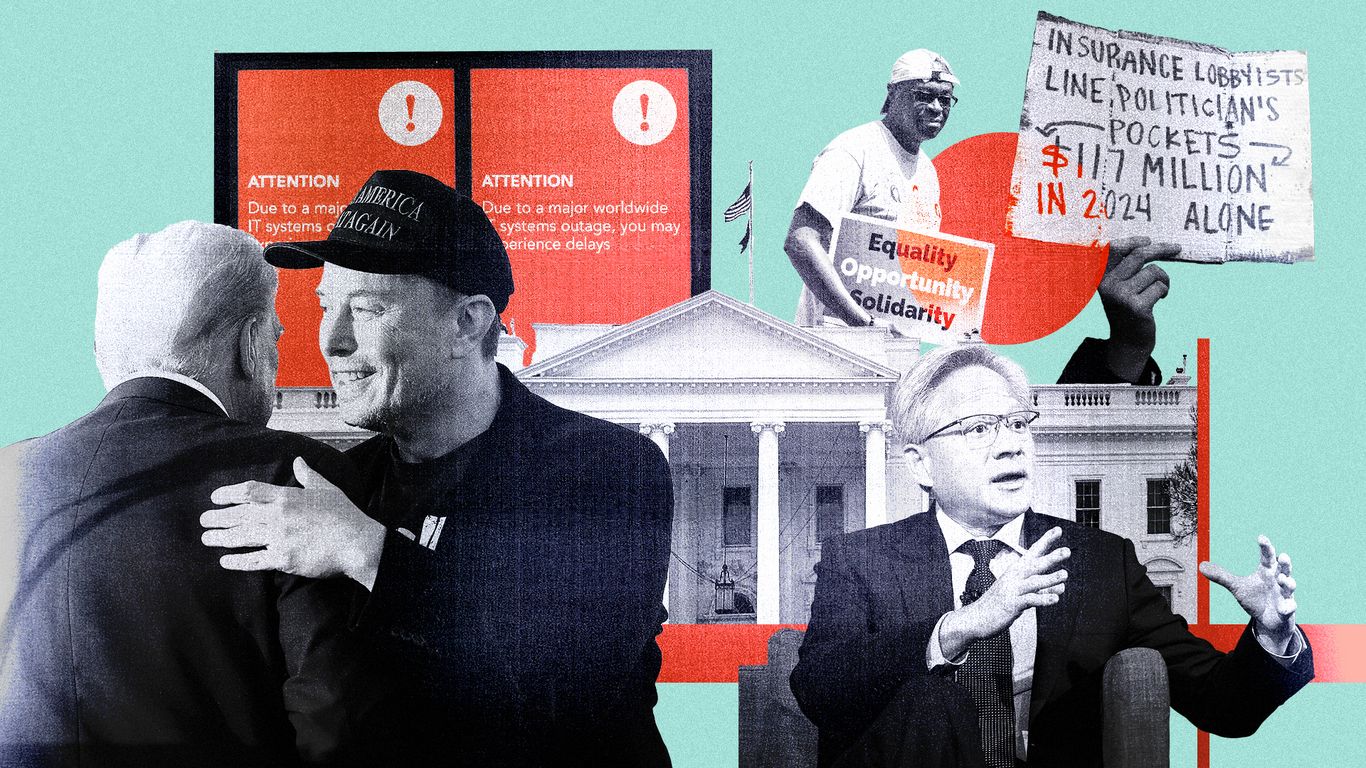
The 2026 midterms will offer the first test of voter sentiment on the AI race, offering a window into how a niche policy debate is transforming into a wedge issue ahead of a presidential campaign cycle. Why it matters: The results will reveal whether explicitly campaigning on AI regulation—or aligning with tech moguls like Elon Musk—is a winning political strategy or a liability for 2028. One thing is already clear: Candidates increasingly can't afford to have half-baked AI agendas. Here are three major questions about the future of AI politics and policy and the races we're watching on Election Day for answers. 1. Did AI break through? A different kind of AI political spending has emerged in the midterms. Instead of supporting or opposing candidates based on their AI positions, some groups want to make AI policy itself a campaign issue. Guardrails Alliance, a pro-regulation advocacy group, recently launched ads targeting Republicans and Democrats over their positions on AI in Arizona, Montana, North Carolina and California. The organization backed Michigan Senate candidate Abdul El-Sayed, who said AI was the most important issue heading into Election Day, tying it explicitly to jobs and affordability. Democratic group Tomorrow Together also launched ads against Republicans' AI track record in Michigan, Wisconsin, Arizona and Pennsylvania. Meanwhile, competing AI groups Public First and Leading the Future spent more than $50 million through affiliated super PACs in nearly 50 races, but their TV and digital ads largely avoided the very issue they're trying to influence: AI. These races could offer an early test of whether explicitly campaigning on AI is a viable political strategy heading into 2028. 2. Did Elon Musk help or hurt candidates? Elon Musk's political spending, involvement in DOGE and ties to the Trump administration have made him both a powerful political backer and a target for Democratic attacks. He was the biggest donor in the midterms by far, contribu
One man’s campaign finance operation in Wisconsin exemplifies the opacity of the US political funding system In the summer of 2024, a non-profit called the Green Dragon Coalition wired the last $20,000 of a $445,000 grant to a Super Pac . Its tax return for that year would describe the purpose of the transfer as “educational”. The same day, according to Federal Election Commission (FEC) records, the Super Pac spent $8,000 attacking Celeste Maloy, the Republican congresswoman for Utah’s second district, four days before the primary that would decide whether she kept her seat. It had already spent more than $400,000 promoting her challenger, Colby Jenkins, who was running to her right with the endorsement of the rightwing Utah senator Mike Lee. Continue reading...
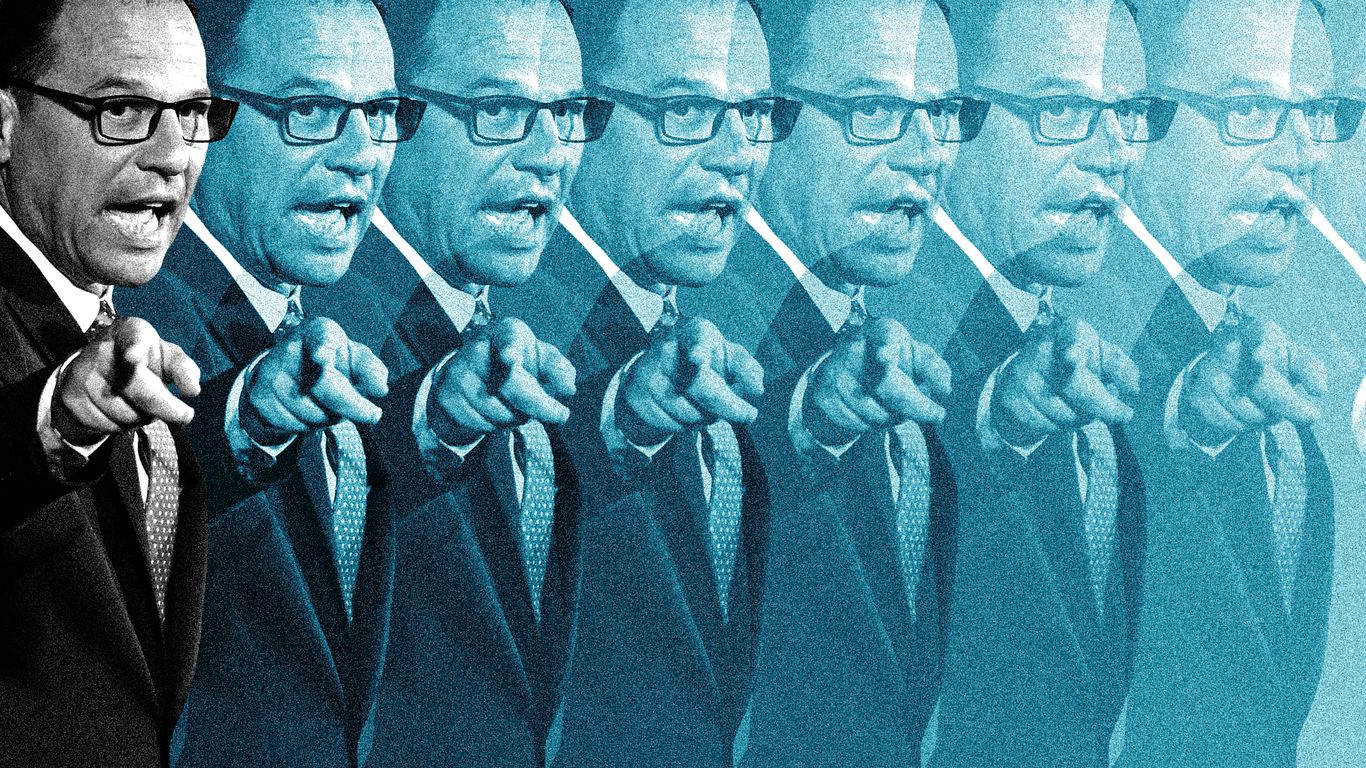
Pennsylvania Gov. Josh Shapiro is an electoral juggernaut in America's biggest swing state — and he's widely seen as a likely contender for president in 2028. But strategists in both parties question how tested he really is. Shapiro's success — he's cruised to victory in multiple statewide races — has come with an asterisk: He hasn't faced a well-financed opponent in recent contests, leading some political insiders to see him as more of a wildcard than his resume suggests. Why it matters: Shapiro's unfamiliarity with intense, bruising campaigns could become a liability in the 2028 Democratic primary, where if he was a top candidate, he'd be confronted with a barrage of attack ads, opposition research and rivals with deep pockets. A plugged-in Democratic operative in Pennsylvania suggested that because of Shapiro's lack of being tested, "it is totally possible that he has an incredible glass jaw — and that he is the Scott Walker of 2028." Walker was the swing-state Wisconsin governor who looked good on paper as a potential presidential candidate but flopped after entering the 2016 GOP primary. Zoom in: In next week's election, Shapiro is running for a second four-year term as the Keystone State's governor. He's on pace to defeat Republican challenger Stacy Garrity by double digits, according to the latest polls. The money gap is gargantuan: Shapiro has dropped $42 million on campaign ads, according to the ad-tracking firm AdImpact. Garrity, the state's treasurer, has spent just $3 million on ads — a drop in the ocean in a state as large as Pennsylvania, with its expensive advertising markets. It's not that Garrity prefers, say, door-knocking to TV ads. She's just outmatched: Campaign finance reports show she's only raised about $11 million this cycle, compared with Shapiro's $64 million. Making matters worse for Garrity, the Republican Governors Association (RGA) has not come to her rescue on the airwaves. Christopher Nicholas, a longtime GOP strategist in Pennsylvan
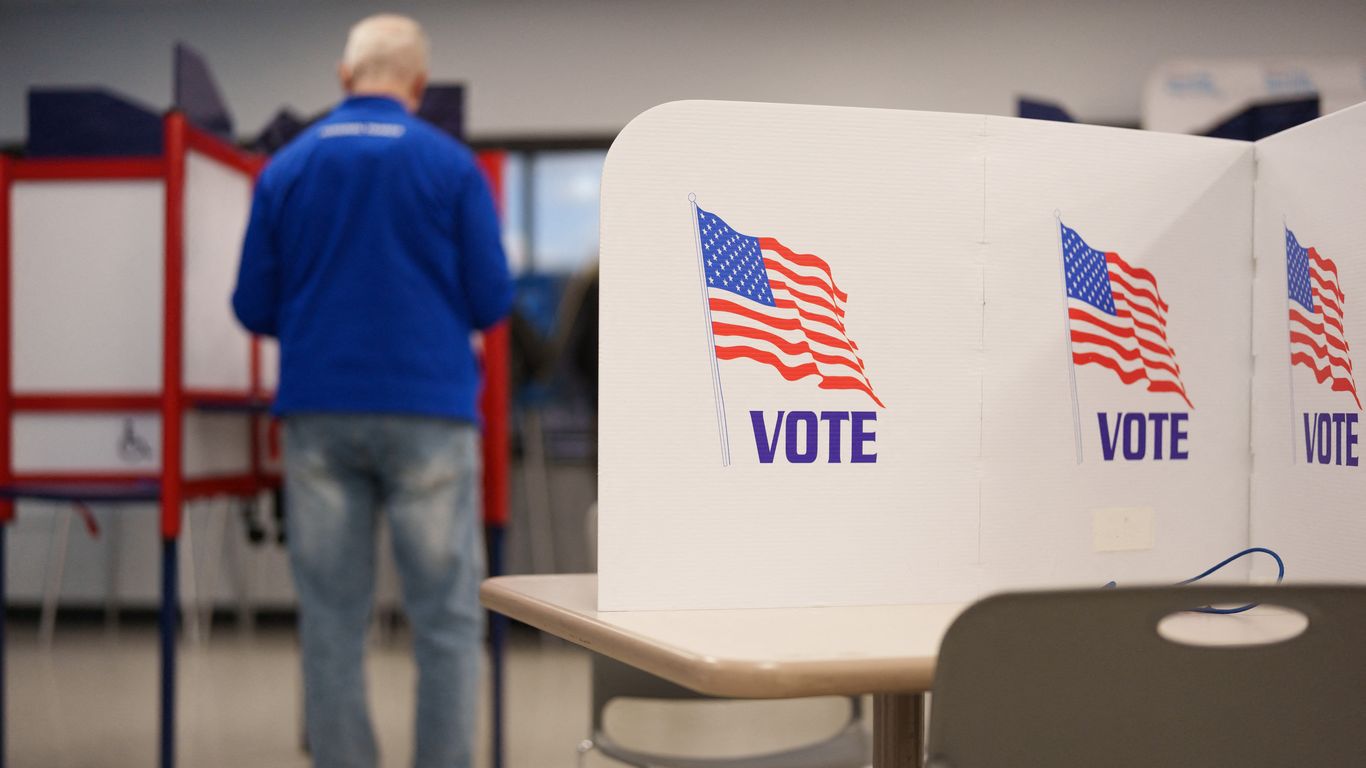
A federal judge restricted Department of Homeland Security investigations into suspected noncitizen voting in nine states, citing concerns that the agency's tactics could intimidate eligible voters. Why it matters: With the midterms less than two weeks away, the ruling curtails a central part of the Trump administration's efforts to investigate suspected noncitizen voting. Driving the news: The ruling, issued late Wednesday, blocks election-related field operations and interviews under the government's Unlawful Voter Initiative that involve or are likely to involve U.S. citizens. California-based U.S. District Judge Araceli Martínez-Olguín also blocked the administration from conducting operations against likely citizens in states relying on records generated by its voter-matching policy. Zoom in: Martínez-Olguín wrote in her order that the groups that sued provided "substantial evidence" that the government's "intimidating conduct" was "directly interfering with their members' right to encourage voters to participate in the 2026 midterm elections." Her order stated that DHS had compiled a "target list" of individuals from a variety of sources, including state voter rolls and commercial data. But Martínez-Olguín cast doubt on the accuracy of the administration's data, warning of a "high likelihood of error in review because there is no federal database containing citizenship status of U.S. residents." Court filings indicated that officers were ordered to prioritize probes in California, Connecticut, Georgia, Missouri, Nevada, New York, Pennsylvania, Washington and Wisconsin. Catch up quick: Democratic Sens. Chuck Schumer (N.Y.) and Alex Padilla (Calif.) released a whistleblower report last month alleging that officials had diverted fraud and national security personnel to the Unlawful Voter Initiative using "highly questionable data" and methods. The whistleblower disclosure alleged that officers were directed, in violation of state law, to access sensitive voter in