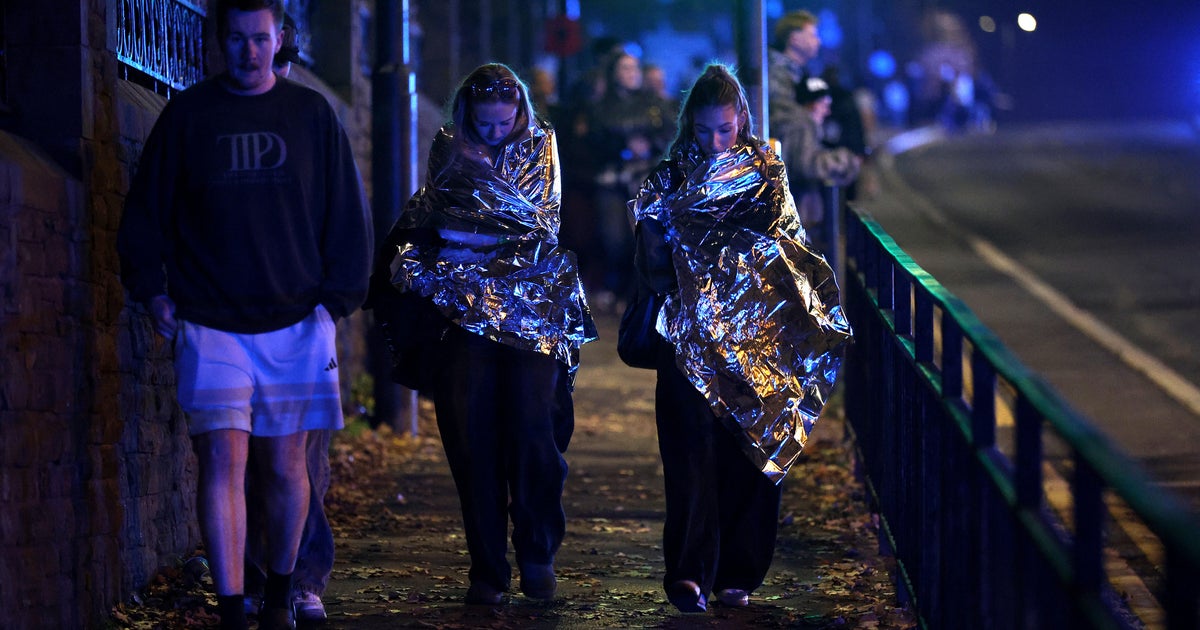
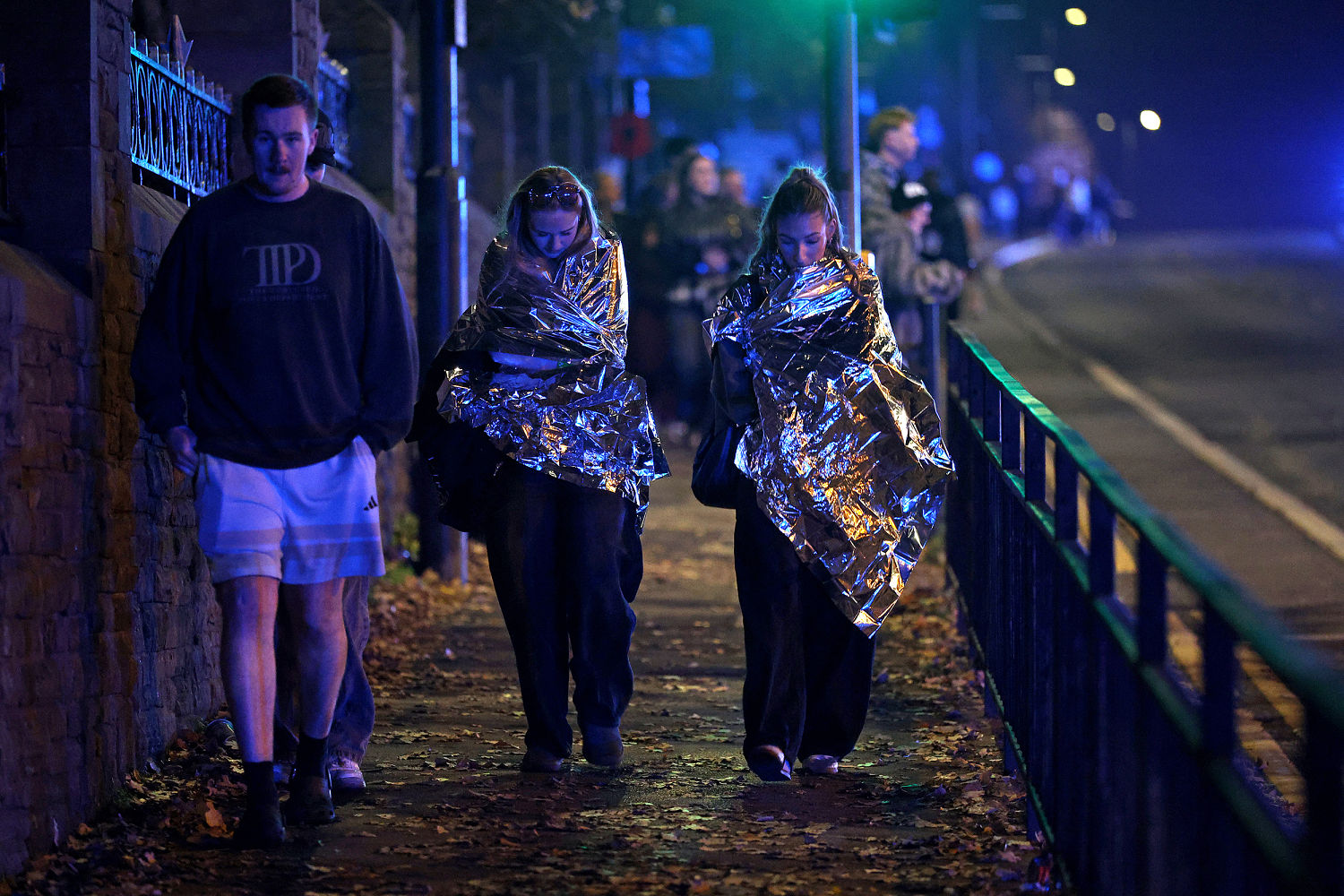
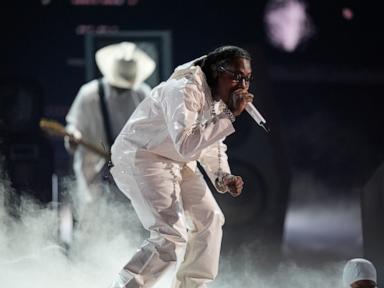
The American rapper was performing in Manchester on Sunday when people in the crowd began experiencing effects from the substance, prompting an emergency response.
Results for “don toliver”
Some 12,000 fans of American rapper Don Toliver had to evacuate his concert in Manchester, England, after a noxious substance spread through the arena.
Police in Germany are responding to bomb threats against a series of schools, but say that at present they don't believe them to be credible. Danish authorities are reporting a similar series of apparent hoaxes.
MANCHESTER, England — Thousands of people attending the concert of U.S. rapper Don Toliver were evacuated from a major British arena on Sunday evening, police said, after an “unknown substance” was released into the crowd.
British police have evacuated over 12,000 fans from a Don Tolliver concert after an unknown substance was released in the crowd
In today’s newsletter: The prime minister has reopened the debate over a future relationship with a changed EU – as the bloc faces the rise of the far right, a protectionist economic agenda and growing defence ambitions Good morning. Nobody really wants to think about Brexit any more, save for the original Brexiters, who seem delighted that Andy Burnham’s “reset” with the EU has given them an excuse to get the old gang back together. But arguments about whether the UK should rejoin the EU will reignite in parliament this week, as Burnham briefs MPs on the deal he agreed on Friday. That deal wasn’t so much a victory as the culmination of Keir Starmer’s incrementalist approach to UK-EU relations. Its core agreements haven’t been ratified by member states yet, and the EU won’t sign them off until Britain resolves a dispute over tuition fees for European students. Burnham is apparently “determined” to take the UK back into the EU, but don’t expect any progress on that before the next general election. Cop 31 | The EU, the UK and allies in the developing world rejected what they called an unacceptable deal that “failed to meet the moment” in a dramatic finish to the UN talks in Turkey. The proposed deal failed to endorse a away from fossil fuels that more than 130 countries demanded. Russia | A Russian warship docked in the Libyan port city of Benghazi was struck in a suspected Ukrainian sea drone attack , causing a dramatic night-time explosion and the sinking of the vessel. Weapons | The Red Cross and other rights groups have warned that it will soon be too late to properly regulate the development of autonomous weapons. The warning came as the UN Convention on Certain Conventional Weapons concluded without an agreement on an instrument for regulating autonomous weapons. UK news | Dozens of hospitals are so short of money they may not be able to continue caring for patients and are being forced to make “unpalatable” cuts to services and staff, the Guardian can reveal.
Incident occurred near the end of Sunday night show by US rapper Don Toliver, with one person taken to hospital Police have evacuated Manchester’s Co-op Live arena after a substance believed to be teargas was let off in the crowd during a Don Toliver concert. Greater Manchester police said the incident occurred near the end of the US rapper’s show on Sunday evening. Continue reading...
Don Toliver concert chaos after ‘substance’ let off in crowd
A look at how antibiotic overuse could fuel superbugs, killing eight million people annually by 2050.
The viral satirization of the caregiving burden left to women and daughters hit home for many viewers The Saturday Night Live sketch , titled Sister quickly went viral this week for its satirization of the burden that women and daughters face to take care of aging family members. In the parody commercial, comedian John Mulaney touts the benefit of “Sister”, who he describes as “a live-in 24/7 elder care provider that is completely free, and also your sister” . “Now I don’t have to worry about dad getting the care and attention he needs because my sister will do it, and I can get back to my life, and the stuff I like to do,” Mulaney says, as the sister, played by cast member Jane Wickline, gives their father’s medication to him. The sketch, which amassed over seven million views on YouTube in less than a week since it aired, has received thousands of responses and comments about its accuracy. “This is one of the MOST wicked and spot on SNL sketches ever written,” wrote one commenter on YouTube. Another posted: “As a hospice nurse this definitely tracks. I deal 90% of the time with adult daughters, and if there is no daughter, it is the daughter in law.” “This is so real it almost gave me a stroke from rage,” added another viewer. Continue reading...
Arrival of payments in contentious legal saga that began in 2020 is ‘a weight off my shoulders’, one survivor said Hundreds of clergy sexual abuse survivors have received more than half of the $305m bankruptcy settlement that the archdiocese of New Orleans reached with them last year, a milestone that marks the beginning of the end of a years-long legal saga. The trustee overseeing the settlement fund, Don Massey, confirmed on Friday that $180m had been distributed to 450 of about 740 survivors, either directly or through their lawyers if they retained legal representation. Massey said he and his staff are working hard to get payments in the rest of the survivors’ hands by the end of the year but are still waiting on hundreds of distribution forms from survivors and their lawyers. Continue reading...
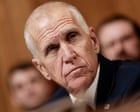
Thom Tillis move comes after Michael LoSapio, nominated for Cisa role, told hearing ‘I don’t believe it was an attack’ Senator Thom Tillis, the outgoing North Carolina Republican who is due to be replaced by a Democrat, has reportedly blocked a confirmation vote on Donald Trump’s nominee to lead a key US cybersecurity agency, Michael LoSapio, after he denied during a hearing that the Capitol was attacked on January 6 2021. Tillis, who declined to run for re-election and after repeated clashes with Trump’s, confirmed to HuffPost on Friday that he has placed a hold on LoSapio’s nomination to serve as a director of the US Cybersecurity and Infrastructure Agency (Cisa). His block on the nomination will prevent it from being included in a package of nominees to be voted on next month, before the Republicans lose their majority in the Senate. Continue reading...
Exclusive: Luis Alejandro Cora Perez says in messages to Guardian from inside Texas facility pain of force-feeding caused him to break strike The text message that came from inside the Immigration and Customs Enforcement (ICE) detention center was stark: “I have spent five days eating regular food. If I don’t eat it, they put the tube in me to feed me.” A Cuban asylum seeker, Luis Alejandro Cora Perez, 32, said in messages to the Guardian this month that he was still weak and dizzy after three months without eating, but that he had broken his hunger strike because being force-fed was just too painful. Continue reading...
Spain’s economy continues to boast growth rates that are the envy of Europe. But as discontent continues to mount over living standards ahead of next week’s elections, it is clear that not everyone is celebrating.
Ahead of Friday's nationwide rallies, German teenagers explain why they are resisting conscription.
The Russians and Chinese don’t want a world without nukes, despite President Trump’s entreaties.
Old-school Tory with a heart wants to make London fun again – just don’t mention Brexit Tories select James Cleverly as candidate for London mayor Sooner or later, Sadiq Khan’s luck was bound to run out. Or was it? When he first stood for London mayor in 2016, the Tory candidate was Zac Goldsmith, who was accused of running a racist campaign. Not the brightest move in one of the most multicultural cities in Europe. Not to be outdone, four years later the Conservatives chose the completely anonymous Shaun Bailey. Even Shaun wasn’t sure who Shaun was. Especially when he was quite sure he could have sworn he wasn’t the Shaun Bailey who had an apparent Christmas party during lockdown, which he said “turned into something once I left”. As if to prove it wasn’t an accident that they had previously fielded the worst candidates possible, the Tories came up with Susan Hall in 2024 . A politician who makes Liz Truss look accomplished. Her campaign was one of the most joyous imaginable. A wild ride of one idiotic speech to the next. You kept thinking the Conservatives must be having a laugh and would unveil their serious candidate. Only they never did. The only votes she got were from those who had never heard her speak. The Tories would have done better if they had put up a turnip. Continue reading...
One of the world's best-known chefs has spoken to FRANCE 24 about her new book that proves you certainly don't need fancy kitchen gadgets to cook delicious meals. The book "The Smallest Restaurant in Paris" tells her own story of starting out in a tiny Parisian flat cooking food just for two people at a time. That then led to a BBC series and a decade of writing and filming cooking stories. Rachel Khoo is now a judge on "The Great Australian Bake Off". She spoke to us in Perspective.
Swiss Cottage school for children with complex needs is place where ‘every child feels they belong’, education secretary says For Maria, the hardest part of having a child with complex needs has been the grief: mourning the life she had imagined for her son, for her family – and coming to terms with how lonely the reality of parenting him can be. “There are wonderful days but there are very hard ones too,” she added, tears coursing down her face. Continue reading...
Ukrainian forces are fighting Russian troops in an old Soviet tunnel in the Kharkiv region.
EU leaders’ decision to exclude the bloc’s foreign policy chief from their negotiating lineup for Russia peace talks reveals how national turf wars undermine Brussels’ global ambitions • Don’t get This Is Europe delivered to your inbox? Sign up here The EU, we are repeatedly told, wants (and needs) to be a global player, a geopolitical heavyweight capable of shaping its own foreign and security policies – or at the very least, speaking with one clear, unambiguous voice on the world stage. Last Friday’s summit in Dublin , when leaders debated who should represent the bloc in talks aimed at ending Russia’s war on Ukraine – the gravest security crisis the EU has faced in decades – showed once again that it is unlikely to find such a voice anytime soon. Continue reading...
Home secretary to give speech to National Police Chiefs’ Council addressing concerns that officers treats groups differently Good morning. Shabana Mahmood has done two of the most difficult jobs in the government. With Labour under pressure from anti-migrant populists, in Reform UK, in the Conservative party and in the media, as justice secretary and home secretary she has been on the frontline in all the debates where the fight between the right and progressive politics has been most intensive. And she has developed a bold, novel, and largely successful strategy for winning these battles; she disarms her critics by agreeing with them. Not entirely, of course. She is still a Labour cabinet minister. But sometimes she can sound a bit like Chris Philp. This is about fairness, Ed, and it’s a very important point. When I talk about two-tier policing, I’m talking about the way that different groups of marchers are treated. For instance, if you go to a Pride march, there are police with rainbow flags on their cars. During the Black Lives Matter protests, the police took the knee. But you go to these protests, and do you see the police waving swastikas? No you don’t. When was the last time you saw a film of a policeman kicking a brown-skinned person in the head? Well, OK , but when was the last time you saw a video of a policeman trying to set fire to a building full of refugees? Exactly. That’s what we mean by two-tier policing. We must tackle head-on the corrosive and growing perception of two-tier policing in this country. Now let me be clear: I know the vast majority of officers police impartially and that policing without fear or favour is their creed. Mahmood will lament the low levels of black officers in police forces, while also warning against “misguided attempts at course correction” that lead to “differential treatment”. And she will warn officers against engaging with “activist groups”, telling them to “leave the politics to the politicians”. We must also be w
Delano D'Souza is pleased to welcome Grégoire Roos, Director of the Europe and Russia and Eurasia Programmes at Chatham House. As European countries prepare to take part in the next round of Ukraine peace talks, Roos questions whether having five European representatives could weaken their negotiating position. "The other option is to realize that it dilutes the negotiating power of Europe. And I would lean towards that," he says, proposing Finnish President Alexander Stubb as a possible representative. Roos also points to differences between Washington and European governments over negotiations with Russia. While "the Americans do absolutely want to have a deal whatever the cost for both Ukraine and Europe," he argues that European governments have little choice but to maintain pressure on Moscow, which has yet to abandon its "maximalist demands." On the proposed meeting between Donald Trump, Vladimir Putin and Xi Jinping, Roos is equally sceptical: "For the three of them, it's really a question of personal image." He adds: "Don't expect anything meaningful coming out of the meeting."
Ma Wee Tin o’ Shortbreid began as a cautionary note: don’t make the Highlands look like a shortbread tin. Then Dougie Wallace shot a Chinese tourist beneath a wee umbrella, and the warning became the title Growing up in Scotland, our family was one of many who kept their photographs in an old shortbread tin. The lid usually showed a castle beside a loch, a stag, a Highland coo and plenty of tartan. It was always sunny. Ma Wee Tin o’ Shortbreid is Scots for “my little tin of shortbread”. The title started as a warning to myself: don’t make the Highlands look like a tin of shortbread. Yellow backpacks and trekking poles rest on benches, with Ben Nevis rising behind Continue reading...
'If we don't stop this outbreak now, it would be the worst Ebola outbreak,' Africa CDC director says.
Raising borrowing costs too far risks laying waste to whatever growth there is in the economy A head of steam is building up behind the Bank of England raising interest rates again. With the latest forecasts by the central bank showing inflation rising to 5% next spring, another increase in the cost of borrowing seems inevitable, and may come as soon as next month. A growing number of analysts predict the Bank’s policymakers will don Scrooge masks when they meet on 17 December to deliver a message of austerity and sacrifice. Continue reading...
Parents take action while independent bookshops say they had already stopped stocking his titles In Sarah’s house, David Walliams has been a bedtime staple for years. Her children, aged eight, six and four, have dressed up as his characters for World Book Day – they love the over-the-top, unusual names and illustrations. Now, all the books are going. “I’ll probably take them away and replace them with other authors,” says Sarah, a mother in west London. “Sooner rather than later, so they don’t realise.” If any of her children ask why, she will tell them “that his choices aren’t great and that I think we should be reading other books”. Continue reading...
Anneliese Midgley surprises colleagues after Burnham said whips office should not be ‘something to be feared’ If Andy Burnham has been accused of being a people pleaser by his critics, the same most certainly cannot be said of his chief whip. “I’m not going to take any shit and I don’t fuck about,” said Anneliese Midgley, the Labour government’s newest head of party discipline, shedding some light on her direct approach to keeping MPs in line. Continue reading...
Users of Microsoft Teams and Outlook in businesses and public services reporting problems. Plus would you like to spend time as a helpful furry little post delivery service? Good morning. A global outage of vital Microsoft systems has crippled businesses and public services around the world. The tech company said it was seeing “early signs of stabilisation” after the failure affected millions of users for more than 12 hours on Thursday and Friday. Some but not all users were reporting problems with services including Microsoft Teams and Outlook email. More than 430 million people use Microsoft 365 apps, and more than 90% of Fortune 500 companies use Copilot, Microsoft’s AI chatbot, according to the company. Microsoft said that there were no indications that the outage had been caused by a cyber-attack. We are covering the recovery efforts and ongoing impact in this live blog . Who are the main people involved? For more information on the cast of characters, Dan Milmo has this profile of outgoing Huang , who went from washing dishes at Denny’s to becoming the rockstar of AI, and Dara Kerr has this piece answering the question: Who is Colette Kress ? And yesterday my newsletter colleague Hettie O’Brien had this excellent breakdown of what we do (and don’t) know about Alice Huang . We also have this timeline of how the scandal unfolded . Continue reading...
Indian graduates are spending months cramming for long-shot civil-service exams, but their frustration is fueling anger toward Narendra Modi’s ruling party.
Progress of bill to reinstate struck-off doctors hinged on support from far right figure Roberto Vannacci, whose rise is shaping politics before 2027 elections Antonio Cremasco contracted Covid at a dinner party on 6 March 2020. Four days later, as Italy became the first European country to go into nationwide lockdown, he was fighting for his life. “I spent 20 days in intensive care, followed by another 20 days in a hospital ward,” said Cremasco, from Bassano del Grappa in the northern Italian Veneto region. After leaving hospital, he needed oxygen therapy for another six months. Cremasco’s ordeal was such that when Covid vaccines became available in Italy in early 2021, he had no qualms about being vaccinated, and he believes the decision saved his life once again. Continue reading...
In today’s newsletter: US intelligence reportedly believes the former tech executive was recruited by Beijing, raising questions about the security of the AI industry and Trump’s close ties to Nvidia chief Jensen Huang Good morning. Espionage is supposed to be a secretive business, and spies are supposed to be virtually invisible. That hasn’t been the case for Alice Huang, the mysterious Shanghai executive who formed a romantic relationship with Jensen Huang, the founder of Nvidia, one of America’s most powerful tech companies. Many questions have arisen since it emerged that US intelligence believes that Huang (no relation of Jensen’s) is an asset recruited by the Chinese intelligence services to spy on behalf of Beijing. This morning’s newsletter explains what we know about the story, and what it tells us about the effectiveness of Chinese espionage. That’s after the headlines. UK | Ministers are considering changing the law to force the entertainment industry to better protect women and children in the wake of the revelations over David Walliams and the conviction of Russell Brand. Climate | The UK government has appointed the world’s first special representative for climate security, in the strongest sign yet of fears that climate breakdown will bring chaos to the country. US midterms | Democrat Scott Colom has become the first Black senator in Mississippi to be elected since Reconstruction, in a stunning upset after more than a week of vote counting in one of the country’s most reliably red states. Europe | Millions of people across Spain have joined the country’s first general strike in 14 years , setting up picket lines to protest against soaring housing prices before an election in which the far right could be catapulted into power. Technology | Police officers risk arresting innocent people , especially from ethnic minorities, if they treat inaccurate facial recognition data as evidence, an official report has found. Continue reading...
‘You just don’t mess or play with a 400-tonne train’, Sydney trains says as 17-year-old suffers multiple injuries to head, chest and pelvis A 17-year-old boy is in a critical condition after falling from the outside of a train on the Sydney Harbour Bridge while he was likely train surfing, NSW police say. Around 11.30am on Thursday, emergency services were called to the railway corridor between Wynyard and Milsons Point train stations following reports someone had fallen from a northbound Tangara train onto the tracks on the bridge. Continue reading...
After being detained for almost 500 days in Algeria, Christophe Gleizes is no closer to being freed. Those close to him, as well as his fellow sports journalists have campaigned tirelessly for his release with the affair even attracting the attention of Zinedine Zidane, manager of the French football team. FRANCE 24's Mark Owen speaks with Thibault Bruttin, Director General of Reporters Without Borders. He says that Gleizes has probably become "a token in a diplomatic game that we don't totally understand, that we don't totally master, up to the point where we are asking ourselves 'has he become a state hostage?'".
Far-right populists remain insurgent and pro-EU governments are braced for Trump’s betrayal. But the midterms also showed that democracy can fight back • Don’t get This Is Europe delivered to your inbox? Sign up here “Is Maga dead?” asked Margaret, a Guardian reader in Switzerland, in a live Q&A with our correspondents after the seismic US midterm elections. If Margaret’s query expressed a hope that the Democrats’ blue wave could transform Europe’s fortunes after two years of Maga-induced trauma, she was probably not alone. The resounding defeat for Donald Trump’s Republicans and the installation of a Democratic-controlled US Congress has been met with understandable relief in European capitals. In the short term however, the worst for Europe is not over. Trump didn’t need congressional approval, after all, to unleash a trade war on his supposed European allies, threaten to invade Greenland, try to stitch up Ukraine or go to war with Iran, an act that has inflated fuel and food prices disastrously. Continue reading...
As Teddy Riner throws his hat in the race for the French presidency, amid France's sociopolitical and economic crises. François Picard is pleased to welcome Lex Paulson, Director of Executive Programs at UM6P School of Collective Intelligence at at Mohammed VI Polytechnic University. The prospect of Olympic judo champion Teddy Riner entering France's presidential race raises questions that extend well beyond the political ambitions of a celebrated athlete. At a time when traditional parties are struggling to mobilize voters and the political center remains deeply fragmented, Riner's emergence points to a broader transformation in democratic competition: the growing importance of personal credibility, public visibility and the capacity to embody an alternative to established political elites. In an interview with France 24, Lex Paulson, Professor of Collective Intelligence at Mohammed VI Polytechnic University, argues that the changing relationship between voters and political institutions is reshaping the conditions under which political outsiders can emerge. "The currency of politics now is no longer just money to buy television advertisements or open offices. It's the ability to capture attention." For Paulson, Riner's celebrity status gives him a considerable advantage in an increasingly fragmented media environment. Yet visibility alone does not confer political credibility. While the Olympic champion's public commitments against racism and xenophobia may resonate with voters, Paulson questions whether he has articulated a sufficiently developed political vision to become a serious presidential contender. The deeper issue, however, is not whether Riner can win. It is what his potential candidacy reveals about the weakness of France's traditional political alternatives and the growing demand for leaders whose personal histories, values and commitments resonate with citizens. "Voters don't vote for policies. Voters vote for people they sense will stand up for them
Conservative leader insists ‘double amputees run marathons’ as she launches Welfare That Works policy document Good morning. It is quite easy for politicians to declare that they will cut the welfare bill by X amount – but much harder when they have to explain exactly who will lose out. This is summed up by a good anecdote about a former chancellor (Ken Clarke, according to some versions, but it could have been any of them), who gave this reply when asked for cuts that would save £1bn: So, do you want one million people to lose £1,000 each, or 10 million people to lose £100 each? It is too late to work out what you think once you’re in government. If you want to change this country, you need to know exactly what you want to do and how you’re going to do it … We’re telling people what we are going to do now so that there will be no nasty surprises from us such as cutting your winter fuel payment, the jobs tax or the family farm tax once we get into government. Labour MPs think cutting welfare is always cruel. They believe the kindest thing you can do for someone who is struggling is to tell them it’s okay not to look after themselves. That there’s nothing wrong with a life of dependency. And if you don’t think very hard about it, I can see why you might believe that is kind. Of course, there are people who genuinely cannot work. People with serious illnesses and disabilities. People who need time to recover. We must have a safety net for those people. But the reality is that millions of people can and do contribute to our economy to their families to their communities even when they face serious challenges. Double amputees run marathons. People who are housebound do wonderful creative work from home. People with autism run some of the biggest tech companies in the world. Continue reading...
The kingdom’s promised reforms don’t always match the realities of its justice system. Unmarried women, particularly foreign workers, face unique perils.
Annette Young is pleased to welcome Renaud Foucart, Senior Lecturer at the Department of Economics ECARES at Lancaster University. France's 1.6% minimum-wage increase, in response to the countrywide protests, may offer a temporary reprieve from social unrest, but it does little to resolve the deeper political and institutional crisis confronting the country. According to Foucart, the central problem extends beyond declining purchasing power, fiscal constraints and the limitations of a minority government. It concerns a growing loss of faith in politics itself. “They are in the street because they don't believe politics can achieve anything,” Foucart argues, suggesting that the persistence of mass demonstrations ahead of the presidential election reflects profound disillusionment with the political system's capacity to deliver meaningful change.
Hundreds of thousands of Palestinians are vulnerable to flooding as Israel continues to block entry of mobile homes.
President has opposing views on many issues, and once called Leo’s predecessor the ‘representative of the Evil One’ Trees are being planted in the garden. The brightly coloured buildings are getting another coat of paint. The choir rehearses. Hundreds of other residents, several of them using wheelchairs, practise their positions outside the sanctuary. Excitement is in the air, because on Monday 9 November, the Cottolengo Don Orione – a Catholic-run home for disabled people – will be the first stop on Pope Leo XIV’s first full day of his trip to Argentina. But the pope’s visit to Claypole, about 26km from Buenos Aires, does not come at an especially happy time for the home, which counts about 400 residents with disabilities. Argentina’s president, Javier Milei, has made wide-ranging cuts to disability funding. Continue reading...
Filmmakers and journalists say threats on Lagos streets is making it harder to tell the city’s stories.
There’s not much they can do over the next couple of years to alleviate angry voters’ stress over prices It was the economy, again. Although Donald Trump largely ignored it, voters’ acute concerns over the rising cost of living fuelled a political upheaval for the ages that is likely to deliver the biggest swing toward Democrats since Watergate, granting them the largest House majority in nearly four decades alongside their biggest edge in the Senate since 2008. Still, having come to power promising to restore affordability, the new crop of Democrats are soon to discover that there is not much they can do over the next couple of years to alleviate angry voters’ stress over pricey gas and groceries, exorbitant mortgages and unaffordable healthcare. Eduardo Porter is a journalist focused on economics and politics. He writes the newsletter Being There on Substack Continue reading...
Tech industry fears delays to its multi-trillion dollar infrastructure buildout meant to power artificial intelligence Several newly elected Democrats and Senator Bernie Sanders have renewed calls for datacenter moratoriums in the days after the US midterm elections. The sweeping Democratic victory , which was buoyed in part by backlash to the tech industry , has added momentum to efforts to slow down the multi-trillion-dollar buildout of the controversial facilities. On the social media platform X, Sanders posted a call for an immediate national datacenter moratorium this week. “Americans don’t want Big Tech oligarchs wrecking the environment, gutting jobs and threatening humanity’s future,” Sanders said on Wednesday. Continue reading...
Michel Barnier says Britain could avoid having to join the single currency, but free movement is non-negotiable Good morning. Andy Burnham is back from the Commonwealth summit, but the Commons is on mini-recess until Tuesday, and there is not much in the political diary for today. But Nigel Farage , the Reform UK leader, will be holding a press conference, which means reporters will have the chance to ask him why his eve-of-poll “I don’t go with the consensus that Trump is going to get smashed” prediction turned out to be so wrong. Another recent claim from Farage has been that, if the UK were to reapply to join the EU, it would have to sign up to the euro. This allegation was never taken particularly seriously by people who actually know how the EU works; while new members are theoretically obliged to sign up to the euro, six of the 27 current members do not use it, one has a formal opt-out (Denmark), and there is plenty of precedent to suggest the EU would easily accept a fudge giving the UK an opt-out. But what is, and what remains unnegotiable, is the condition to join the single market. There is no negotiation possible. No possible negotiation on any kind of cherry-picking or the single market ‘a la carte’. The UK knows quite perfectly the condition to be part of and to rejoin the single market and the customs union. But what is, and what remains unnegotiable, is the condition to join the single market. There is no negotiation possible. No possible negotiation on any kind of cherry-picking or the single market ‘a la carte’. The UK knows quite perfectly the condition to be part of and to rejoin the single market and the customs union. Continue reading...
Democrats flipped a Senate seat and recaptured the governor’s mansion in Ohio.
Even Trump seems to recognize that the relationship has become a political liability, and may never be the same On the eve of a midterm election that ended in an unequivocal rejection of his brand of politics, even Donald Trump seemed to recognize that the US-Israel relationship has become a political liability. Trump’s 11th-hour suggestion, on election morning, that he would cut military aid to Israel at the end of the year because, as he put it, “they don’t need it”, was condemned across the board – with pro-Palestinian advocates dismissing it as “desperate” and pro-Israel ones as “unserious”. Continue reading...
Pedro Sánchez and his socialist-led coalition government are racing to rebuild trust ahead of a snap election, but the task they face is immense • Don’t get This Is Europe delivered to your inbox? Sign up here A week ago today, for the second time in nine months, I got in my car and drove south from Madrid to cover a deadly train crash. At 8.53am last Wednesday, a high-speed train operated by Spain’s state-owned rail company, Renfe, smashed into the back of a stationary train run by the private rail company Iryo, on the outskirts of the small town of Urda in Castilla-La Mancha. Sixty-nine people died in the accident , more than 100 were injured, and Spain’s already depleted confidence in its treasured rail network plummeted. Continue reading...
Stuart Norval welcomes France 24 International Affairs Editor Philip Turle and Hind Ziane, Geopolitical analyst and founder / CEO of Genpo. "In 1974, we had the Watergate babies. Now we have the Iran War babies," remarks Ziane with this striking historical analogy. Just as the Watergate scandal helped propel a new generation of Democratic lawmakers into Congress in 1974, Zian argues that public disillusionment with the Iran war, mounting economic pressures and dissatisfaction with Donald Trump's leadership may now be reshaping the American political landscape. Yet the significance of this veritable blue wave extends well beyond the Republican Party's reported losses. As international affairs editor Philip Turle reminds us, "They're not voting for Democrats because they love the Democrats. They're voting for the Democrats because they don't like Donald Trump." This distinction lies at the heart of a decisive electoral rejection, across America, of a wildly unpopular administration. A party can achieve a sweeping electoral victory without necessarily winning a mandate or even the lasting confidence of the electorate.