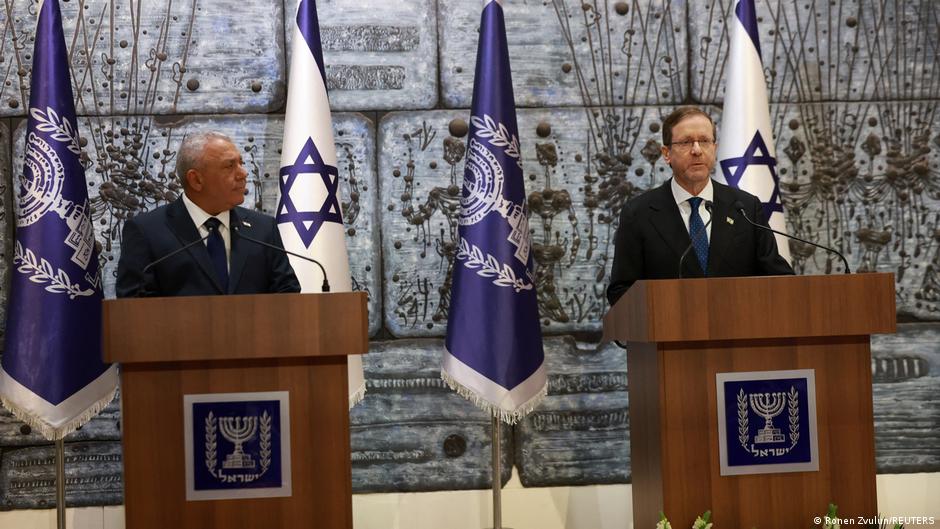
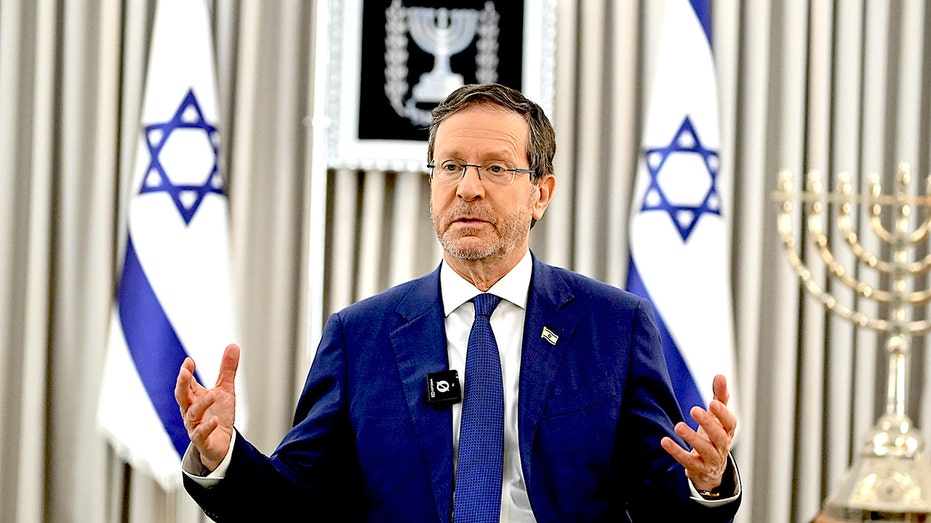
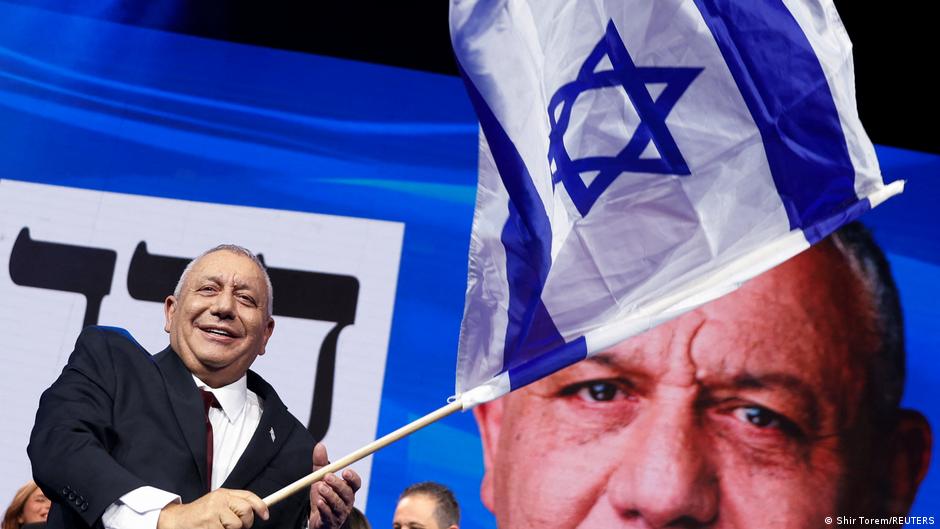
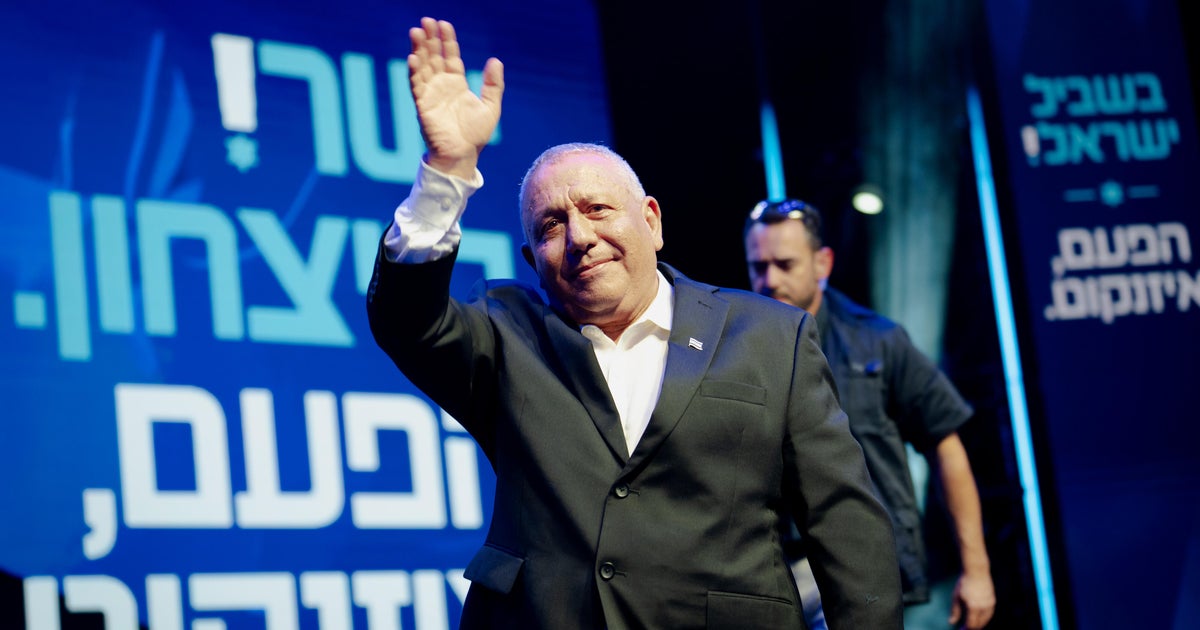
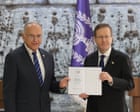
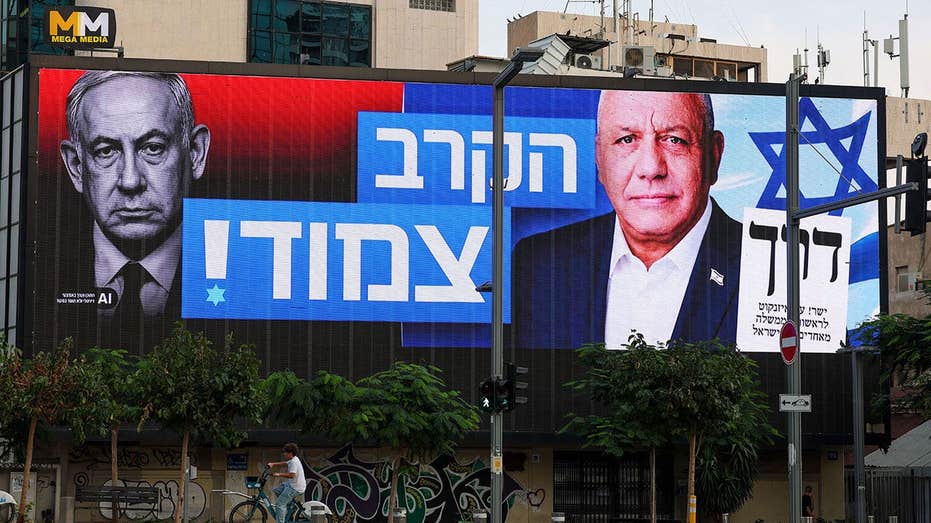
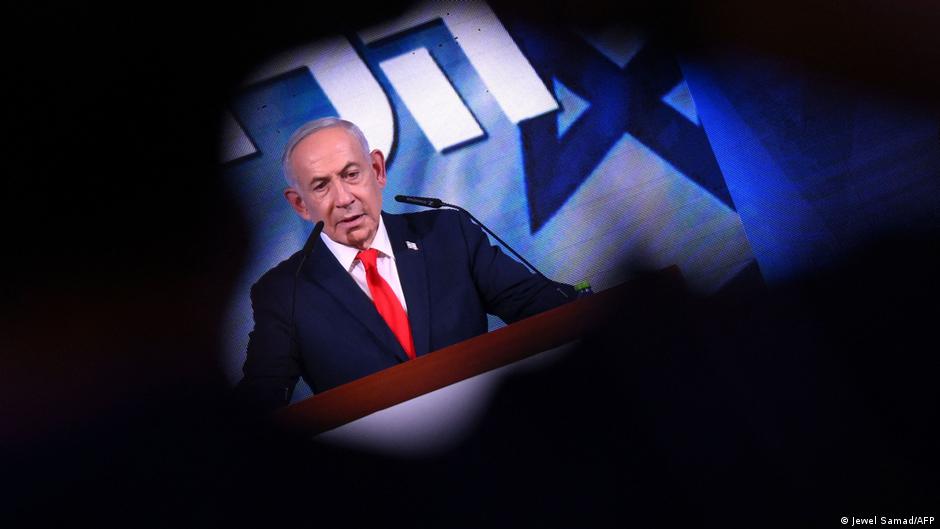
Israeli President Isaac Herzog tasked Gadi Eisenkot with the right of trying to form a government. The opposition leader's way to replacing Benjamin Netanyahu as prime minister is full of political challenges.
Results for “eisenkot”
Israel's former military chief has been given the opportunity to form a government after an inconclusive election.
Mr. Eisenkot, a career general and the leading rival of Prime Minister Benjamin Netanyahu of Israel, will now have up to six weeks to form a coalition.
Arab-led parties have endorsed Gadi Eisenkot despite his ruling out a coalition with them. Their support is driven by a shared goal: removing Benjamin Netanyahu from power. But could these parties ultimately hold the balance of power in forming Israel's next government? Antonia Kerrigan reports.
Unpolished and understated, Eisenkot offers a stark contrast to Netanyahu but risks continuing his legacy
Israel's president asked opposition leader Gadi Eisenkot to form the next gov't over Prime Minister Benjamin Netanyahu.
Neither PM Benjamin Netanyahu's bloc nor that of his rival secured a majority in last week's election.
Gadi Eisenkot secured 67 Knesset endorsements over Benjamin Netanyahu, but deep coalition divisions over Arab parties and conscription cloud his path.
Israel's political landscape shifts as President Herzog hands opposition leader Gadi Eisenkot the mandate to form a government, dealing a blow to Benjamin Netanyahu's grip on power.
Gadi Eisenkot, a former military chief, now has four weeks to build a coalition that could unseat Israel’s longstanding leader, Benjamin Netanyahu.
President Isaac Herzog formally assigns Eisenkot 28 days to secure 61 Knesset seats and replace Netanyahu as PM.
Gadi Eisenkot ran as the main rival to Prime Minister Benjamin Netanyahu, but neither won enough support to command a majority. Israel's main parties have recommended Eisenkot form a new government.
President Isaac Herzog has picked former Israeli military chief Gadi Eisenkot, leader of an anti-Netanyahu alliance, to take the first shot at trying to form a government, with tricky coalition talks expected.
The anti-Netanyahu alliance led by former Israeli military chief Gadi Eisenkot has been tasked with forming a new government, with tricky coalition talks expected.
The anti-Netanyahu alliance led by former Israeli military chief Gadi Eisenkot has been tasked by President Isaac Herzog with forming a new government, with tricky coalition talks expected.
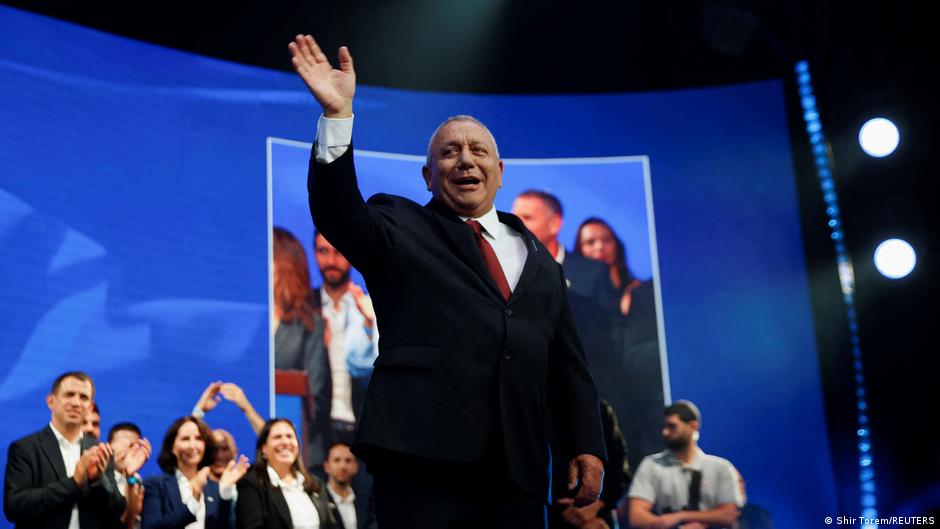
Gadi Eisenkot, a former military chief, hopes to succeed Benjamin Netanyahu as prime minister by cobbling together a coalition after an inconclusive election.
Knesset has been deadlocked since election last month when Benjamin Netanyahu’s coalition lost its majority Israel’s president has chosen Gadi Eisenkot, Prime Minister Benjamin Netanyahu’s strongest rival, to try to form a new government, Israeli media has reported, following a deadlocked election that left neither man with a clear path to power. Isaac Herzog informed the leader of the Yashar party, Gadi Eisenkot, of his intention to task him with forming a government,” Herzog’s office said, adding that the formal appointment would take place in an official ceremony on Sunday at the president’s residence in Jerusalem. Continue reading...
Gadi Eisenkot, a former military chief, ran against Prime Minister Benjamin Netanyahu, but neither won a clear majority.
Following inconclusive elections in Israel, opposition candidate Gadi Eisenkot says he is confident of securing the mandate to form a government, as President Isaac Herzog prepares to nominate the first candidate. Eisenkot claims he is making progress in efforts to oust long-serving Prime Minister Benjamin Netanyahu. Noga Tarnopolsky reports from Jerusalem.
Gadi Eisenkot is poised to get a chance to form a new government, replacing Benjamin Netanyahu as prime minister. But the obstacles are formidable.
Eisenkot's bloc and Arab-led parties seek to oust Netanyahu, but failure to form government could leave him in power.
Arab-majority parties in Israel, the Joint List and Ra’am, have backed Netanyahu’s rival Gadi Eisenkot to form a governm
In Israel, Gadi Eisenkot emerged on Thursday, November 5, as the frontrunner to be tasked with forming a government. This comes after one of the two main parties representing ultra-Orthodox Jewish voters – a longtime ally of Prime Minister Benjamin Netanyahu's coalition – declined to recommend any candidate for the task. FRANCE 24's correspondent in Jerusalem Noga Tarnopolsky reports.
Israeli opposition candidate Gadi Eisenkot said on Friday he was making "significant progress" in forming a government to oust Prime Minister Benjamin Netanyahu as one of his possible coalition partners walked back demands that ultra-Orthodox Jews complete military service and signalled a willingness to hold talks with the community.
Israeli President Isaac Herzog said he will announce on Sunday, November 8, whom he will task with trying to form a new government, following post-election talks with all party leaders. 46 parliament members recommended Prime Minister Benjamin Netanyahu, while 67 backed his opponent Gadi Eisenkot. Seven lawmakers abstained.
Israeli President Isaac Herzog said he will announce on Sunday, November 8, whom he will task with trying to form a new government, after the opposition's Gadi Eisenkot secured a commanding number of recommendations to replace Prime Minister Benjamin Netanyahu. FRANCE 24's International Affairs Commentator Douglas Herbert has more.
Announcement comes after majority of Israeli lawmakers endorse Eisenkot over Netanyahu.
Arab-majority party Ra’am and the Democrats have backed Gadi Eisenkot in a bid to form Israel’s next government.
President calls on all parties to help avoid new election after Netanyahu and Eisenkot blocs fell short of majority Israel’s president, Isaac Herzog, was due to meet Benjamin Netanyahu and his chief political rival, Gadi Eisenkot, on Thursday with less than a week left before he decides which of the two men should first try to form a government. A bitterly contested election last month, seen by many observers as one of the most consequential for Israel in many decades, ended with neither Netanyahu nor Eisenkot, a former military general and chief of staff, securing a clear pathway to power. Continue reading...
Israel's largest Arab party grouping said Thursday it would recommend opposition leader Gadi Eisenkot to form the next government, potentially bolstering his bid after Arab-majority lists won a record 19 seats in last week's election.
Arab-led parties won a record 19 seats in Israel's 120-seat parliament in last week's general election.
President Isaac Herzog will meet with party leaders over the next two days to decide whether to give Prime Minister Benjamin Netanyahu or rivals the first chance at forming a coalition.
Move comes after attorney general blocked Shin Bet call to interrogate politicians from Palestinian-led parties Israel’s election commission on Wednesday confirmed the final results of the 27 October vote that stripped Benjamin Netanyahu’s far-right coalition of their governing majority, rejecting claims of mass fraud promoted by the prime minister. His main challenger, Gadi Eisenkot, warned that Netanyahu had launched a “pogrom against democracy”, attempting to hold on to power by discrediting valid votes and weaponising security forces against parties led by Palestinian citizens of Israel. Continue reading...
Opposition promises to form a government quickly but remains split over whether to ally with Arab-led parties.
The Israeli opposition bloc led by Gadi Eisenkot pledged Tuesday to form a government quickly to oust Prime Minister Benjamin Netanyahu but remained unclear on how, with divisions over whether to ally with Arab lawmakers. Arab-majority parties last week won 19 seats in the 120-member parliament. Eisenkot's diverse opposition bloc won 48 seats while Netanyahu's camp secured 53, of which 27 are from his Likud party.
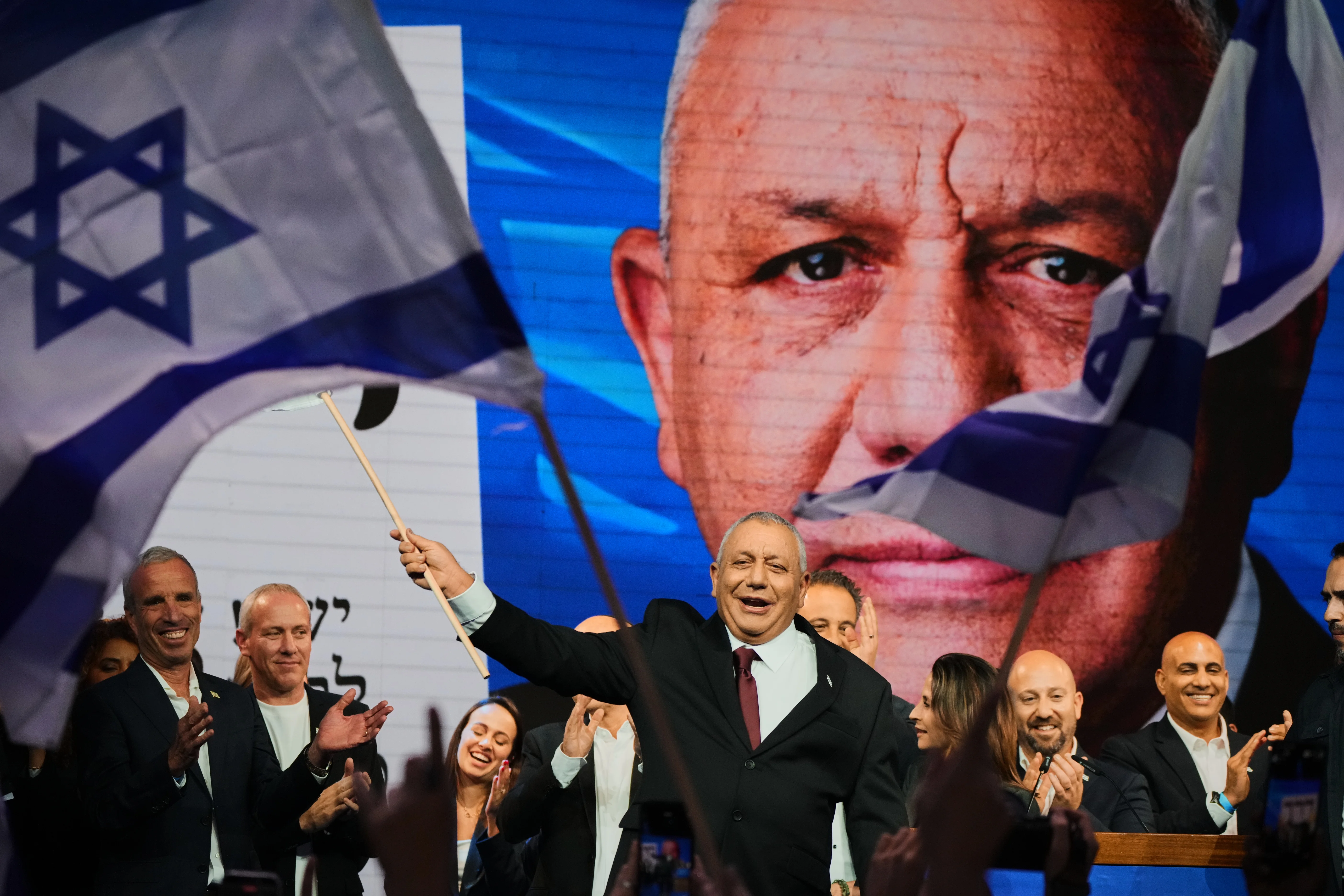
Israel's opposition is on Tuesday due to meet for the first time since last week's closely contested election in which neither Gadi Esenkot's change bloc nor incumbent Prime Minister Benjamin Netanyahu's right-wing alliance managed to win a majority in the Knesset. All parties in Eisenkot's camp have endorsed him to be the next prime minister, but the hot-button issue will be whether to unite with the Arab parties who made surprise gains in the vote.
Erin Ogunkeye is pleased to welcome Efrat Shapira Rosenberg, Israeli Radio/TV Host, Columnist, Podcaster and Educator. Following a deadlocked Israeli election, “everyone is saying who they’re not going to sit with, but no one is actually saying who they will sit with.” As President Isaac Herzog prepares to consult parliamentary factions over the formation of a new coalition, the impasse reveals tensions that extend beyond the familiar confrontation between Benjamin Netanyahu and his political opponents. According to Shapira, co-host of the highly popular Israeli politics podcast Miflaget Hamakshavot, the divisions are equally pronounced within the opposition bloc supporting Gadi Eisenkot.
Political wrangling is still ongoing as all blocs weigh potential paths to power.
Party leaders will make competing cases to the Israeli president for either Benjamin Netanyahu or Gadi Eisenkot to get the first chance to build a governing coalition.
In a counterprotest, Netanyahu supporters demand that Israel should not have a government with 'terrorists'.
Netanyahu and Eisenkot are locked in a struggle to form a governing coalition in the Knesset.
In an interview with FRANCE 24, former Israeli prime minister Ehud Barak said Prime Minister Benjamin Netanyahu "did not win" this week's election in Israel but "lost dramatically", and that his rival Gadi Eisenkot should ally with Arab parties. Barak also suggested that claims of Qatari funding for an Arab party aimed to distract from an ongoing corruption scandal, and warned that Netanyahu was ready to strike Iran to stay in power.
Israel's wartime election appeared deadlocked on Tuesday, exit polls showed, with Gadi Eisenkot's opposition bloc running neck and neck with Prime Minister Benjamin Netanyahu's camp, leaving neither side with a clear path to power. The projections pointed to a setback for Netanyahu's coalition and potentially weeks of political wrangling to form a government. FRANCE 24's Jerusalem correspondent Noga Tarnopolsky has more.
Prime Minister Benjamin Netanyahu’s party and its allies won 53 seats in Parliament, falling short of the outright majority needed to form a government. The main opposition bloc, led by Gadi Eisenkot, won 48.
Netanyahu's bloc secured only 53 Knesset seats as ultra-Orthodox allies reportedly explore breaking ranks to back Gadi Eisenkot's opposition.
The leading contenders, Prime Minister Benjamin Netanyahu and Gadi Eisenkot, aren’t substantially different in their approach to Israel’s security or in their opposition to a Palestinian state.
In today’s newsletter: Benjamin Netanyahu has been left without a majority, now it is up to the coalition to find out whether the desire for change will prove to be a defining political moment Good morning. It was described by many Israelis as the most consequential election in their country’s history. And, as the final votes were tallied, it has delivered a result that presents Israel with a significant dilemma. Benjamin Netanyahu’s far-right coalition has lost its mandate while the opposition has a clear majority: but only if the Jewish Israeli opposition bloc, led by retired general Gadi Eisenkot, is prepared to make a governing pact with Palestinian Israeli parties, which have secured a historic result. UK politics | John Healey has backed away from cutting the cost of welfare this parliament, amid dire warnings his first budget could lead to brutal spending cuts because of a £28bn shortfall in public finances. Patrick Stewart | The acclaimed British stage and screen actor renowned for both Shakespeare and sci-fi, died at his home in Los Angeles after “a brief and poignant journey with Alzheimer’s disease and Lewy body dementia”, his longtime spokesperson said. Environment | One of the most ambitious nature recovery projects ever undertaken in England can go ahead after campaigners announced they had raised £30m to buy an estate in Northumberland. Europe | Spain began three days of mourning on Thursday for at least 69 people who died in a high-speed rail collision , as hospitals continued to treat dozens of injured passengers and train drivers went on strike to urge more investment in railway safety. US news | The Trump administration has opened a criminal investigation in California over claims that thousands of noncitizens are registered to vote in the state, and has begun subpoenaing election officials. Continue reading...
With all the votes counted, the pro-Netanyahu bloc finished ahead of Gadi Eisenkot's anti-Netanyahu bloc. But tough coalition talks loom as neither grouping won a majority. DW has more.