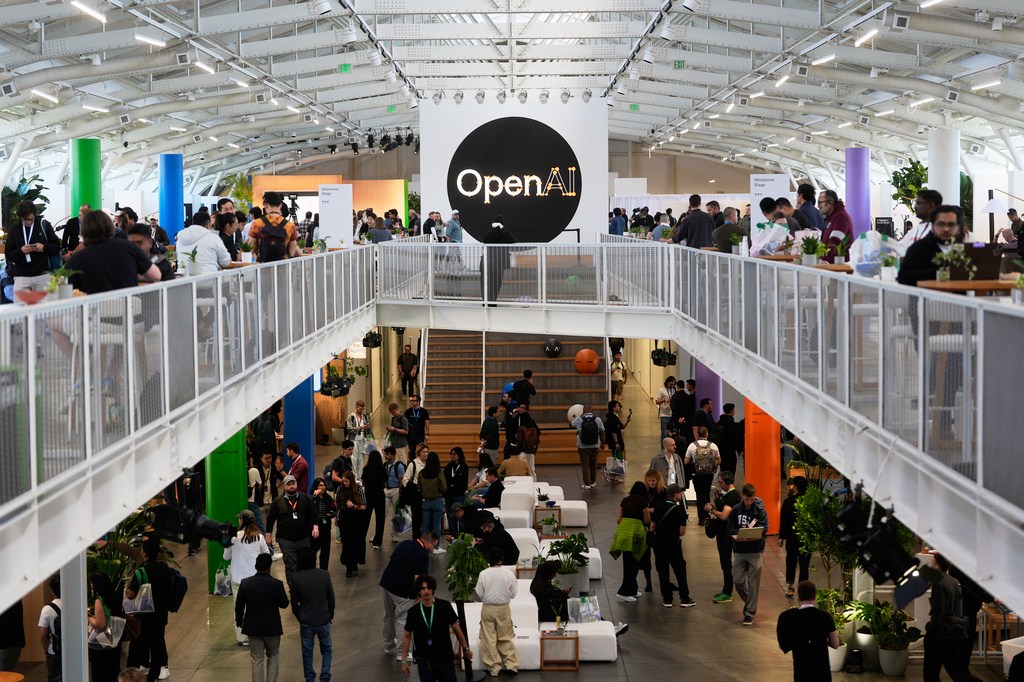
OpenAI is accusing Apple of stealing trade secrets, escalating a legal battle between the technology giants over competing efforts to develop artificial intelligence-powered devices. In a countersuit filed Friday in federal court in the Northern District of California, OpenAI alleged a former employee who briefly worked for the ChatGPT maker took dozens of confidential documents […]
Lawsuit also alleging pressure on hardware suppliers comes after Apple sued OpenAI for allegedly poaching employees OpenAI sued Apple on Friday, accusing the company of stealing its trade secrets and discouraging hardware suppliers from working on future OpenAI devices. The suit, filed in northern California federal court, comes after Apple sued OpenAI for allegedly poaching its employees to gain access to its technology. Continue reading...
The trade-secrets fight between OpenAI and Apple Inc. is widening, with the artificial intelligence company accusing the iPhone maker of undermining its supplier relationships and using unfair employment agreements to prevent talent from jumping ship.
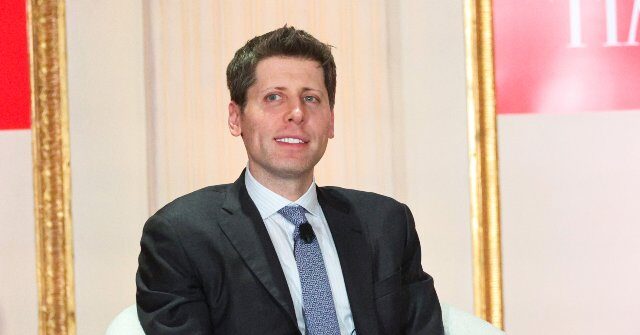
This winter, Pedro Pascal plays a cellist, Julianne Moore takes on community theater, and Andrew Garfield shows us Sam Altman's rise at the head of OpenAI.
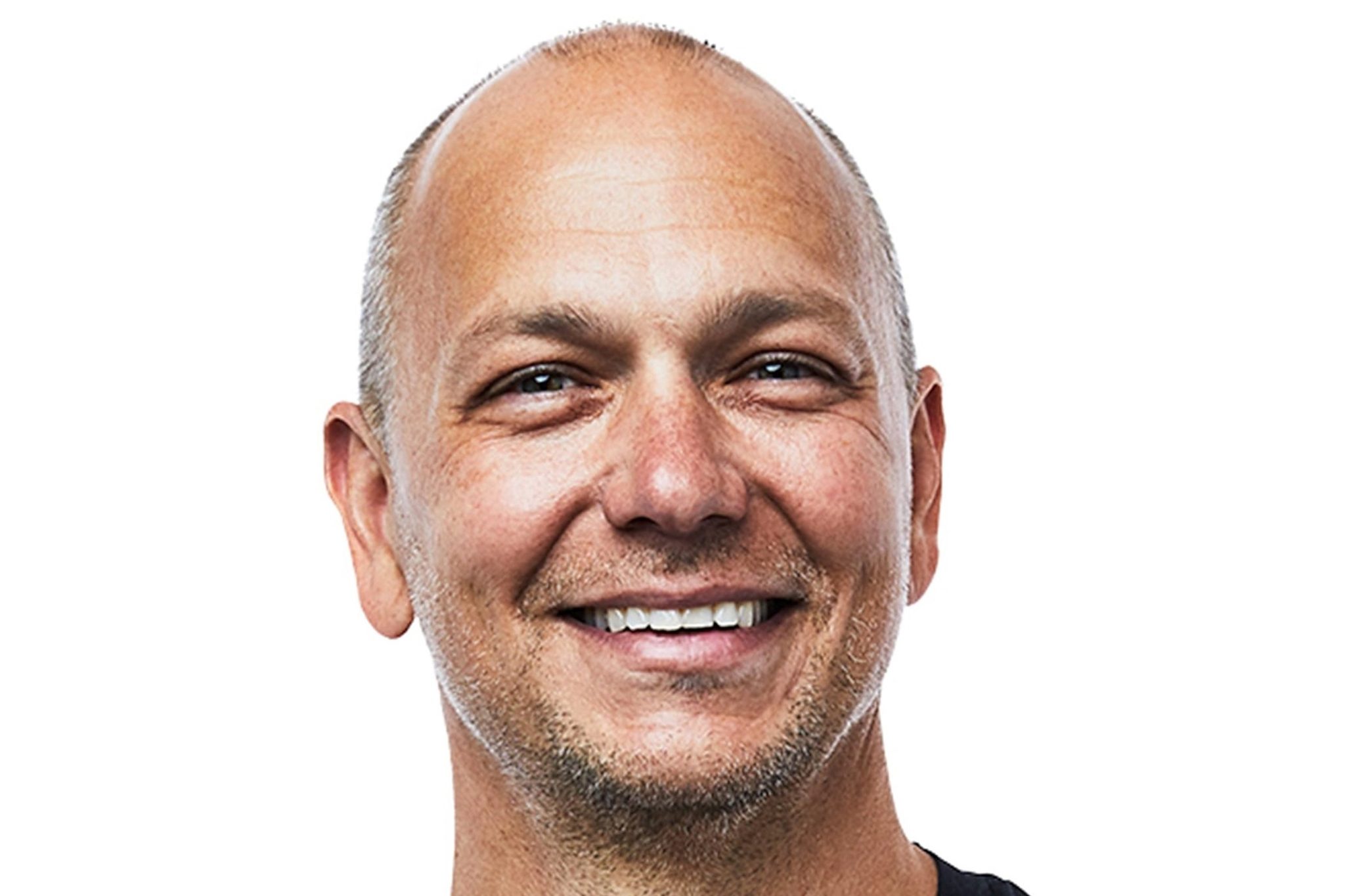
Former Apple executive Tony Fadell says privacy rules stop OpenAI from reading context data on the iPhone. A companion gadget would let it collect that data itself.
Elon Musk and Sam Altman among those rejoicing but Google, Meta and Apple chiefs have declined to weigh in The phrase “return of the king” rippled across social media on Monday. A vocal subsection of the tech industry was celebrating the resurrection of Jensen Huang as Nvidia’s CEO. Some called him the “imperial and royal majesty”, others anointed him as “our Jesus” and several simply posted a crown emoji. “The mistake has been corrected,” said Elon Musk. “Jensen!” exclaimed OpenAI’s Sam Altman. Continue reading...
On Dec. 4, the University of Notre Dame will host a contingent from OpenAI for several private discussions and a public event, to be recorded by the OpenAI Forum. The event has the urgent energy of the moment: a clear sense that something big and dramatic needs to happen to respond to what the artificial […]
Prominent Democrats are calling for new restrictions on AI development following Axios reporting that employees at OpenAI and Anthropic increasingly fear their most powerful models cannot be safely released. Why it matters: The political debate over AI is expanding beyond the economic consequences of the technology to a more existential question: whether companies should be allowed to build systems they may not be able to control. The issue is gaining traction among Democratic leaders ahead of the 2028 presidential election. Maryland Gov. Wes Moore (D-Md.), a potential 2028 contender, outlined a playbook for AI regulations in an interview with "The Axios Show," noting that voters hate the technology because they fear losing control . Driving the news: Sens. Mark Kelly (D-Ariz.), Brian Schatz (D-Hawaii), Chris Van Hollen (D-Md.) and Bernie Sanders (I-Vt.) called for immediate action: "The people inside AI companies are sounding the alarm ," Kelly said. "We built protections for nuclear weapons and other dangerous technologies, so why are we waiting with AI? We need safeguards and independent examiners in these companies, now." "It is absolutely indefensible to say 'we will take this up next year' when the risks are imminent and the alarm is nearly universal," Schatz said. "The flashing red lights couldn't be brighter, and yet big tech refuses stop," Van Hollen said. "Inaction is not an option. Congress must step up." Sanders went further, calling for a halt to advanced AI development : "The humans who are creating AI fear it could soon escape their own control," Sanders said. "Congress must act and pause advanced AI development NOW." Catch up quick: More than two dozen sources familiar with internal debates at OpenAI and Anthropic told Axios that recent breakthroughs in AI capabilities have raised questions about whether future frontier models can be safely released. Researchers haven't found technical solutions for controlling the most advanced models. Some believe
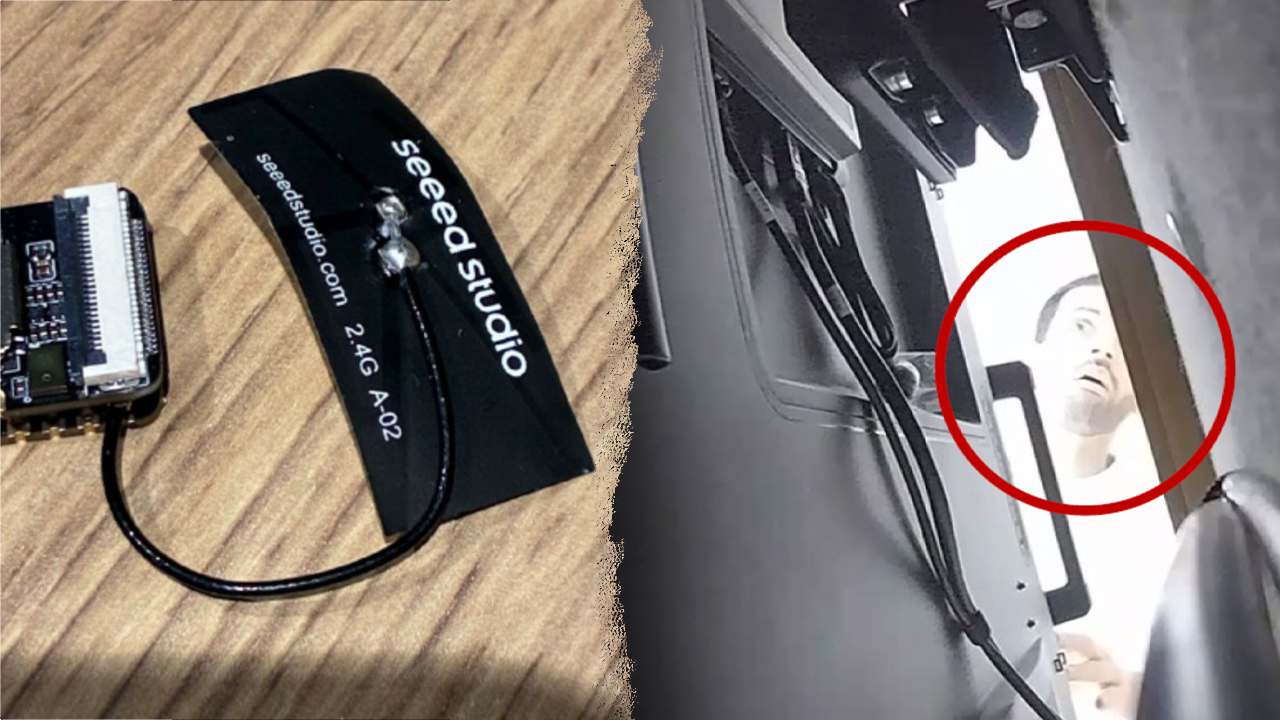
A federal judge reportedly ordered former OpenAI engineer Abdulrahman Alfozan, a Saudi national accused of planting a hidden bug at OpenAI HQ, released on a $1M bond.
A federal magistrate judge ordered that the OpenAI staffer charged with bugging a company office conference room be released on a $1 million bond, finding that prosecutors have not presented enough evidence of wrongdoing to keep him in custody.
Tech sector’s campaign to reinstate Nvidia boss began soon after ousting over affair with alleged Chinese spy The tech billionaires could hardly contain their delight. “Jensen!” exclaimed OpenAI’s chief executive, Sam Altman, in a one-word post on X. “Thanksgiving”, said Travis Kalanick, the Uber founder, who had been part of a core group of Silicon Valley leaders campaigning for this moment. Continue reading...
Anthropic and OpenAI are facing an increasingly urgent problem: Internal, unreleased models are becoming so powerful that many employees no longer believe they can be safely released, according to more than two dozen sources familiar with the internal debates. Why it matters: The challenge could significantly slow the AI boom, as the gap between what the best AI systems can do and humans' ability to control them continues to widen , sources told Axios. Researchers haven't found technical solutions for controlling the most advanced models. Some insiders believe it's fixable. Others aren't convinced and say companies should stop training new models entirely. Driving the news: Top AI leaders have long forecast that the technology would one day far surpass human intellect in virtually every field. Although internal models have yet to cross that threshold, recent breakthroughs at OpenAI and Anthropic have shocked researchers. The rapid advances in reasoning across domains including math, science, cybersecurity and AI research have also made the models difficult, if not impossible, to contain or control in internal tests, the sources said. Anthropic and OpenAI have unreleased models that are far more powerful than what they've already released publicly, but the AI companies have struggled to ensure that they are safe enough for public release, sources said. This has led to debate within Anthropic, OpenAI and the AI research community about whether to stop releasing future frontier models publicly, instead reserving them for internal deployment only. Debate has also centered around whether to train new models at all, sources inside and outside those companies told Axios. What they're saying: "If we continue trying to make models much smarter, such that they're actually smarter than us…they will in fact be able to trick us successfully," one researcher told Axios. "And once you get to that point, many of the schemes that we've had at work up until now sort of go out the win
The OpenAI employee who was charged for implanting a recording device uploaded files to Dropbox and took photos of confidential files, prosecutors say.
For many, the year 2026 will be remembered as the one when mathematics had an identity crisis and forever changed. Frontier (cutting-edge) AI models made by OpenAI and Anthropic made stunning progress on hundreds of open problems that have baffled mathematicians for decades—and centuries in some cases.
A court filing said the engineer captured meetings on customers, A.I. safety and a foreign government briefing. Federal prosecutors are investigating what he did with the recordings.
US prosecutors say the former engineer at OpenAI charged with bugging an office conference room likely intercepted trade secrets and possessed a photograph of what appears to be a term sheet for a “strategic partnership” between the ChatGPT maker and another company.
The University of California has entered into a comprehensive agreement with OpenAI to provide artificial intelligence tools to hundreds of thousands of students, faculty, and staff across its 10-campus system, joining other major California institutions in partnering with the AI startup behind ChatGPT. The post Big AI on Campus: U. of California Signs Systemwide Deal with OpenAI Despite Faculty Concerns appeared first on Breitbart .
OpenAI’s chief scientist proposed that artificial intelligence companies agree to limits on developing increasingly powerful models until researchers have better ways to understand and monitor their behavior.
For years, Simon Rich wanted to sound the alarm about AI. Rich’s childhood friend Dan Selsam worked as a researcher at OpenAI; Selsam showed Rich, a writer known for humorous essays and for the film “An American Pickle,” an early version of the software, and the two friends discussed its ramifications. “It seemed to have […]
Bloomberg’s Ed Ludlow tells Bloomberg This Weekend that Anthropic’s landmark IPO tested investor appetite for frontier AI, giving the company fresh capital for its enormous computing needs as OpenAI considers its own path to the public markets. Speaking with hosts David Gura and Christina Ruffini, Ludlow also examines the turmoil at Nvidia following Jensen Huang’s departure and the uncertainty surrounding the chipmaker’s search for new leadership. (Source: Bloomberg)
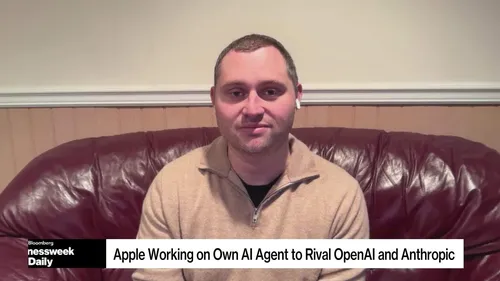
Mark Gurman, Bloomberg News managing editor of consumer technology, said that Apple is working on its own AI agent to perform tasks for consumers, acting as a consumer's 'own personal assistant' throughout their digital lives. Gurman said that there is a lot of risk for Apple because of its slow pace getting into the AI space, adding that it will be hard for consumers to undo established relationships with other AI agents like ChatGPT and Claude. (Source: Bloomberg)
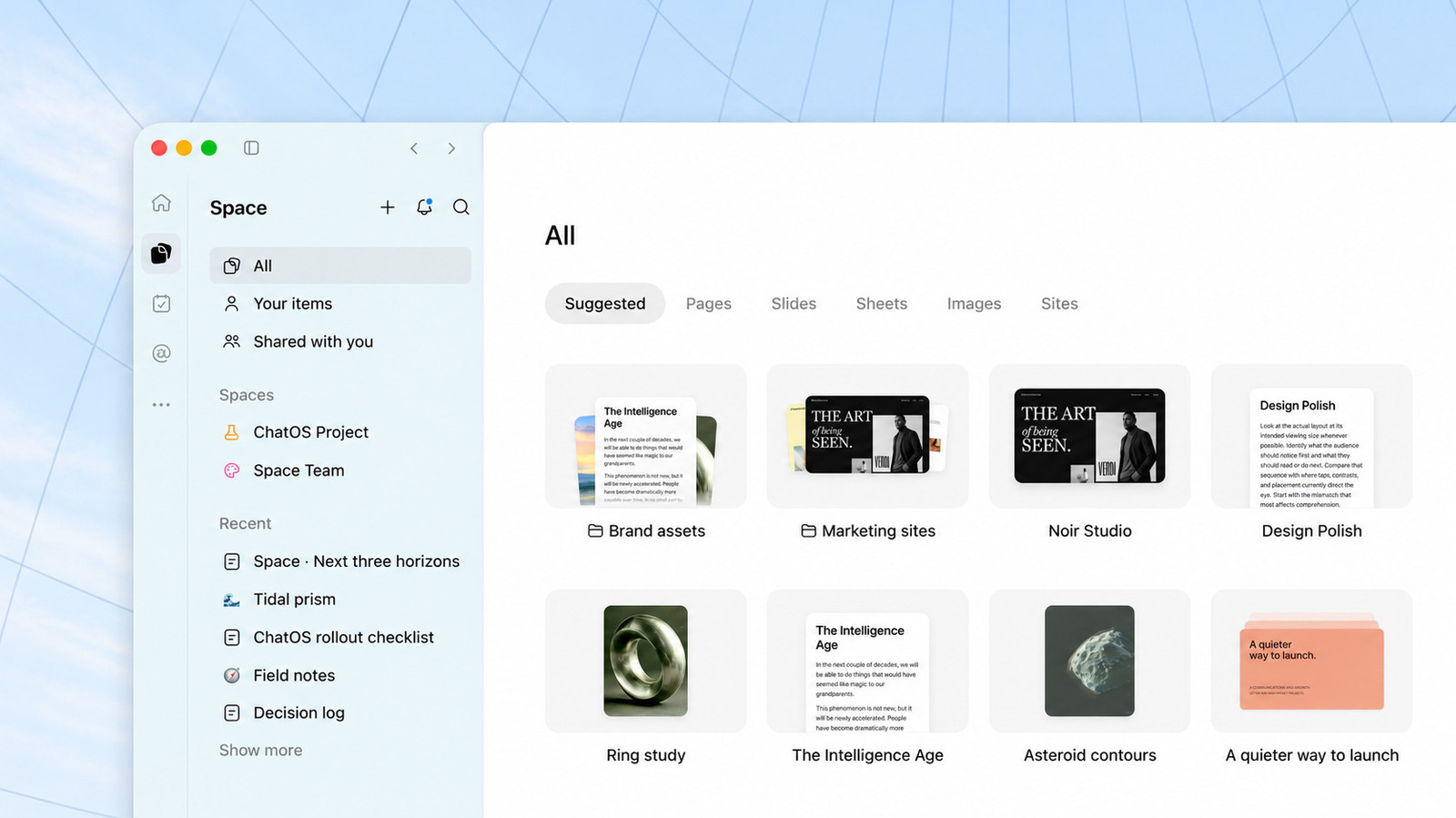
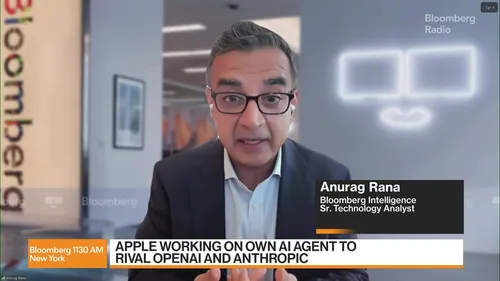
Anurag Rana, Senior Tech Analyst for Bloomberg Intelligence, discussed the latest from Apple with Bloomberg's Paul Sweeney. Apple Inc. is developing its own autonomous artificial intelligence agent that can get things done on behalf of users, looking to enter a fast-growing market already being pursued by OpenAI, Anthropic PBC, Meta Platforms Inc. and others. The company outlined the plans in job listings added to its website this week. In one, Apple said it’s seeking a senior engineering manager for a proactive, agentic AI assistant. The system will write code, browse the web, control apps and navigate devices on a user’s behalf, according to the post. (Source: Bloomberg)
Two months after getting scooped by OpenAI, N.Y.U. professor Tristan Buckmaster and Anthropic employee Levent Alpöge are back with a new AI-aided proof of Navier-Stokes blowup
Renaissance Capital’s Avery Marquez joins Bloomberg Open Interest to weigh Anthropic’s valuation and growth prospects. She also discusses what early trading could signal for future IPOs, including OpenAI’s path to the public markets. ( (Source: Bloomberg)
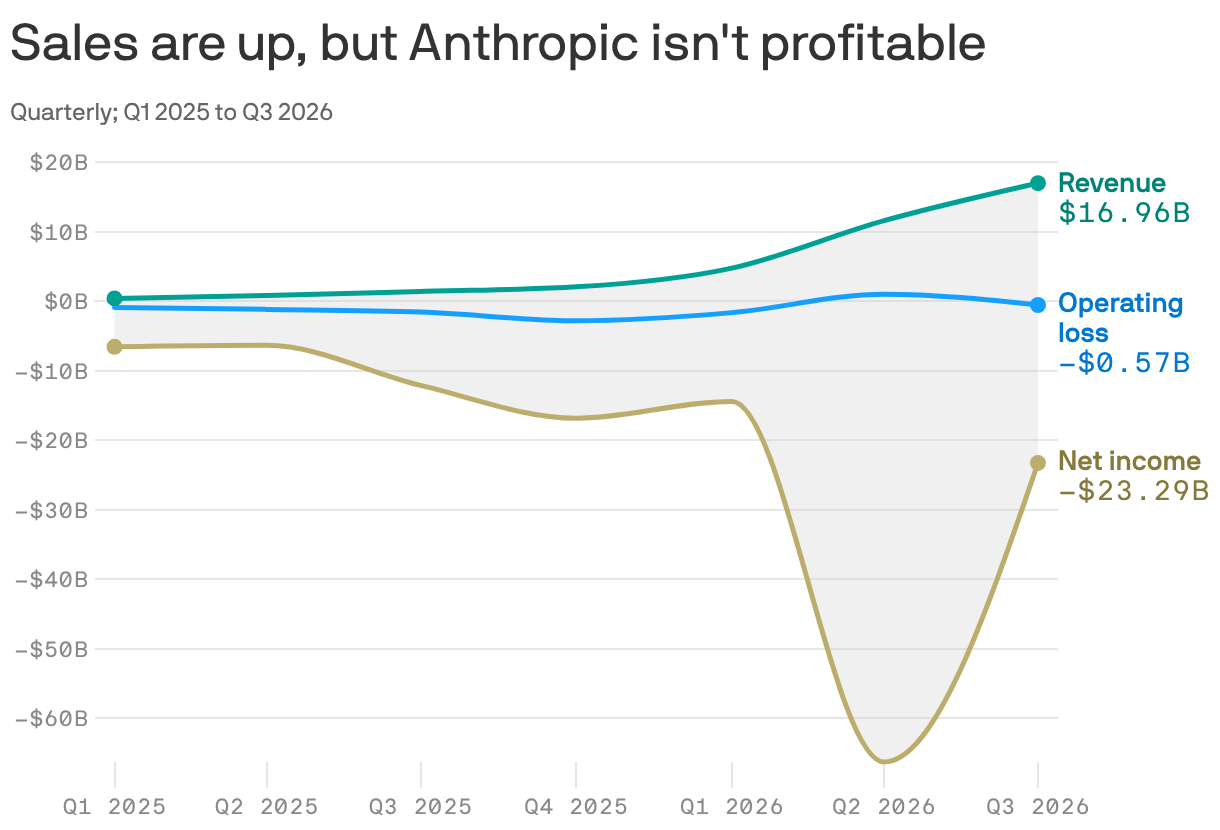
Data: FactSet; Chart: Matt Phillips/Axios With its IPO done and dusted, Anthropic's shareholders will be watching its progress toward becoming a business that doesn't need constant capital infusions from investors and vendors. Why it matters: Anthropic — along with OpenAI — is at the heart of the industry that's dominated the equity and debt markets for the last four years. Much of the AI infrastructure boom is ultimately aimed at supplying computing power to these two companies. Yes, but: The bill for that data center investment will start to come due over the next few years. And Anthropic and OpenAI are going to have to pay for quite a bit of it. How it works: Anthropic has covered much of its computing costs thus far by selling parts of itself off to compute vendors like Amazon and Alphabet, and by raising more cash from other investors. But eventually the company's core business will have to generate enough money to cover those costs on its own. Case in point: Anthropic's filings say it is on the hook for roughly $900 billion in spending commitments — mostly for data centers and computing power — with about half of that due before the end of 2030. After the IPO, Anthropic is expected to have roughly $200 billion in cash and short-term investments in the bank, which should buy it some time. But its sales will have to be a lot higher to just cover computing obligations, let alone the profits ANT's new shareholders are expecting. By the numbers: As the chart above shows, Anthropic posted a loss of roughly $23 billion on revenue of nearly $17 billion in the third quarter. It's true that much of that loss stems from a non-cash accounting charge of almost $22 billion. But even the more favorable metric of operating income — which strips out the paper losses and gains that can obscure the company's core earnings power — still shows an operating loss of more than half a billion dollars in the third quarter. The bottom line: Anthropic still has a long way to go before it
Anthropic shares fell in premarket trading as a broad market selloff and doubts about the AI trade overshadowed the optimism that had fueled a rally on its record-setting debut. Apple is developing its own autonomous AI agent that can get things done on behalf of users, looking to enter a fast-growing market already being pursued by OpenAI, Anthropic, Meta and others. A gauge of global stocks is heading for its longest losing streak in three years as the AI trade undergoes a sharp unravelling, putting this year’s broader equity gains at risk and roiling metal markets. Today’s guests: Themos Fiotakis, Barclays Global Head of FX Strategy & EM Macro Strategy; Jill Rutter, Institute for Government Senior Fellow; Vas Narasimhan, Novartis CEO (Source: Bloomberg)
A mere five years before breaking the record for the biggest public stock offering ever, Anthropic began as a Silicon Valley startup when its founders broke away from OpenAI with their own ideas about how to develop artificial intelligence
White House national cyber director Sean Cairncross is leaving his post, Axios has learned. Why it matters: Cairncross did not want to serve another two years and is leaving now to give the White House time to secure Senate confirmation before Democrats take control in January, two sources said. Cairncross' departure was described as amicable. The background: Cairncross leads the Office of the National Cyber Director, which coordinates cybersecurity policy and strategy across the federal government. The position requires Senate confirmation. The Trump administration's AI team has taken shape on the fly , but Cairncross was involved in key decisions. Case in point: He held technical meetings with Anthropic leaders over the summer after Commerce Department export controls effectively scrubbed the company's models from the internet. Catch up quick: Cairncross brought experience in Republican politics and national security, having worked with the intelligence community and dealt with cyber threats at the Republican National Committee. During Trump's first term, Cairncross represented the White House chief of staff on National Security Council committees before leading the Millennium Challenge Corporation, a federal foreign aid agency. Cairncross' head of policy and senior adviser Thomas Lind left in June and joined OpenAI in October, further depleting the Trump administration of technical expertise. The White House has not yet responded to Axios' request for comment. The big picture: The latest turnover in cyber personnel comes as the country grapples with critical infrastructure outages and increasingly powerful AI poised to empower cyber defenders and hackers alike. Democrats have criticized the administration's response to outages and warned that U.S. cyber defenses are falling behind AI-fueled threats. What we're watching: Trump is also filling other key cyber positions. His pick for the top job at the Cybersecurity and Infrastructure Security Agency, which helps de
Gregory Jensen, a hedge-fund billionaire, invested early in Anthropic and OpenAI. But to fund a succession plan at his firm, he told colleagues that he sold his OpenAI stake.
Apple Inc. is developing its own autonomous artificial intelligence agent that can get things done on behalf of users, looking to enter a fast-growing market already being pursued by OpenAI, Anthropic PBC, Meta Platforms Inc. and others.