South Korea says North Korea has launched an unidentified projectile off the North's east coast
South Korea says North Korea has launched an unidentified projectile off the North's east coast
ABC News · Oct 29

National news
South Korea says North Korea has launched an unidentified projectile off the North's east coast
Get all the stories you need-to-know from the most powerful name in news delivered first thing every morning to your inbox.
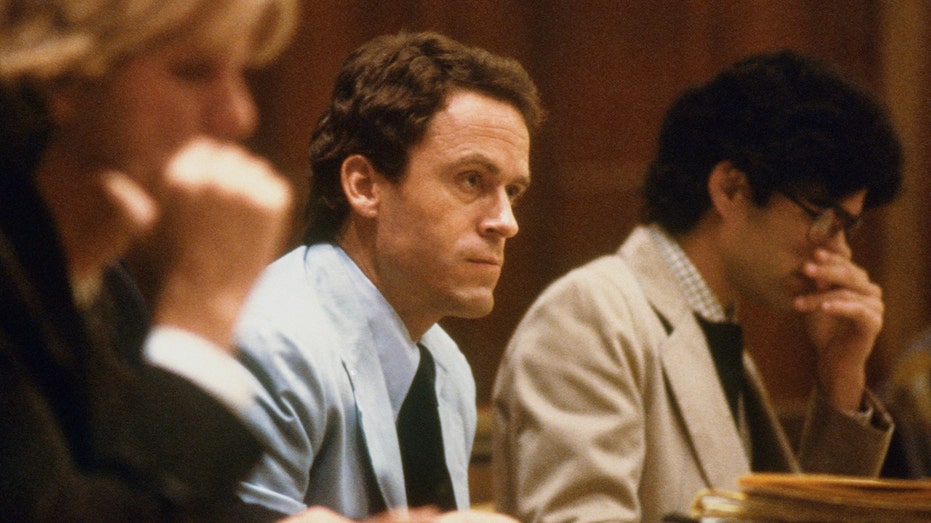
DNA evidence linked Ted Bundy to Melissa Ann Smith's 1974 murder, but a cold-case detective says the serial killer may have unknown victims.
The post Detroit Could Block Billionaire-Owned Concrete Plant From Further Neighborhood Expansion appeared first on ProPublica .
Call it a new Apollo moment: Rocket launches from Cape Canaveral, Florida, are now outpacing those of the Cold War-era space race that first made the launch site famous. Why it matters: U.S. leaders are rushing to grow the number of rocket providers at America's busiest spaceport amid a space and arms race with China. Beijing plans to send a crew to the Moon by 2030 or sooner and is rapidly building up its satellite and rocket fleets. What they're saying: "There's nothing really comparable in the background of my career to what we're experiencing today," Space Force Col. Brian Chatman, the commander of Florida's rocket range, told Axios in an exclusive interview. Behind the scenes: The Cape is busy expanding to meet President Trump's mandate for the nation to support 1,000 annual launches by 2030. Chatman said with all the contractors on base, inspection backups and parking chaos abound. A rundown of some major projects Chatman is overseeing: SpaceX is expanding its footprint on the Cape for its Starship super heavy-lift launchpads. Newcomers Relativity Space and Stoke Space are setting up their facilities and are aiming to launch rockets for military and commercial customers sometime in late 2026 and 2027 . NASA is preparing for next year's Artemis III testing missions, and the Artemis IV voyage that aims to return astronauts to the Moon by 2028. Blue Origin is rapidly rebuilding its launch complex after its New Glenn rocket exploded in May. Jamie Draper, the Cape Canaveral Space Force Museum's director, told Axios there's been "boom and bust" cycles throughout the base's history. "We're definitely in one of those boom cycles right now," Draper said. By the numbers: Last year, Space Launch Delta 45, the military command overseeing the Cape, supported 109 orbital liftoffs from the base — the most in its history. In April, Space Launch Delta 45 oversaw five different rocket launches for unique missions, breaking a record set at the height of the U.S.-Soviet space rac
The post Top U.S. Health Official Backed a Medication Policy Shift That Benefited a Company She Has Stock In appeared first on ProPublica .
President Trump seems to think he can save a vulnerable Ohio Republican senator's ass by talking about how strong it is. Why it matters: Republicans are getting hammered over the war in Iran, gas prices and data centers. But they're playing along with Trump's ogling of male candidates, which he's described as an election strategy. "I don't do this with men very often. I started examining his body because I didn't know he was a great athlete. And I looked and I watched up and down and I looked at his ass," Trump said of Sen. Jon Husted (R-Ohio) at an Ohio rally. "My wife and I have a good sense of humor, and we know he's doing all he can to help us win," Husted told Axios. "We have made sure to hit the gym during the busy campaign to uphold the high standards the president has set for us." Zoom in: In five rallies over three weeks across the country, Trump gave a head-to-toe appraisal of his most vulnerable Republican senator. "His ass was like a big piece of muscle," Trump said in Michigan last week. "Then I looked at his legs and I said, 'Man, his feet are big,' " Trump said in North Carolina. Polling has shown Husted narrowly behind or tied with former Sen. Sherrod Brown (D), and Republicans view him as the most vulnerable GOP incumbent. Zoom out: Husted is getting the most love, but he's not alone. "You know, he's a very handsome guy," Trump said about Sen. Tim Sheehy (R-Mont.) at a Montana rally earlier this month. "I like the white hair, I like the big, strong build. Big, strong guy." Trump said of Rep. Mike Collins (R-Ga.), who is running for Senate in Georgia. Trump called him "all man." "I actually think that Rick Jackson's a very handsome, distinguished, beautiful-looking guy," Trump said about the Republican gubernatorial candidate in Georgia. "Look at this beautiful guy," Trump said of House candidate Ed Gallrein (R-Ky.). Trump called him: "Central casting." Between the lines: Senate Majority Leader John Thune (R-S.D.) has also joined the fun: "I know tha
House progressives are planning to use their growing power to force votes next year on their most sweeping and divisive policies, including Medicare for All, abolishing ICE and cutting aid to Israel. Why it matters: The ultimate goal is to get these policies on the front burner for a Democratic president in 2029, even if that means forcing House Democrats into tough decisions. Rep. Pramila Jayapal (D-Wash.) told Axios the left wants mark-ups and votes on bills such as Medicare for All "so that we can prepare for when we have the trifecta and so that we can really build the support we need." "Forcing the vote is important so we can see where everyone is at, I think that's really key for 2028 and 2029," said Mai Vang, a progressive House candidate in California. The big picture: Here is what progressives most want to see go to a House vote in 2027, according to lawmakers, candidates and operatives who spoke to Axios: 1) Medicare for All The Medicare for All Act introduced by Rep. Pramila Jayapal (D-Wash.) has 118 co-sponsors — more than half the House Democratic caucus. The left wants to force the issue onto the floor and make their Democratic colleagues reckon with the policy's popularity in public opinion polls . Ultimately, they aim to ensure support for Medicare for All is a must-have for any 2028 presidential candidate to win the primary. "Years ago I negotiated with [former House Speaker Nancy] Pelosi to get the hearings , but we have not had a markup," Jayapal, a former Progressive Caucus chair, said in an interview with Axios. Jayapal pointed to the bill she and Rep. Pat Ryan (D-N.Y.) unveiled last week, which would lower the Medicare age from 65 to 50, as a potential compromise measure that could get caucus-wide support next year. Yes, but: A Democratic wave could bring in a bloc of members from red-leaning districts who could be sensitive to being tagged as wanting to end private insurance. Jayapal told Axios there's an "opening we've never seen before" with
The post “Peak Greenwashing”: Two Bills in Congress Endorse Misleading Recycling Claims appeared first on ProPublica .
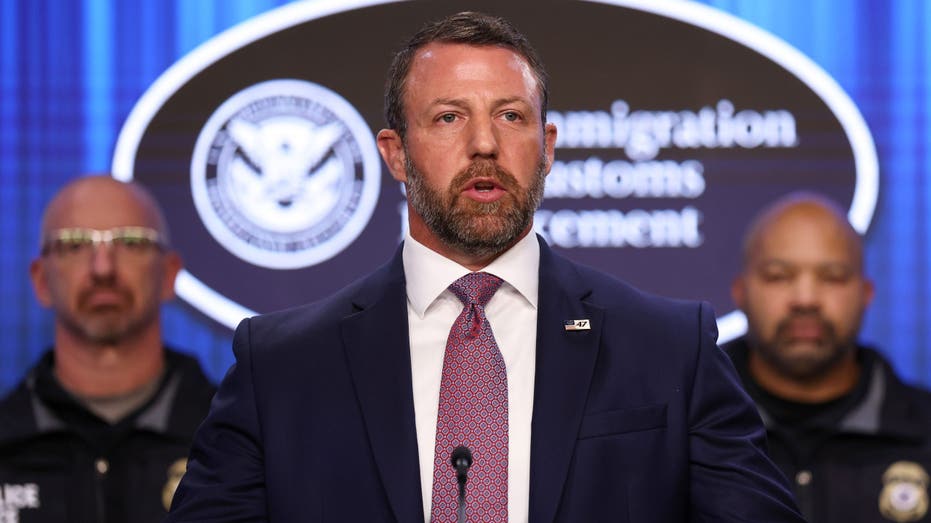
The Department of Homeland Security is investigating a breach that exposed roughly 40,000 employees, including 10,000 ICE agents and CBP personnel.
Donald Trump roared back into office two years ago partly on the power of immigration
The Justice Department has filed notice that President Donald Trump’s announcements that there are plans for renovating the East Potomac Golf Course and there are plans to close the park beginning Nov. 15 are accurate
Utah is pursuing criminal charges against prediction market operator Kalshi and two executives, after a federal judge rejected Kalshi’s effort to prevent Utah from enforcing its anti-gambling laws against the activity
A fire at a massive Department of Energy nuclear site triggered emergency measures, though officials reported no contamination outside the facility.
The Big 12 Conference has fined UCF $100,000 for derogatory chants by football fans aimed at The Church of Jesus Christ of Latter-day Saints in a game against BYU
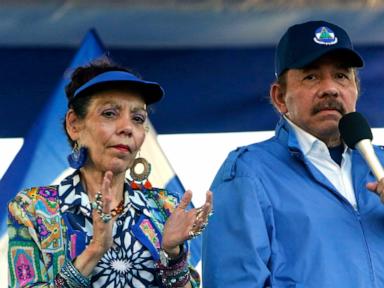
United Nations human rights experts say Nicaragua’s co-presidents have established a dictatorship and there are “reasonable grounds to believe that crimes against humanity have been committed."
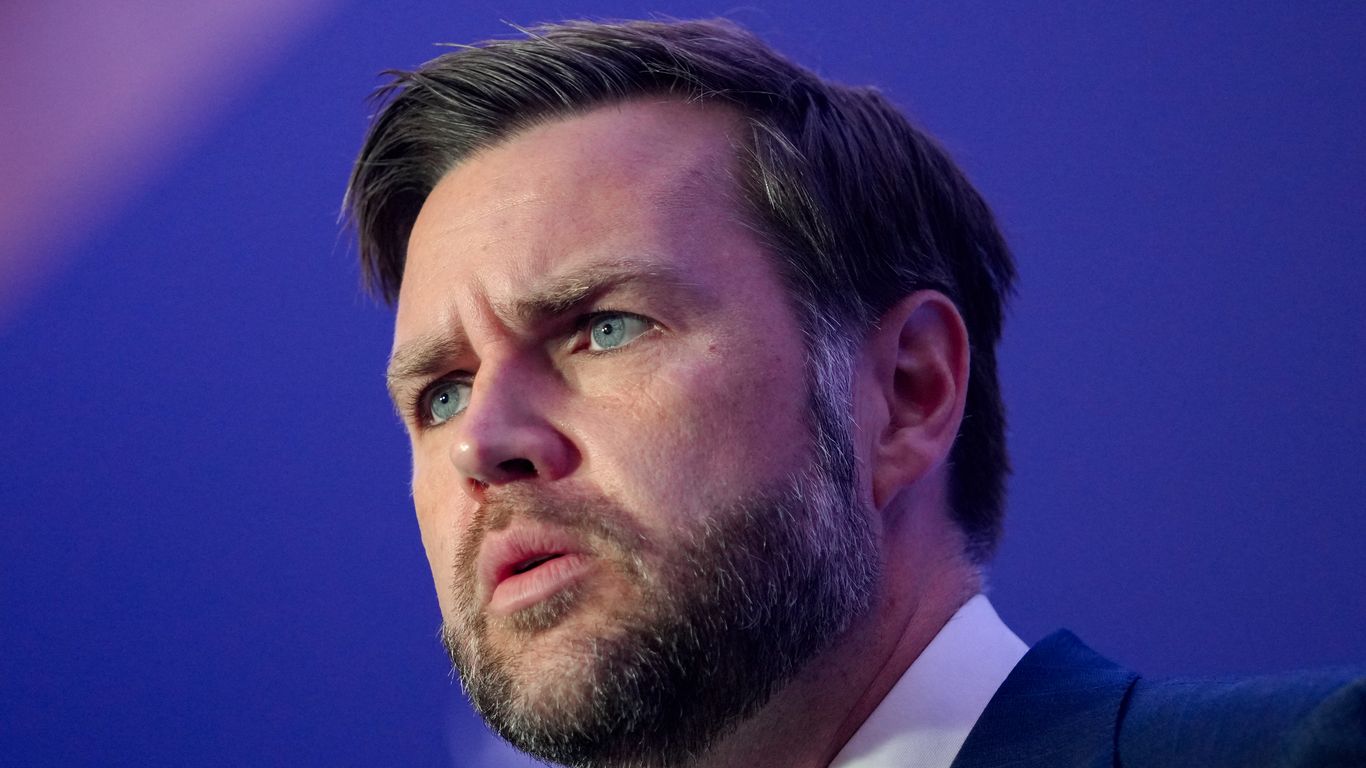
Vice President Vance sent a letter to Iran's national security chief stressing that any negotiations to head off U.S. military strikes "require discussions on the nuclear issue," a U.S. official said. Why it matters: The letter to Mohsen Rezaei, which focused on the possibility of restarting negotiations between the U.S. and Iran, is the most senior-level outreach by the U.S. to Iran in several months. It comes as President Trump considers resuming major combat operations in Iran after the midterm elections. Behind the scenes: Vance suggested sending the letter to Rezaei, who is one of the top national security officials in Iran and has a direct line to Supreme Leader Mojtaba Khamenei. "The President was enthusiastic about the letter," said the U.S. official, who declined to say when it was sent. The Wall Street Journal first reported the letter. Zoom out: One of the key sticking points in efforts to relaunch negotiations is Iran's demand that the U.S. first lift its naval blockade, release frozen funds, and allow oil sales. The U.S. wants Iran to restart nuclear negotiations before receiving any sanctions relief. What he's saying: Trump told reporters Wednesday that Vance's letter was about helping Iran obtain needed medical supplies. "Basically, it's getting supplies in to help people that are not well," he said.