Ballot Rejections Soared in Rural Counties After USPS Reduced Mail Service
The post Ballot Rejections Soared in Rural Counties After USPS Reduced Mail Service appeared first on ProPublica .
ProPublica · Oct 22

National news
The post Ballot Rejections Soared in Rural Counties After USPS Reduced Mail Service appeared first on ProPublica .
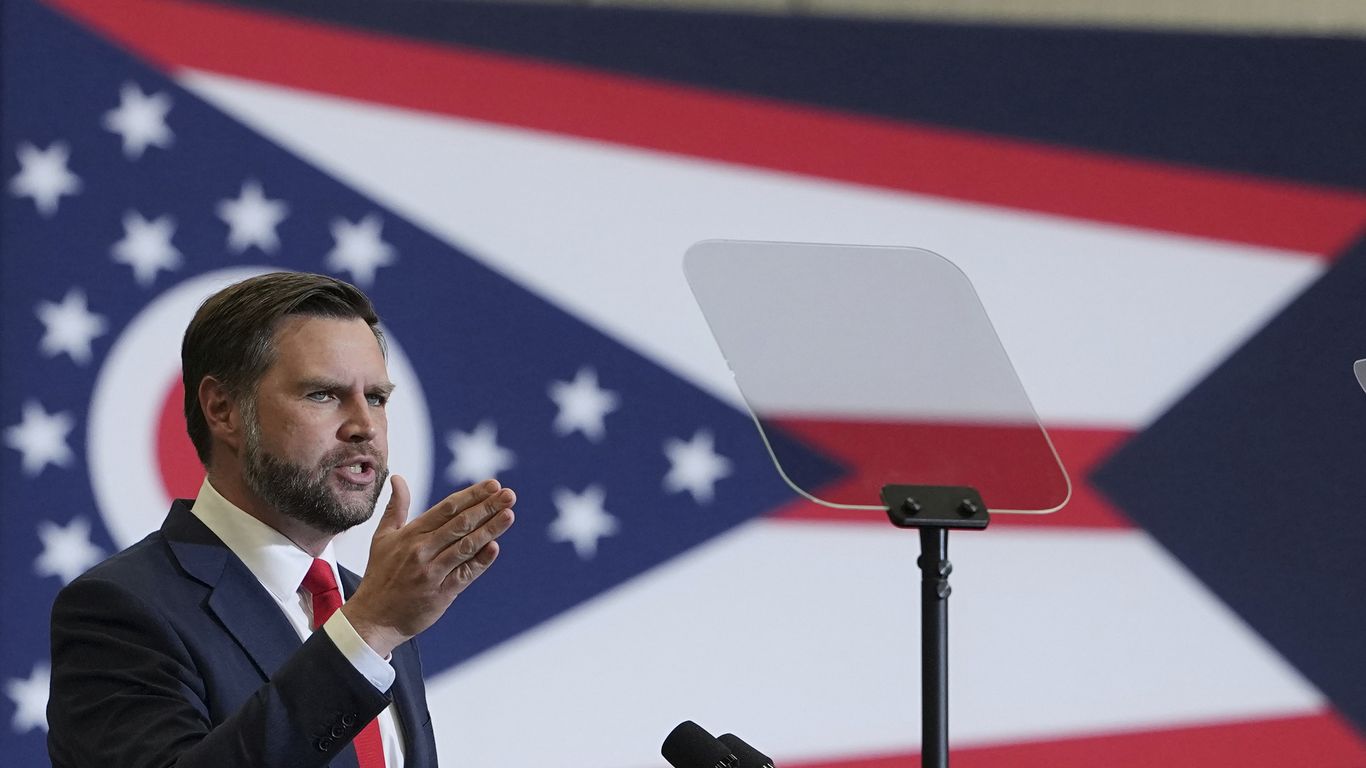
Vice President Vance 's call for fellow Republicans to "stop whining" about Vivek Ramaswamy's controversial attack ad in Ohio's race for governor showed a key part of his political mindset ahead of his expected run for president in 2028: Never back down. Why it matters: Channeling President Trump, Vance has shown contempt for what he sees as the old-guard GOP's reflex to cave under pressure from Democrats and the media. He thinks too many Republicans sacrifice allies to make controversies go away, and that giving critics a political scalp only encourages them to demand another, according to people familiar with his thinking. It's an approach with some risk — namely whether Vance, entering a critical period in his political career, has the political muscle to get away with Trump's no-apologies approach. Driving the news: Vance on Wednesday defended Ramaswamy amid bipartisan outrage over an ad featuring the estranged mother of Ramaswamy's Democratic opponent, Amy Acton . In the deeply personal ad, Acton's mother calls her daughter a liar, and says Ohioans shouldn't vote for her for governor. Not mentioned in the ad: Acton and her brother were removed from the mother's care as children after Acton accused her stepfather of sexual abuse. Her mother sided with the stepfather, leading to an estrangement that has lasted nearly 50 years. Appearing at a campaign stop for Ramaswamy in Ohio, Vance showed little concern about the criticism over the ad. Vance said he was "disgusted" by fellow Republicans criticizing it, telling them to "stop whining." Asked whether the ad was appropriate, Vance said it was "not really my concern," and that politics is tough. The other side: The backlash has included Republicans and Democrats who believe the ad crossed a moral line by exploiting Acton's traumatic childhood. "I would not have run that ad," Ohio Sen. Jon Husted, who appeared alongside Vance and Ramaswamy at a campaign rally Wednesday, told the AP . Former UN ambassador Nikki Haley
Major U.S. banks are detecting unauthorized third-party AI agents operating inside customer accounts, with some agents attempting to take actions that appear to be independent of user instructions, sources tell Axios. Why it matters: AI agents are becoming a nightmare for America's banks, making their way into banking systems faster than financial institutions can respond. The difficulty in distinguishing between a human and an unauthorized bot is forcing banks to block the technology and rapidly rewrite their terms of service. Driving the news: Banks including Morgan Stanley, Bank of America, JPMorgan, Wells Fargo and others are racing to contain agent risks. Some are aware of unauthorized access, people familiar with the issue said. These are generally situations when an agent or AI assistant accesses a human's account with the user's permission and login credentials. Even if permitted by the user, this goes against the guidelines of most banks requiring that humans log in to their own accounts. This presents significant security risks : Banking executives fear the steps agents with login access might take, especially if a user has granted purchase authority or the ability to shift funds. In other instances, some banks have tracked activity when agents — programmed to fulfill requests or complete tasks on a user's behalf — contact call centers or appear to take actions independent of user instructions, the people said. What they're saying: Bank executives described the situation as horrifying, with one official saying the industry has grave concerns about agents gaining access to customer accounts and taking steps that could impact user finances. State of play: The concerns are at the root of the decision by several banks to restrict third-party AI agent access, the people said. Morgan Stanley has begun blocking third-party agents from accessing its platforms, sources familiar with the decision said. JPMorgan , Bank of America and Citi are also restricting agents
The post Sexual Assaults on Campus No Longer Scrutinized as Closely Under Trump’s Education Department appeared first on ProPublica .
A massive chemical leak in Toledo, Ohio, is forcing some people out of their homes while others have been told to shelter in place.
Democratic groups sued the Trump administration Tuesday, accusing it of using unfounded voter fraud claims to muscle its way into how states run elections. Why it matters: The groups say the administration is issuing a stream of threats to intimidate and bully both voters and election officials. They're asking a judge to declare the administration's actions unlawful and block further interference. Driving the news: The lawsuit condemns the administration for targeting state voter rolls by insisting that local officials review federally compiled lists of alleged noncitizens on their voter rolls. The suit also alleges that the administration is improperly demanding that states deny ballots to registered voters based on those federal lists. The Democrat-aligned groups also claim the administration has attempted to intimidate state and local officials by threatening them with jail time or prosecution. Case in point: The lawsuit cites a Department of Homeland Security claim that Nevada had nearly 16,000 noncitizens on its voter rolls. The department later claimed that it had confirmed 185 of those people were noncitizens. State records later indicated that all 185 were citizens. The DOJ also demanded that California deny ballots to more than 20,000 people based on a federal list that flagged them as suspected ineligible voters, the lawsuit says. A preliminary investigation by Los Angeles County investigators found that more than 25% of those flagged listed a U.S. birthplace, and others already had their voter registrations canceled. What they're saying: "Department of Justice and DHS officials have sought to bolster their interference efforts through a persistent stream of threats and intimidation directed towards state and local election officials across the country," the groups' attorneys wrote. "Defendants' coercive threats of legal retaliation against state officials, including even potential imprisonment, for simply following state law and aiding registered voters i
House Democrats' campaign arm is instructing allied super PACs to promote minor candidates in several key House races, Axios has learned. Why it matters: This allows Democrats to steer outside groups toward siphoning votes from Republicans without violating laws against direct coordination. An Axios review of the Democratic Congressional Campaign Committee's "redboxes" — publicly available webpages laying out what PACs should say in ads and which voters to target — found references to minor candidates in five races. The DCCC included language on four of those pages promoting a third-party or independent candidate with language touting their conservative, pro-gun or anti-government bona fides. "Registered Republicans under the age of 55 need to see ads," the redbox for Colorado's 5th District says, "showing that ... Christopher Mitchell, a libertarian, is the true conservative running for Congress." The page for Virginia's 2nd District says white, college-educated men should see that independent J. Matt Baker is "a staunch supporter of the 2nd amendment" who will "defend our constitution." In Virginia's 5th District , the DCCC wants the same group of voters to know that independent Cooke Harvey "will fight for Virginia's farmers against big government." Republican women in Nevada's 2nd District should be informed that American Independent Party candidate Lynn Chapman "has spent decades fighting for conservative values," the DCCC says. Zoom in: In several cases, the redboxes urge super PACs to steer Democratic and left-leaning voters away from minor candidates who could siphon votes from the DCCC's recruit. The redbox for Alaska's at-large district — where Democrats are backing independent Bill Hill — says voters need to know Eric Hafner is a "fake Democrat" despite being listed on the ballot as one, noting he is an inmate in New York with no clear ties to Alaska . The page for Virginia's 2nd District urges PACs to ding the progressive credentials of another independe
The White House counsel's office warned Politico in a Monday letter that it had 48 hours to retract or correct recent stories about alleged staff drama, or it would suffer unspecified consequences. That deadline expires Thursday. Why it matters: The White House demand threatens to escalate already tense relations with Politico specifically and, more generally, the press corps that covers President Trump in Washington. Politico, CNN, and MS NOW are already banned from covering Trump in the Oval Office and on Air Force One because the president does not like their coverage. Trump blocked all three outlets from the White House grounds as well, but a judge on Oct. 13 restored their access. CNN threatened legal action Wednesday to regain access to Air Force One and the "pool" of television networks that accompany the president. Zoom in: In his letter to Politico, White House Counsel Will Scharf singled out three stories concerning White House Chief of Staff Susie Wiles despite "on-the-record refutations" or contrary evidence supplied by senior staff and even the president. Oct. 15: In a story headlined " Trump's ice maiden is under fire ," Politico Playbook reported that Trump was considering a replacement for Wiles. Trump called it "fake news." Oct. 16: Politico Playbook wrote that the prior day's story had caused a "freakout" and that the president "blew up" over it. A White House spokesman called it "unbelievably stupid and false." Oct. 16: In a story headlined " Susie Wiles helped set up Fox interview ahead of press secretary's exit ," Politico insinuated the chief of staff set up Katie Zacharia to fail in a Sean Hannity interview on Fox the night before. The White House and Fox News denied the reporting. And White House officials provided text messages to Politico before publication showing Zacharia — not Wiles — set up the interview, which the New York Post reported the following day. "Politico has not corrected or retracted its false reporting. Instead, a Politico
Security officials are sounding the alarm over two critical vulnerabilities in a programming language used to run millions of websites, marking one of the most consequential cybersecurity discoveries yet made with AI . Why it matters: The bugs, which researchers found partly with an OpenAI model, proves AI can uncover critical flaws humans missed for decades — raising the stakes for defenders racing to fix vulnerabilities before attackers can exploit them at machine speed. What they're saying: Matthew Prince, the CEO of Cloudflare, a global connectivity and internet security company, said the company saw thousands of attempts to exploit the flaws in the 10 hours before it was publicly announced. "That jumped to tens of thousands in the 45 minutes post announcement, hundreds of thousands within 2 hours, and millions now," he wrote on X. Driving the news: There are two problems hackers could easily exploit in an open-source programming language known as PHP that's used on nearly 70% of all websites . Government officials from the U.S. to Japan are warning companies to apply a patch to fix the bugs, or consider taking down their sites to avoid an attack. OpenAI touted the role its model played in discovering one of the vulnerabilities, which allowed PHP researchers to create a fix. Between the lines: Security researchers have been skeptical of AI-generated vulnerability reports, many of which have turned out to be minor bugs or false alarms. But the PHP discovery could force the cybersecurity community to reckon with the reality of AI threats. "It highlights how AI can uncover security flaws with internet-scale impact, but the same capabilities can also help attackers rapidly develop offensive tools and exploits," OpenAI said in a blog post Wednesday. Threat level: If exploited, the PHP flaws would allow malicious hackers to take control of vulnerable web servers without needing a password or other credentials. Since PHP runs under a wide variety of internet applicatio
Senate Republicans are weighing three last-ditch spending moves that would have been unimaginable six months ago: a cash infusion for Mississippi and even more money for South Carolina and Kansas. Why it matters: It's been 94 years since Kansas elected a Democratic senator, 44 years for Mississippi and 28 for South Carolina. But panic is spreading through the Republican Party. "The wall has broken. The enemy is inside the fort," one national Republican political operative told Axios. "We are now fighting hand to hand." The Senate map, which once looked impregnable for Senate Majority Leader John Thune (R-S.D.), is now full of vulnerabilities. Democratic challengers are polling within the margin of error in more than half a dozen deep-red states, according to internal GOP polls. The other side: "We're nervous about Alaska. We're nervous about Michigan. We're still going to hold the Senate at the end," said another operative. Zoom in: Two weeks ago, when Senate Leadership Fund decided to take out a $5 million "insurance policy" in South Carolina, operatives took a hard look at Idaho, South Dakota and Mississippi. At the time, they concluded they didn't need to spend any money in those states, according to a person familiar with the matter. But Senate Republicans are now reviewing the Mississippi race and may need to spend there to protect Sen. Cindy Hyde-Smith from a surprisingly competitive bid by Democratic district attorney Scott Colom . Senate Majority PAC, the main super PAC for Senate Democrats, announced a $1.2 million investment in the race on Tuesday. Zoom out: In early June, SLF started to reinforce a Midwestern red wall to protect the GOP majority, reserving $28 million in TV advertising in Ohio and $11 million in Iowa . Those investments have ballooned to $93 million in Ohio and $53 million in Iowa. After an initial $5 million buy in South Carolina, SLF's spending has increased to $8.5 million, according to AdImpact. And a super PAC linked to Sen. John Bar
The post Colorado Marijuana Regulators Failed to Protect Consumers From Potential Contamination, Audit Finds appeared first on ProPublica .
The time change known as daylight savings starts Sunday, March 8, 2026. Most Americans lose an hour of sleep when clocks "spring forward."
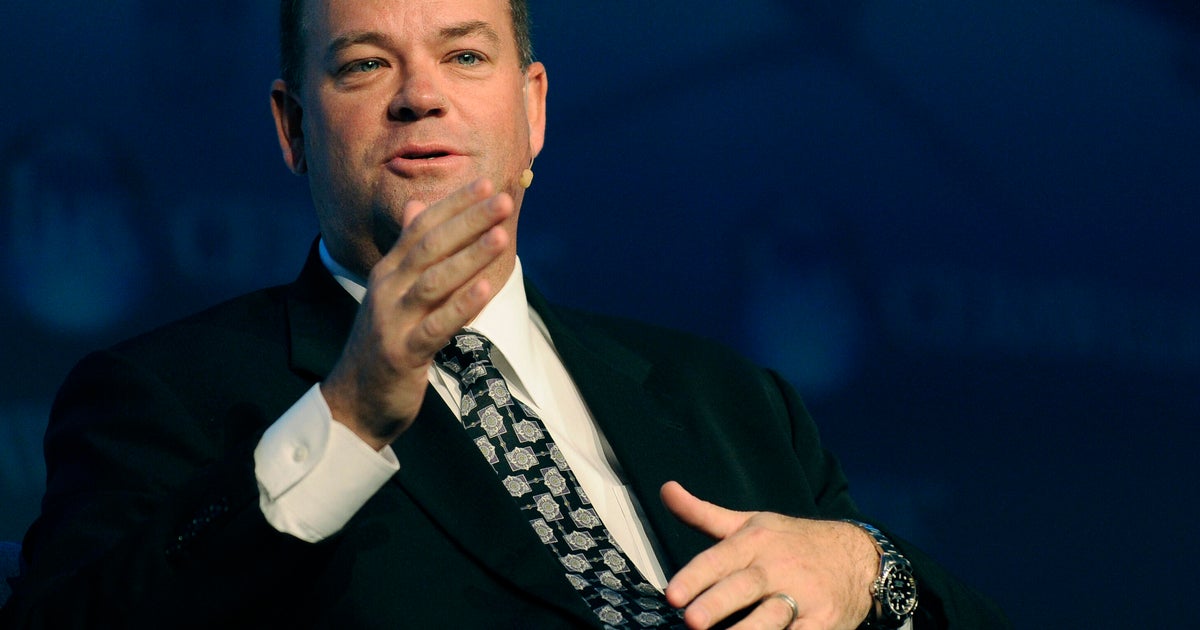
Oil giant ConocoPhillips is planning to lay off up to a quarter of its global workforce, amounting to thousands of jobs.
"We don't want to be replaced by machines," said one advocate for immigrant farmworkers.